Direct Higgs-gravity interaction and stability of our Universe
Vincenzo Branchina, Eloisa Bentivegna, Filippo Contino, Dario, Zappal\`a

TL;DR
This paper proposes a universal stabilizing mechanism for our universe's stability, arising from the nonminimal coupling between gravity and the Higgs boson, which naturally occurs in quantum gravitational backgrounds.
Contribution
It introduces a fundamental, model-independent mechanism from Higgs-gravity interaction that stabilizes the electroweak vacuum against decay.
Findings
Higgs-gravity coupling can stabilize the electroweak vacuum.
The mechanism is universal and rooted in fundamental physics.
It does not depend on specific new physics models.
Abstract
The Higgs effective potential becomes unstable at approximately GeV, and if only standard model interactions are considered, the lifetime of the electroweak vacuum turns out to be much larger than the age of the Universe . It is well known, however, that is extremely sensitive to the presence of unknown new physics: the latter can enormously lower . This poses a serious problem for the stability of our Universe, demanding for a physical mechanism that protects it from a disastrous decay. We have found that there exists a universal stabilizing mechanism that naturally originates from the nonminimal coupling between gravity and the Higgs boson. As this Higgs-gravity interaction necessarily arises from the quantum dynamics of the Higgs field in a gravitational background, this stabilizing mechanism is certainly present. It is not related to any specific…
Click any figure to enlarge with its caption.
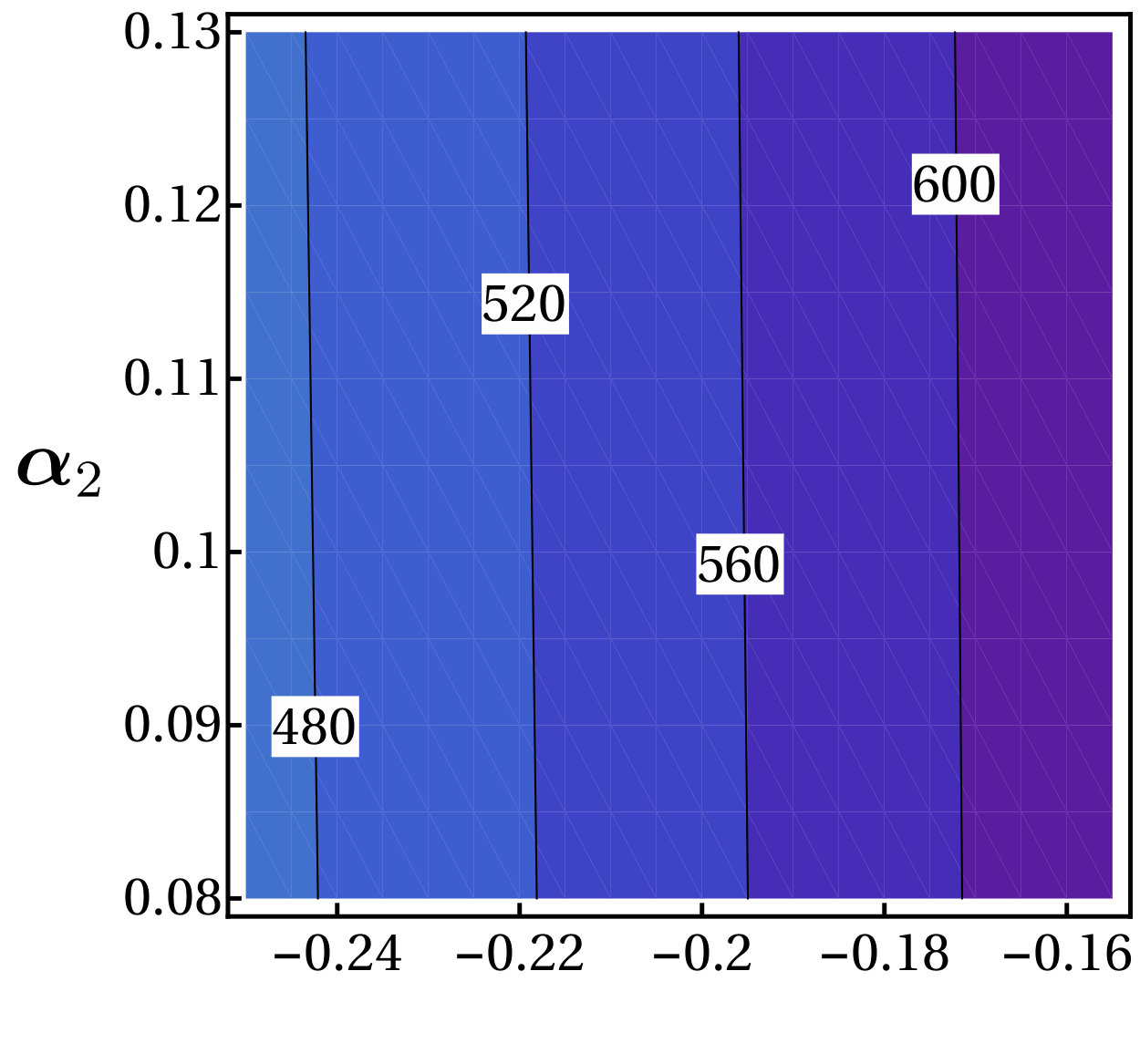 Figure 1
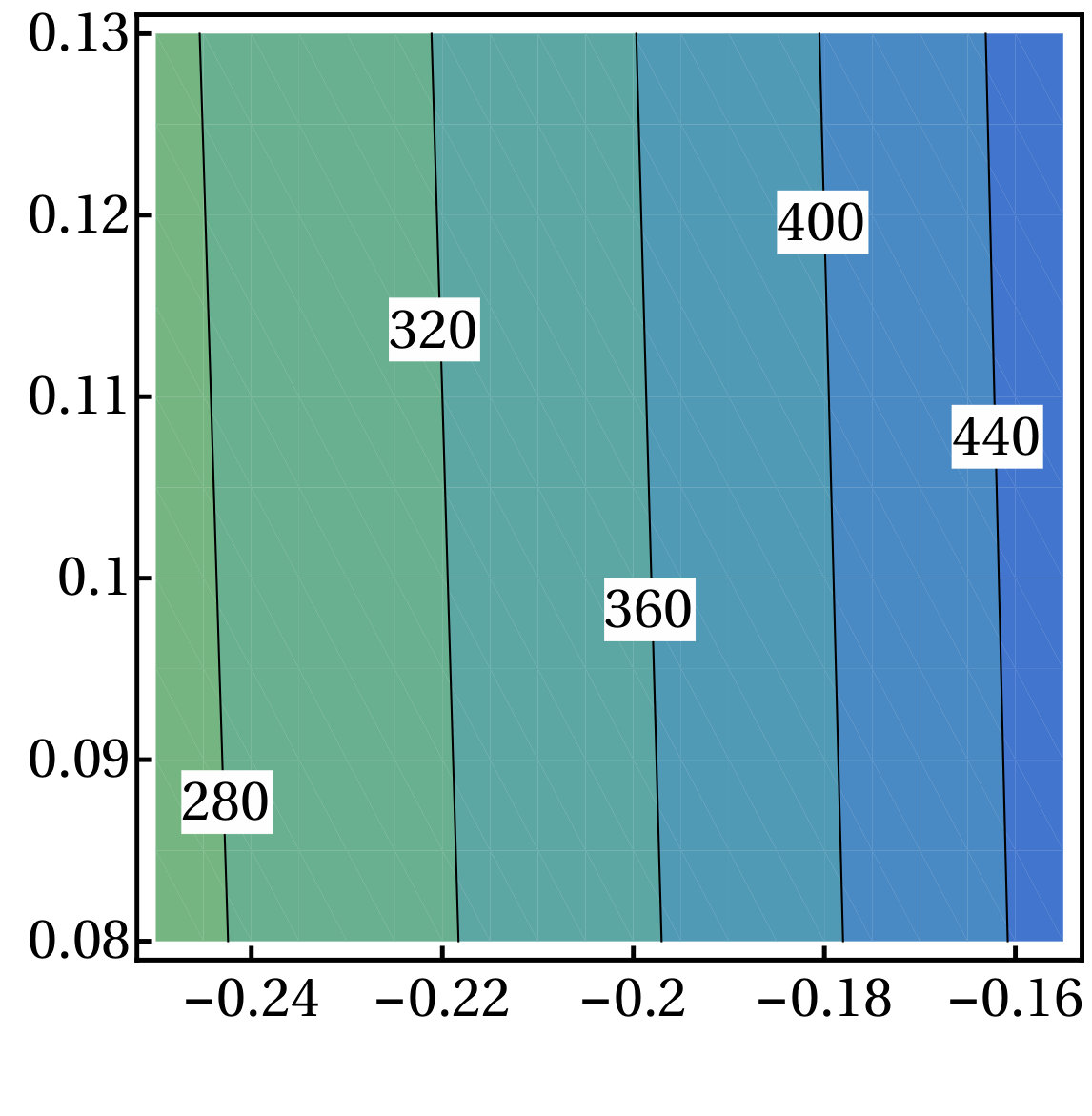 Figure 2
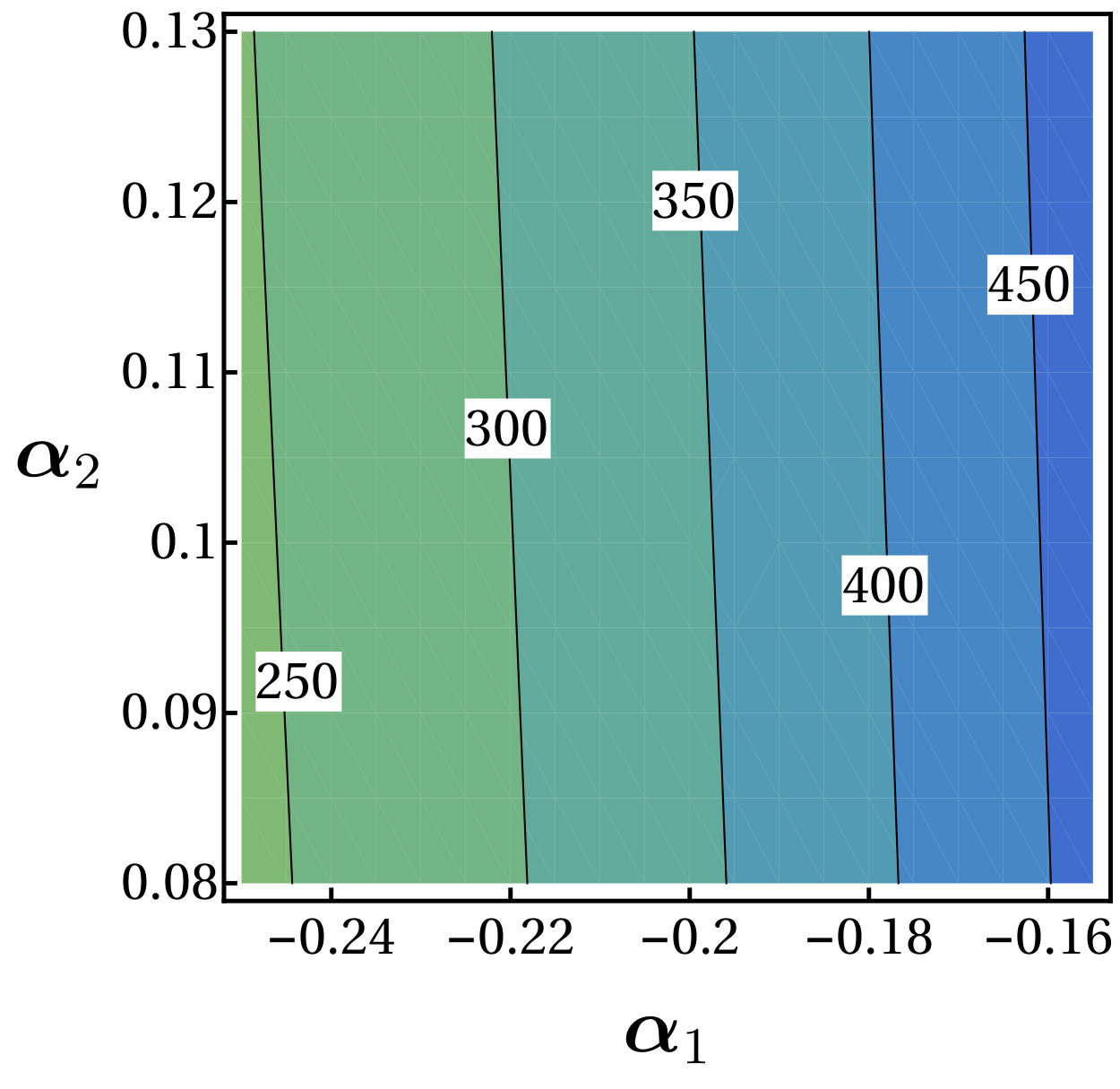 Figure 3
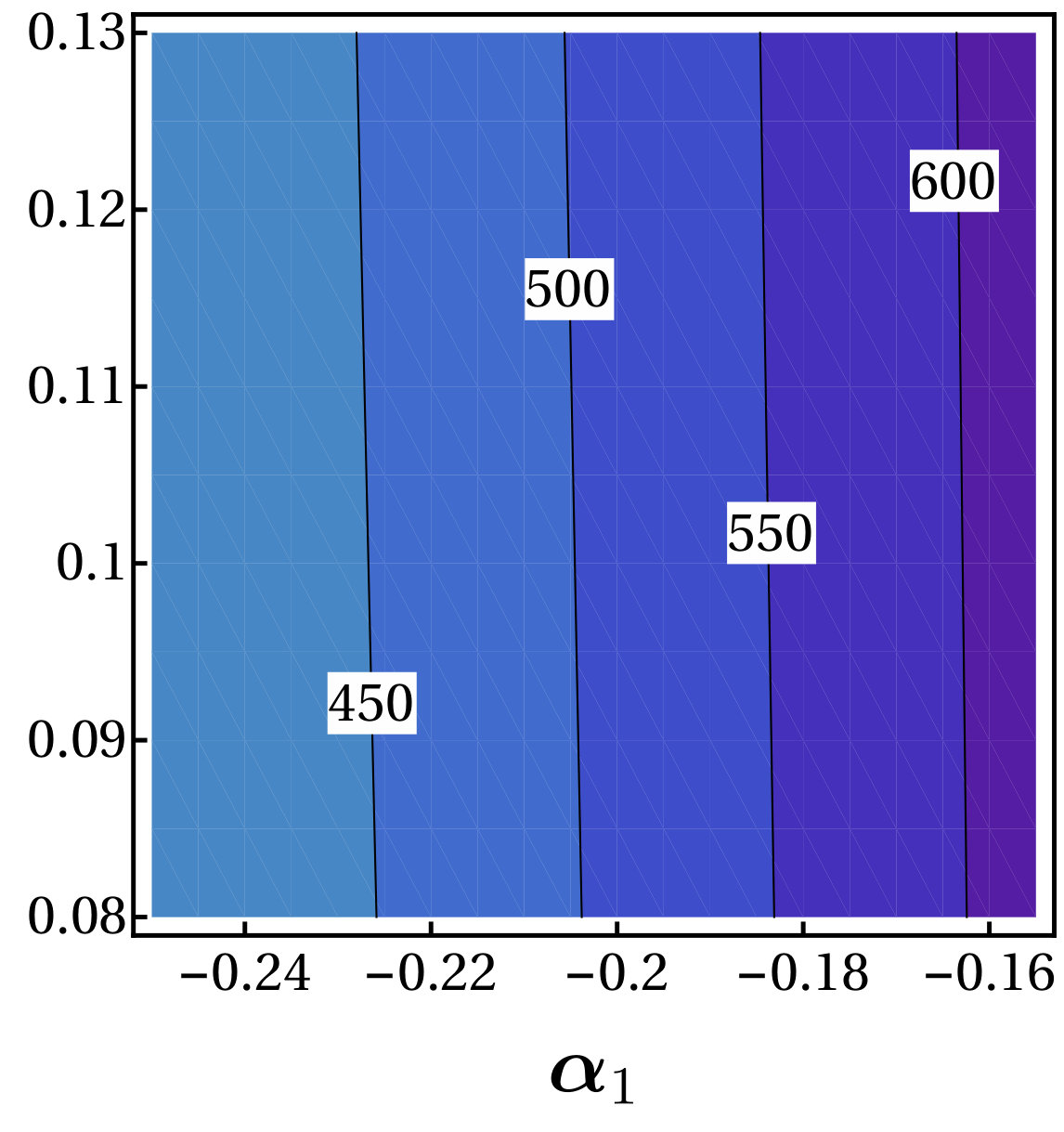 Figure 4
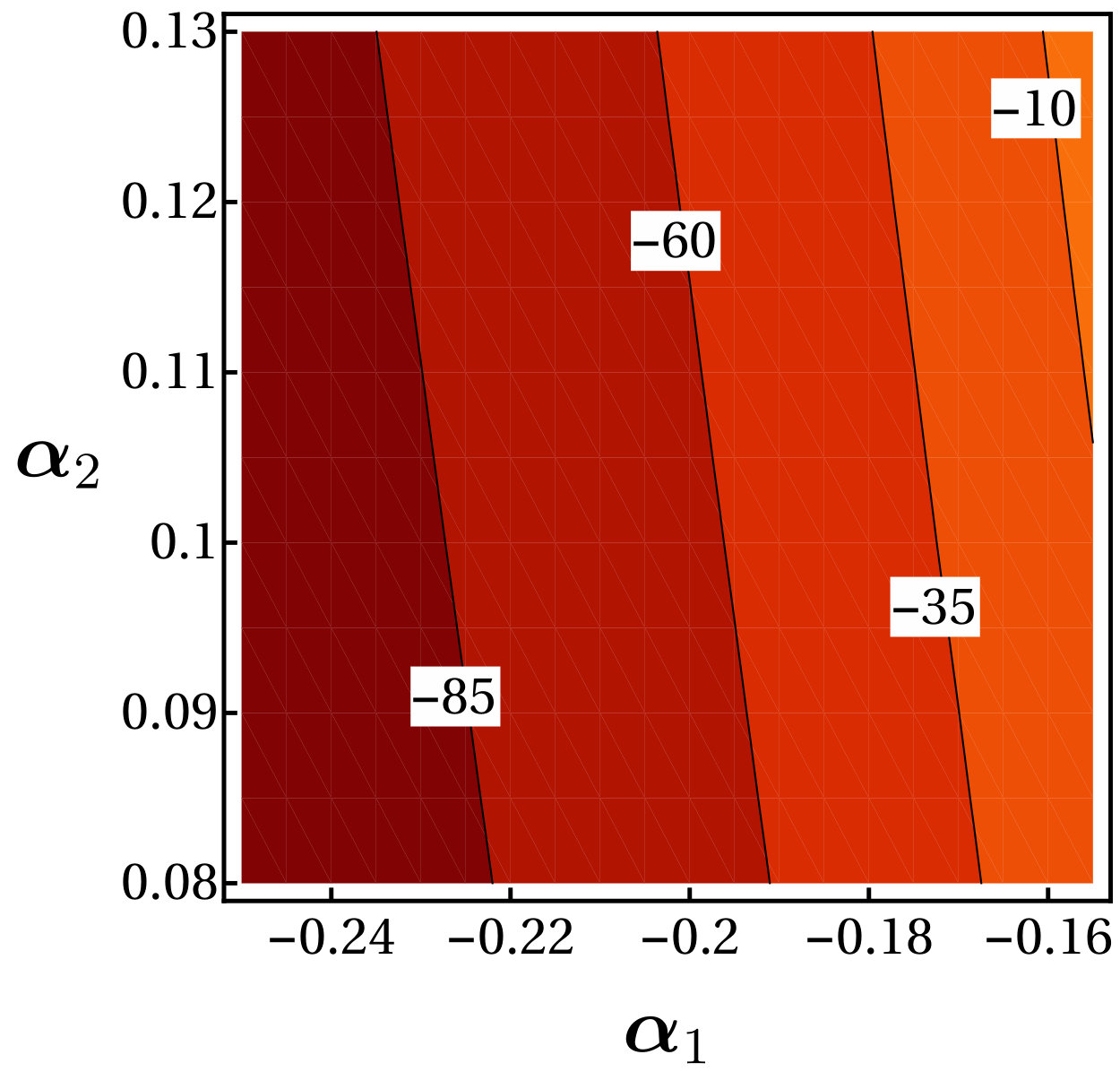 Figure 5
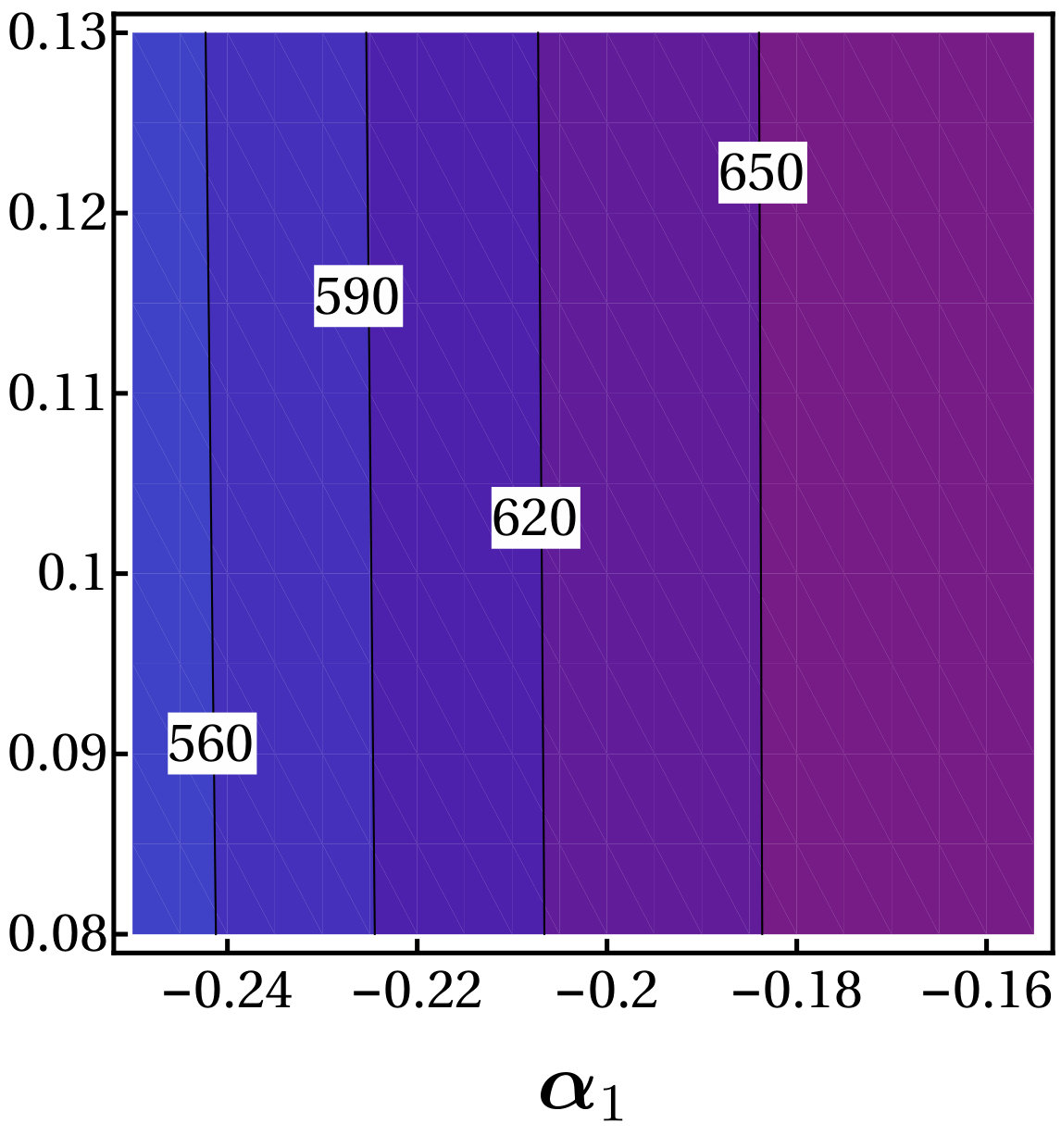 Figure 6
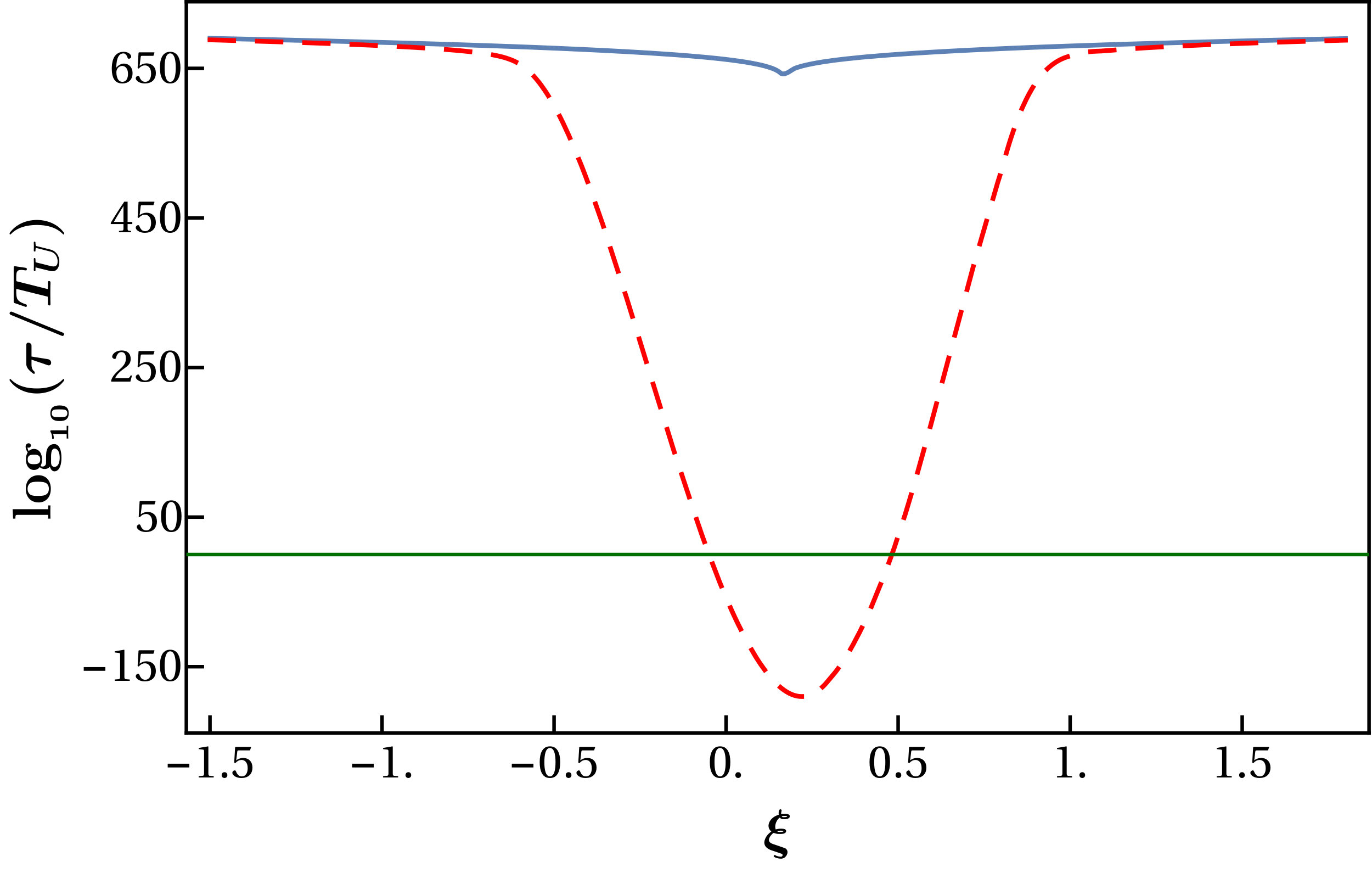 Figure 7
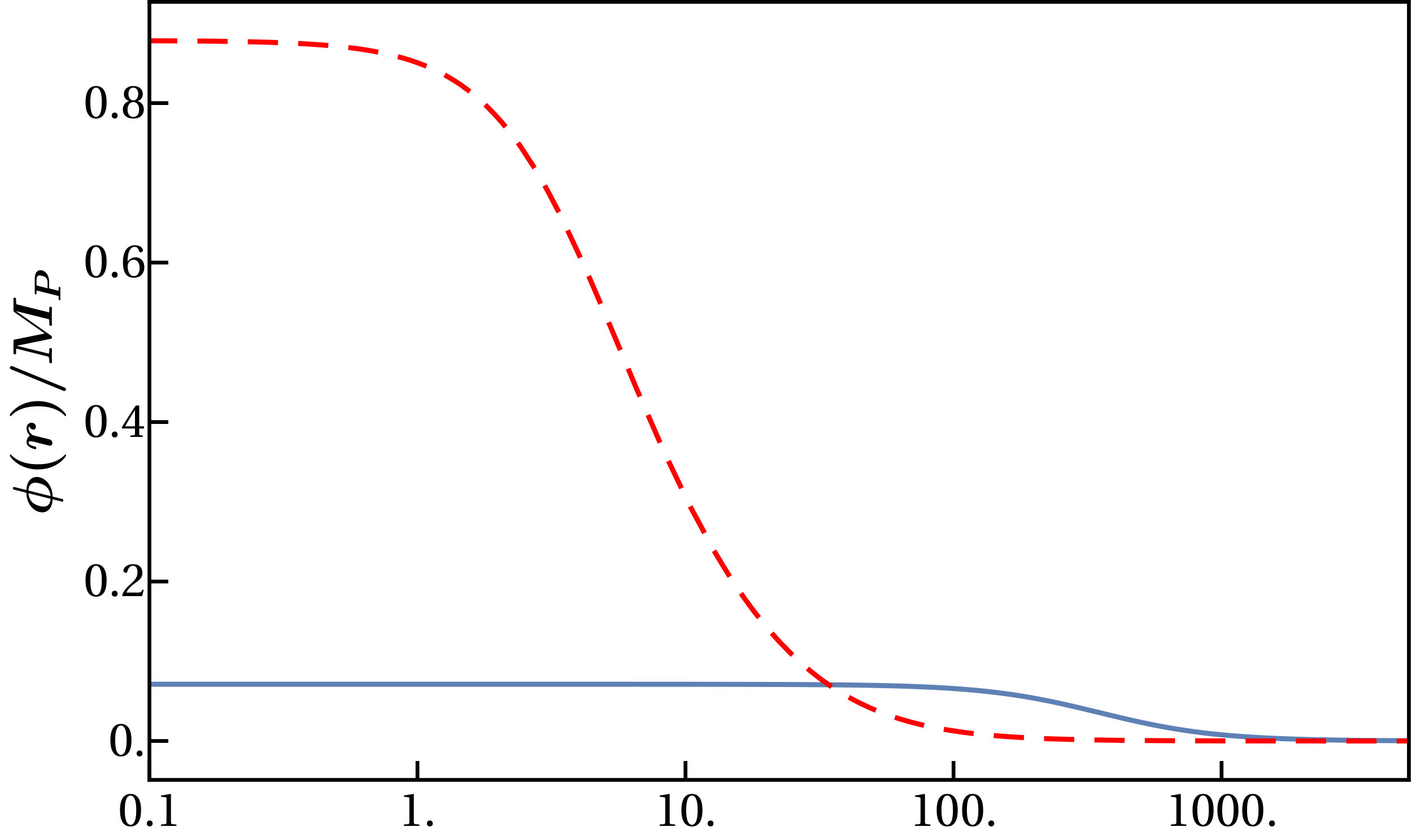 Figure 8
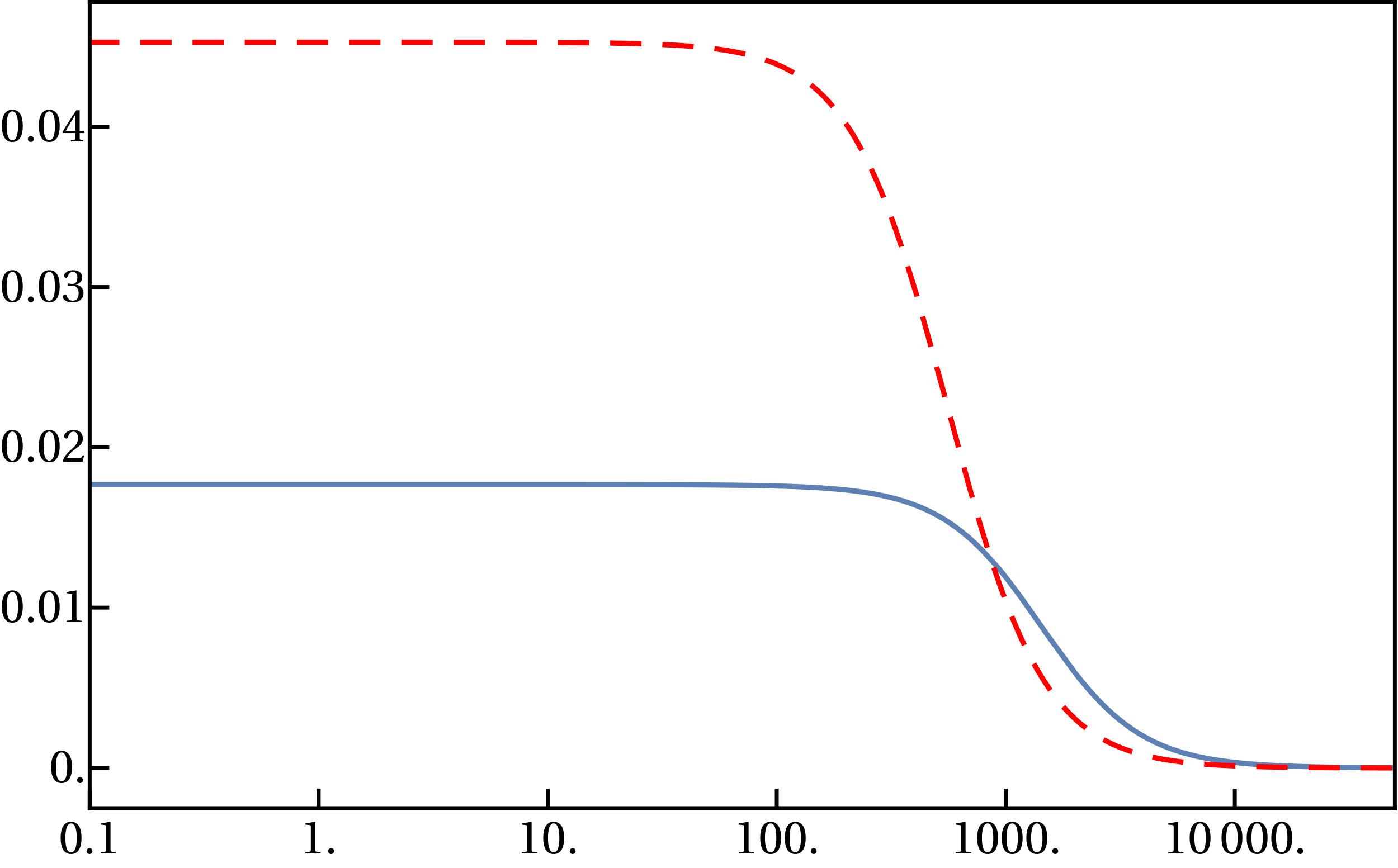 Figure 9
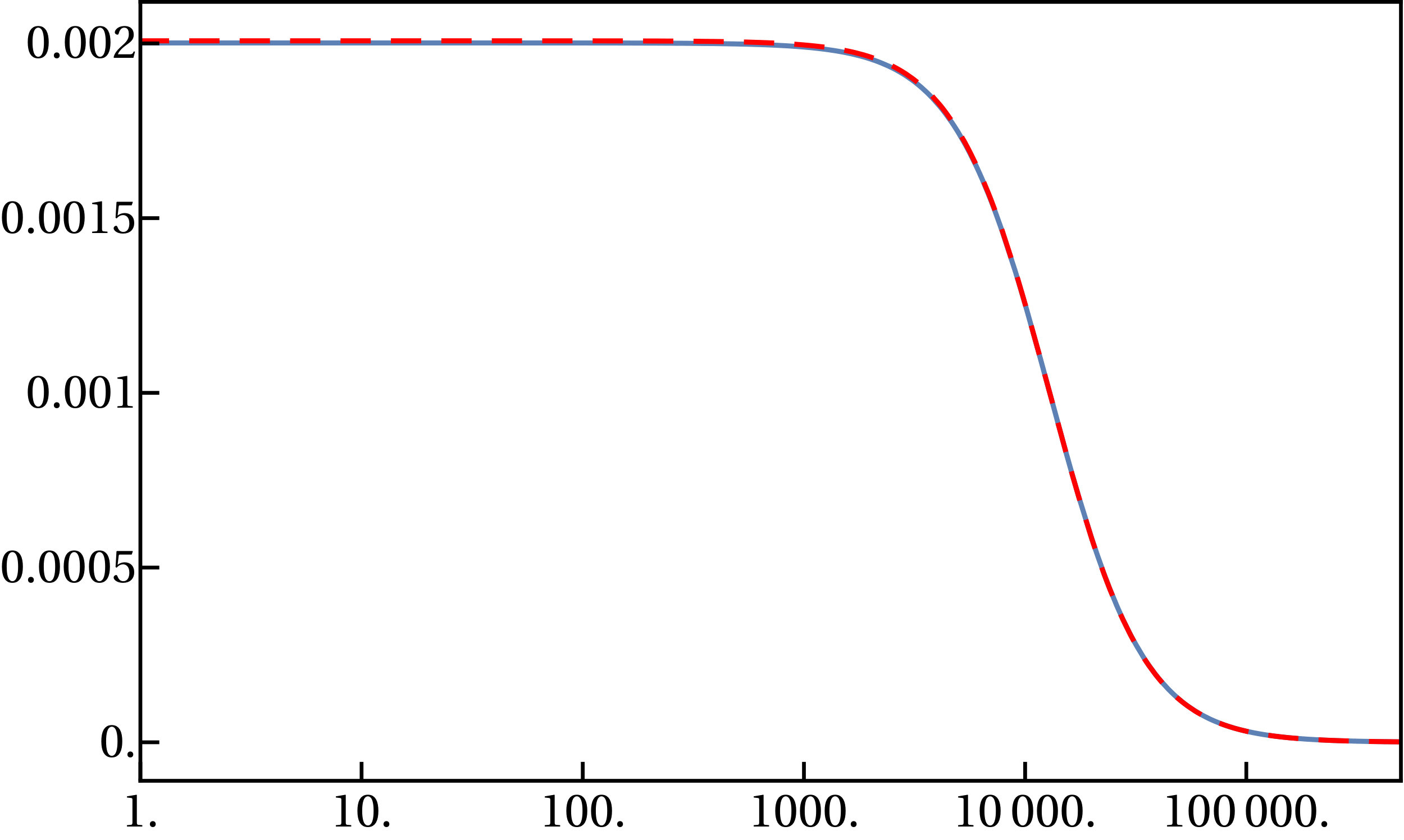 Figure 10
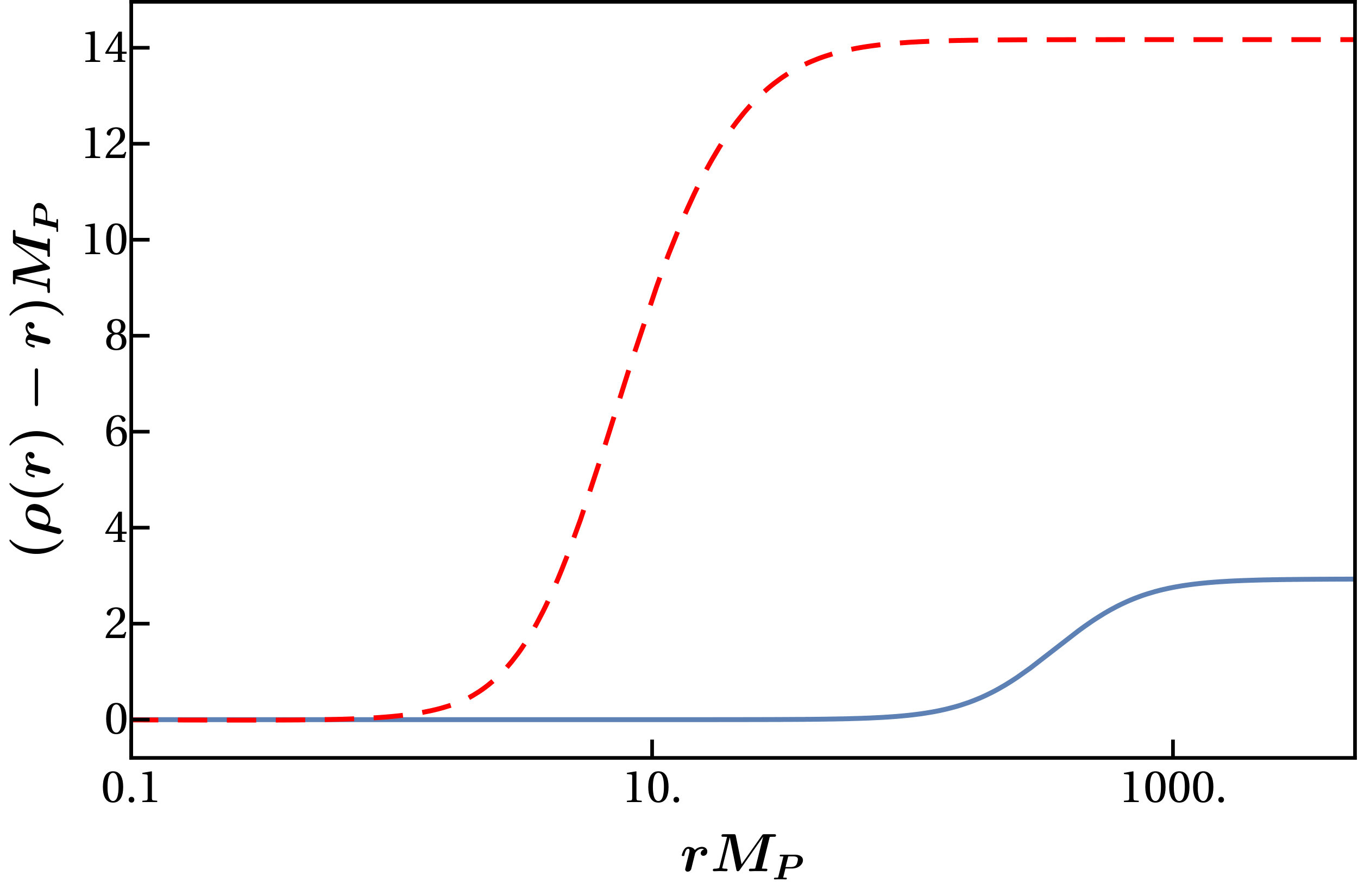 Figure 11
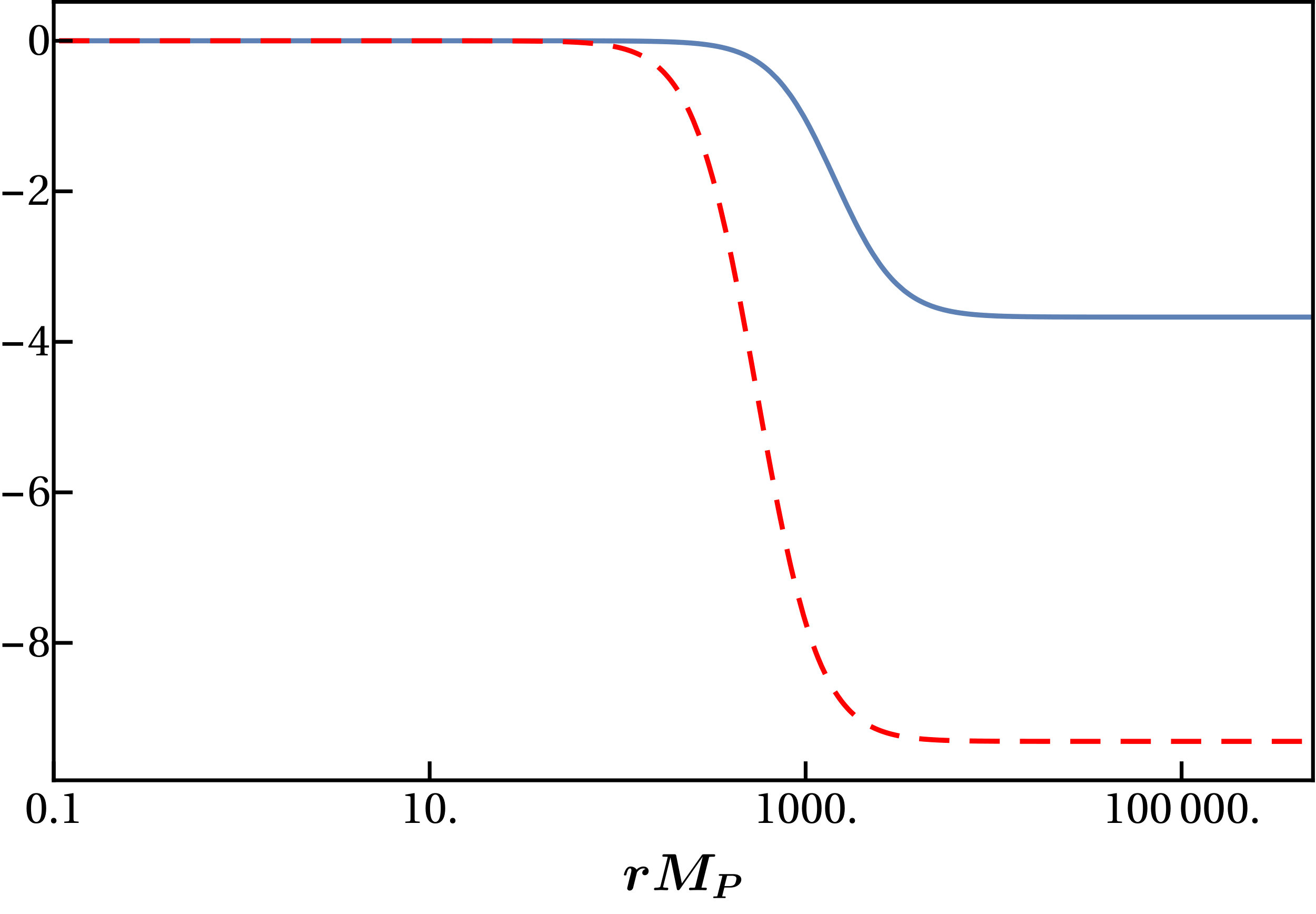 Figure 12
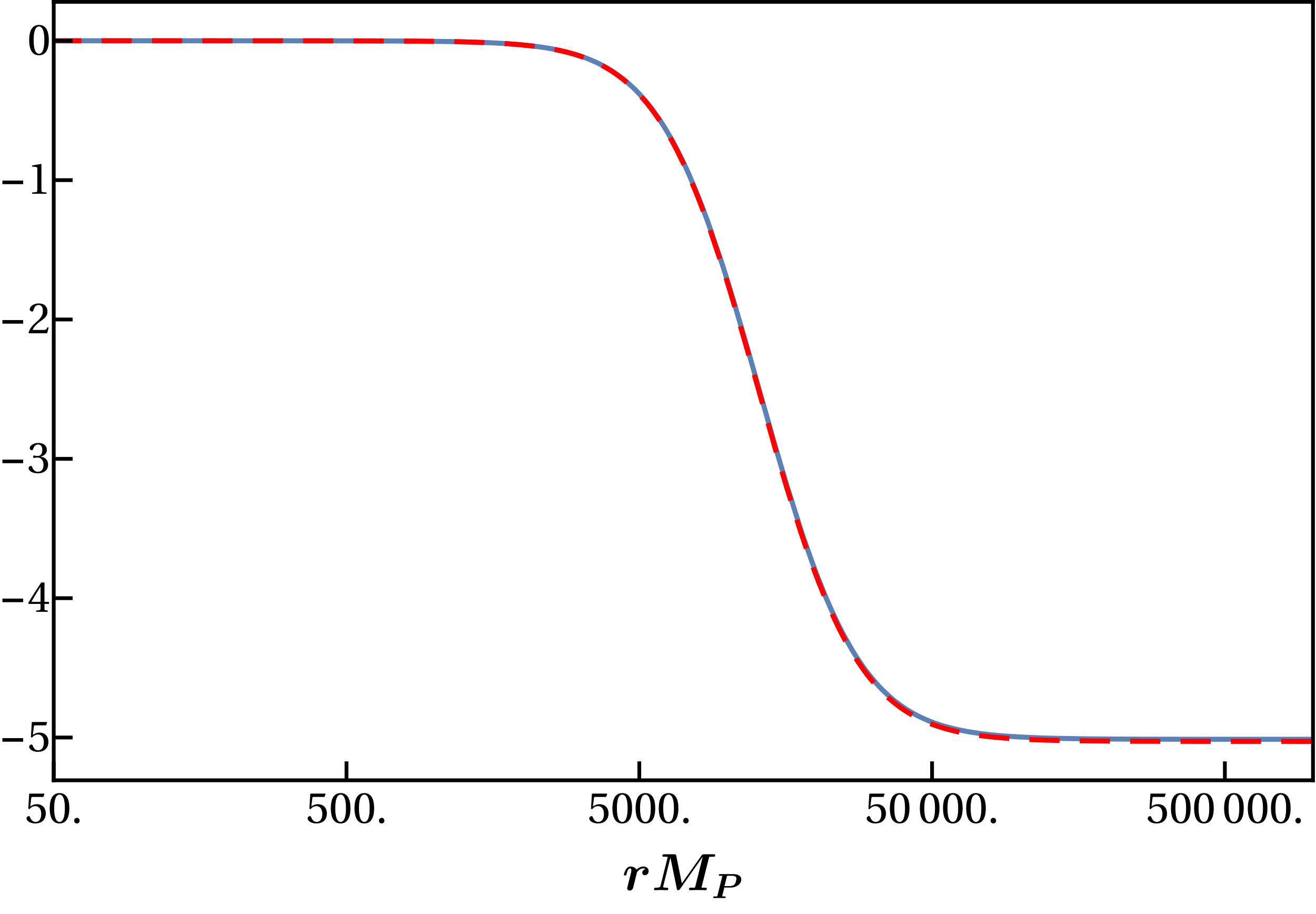 Figure 13
Peer Reviews
No public reviews on file for this paper yet. If you reviewed it on a platform where reviews are public (OpenReview, ICLR, NeurIPS, ICML), you can paste yours below so the community can read it here.
Videos
No videos yet. Explain this paper in a talk, walkthrough, or lecture? Add one.
Direct Higgs-gravity interaction
and stability of our Universe
Vincenzo Branchina, Eloisa Bentivegna Filippo Contino and Dario Zappalà
aDepartment of Physics and Astronomy, University of Catania,
Via Santa Sofia 64, 95123 Catania, Italy
bINFN, Sezione di Catania, Via Santa Sofia 64, 95123 Catania, Italy
cIBM Research UK, The Hartree Centre, Daresbury WA4 4AD, United Kingdom
dScuola Superiore di Catania, Via Valdisavoia 9, 95123 Catania, Italy
(March 8, 2024)
Abstract
ABSTRACT
The Higgs effective potential becomes unstable at approximately GeV, and if only standard model interactions are considered, the lifetime of the electroweak vacuum turns out to be much larger than the age of the Universe . It is well known, however, that is extremely sensitive to the presence of unknown new physics: the latter can enormously lower . This poses a serious problem for the stability of our Universe, demanding for a physical mechanism that protects it from a disastrous decay. We have found that there exists a universal stabilizing mechanism that naturally originates from the nonminimal coupling between gravity and the Higgs boson. As this Higgs-gravity interaction necessarily arises from the quantum dynamics of the Higgs field in a gravitational background, this stabilizing mechanism is certainly present. It is not related to any specific model, being rather natural and universal as it comes from fundamental pillars of our physical world: gravity, the Higgs field, the quantum nature of physical laws.
††∗E-mail: [email protected]
†E-mail: [email protected]
‡E-mail: [email protected]
§E-mail: [email protected]
The discovery of the Higgs boson boosted new interest on the stability analysis of the electroweak (EW) vacuum Cabibbo:1979ay ; Flores:1982rv ; Lindner:1985uk ; Lindner:1988ww ; Sher:1988mj ; Sher:1993mf ; Altarelli:1994rb ; Isidori:2001bm ; Espinosa:2007qp , being of crucial importance for our understanding of standard model (SM) and beyond standard model physics and for its impact on cosmological studies, as is the case for Higgs inflation models Bezrukov:2007ep . This renewed interest also prompted a more careful treatment of questions as the gauge invariance of the vacuum decay rate, and the contribution of zero modes to the quantum fluctuation determinant Andreassen:2014gha ; Andreassen:2017rzq ; DiLuzio:2014bua ; Endo:2017tsz ; Chigusa:2017dux ; Andreassen:2014eha .
It is well known that due to the top loop corrections, the Higgs potential turns over for values of , where GeV is the location of the EW minimum, and develops a second minimum at . The location and depth of the latter mainly depend on the Higgs boson and top quark masses, and , and for the known values, GeV and GeV ATLAS:2014wva ; Aad:2015zhl , it turns out to be much deeper than the EW one, thus being a false vacuum (a metastable state) Turner ; Rees 111For a different approach to the stabilization problem and renormalization of the effective potential see Bender:2015uxa ; Bender:2012ea ; Bender:2013qp ..
To calculate the EW vacuum lifetime , that is the tunneling time from the EW (false) vacuum to the true one, we need to know the Higgs field dynamics, normally described by the (Euclidean) action ( is the Newton constant, the spacetime metric, the Ricci scalar),
[TABLE]
where is the potential to which the Higgs boson is subject. Then we have to seek for the so-called bounce solutions to the corresponding (Euclidean) equations of motion Coleman:1977py ; Callan:1977pt ; Coleman:1980aw . These are -symmetric solutions that depend only on the radial coordinate , and obey boundary conditions to be specified below. Implementing the symmetry, the (Euclidean) metric becomes,
[TABLE]
where is the unit 3-sphere line element, and is the volume radius of the 3-sphere at fixed coordinate.
The equations of motion take the form () Coleman:1980aw ,
[TABLE]
where the first equation is for the Higgs field, while the second one is the only Einstein equation left by symmetry. The dot indicates derivative with respect to . The boundary conditions for the bounce (, ) are ; ; .
The decay rate () from the false to the true vacuum is given by Coleman:1977py ; Callan:1977pt ; Coleman:1980aw ,
[TABLE]
where , is the action calculated at the trivial false vacuum solution , and is the quantum fluctuation determinant.
For symmetric configurations (and in particular for bounces), the action can be written as
[TABLE]
Moreover, as we take , we have .
Defining the size of the bounce as the value of the radial coordinate such that , the prefactor in Eq. (4) can be estimated to a good approximation Arnold:1991cv as , and then becomes
[TABLE]
In calculating , it was usually assumed that can be approximated with the SM Higgs potential. In other words, it was assumed that although high energy (Planckian) NP terms are expected, they can be neglected Isidori:2001bm ; Espinosa:2007qp ; Degrassi:2012ry ; Buttazzo:2013uya . However, it is now well known that the necessarily present NP terms can have an enormous impact on Branchina:2013jra ; Branchina:2014rva ; Branchina:2014usa ; Branchina:2015nda ; Branchina:2016bws ; Bentivegna:2017qry ; below we show a specific example [see Eqs. (10) and (12)]. Before doing that, however, let us consider the SM potential alone.
The SM (renormalization group improved) Higgs potential can be approximated as Sher:1988mj ; Sher:1993mf ; Altarelli:1994rb :
[TABLE]
where is the quartic running coupling ( is the running scale) with Flores:1982rv ; Mihaila:2012fm ; Chetyrkin:2012rz ; Bezrukov:2012sa .
A good approximation for was obtained in Burda:2016mou , by fitting the two-loop improved Higgs potential with the three parameter function
[TABLE]
where is the Planck mass. The fit gives
[TABLE]
Taking for the SM potential (7) [with (8) and (9)], we get Bentivegna:2017qry
[TABLE]
a value much larger than the age of the Universe .
New physics at high (Planckian) energies can be parametrized by adding to the SM Higgs potential higher powers of as Branchina:2013jra ; Branchina:2014rva ; Branchina:2014usa ; Branchina:2015nda ; Branchina:2016bws ; Bentivegna:2017qry ; Branchina:2005tu ; Branchina:2008pc ; Branchina:2018qlf
[TABLE]
If we now take , and consider for the (dimensionless) couplings and specific values, as for instance and , for the EW vacuum lifetime in the presence of NP we find
[TABLE]
The presence of these NP terms can enormously lower Branchina:2013jra ; Branchina:2014rva ; Branchina:2014usa ; Branchina:2015nda ; Branchina:2016bws ; Bentivegna:2017qry , to the point that we can get . Note that the huge difference between and is due to a big difference between the bounces in the two cases considered, as can be seen from the left column of Fig. 1.
There must be a mechanism that protects our Universe from a disastrous decay. It has been recently shown that, embedding the SM in supergravity models with discrete R symmetries, a very efficient protective mechanism can be constructed Branchina:2018xdh . In this article we show that there exists a universal stabilizing mechanism that arises from the combination of three basic pillars of our physical world: (i) gravity, (ii) the Higgs boson, and (iii) the quantum nature of physical laws.
In fact, the quantum dynamics of the Higgs field in a gravitational background imposes a direct interaction between and gravity Callan:1970ze ; Birrell:1982ix
[TABLE]
where is the coupling that measures the strength of this interaction. This term is at the origin of the stabilizing mechanism discussed in this work.
Adding then (13) to (1) [and implementing the symmetry], the equations of motion become
[TABLE]
with boundary conditions as for Eq. (3). For , Eqs. (14) and (15) reduce to Eqs. (3). Moreover, the action for -symmetric configurations takes again the form (5).
As long as the NP terms are neglected, the inclusion of in the action does not change the stability condition of the Universe, as still remains much larger than Rajantie:2016hkj . However, when these terms are taken into account, but the interaction is not included, can be enormously lowered [see Eq.(12)].
In this article we show that turning on (as we must) the interaction (13), with the exception of a tiny range of values of , the EW vacuum lifetime is enormously enhanced and becomes much larger than , even in the presence of Planckian NP. This is seen in Table 1, where for the Higgs potential we have taken , with , . Table 1 shows the tunneling time (and for comparison ) for different .
A graphical representation of the results of Table 1 is given in Fig. 2, where the decay time [more precisely ] as a function of is plotted in the interval . The range of where is lower than is very tiny (), and centered around its minimal value . We observe that, for increasing values of , tends towards : the interaction is so strong to wash out the destabilizing effect of the NP potential (11).
The coincidence between and is due to the fact that with increasing the bounces obtained with the Higgs potential tend towards the SM ones, as can be seen from Fig. 1. In fact, actually and both decrease with increasing , and reach the value for . For further increasing values of , not presented in the figure, and still coincide and take lower and lower values. For negative , the same trend is observed for increasing .
Now we estimate (for these sufficiently large values of ) the relative weight in the equations of motion (14) and (15) of the two terms and in the potential by considering the ratio
[TABLE]
Being and , we find (Planck units), so that the (potentially destabilizing) term is very much suppressed as compared to the standard term. It is then not surprising that the bounce solution for the potential converges to the corresponding bounce for alone.
Finally we see why and coincide. From (5) we see that at the bounce is
[TABLE]
As for increasing we have , Eq. (17) can be replaced with
[TABLE]
For the argument given above, the second term in the rhs of Eq. (18) is negligible as compared to the first one, and having and practically the same size , it follows that and coincide.
The enormous stabilizing effect of the Higgs-gravity interaction can be further illustrated by comparing values of calculated at different values of (e.g. , ) in a region of the parameter space where in the case is always lower than . For and we chose the ranges , . Figure 3 shows the results. The left panel is the stability diagram for the case, the right one for . The black lines are level curves with the same value of , and the numbers on the top of them are . The red color scale of the left panel, ranging from darker to lighter (left to right), indicates increasing values of ; as said above, in the whole region. The right panel is the stability diagram for . The blue color scale again indicates increasing values going from left to right. The values of have enormously increased, and in the same region of the plane they turn out to be much larger than . The destabilizing effect of the NP terms is entirely washed out by the direct coupling between the Higgs field and gravity. In Fig. 4 we consider other values of () that confirm these results.
The lesson is clear. If we do not take into account the direct Higgs-gravity interaction, NP terms can strongly destabilize the EW vacuum, and without a knowledge of high energy new physics, in particular without a complete theory of quantum gravity, we cannot draw any conclusion on the ultimate fate of our Universe. The Higgs-gravity interaction term, whose presence is guaranteed by exceptionally well-known experimental facts (gravity, the Higgs boson, and the quantum nature of physical laws), acts as a universal stabilizing mechanism, that washes out any potentially destabilizing effect from high energy new physics (for instance from unknown quantum gravity), protecting our universe from a disastrous decay.
Acknowledgments
This work is carried out within the INFN project QFT-HEP and is supported in part by the Polish National Science Centre HARMONIA Grant No. UMO-2015/18/M/ST2/00518 (2016–2019).
The reference list from the paper itself. Each links out to its DOI / PubMed record.
- 1(1) N. Cabibbo, L. Maiani, G. Parisi and R. Petronzio, Nucl. Phys. B 158 , 295 (1979).
- 2(2) R. A. Flores and M. Sher, Phys. Rev. D 27 , 1679 (1983).
- 3(3) M. Lindner, Z. Phys. C 31 , 295 (1986).
- 4(4) M. Sher, Phys. Rep. 179 , 273 (1989).
- 5(5) M. Lindner, M. Sher, and H. W. Zaglauer, Phys. Lett. B 228 , 139 (1989).
- 6(6) M. Sher, Phys. Lett. B 317 , 159 (1993); 331 , 448(A) (1994)].
- 7(7) G. Altarelli and G. Isidori, Phys. Lett. B 337 , 141 (1994).
- 8(8) G. Isidori, G. Ridolfi, and A. Strumia, Nucl. Phys. B 609 , 387 (2001).