A search for $\it{\Xi}^{++}_{cc} \rightarrow D^{+} p K^{-} \pi^{+}$ decays
LHCb Collaboration: R. Aaij, C. Abell\'an Beteta, B. Adeva, M., Adinolfi, C.A. Aidala, Z. Ajaltouni, S. Akar, P. Albicocco, J. Albrecht, F., Alessio, M. Alexander, A. Alfonso Albero, G. Alkhazov, P. Alvarez Cartelle,, A.A. Alves Jr, S. Amato, Y. Amhis, L. An, L. Anderlini

TL;DR
This study searches for the doubly charmed baryon $ ext{ extit{ extXi}^{++}_{cc}}$ decaying into $D^{+} p K^{-} \pi^{+}$ using LHCb data but finds no signal, setting upper limits on decay ratios.
Contribution
First search for $ ext{ extit{ extXi}^{++}_{cc}}$ decaying into $D^{+} p K^{-} \pi^{+}$ with LHCb data, establishing upper limits on decay ratios.
Findings
No significant signal observed in the mass range.
Upper limit on decay ratio $ rac{ ext{Br}( ext{ extit{ extXi}^{++}_{cc}} o D^{+} p K^{-} \pi^{+})}{ ext{Br}( ext{ extit{ extXi}^{++}_{cc}} o ext{ extLambda}^{+}_{c} K^{-} \pi^{+}\pi^{+})}$ set at $<1.7 imes 10^{-2}$ (90% CL).
Data sample corresponds to 1.7 fb$^{-1}$ at 13 TeV.
Abstract
A search for the baryon through the decay is performed with a data sample corresponding to an integrated luminosity of 1.7 recorded by the LHCb experiment in collisions at a centre-of-mass energy of 13 TeV. No significant signal is observed in the mass range from the kinematic threshold of the decay to 3800 . An upper limit is set on the ratio of branching fractions with at the 90% (95%) confidence level at the known mass of the state.
Click any figure to enlarge with its caption.
 Figure 1
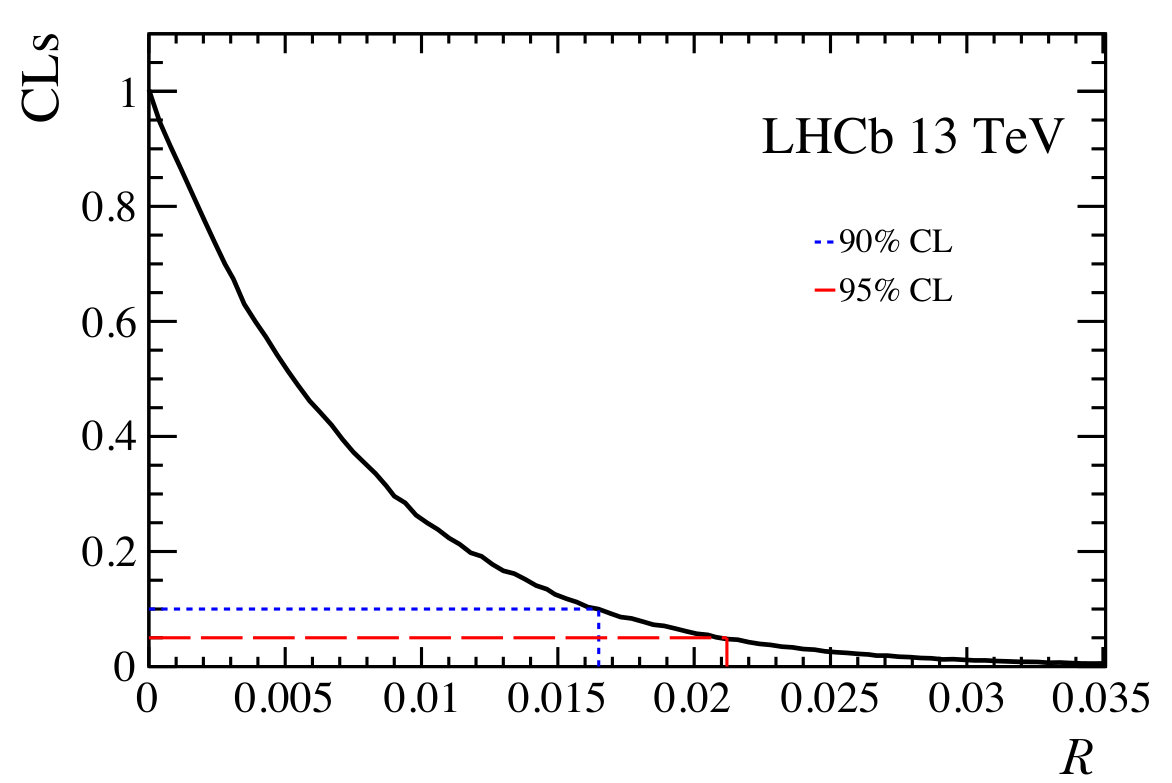 Figure 2
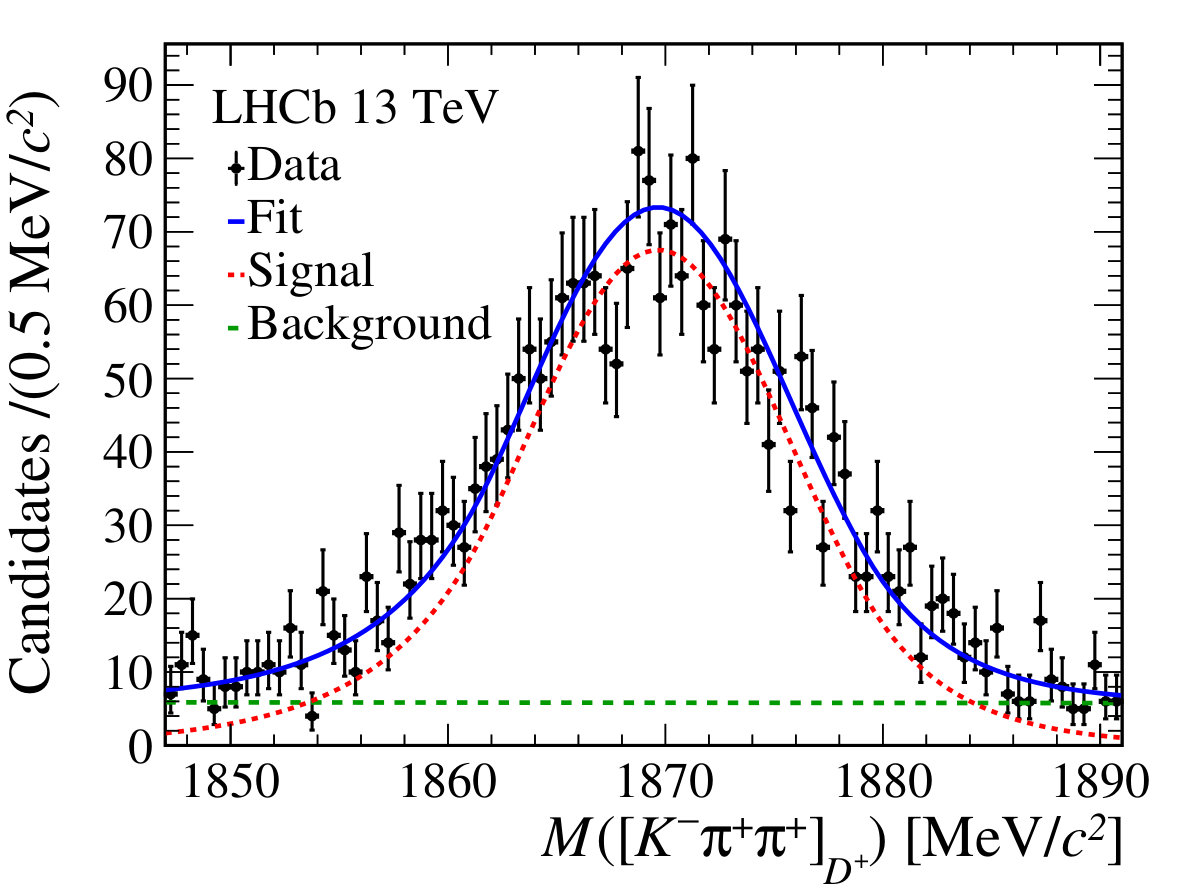 Figure 3
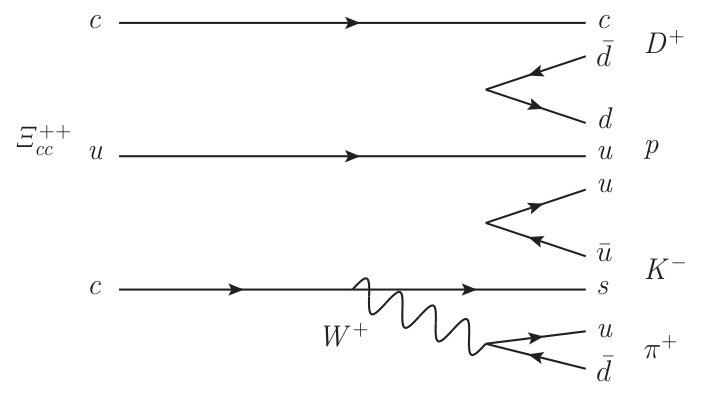 Figure 4
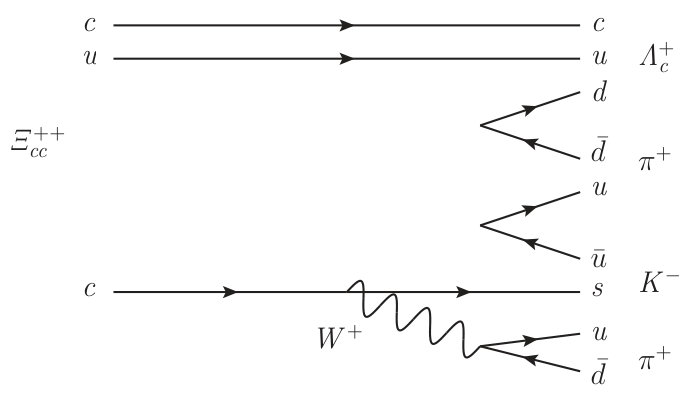 Figure 5
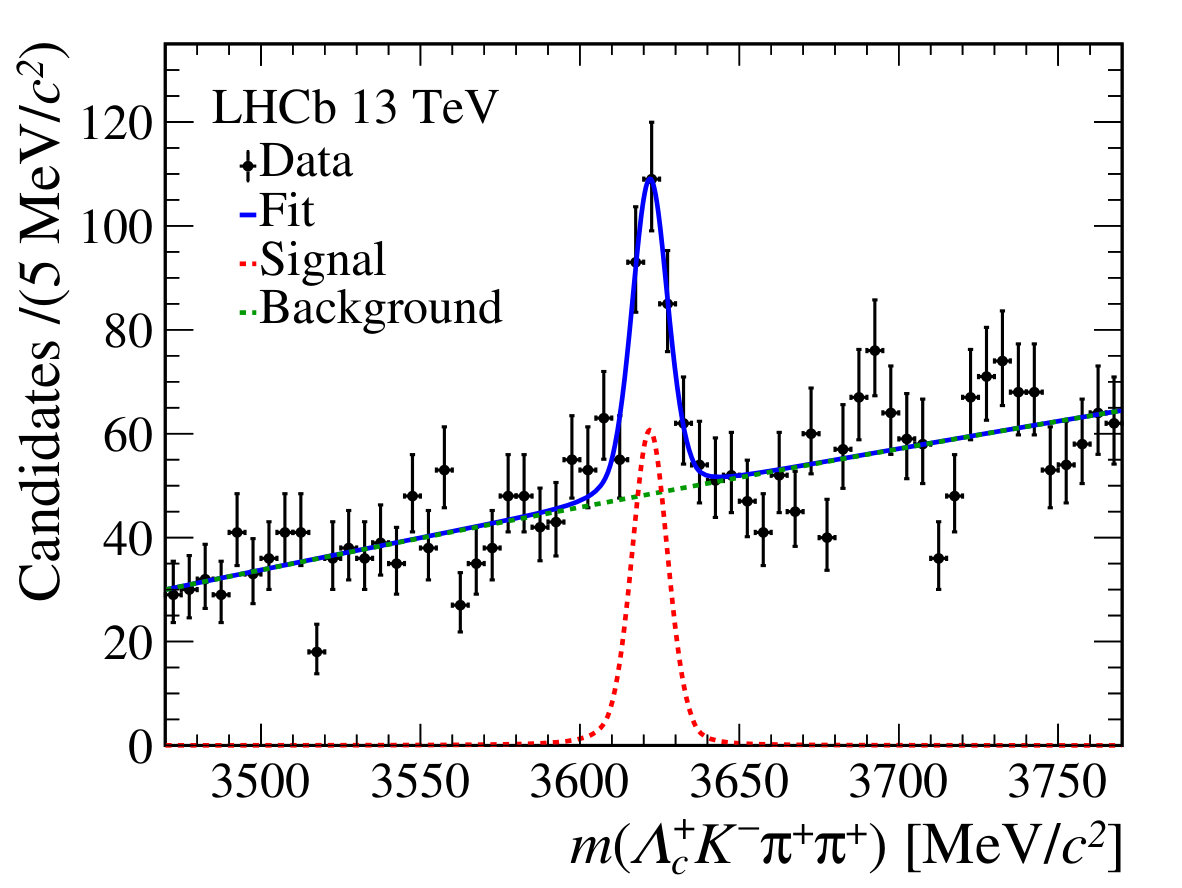 Figure 6
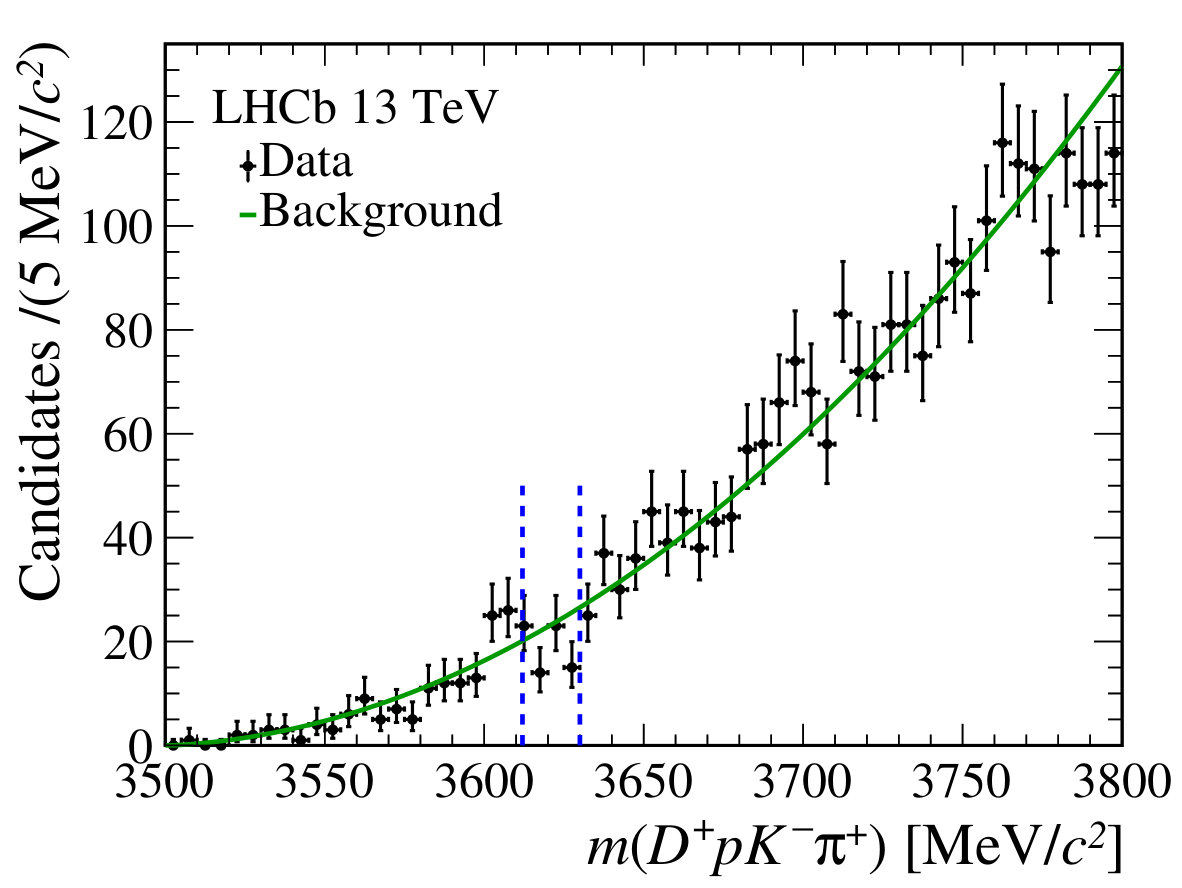 Figure 7
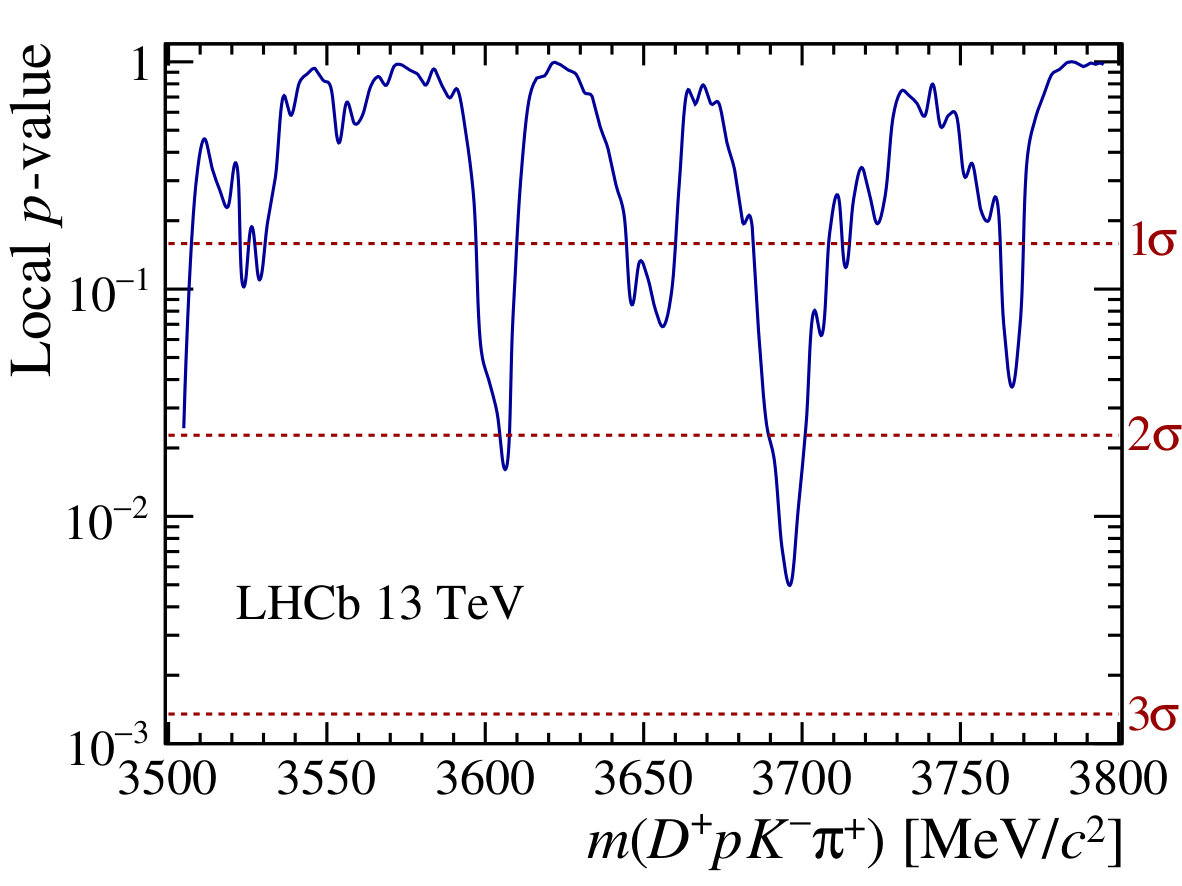 Figure 8
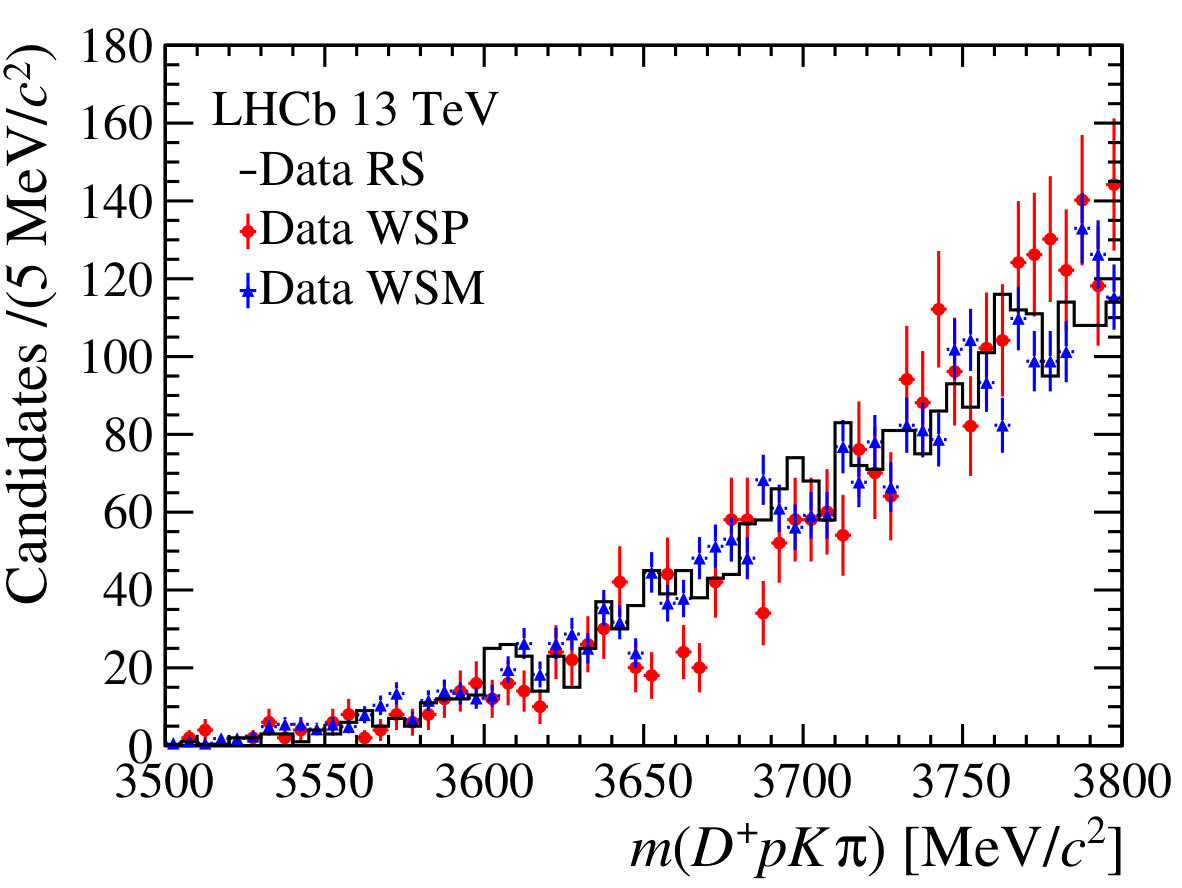 Figure 9
| Source | |
|---|---|
| Statistical | |
| Branching fractions | |
| Trigger efficiency | |
| Mass fit model | |
| lifetime | |
| PID calibration | |
| Simulation modelling | |
| Total uncertainty |
Peer Reviews
No public reviews on file for this paper yet. If you reviewed it on a platform where reviews are public (OpenReview, ICLR, NeurIPS, ICML), you can paste yours below so the community can read it here.
Videos
No videos yet. Explain this paper in a talk, walkthrough, or lecture? Add one.
EUROPEAN ORGANIZATION FOR NUCLEAR RESEARCH (CERN)
CERN-EP-2019-067
LHCb-PAPER-2019-011
October 10, 2019
**A search for **
** decays**
LHCb collaboration†††Authors are listed at the end of this paper.
A search for the baryon through the decay is performed with a data sample corresponding to an integrated luminosity of 1.7 recorded by the LHCb experiment in collisions at a centre-of-mass energy of 13 TeV. No significant signal is observed in the mass range from the kinematic threshold of the decay to 3800. An upper limit is set on the ratio of branching fractions with at the 90% (95%) confidence level at the known mass of the state.
Published in JHEP, DOI: 10.1007/JHEP10(2019)124
© 2024 CERN for the benefit of the LHCb collaboration. CC-BY-4.0 licence.
1 Introduction
The first observed doubly charged and doubly charmed baryon was the () state found through the and decay modes by the LHCb collaboration [1, 2]. With two heavy constituent quarks, this baryon provides a unique system for testing quantum chromodynamics. The average mass of the baryon from the two LHCb measurements now stands at {3621.24\pm 0.65(\mathrm{stat})\pm~{}0.31~{}(\mathrm{syst})}$$\text{\,Me\kern-1.00006ptV\!/}c^{2} and its lifetime is (stat) 0.014 (syst) ps [3], consistent with a weakly decaying state. However, many features of the baryon remain unknown, including its spin and parity. Previously, signals of the singly charged state were reported in the and final states by the SELEX collaboration [4, 5]. The masses of the and ground states are expected to be approximately equal according to isospin symmetry [6]. Searches in different production environments at the FOCUS, BaBar, Belle and LHCb experiments have however not shown evidence for a state with the properties reported by the SELEX collaboration [7, 8, 9, 10].
To further understand the dynamics of weakly decaying doubly heavy baryons, it is of prime importance to pursue searches for additional decay modes of the baryon. These decays may differ significantly from those of singly heavy hadrons due to interference effects between decay amplitudes of the two heavy quarks. From an experimental viewpoint, the decay is a suitable search channel, since the trigger is proven to be very efficient at LHCb [11].111The inclusion of charge-conjugate processes is implied throughout this paper. The tree-level amplitudes of the inclusive decays of and , as shown in Fig. 1, are comparable, which suggests that the branching fractions of these two modes could be similar. Theoretical calculations have been performed on pseudo-two-body decays of doubly-charmed baryons [12]. The decay could proceed as a pseudo-two-body decay if it decays via an excited state with a mass greater than 1572, which would then decay to a final state. However, the properties of such decays are not well known [13]. The decay also has a energy release of 180 MeV, compared to 560 MeV for the decay, which means it is expected to have a lower branching fraction because of the smaller available phase space.
The analysis presented in this paper searches for the baryon, at its known mass, through decays and also explores a larger mass range to identify the hypothetical isospin partner of the state that the SELEX collaboration reported. The analysis uses collision data corresponding to an integrated luminosity of recorded by the LHCb experiment in 2016 at a centre-of-mass energy of 13 TeV. The branching fraction of the decay is normalised to to reduce systematic uncertainties.
The ratio of branching fractions, , is determined as
[TABLE]
where and refer to the measured yields of the signal in the and channels, respectively, and and are the corresponding selection efficiencies of the decay modes. The values for and are known to be and , respectively [13] and are uncorrelated.
For convenience, the single-event sensitivity, , is defined as
[TABLE]
such that Eq. 1 reduces to . All aspects of the analysis are fixed before the data in the mass region are examined.
2 Detector and software
The LHCb detector [14, 15] is a single-arm forward spectrometer covering the pseudorapidity range , designed for the study of particles containing or quarks. The detector includes a high-precision tracking system consisting of a silicon-strip vertex detector surrounding the interaction region [16], a large-area silicon-strip detector located upstream of a dipole magnet with a bending power of about , and three stations of silicon-strip detectors and straw drift tubes [17] placed downstream of the magnet. The tracking system provides a measurement of the momentum, , of charged particles with a relative uncertainty that varies from 0.5% at low momentum to 1.0% at 200. The minimum distance of a track to a primary vertex (PV), the impact parameter (IP), is measured with a resolution of , where is the component of the momentum transverse to the beam, in . Charged hadrons are identified using two ring-imaging Cherenkov detectors [18]. Photon, electron and hadron candidates are identified by a calorimeter system consisting of scintillating-pad, pre-shower detectors, an electromagnetic calorimeter and a hadronic calorimeter. Muons are identified by a system composed of alternating layers of iron and multiwire proportional chambers [19]. The trigger consists of a hardware stage, based on information from the calorimeter and muon systems, followed by a software stage, which applies a full event reconstruction. The online reconstruction incorporates near-real-time alignment and calibration of the detector [11]. The same alignment and calibration information is propagated to the offline reconstruction, ensuring consistent and high-quality information between the trigger and offline software. The identical performance of the online and offline reconstruction offers the opportunity to perform physics analyses directly using candidates reconstructed in the trigger [20]. The analysis described in this paper makes use of these features.
Simulated decays are used to design the candidate selection and to calculate the efficiency of such a selection. The proton-proton interactions are generated using Pythia [21, *Sjostrand:2006za] with a specific LHCb configuration [23]. Genxicc v2.0 [24], the dedicated generator for doubly-heavy-baryon production at LHCb, is used to produce the signal. Decays of hadronic particles are described by EvtGen [25], in which final-state radiation is generated using Photos [26]. The interaction of the generated particles with the detector and their response are implemented using the Geant4 toolkit [27, *Agostinelli:2002hh] as described in Ref. [29]. The decays are generated with a mass of 3621.40 and the decay products of and hadrons are distributed uniformly in phase space.
3 Triggering, reconstruction and selection
The procedure to trigger, reconstruct and select candidates is designed to retain signal and to suppress three primary sources of background: combinatorial background, which arises from random combination of tracks; misreconstructed charm or beauty hadron decays, which typically have displaced decay vertices; and combinations of a real meson with other tracks to form a fake candidate. To better control systematic uncertainties, the selection of decays is also designed to be as similar as possible to that of the normalisation channel, described in Ref. [1].
The candidates are reconstructed in the final state . At least one of the three tracks used to reconstruct the candidate must be selected by the inclusive software trigger, which requires that the track has and with respect to any PV, where is defined as the difference in of a given PV reconstructed with and without the considered track. The candidate then must be reconstructed and accepted by a dedicated selection algorithm in the software trigger. This algorithm applies several geometric and kinematic requirements; at least one of the three tracks must have and , at least two of the tracks must have and and the scalar sum of the of the three tracks must be larger than 3. Furthermore, the candidate must have a good vertex-fit quality with . The candidate must also point back to its associated PV, where the angle between its flight path and momentum vector should be less than 0.01 radians. The associated PV is that which best fits the flight direction of the reconstructed candidate. The vertex must also be displaced from this PV such that the estimated decay time is longer than . Only candidates whose invariant mass is within of the known mass of the meson (1869.65 [13]) are retained. Finally, candidates are required to pass a MatrixNet classifier [11] within the software trigger, which has been trained on and vertex information prior to data taking. For events that pass the online trigger, the offline selection of candidates proceeds in a similar fashion to that used in the software trigger: three tracks are required to form a common vertex that is significantly displaced from the associated PV of the candidate and its combined invariant mass must be in the range . Particle identification (PID) requirements are imposed on all three tracks to suppress combinatorial background and misidentified charm decays. The candidates are formed by combining a candidate with three more charged tracks, each with and separately identified as a proton, kaon and pion with good track quality. The three tracks and the candidate are required to form a vertex in which each pairwise combination of the four particles is required to have a distance of closest approach of less than 10 mm and the fitted vertex must have . The candidate is also required to point back to the PV, and to have p_{\mathrm{T}}>4.5$$\text{\,Ge\kern-1.00006ptV\!/}c. Only events that passed the hardware trigger based on information from the muon and calorimeter systems that are not part of the reconstructed event are used in the analysis [11]. Hence, the event is triggered independently of the reconstructed candidate, which reduces the systematic uncertainty on the efficiency ratios between the and decay modes.
To improve the mass resolution, the following mass estimator is used in the analysis
[TABLE]
where is the measured invariant mass of the candidate, is the measured invariant mass of the combination corresponding to the intermediate candidate and is the known mass of the meson. By using the mass definition in Eq. 3, a mild correlation between decay time and mass is reduced and the mass resolution is improved by 0.15. The candidates are accepted if they have a reconstructed mass in the range {3300\leq m({{D}^{+}}{p}{{K}^{-}}{{\pi}^{+}})\leq 3800}$$\text{\,Me\kern-1.00006ptV\!/}c^{2}.
Following a comparison study of different multivariate methods, a classifier based on the multilayer perceptron (MLP) algorithm [30] is used to further suppress combinatorial background. Simulated decays are used to train the MLP classifier to recognise signal. Dedicated software triggers reconstruct an unphysical combination of (wrong-sign-plus, WSP) and (wrong-sign-minus, WSM) data. The WSP and WSM samples are expected to be good proxies for combinatorial background in the (right-sign, RS) channel. For this analysis, WSP data in the mass region is used to train the MLP classifier to identify background, while the WSM data is used to cross-check the results. Fifteen input variables are used in the MLP training. The variables with the best discriminating power between signal and background are: the vertex fit with a kinematic refit [31] of the decay chain requiring it to originate from its PV; the smallest of the four decay products of the candidate; the angle between the momentum vector and the direction from the PV to the decay vertex; the of the candidate with respect to its PV; the maximum distance of the closest approach between all pairs of tracks forming the candidate; and the maximum distance of the closest approach between all pairs of tracks from the decay of the candidate. To maintain a sizeable number of signal events, the hardware-trigger requirements are not applied to the signal and background samples. In addition to the training samples, disjoint testing samples are acquired from the same source. After training, the response of the MLP is compared between the training and testing samples. No signs of the MLP classifier being overtrained are found based on the Kolmogorov–Smirnov test statistic. Candidates are retained only if the MLP response output exceeds a certain threshold. The threshold is chosen by maximising the Punzi figure of merit [32], with a target significance of five sigma. To test for potential misreconstruction effects, the same selection criteria are applied to the WSP and WSM data; no peaking structures are visible in either control sample, as expected.
After the multivariate selection, events may contain multiple candidates. This can arise from mistakes in the reconstruction of decays. For instance, there can be cases when candidates in the same event have used the same track more than once. To deal with this, the angle between any two tracks of the same charge is required to be greater than 0.5 mrad. If a candidate has been formed from at least one pair of these cloned tracks, then the candidate is removed. This requirement removes around 6% of candidates in RS data following the multivariate selection. In a separate scenario, the same six final-state tracks may be used to reconstruct more than one candidate in the same event but with the tracks wrongly interchanged (e.g., the track originating from the decay vertex and the track coming from the decay vertex). In this situation, only one of the candidate from such an event, chosen at random, is retained. This requirement discards less than 1% of candidates at this stage of the selection.
4 Mass distributions
To determine the yield of and particles following the selection of candidates, the and mass distributions are fitted using models that are developed using simulation.
The invariant-mass distribution of the candidates after the candidate selection is shown in Fig. 2 (left). A Crystal Ball function with exponential tails on both sides [33] is used to model the signal component and a linear function is used to fit the background contribution. The parameters of the signal model are fixed to values obtained from simulation, while all parameters in the background model are free. The selection retains 2697 candidates with a purity of 80% according to the results of the fit to the mass spectrum.
The invariant-mass distributions in the RS, WSP and WSM data samples after the candidate selection are shown in Fig. 2 (right). All the samples have similar smoothly shaped distributions across the entire mass range studied.
The invariant-mass distribution of the candidates, , for the signal decay mode after applying all requirements of the analysis, is shown in Fig. 3 (left). The mass distribution is fitted with an unbinned extended maximum-likelihood method, assuming only a background contribution, described by a second-order Chebyshev polynomial. No signal peak is visible in the spectrum and the local p-value is calculated as a function of mass and shown in Fig. 3 (right). The local p-value is defined as the probability of observing data that is less compatible with the background-only hypothesis than the data set. The test statistic used is based on in Ref. [34], but instead of assigning it the value zero when observing fewer than expected candidates, it is assigned the value to achieve a more intuitive behaviour of the p-value for downward fluctuations. The likelihoods are evaluated with Poisson statistics using the predicted number of background candidates and observed number of signal candidates in regions of around each hypothetical mass, where is the mass resolution determined from simulated decays.
There is no visible signal near the mass of 3620 where a signal would be expected, nor is there any excess of candidates near the mass of 3520 where the hypothetical isospin partner was observed by the SELEX collaboration [4, 5]. The global p-value, including the look-elsewhere effect in the mass range , is 26% and only one signal candidate is observed in the mass range from the kinematic threshold of 3441 to 3500. Hence, no significant signal is observed in the mass range from the kinematic threshold to 3800 and we proceed to set a limit on the relative branching fraction .
The invariant-mass distribution of the candidates, , for the normalization decay mode, , is shown in Fig. 4. In this case a signal peak is clearly visible. Both the candidate selection and the modelling of the mass spectrum are identical to that in Ref.[1], except for the additional requirements on the hardware trigger. An extended unbinned maximum-likelihood fit to this invariant-mass distribution returns a signal yield of .
5 Efficiency determination
To set an upper limit on the ratio , it is necessary to evaluate the ratio of efficiencies between the and decay modes.
The efficiency ratio may be factorised as
[TABLE]
where efficiencies are evaluated for the geometric acceptance (acc), the reconstruction and selection excluding particle identification requirements (sel), the particle identification requirements (PID) and the trigger (trig). Each factor is the efficiency relative to all previous steps in the order given above. The individual ratios are evaluated with simulated decays, assuming a uniform phase space model, except for PID which is derived from data [35, 18]. The efficiencies are corrected for known differences between simulation and data, apart from the geometric acceptance.
The individual efficiency components, shown in Eq. 4, are found to be similar between the two decay modes, except for the reconstruction and selection efficiency, , where in the channel it is found to be approximately twice as large as that of the decay. This leads to a total efficiency ratio of , where the uncertainty is statistical only. Combining this total relative efficiency with the value for obtained in Sect. 4 and the known values for the branching fractions and , then according to Eq. 2, the single-event sensitivity is . The uncertainty on includes the total uncertainty on the and branching fractions and the statistical uncertainty on the and measured values.
6 Systematic uncertainties
The statistical uncertainty on the measured signal yield in the channel is the dominant uncertainty on and the systematic uncertainties on have small effect on the upper limits on the ratio .
The largest systematic uncertainty arises from the evaluation of the efficiency of the hardware-trigger requirement. Only candidates that are triggered independently of the candidate’s final-state tracks are used in the branching fraction ratio limit to minimise this systematic uncertainty. The ratio of these efficiencies is equal to one if the kinematic distributions of the candidate in the and decay modes are identical. However, the efficiencies can be different if the respective selection requirements of the and analyses select different kinematic regions of the candidate. This effect is studied by weighting the distributions in simulated samples. The change in efficiency of the hardware trigger after the weighting is evaluated and results in a systematic uncertainty of 3.5%. The impact of the model used to fit the invariant-mass distribution on the yield of candidates, , is investigated by using alternative signal and background models and performing the fit over different mass ranges. The largest variation in the yield of candidates is 3.1% and this is taken as a systematic uncertainty on . The effect of the uncertainty associated with the baryon’s lifetime on the relative reconstruction and selection efficiency between the and channels is investigated by varying the lifetime within its uncertainty and a systematic uncertainty of 2.9% is assigned to the parameter. The PID efficiency is determined in bins of particle momentum and pseudorapidity using calibration samples taken from data [35]. The size of the bins is increased or decreased by a factor of two and the largest deviation on of 1.5% is assigned as systematic uncertainty. Finally, since the simulation may not describe the signal perfectly, simulated decays are weighted to make their distribution match that observed in the data. The selection and software-trigger efficiencies are similarly calculated using -corrected simulated decays. The number of bins used is increased or decreased by a factor of two and the efficiencies are recalculated for both decay channels. This results in a change in of 1.2%. All efficiencies calculated from simulation are averaged over the entire phase space assuming a uniform distribution for both the and decays. The phase-space distributions of the selected candidates are uniform and show agreement in data and simulation. Therefore, no systematic uncertainty is assigned to the relative selection and reconstruction efficiencies for the effect of intermediate resonances in their decay.
Table 1 summarises the systematic and statistical uncertainties on . The statistical uncertainty is dominated by the uncertainty of the yield of the normalisation mode but includes a small contribution from the finite size of the simulated samples. The ratio of the branching fractions and have a combined uncertainty of 5.7%. The systematic uncertainties from the different sources discussed above are considered uncorrelated and are added in quadrature to give a total systematic uncertainty of 5.8%. Adding all sources of uncertainty in quadrature gives a total uncertainty of 17.7% on the parameter.
7 Results
In this analysis no significant signal is observed so an upper limit is set on the ratio of branching fractions, . The CLs method [36] is used to determine the ratio of confidence levels (CL) between the signal-plus-background and background-only hypotheses. The upper limit is obtained from the total number of candidates, , observed in the expected signal mass region. This value is calculated by counting the number of candidates within the mass region, (indicated by two dashed blue lines in the left-hand plot of Fig. 3). This mass region corresponds to approximately around the average mass of the state.
The CLs score for a possible value of ratio is calculated as
[TABLE]
where is sampled from the distribution of the expected number of signal candidates for a given ratio , is sampled from the distribution of the expected number of background candidates predicted by the background-only fit (Fig. 3, left) and indicates the probability that these statistical quantities are smaller than . The data points in the mass region are removed for the fit and is determined by performing an integral extrapolation. The probability requirements in the numerator and denominator of Eq. 5 are tested by running a large number of pseudoexperiments sampling from a Poisson distribution with statistical means of and , respectively. The 17.7% uncertainty on is fully accounted for by sampling from a Gaussian distribution in each pseudoexperiment.
The derived CLs curve as a function of the possible values of the ratio is shown as the black line in Fig. 5. This curve is obtained using values of and as observables and running pseudoexperiments for each hypothetical value of ratio . The upper limit measured is
[TABLE]
as shown by the blue dotted line (red dashed line) in Fig. 5.
8 Conclusions
Following observations of the and decay modes, a search for the decay is performed using collision data recorded by the LHCb experiment in 2016 at a centre-of-mass energy of 13 TeV, corresponding to an integrated luminosity of . No significant signal is found in the mass range from the kinematic threshold of the decay of 3441 to 3800. Considering the statistical and systematic uncertainties, an upper limit on the ratio of branching fractions between the and decay is set to be at the 90% (95%) confidence level at the known mass of the baryon.
The upper limit on the ratio of branching fractions between the two decay modes is derived assuming a uniform phase space model in the efficiency determinations. A better theoretical understanding of the resonant and nonresonant contributions underpinning the and decay processes is required to understand the at least two orders of magnitude difference between the branching fractions of the two decay modes. Dynamical effects or spin constraints in the resonance structures could be suppressing the decay. The full dataset from LHCb, or future data taking with the upgraded detector, may reveal evidence of this decay and then shed more light on the production and decay dynamics of the baryon.
Acknowledgements
We express our gratitude to our colleagues in the CERN accelerator departments for the excellent performance of the LHC. We thank the technical and administrative staff at the LHCb institutes. We acknowledge support from CERN and from the national agencies: CAPES, CNPq, FAPERJ and FINEP (Brazil); MOST and NSFC (China); CNRS/IN2P3 (France); BMBF, DFG and MPG (Germany); INFN (Italy); NWO (Netherlands); MNiSW and NCN (Poland); MEN/IFA (Romania); MSHE (Russia); MinECo (Spain); SNSF and SER (Switzerland); NASU (Ukraine); STFC (United Kingdom); DOE NP and NSF (USA). We acknowledge the computing resources that are provided by CERN, IN2P3 (France), KIT and DESY (Germany), INFN (Italy), SURF (Netherlands), PIC (Spain), GridPP (United Kingdom), RRCKI and Yandex LLC (Russia), CSCS (Switzerland), IFIN-HH (Romania), CBPF (Brazil), PL-GRID (Poland) and OSC (USA). We are indebted to the communities behind the multiple open-source software packages on which we depend. Individual groups or members have received support from AvH Foundation (Germany); EPLANET, Marie Skłodowska-Curie Actions and ERC (European Union); ANR, Labex P2IO and OCEVU, and Région Auvergne-Rhône-Alpes (France); Key Research Program of Frontier Sciences of CAS, CAS PIFI, and the Thousand Talents Program (China); RFBR, RSF and Yandex LLC (Russia); GVA, XuntaGal and GENCAT (Spain); the Royal Society and the Leverhulme Trust (United Kingdom).
The reference list from the paper itself. Each links out to its DOI / PubMed record.
- 1[1] LH Cb collaboration, R. Aaij et al. , Observation of the doubly charmed baryon Ξ c c + + superscript subscript Ξ 𝑐 𝑐 absent {\mathchar 28932\relax}_{cc}^{++} , Phys. Rev. Lett. 119 (2017) 112001 , ar Xiv:1707.01621 · doi ↗
- 2[2] LH Cb collaboration, R. Aaij et al. , First observation of the doubly charmed baryon decay Ξ c c + + → Ξ c + π + → superscript subscript Ξ 𝑐 𝑐 absent superscript subscript Ξ 𝑐 superscript 𝜋 {\mathchar 28932\relax}_{cc}^{++}\!\rightarrow{\mathchar 28932\relax}_{c}^{+}\pi^{+} , Phys. Rev. Lett. 121 (2018) 162002 , ar Xiv:1807.01919 · doi ↗
- 3[3] LH Cb collaboration, R. Aaij et al. , Measurement of the lifetime of the doubly charmed baryon Ξ c c + + superscript subscript Ξ 𝑐 𝑐 absent {\mathchar 28932\relax}_{cc}^{++} , Phys. Rev. Lett. 121 (2018) 052002 , ar Xiv:1806.02744 · doi ↗
- 4[4] SELEX collaboration, M. Mattson et al. , First observation of the doubly charmed baryon Ξ c c + superscript subscript Ξ 𝑐 𝑐 {\mathchar 28932\relax}_{{c}{c}}^{+} , Phys. Rev. Lett. 89 (2002) 112001 , ar Xiv:hep-ex/0208014 · doi ↗
- 5[5] SELEX collaboration, A. Ocherashvili et al. , Confirmation of the double charm baryon Ξ c c + ( 3520 ) superscript subscript Ξ 𝑐 𝑐 3520 {\mathchar 28932\relax}_{{c}{c}}^{+}(3520) via its decay to p D + K − 𝑝 superscript 𝐷 superscript 𝐾 p{{D}^{+}}{{K}^{-}} , Phys. Lett. B 628 (2005) 18 , ar Xiv:hep-ex/0406033 · doi ↗
- 6[6] M. Karliner and J. L. Rosner, Isospin splittings in baryons with two heavy quarks , Phys. Rev. D 96 (2017) 033004 , ar Xiv:1706.06961 · doi ↗
- 7[7] S. P. Ratti, New results on c-baryons and a search for cc-baryons in FOCUS , Nucl. Phys. Proc. Suppl. 115 (2003) 33 · doi ↗
- 8[8] Ba Bar collaboration, B. Aubert et al. , Search for doubly charmed baryons Ξ c c + superscript subscript Ξ 𝑐 𝑐 {\mathchar 28932\relax}_{{c}{c}}^{+} and Ξ c c + + superscript subscript Ξ 𝑐 𝑐 absent {\mathchar 28932\relax}_{{c}{c}}^{++} in Ba Bar , Phys. Rev. D 74 (2006) 011103 , ar Xiv:hep-ex/0605075 · doi ↗