Results and techniques for higher order calculations within the gradient-flow formalism
Johannes Artz, Robert V. Harlander, Fabian Lange, Tobias Neumann, and, Mario Prausa

TL;DR
This paper develops a systematic perturbative method within the QCD gradient-flow formalism, providing higher-order calculations for observables, including three-loop results for quark and gluon condensates, and tools for accurate scheme conversions.
Contribution
It introduces a comprehensive perturbative framework for the gradient-flow formalism, including Feynman rules and higher-order calculations, enhancing precision in QCD observable evaluations.
Findings
Three-loop results for the quark condensate at finite flow time.
Conversion factor for ringed quark fields to the MS scheme.
Re-evaluation and improved accuracy of the three-loop gluon condensate.
Abstract
We describe in detail the implementation of a systematic perturbative approach to observables in the QCD gradient-flow formalism. This includes a collection of all relevant Feynman rules of the five-dimensional field theory and the composite operators considered in this paper. Tools from standard perturbative calculations are used to obtain Green's functions at finite flow time at higher orders in perturbation theory. The three-loop results for the quark condensate at finite and the conversion factor for the "ringed" quark fields to the scheme are presented as applications. We also re-evaluate an earlier result for the three-loop gluon condensate, improving on its accuracy.
Click any figure to enlarge with its caption.
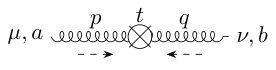 Figure 1
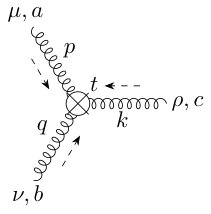 Figure 2
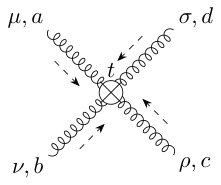 Figure 3
 Figure 4
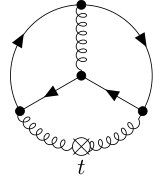 Figure 5
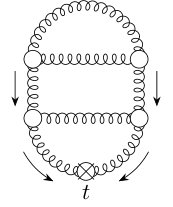 Figure 6
 Figure 7
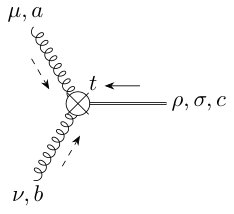 Figure 8
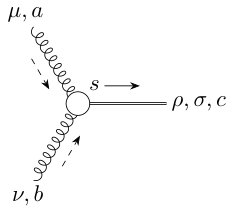 Figure 9
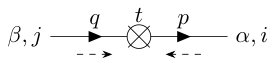 Figure 10
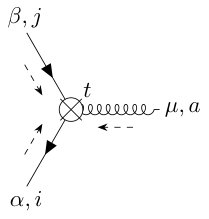 Figure 11
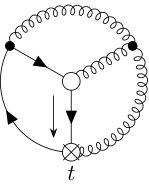 Figure 12
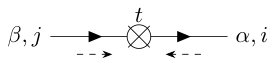 Figure 13
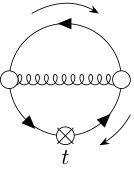 Figure 14
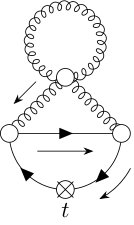 Figure 15
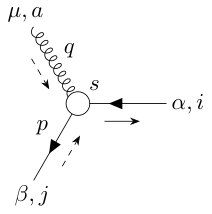 Figure 16
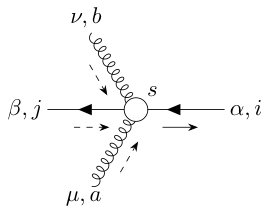 Figure 17
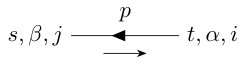 Figure 18
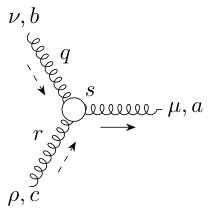 Figure 19
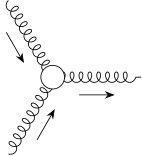 Figure 20
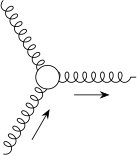 Figure 21
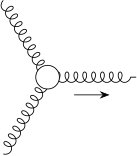 Figure 22
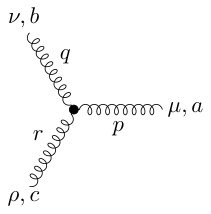 Figure 23
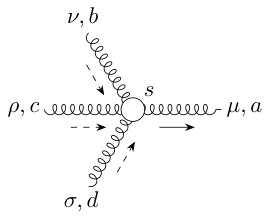 Figure 24
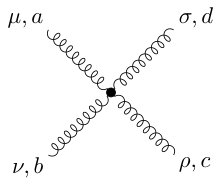 Figure 25
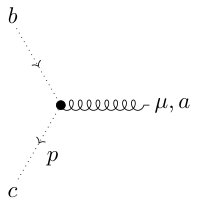 Figure 26
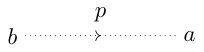 Figure 27
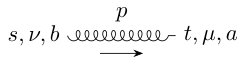 Figure 28
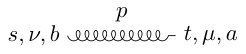 Figure 29
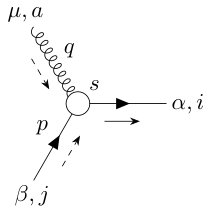 Figure 30
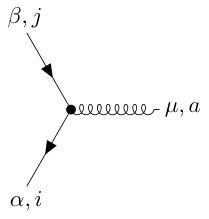 Figure 31
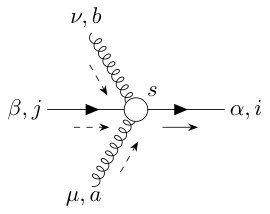 Figure 32
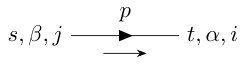 Figure 33
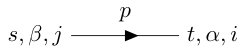 Figure 34
 Figure 35
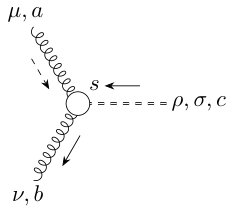 Figure 36
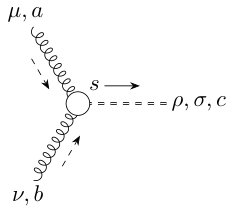 Figure 37
 Figure 38
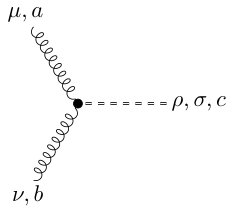 Figure 39
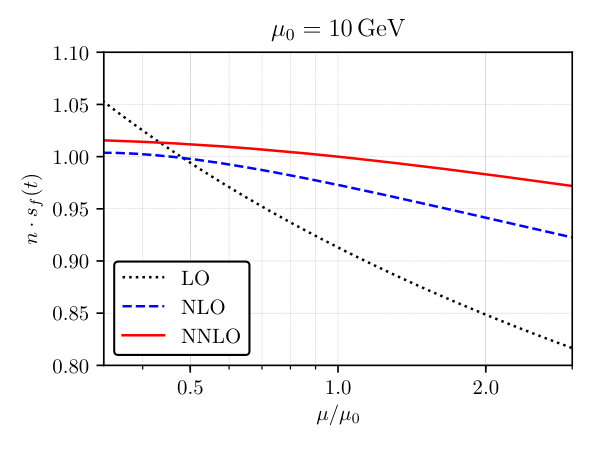 Figure 40
Peer Reviews
No public reviews on file for this paper yet. If you reviewed it on a platform where reviews are public (OpenReview, ICLR, NeurIPS, ICML), you can paste yours below so the community can read it here.
Videos
No videos yet. Explain this paper in a talk, walkthrough, or lecture? Add one.