Dynamics of cosmological models with nonlinear classical phantom scalar fields. II. Qualitative analysis and numerical modeling
Yu.G. Ignat'ev, A.A. Agathonov

TL;DR
This paper conducts a comprehensive qualitative and numerical analysis of cosmological models with nonlinear classical and phantom scalar fields, revealing complex phase space behaviors including bifurcations, inaccessible regions, and distinct trajectory patterns.
Contribution
It provides the first detailed phase portraits and bifurcation analysis of models with nonlinear classical and phantom scalar fields in cosmology.
Findings
Phase trajectories can split into multiple bifurcation flows.
Regions inaccessible for motion can appear in phase space.
Phantom fields wind around symmetric foci, classical fields can have limit cycles.
Abstract
A detailed qualitative analysis and numerical modeling of the evolution of cosmological models based on nonlinear classical and phantom scalar fields with self-action are performed. Complete phase portraits of the corresponding dynamical systems and their projections onto the Poincar\'e sphere are constructed. It is shown that the phase trajectories of the corresponding dynamical systems can, depending on the parameters of the model of the scalar field, split into bifurcation trajectories along 2, 4, or 6 different dynamical flows. In the phase space of such systems, regions can appear which are inaccessible for motion. Here phase trajectories of the phantom scalar field wind around one of the symmetric foci (centers) while the phase trajectories of the classical scalar field can have a limit cycle determined by the zero effective energy corresponding to a Euclidean Universe.
Click any figure to enlarge with its caption.
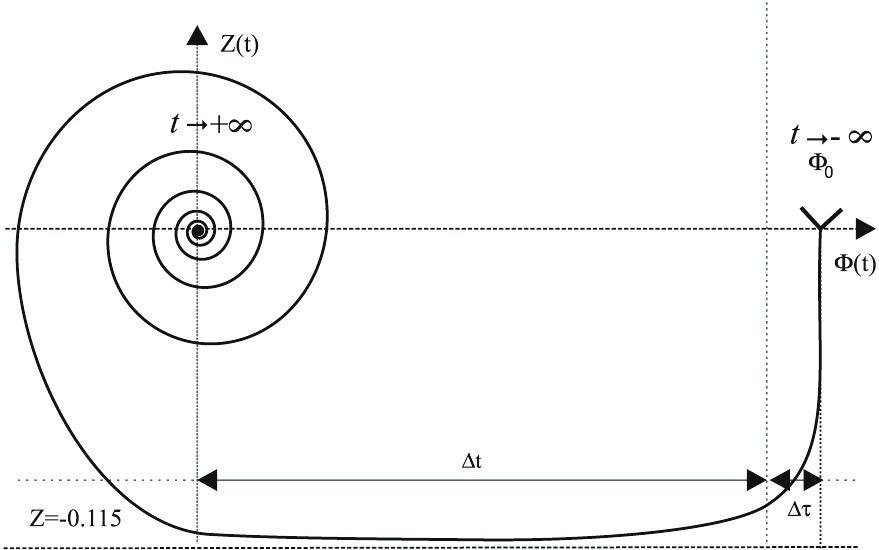 Figure 1
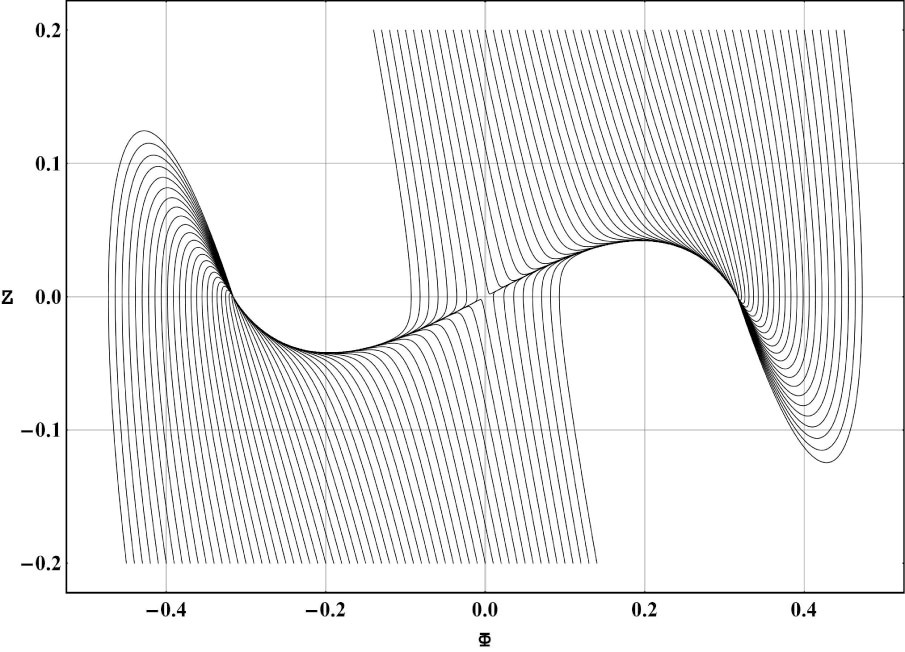 Figure 10
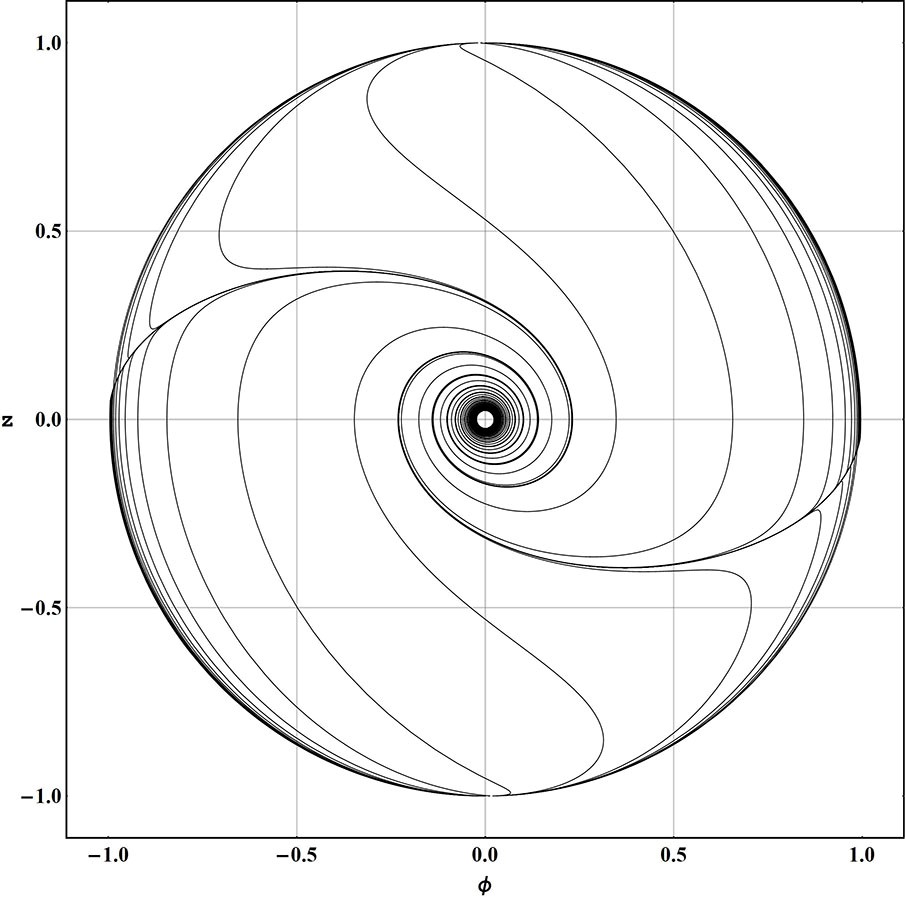 Figure 11
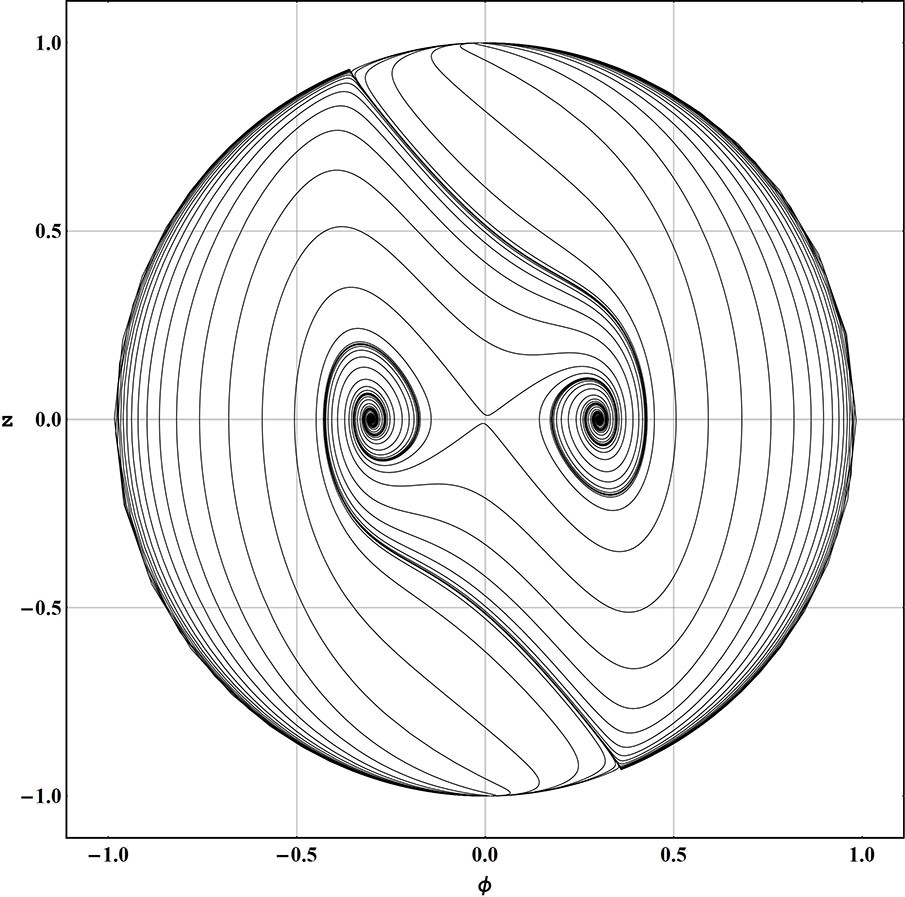 Figure 12
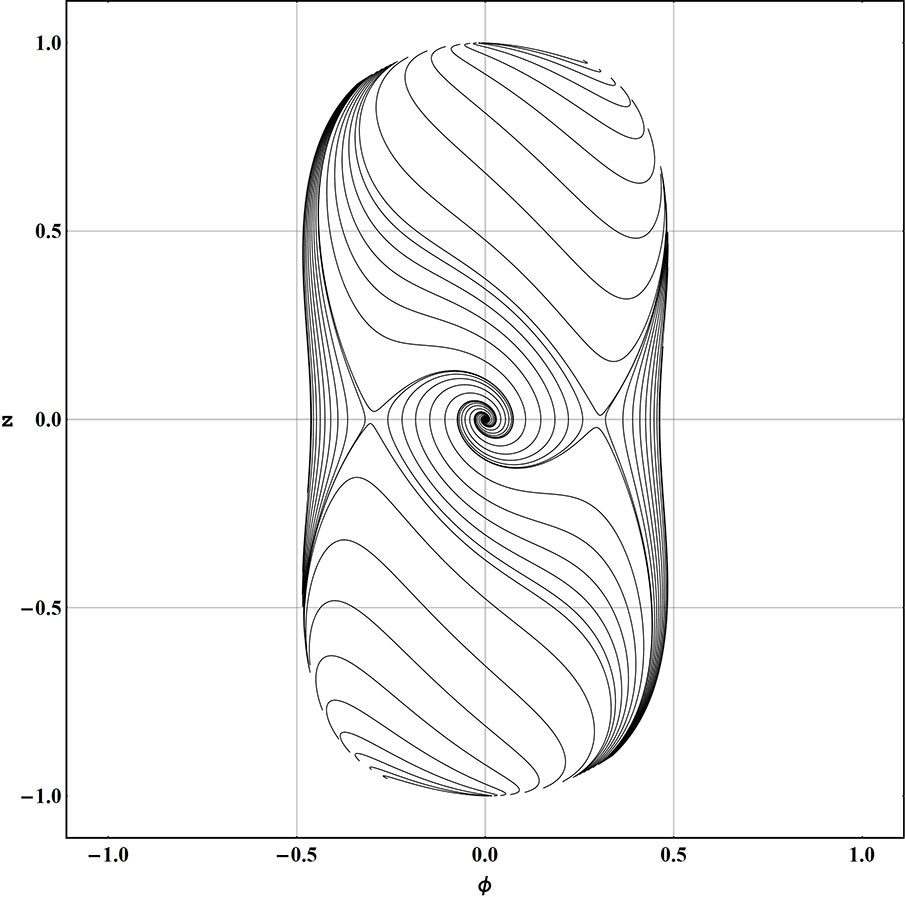 Figure 13
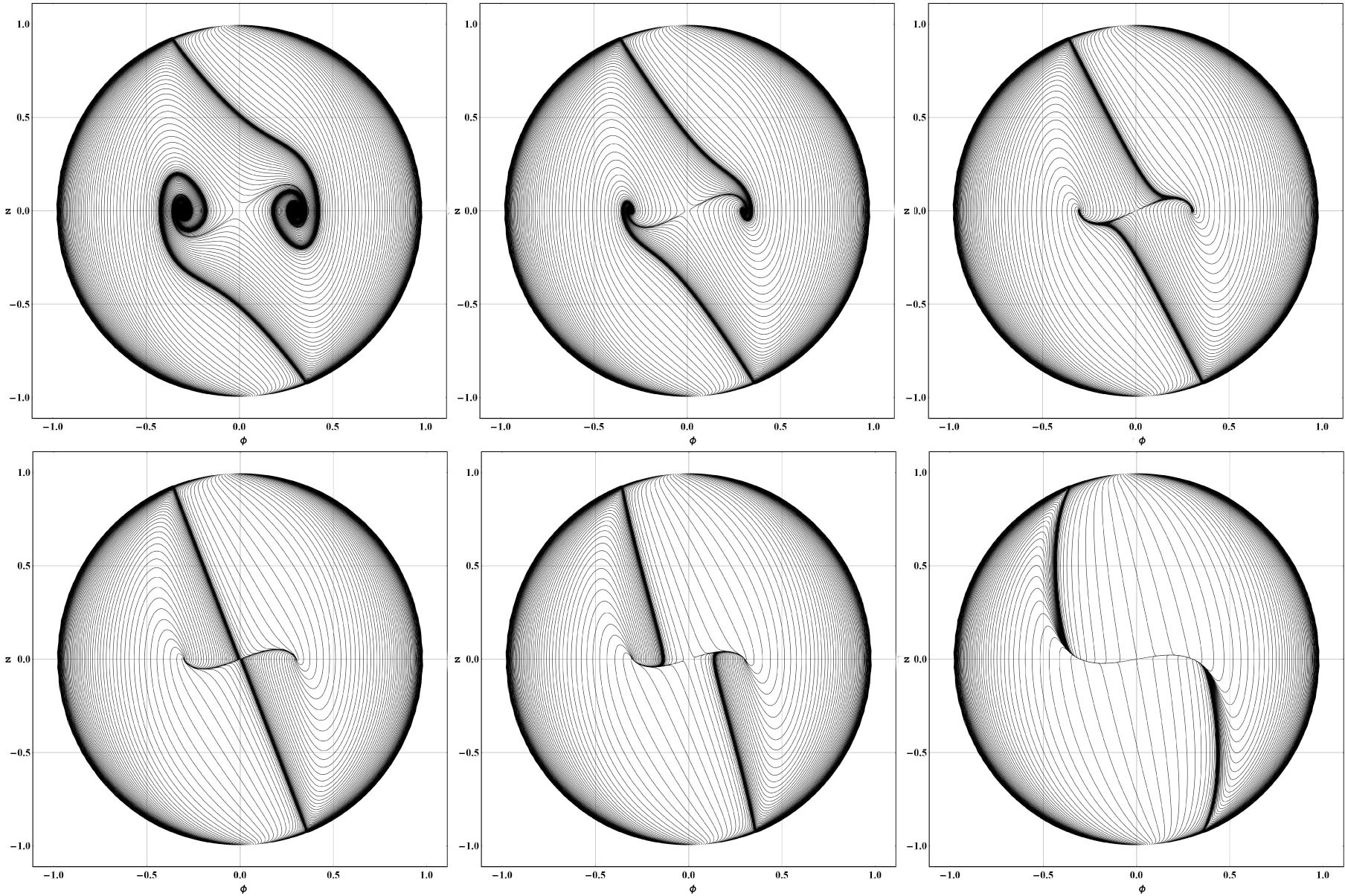 Figure 14
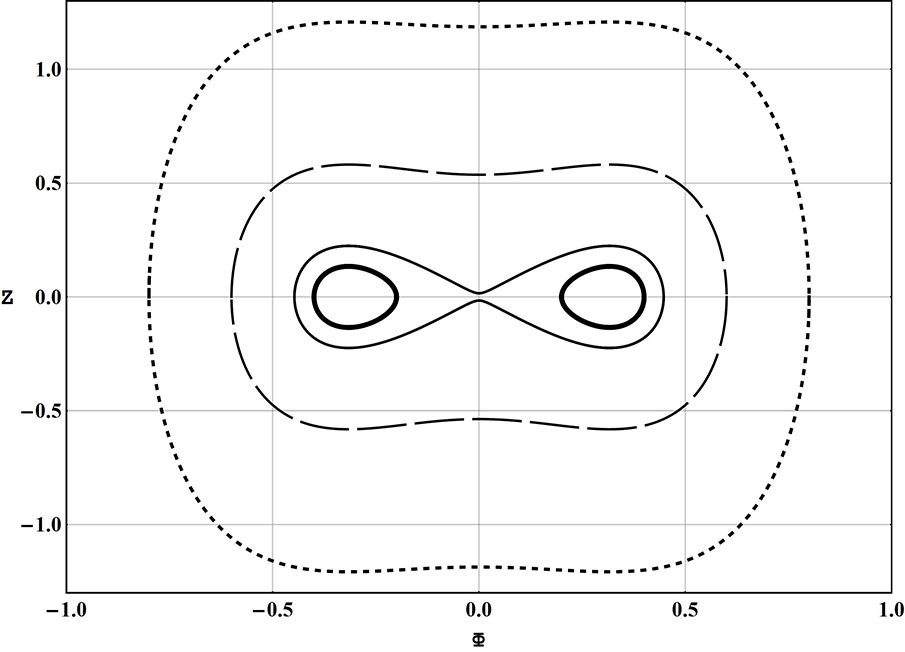 Figure 15
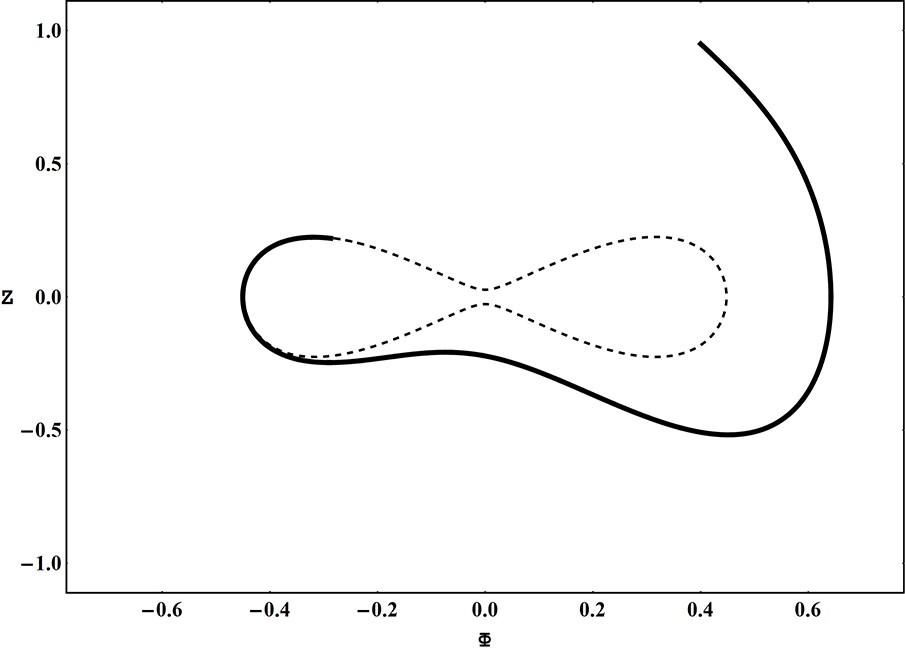 Figure 16
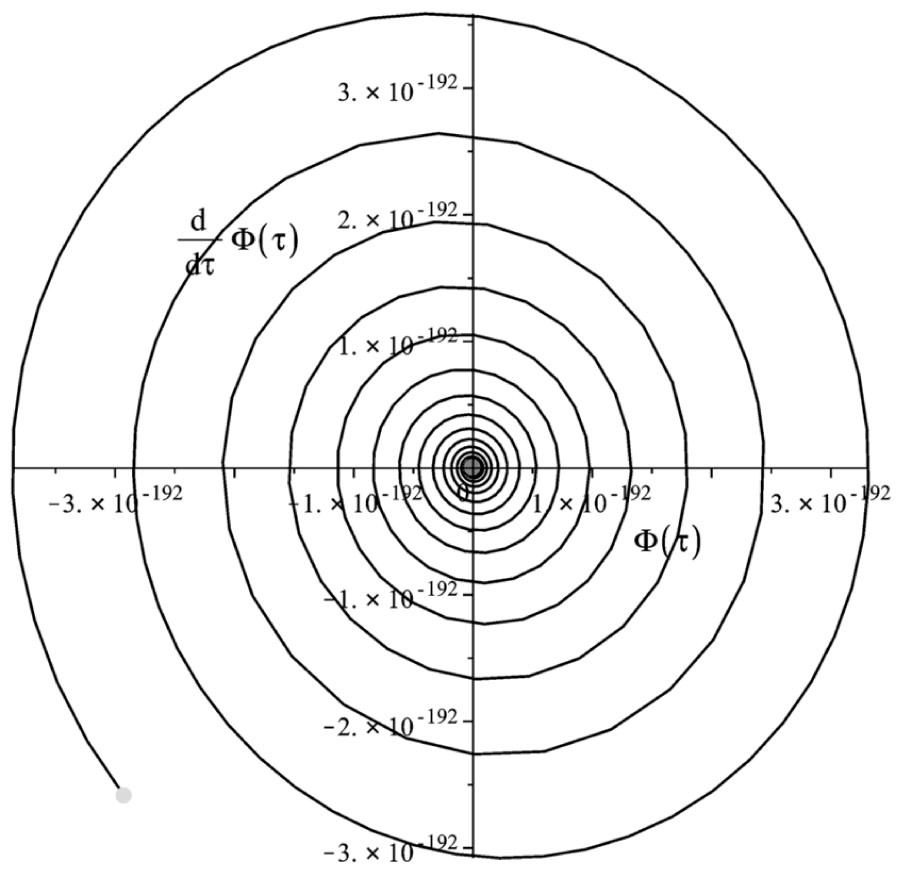 Figure 2
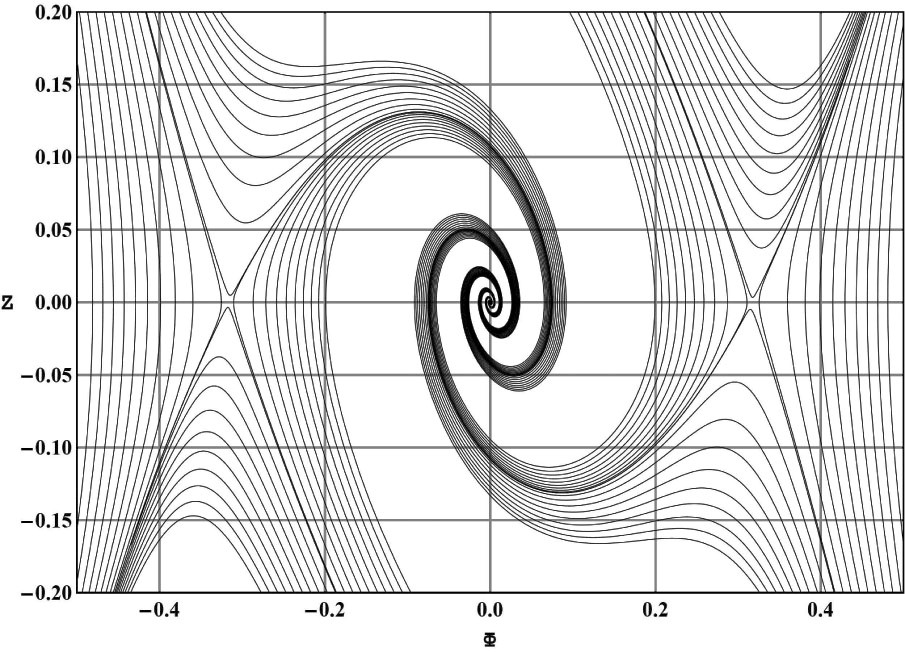 Figure 3
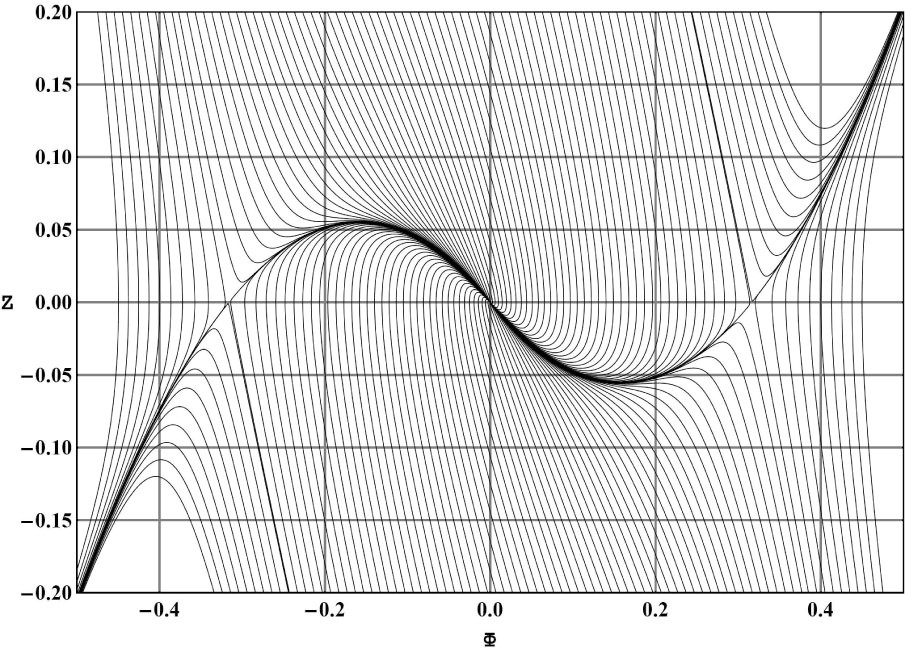 Figure 4
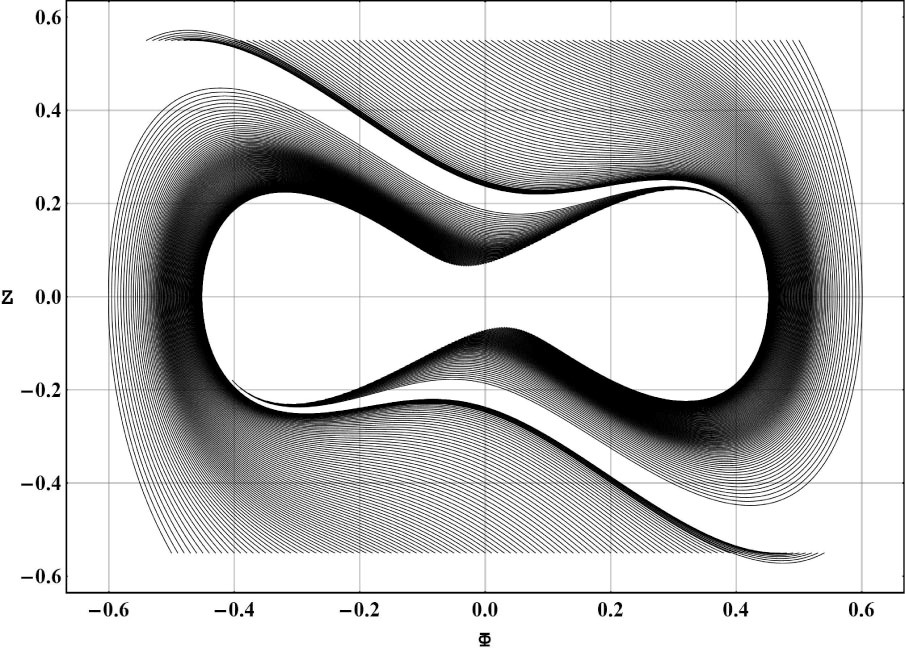 Figure 5
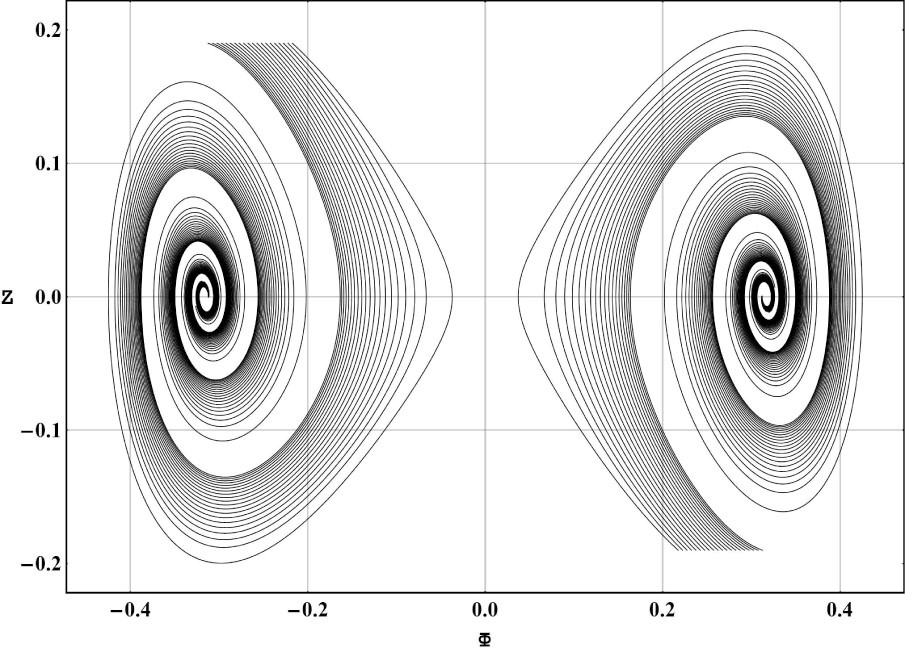 Figure 6
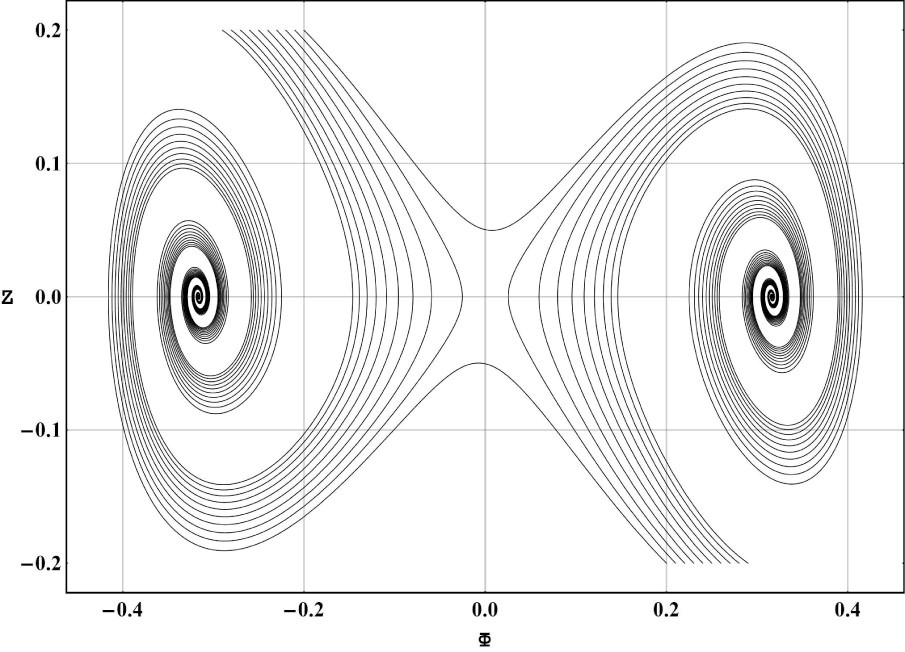 Figure 7
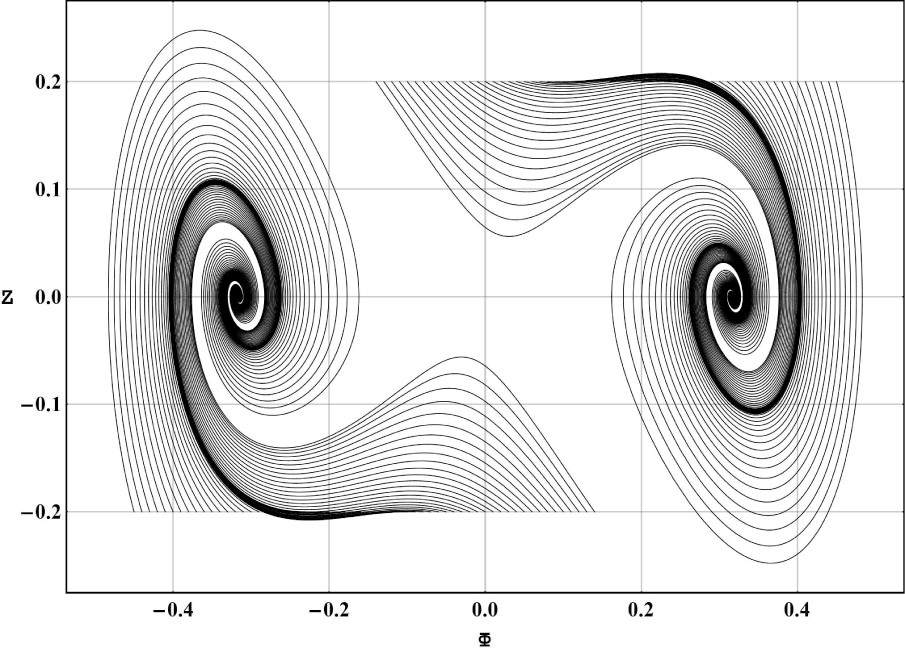 Figure 8
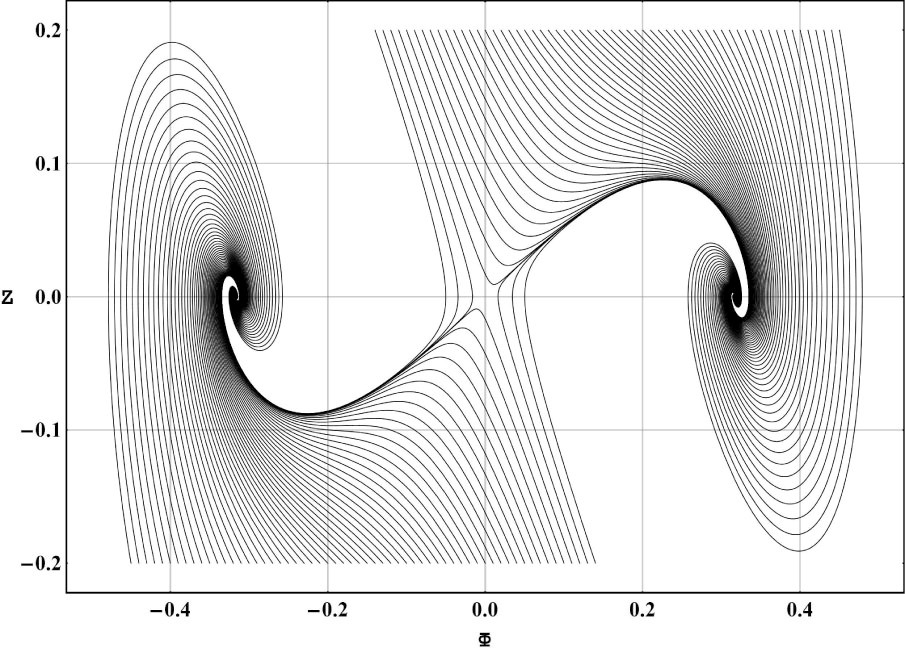 Figure 9
Peer Reviews
No public reviews on file for this paper yet. If you reviewed it on a platform where reviews are public (OpenReview, ICLR, NeurIPS, ICML), you can paste yours below so the community can read it here.
Videos
No videos yet. Explain this paper in a talk, walkthrough, or lecture? Add one.