Contextual bound states for qudit magic state distillation
Shiroman Prakash, Aashi Gupta

TL;DR
This paper reformulates qudit magic state distillation within discrete phase space, revealing the existence of bound states that are contextual but ineffective for distillation, thus refining understanding of the role of contextuality in quantum computing.
Contribution
It demonstrates that all finite qudit magic state distillation routines include bound states outside the Wigner polytope, highlighting limitations of contextuality as a resource.
Findings
Bound states exist outside the Wigner polytope.
Such states are contextual but useless for distillation.
Refines the understanding of contextuality's role in quantum computing.
Abstract
Identifying necessary and sufficient conditions for universal quantum computing is a long-standing open problem for which contextuality is, perhaps, the only promising solution [Howard et al., Nature 510, 351 (2014)]. To justify this conjecture, Howard et al. showed that contextuality is equivalent to Wigner negativity for qudits, and is therefore necessary and possibly sufficient for qudit magic state distillation. Here, we reformulate magic state distillation in the language of discrete phase space, to show that any finite qudit magic state distillation routine contains bound states outside the Wigner polytope -- these states exhibit contextuality but are useless for magic state distillation.
Click any figure to enlarge with its caption.
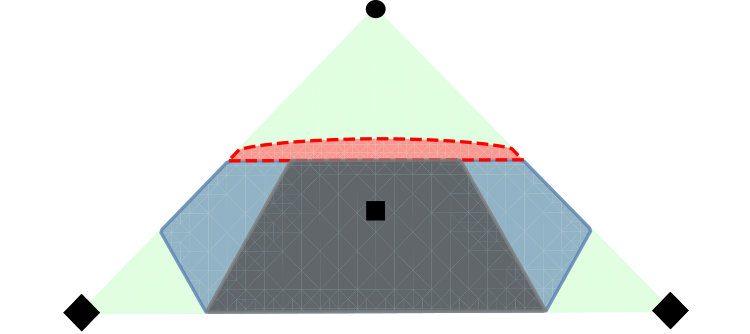 Figure 1
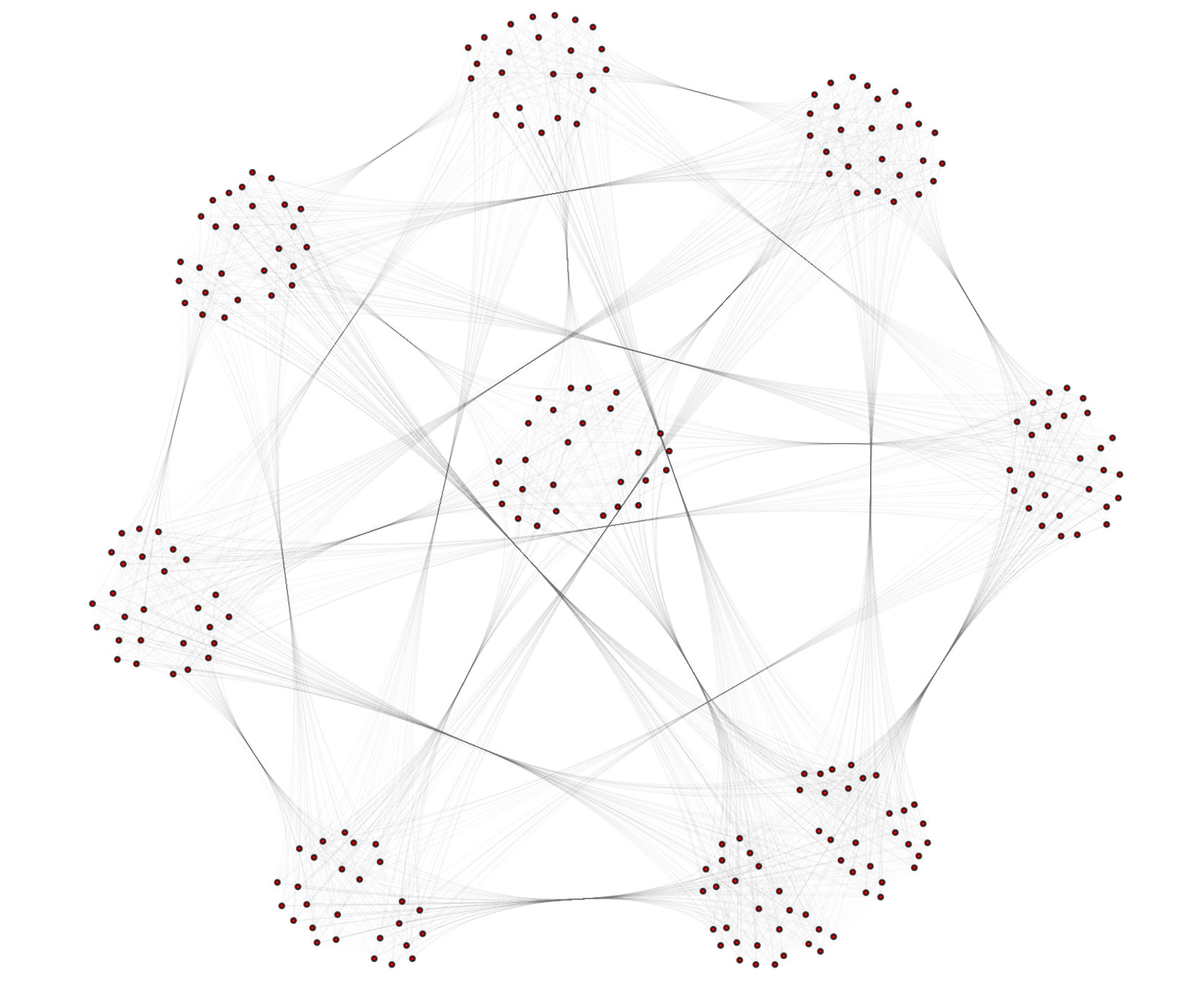 Figure 2
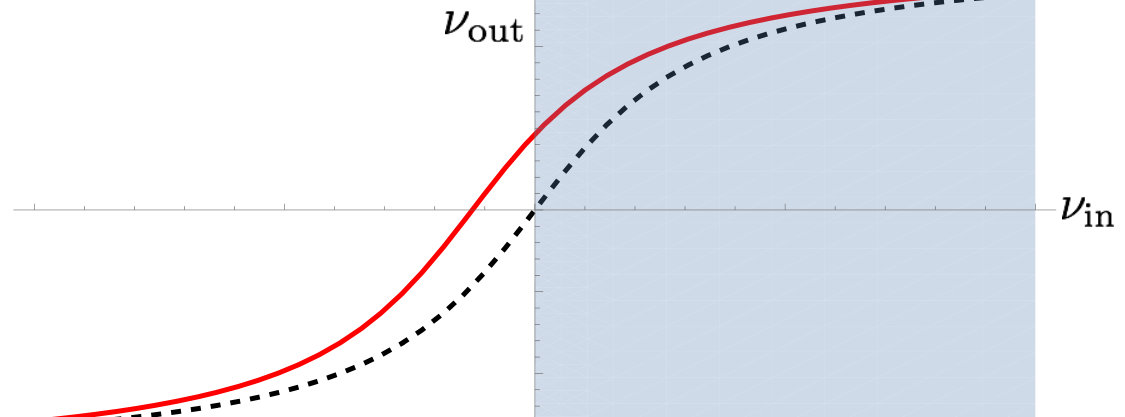 Figure 3
Peer Reviews
No public reviews on file for this paper yet. If you reviewed it on a platform where reviews are public (OpenReview, ICLR, NeurIPS, ICML), you can paste yours below so the community can read it here.
Videos
No videos yet. Explain this paper in a talk, walkthrough, or lecture? Add one.
Contextual bound states for qudit magic state distillation
Shiroman Prakash
Aashi Gupta
Dayalbagh Educational Institute,
Dayalbagh, Agra, India.
(January 3, 2020)
Abstract
Identifying necessary and sufficient conditions for universal quantum computing is a long-standing open problem for which contextuality is, perhaps, the only promising solution [Howard et al. Nature 510, 351 (2014)]. To justify this conjecture, Howard et al. showed that contextuality is equivalent to Wigner negativity for qudits, and is therefore necessary and possibly sufficient for qudit magic state distillation. Here, we reformulate magic state distillation in the language of discrete phase space, to show that any finite qudit magic state distillation routine contains bound states outside the Wigner polytope – these states exhibit contextuality but are useless for magic state distillation.
pacs:
Valid PACS appear here
I Introduction and Summary of Results
Magic state distillation Bravyi and Kitaev (2005), the leading approach to fault-tolerant quantum computation, has been used by Howard et al. Howard et al. (2014) to identify contextuality Bell (1966); Kochen and Specker (1967) as a “necessary and possibly sufficient” resource for universal quantum computation. This is a satisfying connection, because contextuality provides a precise operational distinction Mermin (1993); Spekkens (2005); Abramsky and Brandenburger (2011); Cabello et al. (2014); Acín et al. (2015); Srivastava et al. (2017) between quantum and classical mechanics and acts as a natural obstruction to classical simulation.
The magic state model Bravyi and Kitaev (2005) is based on the observation that the requirement of fault-tolerance naturally imposes strong limitations on the abilities of a quantum computer. The canonical fault-tolerant quantum computer is only able to implement Clifford unitaries Gottesman (1998a), and initialize and measure qubits or qudits in the computational basis. Via the Gottesman-Knill theorem Gottesman (1998b); Aaronson and Gottesman (2004)– or discrete phase space for qudits of odd-prime dimension Veitch et al. (2012) – a quantum computer subject to these limitations can be efficiently classically simulated. Hence we need to supplement our fault-tolerant quantum computer with an extra ingredient, which, in the magic state distillation model, is the ability to prepare certain non-stabilizer states known as magic states. Using magic states one can implement a non-Clifford gate, such as the gate Anwar et al. (2012); Howard and Vala (2012); Prakash et al. (2018), via state-injection, to achieve universal quantum computation.
By assumption, our hardware can only prepare magic states with low fidelity. Crucially, however, it is possible to produce a magic state with arbitrarily high fidelity, starting from many low-fidelity magic states using protocols consisting of only Clifford operations and stabilizer measurements. A variety of protocols exist (e.g., Bravyi and Kitaev (2005); Knill (2005); Reichardt (2005, 2009); Anwar et al. (2012); Campbell et al. (2012); Dawkins and Howard (2015)). For any given protocol, there exists a minimum threshold fidelity required of input states for the protocol to be successful. Input states not meeting this requirement are known as bound states Campbell and Browne (2010), and are useless for producing pure magic states using the given protocol.
Classical simulability places a theoretical limit for the threshold fidelity of any magic-state distillation routine. Clifford operations on states in the Wigner polytope – the region of state space consisting of states with positive Wigner function Wootters (1987); Gibbons et al. (2004); Gross (2006) – are classically simulable, hence any potentially useful input states for magic state distillation must lie outside this polytope Veitch et al. (2012); Mari and Eisert (2012). Howard et al. (2014) showed that the set of single-qudit states which lie outside the Wigner polytope are precisely those states that display contextuality with respect to stabilizer measurements Howard et al. (2013) – witnessed by the exclusivity graph Cabello et al. (2014) of Figure 1 – thus establishing contextuality as a necessary condition for universal quantum computation.
The argument of Howard et al. (2014) crucially invoked qudits of odd-prime dimension. Attempts to generalize this to qubits, Bermejo-Vega et al. (2017), lead to difficulties Lillystone et al. (2019), such as the existence of state-independent contextuality. Because the role of contextuality as a resource is most precise for qudits of odd-prime dimension (which, following Howard et al. (2014), we refer to simply as qudits), we focus exclusively on this case.
Here, we attempt to address whether contextuality is sufficient for universal quantum computation. There are two ways to translate this question into a question about magic state distillation.
Does there exist a magic state distillation routine for which the onset of contextuality is a sufficient condition for distillation? 2. 2.
For any quantum state exhibiting contextuality, does there exist a magic state distillation scheme for which that state is useful?
Below, we show that the answer to the first question is no. Our result can be stated as
Theorem 1
For any , there exist qudit states that exhibit contextuality but are bound states for all magic state distillation routines based on stabilizer codes of length less than .
This theorem, which is a consequence of a stronger theorem proven in section V, places a universal limitation on qudit magic state distillation routines, but does not answer the second question. This is because it allows for an infinite sequence of magic state distillation routines, based on stabilizer codes of increasing length , for which contextuality becomes sufficient in the limit .
Our theorem is similar to, and inspired by Campbell and Browne (2010) which demonstrated the existence of bound states for qubit magic state distillation outside the stabilizer octahedron. Our work differs from Campbell and Browne (2010) in two ways. Not only does our result apply to qudits; but, more importantly, we demonstrate the existence of bound states outside the Wigner polytope, which is the largest known classically simulable region of qudit phase space,Gross (2006); Veitch et al. (2012); Mari and Eisert (2012) and contains the qudit stabilizer polytope as a proper subset. This includes bound states at a finite distance away from the stabilizer polytope, as illustrated in Figure 2.
The remainder of this article is as follows. We first present a canonical form for qudit stabilizer reductions. We then reformulate magic state distillation in the language of discrete phase space and present algorithms for simulating magic state distillation routines. Finally, we use these results to prove the existence of bound states for any finite stabilizer reduction.
II Qudit Stabilizer codes
Consider qudits of odd-prime dimension . Generalized Pauli operators and acting on qudits are defined as Gottesman (1999):
[TABLE]
where and .
A multi-qudit Pauli operator acting on qudits,
[TABLE]
can be specified by a symplectic vector: . Two multi-qudit Pauli operators and commute if
[TABLE]
All known magic-state distillation routines are stabilizer reductions, which consist of projecting the input qudits onto the subspace of an -to- qudit stabilizer code, possibly preceded by the random application Clifford unitaries to impose convenient symmetries on the input states. As argued in Campbell and Browne (2009), for any magic state distillation routine that is not a stabilizer reduction, there exists a stabilizer reduction with equal or better threshold fidelity.
A stabilizer code that encodes a single qudit in physical qudits is defined by a set of linearly-independent commuting -qudit Pauli operators, whose symplectic vectors can be combined into a matrix:
[TABLE]
Two stabilizer codes are equivalent if they differ only by any combination of the following procedures:
Exchange of qudit with qudit , i.e., interchanging the th and th column of both the matrix and the matrix . 2. 2.
Raising a stabilizer to a non-zero power in , i.e., multiplying any row of by a non-zero element of . 3. 3.
Multiplying one stabilizer with another stabilizer, i.e., adding one row of to another row.
Using these elementary operations, we can put any matrix into the following canonical form, following Gottesman (1997),
[TABLE]
where is the rank of , and . is an matrix, is an matrix, and is an matrix. and are dimensional column vectors and is an -dimensional column vector. The subspace where each stabilizer in the above canonical form has a given eigenvalue , defines the codespace.
We must also define logical Pauli operators, and , that satisfy and commute with all stabilizers of the code. The allowed logical Pauli operators are parameterized by .
[TABLE]
If , and are all zero, the code is trivial. Projecting onto the codespace of such a code is equivalent to simply projecting the first qudits onto some stabilizer state, and leaving the th qudit unchanged.
III The Wigner polytope
We now review the definition of the Wigner polytope and its relation to contextuality.
III.1 Discrete Wigner functions
Given any -qudit state , we can define a quasi-probability distribution known as the discrete Wigner function as in Wootters (1987); Gross (2006); Veitch et al. (2012). This is done by first defining phase-point operators :
[TABLE]
in terms of which, the Wigner function is defined as,
[TABLE]
If the state is separable, the -qudit Wigner function can be written as a product single-qudit Wigner functions:
[TABLE]
The set of single-qudit states with defines a convex set called the Wigner polytope.
For Clifford operations and stabilizer measurements acting on states described by non-negative Wigner function, classical simulation Veitch et al. (2012); Mari and Eisert (2012) is possible thanks to the existence of an ontological model, in which the “ontological state” of the system is described by a single point in discrete phase space . Clifford unitaries act as symplectic rotations and translations on the ontological state Appleby (2005); Appleby et al. (2008). Measurement of a multi-qubit Pauli operator on a system in the ontological state yields the deterministic result . It also acts as a random translation in the direction .
A quantum state within the Wigner polytope corresponds to a probability distribution over these ontological states given by its discrete Wigner function . If this probability distribution can be efficiently sampled, which is the case if is separable, then the above construction is an efficient scheme for classical simulation.
III.2 Wigner negativity and contextuality
We review the equivalence established by Howard et al. (2014) between Wigner negativity and contextuality with respect to stabilizer measurements. First, observe that contextuality implies negativity – for any state with non-negative Wigner function, the construction of Veitch et al. (2012) reviewed above provides a non-contextual ontological model that reproduces stabilizer measurements. To show that negativity also implies contextuality, Howard et al. (2014) construct a non-contextuality inequality that is violated by states with negative Wigner function.
To do this, we need to introduce an ancilla qudit, which can be in any state. Define to be the set of two-qudit projectors onto states of the form , where is any stabilizer state whose discrete Wigner function does not have support on . There are such projectors. Next, define to be the set of rank-1 projectors onto two-qudit entangled stabilizer states. By the Choi-Jamiolkowski isomorphism, the number of such projectors equals the number of single-qudit Clifford unitaries, which is .
We now construct an exclusivity graph out of the combined set of projectors . Each projector corresponds to a vertex in the graph. Two vertices are connected by an edge if they correspond to orthogonal projectors. (Orthogonal projectors represent mutually exclusive measurement outcomes.) Figure 1 depicts the resulting exclusivity graph for qutrits, which contains vertices and edges.
Define to be the sum of all projectors in . Compatibility with a non-contextual hidden variables (NCHV) model places an upper bound on . In any ontological state, each projector (i.e., vertex) is assigned a value of [math] or , subject to the constraint that two orthogonal projectors (i.e., two adjacent vertices) cannot both be assigned the value . Hence the set of all projectors assigned the value forms an independent set in the exclusivity graph. The independence number of a graph is the size of its largest independent set. In any ontological state or probabilistic-mixture of ontological states, cannot exceed the independence number of the exclusivity graph. The authors of Howard et al. (2014) showed that the independence number of the exclusivity graph constructed from is . Hence, any quantum state for which is incompatible with a NCHV model, and exhibits contextuality.
Using, e.g., Cormick et al. (2006), the sum of projectors can be rewritten as
[TABLE]
Therefore, the condition that is equivalent to , which is precisely the condition for contextuality obtained via the exclusivity graph construction.
IV Simulating magic state distillation in discrete phase space
We now illustrate how finite stabilizer reductions can be simulated in discrete phase space.
IV.1 Monte Carlo algorithm
We first describe a Monte Carlo algorithm for simulating magic-state distillation, which illustrates the classical simulability of states within the Wigner polytope, in the spirit of Veitch et al. (2012).
As in Bravyi and Kitaev (2005), we assume that the undistilled input qudits are all described by the same single-qudit density matrix . Our algorithm, takes as input:
- •
A single-qudit discrete Wigner function corresponding to ; which is non-negative, and
- •
a stabilizer code , with eigenvalues .
It returns as output:
- •
the single-qudit discrete Wigner function corresponding to the density matrix of the distilled qudit.
The algorithm consists of the following steps:
Initialize a histogram for all in . 2. 2.
Repeat the following procedure many times:
- (a)
Randomly choose a point in from the probability distribution
[TABLE]
Here, and . Because the probability distribution is separable, this can be done efficiently. 2. (b)
Check if this point is in the codespace, by checking if
[TABLE]
- i.
If the point is not in the codespace, do nothing. 2. ii.
If it is in the codespace, calculate and :
[TABLE]
and increment . 3. 3.
After the step 2 has been repeated a sufficient number of times, obtain the Wigner function of the distilled state by normalizing :
[TABLE]
IV.2 Exact algorithm
We now present an algorithm that calculates exactly given .
A naiive way to do this would be to loop over all points in discrete phase space. For each point , check it is in codespace: if it is, calculate and , as before, and then update the histogram:
[TABLE]
After completing this loop normalize , via equation (14), to obtain .
The above algorithm loops over all points in -qudit phase-space. However, we only need to loop over the points in the codespace, which can be done explicitly, as we now show.
The codespace consists of the set of phase-space points satisfying equation (11). This equation represents equations in unknowns – hence the space of solutions is an -dimensional vector space. Assume each . Then, the stabilizers of along with the logical and logical operators are independent solutions to equation (11), and form a basis for the codespace. We thus have:
[TABLE]
is an dimensional vector, which, along with and , parameterizes the codespace. If we would need to add a constant vector representing any particular solution to equation (11), that can be obtained using a generalized inverse of , to the RHS of this equation.
Explicitly, the algorithm is:
Initialize a histogram for all in . 2. 2.
For each , and each :
- (a)
calculate and via equation (16), and, 2. (b)
update via equation (15). 3. 3.
Obtain from using equation (14).
This algorithm works even when contains negative entries. In fact, this formulation of magic state distillation is more general than the usual formulation, since it also applies to “post-quantum” theories that allow preparations with discrete Wigner functions that do not correspond to quantum states.
V Impossibility Theorem
With the above ingredients in place, we prove our theorem. We first prove a special case of our main result, which we then generalize.
A natural candidate for a magic state is given by the Wigner function:
[TABLE]
where . An example of such a state is for qutrits Anwar et al. (2012) for which . Because the discrete Wigner function has only one negative entry, this state lies directly above a single face tof the Wigner polytope, and is therefore analogous to the state of Bravyi and Kitaev (2005).
Consider the state obtained from mixing this state with the maximally-mixed-state. By randomly applying a symplectic rotation Appleby (2005), any state can be put in this form. For such states, is the only entry of the Wigner function which may be negative. Any magic state distillation procedure induces a continuous function .
By the usual argument of classical simulability, if then for any stabilizer reduction. For a stabilizer reduction with threshold tight to the Wigner polytope, if . Therefore, for any tight stabilizer reduction, illustrated in Figure 3.
Equation (16) leads to an explicit expression for when :
[TABLE]
where is a (positive) normalization constant. All entries of are positive except one: . The only way can be equal to zero is, if, for each , there exists at least one value of such that both and .
Denote where and are and dimensional vectors. Using the canonical form of the stabilizer code, we have:
[TABLE]
Consider a vector for which and contain all non-zero entries. For such a vector, the only value of for which both and could equal [math] is the last value. For this we require that both and .
For prime , if has a single non-zero entry, we can always find a vector with all non-zero entries such that . Similarly, if either or has a non-zero entry, we can find a pair of vectors and , each with all nonzero entries, such that .
Therefore, for we require , and . But, as mentioned earlier, this means that the magic state distillation routine is trivial, and . Thus, there is no finite stabilizer reduction that distills states tight to the face of the Wigner polytope.
We now generalize the above argument. First, restrict attention to states much closer to one facet than they are to any other facet. For this family of states we can unambiguously define to be the entry of the Wigner function smallest in magnitude. Any magic-state distillation routine whose threshold is tight or almost tight to the Wigner polytope defines a continuous map on the space of states which induces a continuous function of . This function must have a fixed point at , if the magic-state distillation routine has no bound states outside the Wigner polytope.
Our argument that above made no use of the location of the single zero of the discrete Wigner function , nor of its symmetries; so it generalizes to the following statement. Let be any finite stabilizer reduction. maps any state described by a non-negative discrete Wigner function with a single zero to a state described by a discrete Wigner function with all positive entries. In other words, maps states which are on a single face of the Wigner polytope to states in the interior. By continuity, there exist states just outside the face of the Wigner polytope which are also mapped to the interior. We thus have the following theorem:
Theorem 2
Let be any state whose discrete Wigner function contains exactly one zero. For any finite magic state distillation procedure, all states sufficiently close to , including states outside the Wigner polytope, are bound states.
VI Outlook
We have yet to understand the implication of our result for contextuality and Wigner negativity as a resource Veitch et al. (2012); Mari and Eisert (2012); Veitch et al. (2014); Pashayan et al. (2015); Wang et al. (2019). In particular, what is the computational power of a Clifford computer with access to a large, but finite, supply of states which exhibit a small violation of a single non-contextuality inequality?111We thank Aram Harrow and Dan Browne for raising this question.
The result of Howard et al. (2014) has been generalized to qudits of any odd dimension Delfosse et al. (2017), and it should be possible to extend our theorem to this more general case.
Our theorem rules out the existence of finite magic-state distillation routines for which contextuality is sufficient for magic-state distillation. However, it allows the possibility that the threshold for magic state distillation can be made arbitrarily close to the the Wigner polytope by increasing the size of the stabilizer code used. If this is the case, for any state exhibiting contextuality, there would exist an -qudit magic-state distillation routine (with sufficiently large) for which is not a bound state; and in this sense, contextuality may still turn out be sufficient for universal quantum computation.
Acknowledgements.
SP thanks Prof. P.S. Satsangi for inspiration and suggesting this problem to him. SP also thanks Mark Howard for comments on a draft of this manuscript. The research of SP is supported in part by a DST INSPIRE Faculty award, DST-SERB Early Career Research Award (ECR/2017/001023) and MATRICS grant (MTR/2018/001077). Aashi Gupta acknowledges the support of an AADEIs Undergraduate Research Award.
The reference list from the paper itself. Each links out to its DOI / PubMed record.
- 1Bravyi and Kitaev (2005) S. Bravyi and A. Kitaev, Phys. Rev. A 71 , 022316 (2005) . · doi ↗
- 2Howard et al. (2014) M. Howard, J. Wallman, V. Veitch, and J. Emerson, Nature 510 , 351 (2014) , ar Xiv:1401.4174 [quant-ph] . · doi ↗
- 3Bell (1966) J. S. Bell, Rev. Mod. Phys. 38 , 447 (1966) . · doi ↗
- 4Kochen and Specker (1967) S. Kochen and E. P. Specker, Journal of Mathematics and Mechanics 17 , 59 (1967) .
- 5Mermin (1993) N. D. Mermin, Rev. Mod. Phys. 65 , 803 (1993) . · doi ↗
- 6Spekkens (2005) R. W. Spekkens, Phys. Rev. A 71 , 052108 (2005) . · doi ↗
- 7Abramsky and Brandenburger (2011) S. Abramsky and A. Brandenburger, New Journal of Physics 13 , 113036 (2011) . · doi ↗
- 8Cabello et al. (2014) A. Cabello, S. Severini, and A. Winter, Phys. Rev. Lett. 112 , 040401 (2014) . · doi ↗