Astro2020 Science White Paper: Probing the Structure of Interstellar Dust from Micron to Kpc Scales with X-ray Imaging
Lynne Valencic, Lia Corrales, Sebastian Heinz, Randall K. Smith,, Geoffrey C. Clayton, Elisa Costantini, Bruce Draine, Julia Lee, Frits, Paerels, Tea Temim, Joern Wilms

TL;DR
This paper discusses how next-generation X-ray detectors will enhance the study of interstellar dust structures across various scales, providing deeper insights into dust grain models and evolution.
Contribution
It highlights the potential of improved X-ray detector sensitivity and resolution to significantly advance interstellar dust research.
Findings
Next-generation X-ray detectors will enable studies of fainter sources.
Higher angular resolution will improve dust structure mapping.
Expanded sightlines will enhance understanding of dust evolution.
Abstract
The X-ray regime is a largely underused resource for constraining interstellar dust grain models and improving our understanding of the physical processes that dictate how grains evolve over their lifetimes. This is mostly due to current detectors' relatively low sensitivity and high background, limiting the targets to the brightest sources. The improved sensitivity of the next generation of X-ray detectors will allow studies of much fainter sources, at much higher angular resolution, expanding our sampled sightlines in both quality and quantity.
Click any figure to enlarge with its caption.
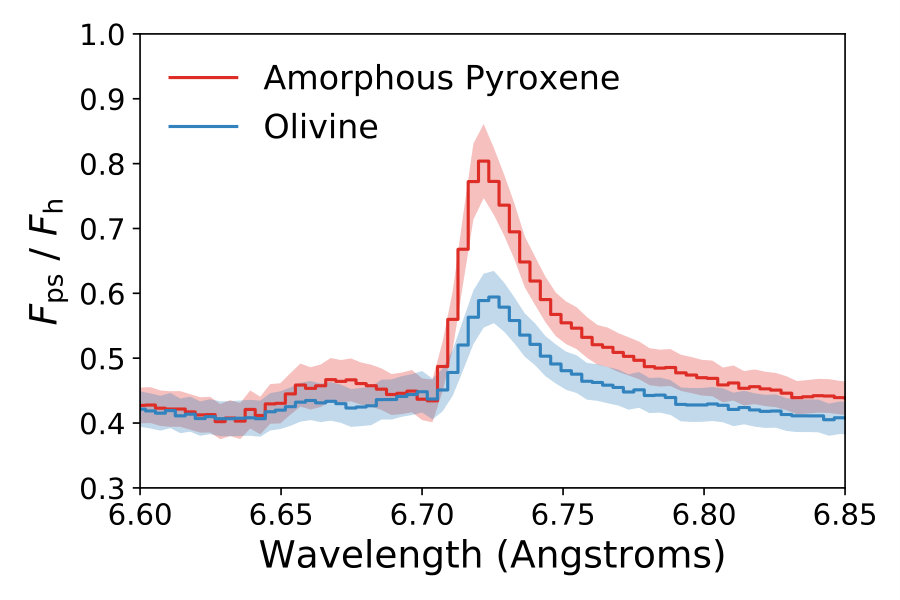 Figure 1
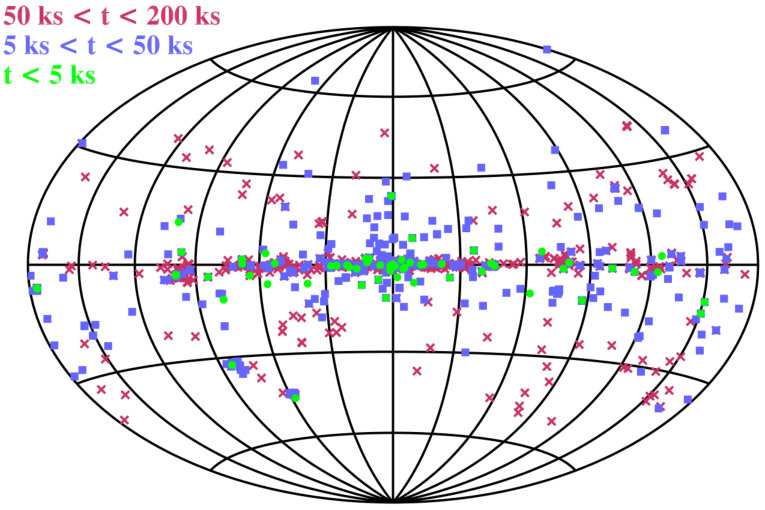 Figure 2
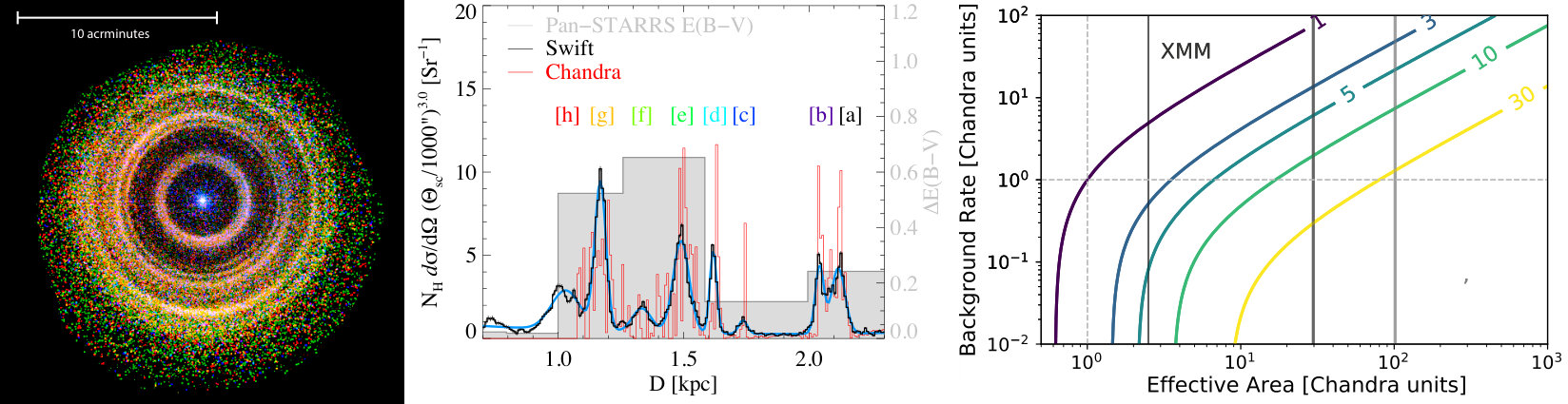 Figure 3
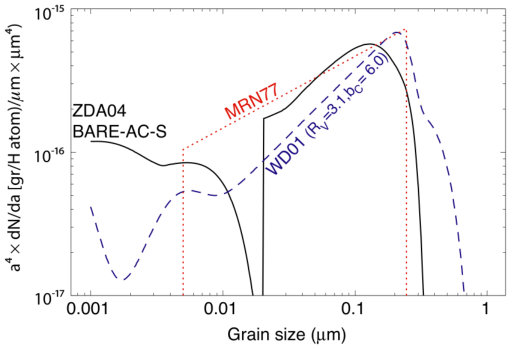 Figure 4
| FX (10-10 erg/cm2/s) | No Scattering | (1) | (2) | (3) |
|---|---|---|---|---|
| Disk blackbody | 8.380.10 | 9.040.11 | 9.310.11 | 8.880.10 |
| Power law | 1.200.03 | 1.240.03 | 1.230.03 | 1.230.03 |
Peer Reviews
No public reviews on file for this paper yet. If you reviewed it on a platform where reviews are public (OpenReview, ICLR, NeurIPS, ICML), you can paste yours below so the community can read it here.
Videos
No videos yet. Explain this paper in a talk, walkthrough, or lecture? Add one.
Taxonomy
TopicsParticle Detector Development and Performance · Nuclear Physics and Applications
Astro2020 Science White Paper
Probing the Structure of Interstellar Dust from Micron to Kpc Scales with X-ray Imaging
Thematic Areas: Planetary Systems Star and Planet Formation Formation and Evolution of Compact Objects Cosmology and Fundamental Physics Stars and Stellar Evolution Resolved Stellar Populations and their Environments Galaxy Evolution Multi-Messenger Astronomy and Astrophysics
Principal Author:
Name: Lynne Valencic Institution: Johns Hopkins University Email: [email protected] Phone: 301-286-1041
Co-authors: Lia Corrales (University of Michigan); Sebastian Heinz (University of Wisconsin); Randall K. Smith (SAO); Geoffrey C. Clayton (Louisiana State University); Elisa Costantini (SRON); Bruce Draine (Princeton University); Julia Lee (Harvard University); Frits Paerels (Columbia University); Tea Temim (Space Telescope Science Institute); Joern Wilms (University of Erlangen-Nuremberg)
Abstract (optional): The X-ray regime is a largely underused resource for constraining interstellar dust grain models and improving our understanding of the physical processes that dictate how grains evolve over their lifetimes. This is mostly due to current detectors’ relatively low sensitivity and high background, limiting the targets to the brightest sources. The improved sensitivity of the next generation of X-ray detectors will allow studies of much fainter sources, at much higher angular resolution, expanding our sampled sightlines in both quality and quantity.
1 Introduction
The effects of dust can be seen along virtually all sightlines – toward objects in the Milky Way, its neighboring galaxies, and the high-redshift Universe – and it is necessary to accurately account for them in order to recover an object’s intrinsic energy distribution. Dust is also interesting in its
own right. Grain surfaces are the sites of molecule growth, and grains themselves are a vital repository for metals in the Universe. They also play an important role in regulating the energy budget of a galaxy, as they generate almost all of the extinction (via both scattering and absorbing) at UV and optical wavelengths, and re-emit this energy in the IR. And ultimately, dust grains are the fundamental building blocks of planet formation.
Grains are injected into the ISM from their formation sites in the upper atmospheres of evolved stars and supernova ejecta where they cycle through diffuse and dense environments. In warm/hot media, they are subjected to destructive processes, such as shattering and sputtering. As large grains are preferentially destroyed by shocks, this leads to a large population of small grains. In cold media, grains grow via coagulation and icy mantle formation. As dense clouds collapse to form stars and planetary systems, the grains are further processed by the proto-stars. Eventually, the stars age to become supernovae or evolved giants, returning their enriched material to the ISM and allowing the “dust life cycle” to continue.
Despite the importance of dust, we still do not know some of its most basic properties, such as grain composition, size, and physical processing in the ISM. In this white paper, we will address how astronomers in the next 10 years will use X-ray imaging of dust scattering halos and echoes to better determine fundamental dust properties, as well as directly measure the distances to bright sources and map the ISM with unprecedented accuracy.
2 How large are the largest grains, and how common are they?
Characterizing grains at the large end of the grain size distribution has important implications for modeling and understanding dust survival in the ISM. X-ray halos provide a key tool in examining dust grain sizes in the ISM. This phenomenon is observed when X-rays from a bright source undergo small-angle scattering off of intervening dust grains in the ISM. The intensity and shape of the halo’s radial profile depends on the source brightness and grain characteristics, specifically the composition, size, distribution along the line of sight, and column density (Overbeck, 1965; Mathis & Lee, 1991; Draine, 2003). The scattering cross section increases rapidly with grain size, making halo observations exquisitely sensitive to the large end of the grain size distribution, which itself is dependent on the grain model.
The grain size distributions for some popular models are shown in Fig. 1. The vast majority of models address the grain characteristics only of those grains in the “standard diffuse ISM”, with RV=3.1, where RV is the ratio of total to selective extinction. Values of RV range from 2.5 to 5.5 in the Milky Way, depending on the dominant grain size and thus the grains’ environment; low values indicate diffuse media while high values indicate dense clouds (Cardelli et al., 1989). Thus, only one phase of the grain life cycle is considered by most common models. Further, the models are degenerate, as there are many that can reproduce the various observables associated with dust derived from other wavelength regimes (e.g. Compiègne et al. 2011). This highlights the need to examine, as much as possible, a broad a section of the spectrum – from the IR through X-rays – and sightlines that sample a wide range of environments.
Many groups have observed halos over the past 40 years (e.g. Rolf, 1983; Predehl & Schmitt, 1995; Valencic & Smith, 2015). But even studies with current detectors are plagued by the problem that is common of all X-ray studies of the ISM: ** the low collecting areas of current X-ray missions prohibits selecting sightlines based on the qualities of the ISM along them or the existence of complementary data at other wavelengths, significantly reducing their utility.** Even so, they do shine a light on the nature of grains; for instance, porosity has been investigated with conflicting results, and it was found that the diffuse ISM is unlikely to contain a significant presence of grains with radius m (Woo et al., 1994; Predehl & Schmitt, 1995; Valencic & Smith, 2015). This contrasts with the results from missions to the outer solar system, which found interstellar grains with much larger radii (m) (Grun et al., 1993; Landgraf et al., 2000; Westphal et al., 2014) and raises the possibility of an as-yet mostly undetected population of large grains in the diffuse ISM.
With their large effective area () and low background, the next generation of detectors will be capable of detecting halos along sightlines chosen for their ISM properties and the existence of multiwavelength data, thus allowing truly comprehensive studies of the line-of-sight ISM. Moreover, they will do this in remarkably short exposure times. For instance, it takes about 104 photons in the halo for solid modeling results (Smith et al. 2002). With Chandra, a moderately bright, absorbed source (FX = 10*-11* erg cm*-2* s*-1* and NH = 51021 cm*-2*) needs exposure time = 290 ks to reach the necessary number of halo photons. In contrast, for an imager with = 7000 cm2 at 1 keV and background = ct s*-1* keV*-1* arcmin*-2* at 1 keV, it needs only 20 ks. Indeed, halos will be an inevitable by-product of observations. For instance, for an imager with the aforementioned characteristics, 3700 sources will have measurable halos in 200 ks in both dense and diffuse media ( cmN cm*-2*), thus allowing the examination of dust at different phases of its life cycle (Fig. 2).
In addition to producing halos, small-angle scattering significantly and systematically affects the measured source spectrum, even for lightly absorbed sources. In order to measure this, the grain scattering cross section must be combined with a model that specifies the grain size distribution and composition; however, the different size distributions can lead to non-negligible differences in the resulting spectra, particularly in heavily absorbed sightlines (Smith et al., 2016). To illustrate, we modeled the spectrum of the microquasar GRS 1758-258 as a combination of an absorbed disk blackbody and power law (Soria et al., 2011; Smith et al., 2016). First, we found each component’s contribution to the flux without scattering. Then, we included the effects of scattering using different models. The results are in Table 1.
3 What is the grain destruction rate?
Studies of halos will also shed light on processes that affect the grain life cycle. A long-standing problem is the uncertainty in the destruction rate, which governs grain lifetimes. Grains are primarily destroyed in supernova (SN) shocks (Dwek & Scalo, 1980; Seab & Shull, 1983) and it has been estimated that all grains in the Galaxy’s and Magellanic Clouds’ ISM should be destroyed in 108 years (Jones et al., 1994; Bocchio et al., 2014; Temim et al., 2015). However, the timescale for dust injection into the ISM from stars is on the order of 109 years (Jones et al., 1994). This suggests that there must be a way to construct grains in the diffuse ISM. While it has been shown that carbonaceous grains can re-form, it remains difficult to regrow silicates (Jones & Nuth, 2011), though some laboratory work shows it may be possible (Krasnokutski et al., 2014). Another way around this problem is if the dust and gas motions are not coupled, thereby reducing the efficiency of grain destruction in SN shocks (Slavin et al., 2004). In this case, grain shattering due to turbulence becomes the dominant means of destruction, and grains may have much longer lifetimes, 109 years (Hirashita et al., 2016), in much better agreement with the injection rate.
Examination of possible halos near neutron stars (Olausen et al., 2011; Younes et al., 2012; Camero-Arranz et al., 2013; Esposito et al., 2013) will shed light on the grain processing in and around SN remnants. Such studies require a telescope with high angular resolution and low background, due to the faintness of the neutron star and halo, and the closeness of the halo to the star. For instance, the neutron star RRAT J1819–1458 has diffuse X-ray emission extending to 20” from the star which may be due to dust scattering (Camero-Arranz et al., 2013). In 90 ks, Chandra can detect only 800 photons of diffuse emission. In contrast, a detector with the characteristics described in §2 would collect an order of magnitude more photons in the same time.
4 What are the grains’ compositions?
X-ray microcalorimeter technology enables high resolution spectroscopic imaging at the 2-4 eV level. This will, for the first time, allow us to measure a high resolution spectrum from a dust scattering halo, which will directly reveal resonant features in the scattering cross-section that can be used to identify different mineral components of interstellar dust grains. Figure 3 shows the
simulated spectrum of the scattering halo for GX 340+0 () normalized by the apparent spectrum of the central point source () using , cm2, and the optical constants of Zeegers et al. (2017). The peak in the scattering cross-section can be used to differentiate between common amorphous and crystalline silicate minerals. Large grains also enhance the height of the scattering peak (Corrales et al., 2016; Zeegers et al., 2017). Thus, scattering halo spectra can be used to reveal ices bound up in large dust grains (m), which, due to shielding, do not exhibit strong absorption (Wilms et al., 2000; Jenkins, 2009). The advent of X-ray microcalorimeter instruments with high imaging resolution will also allow us to probe the X-ray scattering spectra from individual ISM clouds, which can be identified through enhanced or diminished scattering across a field of view (FoV) (e.g., Heinz et al., 2015).
5 What is the distribution of dust along a line of sight?
While halos for constant sources are extremely useful diagnostics of the ISM, the halos associated with time-variable sources are perhaps even more so. This is because the scattered X-rays in a halo have a longer path length than non-scattered X-rays, and thus show a time delay. Therefore, if the X-ray source is variable, the halo’s radial profile will change, yielding information on the distance to the intervening cloud(s) to extraordinarily high precision, up to 1% (Trümper & Schönfelder, 1973; Heinz et al., 2015; Vasilopoulos & Petropoulou, 2016; Pintore et al., 2017; Jin et al., 2018).
Time series imaging of such echoes allows the 3-dimensional reconstruction of the column density distribution of dust clouds along the line-of-sight within the limits of the FoV and resolution limits of the X-ray telescope. The unique identification of individual clouds with rings in such X-ray light echoes, together with knowledge of the spectrum of the flare producing the echo, encode the energy and scattering angle dependence of the scattering cross section. With knowledge of the distance to the X-ray source, such echoes can thus be used as sensitive probes of grain sizes and compositions (e.g. Heinz et al., 2016). With Gaia’s accurate distances across the Galaxy, X-ray tomographic observations of interstellar dust will become precision tools to map out the galaxy in dust and to test the grains’ mineralogy and size distributions. Further, it will be possible to use correlations between dust and molecular cloud data to measure streaming motions of gas relative to Galactic rotation, and to constrain the gas-to-dust ratio as a function of Galactic position.
To enable order-of-magnitude improvements in dust echo tomography, we must plan carefully for the next generation of X-ray telescopes. This includes common requirements for X-ray telescopes: High spatial resolution (comparable to or better than a few arcseconds), large FoV, and high AE in the energy band of 1-5 keV. However, tomography also requires less common capabilities: Executing target of opportunity (ToO) observations with 1 day turnaround; low diffuse background rates; and the ability to observe potentially bright point sources. Finally, triggering observations of echoes requires all-sky X-ray monitoring, such as currently provided by MAXI.
For a detector with and background as described in §2, over a lifetime of 5 years, the ISM for 50 sightlines will be able to be mapped in this way, to greater precision than current stellar population extinction maps; see Fig. 4. Furthermore, higher telescopes raise the possibility of observing X-ray scattering from circumgalactic or intergalactic dust (Corrales, 2015).
6 Conclusion
X-ray dust scattering halo studies have the potential to deepen our understanding of grains in diffuse and dense media. Up until now, halo studies have been limited to only the brightest X-ray sources. Modern detectors with large , low background, and high angular resolution will allow studies of sightlines that are chosen for the qualities of their ISM and the existence of complementary data at other wavelengths. Further, telescopes with fast ToO capabilities will permit tomography studies, which will produce high-precision dust cloud maps and test grain compositions and size distributions. This will lead to more realistic grain models over the range of the grains’ life cycle, allowing us to more accurately account for the effects of dust in other astronomical studies, and greater understanding of the physical processes which dictate the grain life cycle.
The reference list from the paper itself. Each links out to its DOI / PubMed record.
- 1Bocchio et al. (2014) Bocchio, M., Jones, A. P., & Slavin, J. D. 2014, A&A, 570, A 32
- 2Camero-Arranz et al. (2013) Camero-Arranz, A., Rea, N., Bucciantini, N., et al. 2013, MNRAS, 429, 2493
- 3Cardelli et al. (1989) Cardelli, J. A., Clayton, G. C., & Mathis, J. S. 1989, Ap J, 345, 245
- 4Corrales (2015) Corrales, L. 2015, Ap J, 805, 23
- 5Corrales et al. (2019) Corrales, L., Mills, B., Heinz, S., & Williger, G. 2019, Ap J, accepted for publication
- 6Corrales et al. (2016) Corrales, L. R., García, J., Wilms, J., & Baganoff, F. 2016, MNRAS, 458, 1345
- 7Draine (2003) Draine, B. T. 2003, Ap J, 598, 1026
- 8Dwek & Scalo (1980) Dwek, E., & Scalo, J. M. 1980, Ap J, 239, 193