Anderson orthogonality catastrophe in $2+1$-D topological systems
Jiahua Gu

TL;DR
This paper investigates the Anderson orthogonality catastrophe in 2+1-dimensional topological systems, revealing universal topological response terms and unique decay behaviors in ground-state overlaps that can identify topological phases and edge modes.
Contribution
It uncovers universal topological response terms in ground-state overlaps for 2+1D topological systems and identifies a faster decay in Laughlin states beyond AOC.
Findings
Universal topological response term in ground-state overlap scaling
Faster-than-exponential decay in Laughlin wave functions
Finite-size scaling as a tool to detect topological features
Abstract
In the thermodynamic limit, a many-body ground state has zero overlap with another state which is a slightly perturbed state of the original one, known as the Anderson orthogonality catastrophe (AOC). The amplitude of the overlap for two generic ground states typically exhibits exponential or power-law decay as the system size increases to infinity. In this paper, we show that for generic -D topological systems at fixed points, there exists a universal topological response term in the scaling of the ground-state overlap. For Laughlin wave functions, in particular, we also find a leading term decaying faster than exponential, which is beyond AOC. Such finite-size scaling behaviors could be utilized to theoretically detect the gapless edge modes, distinguish the topology of quantum states or serve as a signature for topological phase transitions.
Click any figure to enlarge with its caption.
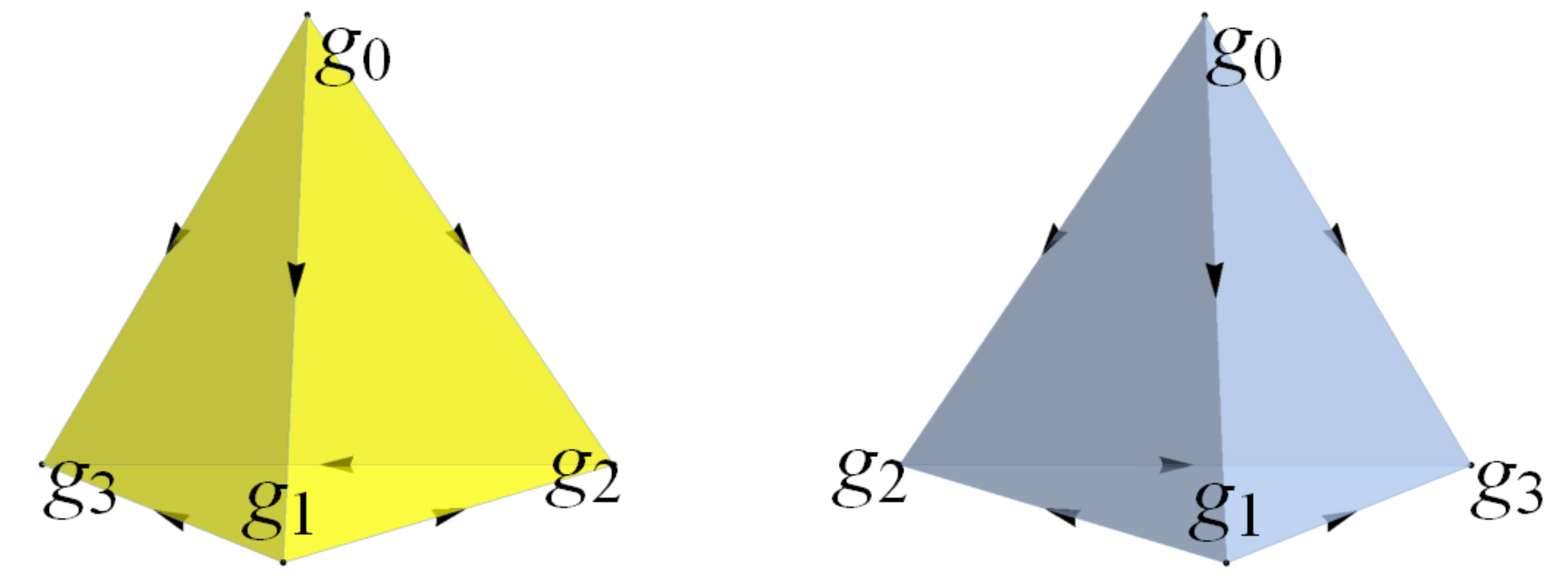 Figure 1
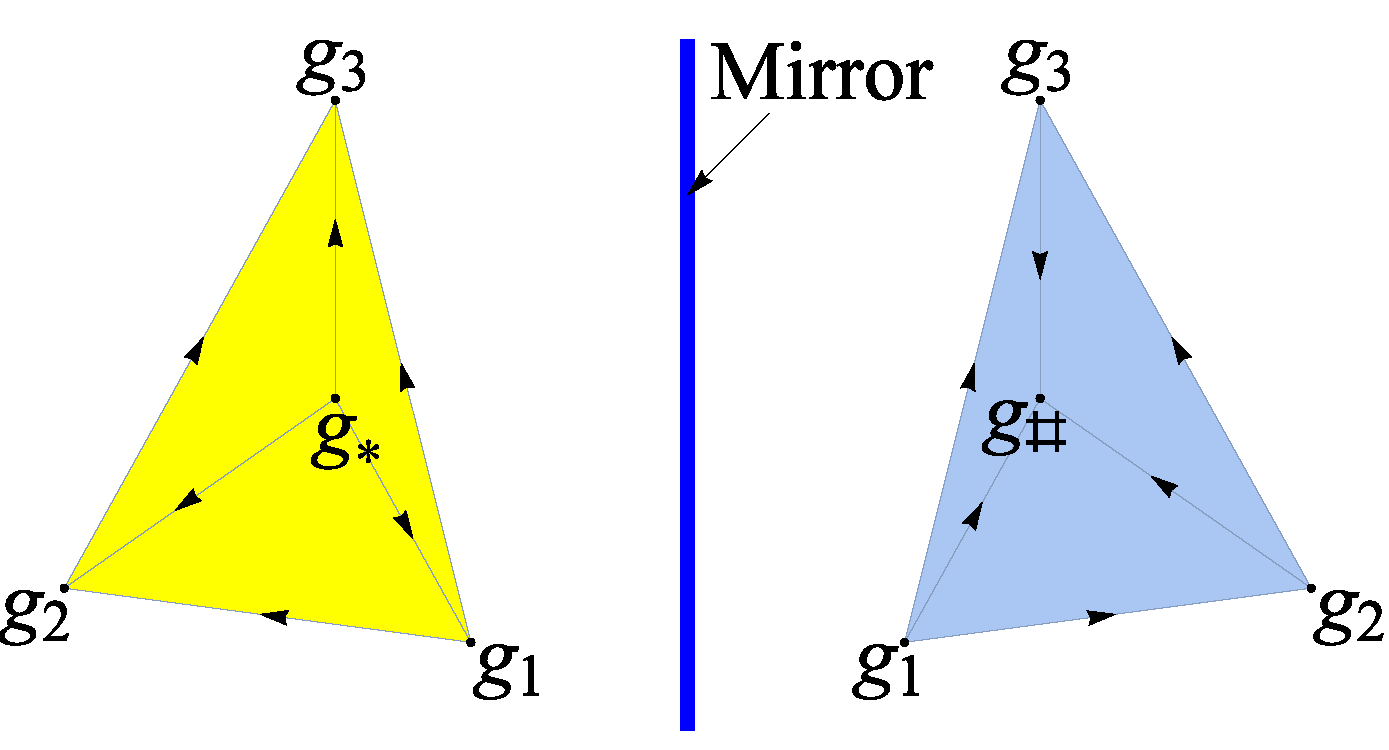 Figure 2
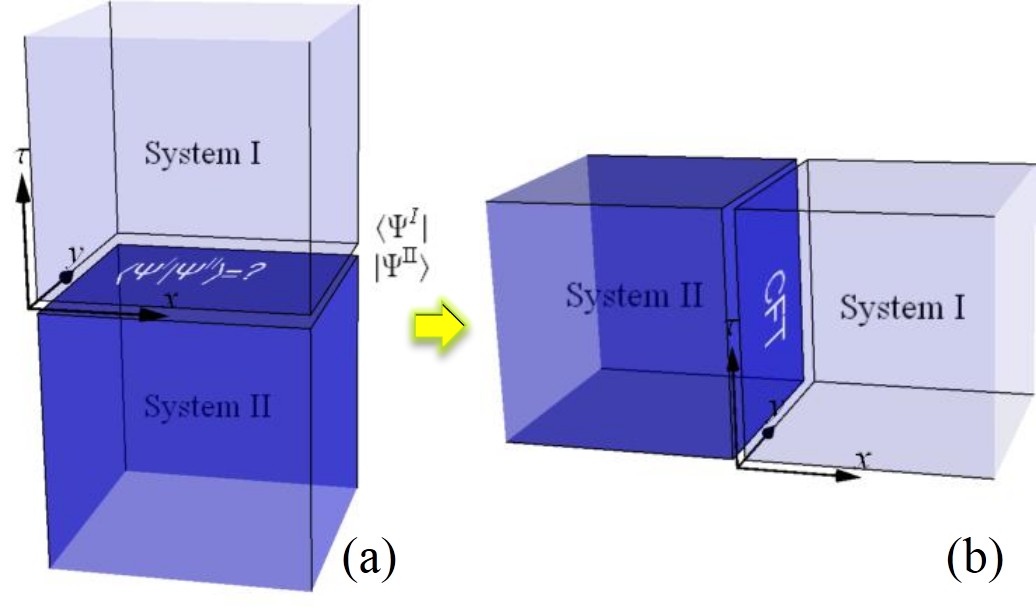 Figure 3
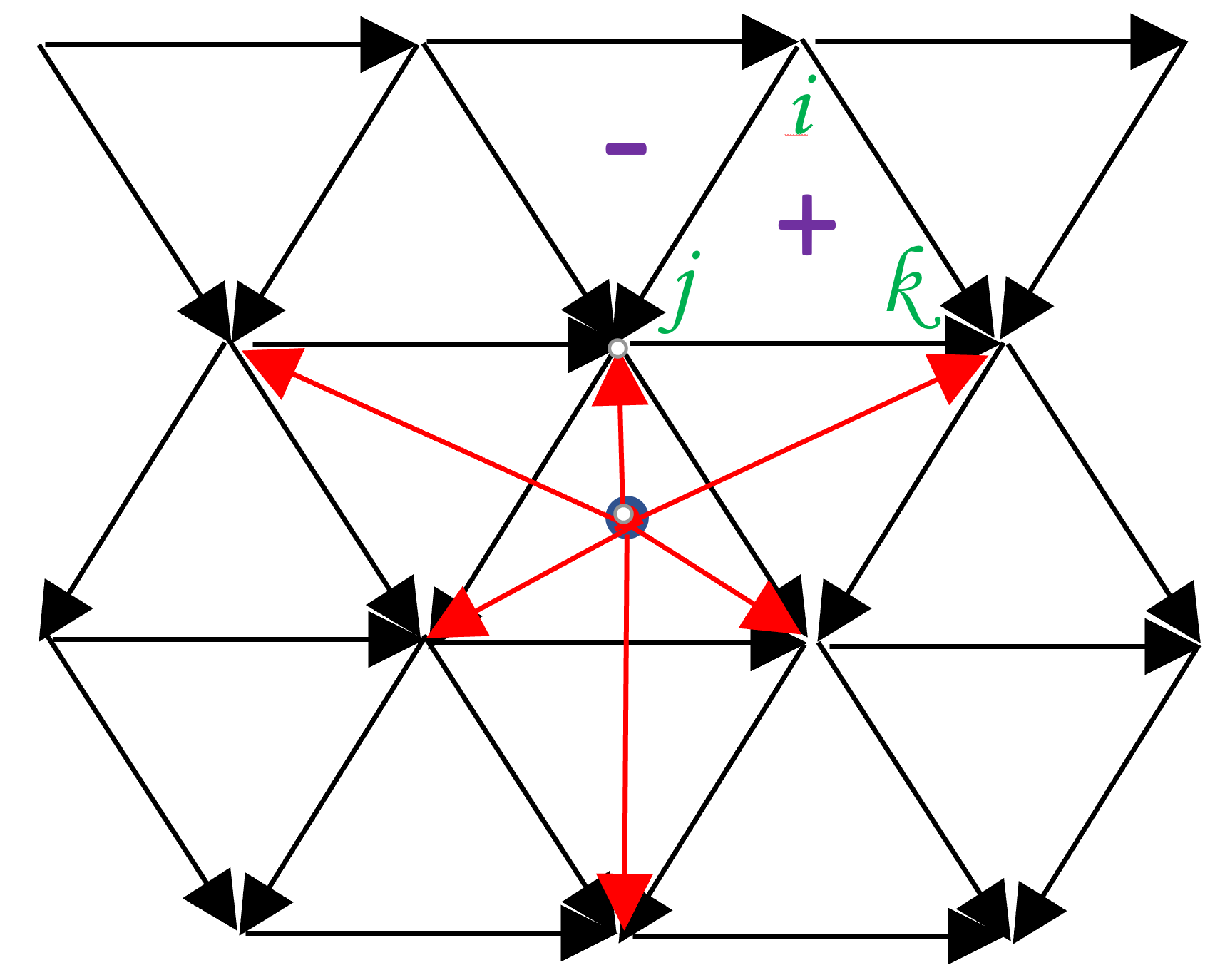 Figure 4
Peer Reviews
No public reviews on file for this paper yet. If you reviewed it on a platform where reviews are public (OpenReview, ICLR, NeurIPS, ICML), you can paste yours below so the community can read it here.
Videos
No videos yet. Explain this paper in a talk, walkthrough, or lecture? Add one.
Taxonomy
TopicsTopological and Geometric Data Analysis · Quantum chaos and dynamical systems · advanced mathematical theories
Anderson orthogonality catastrophe in -D topological systems
Jiahua Gu
Department of Physics, University of Michigan, Ann Arbor, Michigan 48109, USA
Abstract
In the thermodynamic limit, a many-body ground state has zero overlap with another state which is a slightly perturbed state of the original one, known as the Anderson orthogonality catastrophe (AOC). The amplitude of the overlap for two generic ground states typically exhibits exponential or power-law decay as the system size increases to infinity, depending on whether the bulk is insulating or conducting. In this paper, we show that for generic -D topological systems at fixed points, there exists a universal topological response term in the scaling of the ground-state overlap. For Laughlin wave functions, in particular, we also find a leading term decaying faster than exponential, which is beyond AOC. Such finite-size scaling behaviors could be utilized to theoretically detect the gapless edge modes, distinguish the topology of quantum states or serve as a signature for topological phase transitions.
pacs:
I Introduction
Ground states of condensed matter systems encode the information of quantum phases. Topological insulators, for example, are defined through the calculation of certain topological invariants Haldane (1988); Kane and Mele (2005a, b); Fu and Kane (2006, 2007); Fu et al. (2007); Bernevig et al. (2006) based on ground states. There has been many efforts trying to understand such information in the ground-state wave functions. In particular, the ground-state overlaps have been utilized to investigate geometric entanglement Wei and Goldbart (2003); Blasone et al. (2008); Orús et al. (2014) and (topological) quantum phase transitions Gu and Sun (2016); GU (2010); Varney et al. (2011, 2010); König et al. (2016); Zanardi and Paunković (2006). Among those efforts, our previous work Gu and Sun (2016) has proven that two insulators lie in the same topological phase if their single-particle ground-state overlap does not vanish in the first Brillouin zone.
However, many-body ground-state overlaps in the thermodynamic limit are always 0 due to Anderson orthogonality catastrophe Anderson (1967). At first glance, it seems no information could be extracted from the wave-function overlap. But we learned in first-year calculus that functions could approach 0 in different order under certain limit condition. Thus, it is expected that more information could be generated from the finite-size scaling of overlaps. For the impurity problem, Anderson first showed a power law decay for the overlap,
[TABLE]
where is the number of electrons and . For two generic wave functions, if the overlap on each lattice site differs by a finite amount then one would naively expect the many-body wave-function overlap exhibit an exponential decay.
In this paper, we focus on the study of -D topological states which includes both symmetry-protected topological (SPT) states and intrinsic topological states. SPT systems are adiabatically connected with trivial product states under local unitary transformation Chen et al. (2013); Gu and Wen (2014). However, there is no such a smooth path connecting nontrivial SPT states and product states if the symmetries are preserved. Such systems in -D must have gapless surface/edge modes Chen et al. (2013); Gu and Wen (2014). In higher dimensions, these boundary modes could also be gapped. But the ground state on the boundary must be degenerate if the essential symmetries are spontaneously broken there Chen et al. (2013); Gu and Wen (2014). In the following, we will exploit the ideal ground-state wave function for -D fixed-point SPT systems (in renormalization-group sense) to prove the existence of a topological response term in ground-state overlaps. Then we will verify it with the example of -protected Ising paramagnetic topological systems Levin and Gu (2012). We show that the overlap of generic fixed-point SPT states has a universal sub-leading terms depending on the Euler characteristic of the manifold the systems live on. Such a topological response term is an analogue of the corrections of entanglement entropy and free energy in -D critical systems. Indeed, we find the coefficient of the topological response term is related to the central charge of an underlying CFT. Similar behavior is seen in systems with intrinsic topological order. More surprisingly, we find an overlap decaying faster than exponential in the case of fractional quantum Hall (FQH) systems. We will end with some open questions.
II Physical Intuition
In this section, we will provide an intuitive argument that will serve as a basic physical picture for the rigorous calculations in later sections.
The imaginary time evolution of an arbitrary state could be written as
[TABLE]
up to a normalization factor. Here is the time-ordering operator, the initial state is an arbitrary state at time 0 and it evolves within time to the final state. Denote the eigenvalues and eigenstates of such a system as and respectively. ’s form a complete set of basis vectors in the wave-function space. So any initial state could be written as a linear combination of ’s,
[TABLE]
where ’s are finite constants. Insert this equation to Eq. (2), we get
[TABLE]
It becomes obvious that in the infinite-time/zero-temperature limit , coefficients of all excited states are suppressed exponentially to 0. In other words, if the initial state contains some component from the ground states, then the final state must be a linear combination of degenerate ground states under long-time evolution. In the case the ground state is non-degenerate, we have reached the unique ground state in this calculation. This is consistent with the fact that when the temperature is 0, quantum systems reside in their ground states.
Once the ground states are obtained, we could calculate the ground-state overlaps. Similar to the argument by You et al. You et al. (2014), here we only give an intuitive argument. In the following sections, we will prove it through rigorous formulation for a large variety of fixed-point topological systems. Consider two (almost) arbitrary states evolving under the Hamiltonian of systems I and II from and to respectively. Since the components of excited states in the two initial states are exponentially suppressed during the evolution, the final states at and are the ground states of system I and system II respectively (Fig. 1(a)). So the overlap describes the theory on the interface . Rotating such a system by , the imaginary-time interface at becomes a spatial interface at (Fig. 1(b)). So as long as the interface at is gapless (which is true for any -D SPT systems) and described by some CFT, the corresponding wave function overlap would be related to a critical theory.
Indeed, we will show later case by case that the overlaps can be interpreted as partition function of certain CFT. For a generic CFT, Cardy Cardy and Peschel (1988) shows that the free energy scales as
[TABLE]
In this expression, the term comes from the contribution of bulk, the term from the boundary contribution. The coefficient of correction depends on the Euler characteristic of the manifold where the system lives on and the central charge of the underlying CFT. Following this key expression for scaling, we conclude that contains the topological response term as we expected.
III Bosonic SPT
In this section, we will give a more rigorous derivation for -D fixed-point bosonic SPT systems. It was shown that a large number of -D SPT states could be described by continuous nonlinear models with topological terms Bi et al. (2015). For example, in spin systems with rotational symmetry, the action is given by
[TABLE]
where is a group element in and with . A more complete classification of bosonic SPT can be achieved through group cohomology Chen et al. (2012, 2013), which could be loosely considered as a discrete version for the topological field theories mentioned above. In the group cohomology construction, the partition function for fixed-point systems are required to be 1. This will be one of the essential requirements when we work with the discrete space-time path integrals in the following.
III.1 Warm-up: Ground States of -D Fixed Points
As we have seen in Section II, theories in continuous space-time can find their ground-state wave function by infinite-time evolution of (almost) arbitrary states. Similarly, after we discretize the space-time, the fixed-point ground states of different SPT phases could be represented through discretized version of space-time evolution of states. For the sake of simplicity, we give an example of a -D bosonic SPT sytem with onsite symmetry (see Fig. 2). In the discrete space-time or triangulation of space-time, group cohomology theory assigns one group element to each vertex and a phase factor (dubbed cocycle) to the simplex (a triangle in -D and a tetrahedron in -D).
Intuitively, the fixed-point ground state of such a system is given by the time evolution of an arbitrary state from vertex to the boundary . Mathematically, the combinations of on the boundary forms an orthogonal set of basis vectors in the wave-function space. The ground-state amplitude over the basis vector is given by
[TABLE]
where is the order of group , is the 2-cocycle associated with triangle and its exponent is determined through the orientation of the triangle . Each could be considered as the discrete version of the action amplitude where is the fixed-point action of the topological system. The Hermitian conjugate of this state is represented as the mirror image of the triangulation on the left panel in Fig. 2 except the time-evolution arrows reversed. Its wave-function amplitude over the basis is
[TABLE]
Pictorially, the overlap is the gluing of two -D manifolds Gu and Wen (2014) sharing the same boundary . This is mathematically represented as
[TABLE]
where the third power of is due to the fact that there are in total 3 vertices on the gluing boundary. For this specific -D case, the resulting manifold is a sphere with the vertex representing negative infinite time and representing positive infinite time. Plugging in the expressions of and , we immediately realize that is exactly the discrete version of a path integral. Since the path integral of fixed-point topological field theories over closed manifolds Chen et al. (2013) are required to be 1, we obtain , consistent with the normality of quantum states. In fact, this result could also be trivially derived from the more basic branching rules Chen et al. (2013), which we omit here.
III.2 Ground-state Overlaps of -D Fixed Points
Now consider a bosonic SPT system with on-site symmetry defined on 2-dimensional closed manifold . Including the time direction, the ground state would be defined on a -D manifold with boundary . Pick an arbitrary point inside and connect it with all the vertices on . In this way we have built a triangulation of the -D manifold (see Fig. 3). One example for such a manifold is a solid 2-sphere and its boundary is a hollow 2-sphere. But it could be much more general. The ground-state wave function could be considered as the time evolution of an arbitrary state from any point inside of to its boundary . Explicitly, the fixed-point wave-function amplitude is given by
[TABLE]
Here corresponds to the action amplitude on a single simplex and depends on the orientation of the simplex. The summation is understood as over the group manifold if is a continuous group. We also denoted as the discrete -D complex whose boundary is and inside of there is only one more vertex . In order for the action to exhibit a quantized topological -term, one essential constraint on the three-cocycle is that on closed -D manifolds,
[TABLE]
The above wave function can be considered as a state on evolved from . All excited states are exponentially suppressed. So such a wave function is the ground state. And its Hermitian conjugate is the state defined on the mirror reflection (similar to the -D case in Fig. 2). Therefore calculating the inner product of these two states is equivalent to gluing and together along Gu and Wen (2014). Similarly, the overlap of two distinct SPT states is a gluing with mismatches of the 3-cocycle ,
[TABLE]
where is the number of vertices on and thus is the total number of vertices including and . becomes a -D closed manifold after the gluing and the orientation has been taken care of by the sign-flip of . Those 3-cocycles satisfying Eq. (11) cancel out. Finally one side of the mirror is occupied by trivial cocycles and the other side is occupied by the difference of the topological -terms for system I and II. On the boundary the discrete version of the topological -term reduces to the Wess-Zumino-Witten (WZW) theory Chen et al. (2011); Liu and Wen (2013); Witten (1983, 1984). So the final expression for the overlap calculation is identical to a partition function of a conformal field theory (CFT) described by WZW action.
As mentioned above, the scaling behavior of generic -D CFT is known to follow Eq. (5). In our case the contribution from the boundary term is 0 since is a closed manifold without boundary. Therefore the finite-size scaling of the overlap follows
[TABLE]
The ground states are derived for generic -D fixed-point bosonic SPT systems. So this result is also generic in the same realm. In -D, SPT systems are guaranteed to have gapless modes in the space-direction interface and the edge modes are described by some CFT. This is consistent with our argument in the physical intuition section.
III.3 An Example on Bosonic SPT
As an example for our result above, we consider the two Ising-paramagnetic systems I and II as described by Levin and Gu Levin and Gu (2012). The ground state of system I is the superposition of all states with different spin configurations. Each spin configuration corresponds to one domain wall (DW) configuration. So we could represent the ground state by the superposition of DW configurations,
[TABLE]
where the normalization factor is the total number of spin configurations. This wave function is clearly topologically trivial since it can be rewritten as direct product of the spin triplet state on each lattice site . And system II is a SPT system. The ground-state wave function is the same superposition as system I except a factor in front of each spin configuration where is the number of DW’s
[TABLE]
Since states with different spin configurations are mutually orthogonal, the overlap of the normalized wave functions is
[TABLE]
where the factor 2 in the denominator is due to the fact that each domain wall configuration corresponds to two different spin configurations. We recognize that the numerator is the partition function of the classical -loop model and lies in the critical region Francesco et al. (1987) with central charge Francesco et al. (1987); di Francesco et al. (1987); Blöte et al. (2012) (See Appendix A). So the finite-size scaling of the numerator follows from Eq. (5) with . The denominator in Eq. (16) only modifies the non-universal coefficient . Therefore the scaling of is the same as Eq. (13).
IV Fermionic SPT
Similar to bosonic SPT, a large class of fermionic SPT phases could be classified using a (special) group supercohomology theory Gu and Wen (2014). In this paper, we only focus on -D systems where gapless edge states exist.
IV.1 Ground-state Wave Functions
The fermionic SPT ground-state wave functions could be constructed in the same way as the bosonic SPT. Suppose the fermionic system with full symmetry is defined on a closed 2-dimensional manifold . The bosonic part of the symmetry is where is the fermion-number-parity symmetry. We can extend the hollow 2-dimensional manifold to solid -D manifold with boundary . Triangulate and assign a group element to each vertex (see Fig. 3). Following the same physical intuition as the bosonic case, we can then write down the ground state as the time evolution of arbitrary state from the point inside to the boundary .
In the bosonic SPT systems, a single tetrahedron with vertices 0, 1, 2, 3 is denoted as (0123). We assigned a pure phase (3-cocycle) where depends the orientation of the tetrahedron . Here, each tetrahedron is associated with a Grassmann tensor. Comparing with the -D bosonic SPT, the new ingredient is to multiply a Grassmann number for each -simplex. In our interested case of -D, this means adding a Grassmann number on each triangular face of the tetrahedron. Such a Grassmann tensor in positive oriented tetrahedron is given by
[TABLE]
where with . The ordering of Grassmann number is naturally inherited from the ordering of the missing indices and the ordering of is from the missing indices . The exponent satisfies
[TABLE]
so that the total Grassmann number is even. There is also a relation between ’s and ’s,
[TABLE]
Such a construction of the sign conventions will be essential in calculating the fermionic path integral in the following.
For a corresponding negatively oriented tetrahedron [see Fig. 4(b)], the general rule to write down the Grassmann tensor is to reverse the order of ’s and ’s, and then switch with so that ’s are in front of ’s. As an example, the Grassmann tensor after reversing the orientation of the above tetrahedron would be
[TABLE]
where .
With each tetrahedron assigned with a Grassmann tensor defined above, we can write down the partition function in terms of fermionic path integral as
[TABLE]
where is the vertex inside the manifold and is the 3-simplexes (tetrahedrons) in the triangulation of . means inside but not on the boundary , i.e., is a shorthand notation for integral over all Grassmann variables inside (up to a sign factor). Explicitly,
[TABLE]
where the product is over all the edges connecting the inside vertex and vertices on the boundary . Similar to the bosonic case, the fixed-point ground state for the fermionic SPT system is
[TABLE]
where in the second line we omitted a sign factor Gu and Wen (2014) which does not influence the overlap calculation. is the product over all the edges on the triangulation of , represents positively oriented triangles and represents negatively oriented triangles.
To write down the Hermitian conjugate of the ground-state wave function described above, we need to first understand its triangulation and configuration. Similar to the bosonic case, we could take the mirror image of the triangulation for the original system. Denote the mirror image of as and the point inside as . Then reverse the arrow between the point and all of the vertices on so that all arrows point to . This new configuration has the same interpretation as time evolution of arbitrary initial state from to 0. The resulting wave function corresponds to the Hermitian conjugate of . Mathematically,
[TABLE]
Here represent negatively and positively oriented triangles in the mirror image respectively, exactly opposite to the formula in the configuration.
IV.2 Overlaps between Fermionic SPT Ground States
Calculating the overlap of and its Hermitian conjugate is equivalent to gluing the -D complexes and over their common boundary (or the mirror image )Gu and Wen (2014). In general, the overlap of two ground states is defined as
[TABLE]
where is the number of lattice sites on the manifold , is the order of group , and is the common boundary of and . In this equation, we follow the shorthand notation defined in Eq. (22).
Similar to the bosonic case, the overlap of with its Hermitian conjugate is a fermionic path integral over a closed manifold and expected to be 1. Indeed, it was explicitly shown by Gu and Wen Gu and Wen (2014) that on any -D closed manifold the partition function reduces to
[TABLE]
where represents the integration over all Grassmann variables up to a sign factor. This result naturally leads to , consistent with the normality of quantum states.
From the construction of Grassmann tensors we clearly see that the sign factors ’s and ’s only depend on the symmetry and triangulation. The only factor encoding the topological theory is the cocycles . So if we have two different SPT phases defined on the same manifold , the Grassmann integral part of the overlap would be the same as calculating or , and thus contributes 1 to the path integral. This was also pointed out by Gu and Wen Gu and Wen (2014). They found that on the closed manifolds the integrals over Grassmann tensor give rise to complex numbers . So according to their results all the integrals over Grassmann numbers should also contribute 1, consistent with our analysis. After canceling out all the Grassmann numbers, the fermionic path integral leads to the same bosonic path integral expression as in the Bosonic case [Eq. (12)]. Therefore the same argument leads to a WZW theory defined on the boundary . So the amplitude of the overlap is again of the form
[TABLE]
V Intrinsic Topological Orders
In this section, we use the famous FQH states to show that the term still exists in the scaling of ground-state overlaps. Besides that, we also find a leading term decaying faster than exponential. This is quite surprising since traditional view would expect exponential decay as leading term. In the following we will show the rigorous calculation.
V.1 FQH Wave Functions on Disks
FQH states have been well-known to exhibit intrinsic topological order Wen (1989). Among these states, filling FQH states can be described by Laughlin wave functions Laughlin (1983), which are given on the disk as
[TABLE]
where is the normalization factor on the disk
[TABLE]
Due to rotational symmetry, the many-body angular momentum is a good quantum number and wave functions with different filling or particle number live in distinct Hilbert space. The meaningful overlaps should be calculated between Laughlin wave functions and topologically trivial wave functions with the same particle number, filling factor, and hence the same angular momentum (28). To find such a trivial wave function, we note that Laughlin wave functions can be expanded to a series of Slater determinants Dunne (1993).
[TABLE]
where is the partition of . Each term in the expansion is a topologically trivial direct-product state with the same filling fraction and particle number as the original Laughlin wave function. And all of ’s constructed in this way are mutually orthogonal (See Appendix B). We choose the Slater determinant with as the topologically trivial wave function since its coefficient . So the normalized trivial wave function is
[TABLE]
Then the overlap of and is
[TABLE]
where the denominator is the partition function of the one component plasma (OCP). And the prefactor (See Appendix C) comes from the ideal gas partition function, the background-background interaction and the constant part of particle-background interaction
[TABLE]
where is an arbitrary length scale, is the mass of each charged particle and is the Planck constant. Here we have also converted the disk radius into the particle number since the particle density is fixed at in the plasma analogy Laughlin (1983).
The OCP can be considered as a critical system with central charge Jancovici et al. (1994); Jancovici and Téllez (1996); Téllez and Forrester (1999); Jancovici and Trizac (2000). So according to Eq. (5) the finite-size scaling of the partition function on a disk is
[TABLE]
where we used for the disk. Following the method of Caillol Caillol, J.M. (1981), in the numerator could be solved exactly by expanding the polynomial into a summation of monomials and then transforming the integral to polar coordinates. Integrating out the angular part of each coordinate we find that all terms with nonzero phases vanish.
[TABLE]
where we made the coordinate transformation . Those terms in are close to 1 if is small. So the only terms that contribute dramatically to are those ’s of order or greater. Then the following asymptotic formula holds dlm
[TABLE]
where is the error function. Replacing the summation over by an integral over , we find scales as
[TABLE]
The terms with factorials could be evaluated through converting the summations into integrals using Euler-Maclaurin formula (See Appendix D). Putting every term together, the finite-size scaling for the overlap is
[TABLE]
where .
V.2 FQH Wave Functions on 2-spheres
To show the effect of the topology, we also calculated the overlap on a sphere. Similar to the disk case, the -particle Laughlin wave functions on the sphere can also be decomposed into Slater determinants . And we choose the trivial wave function as the one with .
[TABLE]
where are the spinor coordinates. And the normalization factors are
[TABLE]
The same argument as in the disk case shows
[TABLE]
where (See Appendix E) comes from the partition function of -particle ideal gas, background-background interaction, the constant part of particle-background interaction and the radius dependence of the integral in the partition function of the OCP.
As in the disk case, the denominator is the partition function of the OCP on a sphere and scales as
[TABLE]
where we used for spheres. And the term vanishes because spheres do not have boundaries.
To evaluate in the numerator, we follow Alastuey and Jancovici Alastuey, A. and Jancovici, B. (1981) to change variables or . Then the integral is over the plane (with no boundaries) defined by the polar coordinates . Again, the only terms contributing to the integral are those terms with vanishing polar angles.
[TABLE]
Taking the logarithm of both sides and then using Euler-Maclaurin formula to convert the summation to integral (See F), we find the scaling of the overlap to be
[TABLE]
where and the boundary term vanishes explicitly.
Comparing the results for disks and spheres, we find that the leading order coefficients for both cases are the same . Such a term indicates a faster decay than typical Anderson orthogonality catastrophe. The coefficient of is proportional to the Euler characteristic of the manifold where the system is defined. This term stems from the critical behavior of the classical OCP and thus is consistent with our physical intuition pictured in the introduction section.
VI Conclusions and Open Questions
In this paper, we calculated the finite-size scaling of the overlaps of topologically different states through mapping the overlap to partition functions of critical systems. For generic -D topologically different states, including both SPT states and intrinsic topological states, the fixed-point ground-state overlaps exhibit a universal sub-leading term depending on the topology of the manifold on which the system lives. Such a universal topological response term relies on the gapless edge state on the interface of different topological systems, as described in Fig. 1. In -D, SPT systems are known to have gapless edge modes described by some CFT. So we conclude that the topological response term always exists for -D SPT systems at fixed-points. Besides the CFT describing the space-direction edge modes, the central charge indicates that there is another CFT associated with the two systems in the time-direction interface (see Fig. 1). It has been clear to us that this CFT from the overlap calculation is different from the CFT on the space-direction interface between the two systems. But it seems to appear when gapless edge modes exist on the space-direction interface of the two systems. We conjecture that the two CFT’s are related in some way. Maybe the Wick rotation of a CFT in the time direction interface becomes the CFT on the interface of space direction (see Fig. 1).
In the case of intrinsic topological order, we only calculate the overlaps between the famous FQH states and product states. We find that the same topological response term still exists and it is also derived from a critical system. Thus we may conjecture that the topological response term persists for any -D topological systems with gapless edge modes. In this overlap calculation, we also notice a leading-order scaling which decays faster than the expected exponential in typical Anderson orthogonality catastrophe. Its coefficient only depends on which Laughlin state participates in the overlap calculation. Such a behavior may be used as a signature for topological phase transitions between topologically ordered FQH states and trivial states.
In higher dimensions, the boundaries of SPT systems may also be gapped by symmetry breaking or due to intrinsic surface topological order Vishwanath and Senthil (2013); Burnell et al. (2014); Fidkowski et al. (2013); Chen et al. (2014); Metlitski et al. (2015). In such systems, the overlap can not have correction. But there might be other universal terms such as a constant term similar to the subleading term in entanglement entropy. We will leave this as future work.
Acknowledgements.
J. Gu would like to thank Professor Kai Sun for his advice and support throughout this project, Ying-Hai Wu for discussions on the expansion of Laughlin wave functions, Huan He and Di Zhou for their help in the beginning of this project. This work was supported by the National Science Foundation (NSF grant EFRI-1741618).
Appendix A Central charge of the critical -loop model
The partition function of the -loop model on the honeycomb lattice is
[TABLE]
for general values of and . The critical line Nienhuis (1982) of this model is . For which contains the point , this loop model is also critical Francesco et al. (1987). And the central charges of both cases are given by Francesco et al. (1987); di Francesco et al. (1987)
[TABLE]
where is defined by . The branches and correspond to and systems respectively. The central charge for is found through Eq. (46) by setting , which leads to (numerically verified by Blöte et al Blöte et al. (2012)).
Actually, the denominator of the overlap (16) of the main text can also be considered trivially as a critical -loop model at . Then the same formula gives , implying no logarithmic term correction in the “free energy”. This is consistent with we got from direct counting.
Appendix B Slater determinants from Laughlin wave-function expansion are mutually orthogonal
A typical Slater determinant in the expansion of Laughlin wave functions is as follows,
[TABLE]
where is a partition of . Another partition corresponds to a different Slater determinant in the expansion. Their inner product is given by
[TABLE]
Clearly, the integral over polar angles vanishes unless for all . But if this condition is true, then which contradicts with our assumption that and are different partitions of . Therefore the integral must vanish and all the Slater determinants in the expansion of Laughlin wave functions are mutually orthogonal.
Appendix C One component plasma on a disk
This section is based on the paper by Sari et al Sari et al. (1976).
One component plasma (OCP) on a disk consists of identical particles with charge and a neutralizing background with uniform charge distribution. The Hamiltonian is where
[TABLE]
is the kinetic term and the potential term consists of background-background interaction, particle-background interaction and particle-particle interaction.
[TABLE]
where is an arbitrary length scale.
After the integration and using the relation we find
[TABLE]
So
[TABLE]
Then the canonical partition function could be calculated by
[TABLE]
The kinetic term contributes as the partition function of ideal gas. Integrate out the momenta first and we obtain
[TABLE]
where we leave the integral over particle positions untouched because the potential part of the plasma depends on positions.
To relate OCP partition function with Laughlin wave function, we assume the particle density , electric charge and . Then the partition function of the OCP on a disk is
[TABLE]
where is exactly the normalization factor of Laughlin wave function and is the prefactor independent of the integral.
Appendix D Scaling of in the disk case
To obtain the scaling of in the numerator of the overlap function (32) in the main text, the only difficulty comes from the evaluation of . We first take logarithm of this term to convert it to a summation and then use Euler-Maclaurin formula to change the summation to an integral with a controlled error term. The Euler-Maclaurin formula reads
[TABLE]
where is the -th Bernoulli number and the error term depends on which term we stop the expansion. For our purpose, knowing is enough.
But before we can finish the calculation, must be evaluated first using Stirling’s formula (or Euler-Maclaurin formula)
[TABLE]
Taking the derivative of this equation we find
[TABLE]
Plug these into the Euler-Maclaurin formula, we find
[TABLE]
Then it is an easy calculation to find the scaling of the overlap as in the main text.
Appendix E One component plasma on a sphere
Similar to the OCP on a disk, the Hamiltonian of the OCP on a sphere consists of a kinetic term and potential term coming from background-background interaction, particle-background interaction and particle-particle interaction. In the following, the distance between two points on the sphere are calculated by embedding the sphere into a 3D Euclidean space.
[TABLE]
where .
In the Laughlin plasma analogy, and . So the partition function (including the ideal gas part) is
[TABLE]
Then we recognize that the integral part is the normalization factor of Laughlin wave functions and the prefactor is .
Appendix F Scaling of in the sphere case
In the main text, the scaling of factorial part of in Eq. (43) is the only difficulty for finding the scaling of in the overlap (41).
[TABLE]
As described in the disk case, the factorials can be approximated using the Stirling’s formula
[TABLE]
And the summation could be converted to integral using the Euler-Maclaurin formula Eq.(56) where is now defined as follows,
[TABLE]
And its derivative is
[TABLE]
Plug these into the Euler-Maclaurin formula, we find the summation part of Eq. (62)
[TABLE]
Inserting this result in the expression of one can easily find the overlap scaling as Eq. (44) in the main text.
The reference list from the paper itself. Each links out to its DOI / PubMed record.
- 1Haldane (1988) F. D. M. Haldane, Phys. Rev. Lett. 61 , 2015 (1988) . · doi ↗
- 2Kane and Mele (2005 a) C. L. Kane and E. J. Mele, Phys. Rev. Lett. 95 , 226801 (2005 a) . · doi ↗
- 3Kane and Mele (2005 b) C. L. Kane and E. J. Mele, Phys. Rev. Lett. 95 , 146802 (2005 b) . · doi ↗
- 4Fu and Kane (2006) L. Fu and C. L. Kane, Phys. Rev. B 74 , 195312 (2006) . · doi ↗
- 5Fu and Kane (2007) L. Fu and C. L. Kane, Phys. Rev. B 76 , 045302 (2007) . · doi ↗
- 6Fu et al. (2007) L. Fu, C. L. Kane, and E. J. Mele, Phys. Rev. Lett. 98 , 106803 (2007) . · doi ↗
- 7Bernevig et al. (2006) B. A. Bernevig, T. L. Hughes, and S.-C. Zhang, Science 314 , 1757 (2006) . · doi ↗
- 8Wei and Goldbart (2003) T.-C. Wei and P. M. Goldbart, Phys. Rev. A 68 , 042307 (2003) . · doi ↗