Slim accretion disks: theory and observational consequences
Bozena Czerny

TL;DR
This paper reviews the development of slim accretion disk theory over 30 years, highlighting unresolved theoretical issues and the importance of observational data in advancing understanding of these models.
Contribution
It summarizes the progress and remaining challenges in the theoretical modeling of slim accretion disks and emphasizes the need for further development and observational comparison.
Findings
Increased observational data supports the applicability of slim disk models.
Critical theoretical issues like disk stability and magnetic field roles remain unresolved.
Further model development and data comparison are essential for progress.
Abstract
Slim accretion disks idea emerged over 30 years ago as an answer to several unsolved problems. Since that time there was a tremendous increase in the amount of observational data where this model applies. However, many critical issues on the theoretical side remain unsolved, as they are inherently difficult. This is the issue of the disk stability under the radiation pressure, the role of the magnetic field in the energy transfer inside the disk and the formation (or not) of a warm corona, and outflows. Thus the progress has to be done both through further developments of the model and through the careful comparison to the observational data.
Click any figure to enlarge with its caption.
 Figure 1
 Figure 2
 Figure 3
 Figure 4
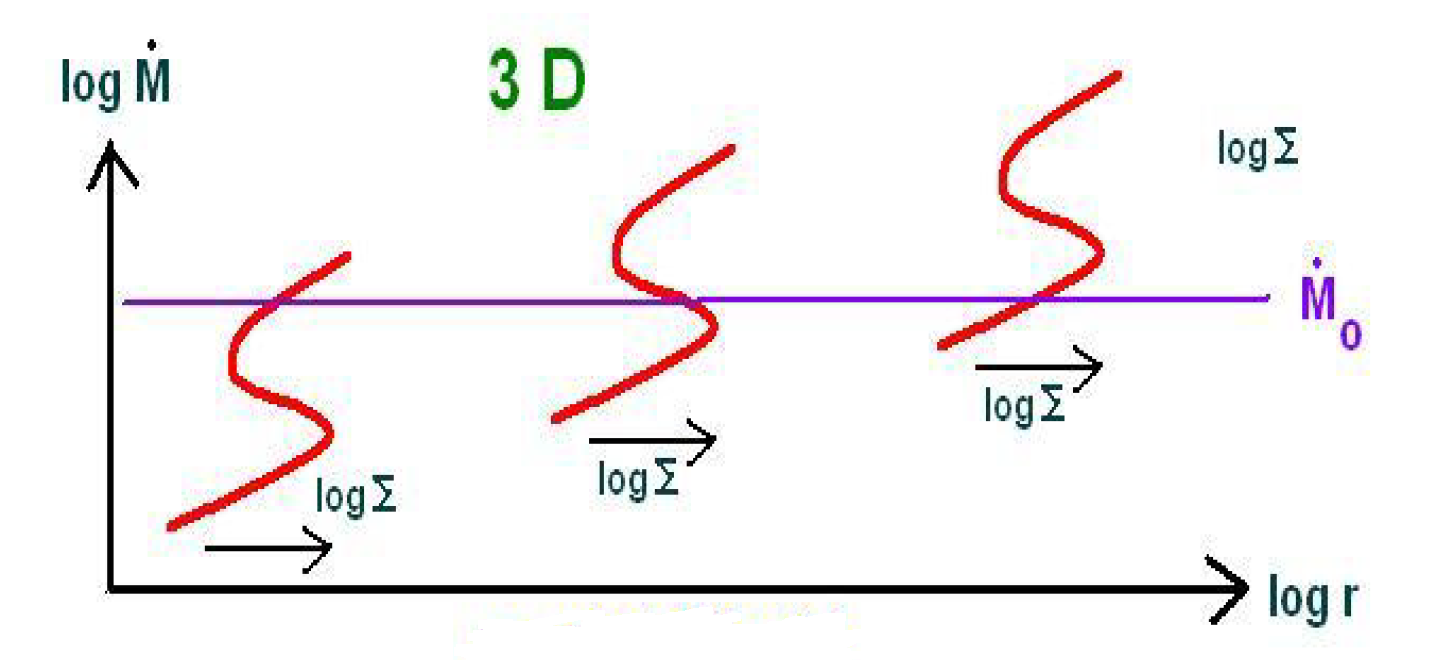 Figure 5
Peer Reviews
No public reviews on file for this paper yet. If you reviewed it on a platform where reviews are public (OpenReview, ICLR, NeurIPS, ICML), you can paste yours below so the community can read it here.
Videos
No videos yet. Explain this paper in a talk, walkthrough, or lecture? Add one.
Taxonomy
TopicsAstrophysical Phenomena and Observations · Astrophysics and Star Formation Studies · High-pressure geophysics and materials
Abstract
Slim accretion disks idea emerged over 30 years ago as an answer to several unsolved problems. Since that time there was a tremendous increase in the amount of observational data where this model applies. However, many critical issues on the theoretical side remain unsolved, as they are inherently difficult. This is the issue of the disk stability under the radiation pressure, the role of the magnetic field in the energy transfer inside the disk and the formation (or not) of a warm corona, and outflows. Thus the progress has to be done both through further developments of the model and through the careful comparison to the observational data.
keywords:
black hole; accretion disks; slim disks; accretion disk stability
\pubvolume
xx \issuenum1 \articlenumber5
\historyReceived: date; Accepted: date; Published: date \TitleSlim accretion disks: theory and observational consequences \AuthorBozena Czerny 1\orcidA \AuthorNamesBozena Czerny
\corresCorrespondence: [email protected]
1 Introduction
Slim accretion disk models were proposed in 1988 by Abramowicz et al. (1988). They describe an optically thick, geometrically not very thin quasi-Keplerian accretion flow onto a black hole in high Eddington ratio sources. In such a flow considerable part of the energy dissipated in the disk interior is carried radially with the flow instead of being reemited at the same radius, as in the standard Shakura and Sunyaev (1973) accretion disk model.
Observed sources are mostly ub-Eddington, but a fraction of active galactic nuclei and some galactic binaries during some stages are close to or above the Eddington ratio and the slim disk model should apply there. Observations indeed support the presence of the optically thick disks in these sources. However, important issues related to the stability of these models and necessary modifications is still under debate. Slim disk of Abramowicz et al. (1988) is based on so-called -viscosity assumption, while fully self-consistent model should predict the viscous torque. The 3-D numerical magneto-hydrodynamical simulations do not yet have all the necessary ingredients to show realistically how the flow onto the black hole proceeds, although there was a tremendous progress in this direction. Thus, at this moment, also semi-analytical models are also very useful tool in confronting the models with the observational data. One of the key issues is actually the presence of the heartbeat states in some astronomical sources and their relation (or not) with the limit cycle behaviour predicted by slim disk model.
2 Accretion disk models
The key parameters in accretion process onto a black hole are the angular momentum of the inflowing material and the accretion rate. Here we concentrate on high angular momentum flow which leads to formation of an accretion disk, and the azimuthal velocity of such flow at a given radius is of the order of Keplerian, apart from the innermost region of the flow close to ISCO.
The accretion rate is conveniently expressed using the dimensionless quantity, , the ratio of the accretion rate to the Eddington accretion rate, . The formal definition of the last quantity is
[TABLE]
where the Eddington luminosity is defined as usually (for a spherically symmetric setup, pure hydrogen plasma)
[TABLE]
is the black hole mass, is the light speed, is Thomson cross-section for scattering in a fully ionized material and is the proton mass, and is the dimensionless accretion efficiency.
Here the subtle point is that the accretion flow efficiency of a slim disk itself depends on the accretion rate. In Shakura and Sunyaev (1973) model the accretion efficiency is 1/12, in full GR extension of this model (Novikov and Thorne, 1973) it is uniquely given by the spin of the black hole, but in slim disks part of the energy is trapped, and as the accretion rate rises, the fraction advected under the horizon rises, and the efficiency of accretion flow drops. Therefore, some authors use in Eq. 1, some use the ’typical value’ of 0.1, and finally some calculate it indeed from the model. In the discussion below I will generally use as a reference value.
Currently used accretion disk models are thus divided predominantly according to the Eddington ratio of the flow, although the value of the angular momentum at the outer disk (more precisely, its relation to the local Keplerian angular momentum) also plays a role. The physics of the accretion process is well described in a number of reviews (e.g. Abramowicz and Fragile, 2013), and the best introduction in a form of a book is offered by Frank et al. (2002). Here I shortly summarize the basic forms of accretion flows.
2.1 spherical accretion and low angular accretion flow
Spherical accretion flow has negligible angular momentum, and the best example is the Bondi flow. Significant part of the flow proceeds supersonically. The flow can be optically thin, like in the case of accretion in weakly active galaxies, or it can be very optically thick in the case of dynamical collapse of a star. If some angular momentum is present, the material meets the centrifugal barrier. Accretion can proceed without, or with, a shock formation. If the corresponding circularization radius is much larger than the Innermost Stable Circular Orbit (ISCO), the rest of the flow has to be described by another models.
2.2 optically thin ADAF flow
If the Eddington ratio is low, well below a few percent, and the angular momentum is a fraction of the Keplerian angular momentum the flow is optically thin, the ion temperature is close to the virial temperature, and the electron temperature (much smaller than the ion temperature in the innermost part of the flow) is determined by the interaction with ions and direct dissipation mechanisms heating electrons. Such a flow is characteristic for Low Luminosity AGN, and for very low luminosity states in galactic sources. Significant fraction of the energy is then advected towards the black hole (hence Advection-Dominated Accretion Flow - ADAF). Since electron temperature there is high, the flow is the efficient source of the X-ray emission.
2.3 standard optically thick geometrically disk.
When the Eddington ratio is higher, the disk material cools down efficiently due to higher density, and the flow becomes optically thick, emitting locally as a black body to a good approximation. The angular momentum of such flow is locally Keplerian (Shakura and Sunyaev 1973, for full General Relativity version see Novikov and Thorne 1973). The disk emission dominates the UV band (for AGN) and soft X-ray band (for galactic sources). The inner radius of the flow is well described by the position of ISCO. Heat advection is negligible in these models, and the local emissivity is by the local dissipation enforced by the transfer of the angular momentum. Accretion efficiency of the flow is set by the position of ISCO, i.e. by the black hole spin. Such models well apply to (some) soft states in galactic sources, and to many quasars in the optical/UV band.
2.4 slim disks
When the accretion rate becomes higher than the Eddington rate, the assumptions underlying standard model break down. Advection term becomes important, the inner radius of the disk moves from its ISCO position (mostly inward, but the effect depends on the viscosity), the departures from the Keplerian angular momentum due to the presence of strong radial pressure gradient become important. The local emission is no longer given by the local dissipation, and a fraction of energy is lost through the inflow under the black hole horizon. The accretion efficiency is lower than in the standard disk, and it decreases with the rise of the accretion rate. These models apply to super-Eddington quasars, Narrow Line Seyfert 1 galaxies, and also to some phases of gamma-ray bursts (but then the physics has to be modified to include neutrino cooling and nuclear processes), and to Tidal Disruption Events (TDE).
2.5 transitions between the models
Here slim disks and standard disks belong to a single branch of solutions. Full slim disk equations can be used to describe the standard disks. The additional terms, present in the slim disk, with automatically become relatively unimportant when the accretion rate is well below the Eddington. This is not the case for the transitions between optically thin and optically thick models. If the viscosity parameter is very high (close or above 1) formal bridge between ADAF and slim disk is found (skipping the standard gas-dominated disk stage), but for lower (more realistic) values the two branches are separate, as shown already in Abramowicz et al. (1995). Thus, the transition between the standard cold disk and the inner ADAF is still under debate, and it seem to require more physics like electron conduction to describe this process (RóżaŃska and Czerny, 2000; Liu et al., 2002), although attempts of describing the transition just at the basis of heating/cooling change are also done (e.g. Hogg and Reynolds, 2017).
3 Historical remarks
Slim disk idea developed out of three earlier independent lines of studies which later convereged into a self-consistent and practical model.
The oldest line of research focused on the proper description of the inner boundary condition of a standard Keplerian disk. The classical model of Shakura & Sunyaev (Shakura and Sunyaev, 1973) assumed that there is no torque acting at the inner edge of the flow and concentrated on the description of the disk at larger radii, not even touching the issue how the flow actually proceeds from the disk toward the black hole horizon. The issue was rised in a number of papers but without offering a satisfactory solution (e.g. Stoeger, 1976). Lead by Bohdan Paczynski, we started the research in this direction at Copernicus Astronomical Center, starting from the proper understanding that the flow must be actually the same as the outflow through the inner Lagrange point L1 in binary starts. Paczynski and Bisnovatyi-Kogan (1981) used a simplified version of equations which did not allow yet to describe the transition of the flow from subsonic outside to supersonic flow below the innermost stable circular orbit, Loska (1982) defined conditions of the transonic flow in the case of barytropic gas, and the complete description of the flow, with advection term, radial radiative term, equation of state based on self-consistently determined gas to radiation pressure ratio was presented by Muchotrzeb and Paczynski (1982). The model described using the vertically-averaged disk model, and the gravity field of the black hole was described in pseudo-Newtonian approximation (Paczyński and Wiita, 1980). Solution had to be determined numerically, and the code prepared by Muchotrzeb and Paczynski (1982) was actually used by Abramowicz et al. (1988) as it already has all the required elements, and it already implied that with the rise of the accretion rate for a given black hole mass, the sonic point moves inward from ISCO (Innermost Stable Circular Orbit) if the viscosity coefficient is small (for large viscosity behaviour, see Muchotrzeb 1983).
The second line of research concentrated on geometrically thick accretion disks, known as Polish dognuts, which were seemingly required to produce well collimated extended jets observed in a fraction of active galaxies. This line of research was also vigorously studied in Warsaw (e.g. Jaroszynski et al., 1980). An important contribution here to slim disk concept was to notice that at certain regime (above the Eddington limit) the radiation in the (spherically symmetric) flow is trapped (Katz, 1977; Begelman, 1978). These models were truly two-dimensional, optically thick disks, and their construction was strongly based on the general idea of figures of equilibrium. For example, models created by Paczyński and Wiita (1980) using the pseudo-Newtonian potential had an inner and also the outer edge, their radial extension was determined by the adopted radial distribution of the angular momentum, since the inner and the outer edge were located at the interception points with the Keplerian angular momentum distribution. Finding the equipotential surface passing through the inner and outer radius allowed to obtain immediately the full 2-D shape. The local radiation from the disk surface was calculated assuming that the local radiation flux, perpendicular to the disk surface is equal to the Eddington flux. Thus, overall emission corresponded to super-Eddington luminosity due to geometry. Global energy budget provided the corresponding accretion rate. However, local energy budget between heating and cooling is not considered in these models, and therefore the angular momentum distribution has to be assumed. In slim disks, developed later, this budget is considered, and therefore the angular momentum distribution is calculated self-consistently for an assumed accretion rate. These models are not used to interpret the data since they require these additional assumptions, but they are useful as initial setup for MHD time-dependent computations. An important contribution here to slim disk concept was also to notice that at certain regime (above the Eddington limit) the radiation in the (spherically symmetric) flow is trapped (Katz, 1977; Begelman, 1978). It also showed a geometrical similarity between an inner edge of geometrically thick disk and a star filling its Roche lobe.
The third line of research was devoted to the problem of thermal and viscous instability of a standard disk. These two instabilities were discovered (soon after publication of Shakura and Sunyaev 1973) by Pringle et al. (1973) and Lightman and Eardley (1974), correspondingly (for combined effect of the two instabilities, see Shakura and Sunyaev 1976). This questioned the very existence of the accretion disks, otherwise attractive as explanation of the accretion phenomenon in binary systems and in active galactic nuclei (Shakura and Sunyaev, 1973; Lynden-Bell, 1969). Using unstable models seemed problematic. The way out was first searched for in the form of modification of the viscosity law. The classical Shakura and Sunyaev (1973) model is based on assumption that the viscour torque is proportional to the total pressure in the disk interior, i.e. gas plus radiation pressure, and the instability appeared for relatively high accretion rate, when the radiation pressure starts to dominate. Sakimoto and Coroniti (1981) proposed pure magnetic viscosity model and argued that in such case the viscous torque is proportional only to the gas pressure which led to stable disks, of much higher surface density, with self-gravitational instabilit in the outer parts. Abramowicz et al. (1988) introducing slim disk still adopted the Shakura and Sunyaev (1973) viscosity prescription but included the advection term which acts (predominantly) as a cooling term. Thus, at very high accretion rates the disk becomes stable. This discovery brought back the interest in accretion disks models as the models of the continuum emission in binary black holes and active galactic nuclei.
4 Applicability and observational appearance
The slim disk equation in their original formulation (Muchotrzeb and Paczynski, 1982; Abramowicz et al., 1988) were using the pseudo-Newtonian gravitational potential of Paczyński and Wiita (1980), and they used the vertically-averaged disk structure. But they contained the key elements: the advection term, the radial pressure gradients, and the proper description of the inner boundary conditions. The presence of the radial pressure gradient allowed to determine, instead of just assume, the radial angular momentum distribution of the angular momentum in the disk. Specifically, the presence of these terms allow to determine where the radial velocity of the flow becomes supersonic, and it must become supersonic before it crosses the black hole horizon. As an inner boundary, the zero-torque condition is assumed, but not at ISCO, as in the standard disk, but at the black hole horizon. The flow is thus calculated all the way to the black hole horizon, and the location of the sonic point (usually below ISCO) results from the model and depends on the accretion rate and viscosity. Due to the presence of these additional radial terms, the model also describes the heat advected with the flow. As mentioned before, for accretion rates much lower than the Eddington ratio the model is in practice similar to the standard model, the advection term is almost unimportant, apart from the region where the flow changes into supersonic, but this transition happens very close to ISCO, and not much energy is dissipated there.
Further numerical developments cover formulation of the slim model in full GR, which gives the opportunity to study the dependence of the model on the black hole spin (Sa̧dowski et al., 2011) since pseudo-Newtonian approach mimics well only the Schwarschild solution. In addition, Sa̧dowski et al. (2011) also introduced a description of the vertical structure of the disk by combining slim disk equations in the vertical plane with the disk vertical structure equations from Newtonian model of RóżaŃska et al. (1999) which include the vertical radiative transfer, convection in the vertical direction, local description of the heating using the parameters. Such 1+1 structure is the most advanced stationary slim model built up to date. However, many trends can be studied using much simpler models, like for example semi-analytical models like super-critical self-similar solutions (Wang and Zhou, 1999).
The role of advection in the disk rises with the rise of the accretion rate, , and some effects start to be seen at , and for above 1 the effects are very important. The advection modifies the shape of accretion disk spectrum. The long wavelength range is not strongly affected since this part of emission comes from the outer parts where advection is not yet strong, but the innermost part of the disk emits less than in classical model so the slim disk spectrum is redder than the corresponding standard model. Finally, the radiation flux emitted close to ISCO in slim disk is again enhanced (see Fig. 7 in Muchotrzeb and Paczynski, 1982) but this affects less the total spectrum since only a relatively small fraction of energy is dissipated there. The effects were studied in a number of papers, and models were applied to a whole range of sources from binary stars, through intermediate black hole mass candidates to active galaxies Szuszkiewicz et al. (1996); Straub et al. (2014). However, observationally the issue is not quite settled, for example recent work on fitting broad band spectra of high Eddington ratio and lower Eddington ratio sources did not show any clear differences, and both were well fitted by a standard disk model (Castelló-Mor et al., 2017). The improvement in use of the slim disk over the standard disk was also not so significant in the case of binary systems close to the Eddington luminosity (Straub et al., 2011), although the model used there, developed by Sa̧dowski et al. (2011), was already an improvement of the original model of Abramowicz et al. (1988).
The slim disk model predicts that as the accretion rate rises, the luminosity rises relatively slowly, and finally saturates at the value of about 10 times higher than the Eddington luminosity. The luminosity rise with accretion rate (see e.g. Figure 11 in Abramowicz and Fragile 2013) above the Eddington rate can be well approximated as a logarithmic rise
[TABLE]
for a non-rotating black hole (Wang et al., 2014a).
AGN approaching this limit were thus proposed to be used as standard candles in cosmology to measure the expansion rate of the Universe (Wang et al., 2014b; Marziani et al., 2019).
Accretion disks at high accretion rate becomes geometrically thicker which additionally collimated the radiation emitted by the innermost part of the disk and affect the illumination of the disk surrounding, including the Broad Line Region (Wang et al., 2014a).
Determination of the black hole mass and Eddington ratio in large quasar samples are never very accurate, most of the higher quality measurements from Shen et al. (2011) catalog imply that most quasars concentrate around but the tail goes to or above the Eddington ratio (Panda et al., 2018). Eddington or super-Eddington accretion rates were claimed for a number of sources (e.g. Collin and Kawaguchi, 2004; Du et al., 2015; Negrete et al., 2018; Martínez-Aldama et al., 2018), and the results or the reverberation measurements in super-Eddington AGN were different that similar results for lower Eddington ratio sources (Du et al., 2016, 2018) supporting the view that indeed a fraction of the sources belongs to this category.
5 Stability of classical slim accretion disks
Altough the aim of formulating the slim disk model was to provide a stable solution for the high accretion rate flow, this goal was not actually fully achieved. However, the most important step was made in unswering the question: what happens when the disk becomes unstable due to radiation pressure? The answer was: at sufficiently high accretion rate indeed the flow cools down by advection and the flow is stabilized. However, the global picture is more complex, in close analogy to the ionization instability issue in the case of cataclysmic variables and X-ray novae.
The global behaviour of the accretion disk is governed by two trends: one describing the local behaviour of the disk structure changes with the rise of the accretion rate, and the second which shows how this behaviour scales with the distance from the black hole.
It we study locally the disk structure close to a black hole, for example at 10 (where ) as a function of the accretion rate, at low accretion rate the disk surface density rises, when the pressure is dominated by the gass pressure. With further rise of the accretion rate we enter the radiation-pressure dominated branch, and the disk surface density now decreases with the rise of the accretion rate.
This solution is unstable, since the heating rises more rapidly than the disk cooling with a small rise in the disk temperature. Finally, when we approach the Eddington limit the advection sets in, and a new stable advection-dominated branch developes. Now again the surface density in the disk rises with the increase of the accretion rate. Thus, for high accretion rates the disk becomes stable. This is quantitatively ilustrated in Figure 2 of Abramowicz et al. (1988), and schematically shown in Figure 1 above, first insert. Since the plots shows so nicely the stability or instability of a partucular disk we call these plots stability curves.
Abramowicz et al. (1988) plots the stability curves only in a very narrow range of radii. The upper branch of this curve (stable branch) corresponds to a slim disk solution while the other two branches are predicted by the classical disk model. The intermediate branch is unstable. In Shakura and Sunyaev (1973) this branch would extend till arbitrary accretion rate but the new terms present in the slim disk model (negligible at low accretion rates) forced the unstable branch to bent. However, if we go to radii of order of a few hundred , the overall shape of the curve does not change much, but the ’location’ of the curve changed dramatically. This is schematically illustrated in Figure 1. The dominating effect is the shift up, so if we consider an accretion rate of a few (in dimensionless units, introduced above), at a distance of hundreds of such accretion rate would imply that the disk is at the unstable radiation-pressure dominated branch, and advection is still unimportant, while if he go further from the black hole, for the same accretion rate the disk is still dominated by the gas pressure. This happens since in general, in the classical solution of the Shakura and Sunyaev (1973) the ratio of the radiation to gas pressure goes down with the radius for a fixed accretion rate. The radii when these transitions take place depend on the mass of the central body, and in general the accretion disks in active galaxies are much more radiation-pressure dominated than in the case of accretion disks at binary black holes. The stabilization due to advection happens in both at roughly the same accretion rate but the stable and unstable zones are much more extended in active galaxies, as illustrated in Janiuk and Czerny (2011).
Therefore, unless the outer radius of the disk is very small, slim disks always have intermediate unstable zone. Thus the models are not stationary. Still, due to the new advection term it was later possible to calculate the time evolution of the disk in the same way as it was done for cataclysmic variables (Meyer and Meyer-Hofmeister, 1981; Smak, 1984), where the stable upper and lower branch were provided by neutral and fully ionized disk states, complementing the intermediate unstable branch, corresponding to parially ionized gas. Only for a slim disk we have an upper advection-dominated branch and lower, gas pressure dominated branch.
If, at a given radius, the mean accretion rate locates the disk on the unstable (radiation-pressure dominated) branch, the disk structure performes the time evolution, with epizodes of outbursts and low states. During outburst the source is on the upper branch, the temperature and radiation flux are high, the accretion rate is high but the ring looses effectively the material, as the mass inflow towards the black hole is not fully compensated by the inflow from outer radii. The disk surface density systematically decreases during this phase. At low state, the temperature and the radiation flux are low, the material effectively accumulates in the ring, and the surface density rises slowly in a viscous timescale.
The limit cycle must be happening ati-clock wise, on the stability curve, as the arguments above imply. The transition from the upper to lower branch takes place when the disk cannot achieve a solution in thermal balance on the upper branch with further reduction of the surface density, and the transition takes place in the thermal timescale. Roughly the same happens when the ring accumulated so much mass that further increase of the survade density leand to lost thermal balance and the disk rapidly expands reaching the upper branch.
Of course, rings are coupled, so it is actually necessary to calculate the evolution of the whole disk but it looks qualitatively similar: large parts of the disk alternate between the upper and the lower stable branch. The inner, formally stable part of a slim disk is also affected since the outer - unstable - part of the disk alternates the supply of the material to the innermost part. So whole inner disk is subject to strong variability.
The models of the time-dependent evolution has been calculated by a number of autors (Nayakshin et al., 2000; Janiuk et al., 2000, 2002; Janiuk and Czerny, 2007; Czerny et al., 2009; Grzȩdzielski et al., 2017a, b), generally with the aim to compare to some observational data for objects showing outbursts. Thus, to fit the outburst amplitude, some modification of the model were usually introduced since in general the outbursts calculated without any modification had too high amplitudes. We will return to this issue later on. In general, these simulations showed regular or semi-regular changes of the predicted luminosity up to a few orders of magnitude. Computations were done in 1-D approximation but globally, with calculated total duration of several of the viscous timescales at the outer, stable part of accretion disk but they still resolved the time evolution of the inner disk part in the thermal timescale.
Here an important point was raised by Gu and Lu (2007). The equations of the slim disks were always solved still in geometrically thin disk approximation, i.e. with expansion of the gravitational potential against , where is the distance from the equatorial plane. This might not be correct for high Eddington ratio sources, since the prediction of the standard disk is that the disk thickness in the radiation pressure dominated part rises linearly with the accretion rate (Shakura and Sunyaev, 1973). If the local disk thickness become larger than the radius, the gravity force in the verical direction would start to decrease with further rise of accretion rate. This in turn might lead to a strong outflow. However, Lasota et al. (2016) argued that this never happens since the advection term will prevent slim disk from becoming thick at arbitrary high accretion rate. Thus, the standard computations of the slim disk evolution are self-consistent.
6 Observational support of outbursts due to radiation pressure
The issue is still under debate whether some regular outbursts observed in accreting sources are actually signatures of the radiation pressure instability in slim disks. In the class of binary black holes, two sources display well defined periodic outbursts (now refered to as heartbeat mode): GRS 1915+105 and IGR J17091-3624. The outbursts last of order of seconds to hundreds of seconds. Several properties of the outbursts are well modeled by the radiation pressure instability, transitions between the states take place anti-clockwise (Janiuk et al., 2002), outbursts are longer when the mean accretion rate is higher (Janiuk et al., 2000). Also the time delay between the hard X-rays and the sift X-rays are in agreemnet with the data if a model of an unstable disk with an accreting corona is used for GRS 1915+105 (Janiuk and Czerny, 2005). On the other hand, other sources do not show such clear states, even at high Eddington ratios, which can be either interpreted as an argument against the very existence of the radiation pressure instability, or might imply that in other sources the effect of winds and/or magnetic fieled changes the regular outbursts into semi-regular periods of enhanced variability Janiuk and Czerny (2011).
Active galaxies are much larger in size, so the timescales of the same phenomenon are correspondingly longer, and the predicted durations of outburst caused by radiation pressure are of order of thousands of years, and they are not accesible to direct observations. However, statistical comparison of the duration of active phave in short-lived radio loud AGN is generally consistent with expectations of the slim disk instability (Czerny et al., 2009). Wu et al. (2016) argued that this is a universal phenomenon seen across the whole black hole mass scale, from binary systems through intermediate black hole outbursts (source HLX-1) to active galaxies.
The comparison of the simple parametric models with the data is one of the ways to establish whether this instability is present. On the other hand, models are based on assumption of the viscosity law, and usually some modifications are required to decrease the outburst amplitude, like the use of the or even more general models (e.g. Szuszkiewicz, 1990; Grzȩdzielski et al., 2017a), or wind coupled to the local accretion rate (e.g. Janiuk et al., 2015).
7 MHD simulations of radiation pressure dominated disks
Ohsuga et al. (2005) were the first to calculate the model of the superctical accretion flow. The flow settled down to a quasi-stationary state. However, these computations were still done in radiative hydrodynamical (RHD) mode, so used the viscosity prescription basically as in standard disk. Also the radial range considered was too small to see any issues related to the global stability discussed above (input material had circularization radius at 100 ).
What is more important, since the year 1981 we are convinced that the viscosity is generated as a result of magnetorotational instability (MRI; Balbus and Hawley 1991). Therefore, the ad-hoc assumption of
the -viscosity law is not needed (in principle) any more. The real progress and answer to the question about the global stability of the super-Eddington flow should come from radiative MHD computations. With this insight, the arbitrary assumption of the viscous torque scaling is not needed, as it should come automatically and self-consistently from the computations.
However, in reality the issue is not as simple as outlined above. If MRI instability has to be followed, the computations of the disk structure must be done in 3-D (even 2-D is not a good approximation for proper desciprion of the dynamo action). The computational timestep must be also shorter than in 1-D computations discussed in Section 5. So instead of a single PC, computations are to be run at computer clusters, and they have difficulties in covering the whole disk for many viscous timescales.
Most 3-D MHD simulations are actually performed in a shearing box approximation, when only a very narrow radial zone is included, and periodic boundaries are assumed. This apparently affects the results. First results suggested that radiation pressure instability does not develop in real radiation pressure dominated disks (Turner, 2004; Hirose et al., 2009) but subsequent sumulations using larger grid domain and more advanced radiative transfer approximation were able to see the thermal runaway after a few thermal timescales (Jiang et al., 2013). Jiang et al. (2016) concluded that if the opacity in the computations include the atomic transitions of iron ions instead of just Thomson cross-section, the disk is stabilized, but again they used a very narrow ring in their computation and the global stabilization of the disk by the use of more complex opacity is unlikely (Grzȩdzielski et al., 2017b).
8 Hot coronae,warm coronae,outflows
However, the most important issue of the slim disk model, and its limitations are related to topics we still do not understand. However, observations show us clearly that our knowledge is incomplete. Slim disks, like the classical disks, do not provide explanation for the jet formation, hard X-ray emission, soft X-ray excess and winds. This is because the disk is basically assumed to be dominated by the thermal pressure, and MRI can change it into outer optically thin layers which do not contribute much to the total spectrum. On the other hand, spectra and variability implies that that these phenomena take place in the inner part of the disk. So something must be missed in the model.
Adding these elements to the model in a parametric way modifies the behaviour of the disk itself, including the disk stability. Winds can reduce the outburst magnitude, as mentioned already in Section 5 but magnetic field providing the energy transport deeply inside the disk can completely stabilize the disk. Such models in parametric form were proposed by a number of authors, particularly in the context of the corona formation and hot flow/cold flow transitions (e.g. Svensson and Zdziarski, 1994; Zycki et al., 1995; Chakrabarti and Titarchuk, 1995; RóżaŃska et al., 1999; Czerny et al., 2003; Rajesh and Mukhopadhyay, 2010).
More advanced, but still semi-analytical models of this phenomena were recently developed, for example by Begelman et al. (2015); Begelman and Silk (2017); Dexter and Begelman (2019); Gronkiewicz and Różańska (2019). Some 3-D simulations of such flows were also performed (e.g. Fragile and Sa̧dowski, 2017) but they required ad hoc presence of the large scale magnetic fields which did not result from the simulations.
More complex time depended behaviour of the disk interior can also stabilize the disk. Janiuk and Misra (2012) considered a role of the stochastic fluctuations of the disk which are naturally expected due to MRI-based viscosity mechanism. They showed that large enough amplitude of such turbulence quenches the radiation pressure instability. This model is semi-analytical, and in principle, the described behaviour should be reproduced in advanced MHD computations without any ad hoc assumptions. But current MHD results are not yet capable of reproducing many other phenomena like power spectra, frequency-dependent time lags, which still have to be modeled in an alternative way (e.g. Ahmad et al., 2018).
Interesting possibility is related to the idea of Magneticall Arrested Disks (MAD) which could lead to modification of the flow close to the central object due to accumulated strength of the large-scale field lines. Such phenomenon has been considered by a number of authors (Narayan et al., 2003; Mondal and Mukhopadhyay, 2019), and it could be responsible for radio loud/radio quiet dychotomy in active galaxies, for the phenomenon of Changing Look (CL) AGN or for the appearance of Ultra-Luminous X-ray sources. However, simulations of MAD were generally done in the context of optically thin ADAF-type flow, and not in the case of slim disks, and we do not know if indeed the same mechanism can work also for those disks.
9 Physics missing
We may still be missing some key elements in the global 3-D MHD simulations. We actually do not know whether it is realistic to expect that a basic MHD run of the accretion process will explain all the complexity observed in accreting black holes. However, this is certainly a goal, and at least we should try to test, if we have enough physics in the equations to expect that. Some elements are still clearly missing.
For example, most recent 3-D simulations performed so far for sub-Eddington accretion rates by Jiang et al. (2019) include new elements: radiation viscosity in the optically thin corona region. This allows them to see the formation of the warm/hot corona, with temperature above in the innermost part of the disk, and the corona becomes more compact for rising accretion rate.
Ghoreyshi and Shadmehri (2018) propose to add the radial viscous force. McKinney et al. (2017) show that double Compton and cyclo-synchrotron cooling is also important and affects the conclusions about the temperature in the innermost part of a slim disk. Convection is certainly present in the accretion disks (e.g. RóżaŃska et al., 1999; Sadowski et al., 2009). This should be present automatically in global 3-D simulations but not in shearing-box approximation. Several processes are well known, but usually not included in the modelling due to their complexity, like electron conduction (e.g. Liu et al., 2017), magnetic field reconnection (e.g. de Gouveia Dal Pino et al., 2010).
We may also need to return to the issue of the anomalous viscosity in the disks (i.e. -viscosity). It is nicely summarized by Hawley and Balbus (1998). They stress that the standard dynamical voscosity in the flow, , when forced to provide the requested -viscosity has implications for the mean free path and the turbulent velocity of the medium:
[TABLE]
where is the local density, is the turbulent motion velocity, is the sound speed, and is the mean free path of a particle, and is the disk thickness.
Since in Shakura and Sunyaev (1973) model, is of order of 0.1, this means that we usually assume a mean free path of the partcle of order of 0.1 H, and the turbulent motion velocity equal to that of the sound speed. This is extreme, and this is the reason why the viscosity operating in accretion disks was named ’anomalous’. MRI solved this problem, we do not need ’anomalous’ viscosity any more. However, we should note, that if hot two-temperature corona forms above an accretion disk, in such a corona mean free path of ions is actually quite large, and sound speed is latge there as well, so in the hot corona standard dynamical viscosity should effectively provide an efficient accretion flow. This is not yet included in any 3-D simulations to my knowledge.
10 Conclusions
In this review I shortly presented the history of the slim disk model, its applicability range, and most of all, its limitations. The description of the accretion flow close to or above the Eddington limit is still quite uncertain. Further, more advanced MHD simulations are needed, but they have to be supplemented with simpler, easy to calculate 1-D models, which can be easily compared to the broad band observational data for galactic binary systems and active galaxies. Modelling time-dependence in observed sources is particularly valuable since stationary spectra are frequently rather degenerate with respect to the model properties. We should keep in mind that spectral properties of a stationary, optically thick, geometrically thin Keplerian disk of (Shakura and Sunyaev, 1973) do not depend on the disk interior (including the viscosity law) while the time-dependent evolution reflect the internal structure. Slim disks should also be tested not only against the spectral properties but also through their time variability.Parametric approach to modelling the data can also help us to know how frequently real objects are in this regime, so developments of models with slim disk option included (Kubota and Done, 2019) and prepared to bo fitted to the data is very valuable.
\funding
This research waspartially supported by the National Science Center, Poland, grant No. 2017/26/A/ST9/00756 (Maestro 9).
Acknowledgements.
We are grateful to Agnieszka Janiuk and Jina-Min Wang for very helpful recent discussions of the topic of slim disks. \conflictsofinterestThe author declares no conflict of interest. \externalbibliographyyes
The reference list from the paper itself. Each links out to its DOI / PubMed record.
- 1Abramowicz et al. (1988) Abramowicz, M.A.; Czerny, B.; Lasota, J.P.; Szuszkiewicz, E. Slim accretion disks. Ap J 1988 , 332 , 646–658. doi: \changeurlcolor black 10.1086/166683 . · doi ↗
- 2Shakura and Sunyaev (1973) Shakura, N.I.; Sunyaev, R.A. Black holes in binary systems. Observational appearance. A&A 1973 , 24 , 337–355.
- 3Novikov and Thorne (1973) Novikov, I.D.; Thorne, K.S. Astrophysics of black holes. Black Holes (Les Astres Occlus); Dewitt, C.; Dewitt, B.S., Eds., 1973, pp. 343–450.
- 4Abramowicz and Fragile (2013) Abramowicz, M.A.; Fragile, P.C. Foundations of Black Hole Accretion Disk Theory. Living Reviews in Relativity 2013 , 16 , 1, [ar Xiv:astro-ph.HE/1104.5499] . doi: \changeurlcolor black 10.12942/lrr-2013-1 . · doi ↗
- 5Frank et al. (2002) Frank, J.; King, A.; Raine, D.J. Accretion Power in Astrophysics: Third Edition ; 2002; p. 398.
- 6Abramowicz et al. (1995) Abramowicz, M.A.; Chen, X.; Kato, S.; Lasota, J.P.; Regev, O. Thermal equilibria of accretion disks. Ap J 1995 , 438 , L 37–L 39, [astro-ph/9409018] . doi: \changeurlcolor black 10.1086/187709 . · doi ↗
- 7RóżaŃska and Czerny (2000) RóżaŃska, A.; Czerny, B. Vertical structure of the accreting two-temperature corona and the transition to an ADAF. A&A 2000 , 360 , 1170–1186, [astro-ph/0004158] .
- 8Liu et al. (2002) Liu, B.F.; Mineshige, S.; Meyer, F.; Meyer-Hofmeister, E.; Kawaguchi, T. Two-Temperature Coronal Flow above a Thin Disk. Ap J 2002 , 575 , 117–126, [astro-ph/0204174] . doi: \changeurlcolor black 10.1086/341138 . · doi ↗