Spin-polarization effects of an ultrarelativistic electron beam in an ultraintense two-color laser pulse
Huai-Hang Song, Wei-Min Wang, Jian-Xing Li, Yan-Fei Li, Yu-Tong Li

TL;DR
This paper investigates how ultrarelativistic electron beams become spin-polarized when colliding with ultraintense two-color laser pulses, revealing asymmetries and polarization effects driven by quantum radiation processes.
Contribution
It introduces a Monte Carlo simulation approach to analyze spin-resolved electron dynamics in two-color laser fields, highlighting the impact of field asymmetry and phase on polarization.
Findings
Electron radiation probabilities are asymmetric in the two-color field.
Electron beams can achieve about 11% total polarization.
Partial polarization can reach up to 63% depending on phase.
Abstract
Spin-polarization effects of an ultrarelativistic electron beam head-on colliding with an ultraintense two-color laser pulse are investigated comprehensively in the quantum radiation-dominated regime. We employ a Monte Carlo method, derived from the recent work of [Phys. Rev. Lett. {\bf 122}, 154801 (2019)], to calculate the spin-resolved electron dynamics and photon emissions in the local constant field approximation. We find that electron radiation probabilities in adjacent half cycles of a two-color laser field are substantially asymmetric due to the asymmetric field strengths, and consequently, after interaction the electron beam can obtain a total polarization of about 11\% and a partial polarization of up to about 63\% because of radiative spin effects, with currently achievable laser facilities, which may be utilized in high-energy physics and nuclear physics. Moreover, the…
Click any figure to enlarge with its caption.
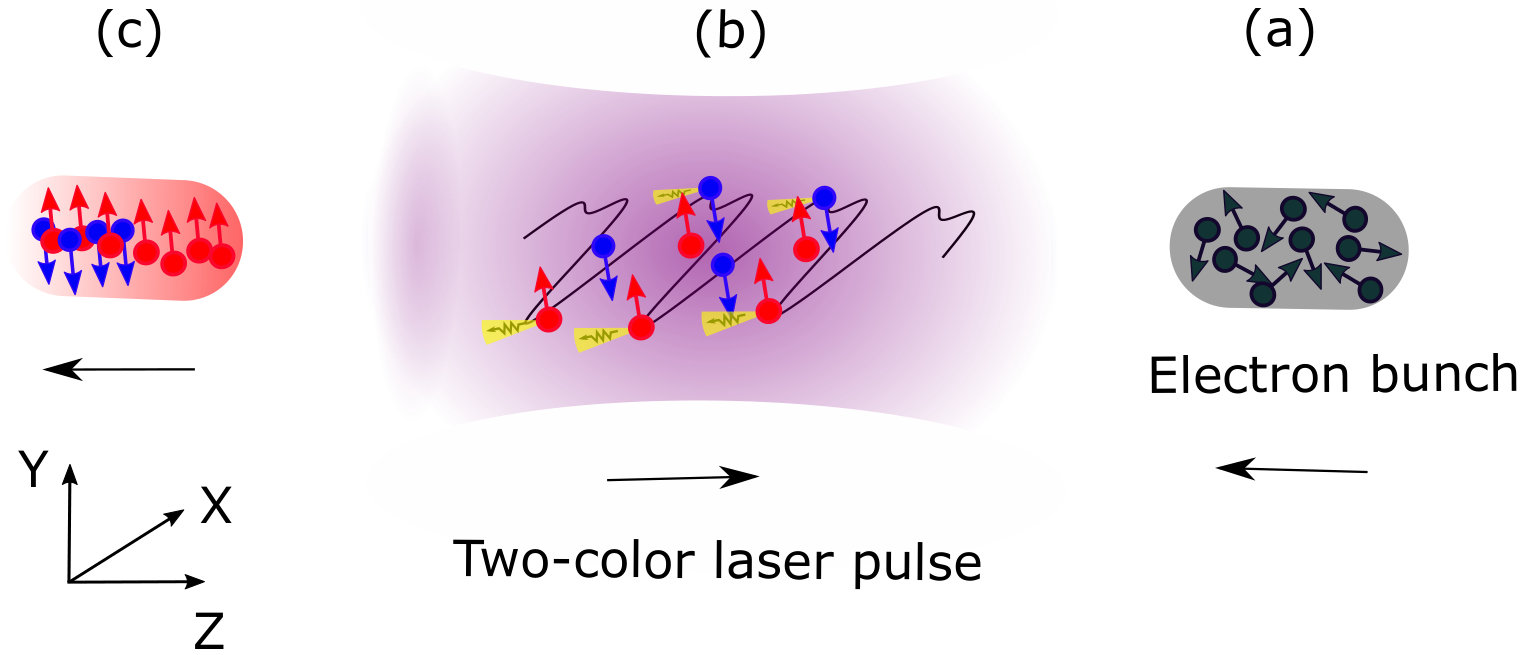 Figure 1
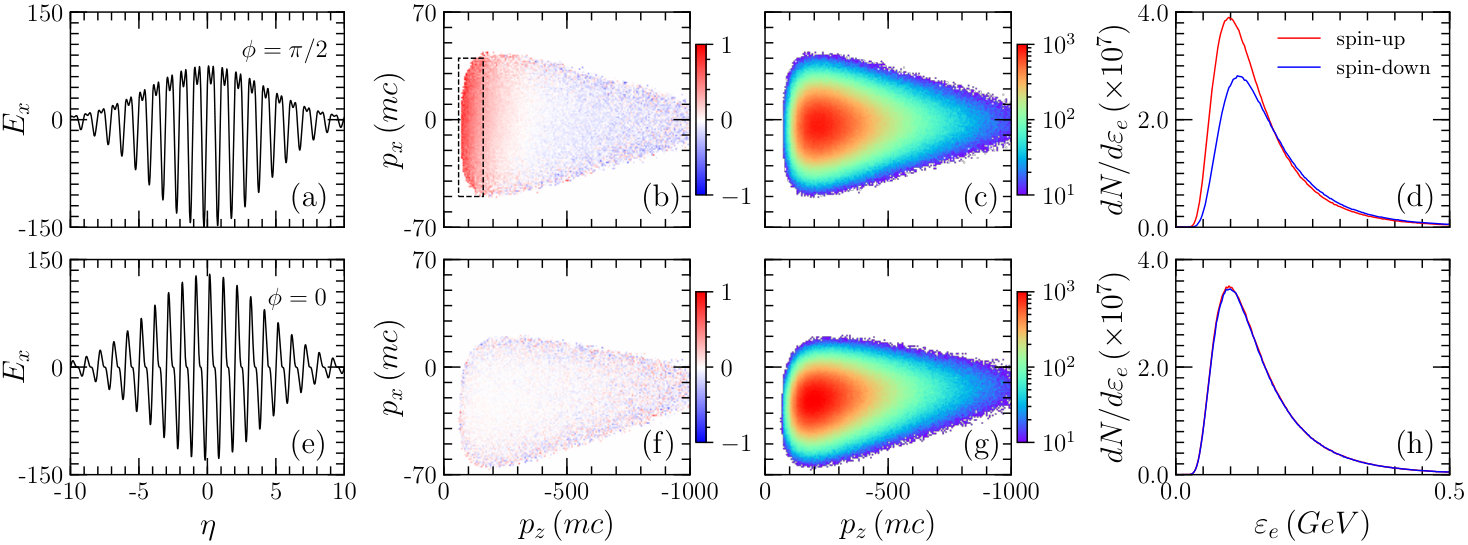 Figure 2
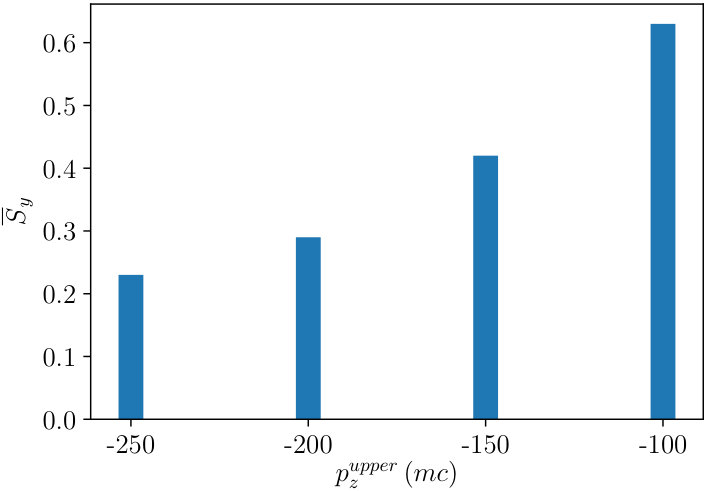 Figure 3
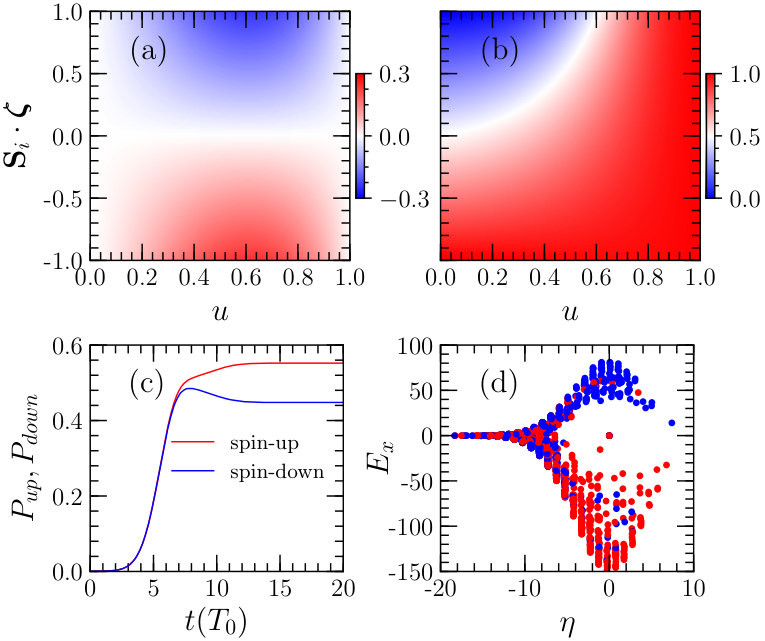 Figure 4
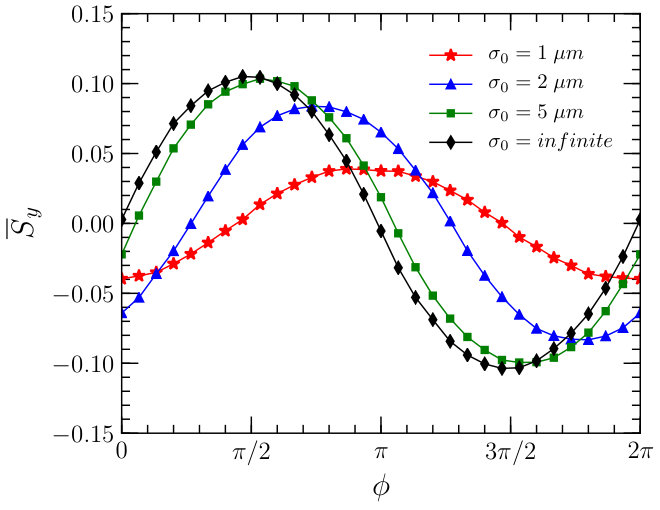 Figure 5
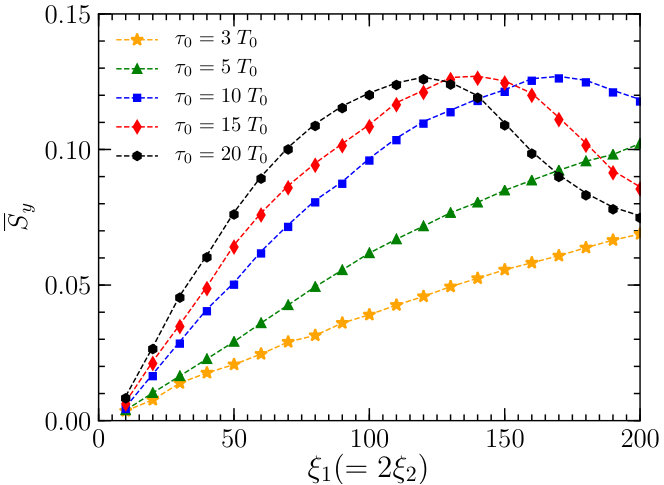 Figure 6
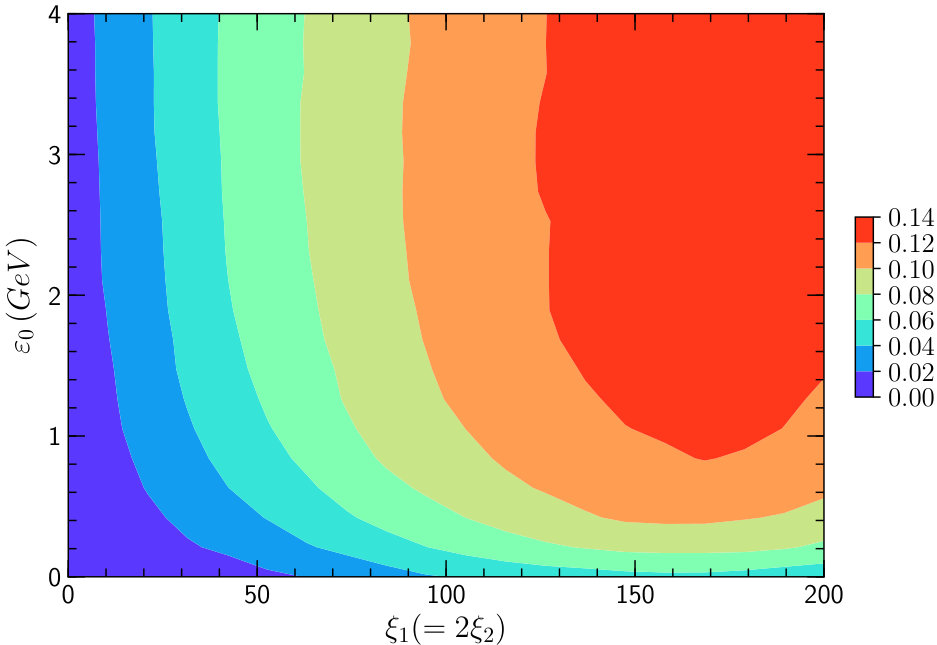 Figure 7
Peer Reviews
No public reviews on file for this paper yet. If you reviewed it on a platform where reviews are public (OpenReview, ICLR, NeurIPS, ICML), you can paste yours below so the community can read it here.
Videos
No videos yet. Explain this paper in a talk, walkthrough, or lecture? Add one.
Spin-polarization effects of an ultrarelativistic electron beam in an ultraintense two-color laser pulse
Huai-Hang Song
Beijing National Laboratory for Condensed Matter Physics, Institute of Physics, CAS, Beijing 100190, China
School of Physical Sciences, University of Chinese Academy of Sciences, Beijing 100049, China
Wei-Min Wang
Department of Physics, Renmin University of China, Beijing 100872, China
Beijing National Laboratory for Condensed Matter Physics, Institute of Physics, CAS, Beijing 100190, China
Jian-Xing Li
MOE Key Laboratory for Nonequilibrium Synthesis and Modulation of Condensed Matter, School of Science, Xi’an Jiaotong University, Xi’an 710049, China
Yan-Fei Li
MOE Key Laboratory for Nonequilibrium Synthesis and Modulation of Condensed Matter, School of Science, Xi’an Jiaotong University, Xi’an 710049, China
Yu-Tong Li
Beijing National Laboratory for Condensed Matter Physics, Institute of Physics, CAS, Beijing 100190, China
School of Physical Sciences, University of Chinese Academy of Sciences, Beijing 100049, China
Songshan Lake Materials Laboratory, Dongguan, Guangdong 523808, China
Abstract
Spin-polarization effects of an ultrarelativistic electron beam head-on colliding with an ultraintense two-color laser pulse are investigated comprehensively in the quantum radiation-dominated regime. We employ a Monte Carlo method, derived from the recent work of [Phys. Rev. Lett. 122, 154801 (2019)], to calculate the spin-resolved electron dynamics and photon emissions in the local constant field approximation. We find that electron radiation probabilities in adjacent half cycles of a two-color laser field are substantially asymmetric due to the asymmetric field strengths, and consequently, after interaction the electron beam can obtain a total polarization of about 11% and a partial polarization of up to about 63% because of radiative spin effects, with currently achievable laser facilities, which may be utilized in high-energy physics and nuclear physics. Moreover, the considered effects are shown to be crucially determined by the relative phase of the two-color laser field and robust with respect to other laser and electron beam parameters.
pacs:
I Introduction
As one of the intrinsic properties carried by electrons, the spin has been extensively studied and utilized in the high-energy physics Moortgat-Pick et al. (2008); Mane et al. (2005); Abbott et al. (2016), materials science Žutić et al. (2004), and plasma physics Marklund and Brodin (2007); Brodin and Marklund (2007). As known, the relativistic polarized electrons are commonly generated via two methods. The first extracts polarized electrons from a photocathode Pierce and Meier (1976) or spin filters Batelaan et al. (1999); Dellweg and Müller (2017a, b), and then employs a conventional accelerator or a laser wakefield accelerator Wen et al. (2018) to accelerate them into the relativistic realm. The second directly polarizes a relativistic electron beam in a storage ring via using the radiative polarization effect (Sokolov-Ternov effect) Sokolov and Ternov (1964, 1968); Baier and Katkov (1967); Baier (1972); Derbenev and Kondratenko (1973). However, the latter typically requires a long polarization time of about minuteshours because of the low static magnetic field at the Tesla scale.
Recently, the rapid development of ultrashort (duration tens of femtoseconds) ultraintense (peak intensity , and the corresponding magnetic field Tesla) laser techniques eli ; Exawatt Center for Extreme Light Stidies () (XCELS) is providing opportunities to investigate electron polarization effects in such strong laser fields, analogous to the Sokolov-Ternov effect. A plenty of theoretical works have been performed in nonlinear Compton scattering, e.g., see Panek et al. (2002); Kotkin et al. (2003); Karlovets (2011); Boca et al. (2012); Krajewska and Kamiński (2013) and the references therein. However, only a small polarization can be obtained in a monochromatic laser field Ivanov et al. (2004) or a laser pulse Seipt et al. (2018). A setup of strong rotating electric fields Del Sorbo et al. (2017, 2018) shows a rather high polarization, when the electrons are trapped at the antinodes of the electric field. Unfortunately, this case may only occur for linearly polarized laser pulses of intensities Gonoskov et al. (2014), which is much beyond current achievable laser intensities. Recently, a scheme with an elliptically polarized laser pulse has been proposed to split the electrons with different spin polarizations through spin-dependent radiation reaction Li et al. (2019a), and consequently, to reach a polarization above 70%. Also, a similar setup can be used to generate a positron beam with a polarization up to 90% due to asymmetric spin-dependent pair production probabilities Wan et al. (2019).
Previous works indicate that the total polarization of all electrons in monochromatic laser pulses are negligible because of the symmetric laser field. In other words, asymmetric laser fields may result in a considerable polarization. The well-known asymmetric two-color laser configuration has been widely adopted in generation of Terahertz radiation Kim et al. (2007); Andreeva et al. (2016); Zhang et al. (2017); Wang et al. (2017), high harmonic wave generation Dudovich et al. (2006); Chen et al. (2014), and laser wakefield acceleration Zeng et al. (2015). Recently, it is also proposed to generate polarized positron beams through multiphoton Breit-Wheeler pair production Chen et al. (2019). However, employing such two-color laser configuration to directly polarize the ultrarelativistic electron beam via nonlinear Compton scattering is still an open challenge.
In this work, the polarization effects of an ultrarelativistic electron beam head-on colliding with a currently achievable ultraintense two-color laser pulse are comprehensively investigated in quantum radiation-dominated regime (see the interaction scenario in Fig. 1). During the interaction, the radiation probabilities of electrons in the positive and negative half cycles of the two-color laser field are substantially asymmetric. Thus, after interaction considerable total polarization and partial polarization can be obtained. We find that the relative phase of the two-color laser pulse is crucial to determine the polarization effects. In particular, when , the laser field strengths in negative half cycles are much higher than those in the positive cycles, and consequently, more photons of higher energies are emitted in the negative half cycles. Accordingly, the electron spins more probably flip to the direction antiparallel to the laser magnetic field in the electron’s rest frame, assumed to be the instantaneous spin quantization axis (SQA) Li et al. (2019a), and those electrons have lower remaining energies due to radiation-reaction effects Di Piazza et al. (2012). As changes, the considered effects are weakened until complete disappearance in the case of . Moreover, the impacts of the laser and electron beam parameters on the considered effects are studied, and optimal parameters are analyzed.
This paper is organized as follows. Section II presents the employed Monte Carlo simulation model. In Sec. III, the polarization effects of the ultrarelativistic electron beam in the two-color laser pulse are shown and analyzed, and the impacts of the laser and electron beam parameters on the polarization effects are also investigated. Finally, a brief summary is given in Sec. IV.
II the theoretical model
The quantum electrodynamics (QED) effects in the strong field are governed by the dimensionless and invariant QED parameter Ritus (1985), where is the field tensor, the electron’s 4-momentum, and the constants , , and are the reduced Planck constant, the electron mass and charge, and the velocity of light, respectively. The normalized laser field amplitude parameter and the QED parameter are considered to ensure that the coherence length of the photon emission is much smaller than the laser wavelength Ritus (1985). Here and are the laser field amplitude and angular frequency, respectively. The spin-dependent probability of photon emission in the local constant field approximation can be written (summed up by photon polarization and electron spin after photon emission) as Li et al. (2019a); Baier et al. (1973)
[TABLE]
where is the modified Bessel function of the order of , , , the electron energy before radiation, the emitted photon energy, and the fine structure constant. The last term in Eq. (1) is a spin-dependent addition, where is the initial spin vector of an electron before photon emission, and . is the electron velocity normalized by , and is the electron acceleration. By averaging over the initial electron spin , the widely employed spin-free radiation probability can be obtained Sokolov et al. (2010); Elkina et al. (2011); Ridgers et al. (2014); Green and Harvey (2015); Harvey et al. (2015). The spin vector = , and .
The stochastic photon emission by an electron can be calculated via using the conventional QED Monte-Carlo algorithm Ridgers et al. (2014) with a spin-dependent radiation probability given by Eq. (1). The electron dynamics in the external laser field is described by classical Newton-Lorentz equations, and its spin dynamics is calculated according to the Thomas-Bargmann-Michel-Telegdi equation Thomas (1926, 1927); Bargmann et al. (1959); Walser et al. (2002). After photon emission, the electron spin is assumed to flip either parallel or antiparallel to the instantaneous SQA (along ) with a probability given in Ref. Li et al. (2019a). Note that, as shown in the last term of Eq. (1), when the spin vector is antiparallel to the instantaneous SQA, the electron has a higher probability to emit a photon.
III Results and analysis
III.1 Simulation setup
In our simulations, the fundamental laser pulse of a wavelength and the second harmonic pulse have the same duration, transverse profile, and linear polarization along the direction. They propagate along the direction and their combined electric field can be expressed as , where and are the normalized amplitudes of the fundamental and the second-harmonic pulses, respectively, , and is the relative phase. We employ a three-dimensional description of the tightly-focused laser pulse with a Gaussian temporal profile with the fifth order in the diffraction angle Salamin and Keitel (2002), where is the Rayleigh length, the wave vector, and the waist radius.
In our first simulation, we take the laser peak amplitude (corresponding to the peak intensity ), and full width at half maximum (FWHM) duration = 10 (33 fs), where is the laser period. Considering that the different Rayleigh lengths of two-color laser pulses, we firstly take the waist radius as infinity for simplicity, and then we will discuss the finite waist effects. Our simulations will show that the results in the plane wave case are very close to the ones with . An unpolarized cylinderical electron beam is employed, including electrons with initial mean energy = 1.5 GeV (corresponding to the relativistic factor ), energy spread , transversely Gaussian profile with a radius , and longitudinally uniform profile with a length . This kind of electron bunch can be obtained by laser wakefield accelerators Leemans et al. (2014); Gonsalves et al. (2019)
During the head-on collision, one could assume the momenta of ultrarelativistic electrons to be approximately along the initial moving direction, i.e., the direction, due to . Hence, the magnetic fields experienced by the electrons in their rest frames are along the axis. Note that “spin-up” and “spin-down” indicate the electron spin parallel and antiparallel to the axis, respectively.
III.2 Electron polarization via radiative spin effects
The combined electric field of the two-color laser pulse has a highly asymmetric envelope profiles in the positive and negative half cycles when , as shown in Fig. 2(a). The electrons in the negative half cycles with higher field strengths have a larger QED parameter , which causes more photons with higher energies to be emitted than those in the positive half cycles. In the negative half cycles, the instantaneous SQA (along ) is along direction, therefore, after photon emission the electron spin is more probably antiparallel to the SQA, i.e., direction Li et al. (2019a). This results in generation of more spin-up (with respect to direction) electrons, as shown in Fig. 2(d). Accordingly, the total polarization of the whole electron beam is about . Moreover, due to radiation-reaction effects, more spin-up electrons have lower energies [see Fig. 2(b)]. In the region of marked by the black dotted box, the polarization of electrons is above . Further, if one filters high-energy electrons, the polarization of remaining electrons with is up to about , as shown in Fig. 3. Obviously, the energy-dependent polarization could provide a way to generate a highly-polarized electron beam by choosing electron energy. And, it may present an experimental scheme to verify the theory of the spin-dependent radiation reaction. Note that the polarization of laser-driven ultrarelativistic electron beams can be measured via the polarimetry of nonlinear Compton scattering Li et al. (2019b).
As , the combined electric field has symmetric envelope profiles in the positive and negative half cycles, as shown in Fig. 2(e). Such a laser field cannot generate more spin-up or spin-down electrons via nonlinear Compton scattering, as observed in Fig. 2(h), because the polarization of electrons induced in the positive and negative cycles counteracts each other. One can notice in Figs. 2(f) and (g) that the electrons can acquire a non-zero drift velocity in a such field configuration due to asymmetry in the laser vector potential Zhang et al. (2017); Wang et al. (2017) and radiation reaction Tamburini et al. (2014). Besides, it is shown in Figs. 2(d) and (h) that the energy spectra of the spin-up and spin-down electrons both become broader compared with the initial quasi-monoenergetic spectrum, because the electrons lose energies via stochastic photon emissions.
To analyze the reasons of the polarization effects, Fig. 4 shows the details of the evolution of the electron spin flips in the two-color laser field with . When interacting with the laser field, electrons emit photons, and the spin flips either parallel or antiparallel to the instantaneous SQA Li et al. (2019a). The formed electron polarization can significantly affect the photon emission according to the last term in Eq. (1). With , i.e., the electron spin is antiparallel to the instantaneous SQA, the emission probability could be enhanced by about , oppositely, it could be decayed by about with , as shown in Fig. 4(a).
In Fig. 4(b), we demonstrate the probability that an electron spin flips to the direction antiparallel to the instantaneous SQA after emitting a photon. One can see that the spin-flip probability depends on both the electron spin direction and the emitted photon energy. With , the electron spin very likely flips even though the emitted photon has a low energy. With , the spin flip arises with a high probability when the emitted photon energy is high enough. Basically, the electron spin tends to flip to the direction antiparallel to the SQA. Note that above analysis holds at high laser intensities [ is employed in Figs. 4(a) and (b)]. When the laser intensity is low and the resulting QED parameter is also small, the photon energy is usually much lower than that of electron, . Hence, contributions of the electron spin term to the spin-flip probability as well as the radiation probability given by Eq. (1) can be ignored.
In Fig. 4(c), we show the ratios of the spin-up and spin-down electron numbers to the total electron number, respectively. When the electron beam collides with the rising edge of the laser pulse at , the electrons gradually flip to spin-up or spin-down with nearly the same probability, due to the low laser field strength and small . As the electrons approach the laser pulse peak around , grows to about 1.1, and more spin-up electrons are generated accompanied with higher energy emitted photons. The similar results can be found in Fig. 4(d), in which we randomly choose 2000 electrons and track their dynamics. It is clearly shown that in the strong laser field region the spin flips are significant. In the negative half cycles of the electric field, the instantaneous SQA is along direction, and the electrons incline to flip to spin-up, i.e., direction. Oppositely, they tend to flip to spin-down, i.e., direction, in the positive half cycles. Because the field strengths in the negative half cycles are stronger, more electrons probably flip to spin-up, and consequently, a polarized electron beam is obtained.
III.3 Impacts of the laser and electron beam parameters on the total polarization of the electron beam
We further study the impacts of the laser and electron beam parameters on the total polarization of the electron beam. In Fig. 5, we change the relative phase with different waist radius . When approaches infinite, i.e., the plane wave case, shown by the black curve with diamonds, the total polarization is zero at , increases gradually to the maximum at , and then decreases to zero at around . Within the range of between and , the same result can be observed except that the polarization turns negative, i.e., more spin-down electrons are generated. This is because the laser strengths in the negative half cycles are higher with , while the ones in the positive half cycles are higher with . The dependency of the polarization on roughly follows the character of the function , similar to the THz generation dependency on Kim et al. (2007), which results from the dependency of laser pulse envelope asymmetry between the positive and the negative half cycles on .
When we take the laser waist radius as , the dependency of the polarization on is still close to the plane wave case. However, as the waist radius is further decreased to and , the dependency deviates gradually from the plane wave case. The maximum of the polarization does not appear at and , and the maximum is reduced significantly. These characters can be explained by the different Rayleigh lengths between the fundamental laser pulse and the second-harmonic one. As the pulses propagate, the envelope of the combined laser field as well as the the ratio of two laser amplitudes walk off. They can remain the same as the plane wave case only at the laser envelope peak. Therefore, the asymmetry of the laser field with is weakened with the decrease of the waist radius. To obtain a considerable polarization, the laser waist radius should be taken as .
Furthermore, we investigate the impacts of the laser peak intensity and pulse duration on the considered effects, as presented in Fig. 6. We employ , , and . When the laser duration (FWHM 33 fs), with enhancing (as well as ) the polarization first increases, and then decreases. The similar results are also observed with longer durations, e.g., and . However, the peak appears at a lower for a longer duration. As the duration is decreased to and , only a monotonical increase appears within the region considered. It is expected that the polarization will decay if higher is adopted. One can also observe that in the increasing region the polarization is higher for a longer duration when the laser amplitude is fixed. The polarization first grows with both of the laser pulse duration and amplitude because of the probabilities of photon emission and electron spin flip . Due to photon emission, the electrons lose their energies. Provided the laser pulse duration is too long, the electrons could lose their main energies in the rising edge of the laser pulses, and the effective laser fields experienced by the electrons are much lower than that at the laser pulse peak. This could causes that the polarization decays with the increase of .
Finally, we study the combined role of the initial electron energy and the laser peak amplitude, as shown in Fig. 7. It is found that a high laser amplitude (e.g., ) is necessary to obtain a high total polarization. With a high laser amplitude, the electron beam energy could be flexible in a large range from hundreds of MeV to few GeV. On the other hand, even though a high electron beam energy is taken (e.g., 4 GeV), the total polarization is relative low.
IV conclusion
In summary, we have investigated the spin polarization effects of an ultrarelativistic electron beam head-on colliding with an ultraintense two-color laser pulse. The asymmetry of the laser field in the processes of the photon emission and the electron spin-flip transition causes considerable total and partial polarization. The polarization strongly depends on the relative phase of the two-color laser pulse. When , the degree of a certain polarization reaches its peak. As is taken as , the same degree is achieved, however, the polarization turns opposite. Moreover, the spin-dependent radiation reaction results in the high polarization of relative-low-energy electrons, which provides a way to generate a highly polarized electron beam by choosing electron energy, and may serve as a signature of the spin-dependent radiation reaction in the QED regime.
V acknowledgments
This work was supported by National Key R&D Program of China (Grant No. 2018YFA0404801), National Natural Science Foundation of China (Grants Nos. 11775302, 11874295 and 11804269), and Science Challenge Project of China (Grant No. TZ2016005 and TZ2018005).
The reference list from the paper itself. Each links out to its DOI / PubMed record.
- 1Moortgat-Pick et al. (2008) G. Moortgat-Pick, T. Abe, G. Alexander, B. Ananthanarayan, et al. , “Polarized positrons and electrons at the linear collider,” Phys. Rep. 460 , 131 – 243 (2008) . · doi ↗
- 2Mane et al. (2005) S R Mane, Yu M Shatunov, and K Yokoya, “Spin-polarized charged particle beams in high-energy accelerators,” Rep. Prog. Phys. 68 , 1997 (2005) .
- 3Abbott et al. (2016) D. Abbott, P. Adderley, A. Adeyemi, P. Aguilera, M. Ali, et al. (PEP Po Collaboration), “Production of highly polarized positrons using polarized electrons at mev energies,” Phys. Rev. Lett. 116 , 214801 (2016) . · doi ↗
- 4Žutić et al. (2004) Igor Žutić, Jaroslav Fabian, and S. Das Sarma, “Spintronics: Fundamentals and applications,” Rev. Mod. Phys. 76 , 323–410 (2004) . · doi ↗
- 5Marklund and Brodin (2007) Mattias Marklund and Gert Brodin, “Dynamics of spin- 1 2 1 2 \frac{1}{2} quantum plasmas,” Phys. Rev. Lett. 98 , 025001 (2007) . · doi ↗
- 6Brodin and Marklund (2007) G Brodin and M Marklund, “Spin magnetohydrodynamics,” New J. Phys. 9 , 277 (2007) .
- 7Pierce and Meier (1976) D. T. Pierce and F. Meier, Phys. Rev. B 13 , 5484 (1976).
- 8Batelaan et al. (1999) H. Batelaan, A. S. Green, B. A. Hitt, and T. J. Gay, “Optically pumped electron spin filter,” Phys. Rev. Lett. 82 , 4216–4219 (1999) . · doi ↗