Coercivity estimates for integro-differential operators
Jamil Chaker, Luis Silvestre

TL;DR
This paper establishes a general condition on the kernel of an integro-differential operator ensuring its quadratic form satisfies a coercivity estimate related to the $H^s$-seminorm, advancing understanding of such operators.
Contribution
It introduces a broad condition on kernels that guarantees coercivity estimates for associated quadratic forms, extending previous results in integro-differential operator theory.
Findings
Provides a new criterion for kernel coercivity
Ensures quadratic forms are bounded below by the $H^s$-seminorm
Enhances theoretical understanding of integro-differential operators
Abstract
We provide a general condition on the kernel of an integro-differential operator so that its associated quadratic form satisfies a coercivity estimate with respect to the -seminorm.
Click any figure to enlarge with its caption.
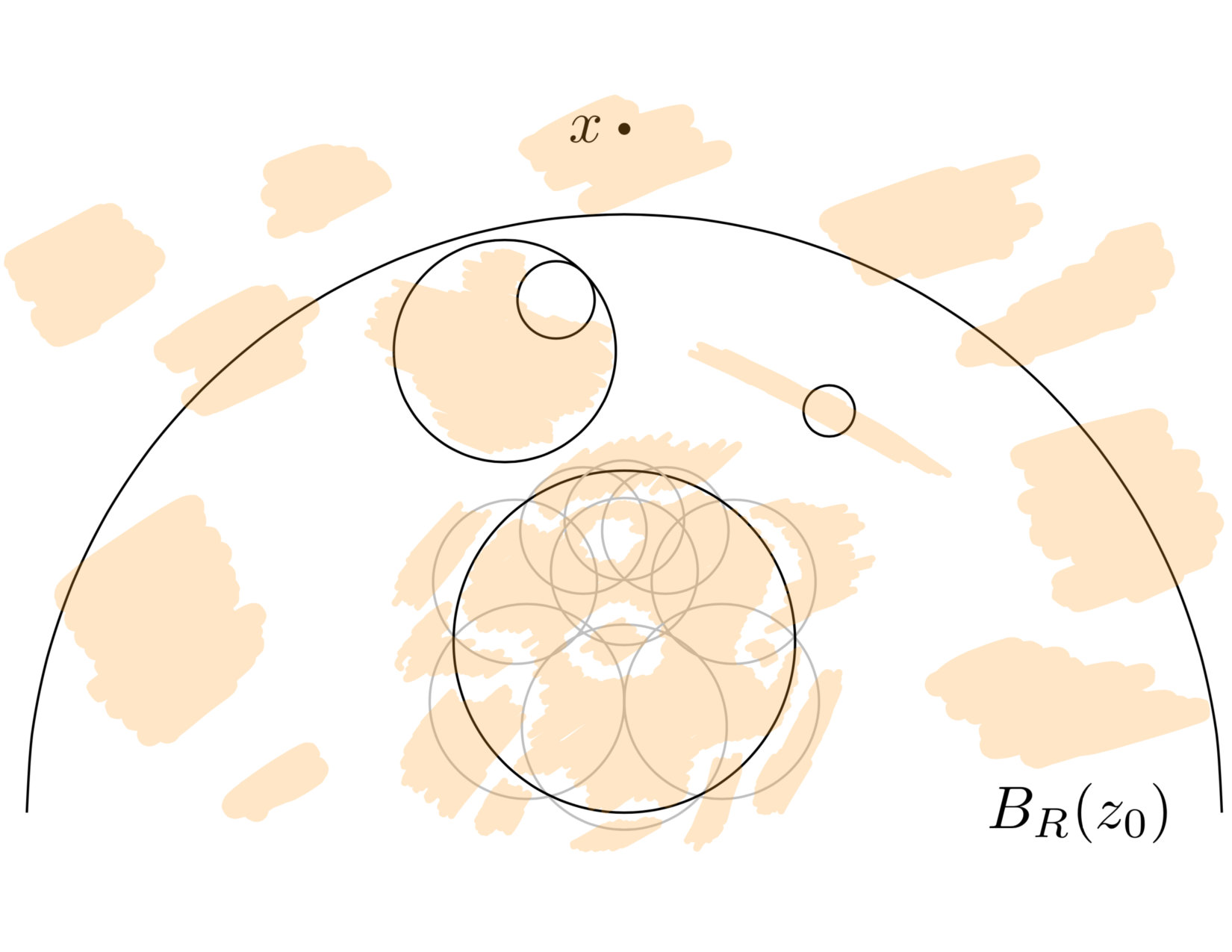 Figure 1
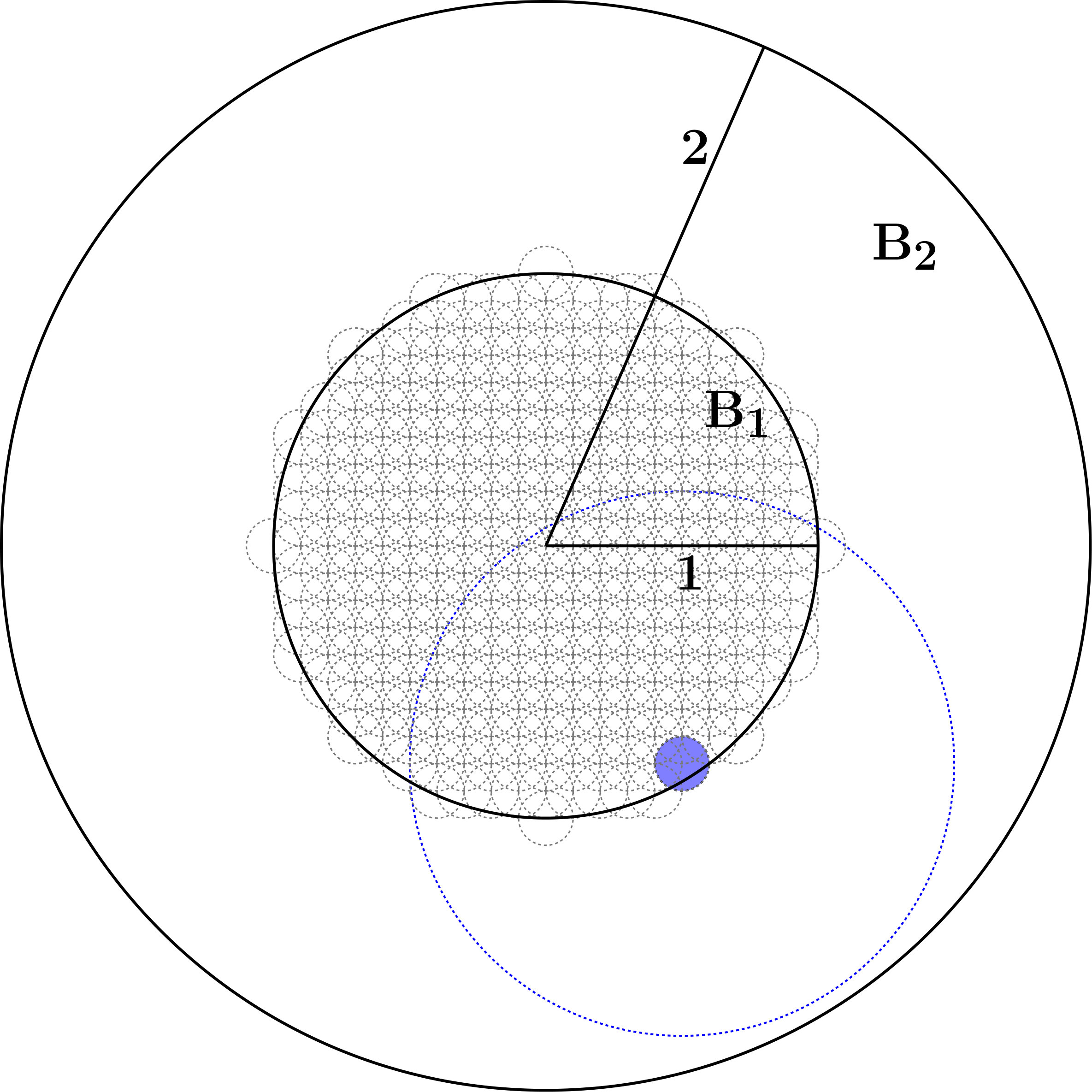 Figure 2
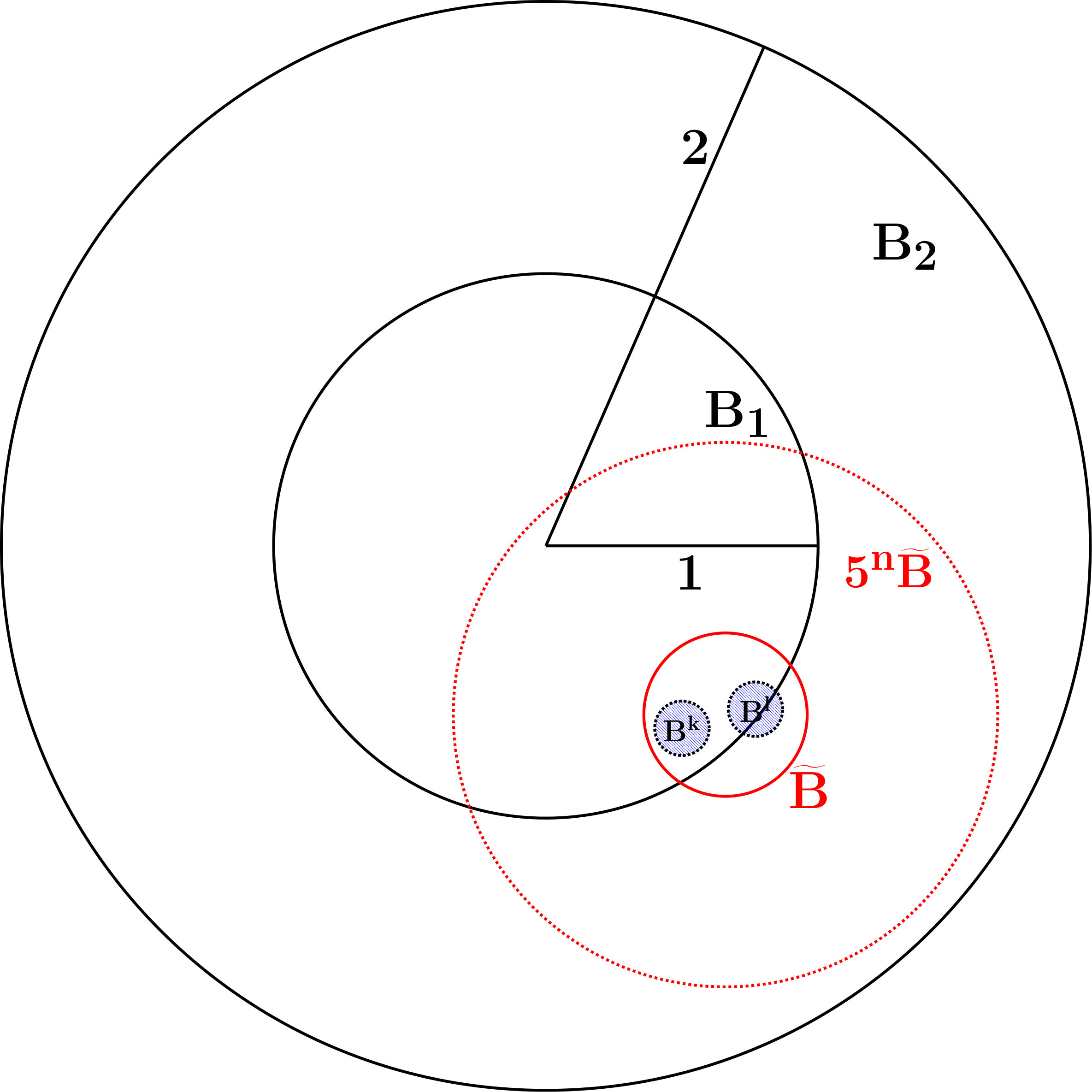 Figure 3
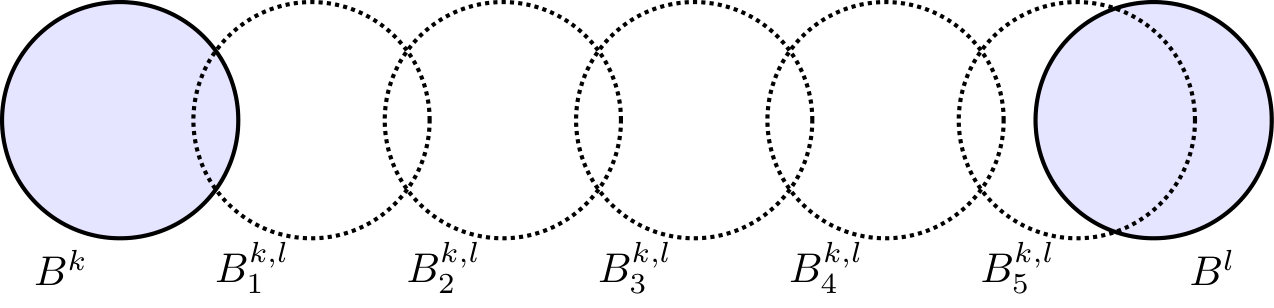 Figure 4
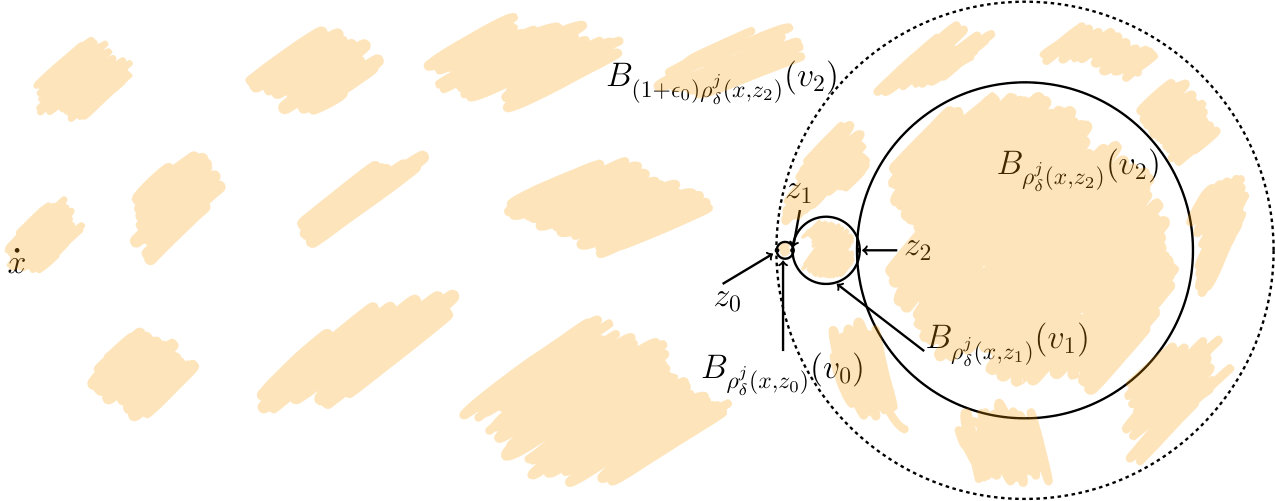 Figure 5
Peer Reviews
No public reviews on file for this paper yet. If you reviewed it on a platform where reviews are public (OpenReview, ICLR, NeurIPS, ICML), you can paste yours below so the community can read it here.
Videos
No videos yet. Explain this paper in a talk, walkthrough, or lecture? Add one.
Coercivity estimates for integro-differential operators
Jamil Chaker
(J. Chaker), Mathematics Department, University of Chicago, Chicago, Illinois 60637, USA
and
Luis Silvestre
(L. Silvestre), Mathematics Department, University of Chicago, Chicago, Illinois 60637, USA
Abstract.
We provide a general condition on the kernel of an integro-differential operator so that its associated quadratic form satisfies a coercivity estimate with respect to the -seminorm.
Luis Silvestre is supported in part by NSF grant DMS-1764285. Jamil Chaker is supported by DFG Forschungsstipendium through Project 410407063.
1. Introduction
In this article, we are interested in coercivity estimates for integro-differential quadratic forms in terms of fractional Sobolev norms. More precisely, we seek general conditions on a kernel so that the following inequality holds for some constant and any function ,
[TABLE]
Here, refers to the homogeneous fractional Sobolev norm whose standard expression is given by
[TABLE]
The quadratic form is naturally associated with the linear integro-differential operator
[TABLE]
Equations involving integro-differential diffusion like (1.2) have been the subject of intensive research in recent years. The understanding of the analog of the theorem of De Giorgi, Nash and Moser in the integro-differentiable setting plays a central role in the regularity of nonlinear integro-differential equations (See [19], [8], [7], [17], [13], [10], [18], [12], [16] and references therein). It concerns the generation of a Hölder continuity estimate for solutions of parabolic equations of the form , with potentially very irregular kernels . There are diverse results in this direction with varying assumptions on . The two key conditions that are necessary for this type of results are the coercivity condition (1.1) and the boundedness of the corresponding bilinear form:
[TABLE]
The initial works in the subject (like [19], [8] or [10]) were focusing on kernels satisfying the convenient point-wise non-degeneracy assumption . These two inequalities easily imply (1.1) and (1.3). However, (1.1) and (1.3) hold under much more general assumptions. In [18] and [12], the coercivity estimate (1.1) is an assumption of the main theorem and some examples are given where the estimate applies to degenerate kernels. There are also recent applications of this framework to the Boltzmann equation (See [16]) where the kernels are not point-wise comparable to and yet (1.1) and (1.3) hold.
While we know a fairly satisfactory general condition that ensures (1.3) (See Section 4.1 in [16]), assumptions that would ensure (1.1) are not well understood. Simple examples of the form can be analyzed using Fourier analysis (See [23]) and they suggest that a condition that implies (1.1) might be that for any point , and any unit vector , we have
[TABLE]
In [12], it is conjectured that (1.4) implies (1.1). That conjecture is also mentioned in [16]. We are not yet able to determine whether (1.4) is sufficient to ensure that (1.1) holds. We make the following assumption on the kernel. Essentially, it says that from every point , the nondegeneracy set has some density in all directions.
Assumption 1.1**.**
There is and such that for every ball and :
[TABLE]
Remark 1**.**
Note that we aim to prove estimates for energy forms and sets of measure zero can be neglected for integration. Hence, 1.1 could be effortlessly relaxed by assuming the property (A1) for almost every instead of every .
We now state our main results.
Theorem 1.2**.**
Assume there exist and such that the kernel satisfies 1.1. There is a constant , depending on the dimension and only, such that for every ,
[TABLE]
Our second main result is a localized version of Theorem 1.2. Indeed the approach we use in the proof of Theorem 1.2 allows us to prove a localized lower bound estimate with some minor additional work.
Theorem 1.3**.**
Assume there exist and such that satisfies 1.1. There is a constant , depending on the dimension and only, such that for every function
[TABLE]
Here, stands for Gagliardo’s seminorm
[TABLE]
The purpose of our theorems is to provide a criteria to verify the coercivity estimate (1.1) based on a general condition on the kernel that is easy to verify in concrete examples. For example, coercivity estimates are known to hold for the non-cutoff Boltzmann collision operator with parameters depending on hydrodynamic quantities. There is a long history of the derivations and use of these estimates. An early version with respect to a sub-optimal Sobolev exponent was obtained by P.L. Lions in [21]. A sharp coercivity estimate appeared in the paper by Alexandre, Desvillettes, Villani and Wennberg [3] which was proved using Fourier analysis. There is a simplified proof using Littlewood-Paley analysis in [4] and [5]. A proof based on a more geometrical argument (essentially measuring the intersection between two cones) is given in the appendix of [16]. The precise asymptotic behavior of these coercivity estimates for large velocities is analyzed by Gressman and Strain in [14]. See also [22], [6], [1], [11], [15], [2] and references therein. All the proofs in the literature use the specific structure of the Boltzmann collision operator, which is a nonlinear integro-differential operator. In [24], the Boltzmann collision operator is written in the form (1.2) with a kernel that depends on the solution itself. Some basic properties of this kernel are easily observed from this computation. The coercivity estimate for the Boltzmann collision operator follows then as a direct application of Theorem 1.3 as a black box.
We now review some earlier works aiming at general conditions on a kernel to ensure the coercivity of the quadratic form (1.1). This is essentially the same objective as in this paper. In [12], they study kernels that satisfy for some fixed kernel that might contain a singular part. A binary operator is defined for any such kernels that allows them to obtain an inequality like (1.1) for some degenerate kernels. Several examples are given. In [9], they study kernels such that for every point in certain cone of directions centered at . These cones are supposed to have a fixed opening, but might rotate arbitrarily from point to point. Our result in this paper implies the result in [9].
We now describe the outline of the proof in this paper. We build a sequence of kernels whose corresponding quadratic forms are smaller than the left hand side of (1.1). The basic mechanism for constructing these kernels is given in Lemma 3.1. Basically, it is an operation that given two kernels whose quadratic forms are bounded above, it produces a third kernel with the same upper bound. It is somewhat reminiscent to the operator defined in [12], but it applies to more generic kernels and allows us for more flexibility in the formula. We then analyze the nondegeneracy sets of these kernels for some sequence . Using a covering argument similar to the growing ink spots lemma by Krylov and Safonov [20], we prove that the density of these sets expands as increases. Moreover, it fills up the full space after finitely many iterations. Finally, we find a universal number so that for all pairs of points and . The coercivity estimate (1.1) follows from that.
As we said before, we aim at developing a theorem that is ready to be applied to obtain the coercivity estimate (1.1) under the least restrictive assumptions possible. Predictably, the proof of Theorem 1.2 is not shorter than the proofs in the literature that apply to particular instances of kernels on a case by case basis. For example, the proof in the appendix of [16] is quite a bit shorter than the proof in this paper. The reason is that the Boltzmann kernel has a special structure that, in the language of this paper, allows you to prove that is already the full space (thus, the proof finishes after only one iteration).
There are some significant instances of kernels that satisfy (1.1) but are not covered by our Assumption 1.1. The main example is when is actually a singular measure. That is the case in Example 4 in [12]. In the context of the Boltzmann equation, the collision kernel would satisfy Assumption 1.1 in terms of the mass, energy and entropy densities (this follows directly from the formulas in [24]). However, if we replace the upper bound on the entropy density by a bound from below on the temperature tensor, the Boltzmann collision kernel would satisfy (1.4) but not Assumption 1.1. In particular our Theorem 1.3 would suffice to imply Corollary L but not Theorem 1 in [14].
We finish the introduction by describing the outline of the article. In Section 3 we describe the construction of the sequence of kernels . In Section 4, we analyze their corresponding sets of nondegeneracy. In Section 5 we finish the proofs of our main theorems, including a covering argument that is necessary for the proof of Theorem 1.3.
2. Preliminaries
2.1. Notation
We use the letter with subscripts for positive constants whose exact values are not important.
Let . For a ball , we denote by the scaled ball .
2.2. Reformulations of 1.1
This subsection is devoted to show that 1.1 can be reformulated in several equivalent ways which allows us to change the position of the point in the relation to the ball of consideration by modifying the value of .
Lemma 2.1**.**
The following statements are equivalent:
- (A1)
There exist and such that satisfies 1.1. 2. (A2)
There exist and such that for every ball and :
[TABLE] 3. (A3)
There exist , and such that for every ball and with :
[TABLE]
Proof.
(A1)(A2): Let and a ball such that . Let . By (A1), there exist and such that
[TABLE]
By continuity, (A2) follows for .
(A2)(A1): Let and a ball such that . There is a ball with radius greater or equal such that . By (A2), there exist and such that . Choosing , leads to
[TABLE]
(A2)(A3): Let , and a ball such that . By (A2) there is and such that
[TABLE]
Hence,
[TABLE]
Choosing
[TABLE]
and , proves (A3).
(A3)(A2): Let and a ball such that . By (A3) there is , and such that
[TABLE]
where . Hence, (A2) follows by choosing :
[TABLE]
∎
Remark 2**.**
It can be easily seen in the foregoing proof that the value of does not change in the transition from one statement into the other. Hence, the constant can be chosen to be the same in all three statements in 2.1.
3. Diffusing the kernels
In this section we introduce auxiliary kernels and corresponding sets of non-degeneracy. Furthermore, we establish some basic properties for these objects.
Lemma 3.1**.**
Assume are kernels such that for every
[TABLE]
for some constants . Consider two functions such that
[TABLE]
Then ,
[TABLE]
also satisfies
[TABLE]
for some constant depending on and only.
Proof.
By Fubini’s theorem and ,
[TABLE]
∎
We iteratively define sequences of auxiliary kernels.
Definition 3.2**.**
Let , . We define for the sequence of auxiliary kernels by
[TABLE]
where are functions satisfying for all resp. :
[TABLE]
Remark 3**.**
For the moment, the functions are generic functions satisfying (3.1). The explicit form of those functions will play an important role in the scope of this work. Since it is not used at the moment, we postpone the explicit mapping for the convenience of the reader. The definition of and will be given in 3.7.
By an iterative application of 3.1, we obtain that the family of auxiliary kernels has energy forms which are bound from above by the original energy form.
Corollary 3.3**.**
For every , there is a constant such that for every function ,
[TABLE]
Given the sequence of kernels , we can define the corresponding sets of non-degeneracy. Let us denote the -Algebra of all Lebesgue measurable sets by .
Definition 3.4**.**
Let be a given sequence. We define for
[TABLE]
Remark 4**.**
The sequence will be chosen to be of the form for some which will be determined in 4.2. In particular, is a decreasing sequence of positive real numbers starting at . This means that for .
Lemma 3.5**.**
Assume there exist and such that satisfies 1.1. Let and . If there is and a ball such that
[TABLE]
then there exists , depending on , and only, such that every for :
[TABLE]
Proof.
Let and such that satisfies 1.1. Furthermore, let , and
[TABLE]
Then and therefore
[TABLE]
By 1.1, we conclude for
[TABLE]
[TABLE]
∎
In the following, we specify the functions and , which play an important role in the already defined auxiliary kernels . Before we define , we first give the following definition of auxiliary radii.
Definition 3.6**.**
Let and , we define ,
[TABLE]
We use the convention , whenever the set of radii in (3.4) is empty.
We can now define the functions , which already appeared in 3.2 and assumed to satisfy (3.1).
Definition 3.7**.**
Let and . We define ,
[TABLE]
where are constants, depending on the dimension only, such that (3.1) is satisfied.
From now on, we assume to be defined as in 3.7. The function localizes the area of integration in the definition of the auxiliary kernel as follows:
Lemma 3.8**.**
Let . If ,
[TABLE]
Proof.
By definition, , iff . Note that and therefore , whenever . Hence,
[TABLE]
∎
Corollary 3.9**.**
For every , there is a constant such that for every function ,
[TABLE]
4. Growing sets of non-degeneracy
In this section we take a closer look at the previously defined auxiliary sets of non-degeneracy and prove important properties for those objects. This section is divided into two parts. In the first part, we prove that there is a sequence such that the sets of non-degeneracy are nested. In the second part, we prove a growing ink-spot theorem, which gives us a qualitative statement regarding the growth behavior of two consecutive sets.
4.1. Nested sets of non-degeneracy
Recall that for any , the family is determined by a decreasing sequence of real numbers with as follows:
[TABLE]
This subsection aims to prove the existence of such sequence which implies that the sets are nested. The goal of this subsection is to prove the following proposition:
Proposition 4.1**.**
Assume there exist and such that satisfies 1.1. There is a constant , depending on the dimension and only, such that the sequence satisfies for all and
[TABLE]
except a set of measure zero.
Before proving 4.1, we first need to prove an auxiliary result, which is the main ingredient in the proof of 4.1.
Lemma 4.2**.**
Assume there exist and such that satisfies 1.1. Let and be given. If , there is a constant , depending on the dimension , and only, such that satisfies for all
[TABLE]
Proof.
Let and such that satisfies 1.1. Let , and assume .
Let for a given . The aim is to show that there is a , such that for , i.e.
[TABLE]
Recall the definition of
[TABLE]
and note that , iff
[TABLE]
Hence, we can reduce the area of integration for to . Since we assumed , there is a neighborhood of in and therefore is not empty.
Let be as above and . By positioning of the points, we can uniformly bound the distance from above by the distance . The triangle inequality implies , where we used in the last inequality. Consequently,
[TABLE]
We aim to prove that there is a pair with , such that
[TABLE]
for some , depending on , and only. This assertion will allow us to reduce the area of integration for to the favorable area on which we can use the lower bounds for the kernels and the upper bound for to prove the lemma.
We define inductively a sequence of points and , using a chain argument, such that we can assign for each pair a ball with a sufficiently large area of non-degeneracy and such that the radius of the subsequent ball increases at least with a given factor. The sequence will be constructed in such a way that we can apply 3.5 for the last ball , which will then imply (4.5) for the pair As in the proof of 3.5, let
[TABLE]
and define . The quantity will describe the growth factor for the sequence of balls and the enlargement of the last ball satisfying (4.5). Note that , since . We construct the sequence of pairs as follows:
- (0)
Set . Since , there is such that
[TABLE] 2.
If there is with , choose such . By the definition of , there is such that
[TABLE]
The radii grow at least by the factor and . Hence, the iteration stops after finitely many steps. Note that for all , since
[TABLE]
In order to apply 3.5 for and , it remains to show that . By construction,
[TABLE]
i.e. . Hence, by 3.5
[TABLE]
which proves (4.5).
We can describe the support of in terms of the ball . To be more precise, by (4.6) we deduce .
The sequence is build such that for all . Choosing sufficiently small, proves (4.4).
To simplify notation, let . Then by (4.3), , and (4.7),
[TABLE]
where the constants depend only on the dimension , and . ∎
We have all tools to prove 4.1.
Proof of 4.1.
Let and such that satisfies 1.1. Let , and . If is a Lebesgue point for some , then for any sufficiently small ball with with . In particular . Hence, by 4.2 there is a constant , depending on and , such that for Since and the constant is independent of and , the proposition follows for the sequence . ∎
4.2. Growing Ink-Spots
As mentioned in the beginning of the section we intend to prove a result concerning the growth behavior for two consecutive auxiliary sets of non-degeneracy. It is a growing ink-spot-type theorem which was originally developed by Krylov and Safonov for elliptic equations in non-divergence form. Our aim is to show that the fraction of two consecutive sets is bounded from below by some constant strictly larger than one, depending on the dimension and only.
Proposition 4.3**.**
Assume there exist and such that satisfies 1.1. There are constants , depending on and only, such that for every ball and with and every , either
[TABLE]
Before we address the proof of 4.3, we first need to prove an auxiliary result. It is an geometric observation, whose application in the proof of 4.3 provides the existence of balls with desired properties.
Lemma 4.4**.**
Let , and be a measurable set. For any and , if
[TABLE]
then there exists a ball such that
[TABLE]
Proof.
For any finite covering of with balls of radius , the Vitali covering lemma implies the existence of a subcollection of disjoint balls with and . Note that and are equivalent formulations of (4.9) and (4.10) respectively. We prove the assertion by contradiction. Assume (4.10) is false, that is for all . Hence,
[TABLE]
∎
We finally have all tools to prove the second main result concerning the auxiliary sets of non-degeneracy.
Proof of 4.3.
Let and such that satisfies 1.1. By 4.1, there is a constant such that the sequence satisfies for any and ,
[TABLE]
almost everywhere. Recall that by 2.1, 1.1 is equivalent to the existence of and , depending only on and , such that for every ball with :
[TABLE]
Let .
We distinguish between two cases:
Case 1: Assume .
Let be a Lebesgue point and be the largest ball in with and . Since is chosen to be the largest ball satisfying and we assumed , we conclude by continuity
[TABLE]
Let denote the radius of .
We distinguish between three subcases:
- (1)
Assume . Recall that by 4.2, for all with . Since satisfies (4.11) and , we have for all and therefore . Hence, we obtain
[TABLE] 2. (2)
Assume . In addition, we assume there is a covering for by a family of balls satisfying for all
- •
has radius ,
- •
.
Using the property and 4.2, we deduce for all . Therefore, and
[TABLE] 3. (3)
Assume and there is no covering as in (2). In this case we show that there is a small ball inside whose radius is comparable to and for which we can apply 4.2.
First note that since we assume that there is no covering as in the second subcase, we can find a ball with radius and . Applying 4.4 for , there is a ball with same radius as such that . Hence by continuity, we can find a ball with same radius as and such that . By 4.2, . Since , the radii satisfy
[TABLE]
We conclude
[TABLE]
The family of balls covers almost everywhere.
Using the Vitali covering lemma, we can select a finite subcollection of non-overlapping balls such that expect for a set of measure zero.
Altogether,
[TABLE]
Hence there is , depending on and , such that
[TABLE]
Case 2: Assume .
In this case we do not cover by a family of balls and consider directly . We make a distinction between the following two subcases:
- (4)
If there exists a covering of as in (2), then we conclude with the same argument as in (2) and conclude . 2. (5)
If there is no covering of as in (2), then we proceed as in (3).
In this case, there is a ball with radius such that and . Hence,
[TABLE]
for some , depending on and .
Proceeding as in Case 1, finishes the proof.
∎
An immediate consequence of 4.3 is the following corollary. It gives us an upper bound for the amount of steps we need until the set of non-degeneracy fills up the whole space. It is important to emphasize that the amount of steps does only depend on and .
Corollary 4.5**.**
Assume there exist and such that satisfies 1.1. There is , depending only on and , such that for every and ,
[TABLE]
Proof.
Let . By 4.3, there are constants , depending on and only, such that (4.8) holds for all balls with . Choosing implies a.e.. Since the choice of is independent of and , we conclude except for a set of measure zero. ∎
5. Proofs of the main results
In this section we prove the coercivity estimates Theorem 1.2 and Theorem 1.3. We have already proven all tools we need to deduce those results. Theorem 1.2 is an immediate consequence of 3.3 and 4.5. The proof of Theorem 1.3 needs some additional work. For the sake of clarity, we will separate parts of its proof into lone results, see subsection 5.2.
5.1. Proof of Theorem 1.2
Proof.
Let and be such that satisfies 1.1. By 4.5, there is , depending on and , such that for every , a.e.. Thus for almost every pair . Hence, by 3.3 there is a constant depending on , such that
[TABLE]
Recall that by 4.1 the sequence is given by for some constant , depending on and , which finishes the proof. ∎
5.2. Proof of Theorem 1.3
In this subsection we prove Theorem 1.3. The idea of the proof is to cover by small balls, whose radii depend on the dimension and the value of from 1.1. We first show that for any given ball, there is a scaling factor for the radius such that the local energy form for on the scaled ball can be bounded from below by the -seminorm on the original ball.
Lemma 5.1**.**
Assume there exist and such that satisfies 1.1. There are constants and , depending on and , such that for every function and every ball
[TABLE]
Proof.
Let and be such that satisfies 1.1. Proceeding as in the proof of Theorem 1.2, by 4.5 and 3.9 there are constants and , depending on and , such that for every ball the assertion follows. ∎
Let be a finite covering of with balls satisfying and . Since consists of balls with same radius, such covering can be chosen such that depends on the radius of those balls and the dimension only. A rough covering of a cube with side length by such balls can be chosen with less then balls and therefore can be covered by less then balls. The radius of the covering balls is chosen so small such that for every covering ball the -scaled ball remains inside .
Proposition 5.2**.**
Assume there exist and such that satisfies 1.1. Let be two balls with and . There is a constant , depending on and , such that for every function
[TABLE]
Proof.
Let and be such that satisfies 1.1. By definition of the balls , we have . In the following, we investigate three cases which relate to the positioning of the balls .
- (1)
If , then the assertion is an immediate consequence of 5.1 and the observation . 2. (2)
Let with . In this case, we can cover the balls by a larger ball and again use 5.1.
To be more precise, we replace the area of integration on the right-hand side of (5.2) by for some ball with and satisfying . Since , we have and therefore the assertion again follows by 5.1.
- (3)
Let with . In this case, the idea is to define a sequence of balls such that two consecutive balls intersect and we can estimate stepwise the corresponding double integrals.
We define a sequence of connecting balls , such that for every
- •
,
- •
,
- •
- •
.
Since and , we easily see . Hence, is bounded by a constant depending on and only. We distinguish between the cases and . In the case , we have
[TABLE]
The terms and can be estimated in the same spirit and therefore, we just investigate and . Note, for all , . By 5.1,
[TABLE]
for some constant , depending on and . It remains to estimate . Since , we obtain for all , and . Hence
[TABLE]
for some constant , depending on and . Combining these estimates proves the assertion in this case.
It remains to consider the case . To simplify notation, let us rename resp. and define and . Let , and for . Since, , for all . Hence by the same idea as in the case , we conclude
[TABLE]
for some , depending on and .
∎
We can finally prove our second main result.
Proof of Theorem 1.3.
Let and be such that satisfies 1.1 and let be a finite covering of with balls satisfying and . Then by 5.2 there is a constant , depending on and such that for all
[TABLE]
Hence,
[TABLE]
which proves the assertion. ∎
The reference list from the paper itself. Each links out to its DOI / PubMed record.
- 1[1] R. Alexandre. Some solutions of the Boltzmann equation without angular cutoff. J. Statist. Phys. , 104(1-2):327–358, 2001.
- 2[2] R. Alexandre. A review of Boltzmann equation with singular kernels. Kinet. Relat. Models , 2(4):551–646, 2009.
- 3[3] R. Alexandre, L. Desvillettes, C. Villani, and B. Wennberg. Entropy dissipation and long-range interactions. Arch. Ration. Mech. Anal. , 152(4):327–355, 2000.
- 4[4] R. Alexandre and M. El Safadi. Littlewood-Paley theory and regularity issues in Boltzmann homogeneous equations. I. Non-cutoff case and Maxwellian molecules. Math. Models Methods Appl. Sci. , 15(6):907–920, 2005.
- 5[5] R. Alexandre and M. Elsafadi. Littlewood-Paley theory and regularity issues in Boltzmann homogeneous equations. II. Non cutoff case and non Maxwellian molecules. Discrete Contin. Dyn. Syst. , 24(1):1–11, 2009.
- 6[6] R. Alexandre, Y. Morimoto, S. Ukai, C.-J. Xu, and T. Yang. The Boltzmann equation without angular cutoff in the whole space: I, Global existence for soft potential. J. Funct. Anal. , 262(3):915–1010, 2012.
- 7[7] M. T. Barlow, R. F. Bass, Z.-Q. Chen, and M. Kassmann. Non-local Dirichlet forms and symmetric jump processes. Trans. Amer. Math. Soc. , 361(4):1963–1999, 2009.
- 8[8] R. F. Bass and D. A. Levin. Transition probabilities for symmetric jump processes. Trans. Amer. Math. Soc. , 354(7):2933–2953 (electronic), 2002.