Non-Local Annihilation of Weyl Fermions in Correlated Systems
L. Crippa, A. Amaricci, N. Wagner, G. Sangiovanni, J. C. Budich, M., Capone

TL;DR
This paper demonstrates that strong electron-electron interactions can cause abrupt, non-local creation or annihilation of Weyl fermions in correlated systems, fundamentally altering the transition to Weyl semimetals.
Contribution
It reveals that many-body correlations can induce discontinuous Weyl node transitions and affect Fermi arc properties, challenging the independent electron approximation.
Findings
Weyl node pairs can appear or disappear suddenly in spectral functions.
Transitions to Weyl semimetals can be discontinuous due to correlations.
Electronic correlations influence Fermi arc structures.
Abstract
Weyl semimetals (WSMs) are characterized by topologically stable pairs of nodal points in the band structure, that typically originate from splitting a degenerate Dirac point by breaking symmetries such as time reversal or inversion symmetry. Within the independent electron approximation, the transition between an insulating state and a WSM requires the local creation or annihilation of one or several pairs of Weyl nodes in reciprocal space. Here, we show that strong electron-electron interactions may qualitatively change this scenario. In particular, we reveal that the transition to a Weyl semi-metallic phase can become discontinuous, and, quite remarkably, pairs of Weyl nodes with a finite distance in momentum space suddenly appear or disappear in the spectral function. We associate this behavior to the buildup of strong many-body correlations in the topologically non-trivial regions,…
Click any figure to enlarge with its caption.
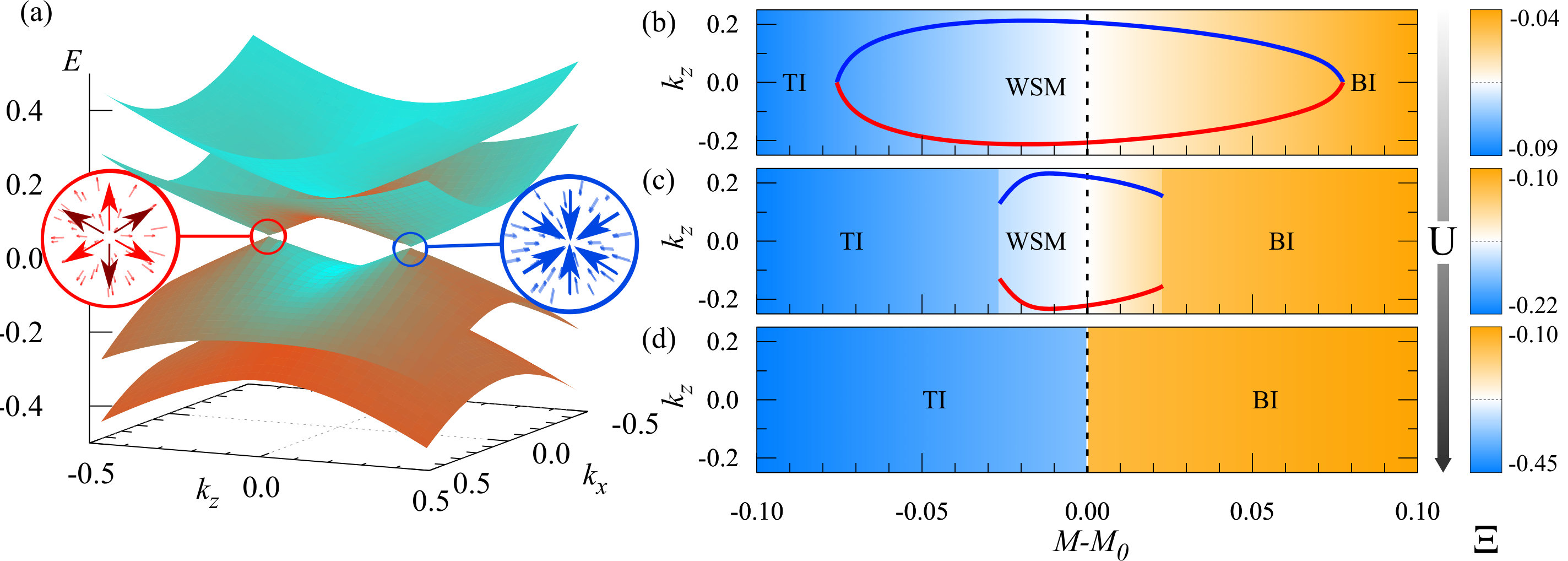 Figure 1
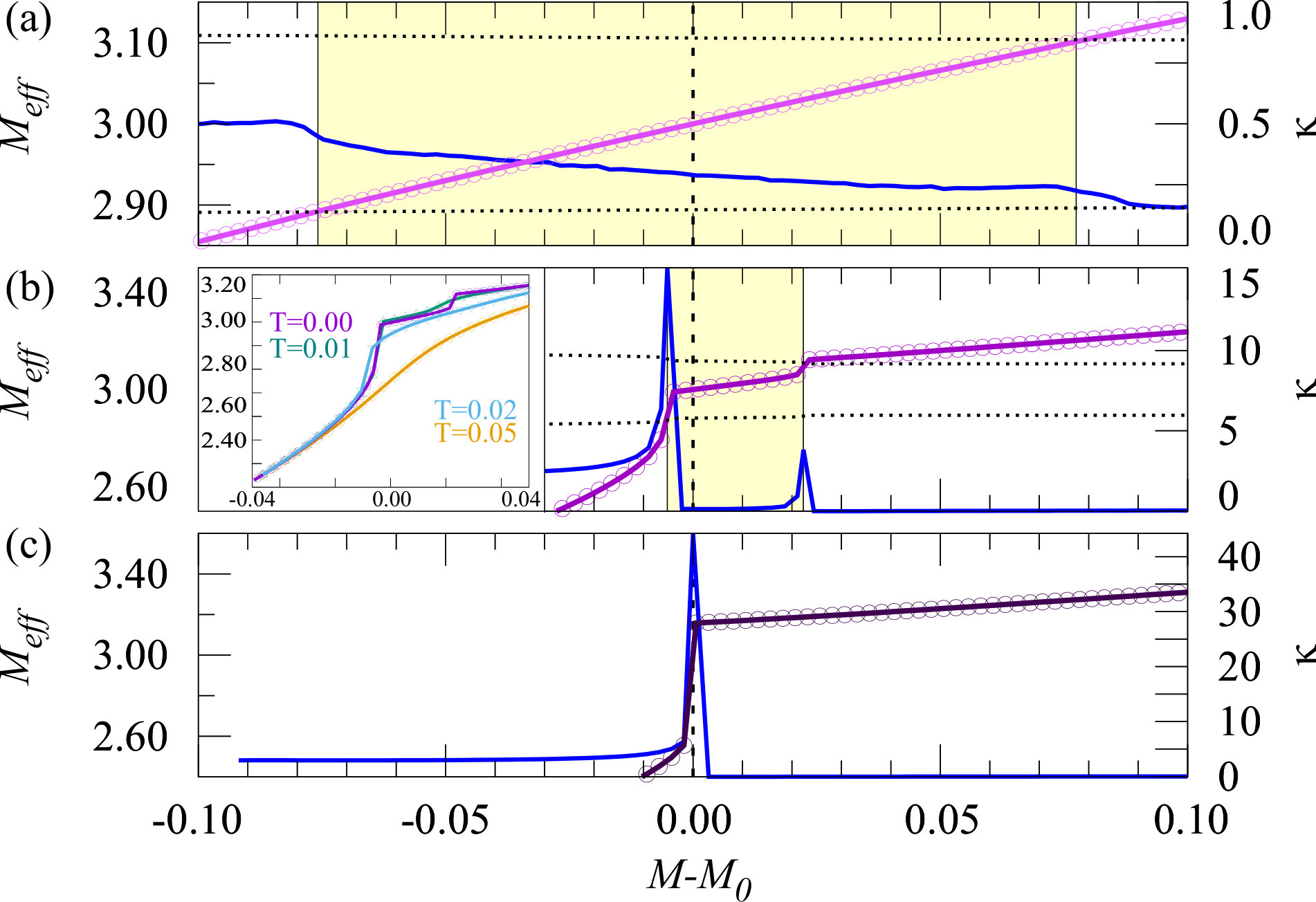 Figure 2
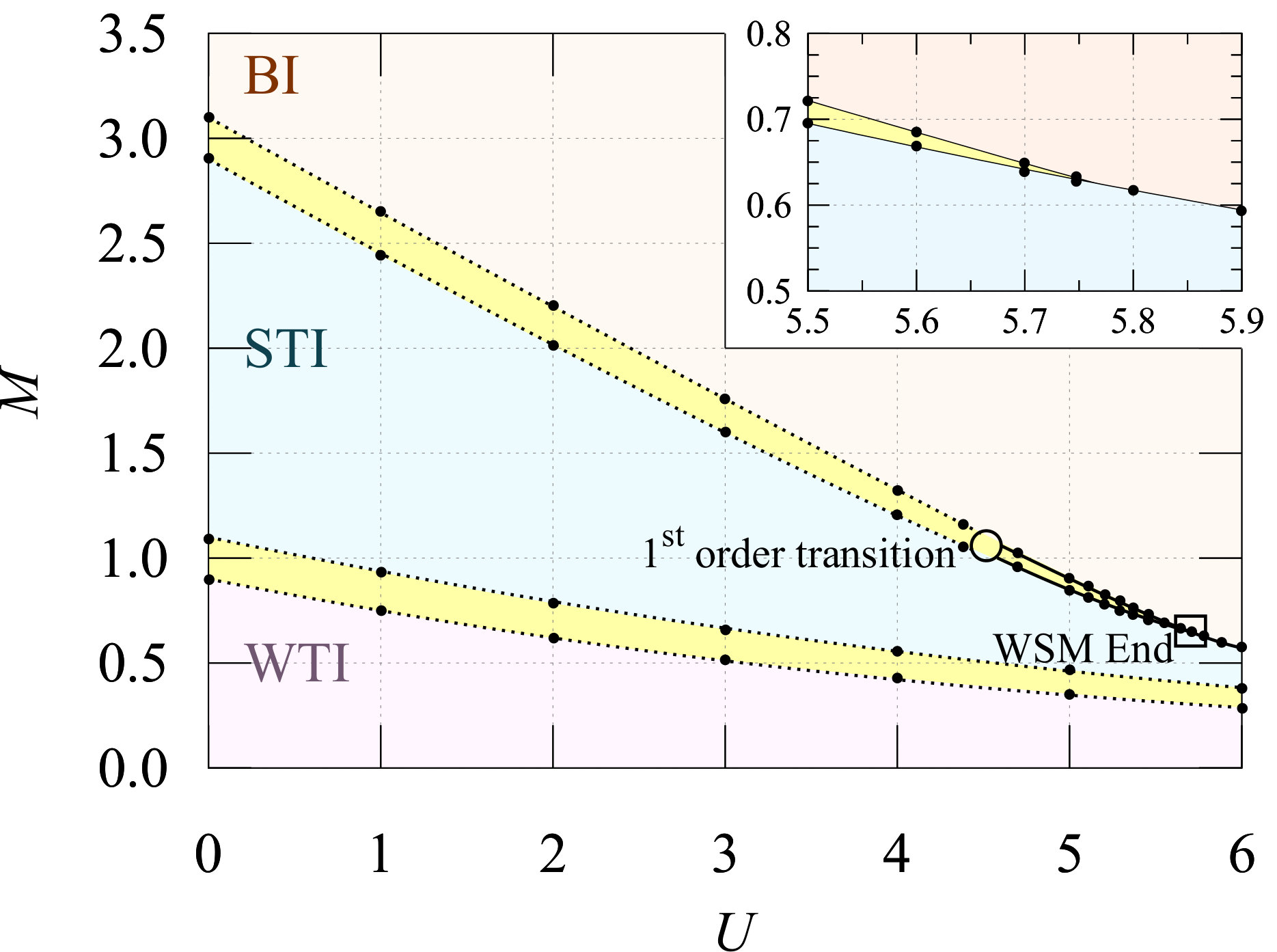 Figure 3
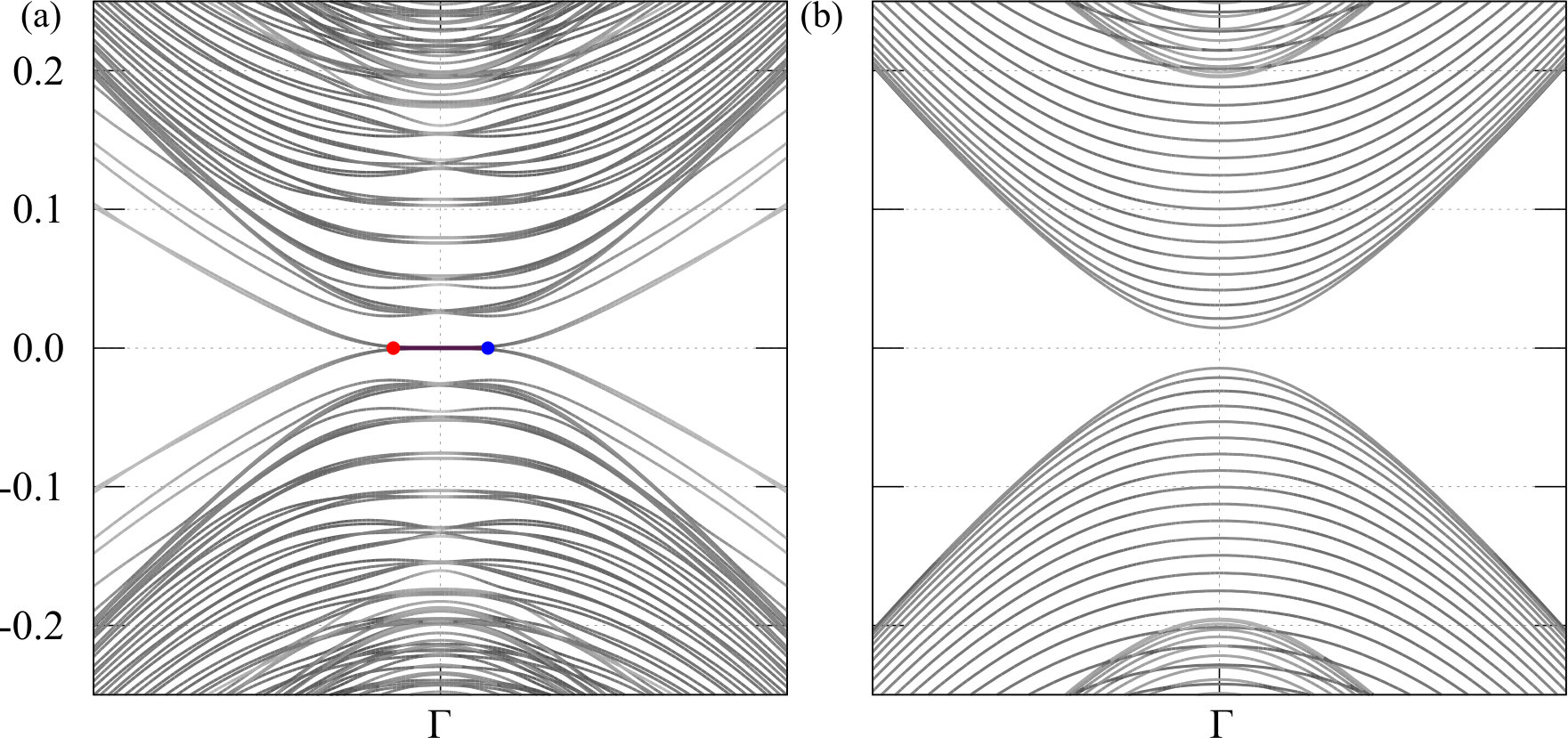 Figure 4
Peer Reviews
No public reviews on file for this paper yet. If you reviewed it on a platform where reviews are public (OpenReview, ICLR, NeurIPS, ICML), you can paste yours below so the community can read it here.
Videos
No videos yet. Explain this paper in a talk, walkthrough, or lecture? Add one.
Non-Local Annihilation of Weyl Fermions in Correlated Systems
L. Crippa
Scuola Internazionale Superiore di Studi Avanzati (SISSA), Via Bonomea 265, 34136 Trieste, Italy
A. Amaricci
CNR-IOM DEMOCRITOS, Istituto Officina dei Materiali, Consiglio Nazionale delle Ricerche, Via Bonomea 265, I-34136 Trieste, Italy
Scuola Internazionale Superiore di Studi Avanzati (SISSA), Via Bonomea 265, 34136 Trieste, Italy
N. Wagner
Institut für Theoretische Physik und Astrophysik and Würzburg-Dresden Cluster of Excellence ct.qmat, Universität Würzburg, 97074 Würzburg, Germany
G. Sangiovanni
Institut für Theoretische Physik und Astrophysik and Würzburg-Dresden Cluster of Excellence ct.qmat, Universität Würzburg, 97074 Würzburg, Germany
J. C. Budich
Institute of Theoretical Physics, Technische Universität Dresden, 01062 Dresden, Germany
M. Capone
Scuola Internazionale Superiore di Studi Avanzati (SISSA), Via Bonomea 265, 34136 Trieste, Italy
( March 16, 2024)
Abstract
Weyl semimetals (WSMs) are characterized by topologically stable pairs of nodal points in the band structure, that typically originate from splitting a degenerate Dirac point by breaking symmetries such as time reversal or inversion symmetry. Within the independent electron approximation, the transition between an insulating state and a WSM requires the local creation or annihilation of one or several pairs of Weyl nodes in reciprocal space. Here, we show that strong electron-electron interactions may qualitatively change this scenario. In particular, we reveal that the transition to a Weyl semi-metallic phase can become discontinuous, and, quite remarkably, pairs of Weyl nodes with a finite distance in momentum space suddenly appear or disappear in the spectral function. We associate this behavior to the buildup of strong many-body correlations in the topologically non-trivial regions, manifesting in dynamical fluctuations in the orbital channel. We also highlight the impact of electronic correlations on the Fermi arcs.
The classification of topological states of matter has revolutionised our understanding of insulating Qi and Zhang (2011) and nodal materials Schoop et al. (2016); Young et al. (2012); Young and Kane (2015), leading to a novel conceptual framework for band-structure theory. Regarding insulating systems, topological insulators (TIs) Kane and Mele (2005); Bernevig et al. (2006); Fu et al. (2007); Zhang et al. (2009); Ryu et al. (2010) represent a paradigmatic example of topological states, which are protected by symmetries such as time reversal symmetry (TRS), and are distinguished from conventional band insulators by topological band structure invariants. Within the independent-electron approximation, phase transitions between topologically distinct insulators occur via semi-metallic Dirac points.
In three spatial dimensions (3D), such critical Dirac points may be promoted to extended Weyl semimetal (WSM) phases Murakami (2007); Wan et al. (2011); Armitage et al. (2018) upon breaking TRS or inversion symmetry, since isolated nodal points in the band structure are topologically stable in 3D. Concretely, a symmetry breaking perturbation splits conventional spin-degenerate Dirac cones into pairs of non-degenerate Weyl fermions with opposite chirality (see Fig. 1a for an illustration). At least within the independent electron approximation such Weyl nodes can only be locally annihilated by continuously bringing them together in reciprocal space with their chiral antidotes Murakami (2007), and the robustness of WSMs against interactions as well as various intriguing correlation effects have recently been reported Witczak-Krempa et al. (2014); Laubach et al. (2016a); Roy et al. (2017); Carlström and Bergholtz (2018); Meng and Budich (2019); Meng et al. (2016); Lai et al. (2018); Rostami et al. (2018); Morimoto and Nagaosa (2016); Laubach et al. (2016b). WSMs exhibit fascinating transport phenomena, related to the chiral anomaly and relativistic electronic dispersion at low energy, and have recently become a major focus of theoretical and experimental research, in a variety of materials ranging from pyrochlore iridates and tantalum monopnictides to synthetic materials such as optical lattices with laser-assisted tunneling Lu et al. (2015, 2013); Yang et al. (2015); Xu et al. (2015); Nakatsuji et al. (2015); Deng et al. (2016); Lv et al. (2015a); Ikhlas et al. (2017); Jiang et al. (2017); Kuroda et al. (2017); Lv et al. (2015b); Min et al. (2019); Huang et al. (2015); Ohtsuki et al. (2019).
In this work, we report on the discovery of drastic changes to the phenomenology of WSMs in the presence of strong electronic correlations (see Fig. 1b for a visualisation). We show this by solving a multi-orbital 3D Hubbard model with a TRS breaking term in the framework of dynamical mean-field theory (DMFT) Georges et al. (1996). Quite remarkably, we find that interactions may lead to the discontinuous annihilation of Weyl nodes in momentum space at a first-order WSM-to-insulator transition. In this scenario, pairs of Weyl points suddenly disappear notwithstanding their finite separation in momentum space, leaving behind a gapped state. This genuine many-body effect may have a deep impact on the prediction and possible detection of WSMs in correlated materials. Conversely, when approaching the transition to a WSM from the trivial band insulator (BI) phase, the nodal phase is entered discontinuously in the strongly interacting regime, without the continuous bifurcation of a degenerate Dirac cone into two distinct Weyl nodes. Furthermore, we unveil the presence of a quantum tri-critical point (QTP), associated to an instability in the orbital channel. Beyond this point the WSM region is dramatically reduced and eventually suppressed in favor of a discontinuous transition between two insulators.
We consider a 3D simple cubic lattice model of spinful electrons with two orbitals per site and unit lattice constant, describing a 3D TI exposed to a TRS-breaking perturbation. The Hamiltonian may be written as the sum of a single-particle term diagonal in momentum space and a two-body interaction local in real space , where we introduced the four-component spinor , with the operator , , annihilating an electron with momentum and spin in orbital . The non-interacting term is
[TABLE]
where and with denote Pauli matrices in spin and orbital space, respectively, and are Kronecker products. The dispersion is and is the strength of the TRS breaking term. In the following we will consider as our unit of energy and fix to .
In the non-interacting regime and for the model describes a weak TI (WTI) and a strong TI (STI) for and , respectively, and a trivial BI for . The topological transitions between these phases occur via the continuous closure of the energy gap and the concomitant formation of a degenerate Dirac cone Amaricci et al. (2015, 2016). A finite value of breaks the TRS and lifts the spin degeneracy, though without giving rise to a net magnetization. The Dirac cone at the transition point splits into two Weyl cones separated in momentum space along . Each Weyl node acts as the magnetic (anti)monopole for the Berry phase and is characterized by a Chern invariant measuring its chirality Qi and Zhang (2011); Wang et al. (2010); Wang and Zhang (2012). The absence of a protecting TRS makes the topological character of the WSM in some sense more robust than the usual symmetry-protected TIs. In the absence of interaction the destruction (formation) of the Weyl cones can only occur through their continuous annihilation (separation) at a specific high-symmetry point.
The topological quantum phase transition points are thus replaced by two distinct WSM phases in two windows centred around and . The one separating the WTI from the STI features three distinct couples of Weyl points, located near the X, X*′* and the points and separated along the direction in the reciprocal lattice space. The second WSM state, separating the STI from the BI, features only one pair of Weyl nodes, located along around , see Fig. 1a.
In the Wannier basis, the Coulomb interaction is described by a set of parameters as the on-site intra-orbital and inter-orbital terms ( and ) and the Hund term . The couplings are related by for electrons with opposite spin in the two orbitals and for electrons with the same spin. The interaction term reads:
[TABLE]
We found that the features of the topological phase transitions are robust across a wide range of variations of the interaction parameters. Therefore, to keep the discussion well defined, in the rest of this work we will focus on the case , case. In the supplemental material 111See Supplemental Material at [URL will be inserted by publisher] for a description of the effects of the parameters on the transition and the Self-Energy. we present additional results with the effects of the Hund’s coupling and of the ratio on the topological phase transition.
The interacting model is solved non-perturbatively by means of DMFT Georges et al. (1996); Amaricci et al. (2015, 2016), i.e. by mapping the lattice problem onto a single-site quantum impurity coupled to an effective bath which is self-consistently determined. Within the DMFT approach, the effects of interaction are contained in the local self-energy function , which in our case is a matrix in the spin and orbital space retaining the local symmetries of the problem. We obtain zero-temperature results using a Lanczos-based exact diagonalization method Georges et al. (1996); Capone et al. (2007); Weber et al. (2012) discretising the bath with levels. The main result of this work, namely the non-local annihilation of the Weyl points in presence of electronic interaction, is robust against a change of as well as for finite temperatures up to a scale of the order of one tenth of the energy unit. We checked the stability of our findings comparing with a continuous-time quantum Monte Carlo solver Wallerberger et al. (2019).
The two aforementioned WSM phases are found to be influenced by the local Coulomb repulsion in a qualitatively distinct way. The one occurring between the weak- and strong TI undergoes a rather predictable and basically adiabatic evolution as a function of . By contrast, the WSM separating the STI and the BI drastically changes its nature as the electron-electron interaction exceeds a certain value. This main result of our work is illustrated in Fig. 1b, c and d. The position of the Weyl points in as a function of is shown by the red and blue lines. In summary, for small (Fig. 1b) the two nodes form a closed path, bridging the STI with the BI region across the vertical dotted line at which, in absence of , the topological phase transition occurs. This continuous behavior of the Weyl nodes is adiabatically connected with the non-interacting case.
Surprisingly, for intermediate values of the interaction strength (Fig. 1c) a discontinuous evolution is observed. The Weyl nodes appear all of a sudden already separated in -space at a critical value of the mass term . Upon further increasing , the position of the cones evolves continuously, but they soon non-locally disappear in favor of the band insulator, without meeting in momentum space. Correspondingly, the red and blue lines are no longer connected, a situation that is fundamentally forbidden within the independent electron approximation.
This intriguing phenomenon can be further characterized by inspecting the correlation strength , which we measure in terms of the deviation from Hartree-Fock theory of our semi-metallic solutions Amaricci et al. (2017, 2015, 2016). Since within DMFT we take into account contributions to the (local) self-energy to all orders, our solution displays self-energy corrections that are much richer than Hartree-Fock theory. In particular, the self-energy is found to exhibit a pronounced frequency structure at intermediate-to-large , thus qualitatively deviating from the static mean field solution Budich et al. (2012, 2013). This is a consequence of the pronounced many-body fluctuations of the STI and of the correlated Weyl phases, originating from their orbitally entangled nature. We can quantify this by computing the difference between the low-frequency limit, which describes the quasiparticles, and the high-energy limit , where is the limit of at high frequency: here the -dependence is hardly visible and can be seen as that of a static Hartree-Fock-like mean field Amaricci et al. (2015, 2016). The behavior of is represented by the background color. In Fig. 1b the evolution of as a function of is smooth everywhere and, similar to the non-interacting case, the Weyl nodes continuously meet in -space at each insulator-to-semimetal transition. In Fig. 1c, the correlation strength changes discontinuously at specific values of at both sides of the dashed line, signalling the abrupt occurrence of the WSM phase from both directions. Since electron-electron interaction suppresses charge fluctuations associated with the formation of Weyl nodes, the WSM region generally shrinks as increases.
For even larger interaction strength (Fig. 1d), the system undergoes a discontinuous transition directly from the strong TI to the trivial BI without the semimetal in between. In this regime, the character of the WSM would be so strongly modified by many-body effects that the most natural evolution for the system is to link the two distinct insulating phases without any intermediate semimetal. This is evident from the sudden change of color at the critical value of , which takes place with hardly any shading, as the semi-metallic region is completely suppressed. To summarize, in the non-trivial regions the groundstate develops a robust many-body character, encoded in a large (negative) value of , which cannot be continuously reconciled with the far less correlated nature of the solution in the trivial BI phase. This effect manifests in the discontinuous change of the (frequency dependent) self-energy. This behavior is reminiscent of the strongly correlated transition found in the presence of TRS and inversion symmetry, where a Dirac semimetal line (rather than a WSM region) cannot be continued to large values of Amaricci et al. (2015, 2016).
There is a more intuitive way of interpreting our results. Concerning the topological nature of the system, the solution of the interacting problem can be recast into a quadratic effective Hamiltonian containing all the terms of Eq. 1. This way the effect of the electron-electron interaction is accounted for by renormalized parameters whose evolution can be compared to the non-interacting case. The two relevant indicators are the effective mass and the effective TRS-breaking field . controls the renormalized energy separation between the orbitals, while corresponds to the effective lifting of the spin degeneracy. The behavior of these two quantities is displayed in Fig. 2 as a function of the bare mass term , where is the critical value of for which , i.e. the condition to have a topological phase-transition for Amaricci et al. (2015). In addition, we show the behavior of the orbital compressibility , where is the local orbital polarization. In analogy with the non-interacting model, the WSM region is characterized by and is marked in yellow.
In the weak coupling regime (Fig. 2a) the effective mass evolves continuously across the boundary of the WSM phase. The orbital compressibility smoothly decreases upon approaching the BI region.
On the contrary, Fig. 2b the behavior of the effective parameters becomes discontinuous. In particular, the evolution of the effective mass term exhibits pronounced discontinuities at the crossing of the lines delimiting the semi-metallic phase. The many-body nature of the strongly correlated solutions is demonstrated by the behavior of , displaying large peaks at the transition points. Interestingly, the WSM region extends asymmetrically around . Indeed, the effect of the interaction is more pronounced in the strong TI phase, because of the more fluctuating orbital polarization , as compared to the close to fully orbitally polarized BI. In Fig. 2c, we report the evolution of the effective parameters for a larger interaction strength . In this regime, the Weyl region is entirely absent. has a large discontinuity just around the critical value , unveiling the direct first-order transition between the STI and the BI phases. This transition is characterized by a large peak of the orbital compressibility at the transition point. In the inset to Fig. 2b we show how the jumps in evolve as a function of the temperature . The temperature at which they disappear for is of the order of of our hopping energy.
An overview of our findings is provided in Fig. 3, where we show the complete phase diagram of the model in the - plane. The different phases of the model are separated by the two WSM regions. The boundary lines have an overall decreasing behavior as a function of , which results from the tendency of the interaction to favour the orbitally polarized states, i.e. the trivial BI with two electrons occupying the lowest orbital Note (1). As anticipated above, the two WSM phases undergo a dramatically different evolution in the presence of interaction. The WSM region between WTI and STI is only slightly affected by the electron-electron repulsion. This region displays a minor reduction of its width and the transition lines keep their continuous character. On the other hand, the WSM region separating the STI and the BI keeps its continuous character only up to a critical value of the interaction . Beyond this value the topological transition lines acquire a first-order character. The width of this WSM phase gradually decreases upon increasing the interaction as a consequence of the renormalization of the effective term . In the inset of Fig. 3 we show the evolution of the Weyl phase boundary lines up to the closure of the corresponding interval for .
Finally we investigate the fate of the boundary modes in the presence of correlations. A distinctive property of WSM are Fermi arcs connecting the projection of the two bulk Weyl nodes onto the surface Brillouin zone. In a single-particle scheme, approaching the topological transition is associated to the progressive shortening of the Fermi arcs until the two ends coalesce in an insulator. It is natural to expect that the scenario we unveiled influences this picture.
To address the correlated boundary states, in Fig. 4 we show the spectrum of the model Eq. (1) in a slab geometry with open boundary conditions along . Our results illustrate the sudden (dis)appearance of the Fermi arcs across the transition for a large value of the interaction , reflecting the first-order character of the transition observed in the bulk system (see Fig. 3).
In conclusion, we revealed that in presence of a large electron-electron interaction the transition to and from a WSM can become of first order. In this scenario, the strongly correlated Weyl nodes can appear or annihilate discontinuously in a non-local fashion in reciprocal space at the transition point. The change in the nature of the transition is inherently linked to a many-body nature of the correlated Weyl semimetal whose distinctive property is an enhancement of the orbital compressibility. We described this behavior by the evolution of effective model parameters. Finally, we showed that in the strongly interacting regime the WSM region can progressively close in favor of a direct transition between two gapped phases.
*Acknowledgements. * The authors thank B. Trauzettel for important comments and careful reading of the manuscript. A.A. and M.C. acknowledge support from H2020 Framework Programme, under ERC Advanced Grant No. 692670 “FIRSTORM”. L.C., A.A. and M.C. acknowledge financial support from MIUR PRIN 2015 (Prot. 2015C5SEJJ001) and SISSA/CNR project “Superconductivity, Ferroelectricity and Magnetism in bad metals” (Prot. 232/2015). J.C.B. acknowledges financial support from the German Research Foundation (DFG) through the Collaborative Research Centre SFB 1143. G.S. acknowledges financial support by the DFG through SFB 1170 “ToCoTronics” and the Würzburg-Dresden Cluster of Excellence on Complexity and Topology in Quantum Matter – ct.qmat (EXC 2147, project-id 39085490). N. W. and G. S. gratefully acknowledge the Gauss Centre for Supercomputing e.V. (http://www.gauss-centre.eu) for funding this project by providing computing time on the GCS Supercomputer SuperMUC at Leibniz Supercomputing Centre (http://www.lrz.de).
The reference list from the paper itself. Each links out to its DOI / PubMed record.
- 1Qi and Zhang (2011) Xiao-Liang Qi and Shou-Cheng Zhang, “Topological insulators and superconductors,” Rev. Mod. Phys. 83 , 1057–1110 (2011) . · doi ↗
- 2Schoop et al. (2016) L. M. Schoop, M. N. Ali, C. Straßer, A. Topp, A. Varykhalov, D. Marchenko, V. Duppel, S. S. P. Parkin, B. V. Lotsch, and Ch. R. Ast, “Dirac cone protected by non-symmorphic symmetry and three-dimensional Dirac line node in Zr Si S,” Nat. Commun. 7 , 11696 (2016) . · doi ↗
- 3Young et al. (2012) S. M. Young, S. Zaheer, J. C. Y. Teo, C. L. Kane, E. J. Mele, and A. M. Rappe, “Dirac semimetal in three dimensions,” Phys. Rev. Lett. 108 , 140405 (2012) . · doi ↗
- 4Young and Kane (2015) Steve M. Young and Charles L. Kane, “Dirac semimetals in two dimensions,” Phys. Rev. Lett. 115 , 126803 (2015) . · doi ↗
- 5Kane and Mele (2005) C. L. Kane and E. J. Mele, “ Z 2 subscript 𝑍 2 {Z}_{2} Topological Order and the Quantum Spin Hall Effect,” Phys. Rev. Lett. 95 , 146802 (2005) . · doi ↗
- 6Bernevig et al. (2006) B. Andrei Bernevig, Taylor L. Hughes, and Shou-Cheng Zhang, “Quantum Spin Hall Effect and Topological Phase Transition in Hg Te Quantum Wells,” Science 314 , 1757–1761 (2006) . · doi ↗
- 7Fu et al. (2007) Liang Fu, C. L. Kane, and E. J. Mele, “Topological Insulators in Three Dimensions,” Phys. Rev. Lett. 98 , 106803 (2007) . · doi ↗
- 8Zhang et al. (2009) Haijun Zhang, Chao-Xing Liu, Xiao-Liang Qi, Xi Dai, Zhong Fang, and Shou-Cheng Zhang, “Topological insulators in Bi 2 Se 3 , Bi 2 Te 3 and Sb 2 Te 3 with a single Dirac cone on the surface,” Nature Physics 5 , 438 EP – (2009) . · doi ↗