Structural and magnetic response of CrI3 monolayer to electric field
S. Ghosh, N. Stojic, and N. Binggeli

TL;DR
This study uses density functional theory to show that a CrI3 monolayer exhibits negligible structural changes under perpendicular electric fields, suggesting that electric field-induced magnetization switching in bilayer CrI3 is not due to structural distortions.
Contribution
The paper provides a comprehensive DFT analysis demonstrating minimal structural response of CrI3 monolayer to electric fields, clarifying previous conflicting theoretical results.
Findings
Structural distortions are negligible due to electronic screening.
Magnetic moments remain constant up to 0.45 V/Angstrom electric field.
Structural changes depend linearly on electric field at low strengths.
Abstract
A recent theoretical study reported large effects of perpendicular electric fields on the atomic structure of a monolayer CrI3, which could be related to the microscopic origin of the technologically promising and experimentally observed electrical switching of magnetization in bilayer CrI3. However, those theoretical results are not in line with a previous theoretical finding of only slight changes under a strong electric field in CrI3. Given the important consequences that the presence of large structural distortions in an electric field might have, we investigated the effects of external electric fields on the CrI3 monolayer using density functional theory for a wide range of field strengths. Conclusively, we find that the structural response of CrI3 to the applied perpendicular electric field is extremely small due to a very efficient electronic screening of the electric field…
Click any figure to enlarge with its caption.
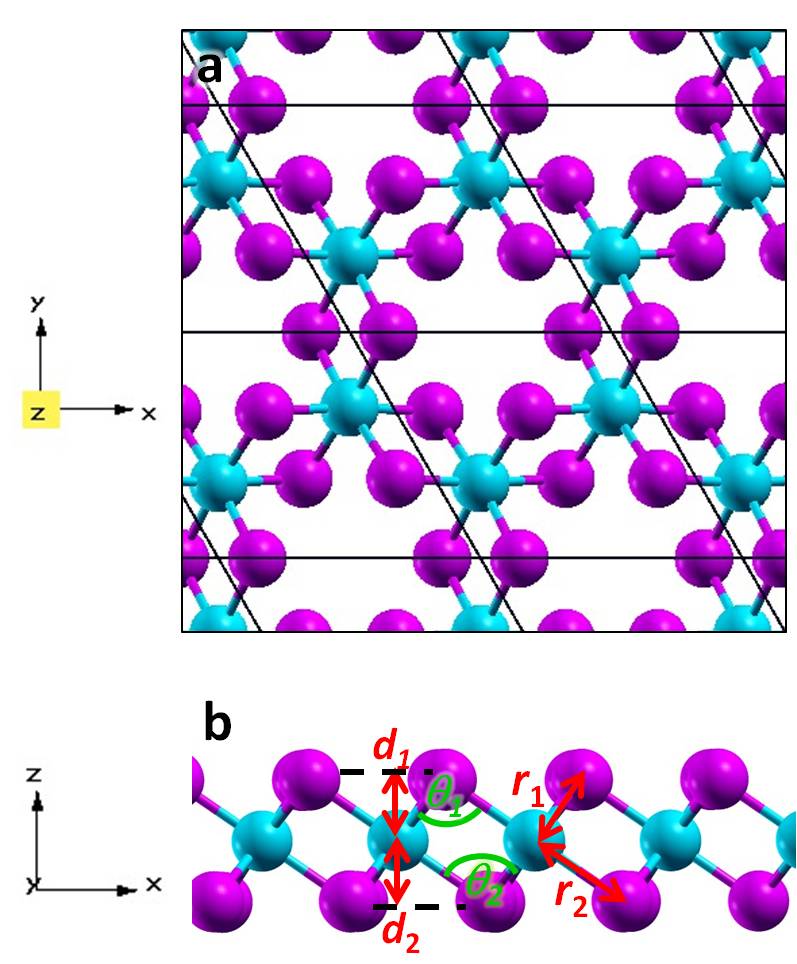 Figure 1
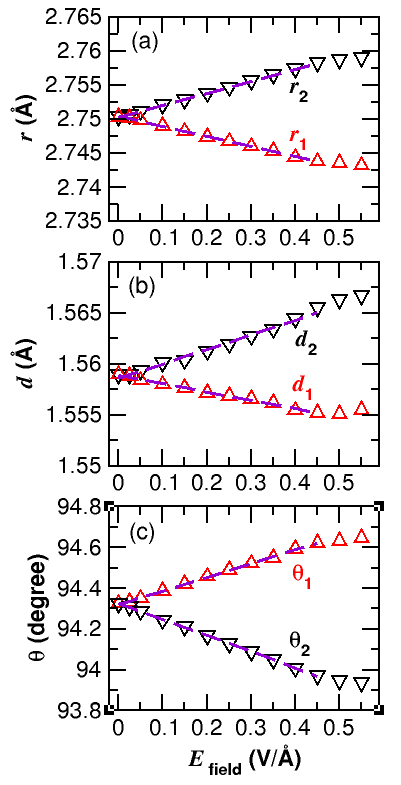 Figure 2
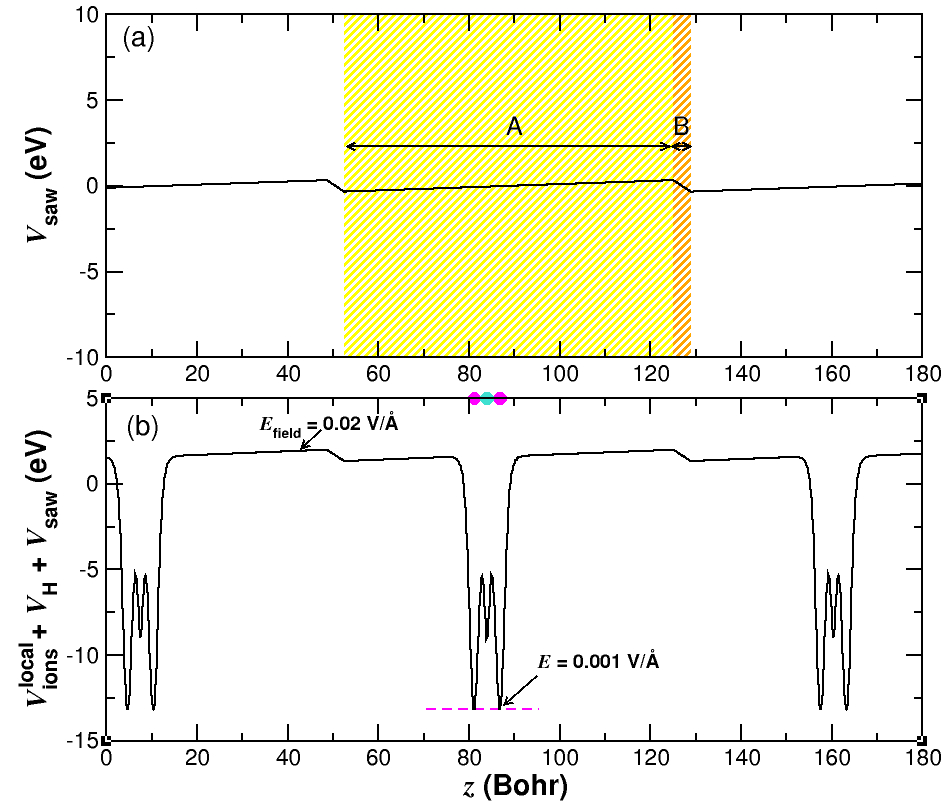 Figure 3
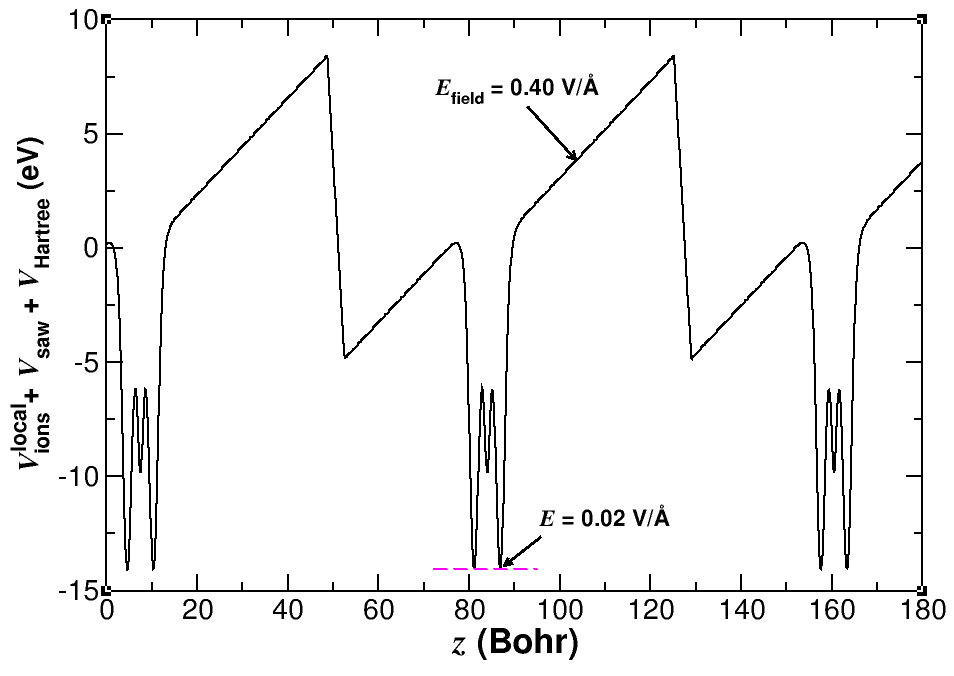 Figure 4
Peer Reviews
No public reviews on file for this paper yet. If you reviewed it on a platform where reviews are public (OpenReview, ICLR, NeurIPS, ICML), you can paste yours below so the community can read it here.
Videos
No videos yet. Explain this paper in a talk, walkthrough, or lecture? Add one.
∎
11institutetext: Abdus Salam International Centre for Theoretical Physics, Strada Costiera 11, Trieste I-34151, Italy
Tel.: +39-040-2240454
11email: [email protected]
Structural and magnetic response of CrI3 monolayer to electric field
S. Ghosh
N. Stojić
N. Binggeli
(Received: date / Accepted: date)
Abstract
A recent theoretical study reported large effects of perpendicular electric fields on the atomic structure of a monolayer CrI3, which could be related to the microscopic origin of the technologically promising and experimentally observed electrical switching of magnetization in bilayer CrI3. However, those theoretical results are not in line with a previous theoretical finding of only slight changes under a strong electric field in CrI3. Given the important consequences that the presence of large structural distortions in an electric field might have, we investigated the effects of external electric fields on the CrI3 monolayer using density functional theory for a wide range of field strengths. Conclusively, we find that the structural response of CrI3 to the applied perpendicular electric field is extremely small due to a very efficient electronic screening of the electric field within the monolayer. Therefore it cannot be the origin of the observed electrical switching of magnetization in the bilayer CrI3. Furthermore, we find that the very small linear dependence of the structural changes on the electric field persists up to a field value of 0.45 V/Å, while the Cr magnetic moment remains constant for the same strengths of electric field.
Keywords:
Chromium trihalide electric field first-principles calculations structural response Dzyaloshinskii-Moriya interaction
1 Introduction
Electrical control of magnetism is a key challenge in condensed matter physics from not only fundamental aspects but also for technological applications. The materials whose magnetic properties can be controlled by electric field could be useful for low-power and high-speed magnetic switching devices. Recently discovered two-dimensional magnetic van der Waals semiconductors, like CrI3HuangNat ; C5TC02840J ; McGuire , CrGeTe3CrGeTe3 and Cr2Ge2Te6fmsemicond1 , can be incorporated and gated in van der Waals nanostructured devices and are attractive candidates for electrical control of magnetism at the nanoscale. In particular, CrI3, which came into focus most recently due to exciting experiments on its bilayer form, NatMaterJiang ; JianNatnanotech ; HuangNatNano is a ferromagnet in bulk with Curie temperature of 61 K with spins pointing out-of-planecryst7050121 ; McGuire ; Lado . Monolayer CrI3 possesses a ferromagnetic (FM) ground state with Curie temperature of 45 KHuangNat , while the bilayer is antiferromagnetic (AFM) with opposite magnetic moments from the two FM monolayers below a critical temperature of about 45 KHuangNatNano . Very recently, a large linear magnetoelectric (ME) effect has been evidenced experimentally in the AFM bilayer CrI3, leading to electrically controlled magnetism characterized by a linear dependence of the magnetization in the bilayer ground stateNatMaterJiang . This was observed with applied perpendicular electric fields up to 0.1V/ÅNatMaterJiang . Furthermore, in the presence of a magnetic field near the FM-AFM spin-flip transition, a reversible electrical switching of the interlayer magnetic order between the FM and AFM states could be achieved by exploiting the large ME response near the critical fieldNatMaterJiang . The microscopic mechanism responsible for the large ME coupling in the CrI3 bilayer is still unknown.
In recent theoretical studies based on first-principles density functional theory (DFT) calculations, Liu et al. chinese_PRB ; chinese_skyrmion predicted very large structural distortions in the CrI3 monolayer in response to vertical electric fields. In particular, in the linear-response regime, splittings due to inversion-symmetry breaking by the electric field in the structural-parameter values of the two surfaces of the CrI3 layer as large as 7 % were predicted for the I-Cr interlayer distance (), with a field as small as 0.02 V/Åchinese_skyrmion , and as large as 3 % for the Cr-I-Cr angle (), with a field of 0.1 V/Åchinese_PRB . Such large structural distortions were found to give rise to a considerable Dzyaloshinskii-Moriya interaction, leading to an electrical reversal of magnetizationchinese_PRB and to electric field induced magnetic skyrmionschinese_skyrmion in simulations with electric fields smaller than 0.1 V/Å. Such results would suggest therefore similar large structural changes induced by the electric field in the CrI3 bilayer, which might be related to the large ME response observed in that system. However, the large structural changes predicted in are not in line with a previous first-principles study on the CrX3 (X = Cl, Br, I) monolayer systems in the presence of a much larger electric field of 1 V/Å, which finds only slight changes induced by the electric field in the band structure of these materialsC5CP04835D . The actual impact of perpendicular electric fields on the atomic structure of the CrI3 monolayer is thus unclear and is important to know in view of its potential consequences on the Dzyaloshinskii-Moriya interaction and resulting ME effects in the CrI3 monolayer and bilayer systems.
In this study, we systematically examine from first-principles the influence of the external perpendicular electric field on the atomic structure of the CrI3 monolayer. The applied field is varied in a large range to carry out a comprehensive study of the trends with field strength also surpassing the linear-response regime. In contrast to previous theoretical findings, we show that the structural changes induced by the electric field are extremely small and therefore cannot cause any significant Dzyaloshinskii-Moriya effect. The very small amplitude of the structural changes results from a very efficient electronic screening of the electric field within the CrI3 monolayer.
2 Computational Details
The calculations are performed using spin-polarized ab initio density functional theory (DFT) as implemented in the Quantum ESPRESSO packageQE . We have used projector augmented wave pseudopotentials PAW to describe the electron-ion interactions. The exchange-correlation interactions are treated within the Perdew-Burke-Ernzerhof (PBE) form of the generalized gradient approximationPBE . The kinetic energy and charge density cutoffs for the plane wave basis set are chosen to be 48 Ry and 457 Ry, respectively. The periodic images of the monolayer are separated by introducing a vacuum of thickness 40 Å along the -direction. Brillouin Zone is sampled with 881 -point mesh. The atomic relaxation is done until the force on each atom becomes smaller than 10*-4* Ry/Bohr. The convergence criterion for electronic self-consistency is set as 10*-12* Ry in order to accurately capture the correct small structural distortions induced by the applied out-of-plane electric field. The electric field is modeled using a sawlike potential along the direction perpendicular to the plane of the monolayer (the direction). Dipole correction is applied to avoid spurious interactions between the periodic images of CrI3 along the -directiondipole .
3 Results and Discussion
3.1 CrI3 structure at zero electric field
Fig.1 shows the equilibrium atomic structure of the CrI3 monolayer. The unit cell consists of 2 Cr atoms and 6 I atoms as shown by the black lines in Fig.1 (a). In this structure, each I atom is ionically bonded to two Cr atoms, and each Cr atom is bound to six I atoms (forming a Cr-centered I octahedron). The Cr3+ ions form an hexagonal network in octahedral coordination, edge-sharing with six I- ions. The CrI3 monolayer consists of three consecutive layers of I, Cr and I atoms as shown in Fig.1(b). In absence of electric field, the CrI3 monolayer is centrosymmetric, with point-group symmetry (with =, =, and = in Fig.1). We have optimized its geometry and find the equilibrium lattice constant to be 6.99 Å. The Cr-I bond distance () and Cr-I-Cr angle () are 2.75 Å and 94.33o, respectively. These values are consistent with previous DFT resultsC8TC01302K ; Half-metallicity ; PhysRevB_strain ; chinese_PRB .
From the spin-polarized DFT calculations we find that the FM state of CrI3 monolayer is energetically more favorable than the AFM state by 18.36 meV/Cr, in good agreement with previous DFT resultsC8TC01302K ; Half-metallicity . The calculated atomic magnetic moment of Cr is 2.982 , close to the total magnetic moment of the FM monolayer per formula unit (3 ), as observed previouslyC8TC01302K ; Half-metallicity ; PhysRevB_strain .
3.2 Modifications produced by the electric field
In Fig. 2 we show the effects of electric field on the CrI3 geometry characterized by the Cr-I distance (), difference in coordinates of Cr and I (), and Cr-I-Cr angle () for I atoms from both layer 1 and layer 2 [see Fig. 1(b)]. These parameters become inequivalent for the two I surface layers in the presence of the electric field, which breaks inversion symmetry. The splitting in the and values, i.e., = - and =-, parameters, in particular, mostly control the Dzyaloshinskii-Moriya interaction between neighbouring Cr spins, responsible for the large ME effects predicted in Refs. chinese_PRB ; chinese_skyrmion . The external electric field causes the I*-* ions to move along the direction opposite to the applied field, i.e., toward negative -direction, while the Cr3+ ions move along positive -direction. Consequently, , and decrease while , and increase with . As can be seen in Fig. 2, the linear-response behavior persists up to the value of 0.45 V/Å. Above that value, in the non-linear regime, the splittings , , and =- tend to saturate in Fig. 2.
Our results in Fig. 2 show that the structural response of CrI3 to the electric field up to 0.6 V/Å is extremely small, for all structural parameters in the wide range of values investigated. In particular, considering the value of 0.2 V/Å (which is the largest value examined in the previous theoretical workchinese_PRB ; chinese_skyrmion and is twice the maximal field value applied in the experimental studyNatMaterJiang ), the resulting splitting in the bond distance [see Fig. 2(a)] is 0.006 Å (amounting to = %), the splitting in the interlayer distance [Fig. 2(b)] is 0.004 Å (= %), and the splitting in the Cr-I-Cr angles [Fig. 2(c)] is 0.29o (= %). All of these structural changes amount to 0.3 % or less. Such a very small impact of the applied electric field on the ionic structure is due, as we show in the Supplementary Material, to a very efficient electronic screening of the electric field within the CrI3 monolayer.
As a result of the small structural changes induced by the electric field in Fig. 2, we find that also the exchange energy, , of the CrI3 monolayer barely changes when the electric field increases, e.g., at = 0.2 V/Å, meV/Cr and at = 0.45 V/Å, meV/Cr. The Cr magnetic moment of FM monolayer remains 2.982 at 0.2 V/Å and very slightly decreases to 2.978 at 0.45 V/Å.
Our results are in contrast to the recent theoretical study reporting significant structural changes (up to 8 % for )chinese_PRB in the linear regime for electric fields up to 0.2 V/Å in the CrI3 monolayerchinese_PRB ; chinese_skyrmion . As we show in the Supplementary Material, some non physical settings of the electric field result in such exaggerated (by a factor larger than 20) structural response to . The structural response we find is consistent, instead, with the negligible band-structure changes reported in another theoretical study induced by structural relaxation in a much larger electric field of 1 V/ÅC5CP04835D .
The Dzyaloshinskii-Moriya interaction, , between neighbouring Cr spins induced by the monolayer structural asymmetry or splitting (or equivalently by ) was found to be as large as meV (0.2 meV) for V/Å (0.05 V/Å) in Ref. chinese_PRB . Such large values are comparable to the magnetic anisotropy energy (MAE) of the CrI3 monolayer, i.e., 0.8 meV/CrPhysRevB_strain ; chinese_PRB , and therefore generated significant ME effects in the corresponding simulationschinese_PRB ; chinese_skyrmion , such as electrical reversal of magnetizationchinese_PRB and electric field induced magnetic skyrmionschinese_skyrmion . When properly evaluated, however, the actual structural response to , in Fig. 2, is one to two orders of magnitude smaller than in Refs. chinese_PRB ; chinese_skyrmion (more than a factor 20 smaller than in Ref. chinese_PRB ). The corresponding magnitude, which scales linearly with () for such small distortions, is therefore less than 0.02 meV for V/Å (less than meV for V/Å) and is thus totally negligible compared to the CrI3 MAE. Hence, in the linear regime (up to V/Å), no significant structural distortion and no resulting relevant Dzyaloshinskii-Moriya ME effect can be reasonably expected to occur experimentally in the CrI3 monolayer.
We note that we have also examined the effect of the electric field on the atomic structure of the CrI3 bilayer in the AFM configuration (with AA layer stacking). The PBE-D2 scheme was used to include dispersion interaction between the two layers of CrI3Grimme . The equilibrium separation between the CrI3 layers was 3.44 Å. Similar to the monolayer, no significant structural change was found in the bilayer CrI3 due to the application of the electric field. The largest changes were of the same order of magnitude as for the monolayer. For example at = 0.1 V/Å, the interlayer distances and changed by 0.07% and 0.10% respectively for the upper monolayer, while for the lower monolayer and changed by 0.02% and 0.08 % respectively. Hence, as for the monolayer, the structural changes in the bilayer are far too small to induce any relevant Dzyaloshinskii-Moriya effect.
4 Conclusion
In this study we have examined the effect of the external perpendicular electric field on the structural properties of the free-standing CrI3 monolayer (as well as the bilayer). We considered a wide range of electric field values, going beyond the linear-response regime, which we find to persist up to field values as large as 0.45 V/Å. Above that value, the changes in the atomic structure associated with the field-induced breaking of inversion symmetry, tend to saturate. In contrast to previous theoretical findings, we show that the structural response to the electric field is far too small to induce any significant Dzyaloshinskii-Moriya magnetoelectric effect in the CrI3 monolayer as well as in the bilayer. The experimentally observed large magnetoelectric response is thus bound to have a different microscopic origin.
Associated Content
Supporting Information Supporting Information accompanies this paper which is available free of charge.
Conflicts of interest The authors declare no conflict of interest for this work.
Supplementary Material
In Fig. SS3(a) the sawtooth potential used in our calculations for the application of the external electric field, with = 0.02 V/Å, is plotted along direction, i.e., perpendicular to the plane of the CrI3 monolayer (following the notation of Ref. chinese_PRB , the total potential acting on the electrons is ). Fig. SS3(b) shows the planar average of the corresponding self-consistent electrostatic potential: , where is the local part of the linear superposition of atomic pseudopotentials, and is the Hartree potential. In our calculations the external field, is applied in region “A” (of length ) while the resulting counterfield (to restore periodicity) is present in “B”. The region “A” is centered around the monolayer and covers 95% of the supercell. Region “B” lies in the vacuum region between the periodic images of the supercell and covers only 0.5% of the supercell. From the calculations performed with the electric field properly applied in the “A” region including the CrI3 monolayer (illustrated in Fig. SS3), we find extremely small changes in the ionic structure of the monolayer induced by the electric field, as reported in our paper.
In Fig. SS3(b) one can observe that the potential minima corresponding to the positions of the two layers of the iodine atoms are nearly unshifted in energy with respect to each other compared to the shift that would be expected in the case of unscreened electric field, i.e., = , where is the iodine interlayer separation. The slope of the dashed line relating the two minima in Fig. SS3(b) corresponds to a field 0.001 V/Å which is very small compared to the slope in vacuum region corresponding to the applied electric field V/Å. This indicates the presence of a large screening (electronic and ionic) of the electric field within the CrI3 monolayer. The same behaviour is present in the calculated electrostatic potential also for larger applied electric field, for instance V/Å as shown in Fig. SS4. The slope of the dashed line corresponds to an electric field V/Å within the CrI3 monolayer which is considerably reduced with respect to the applied electric field. In fact, from the ratio of the electric field in the vacuum to the electric field in the monolayer, we estimate the dielectric screening (electronic+ionic) constant of CrI3 would be 20. Similar calculations of the field ratio performed without ionic relaxation for the electronic screening alone gives 13. This large electronic screening of the electric field is the reason behind the very small displacements of the ions found in our calculations.
If instead one inadvertently exchanges the location of the external electric field and of the counter field in the input of the sawtooth potential, i.e., puts the applied field in region “B” (of the vacuum) resulting in a counter field present in region “A”, then huge distortions in the structure of the CrI3 monolayer are obtained. In the case when the external field is applied in region “B” of Fig. SS3, which lies in the vacuum region, then one reproduces precisely all the results on the structural distortions as a function of the applied electric field reported in Phys. Rev. B, 97, 054416 (2018)chinese_PRB . Using, e.g., = 0.05 V/Å, the structural changes are found to be: Å( of 4.8%) and ( of 1.28%). These values are more than one order of magnitude larger than values obtained with the proper physical setting of the field ( Å and ).
Such effect arises because the component due to the electric field of the forces () on the ions is calculated directly (analytically) from the value of the according to Eq. 1, belowPhyReVBEfield :
[TABLE]
where is the Hellmann-Feynman force calculated with the potential satisfying the periodic boundary condition ()PhyReVBEfield . The second part of Eq. 1 is evaluated analytically in terms of the applied field , the ion charge , and the dipole moment, , of the slabPhyReVBEfield . This part (which is substantial) is correct obviously only if the monolayer is inside the region of the applied field.
The reference list from the paper itself. Each links out to its DOI / PubMed record.
- 1(1) B. Huang, G. Clark, E. Navarro-Moratalla, D.R. Klein, R. Cheng, K.L. Seyler, D. Zhong, E. Schmidgall, M.A. Mc Guire, D.H. Cobden, W. Yao, D. Xiao, P. Jarillo-Herrero, X. Xu, Nature 546 , 270 (2017). DOI https://doi.org/10.1038/nature 22391
- 2(2) W.B. Zhang, Q. Qu, P. Zhu, C.H. Lam, J. Mater. Chem. C 3 , 12457 (2015). DOI 10.1039/C 5TC 02840 J. URL http://dx.doi.org/10.1039/C 5TC 02840 J
- 3(3) M.A. Mc Guire, H. Dixit, V.R. Cooper, B.C. Sales, Chemistry of Materials 27 (2), 612 (2015). DOI 10.1021/cm 504242 t
- 4(4) C. Huang, J. Feng, F. Wu, D. Ahmed, B. Huang, H. Xiang, K. Deng, E. Kan, Journal of the American Chemical Society 140 (36), 11519 (2018). DOI 10.1021/jacs.8b 07879
- 5(5) C. Gong, L. Li, Z. Li, A. Stern, Y. Xia, T. Cao, W. Bao, C. Wang, Y. Wang, Z.Q. Qiu, R.J. Cava, S.G. Louie, J. Xia, X. Zhang, Nature 546 , 265 (2017). DOI https://doi.org/10.1038/nature 22060
- 6(6) S. Jiang, J. Shan, K.F. Mak, Nature Materials 17 , 406 (2018). DOI https://doi.org/10.1038/s 41563-018-0040-6
- 7(7) S. Jiang, L. Li, Z. Wang, K.F. Mak, J. Shan, Nature Nanotechnology 13 , 549 (2018). DOI 10.1038/s 41565-018-0135-x
- 8(8) B. Huang, G. Clark, D.R. Klein, D. Mac Neill, E. Navarro-Moratalla, K.L. Seyler, N. Wilson, M.A. Mc Guire, D.H. Cobden, D. Xiao, W. Yai, P. Jarillo-Herrero, X. Xu, Nature Nanotechnology 13 , 544 (2018). DOI https://doi.org/10.1038/s 41565-018-0121-3