Derivative-free optimization methods
Jeffrey Larson, Matt Menickelly, Stefan M. Wild

TL;DR
This paper reviews recent advances in derivative-free optimization methods, focusing on their categorization, applications, and developments for black-box functions in scientific, engineering, and AI problems.
Contribution
It provides a comprehensive overview and unification of recent developments in derivative-free optimization, highlighting different problem settings and methodological approaches.
Findings
Categorization of methods based on function properties
Overview of deterministic and randomized approaches
Discussion of methods for stochastic and constrained problems
Abstract
In many optimization problems arising from scientific, engineering and artificial intelligence applications, objective and constraint functions are available only as the output of a black-box or simulation oracle that does not provide derivative information. Such settings necessitate the use of methods for derivative-free, or zeroth-order, optimization. We provide a review and perspectives on developments in these methods, with an emphasis on highlighting recent developments and on unifying treatment of such problems in the non-linear optimization and machine learning literature. We categorize methods based on assumed properties of the black-box functions, as well as features of the methods. We first overview the primary setting of deterministic methods applied to unconstrained, non-convex optimization problems where the objective function is defined by a deterministic black-box oracle.…
Click any figure to enlarge with its caption.
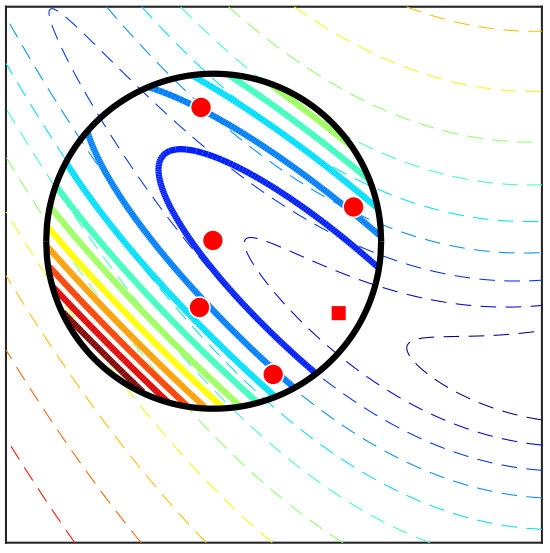 Figure 2
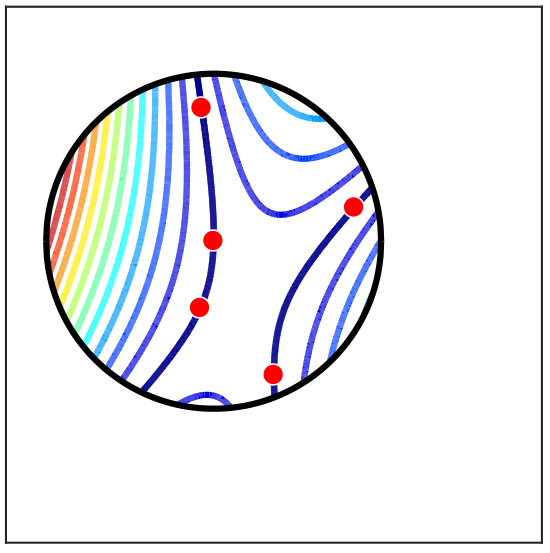 Figure 2
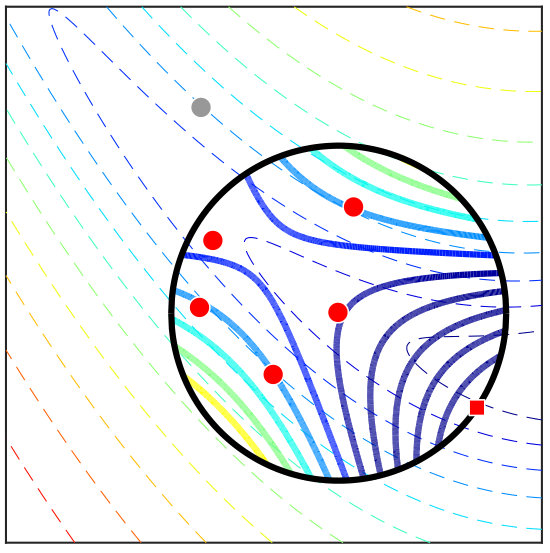 Figure 2
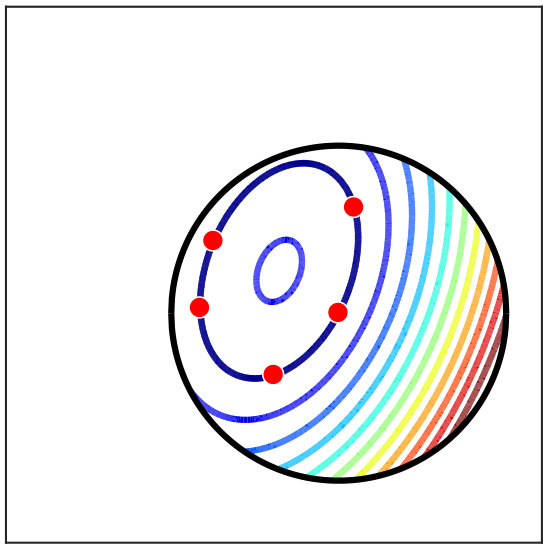 Figure 2
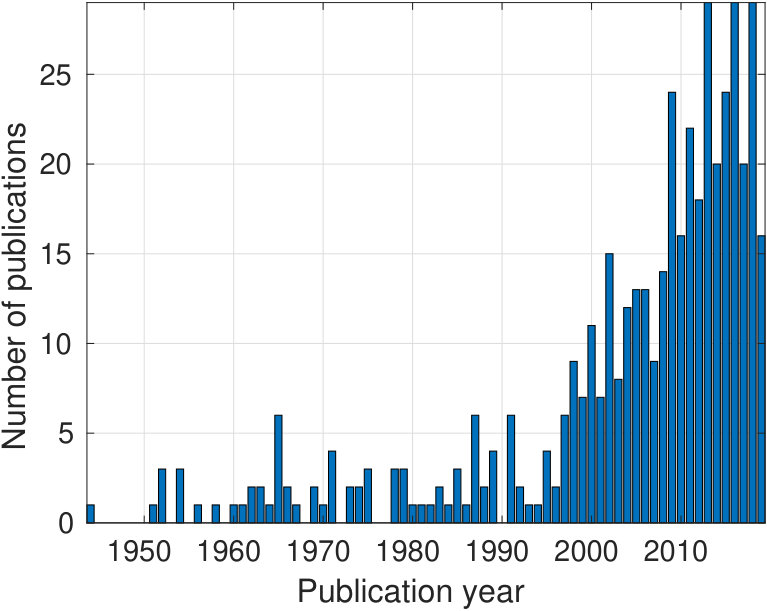 Figure 5
Peer Reviews
No public reviews on file for this paper yet. If you reviewed it on a platform where reviews are public (OpenReview, ICLR, NeurIPS, ICML), you can paste yours below so the community can read it here.
Videos
No videos yet. Explain this paper in a talk, walkthrough, or lecture? Add one.