Antiferromagnetic ordering and dipolar interactions of YbAlO$_3$
L. S. Wu, S. E. Nikitin, M. Brando, L. Vasylechko, G. Ehlers, M., Frontzek, A. T. Savici, G. Sala, A. D. Christianson, M. D. Lumsden, A., Podlesnyak

TL;DR
This study investigates the magnetic properties of YbAlO$_3$, revealing antiferromagnetic order, anisotropic Yb moments confined in the plane, and the significance of dipolar interactions, positioning YbAlO$_3$ as a potential one-dimensional quantum magnet.
Contribution
It provides detailed experimental and theoretical insights into the magnetic structure and interactions of YbAlO$_3$, highlighting the role of dipole-dipole interactions and one-dimensional magnetic behavior.
Findings
Yb moments form a non-collinear AFM structure below 0.88 K.
Dipole-dipole interactions influence magnetic ordering.
YbAlO$_3$ exhibits dominant one-dimensional interactions along the c-axis.
Abstract
In this paper we report low-temperature magnetic properties of the rare-earth perovskite material YbAlO. Results of elastic and inelastic neutron scattering experiment, magnetization measurements along with the crystalline electrical field (CEF) calculations suggest that the ground state of Yb moments is a strongly anisotropic Kramers doublet, and the moments are confined in the -plane, pointing at an angle of to the -axis. With temperature decreasing below K, Yb moments order into the coplanar, but non-collinear antiferromagnetic (AFM) structure , where the moments are pointed along their easy-axes. In addition, we highlight the importance of the dipole-dipole interaction, which selects the type of magnetic ordering and may be crucial for understanding magnetic properties of other rare-earth orthorhombic perovskites.…
Click any figure to enlarge with its caption.
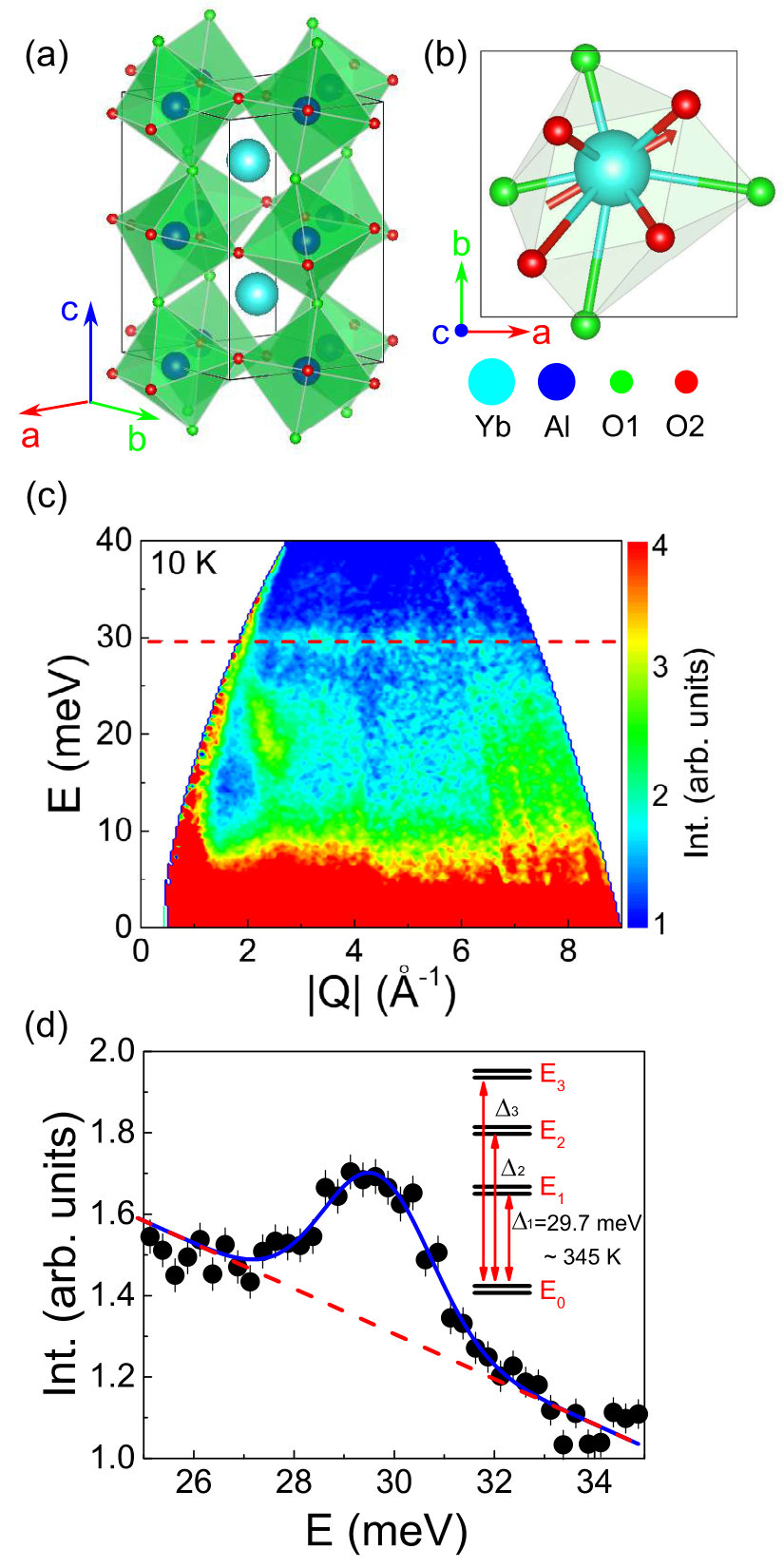 Figure 1
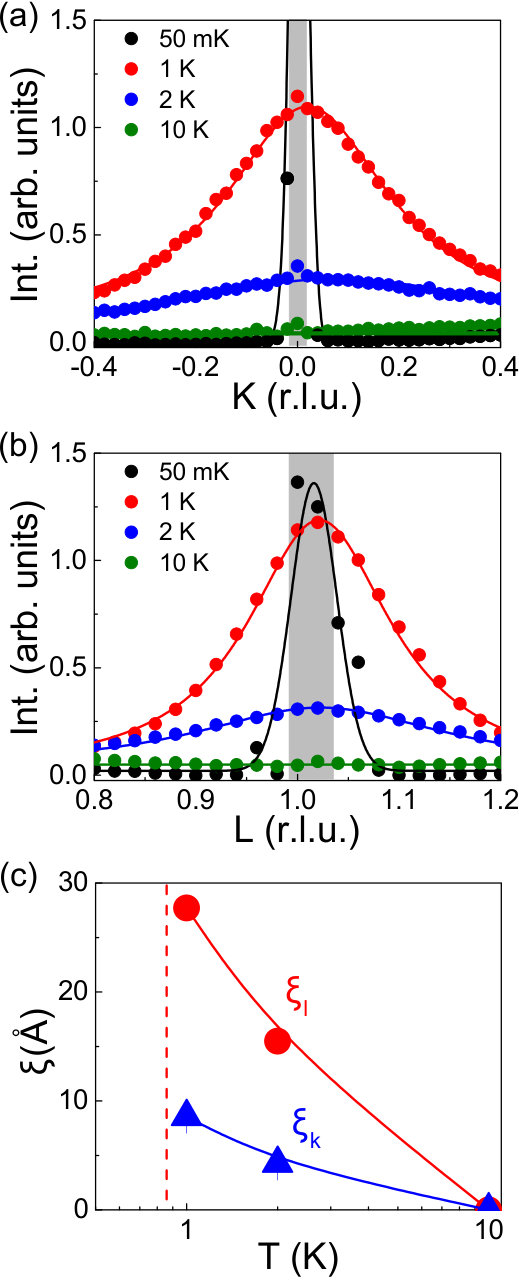 Figure 2
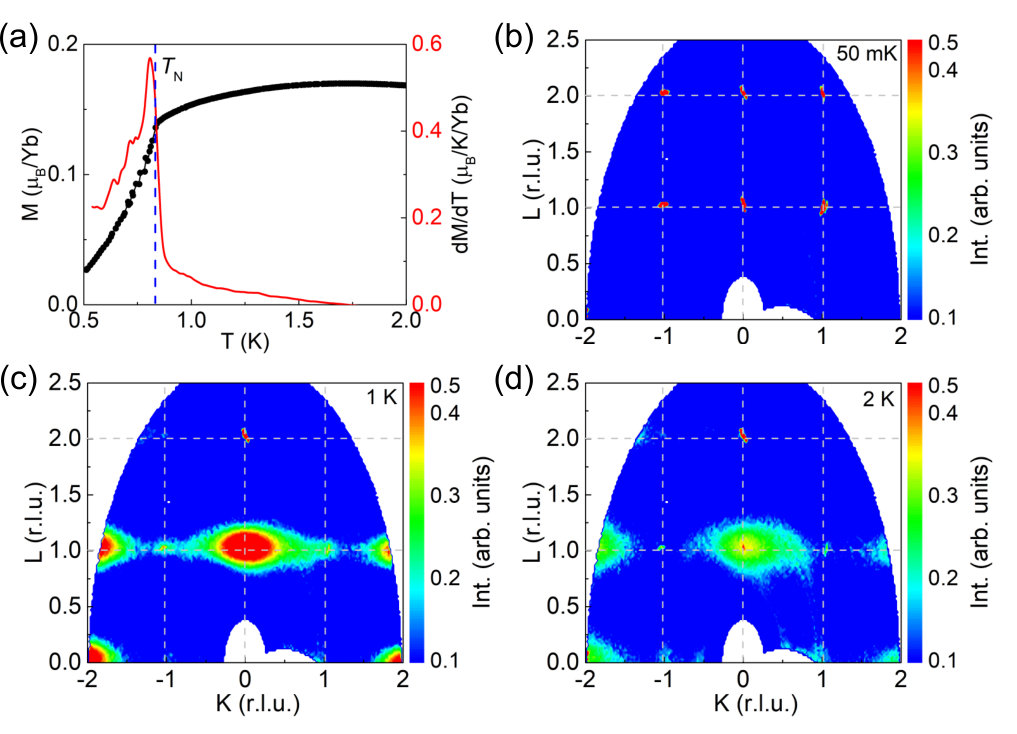 Figure 3
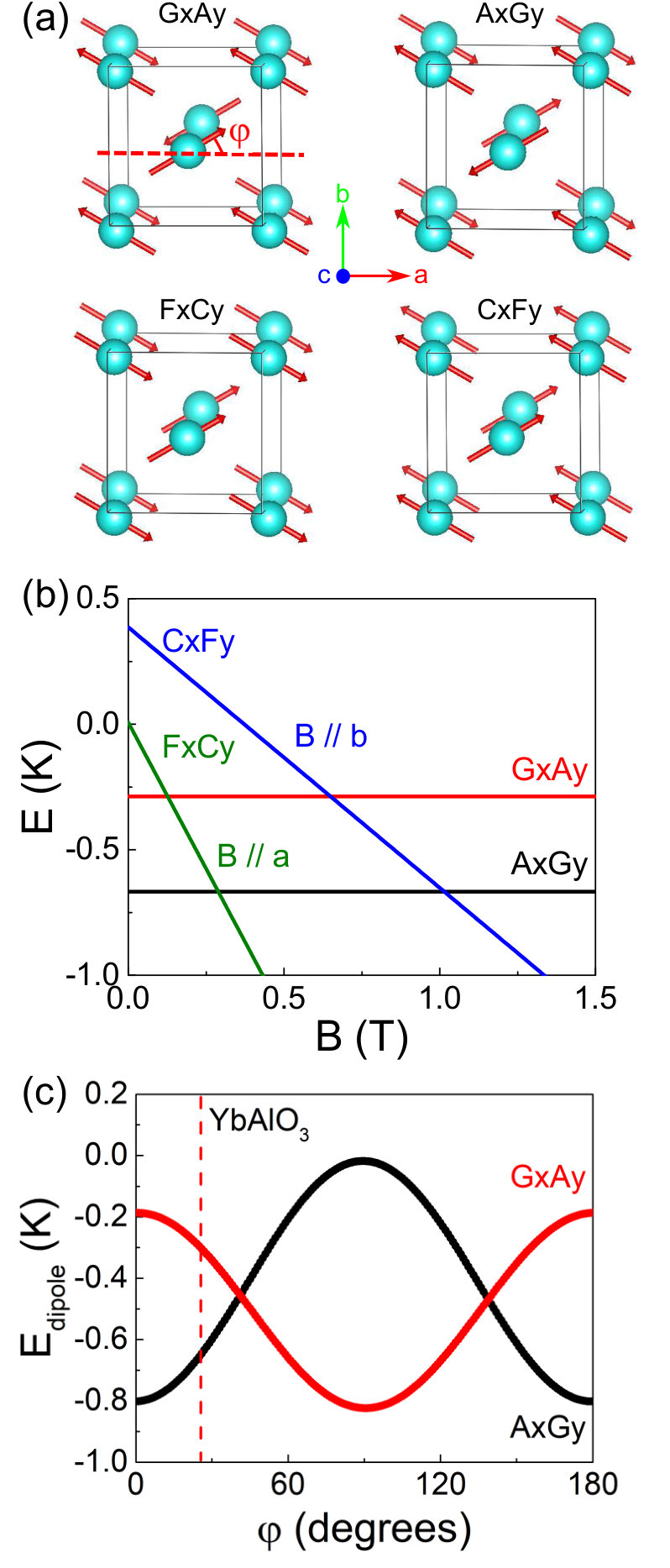 Figure 4
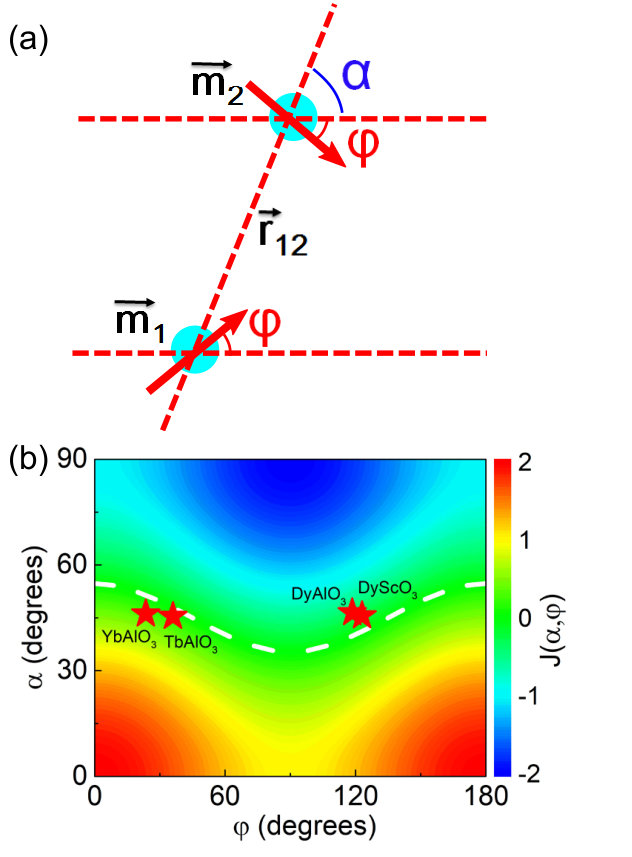 Figure 5
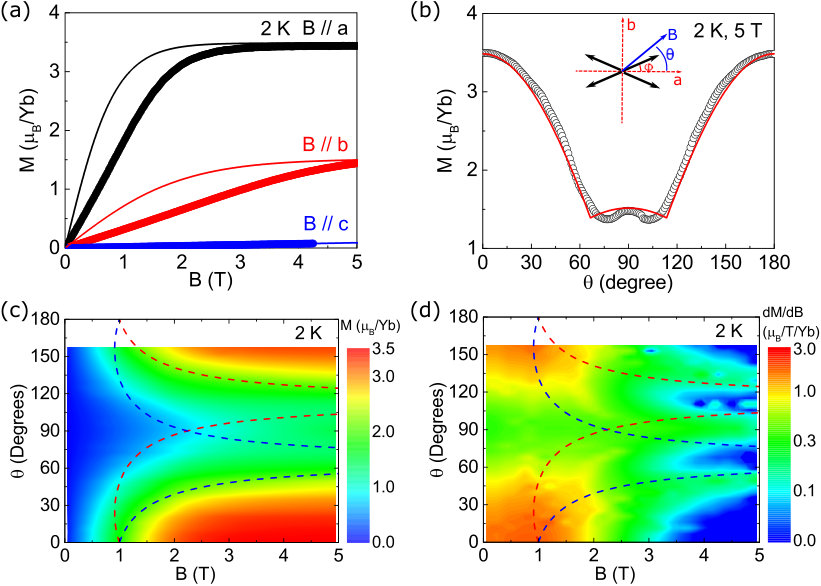 Figure 6
Peer Reviews
No public reviews on file for this paper yet. If you reviewed it on a platform where reviews are public (OpenReview, ICLR, NeurIPS, ICML), you can paste yours below so the community can read it here.
Videos
No videos yet. Explain this paper in a talk, walkthrough, or lecture? Add one.
††thanks: Corresponding author: [email protected]
Antiferromagnetic ordering and dipolar interactions of YbAlO3
L. S. Wu
Neutron Scattering Division, Oak Ridge National Laboratory, Oak Ridge, TN 37831, USA
Department of Physics, Southern University of Science and Technology, Shenzhen 518055, China
S. E. Nikitin
Max Planck Institute for Chemical Physics of Solids, Nöthnitzer Str. 40, 01187 Dresden, Germany
Institut für Festkörper- und Materialphysik, Technische Universität Dresden, D-01069 Dresden, Germany
M. Brando
Max Planck Institute for Chemical Physics of Solids, Nöthnitzer Str. 40, 01187 Dresden, Germany
L. Vasylechko
Lviv Polytechnic National University, 79013 Lviv, Ukraine
G. Ehlers
Neutron Technologies Division, Oak Ridge National Laboratory, Oak Ridge, TN 37831, USA
M. Frontzek
Neutron Scattering Division, Oak Ridge National Laboratory, Oak Ridge, TN 37831, USA
A. T. Savici
Neutron Scattering Division, Oak Ridge National Laboratory, Oak Ridge, TN 37831, USA
G. Sala
Neutron Scattering Division, Oak Ridge National Laboratory, Oak Ridge, TN 37831, USA
A. D. Christianson
Materials Science and Technology Division, Oak Ridge National Laboratory, Oak Ridge, Tennessee 37831, USA
Neutron Scattering Division, Oak Ridge National Laboratory, Oak Ridge, TN 37831, USA
M. D. Lumsden
Neutron Scattering Division, Oak Ridge National Laboratory, Oak Ridge, TN 37831, USA
A. Podlesnyak
Neutron Scattering Division, Oak Ridge National Laboratory, Oak Ridge, TN 37831, USA
Abstract
In this paper we report low-temperature magnetic properties of the rare-earth perovskite material YbAlO3. Results of elastic and inelastic neutron scattering experiment, magnetization measurements along with the crystalline electrical field (CEF) calculations suggest that the ground state of Yb moments is a strongly anisotropic Kramers doublet, and the moments are confined in the -plane, pointing at an angle of to the -axis. With temperature decreasing below K, Yb moments order into the coplanar, but non-collinear antiferromagnetic (AFM) structure , where the moments are pointed along their easy-axes. In addition, we highlight the importance of the dipole-dipole interaction, which selects the type of magnetic ordering and may be crucial for understanding magnetic properties of other rare-earth orthorhombic perovskites. Further analysis of the broad diffuse neutron scattering shows that one-dimensional interaction along the -axis is dominant, and suggests YbAlO3 as a new member of one dimensional quantum magnets.
I Introduction
Perovskite materials with chemical composition O3 ( is a trivalent rare-earth ion and is a transition metal) are in a focus of attention in modern solid-state physics and materials science, because they exhibit interesting magnetic White (1969); Plakhty et al. (1983); Nikitin et al. (2018); Wu et al. (2019), multiferroic Cheong and Mostovoi (2007) and optical Kimel et al. (2004) effects. A number of intriguing magnetic properties arise in these materials from the coupling between the and magnetic sublattices, but its accurate microscopic description is still absent. On the one hand, it is well established from both experimental and theoretical sides, that the strong Heisenberg superexchange interaction induces a robust antiferromagnetic (AFM) order below K Hahn et al. (2014); Shapiro et al. (1974); Yamaguchi and Tsushima (1973); Yamaguchi (1974). In contrast, the interaction is much weaker and usually taken into account phenomenologically, while the interaction is often not even considered Bazaliy et al. (2005); Belov et al. (1976); Yamaguchi (1974).
Our recent research of YbFeO3 revealed that Yb moments form spin chains along the -axis and exhibit unconventional low-energy spin excitations, which are strongly modified by the presence of the magnetic Fe sublattice Nikitin et al. (2018). Contrary to the almost isotropic Fe spins, the Yb moments exhibit a strong single-ion anisotropy, which is rather important for an understanding of the magnetic properties of this material Bazaliy et al. (2005). Results of this work raised two important questions: (i) What is the magnetic ground state and magnetic anisotropy of the Yb moments in a distorted perovskite lattice? (ii) How one can efficiently describe Fe-Yb interaction? While the second question requires advanced theoretical DFT-based calculations, one can answer the first one by studying isostructural YbO3 materials with a nonmagnetic ion in position. To this end, we performed a comprehensive study of YbAlO3, and demonstrated that it provides a realization of a quantum spin chain material exhibiting both quantum critical Tomonaga-Luttinger liquid behavior and spinon confinement-deconfinement transitions in different regions of magnetic field-temperature phase space Wu et al. (2019).
In this work we focus on the magnetic ground state properties of YbAlO3 and discuss its single-ion anisotropy and moment configuration at low temperature. We performed neutron scattering and magnetization measurements combined with point charge model ab-initio calculations. We put the results in context with the findings from a previous study of the iso-structural compound DyScO3 Wu et al. (2017). We show that the combination of strong spin-orbit coupling and crystalline electrical field effects creates an energetically isolated Kramers doublet ground state in both systems. The ground state doublets have a strong uniaxial anisotropy, which constrains the magnetic moments in the -plane with angle to the -axis, and depending on dipolar interchain interaction determine the type of AFM ordering. However, distinct from DyScO3, in which case neither the transverse nor the longitudinal fluctuations are seen in inelastic neutron scattering, due to the strong Ising single-ion anisotropy and the constraint of the selection rule Wu et al. (2017), the analysis of the YbAlO3 ground states wavefunctions shows that the longitudinal fluctuations are visible to neutrons, making it a perfect object for exploring one-dimensional quantum magnetism.
II Experimental Details
A single crystalline sample of YbAlO3 with clear orange color was prepared by the Czochralski technique, as described elsewhere Buryy et al. (2010); Noginov et al. (2001). Magnetization measurements were performed using a Quantum Designs Magnetic Property Measurement System (MPMS) with a horizontal sample rotator insert and MPMS-3 with 3He insert for the low-temperature measurements down to 0.5 K. Neutron scattering measurements of YbAlO3 were performed at the time-of-flight Cold Neutron Chopper Spectrometer (CNCS) Ehlers et al. (2011, 2016), at the Spallation Neutron Source (SNS) at Oak Ridge National Laboratory. Data were collected with a single crystal YbAlO3 sample of mass around 0.6 g, which was aligned in the scattering plane. A bottom-loading dilution refrigerator insert was used to access temperatures as low as 50 mK. The incoming neutron energy was fixed at 3.32 meV ( Å) and 50 meV ( Å), and the high-flux instrument mode was used to maximize the neutron intensity. The software packages Dave Azuah et al. (2009) and MantidPlot Arnold et al. (2014) were used for data reduction and analysis. The crystal electric field (CEF) calculations were performed using the McPhase software package McP .
III Results and Analysis
III.1 Crystal structure and crystal electric field
The reference list from the paper itself. Each links out to its DOI / PubMed record.
- 1White (1969) R. L. White, “Review of Recent Work on the Magnetic and Spectroscopic Properties of the Rare-earth Orthoferrites,” J. Appl. Phys. 40 , 1061 (1969) . · doi ↗
- 2Plakhty et al. (1983) V. P. Plakhty, Yu. P. Chernenkov, and M. N. Bedrizova, “Neutron diffraction study of weak antiferromagnetism in ytterbium orthoferrite,” Solid State Commun. 47 , 309–312 (1983) . · doi ↗
- 3Nikitin et al. (2018) S. E. Nikitin, L. S. Wu, A. S. Sefat, K. A. Shaykhutdinov, Z. Lu, S. Meng, E. V. Pomjakushina, K. Conder, G. Ehlers, M. D. Lumsden, A. I. Kolesnikov, S. Barilo, S. A. Guretskii, D. S. Inosov, and A. Podlesnyak, “Decoupled spin dynamics in the rare-earth orthoferrite Yb Fe O 3 subscript Yb Fe O 3 {\mathrm{Yb Fe O}}_{3} : Evolution of magnetic excitations through the spin-reorientation transition,” Phys. Rev. B 98 , 064424 (2018) . · doi ↗
- 4Wu et al. (2019) L.S. Wu, S.E. Nikitin, Z. Wang, W. Zhu, C.D. Batista, A.M. Tsvelik, A.M. Samarakoon, D.A. Tennant, M. Brando, L. Vasylechko, M. Frontzek, A.T. Savici, G. Sala, G. Ehlers, A.D. Christianson, M.D. Lumsden, and A. Podlesnyak, “Tomonaga-Luttinger liquid behavior and spinon confinement in Yb Al O 3 ,” Nat. Commun. 10 , 698 (2019) . · doi ↗
- 5Cheong and Mostovoi (2007) S-W. Cheong and M. Mostovoi, “Multiferroics: a magnetic twist for ferroelectricity,” Nature Mater. 6 , 13 (2007) . · doi ↗
- 6Kimel et al. (2004) A. V. Kimel, A. Kirilyuk, A. Tsvetkov, R. V. Pisarev, and Th. Rasing, “Laser-induced ultrafast spin reorientation in the antiferromagnet Tm Fe O 3 ,” Nature 429 , 850 (2004) . · doi ↗
- 7Hahn et al. (2014) S. Hahn, A. Podlesnyak, G. Ehlers, G. Granroth, R. Fishman, A. Kolesnikov, E. Pomjakushina, and K. Conder, “Inelastic neutron scattering studies of Y Fe O 3 ,” Phys. Rev. B 89 , 014420 (2014) . · doi ↗
- 8Shapiro et al. (1974) S. M. Shapiro, J. D. Axe, and J. P. Remeika, “Neutron-scattering studies of spin waves in rare-earth orthoferrites,” Phys. Rev. B 10 , 2014 (1974) . · doi ↗