Universality of Heisenberg-Ising chain in external fields
Haiyuan Zou, Rong Yu, Jianda Wu

TL;DR
This paper demonstrates that the quantum phase transition in a Heisenberg-Ising chain under various external fields universally falls into the 1D transverse-field Ising model class, supported by analytical and numerical evidence, and relates to recent experiments.
Contribution
It establishes the universality of 1DTFIM in a broader class of Heisenberg-Ising chains with external fields, extending the understanding of quantum phase transitions in real materials.
Findings
Quantum phase transition exhibits 1DTFIM universality.
Critical exponents and central charge match 1DTFIM predictions.
Universal critical surface identified across parameter space.
Abstract
Motivated by the recent surge of transverse-field experiments on quasi-one-dimensional antiferromagnets Sr(Ba)CoVO, we investigate the quantum phase transition in a Heisenberg-Ising chain under a combination of two in-plane inter-perpendicular transverse fields and a four-period longitudinal field, where the in-plane transverse field is either uniform or staggered. We show that the model can be unitary mapped to the one-dimensional transverse-field Ising model (1DTFIM) when the and components of the spin interaction and the four-period field are absent. When these two terms are present, following both analytical and numerical efforts, we demonstrate that the system undergoes a second-order quantum phase transition with increasing transverse fields, where the critical exponents as well as the central charge fall into the universality of 1DTFIM. Our results naturally…
Click any figure to enlarge with its caption.
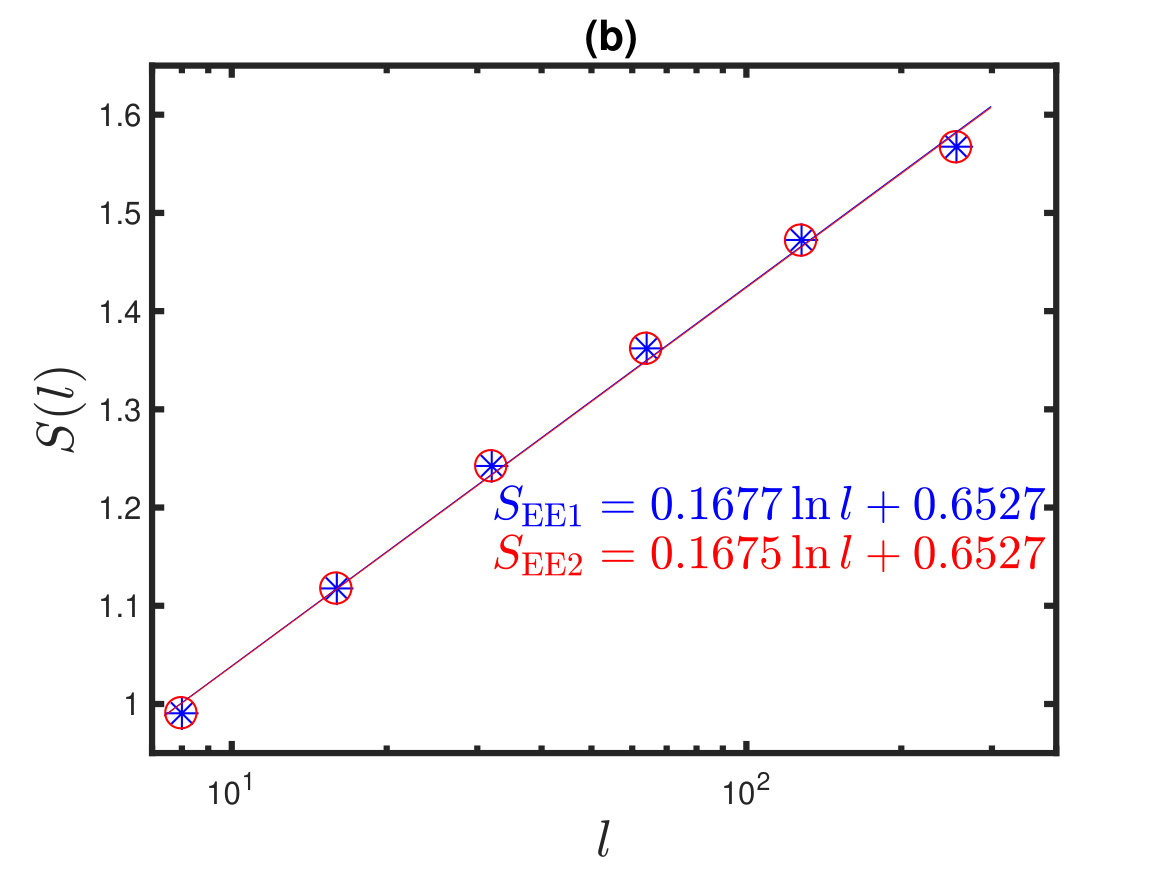 Figure 1
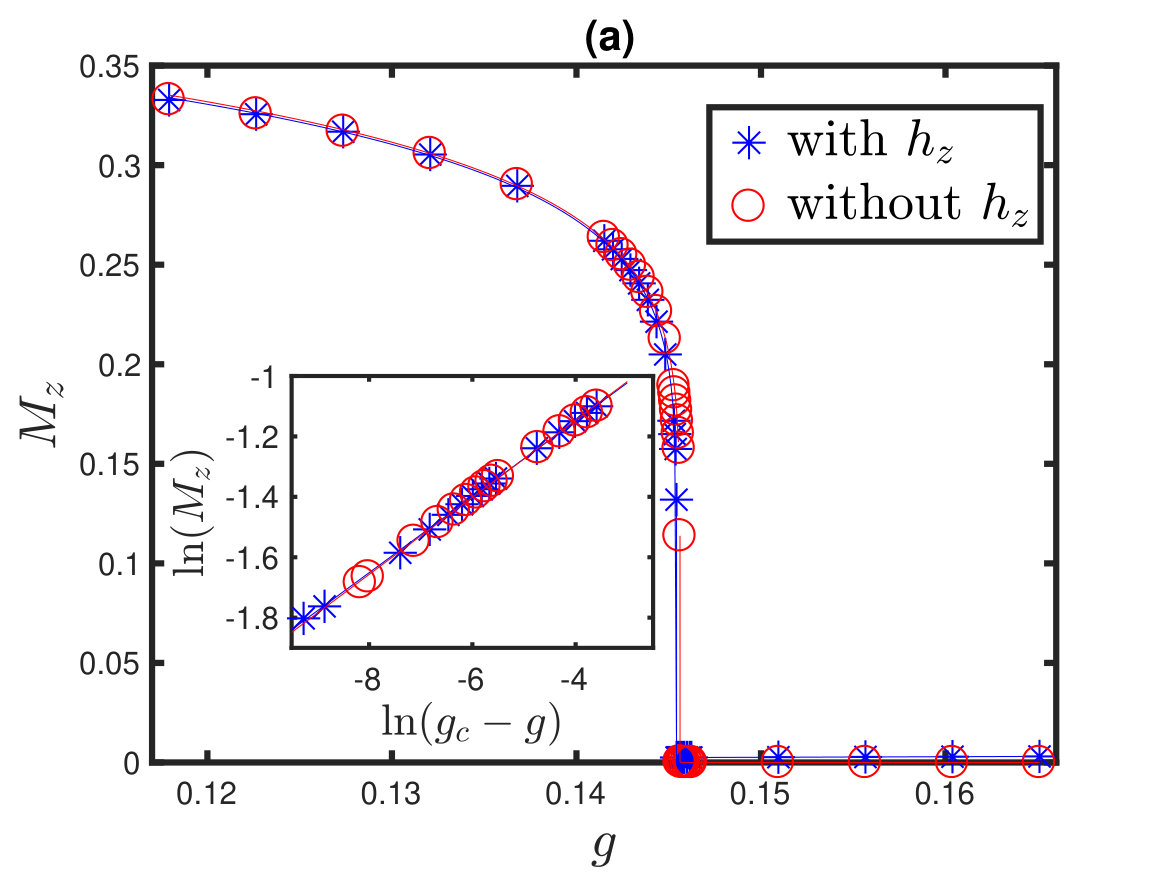 Figure 2
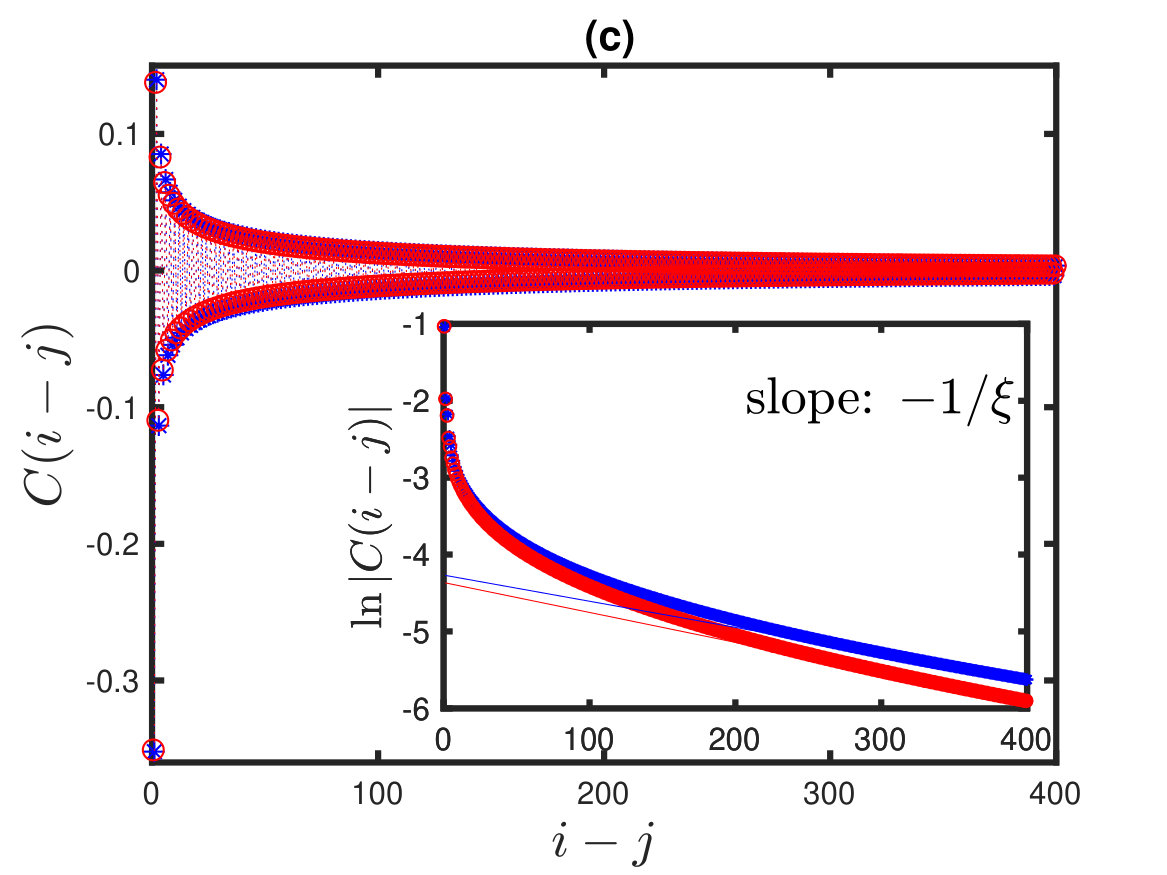 Figure 3
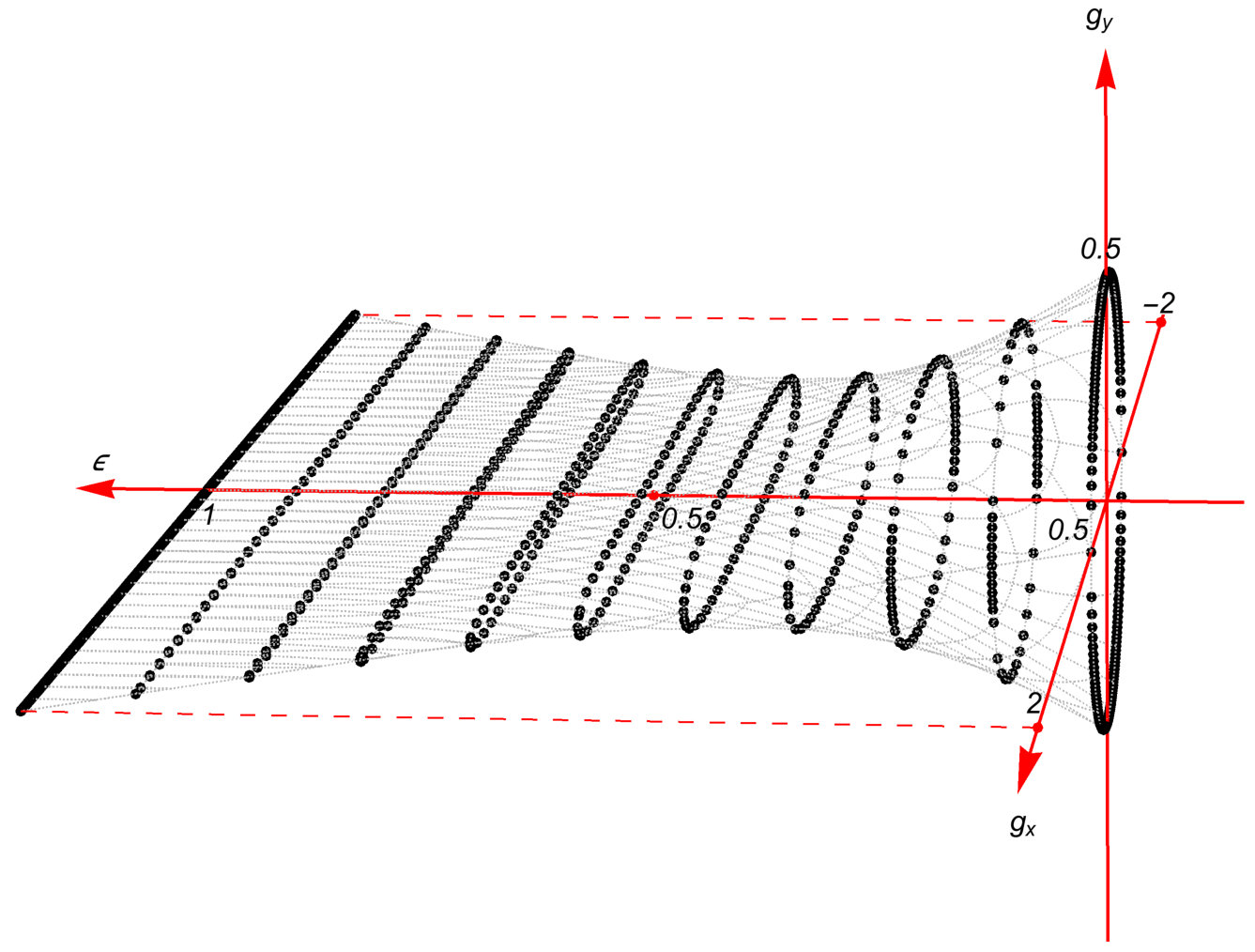 Figure 4
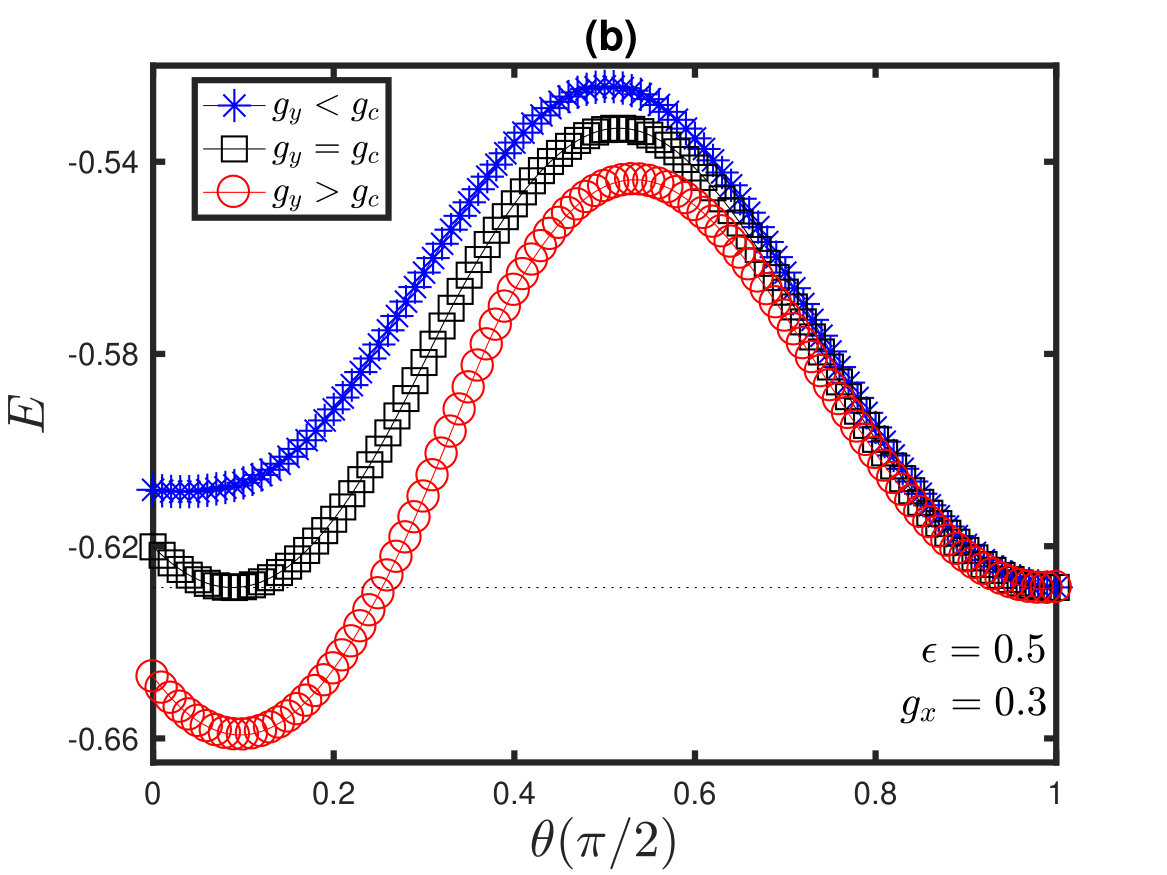 Figure 5
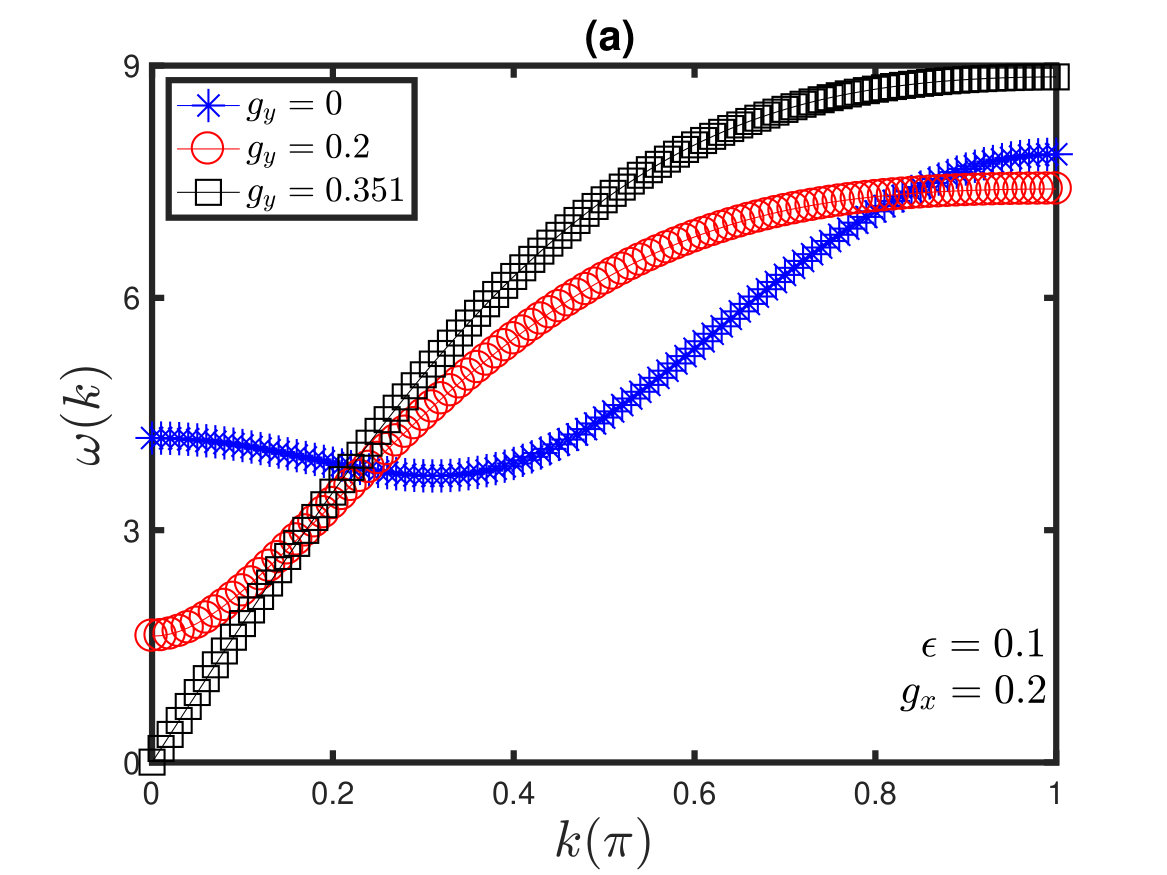 Figure 6
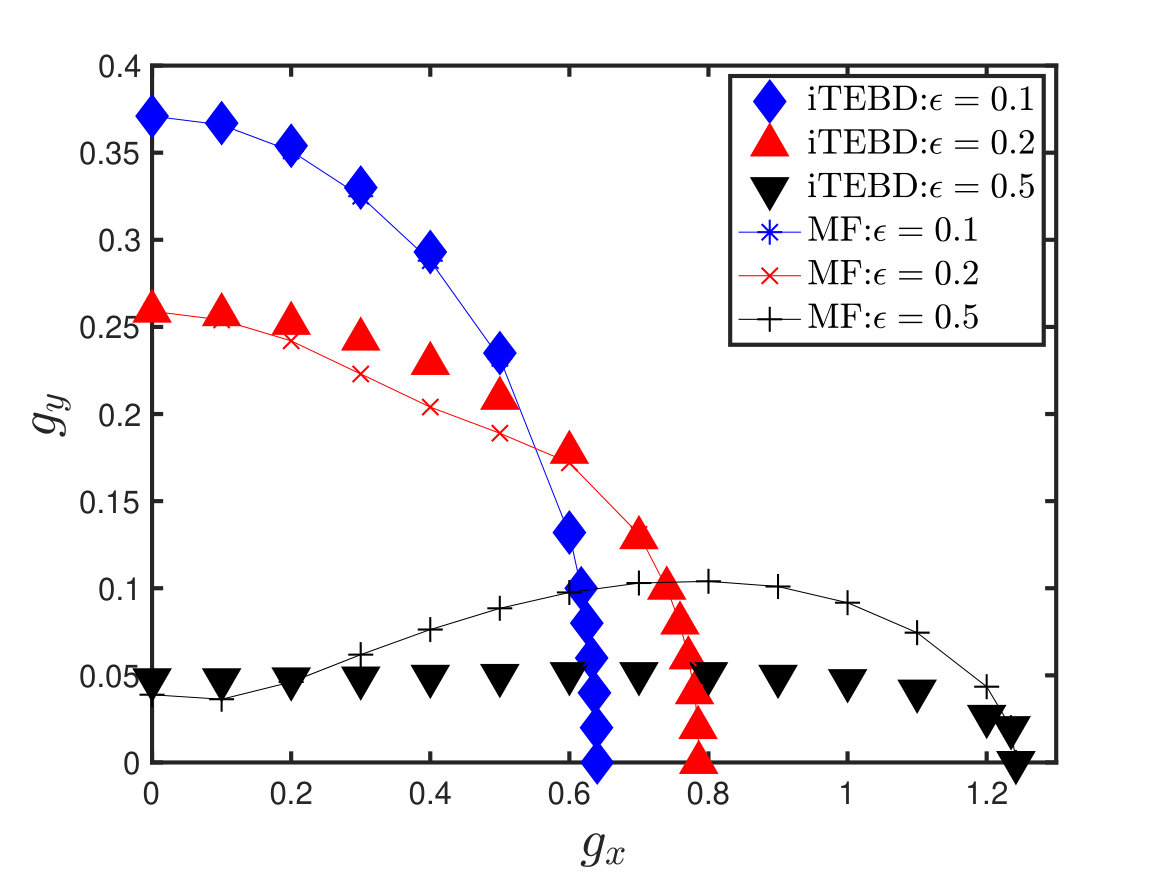 Figure 7
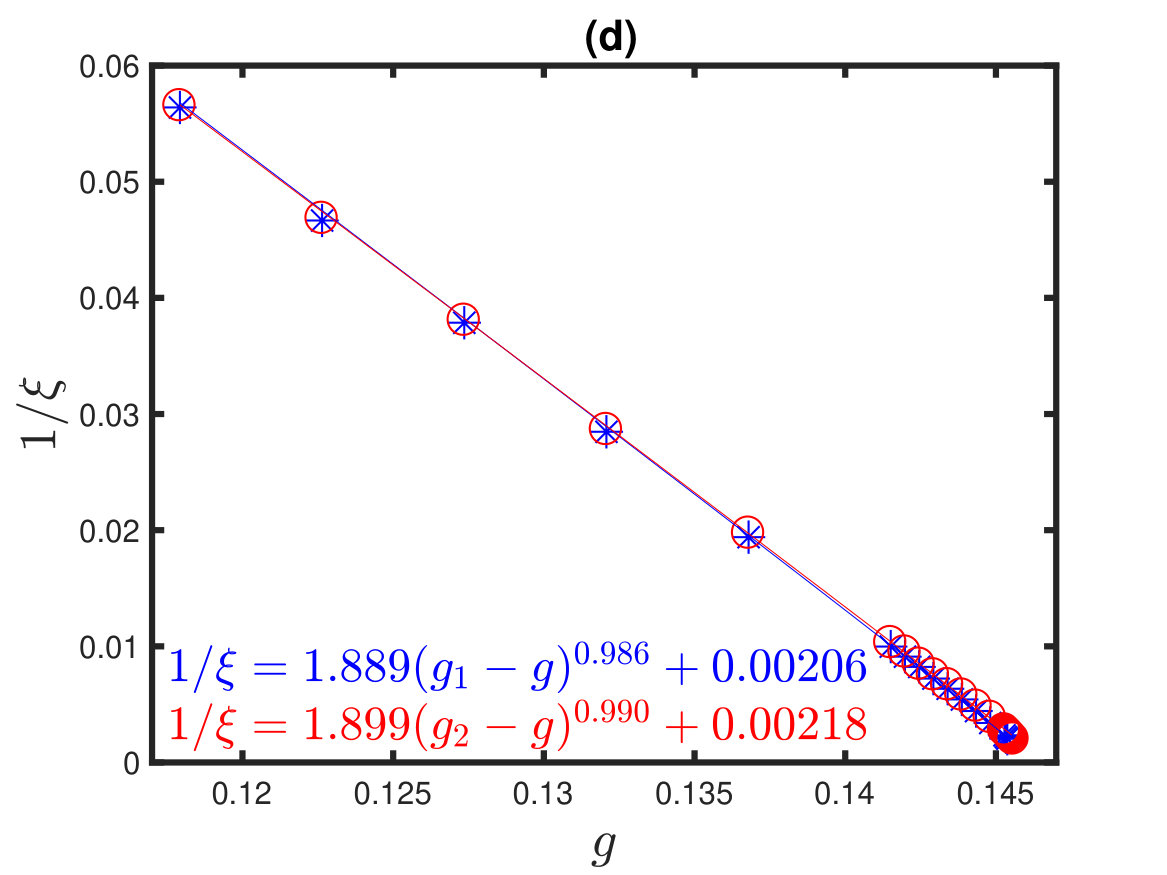 Figure 8
Peer Reviews
No public reviews on file for this paper yet. If you reviewed it on a platform where reviews are public (OpenReview, ICLR, NeurIPS, ICML), you can paste yours below so the community can read it here.
Videos
No videos yet. Explain this paper in a talk, walkthrough, or lecture? Add one.
Universality of Heisenberg-Ising chain in external fields
Haiyuan Zou
Tsung-Dao Lee Institute & School of Physics and Astronomy, Shanghai Jiao Tong University, Shanghai 200240, China
Rong Yu
Department of Physics and Beijing Key Laboratory of Opto-electronic Functional Materials & Micro-nano Devices, Renmin University of China, Beijing, 100872, China
Jianda Wu
Tsung-Dao Lee Institute & School of Physics and Astronomy, Shanghai Jiao Tong University, Shanghai 200240, China
Abstract
Motivated by the recent surge of transverse-field experiments on quasi-one-dimensional antiferromagnets Sr(Ba)Co2V2O8, we investigate the quantum phase transition in a Heisenberg-Ising chain under a combination of two in-plane inter-perpendicular transverse fields and a four-period longitudinal field, where the in-plane transverse field is either uniform or staggered. We show that the model can be unitary mapped to the one-dimensional transverse-field Ising model (1DTFIM) when the and components of the spin interaction and the four-period field are absent. When these two terms are present, following both analytical and numerical efforts, we demonstrate that the system undergoes a second-order quantum phase transition with increasing transverse fields, where the critical exponents as well as the central charge fall into the universality of 1DTFIM. Our results naturally identify the 1DTFIM universality of 1D quantum phase transitions observed in the existed experiments in Sr(Ba)Co2V2O8 with transverse field applied along either [100] or [110] direction. Upon varying the tuning parameters a critical surface with 1DTFIM universality is determined and silhouetted to exhibit the general presence of the universality in a much wider scope of models than conventional understanding. Thus our results provide a broad guiding framework to facilitate the experimental realization of 1DTFIM universality in real materials.
I Introduction
Quantum phase transition arises when the ground state energy of a many-body system encounters non-analyticity upon non-thermal parameter tuning Spe (2010); Sachdev (2011). A quantum critical point (QCP) pops up when the transition is continuous. Near a QCP, exotic behaviors which have no counterparts in classical phase transitions emerge due to the intrinsic driven power of quantum fluctuations. These include the non-Fermi-liquid behavior and unconventional superconductivity in a variety of strongly correlated electron systems Spe (2010); Si et al. (2001); Schröder et al. (2000); Coleman and Schofield (2005); Si and Steglich (2010); Schuberth et al. (2016); Wu et al. (2016), as well as the peculiar spin dynamics in one-dimensional quantum magnets Kinross et al. (2014); Wu et al. (2014).
The one-dimensional transverse-field Ising model (1DTFIM) serves as a paradigmatic quantum spin model that exhibits a continuous quantum phase transition with rich quantum critical behaviors Niemeijer (1967); Pfeuty (1970); Barouch and McCoy (1971); Suzuki (1971, 1976); Jullien et al. (1978); Kopp and Chakravarty (2005); Wu et al. (2018); Wang et al. (2018a), where the celebrated conformal invariance emerges near its QCP Belavin et al. (1984). Although the quantum criticality of the 1DTFIM has been theoretically studied in great detail during past decades, it remains rare and tough to experimentally detect this 1D quantum criticality: On one hand, spin interactions beyond the standard 1DTFIM are usually non-negligible in real materials; on the other hand, the 3D ordering at finite temperatures may mask the 1D quantum critical point and the associated critical behavior Coldea et al. (2010).
Among the potential materials, the widely investigated quasi-one-dimensional effective spin- antiferromagnetic Heisenberg-Ising screw chain compounds SrCo2V2O8 (SCVO) He et al. (2006); Bera et al. (2017, 2014); Wang et al. (2018b); Faure et al. (2018) and BaCo2V2O8 (BCVO) He et al. (2005); Kimura et al. (2007); Lake et al. (2013); Klanjšek et al. (2015); Kimura et al. (2013) are encouraging candidates to access the 1D QCP. Recent series transverse-field experiments on these two materials confirm the existence of a novel 1D QCP residing outside the dome of the 3D Néel ordered phase, which further reveals promising features of quantum criticality of 1DTFIM universality around the 1D QCPWang et al. (2018a); Cui et al. . However, the underlying effective model for understanding this 1D QPT is complicated. Owing to the screw chain structure, the applied transverse field induces an in-plane staggered field perpendicular to it and a four-period field along the crystalline axis. This gives rise to a Heisenberg-Ising model under various external fields [cf. Eq. (II)].
This superficially complicated model looks completely different from the original 1DTFIM. It raises a question about the nature of the QCP, if there exists one, in the model [cf. Eq. (II)]. To clarify this issue, we systematically carry out theoretical investigation on the quantum phase transition and the possible universality class near the QCP of the effective model via determining various critical exponents as well as the central charge associated with the conformal invariance.
Application of a transverse magnetic field suppresses the long-range antiferromagnetic (AF) order and induces an order-disorder phase transition. As a consequence of the anisotropy of the crystal structure, the value of the critical transverse field varies with the field direction. For example, when the transverse field is applied along the direction, a staggered transverse field along the direction and a four-period-staggered field along the direction ( axis) are induced Kimura et al. (2013). The induced fields shift the quantum critical point to 10 T for BCVO Niesen et al. (2013) and 7 T for SCVO Wang et al. (2016), significantly lower than the values when the field is applied along the direction Wang et al. (2018a). Given that the interchain exchange coupling is much weaker than the intrachain coupling along the easy-axis (-axis) in these compounds, these order-disorder phase transitions exhibit sharp features and can be described by an effective 1D spin- XXZ model with external fields.
In this paper, we study this effective 1D model [cf. Eq. (II)] with corresponding parameters following the existed materials of SCVO and BCVO. By using infinite time-evolving block decimation (iTEBD) method Vidal (2007); Orús and Vidal (2008), we calculate the staggered magnetization, the entanglement entropy, and the spin-spin correlation function with fields to locate the QCP. Meanwhile, the scaling analysis on these quantities allows us to extract various critical exponents and the central charge to characterize the nature of the quantum phase transition. The phase transition is found to fall into the 1DTFIM universality for the transverse field applied along the [100] (or equivalently [010]) direction in real experiments Cui et al. . We further demonstrate that the induced -axis four-period-staggered field is irrelevant for the universality of the transition. After pinning down the nature of the 1D QCP in the existed transverse-field experiments on SCVO and BCVO, more general situations of the model are further analyzed in detail by relaxing the allowed tuning fields in the effective model. With varying the spin anisotropy factor and the transverse components of the factor and , a critical surface falling into 1DTFIM universality is determined and silhouetted in the parameter space. The numerical calculation is subsequently followed by a mean field analysis, which qualitatively confirms the iTEBD results for small . The well-established critical surface immediately leads to promising prediction that a line of 1DTFIM critical point should be directly observed when the transverse field is gradually rotated from [100] to [110] direction in either SCVO or BCVO.
The rest of this paper is organized as follows. Sec. II presents the effective model for SCVO and BCVO, and shows that the quantum phase transition induced by tuning the applied transverse field belongs to the 1DTFIM universality class. Sec. III studies the model in more general situations. We obtain the ground-state phase diagram of this generalized model by iTEBD calculations. These numerical results are further confirmed by a mean-field analysis. Sec. IV provides a guideline for experiments based on the general theoretical results. We draw conclusion in Sec. V.
II The effective model
For the material of SCVO or BCVO when the transverse field is applied along the direction, the corresponding effective spin- Heisenberg-Ising XXZ Hamiltonian reads as
[TABLE]
where , and refer to the three Pauli matrices. Take the SCVO system for example, meV, and the anisotropic factor are estimated Wang et al. (2015). with Bohr magneton , the gyromagnetic ratio ,Wang et al. (2015) and is the applied -axis magnetic field. The ratio of the induced staggered fields to are set as Kimura et al. (2013). In our calculation, we set the energy unit in the model, and take the anisotropic factor . In this way, is the only tuning parameter in the model.
At small magnetic fields the ground state of the model is an antiferromagnetic (AF) ordered state. The applied magnetic field in direction plays the role of suppressing this order, and gives rise to a quantum phase transition at a QCP, . The induced staggered field enhances this effect, while the field has negligible contribution. To see this, we calculate the average magnetization in direction, , using the iTEBD method for the Hamiltonian in Eq. (II) for two cases: with and without the term. We find that the term indeed only slightly changes the location of the QCP: As shown in Fig. 1(a), the critical field in the former case, and for the latter. The critical exponent can be obtained by fitting () for both cases. In Fig. 1(a) the fitting gives and for the two cases, both agree with of the 1DTFIM universality within error bars. We also calculate the entanglement entropy for a subsystem with spins in an infinite chain, where the reduced density matrix of is defined as . (The ground state wavefunction can be decoupled to the tensor product of wavefunctions of subsystems, and ). From conformal field theory analysis Calabrese and Cardy (2004), the entanglement entropy scales as , where is the central charge associated with the conformal invariance. Figure 1(b) shows the scaling of with subsystem size , which gives and , for both cases with and without the term, respectively. Note that either agrees with of the 1DTFIM. The critical exponent and central charge are consistent with Ref. Takayoshi et al. (2018) where only the staggered field ( term) is considered. We further calculate the spin-spin correlation, denoted as , for Hamiltonian Eq. (II) with and without the term (see Fig. 1(c)). Using the relation , with correlation length and , the critical exponent can be obtained. We find (0.990) for the cases with (without) term (Fig. 1d).
Based on these evidences, we conclude: (1) The quantum phase transition falls in the 1DTFIM university class; (2) the four-period field is an irrelevant term for this transition, which only slightly shifts the location of the QCP. For the case when the transverse field is applied along the direction in some experimental setup, after some slight modifications, the model in Eq. (II) can still describe the phase transition. In this case, we need to set , and take the term to be for spin on site , with a four-period pattern Kimura et al. (2013). Compare with the four-period pattern for the cases, the effects of the pattern of the term is even weaker. In particular, the quantum phase transition still keeps the 1DTFIM university.
III The generalized model
Since the small term in Eq. (II) is irrelevant to the quantum phase transition induced by the transverse field, we drop the term and focus on the effects of the two inter-perpendicular transverse fields via studying a generalized model from the Hamiltonian in Eq. (II).
[TABLE]
with . We consider arbitrary ratio . It extends the parameter region of the realistic model Eq. (II) in Sec. II, where the ratio is fixed as 0.4. For small and , the Hamiltonian Eq. (2) has an AF ordered ground state.
III.1 iTEBD calculation
We first use the iTEBD method to study the model Eq. (2) extensively. The average magnetization for various and values is calculated, and the quantum critical point is reached when the AF ordering is completely suppressed.
We scan the parameters and with 0,0.1,…,1, and obtain the QCPs of the generalized model in a 3D -- parameter space. As shown in Fig. 2, the obtained QCPs form a smooth critical surface. At 0, i.e. without the XY spin interaction terms, the critical points in the - plane are located on a circle with since in this case the model can be unitary transformed to the 1DTFIM. At a small , the critical points approximately form an ellipse with , where is the critical point on the () axis. For , a nonmonotonic behavior of the critical curve appears due to the nontrivial competition among the XY spin interactions, , and terms. The critical curve forms a dumbbell shape with . continuously shrinks with increasing and vanishes at and . When , the XXZ Heisenberg-Ising Hamiltonian becomes the Heisenberg XXX model. Without the external fields, the XXX model naturally contains an SU(2) symmetry with no long-range magnetic order at zero temperature. Therefore, at the external fields just simply lead to paramagnetic response. We notice that the 1DTFIM-type QCP obtained from Sec. II falls into this critical surface. By checking the linearity between the magnetization and across the QCPs on the critical surface, we can conclude that the transition across any point on the critical surface belongs to the 1DTFIM universality class. The critical surface is symmetric along the (or ) axis as the Hamiltonian is invariant by sending when . For , the XXZ model will become Heisenberg-XY type with physics dominated by the XY term. The influence of various external fields at this situation will be deferred to future study.
III.2 Mean field calculation
To further understand the properties of the phase transition obtained from iTEBD calculation, a rotation of spins on even sites () are carried out to transform the Hamiltonian [Eq. (2)] into
[TABLE]
Correspondingly, the AF ground state at small and values for Eq. (2) is transferred to a Ferromagnetic (FM) state. Due to the asymmetric terms in Eq. (3), the perturbation of and is nonequivalent. Both the and terms suppress the FM state, but the term competes with . It can induce a reentrant behavior of the staggered magnetization in the transverse XXZ model with , which is discussed in Ref Hieida et al. (2001) for . However, the and terms have similar effects. Thus, adding a term can efficiently suppress the FM phase. This also means the staggered -field can greatly assist to destroy the AF ordering in the original model [Eq. (2)].
We then carry out a mean field treatment Dmitriev et al. (2002); Caux et al. (2003) to the generalized model [Eq. (3)]. Here, another unitary transformation, rotating the spins around the axis by , is performed, before rotating all the spins around the axis by . Through these two transformation, magnetic field is directed along a new axis contributed from both and terms. After a Jordan-Wigner transformation, a spinless fermion Hamiltonian is obtained,
[TABLE]
with , , , and is the density operator. The four-fermion interaction term is decoupled in three possible ways, with the expectation values for the magnetization, kinetic hopping, and pairing terms denoted as
[TABLE]
The mean-field Hamiltonian then becomes
[TABLE]
where
[TABLE]
Fourier transform the Hamiltonian to the momentum space and diagonalize it using a Bogoliubov transformation,
[TABLE]
with
[TABLE]
The mean field Hamiltonian density becomes
[TABLE]
where is the single particle excitation spectrum,
[TABLE]
The quantities ,, can be determined by the self-consistency conditions:
[TABLE]
and the optimized can be fixed by minimizing the ground state energy.
The phase diagram in - plane for a few different values is shown in Fig. 3. For small , the critical line is consistent with that determined from the iTEBD method. For , the nonmonotonic behavior of the transition line is also observed at mean-field level, although the critical line determined is quantitatively deviated from the iTEBD results.
We can understand the different critical line shapes at small and large values within the mean-field approach. For small , there is only one optimized value from 0 to , while the parameter and are tuned from () to (). The single particle spectrum function is gapless at at the order-disorder transition point (Fig. 4(a)). For intermediate , however, a double well structure of the energy as a function of appears (Fig. 4(b)), which indicates competing quantum fluctuations between the and terms. By fixing , at where is the critical point, the minimal energy point is closer to , and thus . In this case, the term dominates the critical quantum fluctuations. However, after crosses the critical point , the minimal energy point jumps to and thus , which indicates that the term begins to play the major role. We fix the phase transition boundary at the point where the ground-state degenerate appears. The above analysis based on the introduced optimized gives a qualitative explanation of the novel behavior of the critical curve in the - plane for large . At large , the quantum fluctuations due to the XY spin interaction term is highly relevant, while the interplay between the intrinsic fluctuations and the term makes the phase transition further nontrivial. In the mean-field treatment, the odd-order terms via Jordan-Wigner transformation are neglected. The increasing discrepancy between the mean field analysis and the iTEBD results with increasing indicates these neglected non-linear terms play a non-negligible role, and eventually lead to the breakdown of the mean-field theory when .
IV Guidance to Experiments
Because of the induced four-period field is irrelevant, our extensive study of the phase transition on the generalized model with broad parameter region and provides a concrete guidance to the experiments on real materials of quasi-1D Ising anisotropic quantum magnets, such as SCVO and BCVO. In SCVO and BCVO, different ratio can be realized by applying a transverse field which gradually rotates in the plane. The rotation of the applied transverse field shifts the position of the QCP. At the direction, strongest in-plane staggered field perpendicular to the external transverse one is induced. Deviation of the applied transverse field from the direction weakens . Consequently it requires stronger applied transverse field to reach the 1DTFIM QCP. And when the applied field reaches the direction of , the required external transverse field reaches maximum. This is clearly observed in BCVO Wang et al. (2018a) and the recent NMR experiments on SCVO Cui et al. with the external transverse field applied along [110] and [100], respectively. For SCVO, when the field is applied to the direction the 1D QCP of SCVO is slightly outside the 3D ordered phase Cui et al. . As the QCP(1D) will be pushed further by rotating the in-plane applied field, it can be used to distinguish unambiguously the 3D QCP and 1D QCP at direction and provide a clean platform to examine the novel quantum critical behavior near the 1D QCP.
V Conclusion
To conclude, following the corresponding effective one-dimensional Heisenberg-Ising model with axial anisotropy tuned by , we demonstrate that the observed transverse-field ()-tuned quantum phase transition outside the three-dimensional Néel order in the materials of BCVO and SCVO falls into the 1DTFIM universality, despite of the presence of the induced in-plane staggered field () and the four-period fields along the axis (). Small is further shown to make negligible effects on the phase transition. A generalized model is immediately constructed by neglecting and relaxing the , , and to a broad parameter region. With the generalized model, the nature of quantum phase transitions is then extensively and carefully scrutinized by the iTEBD method, and it has been shown that the quantum phase transition falls into the 1DTFIM universality, rendering out a nice 1DTFIM quantum critical surface until (XXX limit). The well-established 1DTFIM critical surface obtained from the generalized model is expected to guide the in-plane-field-rotation measurements on real materials such as SCVO, BCVO, and CoNb2O6 etc.. Our study concretely demonstrates that the 1DTFIM universality is robust against additional spin interaction terms as well as various external fields. This opens rich opportunities to access to the 1DTFIM QCP and realize the celebrated Zamolodchikov quantum integrable model Zamolodchikov (1989) near this QCP in real materials.
VI Acknowledgments
We thank Weiqiang Yu and Zhe Wang for helpful discussions. The work at Shanghai Jiao Tong University is supported by the National Natural Science Foundation of China Grant No. 11804221 (H.Z.), and Science and Technology Commission of Shanghai Municipality Grant No. 16DZ2260200 (H.Z.). The work at Renmin University of China was supported by the Ministry of Science and Technology of China, National Program on Key Research Project Grant number 2016YFA0300504, the National Science Foundation of China Grant number 11674392, and the Fundamental Research Funds for the Central Universities and the Research Funds of Remnin University of China Grant number 18XNLG24 (R.Y.). J.W. acknowledges support from Shanghai city.
Appendix A iTEBD results
In this appendix, we list the values of the quantum critical points, used to generate the critical surface in Fig. 2 of the main text. In tables I-III, are the critical points in the - plane for different . All the critical points are obtained by scanning the parameter space along or with one of them held at fixed value. The width of error bars is the step size of the iTEBD calculation.
Technically, convergent iTEBD results upto particular significant digit can be reached as the Schmidt rank which characterizes the entanglement of the system is increased. In Sec. II, we carry the iTEBD calculation with to obtain convergent four significant digit results for QCP locations. However, To obtain convergent three significant digit results, is enough. Thus, the numerious QCP results in Sec. III is calculated from .
The reference list from the paper itself. Each links out to its DOI / PubMed record.
- 1Spe (2010) Special issue on Quantum Phase Transitions, J. Low Temp. Phys. 161 , 1 (2010) . · doi ↗
- 2Sachdev (2011) S. Sachdev, Quantum phase transitions , second ed. ed. (Cambridge University Press, Cambridge, 2011).
- 3Si et al. (2001) Q. Si, S. Rabello, K. Ingersent, and J. L. Smith, Nature 413 , 804 (2001).
- 4Schröder et al. (2000) A. Schröder, G. Aeppli, R. Coldea, M. Adams, O. Stockert, H. Löhneysen, E. Bucher, R. Ramazashvili, and P. Coleman, Nature 407 , 351 (2000).
- 5Coleman and Schofield (2005) P. Coleman and A. J. Schofield, Nature 433 , 226 (2005).
- 6Si and Steglich (2010) Q. Si and F. Steglich, Science 329 , 1161 (2010).
- 7Schuberth et al. (2016) E. Schuberth, M. Tippmann, L. Steinke, S. Lausberg, A. Steppke, M. Brando, C. Krellner, C. Geibel, R. Yu, Q. Si, et al. , Science 351 , 485 (2016).
- 8Wu et al. (2016) J. Wu, Q. Si, and E. Abrahams, Physical Review B 93 , 104515 (2016).