Scaling in the massive antiferromagnetic XXZ spin-1/2 chain near the isotropic point
S. B. Rutkevich

TL;DR
This paper investigates the finite-size and temperature scaling behaviors of the antiferromagnetic XXZ spin-1/2 chain near the isotropic point, revealing universal functions that describe energy corrections and free energy dependence.
Contribution
It provides a numerical calculation of the universal Casimir scaling function for the ground state energy and links it to the temperature dependence of the free energy in the gapped phase.
Findings
Universal Casimir scaling function for ground state energy
Scaling function describes low-temperature free energy behavior
Numerical solution of nonlinear integral equation
Abstract
The scaling limit of the Heisenberg XXZ spin chain at zero magnetic field is studied in the gapped antiferromagnetic phase. For a spin-chain ring having sites, the universal Casimir scaling function, which characterises the leading finite-size correction term in the large- expansion of the ground state energy, is calculated by numerical solution of the nonlinear integral equation of the convolution type. It is shown, that the same scaling function describes the temperature dependence of the free energy of the infinite XXZ chain at low enough temperatures in the gapped scaling regime.
Click any figure to enlarge with its caption.
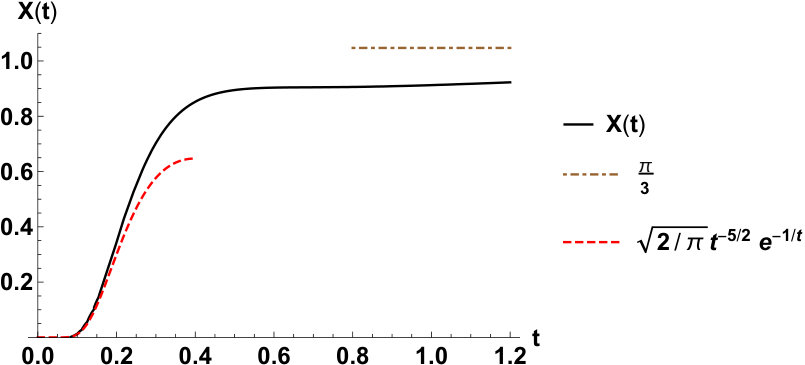 Figure 1
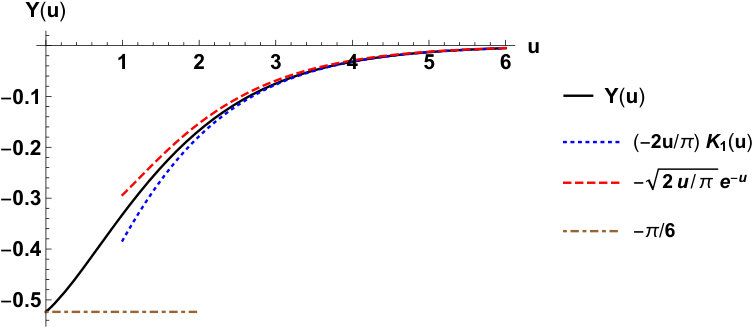 Figure 2
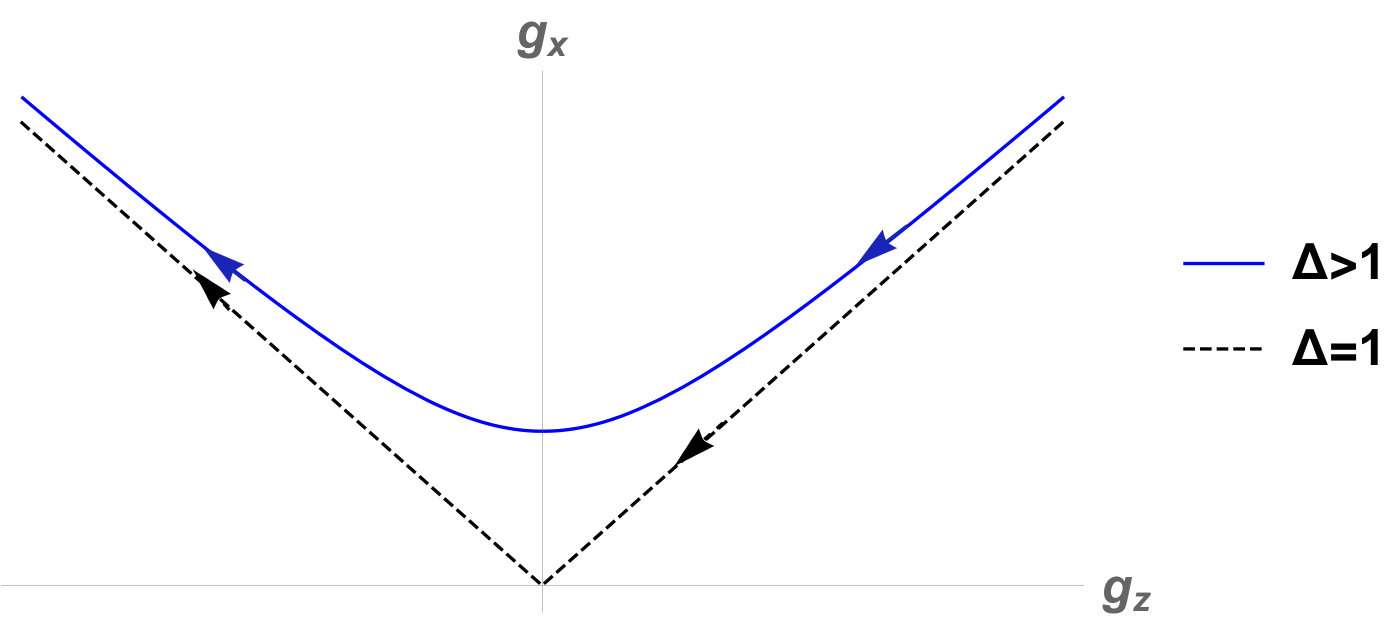 Figure 3
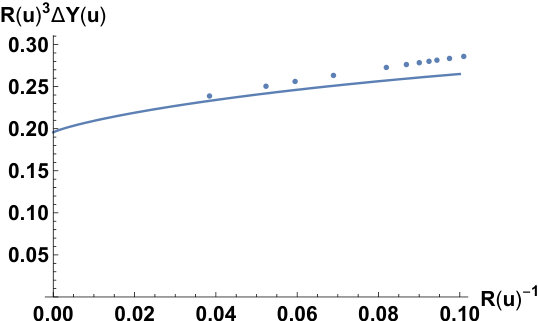 Figure 4
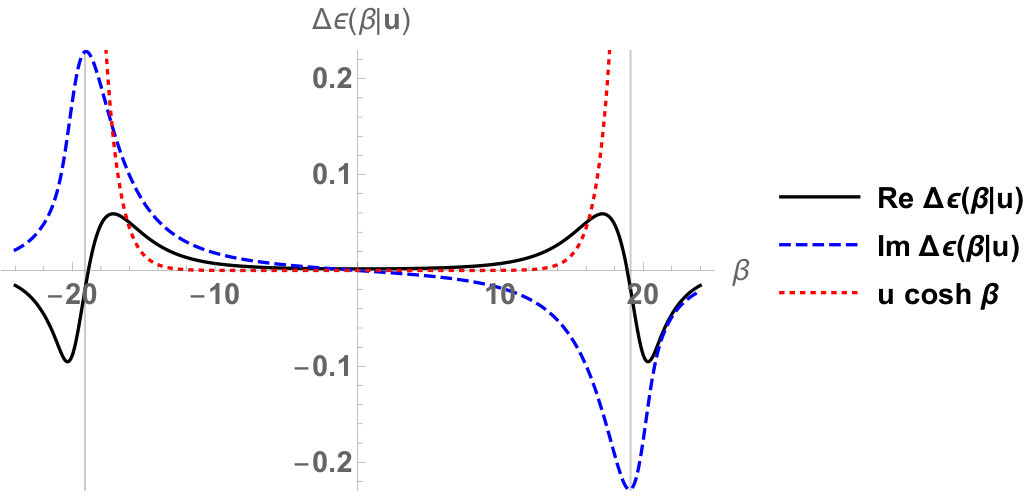 Figure 5
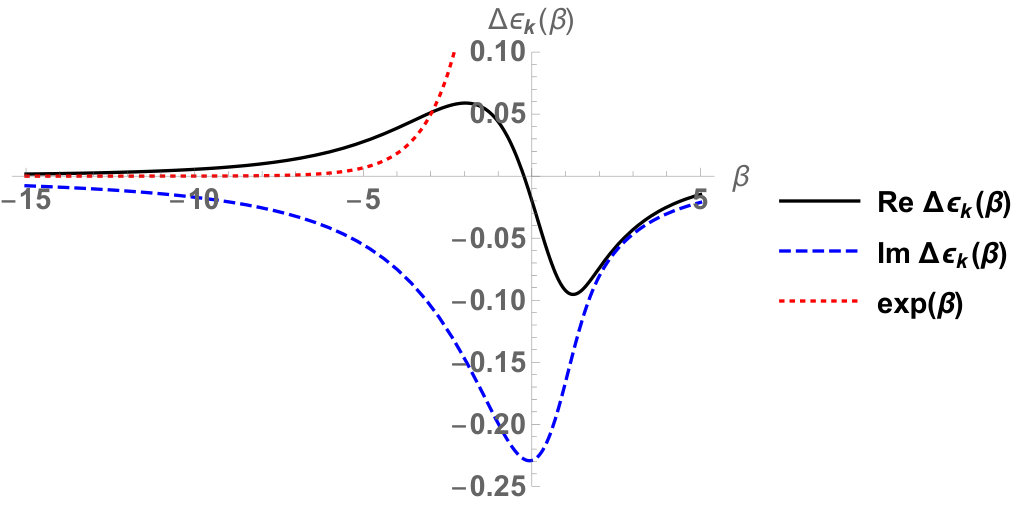 Figure 6
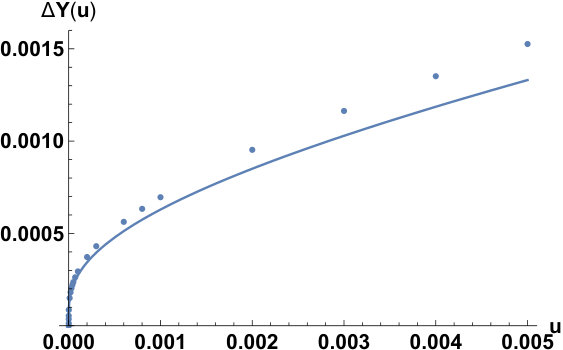 Figure 7
Peer Reviews
No public reviews on file for this paper yet. If you reviewed it on a platform where reviews are public (OpenReview, ICLR, NeurIPS, ICML), you can paste yours below so the community can read it here.
Videos
No videos yet. Explain this paper in a talk, walkthrough, or lecture? Add one.
Scaling in the
massive antiferromagnetic XXZ spin-1/2 chain near the isotropic point
Sergei B. Rutkevich
(March 06, 2020)
Abstract
The scaling limit of the Heisenberg XXZ spin chain at zero magnetic field is studied in the gapped antiferromagnetic phase. For a spin-chain ring having sites, the universal Casimir scaling function, which characterises the leading finite-size correction term in the large- expansion of the ground state energy, is calculated by numerical solution of the nonlinear integral equation of the convolution type. It is shown that the same scaling function describes the temperature dependence of the free energy of the infinite XXZ chain at low enough temperatures in the gapped scaling regime.
I Introduction
Integrable models of statistical mechanics and field theory [1, 2] provide us with a very important source of information about the thermodynamic and dynamical properties of the magnetically ordered systems. Of particular importance is any progress in solutions of such models in the scaling region near the continuous phase transition points, since, due to the universality of critical fluctuations, it does not only yield the exact and detailed information about the model itself but also about the whole universality class it represents.
In this paper we address the universal finite-size and thermodynamic properties of the anisotropic spin-1/2 XXZ chain in the massive antiferromagnetic phase in the critical region close to the quantum phase transition at the isotropic point. The Hamiltonian of the model has the form
[TABLE]
Here the index enumerates the spin-chain sites, are the Pauli matrices, , is the antiferromagnetic coupling constant, and is the anisotropy parameter. The number of sites will be chosen even, , and periodic boundary conditions will be implied, . The massive antiferromagnetic phase is realized in this model at . Following Lukyanov and Terras [3], we shall use the following convenient parametrization,
[TABLE]
where , denotes the lattice spacing, and is the dimensionful spatial coordinate of the lattice site . So, the length of the chain is . The Euclidean evolution in this model is described by the operator .
In the thermodynamic limit , the antiferromagnetic ground state of model (1) is doubly degenerate at . Its particle sector is represented by the kink-like topological excitations, which interpolate between two antiferromagnetic vacua [4]. Since these excitations carry spin , they are usually called ”spinons”.
For finite , the ground state energy of the model (1) can be represented as,
[TABLE]
where is the bulk term calculated and studied for all by C. N. Yang and C. P. Yang [5, 6] by means of the coordinate Bethe Ansatz. The Casimir energy term exponentially vanishes in the thermodynamic limit at fixed and . This term describing the finite-size correction to the bulk ground-state energy has been extensively studied by many authors [7, 8, 9, 10, 11, 12] by means of the technique utilising a certain nonlinear integral equation (NLIE) of the convolution type. Most attention in these studies has been concentrated on the gapless Luttinger liquid phase. For the massive antiferromagnetic phase that takes place at , the NLIE was derived by de Vega and Woynarowich [11], and further studied by Dugave et al. [12].
Note that study of the Casimir energy finite-size correction term does not have immediate experimental implications, though it is important for the theory and crucial for the interpretation of the results of the computer simulation, which are typically performed on finite-size systems. In contrast, calculations of the per-site free energy
[TABLE]
of the infinite XXZ chain has a major importance for the experiments, since it yields the specific heat that can be directly measured in quantum quasi-one-dimensional antiferromagnets. The most systematic approach to the thermodynamics of the XXZ spin chain is based on the Thermodynamic Bethe Ansatz (TBA) method, which first version was invented in 1969 by C. N. Yang and C. P. Yang [13], who used it to study the one-dimensional gas of delta-interacting bosons. Application of the TBA for calculation of the thermodynamic quantities in the XXZ spin chain was started in 1971 by Takahashi [14] and Gaudin [15], and later continued by many other authors [16, 17, 10, 18, 19]. Thermodynamics of the more general XYZ spin-chain model was studied by means of the TBA in [16, 20, 21]. Further references on the TBA method and its applications in the theory of the integrable spin-chain models can be found in monographs [22, 23].
The specific heat , apart from the trivial linear dependence on the coupling constant , depends on temperature and on the anisotropy parameter . For a given , the temperature dependence of can be found by means of the TBA method, see Fig. 4a in [21], where the plot of the specific heat obtained this way is shown.
At the isotropic point , the XXZ chain (1) undergoes a continuous quantum phase transition, and the correlation length diverges. Close to the isotropic point for , the correlation length becomes much larger than the lattice spacing, and the spin chain arrives at the massive scaling regime. It will be shown later, that
one should expect in this regime the following scaling behaviour of the specific heat at low enough temperatures ,
[TABLE]
where is the universal scaling function depending solely on the scaling parameter , and is the spinon mass, which is equal to the half of the gap in the two-spinon excitation energy spectrum. The Casimir energy should have the analogous universal scaling behaviour at ; see equation (9) below. Surprisingly, the scaling behaviour of the specific heat and Casimir energy in the XXZ spin chain at has never been studied in literature, and the corresponding universal scaling functions and remained unknown. The aim of the present paper is to fill this gap.
First, we modify the nonlinear integral equation derived by Dugave et al. [12] and proceed in it to the scaling limit in the massive antiferromagnetic phase in order to describe the scaling behaviour of the Casimir energy . The scaling limit is understood in the usual way,
[TABLE]
Here is the correlation length, which behaves [12] at small as,
[TABLE]
and the spinon mass has the following asymptotic behaviour [24]
[TABLE]
at .
It follows from dimension arguments [25] that the Casimir energy takes the scaling form in the limit (I),
[TABLE]
where
[TABLE]
is the scaling parameter and is the universal Casimir scaling function. We calculated this function numerically by iterative solution of the NLIE written in the scaling limit (I). The plot of the resulting Casimir scaling function is shown in Figure 1.
The scaling limit (I) of model (1) can be described by the sine-Gordon quantum field theory [26, 3], in which the coupling constant approaches its upper boundary value . This Euclidean quantum field theory (EQFT) lives on the torus having the periods , in the limit . Under the choice (2) of the coupling constant , the dispersion law of the elementary excitations in this continuous EQFT takes the relativistic form , indicating the rotational symmetry of the theory in the plane. As it was explained by Al. B. Zamolodchikov [25], this allows one to relate the ground state energy of the EQFT [determined in our case by equations (3) and (9)] with the free energy of the chain having the infinite length at a nonzero temperature ; see equation (2.8) in [25]. As a result, one arrives at the following representation for the per-site free energy (4) in the scaling regime (I):
[TABLE]
where is the scaling parameter, and
[TABLE]
is the spinon mass. Note that we have changed notations in equations (11) and (12) using the coupling constant instead of the lattice spacing as the argument of the functions . The free energy reduces to the form (11) in the scaling regime, which is realised at and . In terms of the original parameters of the XXZ chain Hamiltonian, these two strong inequalities read
[TABLE]
Accordingly, the specific heat per chain site must scale under conditions (13) to the form (5) where
[TABLE]
The plot of the universal specific heat scaling function determined from equation (14) is shown in Figure 2.
In what follows, we will describe how these results were obtained and present them in more details.
In particular, in section II we recall briefly a few basic results on the Bethe Ansatz calculation of the ground state energy of the finite XXZ spin chain in the gapped antiferromagnetic phase. The well-known representation of this ground-state energy in terms of the solution of a nonlinear integral equation is described in section III. New results are presented in section IV. First, we proceed in it to the scaling limit in the nonlinear integral equation, and then describe the numerical and analytical results for the universal scaling functions characterising the Casimir energy, the free energy and specific heat of the XXZ spin chain in the antiferromagnetic gapped near-critical regime. Section V contains concluding remarks. Finally, in the two Appendixes we describe two alternative analytical calculations of the Casimir scaling function in the limit . In Appendix A we exploit to this end the small- asymptotical analysis of the nonlinear TBA equations, while in appendix B we use the renormalisation group perturbation-theory technique.
II Bethe-Ansatz solution for the ground state at
The ground state of the -site chain is characterized by the set of real Bethe roots , , which solve the equations
[TABLE]
where , and
[TABLE]
Note that for the Bethe roots describing the ground state, and
[TABLE]
The ground-state energy of the -site chain reads
[TABLE]
where
[TABLE]
and
[TABLE]
Note that
The counting function can be defined near the real axis by the relations,
[TABLE]
The counting function is analytic in the strip and quasiperiodic there,
[TABLE]
The logarithmic derivative in of equation (16) reads
[TABLE]
where
[TABLE]
III Nonlinear integral equation
Assuming that the counting function corresponding to the ground state strictly increases at real , and taking into account (21), (22), one concludes that equation (15) has exactly real solutions in the interval , and these solutions coincide with the Bethe roots . Application of Cauchy’s integral formula to the sums in the right-hand sides of (23) and (18) leads to the following integral representations of these equations [12]:
[TABLE]
Let us define the linear integral operator that acts on a -periodical function of as follows,
[TABLE]
By action with the operator on both sides of equation (26), and subsequent integration in , one modifies it to the form
[TABLE]
where
[TABLE]
Similarly, the ground-state energy (27) can be represented in the form (3), where
[TABLE]
is the ground state energy per site in the infinite chain, and the finite-size correction (Casimir energy) reads
[TABLE]
IV Scaling limit
In the scaling limit (I), the solution of equation (28) approaches very fast to its bulk limit everywhere in the real axis, apart from the small vicinities of the points . To describe the scaling limit of equation (28) near one of such points , let us make in it the linear change of the rapidity variables ,
[TABLE]
where are the rescaled rapidities.
The function reduces in the vicinity of the point in the scaling limit (I) to the form
[TABLE]
The scaling limit of the first term on the right-hand side of the integral equation (28) reads,
[TABLE]
To prove this, let us note that the leading contribution to the sum in the second line of (III) comes at and from the two terms with . Then simple calculations yield,
[TABLE]
Integration of this equality with respect to with (31) taken into account leads to (36).
In order to find the scaling limit of the kernel in equation (28), we replace the sum on the right-hand side of (29) by the integral,
[TABLE]
where according to (34) are related to , and
[TABLE]
The integral on the right-hand side can be explicitly calculated,
[TABLE]
where is the soliton-soliton scattering amplitude in the sine-Gordon model [27, 28],
[TABLE]
Here the parameter is simply related to the coupling constant in the sine-Gordon model . It is well known [29, 30], that equation (40) describes also the amplitude of the spinon-spinon scattering in the XXZ model (1) in the gapless phase , if the parameter is chosen so that
[TABLE]
The limit corresponds to the isotropic antiferromagnetic point of the XXZ spin chain, in which and . The spinon-spinon scattering phase factor (41) at this point of model (1) was first obtained by Faddeev and Takhtajan [31].
The nonlinear integral equation (28) reduces in the scaling limit to the form
[TABLE]
with real , and the scaling limit of the Casimir energy (33) reads
[TABLE]
Equations (43) and (44) coincide with the limit of equations (5.9) and (5.8) obtained by Destri and de Vega [10] for the massive Thirring (sine-Gordon) model. However, concentrating in their article on the massive Thirring model with a finite and on the gapless case of the XXZ spin chain, the authors of [10] did not apply their results to describe the massive scaling regime of the XXZ chain, which we address here. Perhaps, for this reason, Destri and de Vega did not study in [10] the non-trivial limit of their integral equation (5.9), which is relevant to the XXZ model in the massive scaling regime.
Let us analytically continue the function into the strip and introduce two auxiliary complex functions (the pseudoenergies) ,
[TABLE]
At real , these functions are complex conjugate to one another. They must satisfy the system of two nonlinear integral TBA equations (compare with equation (3.3) and (3.4) in [25]), which follow from (43),
[TABLE]
In turn, the Casimir energy (44) takes the form (9), with the scaling function
[TABLE]
The nonlinear integral equations (46) with a different first term in the right-hand sides, however, were studied by Klümper [21, 18], who used them to calculate the temperature dependence of the specific heat and magnetic susceptibility in the isotropic antiferromagnetic XXX spin-1/2 chain.
Note that the nonlinear integral equations (46) can be derived in a completely different way exploiting Klümper’s results [21] for the general XYZ spin chain. If one starts from the TBA equations (3.19) derived in [21] for the XYZ chain, proceeds to the limit corresponding to the XXZ chain in the gapped antiferromagnetic phase , and afterwards proceeds to the scaling limit , one arrives at equations (46). In turn, formula (3.21) in [21] representing the free energy of the XYZ chain reduces after these two limiting procedures to the scaling form (11) with the scaling function given by (47).
The system of nonlinear integral equations (46) can be solved numerically by iterations. The convergence of iterations is perfect at large and intermediate values of the scaling parameter , but retards at very small . The plot of the resulting Casimir scaling function is shown in Figure 1.
The scaling function exponentially decays at large ,
[TABLE]
where is the Macdonald function. As in the case of the massive Thirring model at a finite (see equations (6.9)-(6.11) in [10]), the large- asymptotics (48) can be easily obtained by replacing the function in (47) by its the ”zeros iteration” and then expanding the resulting logarithm in the integrand to the first order, .
At the isotropic point , the scaling function takes the value
[TABLE]
in agreement with the CFT prediction [25, 10] for the Gaussian field theory with the central charge . A rather involved perturbative calculation of three further terms in the small- expansion of is described in Appendix A. The final results read,
[TABLE]
where , and
The logarithmic singularity of the Casimir scaling function at predicted by equation (51) is too weak to be resolved in Figure 1. However, this singularity is clearly seen in Figure 3a, which displays at small the deviation of from its CFT limit (50), . The numerical data shown by dots slowly approach with decreasing the solid curve representing the asymptotical formula (51). The same tendency remains at very small , as one can see in Figure 3b. The dots in this Figure display the numerical data for the function in the interval plotted against . The solid curve represents the small- asymptotics for this function,
[TABLE]
corresponding to (51).
The asymptotic low- and high-temperature behaviour of the free energy per site can be read from (11), (48), and (51),
[TABLE]
at , and
[TABLE]
at , where is given by (12). The corresponding small- asymptotics of the scaling function takes the form,
[TABLE]
and slowly approaches the CFT value at very large .
For the total free energy of the spin chain of the length , which has sites, the low-temperature asymptotics following from (54) reads,
[TABLE]
This result has a transparent physical interpretation. One can easily see, that the right-hand side of equation (56) is just the grand canonical potential of the classical ideal gas of two kinds of nonrelativistic particles (spinons with spins oriented up and down) having the same mass and the chemical potential , which move in one dimension in the line of the length .
It is interesting to compare two asymptotical formulas for the ground-state energy of the XXZ spin chain of finite length supplemented with periodic boundary conditions.
The first one
[TABLE]
contains three initial terms in the large- expansion of the XXZ spin-chain ground-state energy at the isotropic point . The third term on the right-hand side was first obtained by Affleck et al. [32] in the conformal perturbation theory approach, and later confirmed (for the analogous low-temperature expansion of the free energy) by Klümper [18] in the discrete-lattice TBA calculations.
The second formula
[TABLE]
holds in the gapped antiferromagnetic phase in the scaling regime at . Equation (58) results from the substitution of two initial terms of the small- expansion (51) into (3) and (9).
Though formulas (57) and (58) look remarkably similar, there are two important differences between them.
The third term on the right-hand side of (57) explicitly depending on the lattice spacing describes the discrete-lattice correction to scaling in the ground-state energy. In contrast, the third term on the right-hand side of (58) does not depend on and describes the universal scaling behaviour of the ground-state energy at . 2. 2.
The ratio is the large parameter in equation (57), and the third term on its right-hand side is, therefore, negative. In contrast, the ratio is the small parameter in the asymptotic expansion (58), and the analogous correction term in the latter is positive.
It turns out, that expansion (58) can be also obtained by means of the perturbative CFT technique applied in [32] for the derivation of (57). The difference is that the log-correction term in (57) was caused by the marginally irrelevant perturbation of the Gaussian CFT Hamiltonian, whereas in the case of (58) the perturbing field is marginally relevant. The field-theoretical derivation of formula (58) is described in Appendix B.
V Conclusions
Considering the Heisenberg XXZ spin-chain ring in the gapped antiferromagnetic phase close to the quantum phase transition point , we expressed its ground-state energy universal Casimir scaling function in terms of the solution of the nonlinear integral equation. We calculated this Casimir scaling function numerically by iterative solution of the nonlinear integral equation, and also analytically determined its asymptotical form at large and small values of the scaling parameter. Then, using the correspondence in the scaling regime between the ground state energy of the finite ring of length with the free energy of the infinite chain at temperature , we calculated the universal scaling function describing the temperature dependence of the specific heat of the infinite chain at low temperatures and .
In contrast to many previous studies [14, 15, 16, 21, 10, 18] of the specific heat in the XXZ spin chain, our results are universal, since we have limited analysis to the scaling regime. Due to its universality, the obtained scaling function should describe exactly the specific heat temperature dependences in those quasi-one-dimensional magnetic compounds in the scaling regime close to the isotropic point, whose magnetic Hamiltonian falls into the universality class of the XXZ spin-1/2 chain model.
In presenting the results, we followed the important recommendation of Tracy and McCoy in [33]: ”We strongly recommend that all data be presented in scale-variable and scale-function language”.
It would be interesting to experimentally observe in quasi-one-dimensional antiferromagnetic compounds the universal specific-heat scaling temperature dependence (5). It would be also interesting and important for the experimental applications to study corrections in small to the scaling dependences (9) and (5).
Acknowledgements.
I am thankful to H. W. Diehl for interesting discussions, and to A. Klümper for numerous suggestions leading to improvement of the text.
Appendix A Perturbative derivation of (51)
In this appendix we perform the asymptotic analysis of the nonlinear TBA integral equations (46) at a small , and describe briefly the derivation of formula (51) for the Casimir scaling function (47). Our calculations are based to some extent on the techniques developed by Destri and de Vega [10] and by Klümper [18] for different TBA integral equations. We will comment on these works later.
Let us rewrite the integral equations (46) in the equivalent form,
[TABLE]
where
[TABLE]
The integral kernel determined by equations (39) and (41) is real at real , and behaves at large as,
[TABLE]
The reflection symmetry of the integral kernels in (59)
[TABLE]
ensures the reflection symmetry of the pseudoenergy
[TABLE]
at real .
Besides the solution of equations (59), it is also useful to consider the difference
[TABLE]
Figure 4a displays its real and imaginary parts plotted agains at the small value of the scaling parameter, . As one can see from this Figure, the function vanishes outside two regions located near the points , where . These two regions become well separated from one another at very small . By this reason, it is useful to shift the argument in the solutions of (59) by , and to introduce new functions
[TABLE]
These two functions solve the integral equations, which are obtained from (59) by replacement of the driving term
[TABLE]
in their right-hand sides.
Proceeding in (66) and (67) to the limit , one obtains the pseudoenergies
[TABLE]
which correspond to the isotropic point of the XXZ spin chain and solve the TBA integral equations,
[TABLE]
where . After subtraction of from , the resulting difference
[TABLE]
decays at . The real and imaginary parts of this function are plotted in Figure 4b. Since the kernels , decay at , the difference (70) also vanishes as at large . Of course, the function decays as well at , due to (70).
As it was mentioned above, the value of the Casimir scaling function at the isotropic point is determined by the CFT. It is well known [25, 9, 10], that the CFT predicted value of finite-size correction to the ground-state energy can be alternatively obtained in the TBA approach without explicit solution of the integral TBA equations. Let us describe such an alternative derivation of the CFT result (50).
The integral representation (47) of the Casimir scaling function reduces at to the form
[TABLE]
Let us now rewrite equation (69a) as
[TABLE]
The key step of this calculation is the counterintuitive substitution of the right-hand side of (72) instead of into the integrand in (71). As the result, one obtains
[TABLE]
Both double-integrals in the right-hand side vanish due to the kernel symmetry (63). After the change of the integration variable in the first integral, we arrive at the desired CFT result (50),
[TABLE]
For the subsequent analysis, we need the explicit form of the asymptotic expansion of the function at . We obtained three terms in this expansion by the straightforward perturbative solution of the integral equations (69) at large negative . The result reads
[TABLE]
where
[TABLE]
Here , denote the following converging integrals:
[TABLE]
and is the unit-step function.
By numerical calculation of the integrals (75) and (76) we obtained the following values:
[TABLE]
It turns out, that the numerical value of is very close to 111This fact was earlier noticed by Klümper [18] who had calculated the same integral numerically in order to determine the low-temperature behaviour of the specific heat in the XXX spin chain. The integral defined by equation (24) in [18] coincides with . . In fact, there are strong arguments [18] that the latter number is the exact value of the imaginary part of the integral (75),
[TABLE]
Under this assumption, one finds from (81), (77) and (79)
[TABLE]
We are now ready to return to the perturbative calculation of the Casimir scaling functions at a small . First, we write the solution of equations (59) in the form
[TABLE]
where
[TABLE]
is the zero-order term and is the small correction. The latter could be in principal determined by means of the perturbative solution of the nonlinear integral equations (59), with the small parameter . Next, one could substitute (82) into (47) and try to extract several initial terms in the small- asymptotic expansion for from the resulting integrals. It turns out, however, that such direct perturbative calculations are extremely difficult and not suitable for evaluation of the higher terms in (51). Really, in order to calculate the smallest term in expansion (51) in this approach, one has to solve perturbatively the nonlinear integral equations (59) to the fourth order in the small parameter .
To avoid this problem, we have applied following [10, 18] the improved technique, which allowed us to obtain (51) without solving perturbatively the integral equations (59). First, we rewrite the integral representation (47) of the scaling function in the equivalent form,
[TABLE]
where . Then we split the integral on the right-hand side into two parts, . The first term is small due to the [small at ] factor in the integrand in (84). After integration by parts in the second term, one obtains at ,
[TABLE]
This formula extends (71) to the case of a small positive . Recall next, that the function defined by (66) solves the integral equation (59) modified according to (67). Let us rewrite this equation in the form similar to (72),
[TABLE]
After substitution of the right-hand side instead of in the integrand in (85) and straightforward calculations, one finds
[TABLE]
where
[TABLE]
and is given by (61). In contrast to the case, the double integral in the right-hand side of (88) is nonzero at due to the finite limits of integration. However, this integral decreases with decreasing and vanishes at .
Using integration by parts and the symmetry properties (63) and (64), the double-integral in (88) can be conveniently represented as the sum of three terms,
[TABLE]
where
[TABLE]
and
[TABLE]
We substituted the function in the form (82) into the integrals in (90) and expanded the results in the small parameter to the fourth order. It turns out that, up to this order, (i) the correction term in (82) does not contribute to these integrals and (ii) these integrals can be expressed solely in terms of two numbers and , which characterise the asymptotical behaviour of the function at ; see (73) and (81). As the result, we obtained,
[TABLE]
This yields for (89),
[TABLE]
After substitution of the obtained earlier values (81) of the constants into this result, we arrive finally at (51).
To conclude this section, we comment on the perturbative analysis around the CFT critical point of two similar TBA equations, which were previously performed by Klümper [18] and by Destri and de Vega [10].
The nonlinear integral TBA equation (3) in [18] studied by Klümper describes the thermodynamic properties of the infinite antiferromagnetic isotropic spin-1/2 Heisenberg chain in the presence of a uniform magnetic field. In the case of zero magnetic field, this equation differs from equation (46b) only by one term. Namely, the driving term in the right-side of (46b) replaces 222Klümper uses in [18] the notation for the rapidity variable ( in our notations), and notations , for the functions, which are analogous to ours , and , respectively. the term in equation (3) in [18]. Despite this difference, the low-temperature asymptotical analysis of the nonlinear TBA equation (3) presented in Section 2 of [18] has some similarities with our small- perturbative calculations described in this Section. In particular, the small parameters and used in Section 2 of [18] are analogous to the small parameters and , which we have exploited in the described above calculations. Note finally, that we have calculated four temperature-dependent terms in the asymptotic expansion (53) for the free energy, while only two such terms were obtained in the analogous expansion (26) in [18].
The nonlinear integral TBA equation for the sine-Gordon (massive Thiring) model was obtained by Destri and de Vega, see equation (5.12) in [10]. Its asymptotical analysis close to the conformal regime was performed by these authors in Section 7.3. While the driving term in this equation is the same as in ours equations (46), the kernels , (see equation (5.13) in [10] and the non-numbered foregoing equation there 333 Note that the latter equation in [10] contains misprints, which are corrected below in the second line of equation (98)) in the integral terms are different. Namely,
[TABLE]
where is the soliton-soliton scattering amplitude (40) in the sine-Gordon model, and parameters and are related according to (42). In the limit , the integral kernel (98) degenerates to the form (38),
[TABLE]
So, the integral nonlinear TBA equations (46) describing the scaling behaviour of the gapped XXZ spin chain represent the degenerate limiting case of the TBA equations for the sine-Gordon model derived by Destri and de Vega. However, our small- asymptotical analysis described in this section is to a large extent different from that developed by Destri and de Vega in Section 7.3 in [10]. The reason is that in our case the integral kernel decays slowly at large rapidities , whereas in the non-degenerate case studied in [10], the kernel (98) exponentially vanishes at ; see the non-numbered equations between (7.24) and (7.25) in [10].
Appendix B Field-theortical derivation of (58)
The continuous limit of the XXZ spin chain (1) near the isotropic point can be described by the marginal perturbation of the Gaussian CFT [37, 38],
[TABLE]
Here is the Hamiltonian of free bosons compactificated at the radius , or equivalently, the Wess-Zumino-Witten (WZW) Hamiltonian of level . Operators and , with , represent the components of the holomorphic and anti-holomorphic currents, respectively. Their normalization can be fixed by the Operator Product Expansions (OPE),
[TABLE]
Following [32, 37], the normalization in equation (99) has been chosen to ensure that the operators multiplying in the isotropic case (see equation (105) below) have a correlation function with unit amplitude.
The Renormalization Group (RG) flow of the scaling parameters in (99) in the one-loop approximation is described by the Kosterlitz-Thoulless RG equations [37],
[TABLE]
where , and is the length scale.
Two RG trajectories are shown in Figure 5. The dashed bisector of the first quadrant corresponds to the isotropic point of the spin-chain Hamiltonian (1). The RG equations (101) reduce in the isotropic case to the simple equation,
[TABLE]
with . Its solution taking the value at the initial point reads as,
[TABLE]
The leading asymptotics of this solution at does not depend on ,
[TABLE]
Along the critical line, the effective Hamiltonian (99) reduces to the form
[TABLE]
where is the marginally irrelevant operator,
[TABLE]
In the Euclidean plane, its two- and three-point correlation functions are fixed due to (100),
[TABLE]
where .
Affleck et al. [32] considered the generalisation of the effective Hamiltonian (105) to the case of the WZW model with arbitrary positive integer , and performed for it the perturbative calculation of the ground-state energy to the third order in . In the case , their result (see the non-numbered equation between equations (8) and (9) in [32]) reads,
[TABLE]
where denotes the non-universal bulk energy density in the infinite system. Note that Affleck et al. [32] did not present the details of their calculation of . However, similar perturbative calculations were described earlier by Cardy [39, 40], and in the most detailed form by Ludwig and Cardy [41]. After replacement of in (109) by its renormalisation group improved value with in accordance with (104), the authors of [32] arrived finally at (57). This result was later confirmed by Lukyanov [38].
Let us turn now to the anisotropic case , and show how the asymptotic formula (58) can be derived following the strategy outline above. To this end, consider the RG flow in the massive antiferromagnetic phase , which is illustrated by the upper trajectory in Figure 5. The first integral of the Kosterlitz-Thoulless RG equations (101) remains positive along it. The solution of the RG equations (101), which corresponds to this trajectory reads,
[TABLE]
with varying in the interval , where
[TABLE]
The well-known arguments (see p. 124 in [42]) lead to the requirement , which allows one together with (7) and (8) to relate parameters and ,
[TABLE]
Note also that
[TABLE]
Let us choose now the running point in the upper RG trajectory in such a way, that:
[TABLE]
Under these conditions, the RG trajectory approaches its asymptote in the second quadrant, the argument of the tangent in equation (110) lies slightly below its pole at , and one finds from (110)-(112),
[TABLE]
where . For such a choice of the scaling variables , , we can approximately represent the effective Hamiltonian (99) in the form
[TABLE]
where , and is the following marginally relevant operator
[TABLE]
Its two- and three-point correlation functions in the plane can be easily found from (100),
[TABLE]
where . Note that equation (116) can be rewritten as,
[TABLE]
The ground-state energy of the Hamiltonian (117) can be calculated perturbatively in the small parameter . This calculation literally reproduces the derivation of equation (109) outlined above, in which one should replace , , and . Accordingly, one obtains instead of (109),
[TABLE]
After further replacement of the scaling variable by its RG improved value (121) and setting , one arrives at the final result (58).
The reference list from the paper itself. Each links out to its DOI / PubMed record.
- 1[1] R. J. Baxter. Exactly solved models in statistical mechanics . Academic Press, London, 1982.
- 2[2] G. Mussardo. Statistical Field Theory: An Introduction to Exactly Solved Models in Statistical Physics . Oxford University Press, Oxford, 2010.
- 3[3] S. Lukyanov and V. Terras. Long-distance asymptotics of spin-spin correlation functions for the XXZ spin chain. Nuclear Physics B , 654(3):323 – 356, 2003.
- 4[4] M. Jimbo and T. Miwa. Algebraic Analysis of Solvable Lattice Models . Number 85 in Conference Board of the Mathematical Sciences. American Mathematical Soc., 1995.
- 5[5] C. N. Yang and C. P. Yang. One-dimensional chain of anisotropic spin-spin interactions. I. Proof of Bethe’s hypothesis for ground state in a finite system. Phys. Rev. , 150:321–327, 1966.
- 6[6] C. N. Yang and C. P. Yang. One-dimensional chain of anisotropic spin-spin interactions. II. Properties of the ground-state energy per lattice site for an infinite system. Phys. Rev. , 150:327–339, 1966.
- 7[7] A. Klümper and M. T. Batchelor. An analytic treatment of finite-size corrections in the spin-1 antiferromagnetic XXZ chain. Journal of Physics A: Mathematical and General , 23(5):L 189–L 195, 1990.
- 8[8] P. A. Pearce and A. Klümper. Finite-size corrections and scaling dimensions of solvable lattice models: An analytic method. Phys. Rev. Lett. , 66:974–977, 1991.