Asymmetric distribution of weak photospheric magnetic field values
Tibebu Getachew, Ilpo Virtanen, Kalevi Mursula

TL;DR
This study analyzes the distribution of weak photospheric magnetic field values over several decades, revealing that asymmetries are significant, resolution-dependent, and likely linked to supergranulation-scale features of the solar surface.
Contribution
It introduces a method to quantify weak-field asymmetries across multiple data sets and resolutions, demonstrating their significance and correlation with supergranulation.
Findings
Weak-field asymmetries increase as map resolution decreases.
Most weak-field asymmetries are statistically significant.
Asymmetries are consistent across different data sets and resolutions.
Abstract
We use the synoptic maps of the photospheric magnetic field observed at Wilcox Solar Observatory, Mount Wilson Observatory, Kitt Peak, SOHO/MDI, SOLIS/VSM, and SDO/HMI to study the distribution of weak photospheric magnetic field values in 1974-2018. We fit the histogram distribution of weak field values for each synoptic map of the six data-sets separately with a parametrized Gaussian function in order to calculate the possible shift (to be called here the weak-field asymmetry) of the maximum of the Gaussian distribution from zero. We estimate the statistical significance of the weak-field asymmetry for each rotation. We also calculate several versions of lower-resolution synoptic maps from the high-resolution maps and calculate their rotational weak-field asymmetries. We find that the weak-field asymmetries increase with decreasing map resolution. A very large fraction of weak-field…
Click any figure to enlarge with its caption.
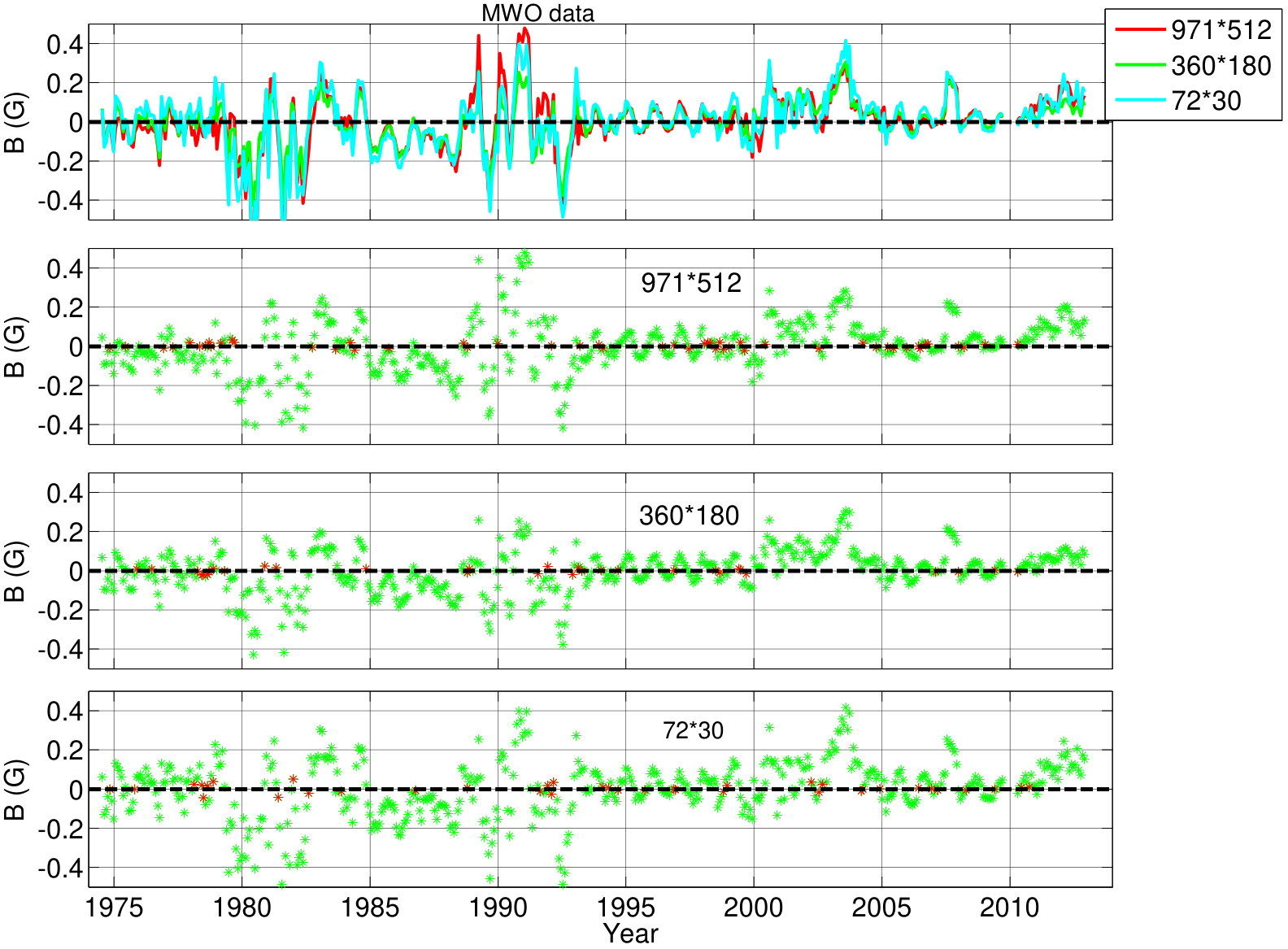 Figure 1
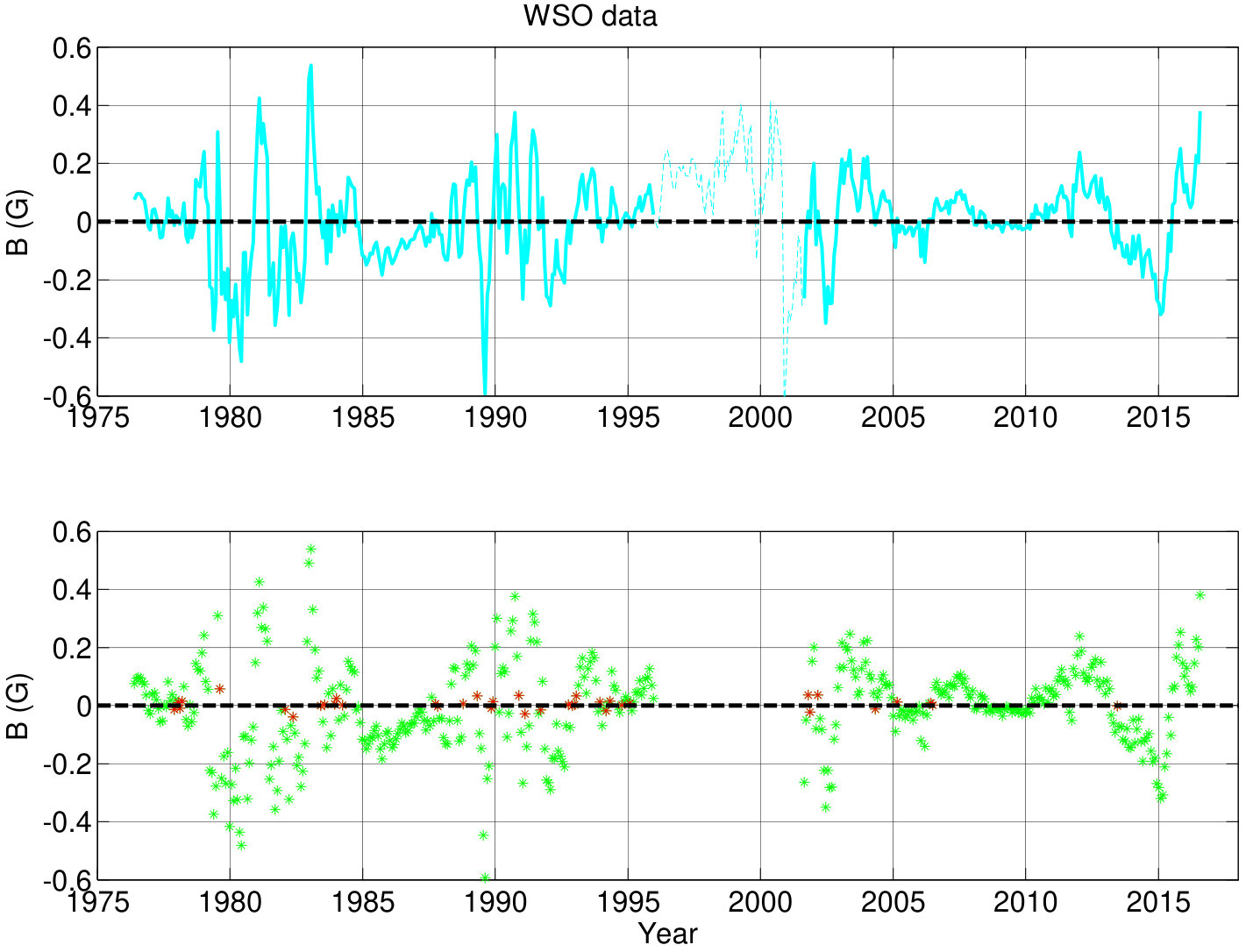 Figure 2
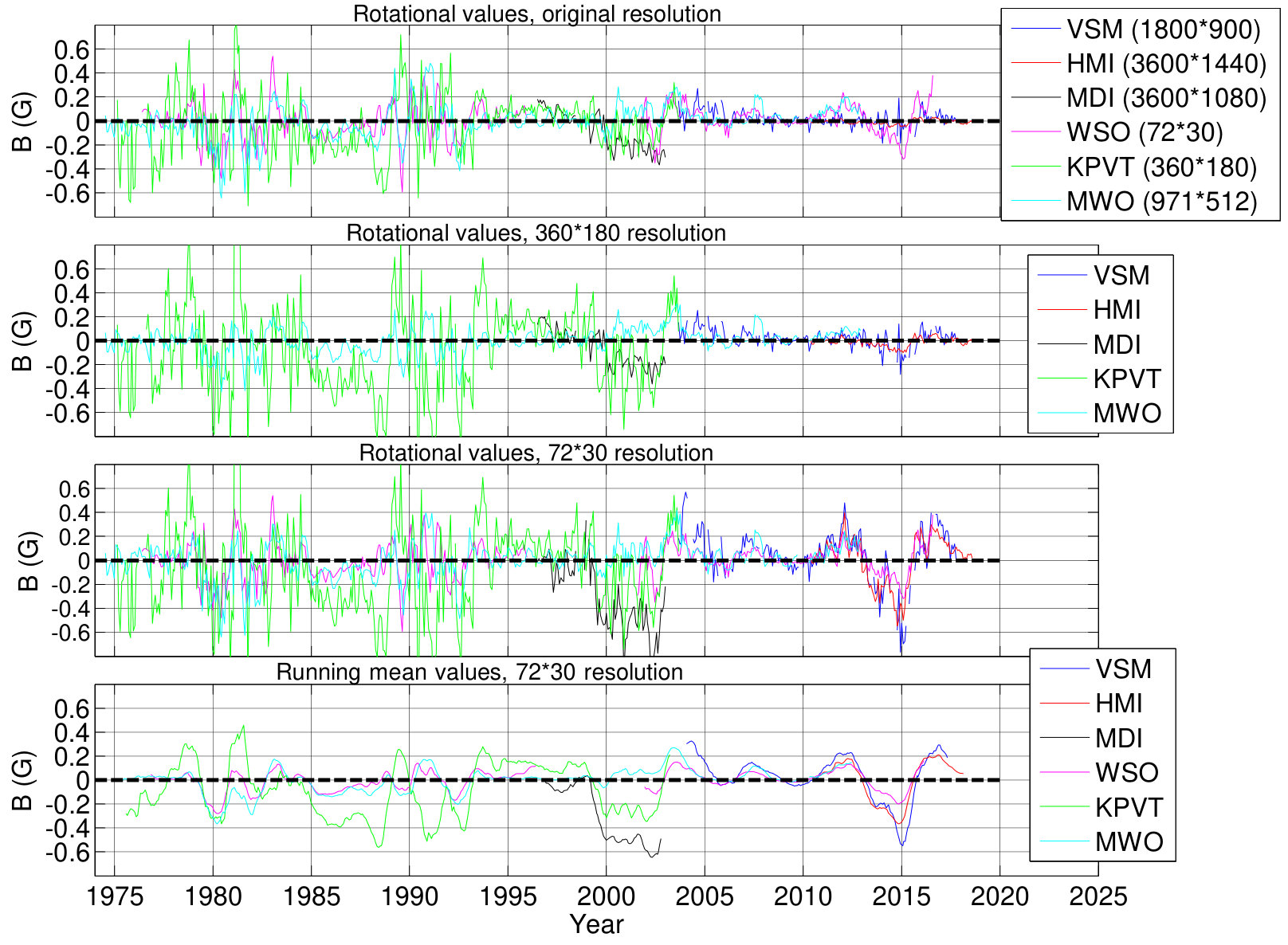 Figure 3
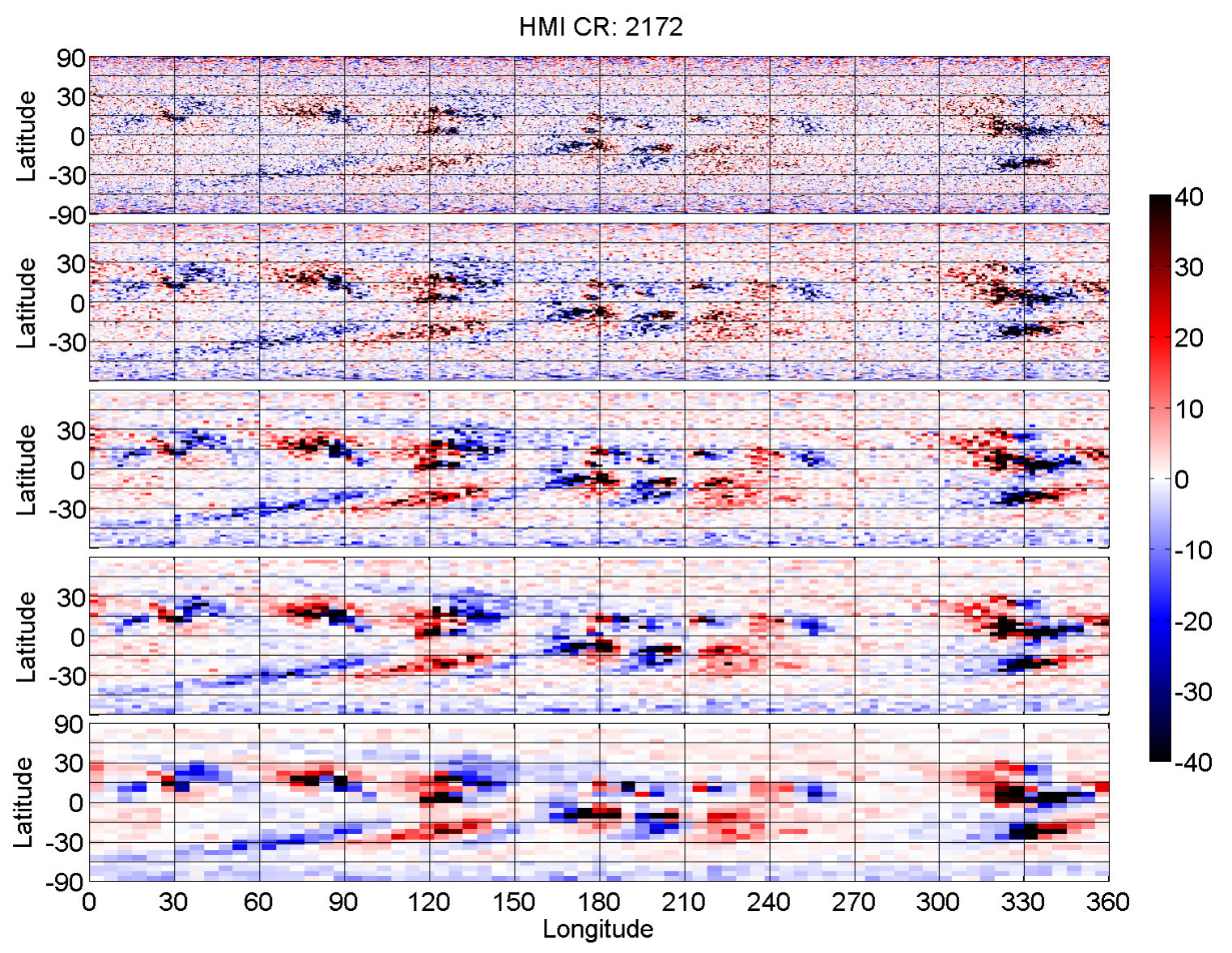 Figure 4
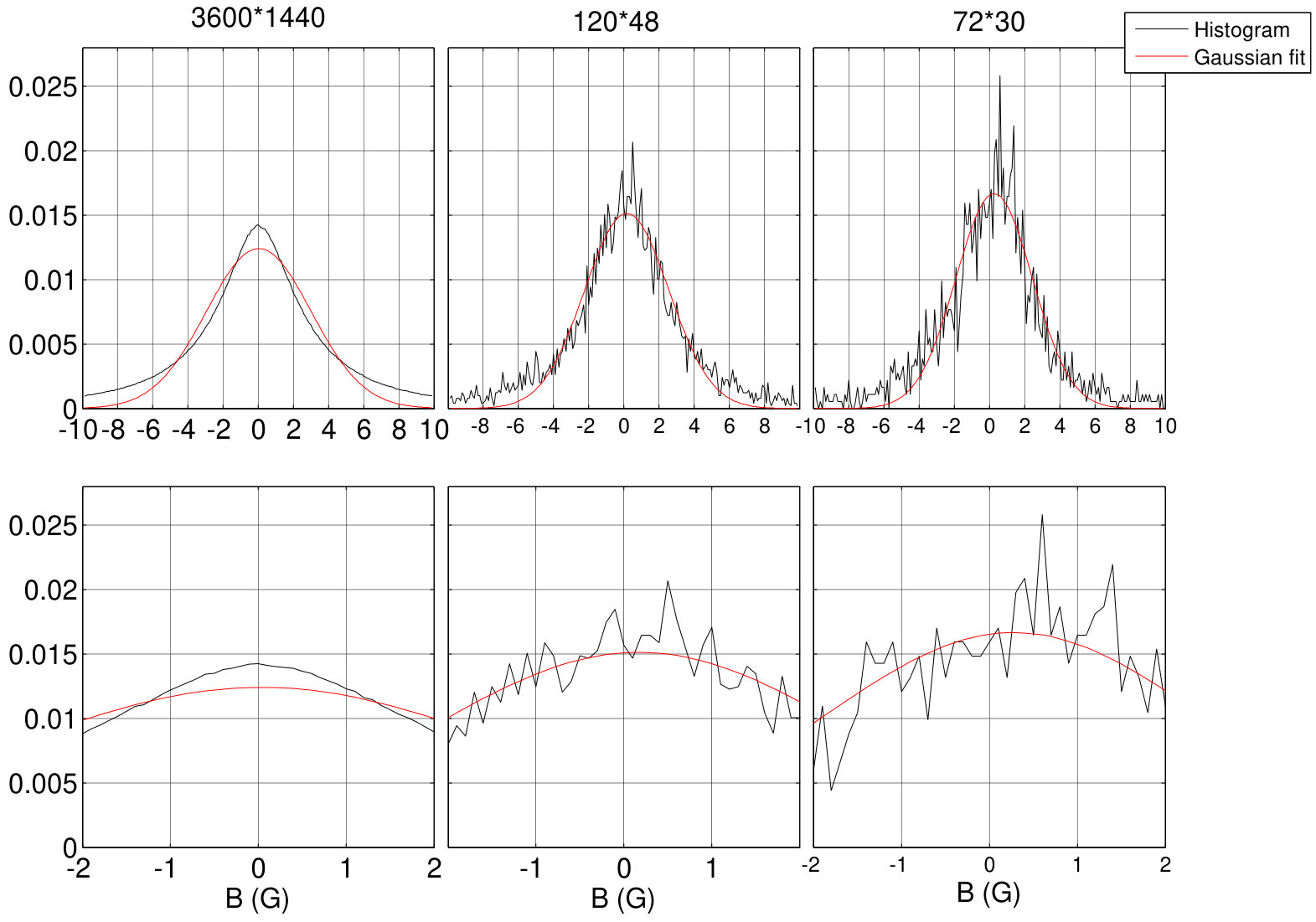 Figure 5
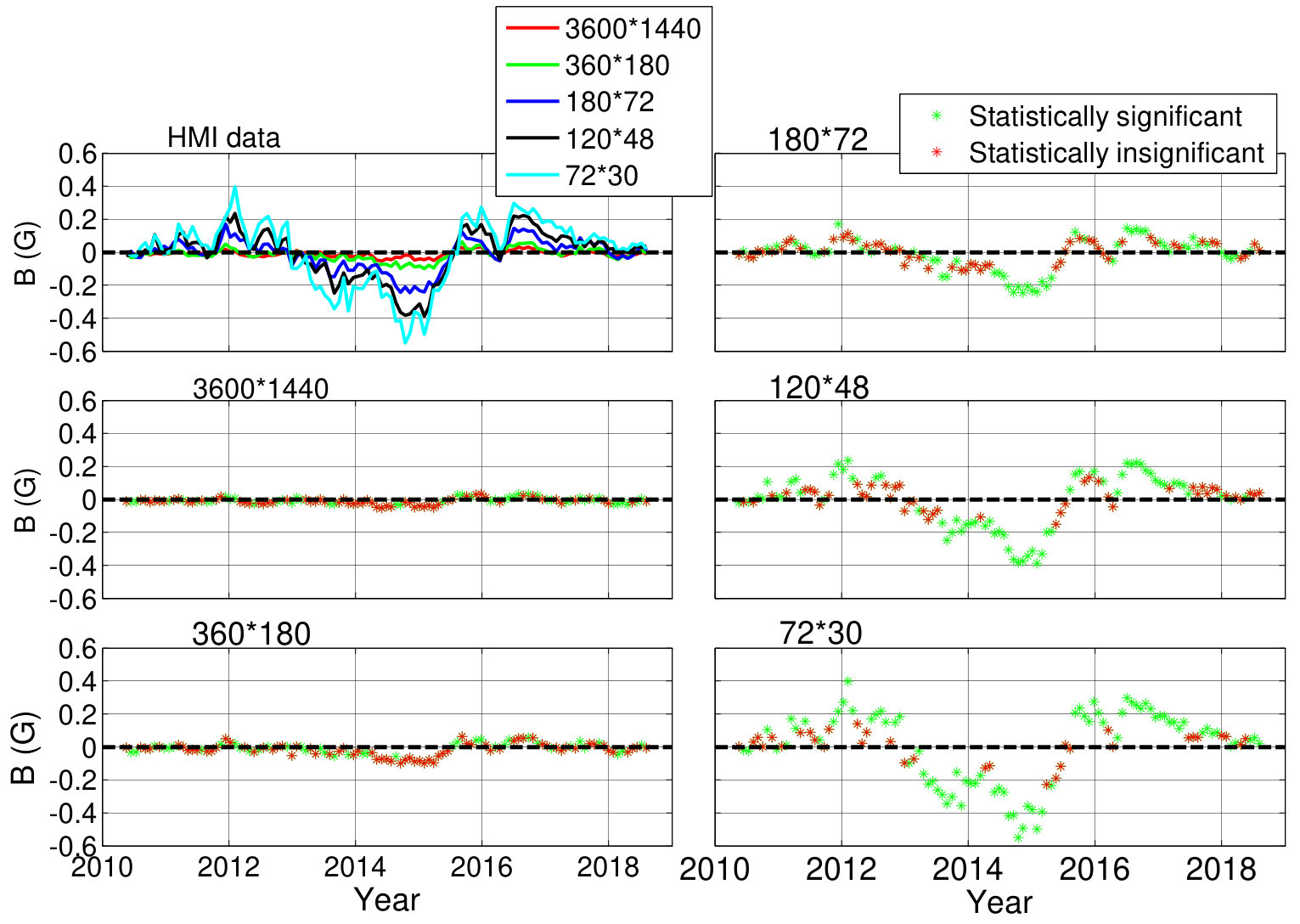 Figure 6
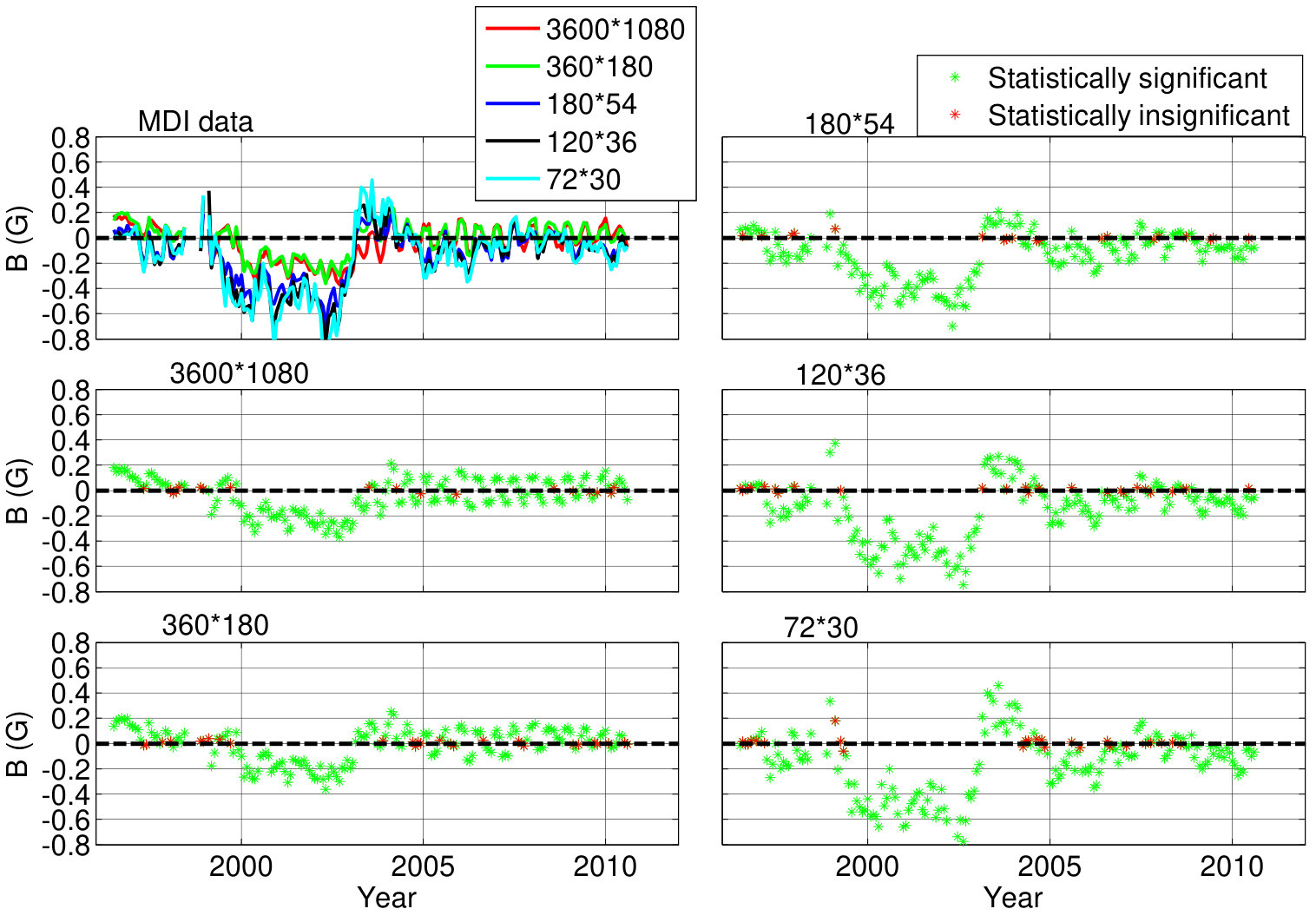 Figure 7
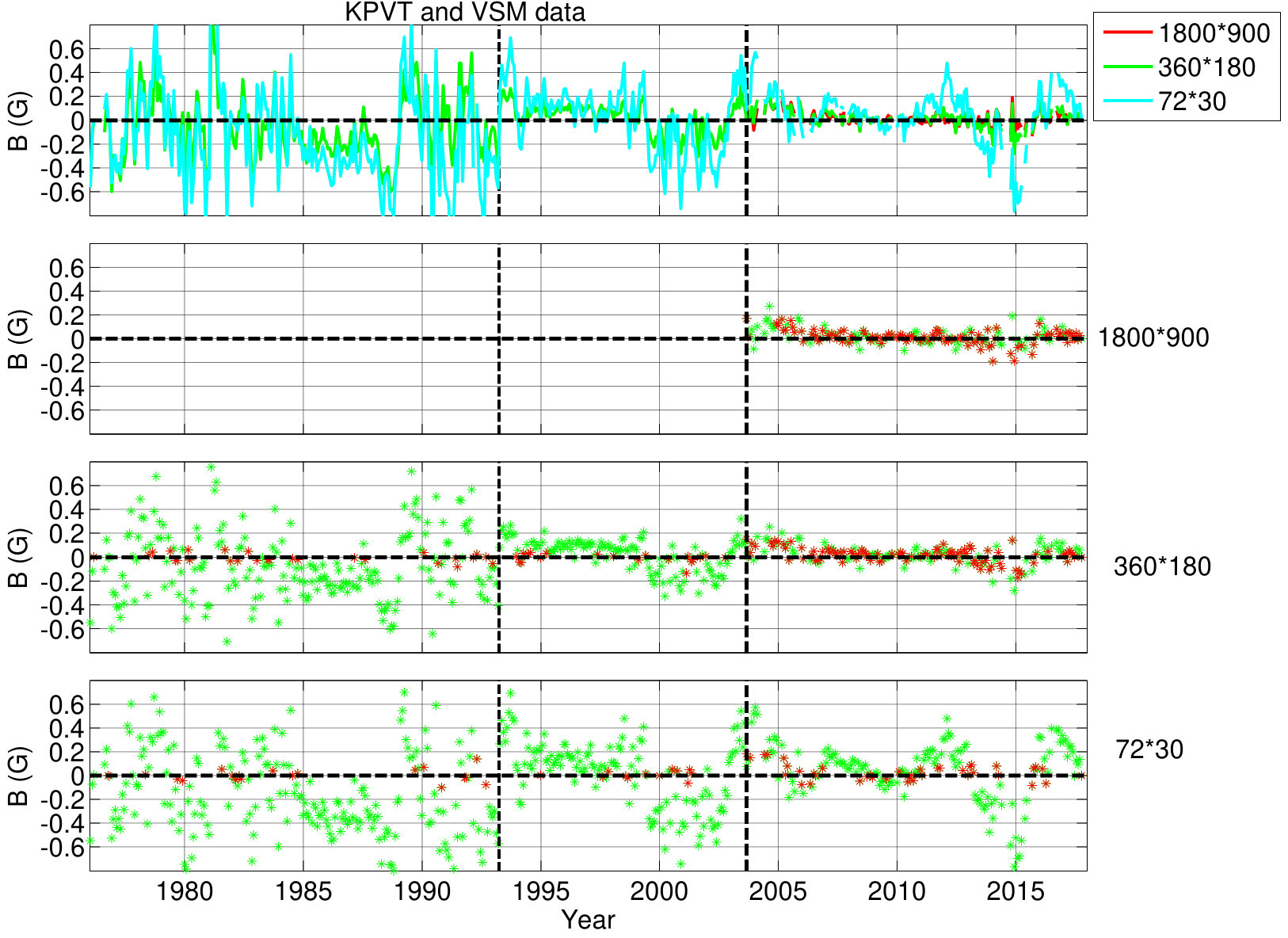 Figure 8
Peer Reviews
No public reviews on file for this paper yet. If you reviewed it on a platform where reviews are public (OpenReview, ICLR, NeurIPS, ICML), you can paste yours below so the community can read it here.
Videos
No videos yet. Explain this paper in a talk, walkthrough, or lecture? Add one.
An example of a Research Note of the American Astronomical Society (RNAAS)
Ethan Vishniac
Editor-in-Chief
Johns Hopkins University
Chris Lintott
RNAAS Editor
Oxford University
American Astronomical Society
2000 Florida Ave., NW, Suite 300
Washington, DC 20009-1231, USA
August Muench
American Astronomical Society
2000 Florida Ave., NW, Suite 300
Washington, DC 20009-1231, USA
editorials, notices — miscellaneous — catalogs — surveys
1
Research Notes of the American Astronomical Society (RNAAS) is a publication in the AAS portfolio (alongside ApJ, AJ, ApJ Supplements, and ApJ Letters) through which authors can promptly and briefly share materials of interest with the astronomical community in a form that will be searchable via ADS and permanently archived.
The astronomical community has long faced a challenge in disseminating information that may not meet the criteria for a traditional journal article. There have generally been few options available for sharing works in progress, comments and clarifications, null results, and timely reports of observations (such as the spectrum of a supernova), as well as results that wouldn’t traditionally merit a full paper (such as the discovery of a single exoplanet or contributions to the monitoring of variable sources).
Launched in 2017, RNAAS was developed as a supported and long-term communication channel for results such as these that would otherwise be difficult to broadly disseminate to the professional community and persistently archive for future reference.
Submissions to RNAAS should be brief communications - 1,000 words or fewer 111An easy way to count the number of words in a Research Note is to use the texcount utility installed with most LaTeX installations. The call texcount -incbib -v3 rnaas.tex) gives 57 words in the front matter and 493 words in the text/references/captions of this template. Another option is by copying the words into MS/Word, and using “Word Count” under the Tool tab., and no more than a single figure (e.g. Figure 1) or table (but not both) - and should be written in a style similar to that of a traditional journal article, including references, where appropriate, but not including an abstract.
Unlike the other journals in the AAS portfolio, RNAAS publications are not peer reviewed; they are, however, reviewed by an editor for appropriateness and format before publication. If accepted, RNAAS submissions are typically published within 72 hours of manuscript receipt. Each RNAAS article is issued a DOI and indexed by ADS (Kurtz et al., 2000) to create a long-term, citable record of work.
Articles can be submitted in LaTeX (preferably with the new ”RNAAS” style option in AASTeX v6.2), MS/Word, or via the direct submission in the Authorea or Overleaf online collaborative editors.
Authors are expected to follow the AAS’s ethics (Kennicutt et al., 2006), including guidance on plagiarism (Vishniac, 2012).
Acknowledge people, facilities, and software here but remember that this counts against your 1000 word limit.
The reference list from the paper itself. Each links out to its DOI / PubMed record.
- 1Kennicutt et al. (2006) Kennicutt, R. C., Jr., Vishniac, E., & Sneden, C. 2006, Ap J, 652, 847
- 2Kurtz et al. (2000) Kurtz, M. J., Eichhorn, G., Accomazzi, A., et al. 2000, A&AS, 143, 41
- 3Vishniac (2012) Vishniac, E. T. 2012, American Astronomical Society Meeting Abstracts #219, 219, 204.04