On Topological Properties of Third type of Hex Derived Networks
Haidar Ali, Muhammad Ahsan Binyamin, Muhammad Kashif Shafiq

TL;DR
This paper explores the topological properties of a newly introduced class of chemical graph networks called third type of Hex derived networks, providing exact calculations of degree-based topological indices.
Contribution
It introduces and analyzes the third type of Hex derived networks, deriving exact topological indices based on vertex degrees, expanding the understanding of chemical graph models.
Findings
Exact topological indices for HDN3(r), THDN3(r), RHDN3(r) networks computed.
Provides insights into the structural properties of these new network types.
Enhances the mathematical tools for chemical graph theory analysis.
Abstract
In chemical graph theory, a topological index is a numerical representation of a chemical network while a topological descriptor correlates certain physico-chemical characteristics of underlying chemical compounds besides its chemical representation. Graph plays an vital role in modeling and designing any chemical network. F. Simonraj et al. derived new third type of Hex derived networks [27]. In our work, we discuss the third type of hex derived networks HDN3(r), THDN3(r) and RHDN3(r) and computed exact results for topological indices which are based on degrees of end vertices.
Click any figure to enlarge with its caption.
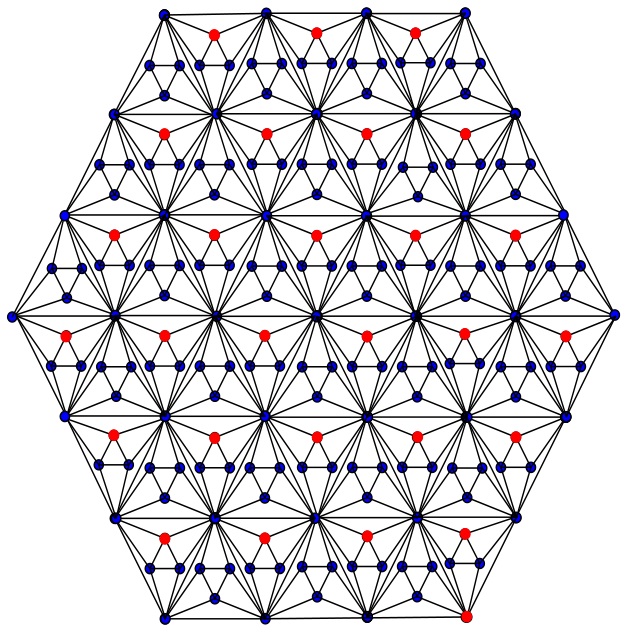 Figure 1
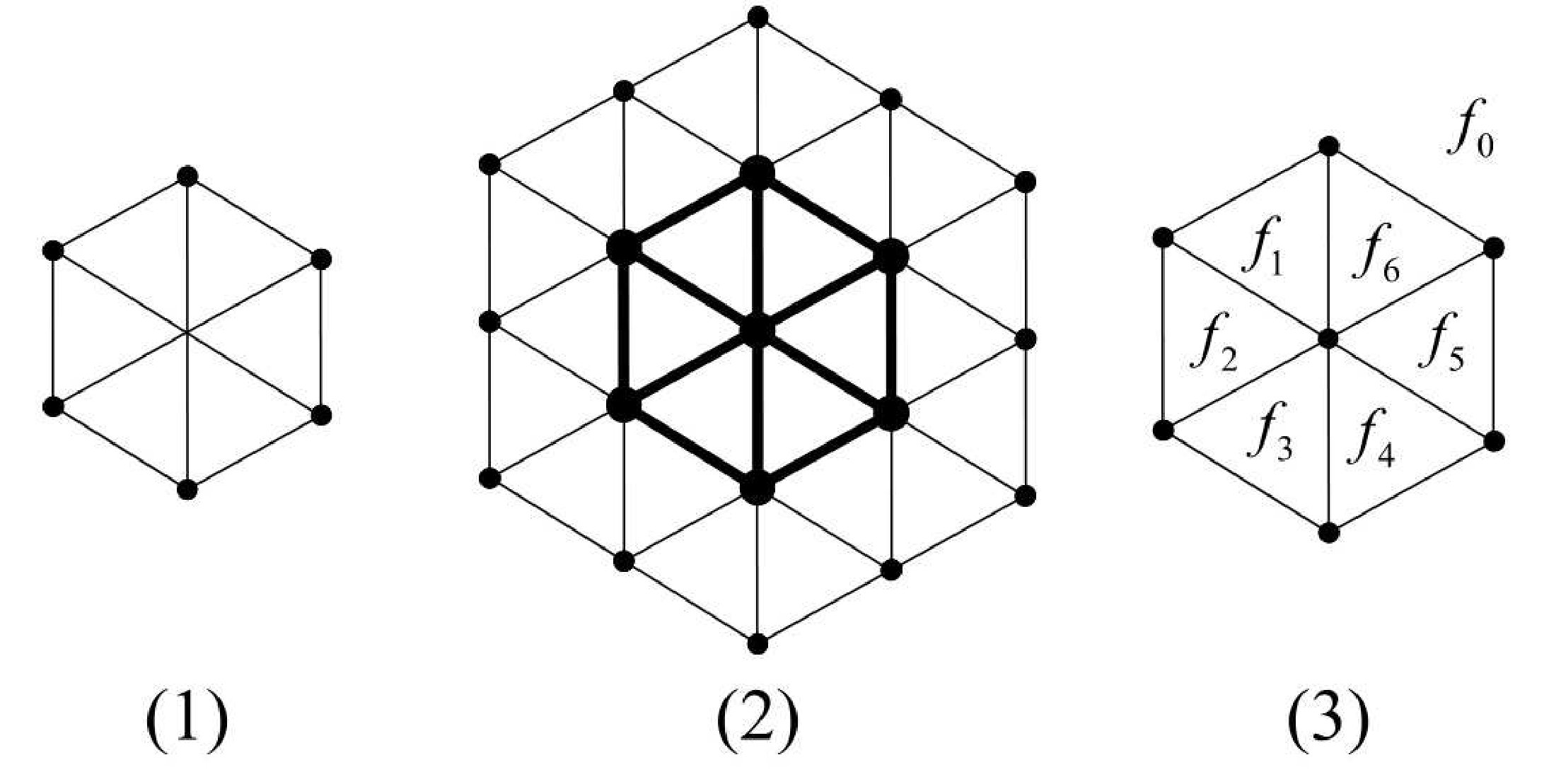 Figure 2
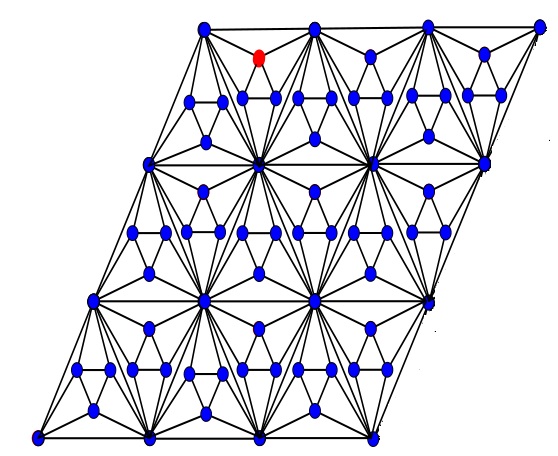 Figure 3
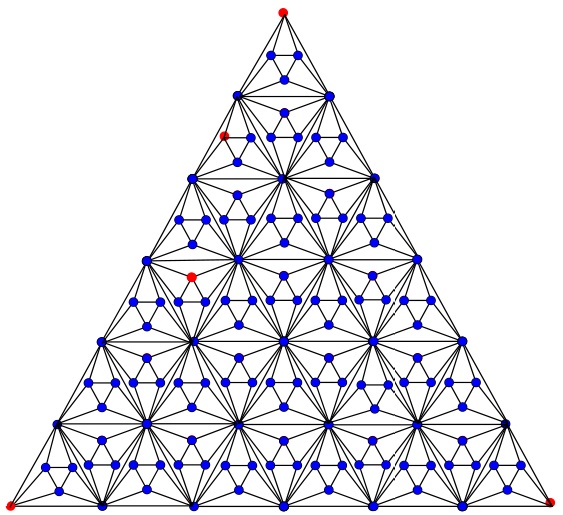 Figure 4
| where | Number of edges | where | Number of edges |
|---|---|---|---|
| where | Number of edges | where | Number of edges |
|---|---|---|---|
| where | Number of edges | where | Number of edges |
|---|---|---|---|
| where | Number of edges | where | Number of edges |
|---|---|---|---|
| where | Number of edges | where | Number of edges |
|---|---|---|---|
| where | Number of edges | where | Number of edges |
|---|---|---|---|
Peer Reviews
No public reviews on file for this paper yet. If you reviewed it on a platform where reviews are public (OpenReview, ICLR, NeurIPS, ICML), you can paste yours below so the community can read it here.
Videos
No videos yet. Explain this paper in a talk, walkthrough, or lecture? Add one.
Taxonomy
TopicsComputational Drug Discovery Methods · Graph theory and applications · Free Radicals and Antioxidants
11institutetext: 1Department of Mathematics,
Government College University,
Faisalabad, Pakistan
E-mail: [email protected], {ahsanbanyamin, kashif4v}@gmail.com
On Topological Properties of Third type of Hex Derived Networks
Haidar Ali1
Muhammad Ahsan Binyamin1
Muhammad Kashif Shafiq1
Abstract
In chemical graph theory, a topological index is a numerical representation of a chemical network while a topological descriptor correlates certain physico-chemical characteristics of underlying chemical compounds besides its chemical representation. Graph plays an vital role in modeling and designing any chemical network.
F. Simonraj et al. derived new third type of Hex derived networks [27]. In our work, we discuss the third type of hex derived networks , and and computed exact results for topological indices which are based on degrees of end vertices.
Keywords: General Randić index, Harmonic index, Augmented Zagreb index, Atom-bond connectivity index, Geometric-arithmetic index, Third type of Hex Derived Networks, , , .
1 Introduction and preliminary results
Topology indices application is now a standard procedure in studying chemical information, structure properties like QSAR and QSPR. Biological indicators such as the Randi Index, Zagreb Index, the Weiner Index and the Balaban index are used and predict and study the physical and chemical properties. There is too much research has been published in this field in the last few decades. The topological index is a numeric quantity associated with chemical constitutions purporting the correlation of chemical structures with many physicochemical properties, chemical reactivity or biological activity. Topological indices are made on the grounds of the transformation of a chemical network into a number that characterizes the topology of the chemical network. Some of the major types of topological indices of graphs are distance-based topological indices, degree-based topological indices, and counting-related topological indices. For any Graph where V is be the vertex set and E to be the edge set of . The degree of vertex x is the amount of edges of episode with x. A graph can be spoken by a polynomial, a numerical esteem or by network shape.
Hexagonal mesh was derived by Chen et al. [8]. A set of triangles, made up a hexagonal mesh as shown in Fig. 1. Hexagonal mesh with dimension 1 does not exist. Composition of six triangles made a 2-dimensional hexagonal mesh (see Fig. 1(1)). By adding a new layer of triangles around the boundary of , we have a 3-dimensional hexagonal mesh (see Fig. 1(2)). Similarly, we form by adding n layers around the boundary of each proceeding hexagonal mesh.
**Drawing algorithm of networks
**Step-1: First we draw a Hexagonal network of dimension .
Step-2: Replace all subgraph in to Planar octahedron once. The resulting graph is called (see Fig. 4) networks.
Step-3: From network, we can easily form (see Fig. LABEL:fig_3)and (see Fig. LABEL:fig_4).
In this paper, we consider as a network with is the set of vertices and edge set , the degree of any vertex is denoted by . The where .
The beginning of degree based topological indices starts from Randić index [24] denoted by and acquainted by Milan Randić and written as
[TABLE]
B. Furtula and Ivan Gutman [12] introduced forgotten topological index (also called F-Index) defined as
[TABLE]
Another topological index in view of the level of the vertex is the Balaban index [4, 5]. This index for a graph of order , size is characterized as
[TABLE]
Ranjini et al. [25] reclassified the Zagreb indices is to be specific the re-imagined in the first place, second and third Zagreb indices for graph as
[TABLE]
[TABLE]
[TABLE]
Only and indices can be computed if we are able to find the edge partition of these networks, based on sum of the degrees of end vertices of each edge. The fourth version of index is introduced by Ghorbani et al. [13] and defined as
[TABLE]
The fifth version of index is proposed by Graovac et al.[14] and defined as
[TABLE]
2 Main Results for third type of Hex Derived networks
F. Simonraj et al. [27] derived new third type of Hex derived networks and found metric dimension of and . In this work, we discuss the newly derived third type of hex derived networks and compute exact results for degree based topological indices. In these days, there is an extensive research activity on these topological indices and their variants see, [1, 2, 3, 7, 18, 19, 20, 21, 22, 23, 26]. For basic definitions, notations, see [6, 9, 15, 16, 29]
2.1 Results for Hex Derived network of type 3,
In this section, we discuss the newly derived third type of hex derived network and compute numerical and exact results for forgotten index, Balaban index, reclassified the Zagreb indices, forth version of index and fifth version of index for the very first time.
Theorem 2.1.1
Consider the Hex Derived network of type 3 , then its forgotten index is equal to
[TABLE]
Proof
Let be the Hex Derived network of type 3, shown in Fig. 4, where . The Hex Derived network has vertices and the edge set of is divided into nine partitions based on the degree of end vertices. The first edge partition contains edges , where . The second edge partition contains edges , where and . The third edge partition contains edges , where and . The fourth edge partition contains edges , where and . The fifth edge partition contains edges , where and . The sixth edge partition contains edges , where and . The seventh edge partition contains edges , where and the eighth edge partition contains edges , where and and the ninth edge partition contains edges , where , Table 1 shows such an edge partition of . Thus from this follows that
[TABLE]
Let be the Hex Derived network of type 3, . By using edge partition from Table 1, the result follows. The forgotten index can be calculated by using (2) as follows.
[TABLE]
[TABLE]
By doing some calculations, we get
[TABLE]
∎
In the following theorem, we compute Balaban index of Hex Derived network of type 3, .
Theorem 2.1.2
For Hex Derived network , the Balaban index is equal to
[TABLE]
Proof
Let be the Hex Derived network . By using edge partition from Table 1, the result follows. The Balaban index can be calculated by using (3) as follows.
[TABLE]
[TABLE]
By doing some calculation, we get
[TABLE]
∎
Now, we compute , and indices of Hex Derived network .
Theorem 2.1.3
*Let be the Hex Derived network, then
= ;
= ;
= .*
Proof
By using edge partition given in Table 1, the ReZG1 can be calculated by using as follows.
[TABLE]
[TABLE]
By doing some calculation, we get
[TABLE]
The ReZG2 can be calculated by using as follows.
[TABLE]
[TABLE]
By doing some calculation, we get
[TABLE]
The ReZG3 index can be calculated from (6) as follows.
[TABLE]
[TABLE]
By doing some calculation, we get
[TABLE]
∎
Now, we compute and indices of Hex Derived network .
Theorem 2.1.4
*Let be the Hex Derived network, then
= ;
= .*
Proof
By using edge partition given in Table 2, the can be calculated by using as follows.
[TABLE]
[TABLE]
By doing some calculation, we get
[TABLE]
The index can be calculated from (8) as follows.
[TABLE]
[TABLE]
By doing some calculation, we get
[TABLE]
2.2 Results for Third type of Rectangular Hex Derived network
Now, we discuss the newly derived third type of rectangular hex derived network and compute numerical and exact results for forgotten index, Balaban index, reclassified the Zagreb indices, forth version of index and fifth version of index for .
Theorem 2.2.1
Consider the Third type of Triangular Hex Derived network of , then its forgotten index is equal to
[TABLE]
Proof
Let be the Hex Derived network of type 3, shown in Fig. 4, where . The Hex Derived network has vertices and the edge set of is divided into six partitions based on the degree of end vertices. The first edge partition contains edges , where . The second edge partition contains edges , where and . The third edge partition contains edges , where and . The fourth edge partition contains edges , where . The fifth edge partition contains edges , where and and the sixth edge partition contains edges , where . Table 3, shows such an edge partition of . Thus from this follows that
[TABLE]
Let be the third type of triangular hex derived network, . By using edge partition from Table 3, the result follows. The forgotten index can be calculated by using (2) as follows.
[TABLE]
[TABLE]
By doing some calculations, we get
[TABLE]
∎
In the following theorem, we compute Balaban index of third type of triangular hex Derived network, .
Theorem 2.2.2
For triangular hex derived network , the Balaban index is equal to
[TABLE]
Proof
Let be the triangular hex derived network . By using edge partition from Table 3, the result follows. The Balaban index can be calculated by using (3) as follows.
[TABLE]
[TABLE]
By doing some calculation, we get
[TABLE]
∎
Now, we compute , and indices of triangular hex derived network .
Theorem 2.2.3
*Let be the triangular hex derived network, then
= ;
= ;
= .*
Proof
By using edge partition given in Table 3, the ReZG1 can be calculated by using as follows.
[TABLE]
[TABLE]
By doing some calculation, we get
[TABLE]
The ReZG2 can be calculated by using as follows.
[TABLE]
[TABLE]
By doing some calculation, we get
[TABLE]
The ReZG3 index can be calculated from (6) as follows.
[TABLE]
[TABLE]
By doing some calculation, we get
[TABLE]
∎
Now, we compute and indices of triangular hex derived network .
Theorem 2.2.4
*Let be the triangular hex derived network, then
= ;
= .*
Proof
By using edge partition given in Table 4, the can be calculated by using as follows.
[TABLE]
[TABLE]
By doing some calculation, we get
[TABLE]
The index can be calculated from (8) as follows.
[TABLE]
[TABLE]
By doing some calculation, we get
[TABLE]
2.3 Results for Third type of Rectangular Hex Derived netwrok
Now, we calculate certain degree based topological indices of Rectangular Hex Derived network of type 3, of dimension . We compute forgotten index, Balaban index, reclassified the Zagreb indices, forth version of index and fifth version of index in the coming theorems of .
Theorem 2.3.1
Consider the third type of rectangular hex derived network , then its forgotten index is equal to
[TABLE]
Proof
Let be the Rectangular Hex Derived network of type 3, shown in Fig. LABEL:fig_3, where . The Rectangular Hex Derived network has vertices and the edge set of is divided into nine partitions based on the degree of end vertices. The first edge partition contains edges , where . The second edge partition contains edges , where and . The third edge partition contains edges , where and . The fourth edge partition contains edges , where and . The fifth edge partition contains edges , where and . The sixth edge partition contains edges , where and . The seventh edge partition contains edges , where and the eighth edge partition contains edges , where and and the ninth edge partition contains edges , where , Table 3 shows such an edge partition of . Thus from this follows that
[TABLE]
Let be the third type of triangular hex derived network, . By using edge partition from Table 3, the result follows. The forgotten index can be calculated by using (2) as follows.
[TABLE]
[TABLE]
By doing some calculations, we get
[TABLE]
∎
In the following theorem, we compute Balaban index of third type of triangular hex Derived network, .
Theorem 2.3.2
For triangular hex derived network , the Balaban index is equal to
[TABLE]
Proof
Let be the rectangular hex derived network . By using edge partition from Table 5, the result follows. The Balaban index can be calculated by using (3) as follows.
[TABLE]
[TABLE]
By doing some calculation, we get
[TABLE]
∎
Now, we compute , and indices of triangular hex derived network .
Theorem 2.3.3
*Let be the rectangular hex derived network, then
= ;
= ;
= .*
Proof
By using edge partition given in Table 3, the ReZG1 can be calculated by using as follows.
[TABLE]
[TABLE]
By doing some calculation, we get
[TABLE]
The ReZG2 can be calculated by using as follows.
[TABLE]
[TABLE]
By doing some calculation, we get
[TABLE]
The ReZG3 index can be calculated from (6) as follows.
[TABLE]
[TABLE]
By doing some calculation, we get
[TABLE]
∎
Now, we compute and indices of triangular hex derived network .
Theorem 2.3.4
*Let be the triangular hex derived network, then
= ;
= .*
Proof
By using edge partition given in Table 4, the can be calculated by using as follows.
[TABLE]
[TABLE]
By doing some calculation, we get
[TABLE]
The index can be calculated from (8) as follows.
[TABLE]
[TABLE]
By doing some calculation, we get
[TABLE]
3 Conclusion
In this paper, we have studied newly formed third type of hex derived networks, , and . The exact results have been computed of Randi, Zagreb, Harmonic, Augmented Zagreb, atom-bond connectivity and Geometric-Arithmetic indices for the very first time of third type of hex-derived networks also find the numerical computation for all the networks. As these important results are help in many chemical point of view as well as for pharmaceutical sciences. We are looking forward in future to derived and compute new networks and topological indices.
The reference list from the paper itself. Each links out to its DOI / PubMed record.
- 1[1] M. Ba c ˇ ˇ 𝑐 \check{c} a, J. Horv a ´ ´ 𝑎 \acute{a} thov a ´ ´ 𝑎 \acute{a} , M. Mokri s ˇ ˇ 𝑠 \check{s} ov a ´ ´ 𝑎 \acute{a} , A. Semaničová-Feňovčíková, A. Suh a ´ ´ 𝑎 \acute{a} nyiov a ˇ ˇ 𝑎 \check{a} , On topological indices of carbon nanotube network, Canadian J. Chem. 93 (2015), 1-4.
- 2[2] A. Q. Baig, M. Imran, H. Ali, Computing Omega, Sadhana and PI polynomials of benzoid carbon nanotubes, Optoelectron. Adv. Mater. Rapid Communin. 9 ( 2015 ) 9 2015 \textbf{9}(2015) , 248 − 255 248 255 248-255 .
- 3[3] A. Q. Baig, M. Imran, H. Ali, On Topological Indices of Poly Oxide, Poly Silicate, DOX and DSL Networks, Canad. J. Chem., DOI:10.1139/cjc-2014-0490
- 4[4] A. T. Balaban, Highly discriminating distance-based topological index, Chem. Phys. Lett. 89 ( 1982 ) 89 1982 \textbf{89}(1982) , 399 − 404 399 404 399-404 .
- 5[5] A. T. Balaban, L. V. Quintas, The smallest graphs, trees, and 4-trees with degenerate topological index J. Math. Chem. 14 ( 1983 ) 14 1983 \textbf{14}(1983) , 213 − 233 213 233 213-233 .
- 6[6] J. A. Bondy, U. S. R. Murty, Graph Theory with Applications, Macmilan, New York, 1997 1997 1997 .
- 7[7] G. Caporossi, I. Gutman, P. Hansen, L. Pavlovíc, Graphs with maximum connectivity index, Comput. Bio. Chem. 27 ( 2003 ) 27 2003 \textbf{27}(2003) , 85 − 90 85 90 85-90 .
- 8[8] M. S. Chen, K. G. Shin, D. D. Kandlur, Addressing, routing, and broadcasting in hexagonal mesh multiprocessors, IEEE Trans. Comput. 39 ( 1990 ) , 10 – 18 39 1990 10 – 18 \textbf{39}(1990),10–18 .