On the Numerical Solution of the Near Field Refractor Problem
Cristian E. Guti\'errez, Henok Mawi

TL;DR
This paper introduces a numerical scheme for solving the near field refractor problem with arbitrary precision, proving finite termination and convergence based on Lipschitz estimates, with a broadly applicable algorithm.
Contribution
It presents a novel numerical algorithm for the near field refractor problem, with proven finite termination and convergence, applicable in general settings.
Findings
Algorithm terminates in finite steps
Convergence relies on Lipschitz estimates
Applicable to arbitrary precision solutions
Abstract
A numerical scheme is presented to solve the one source near field refractor problem to arbitrary precision and it is proved that the scheme terminates in a finite number of iterations. The convergence of the algorithm depends upon proving appropriate Lipschitz estimates for the refractor measure. The algorithm is presented in general terms and has independent interest.
Click any figure to enlarge with its caption.
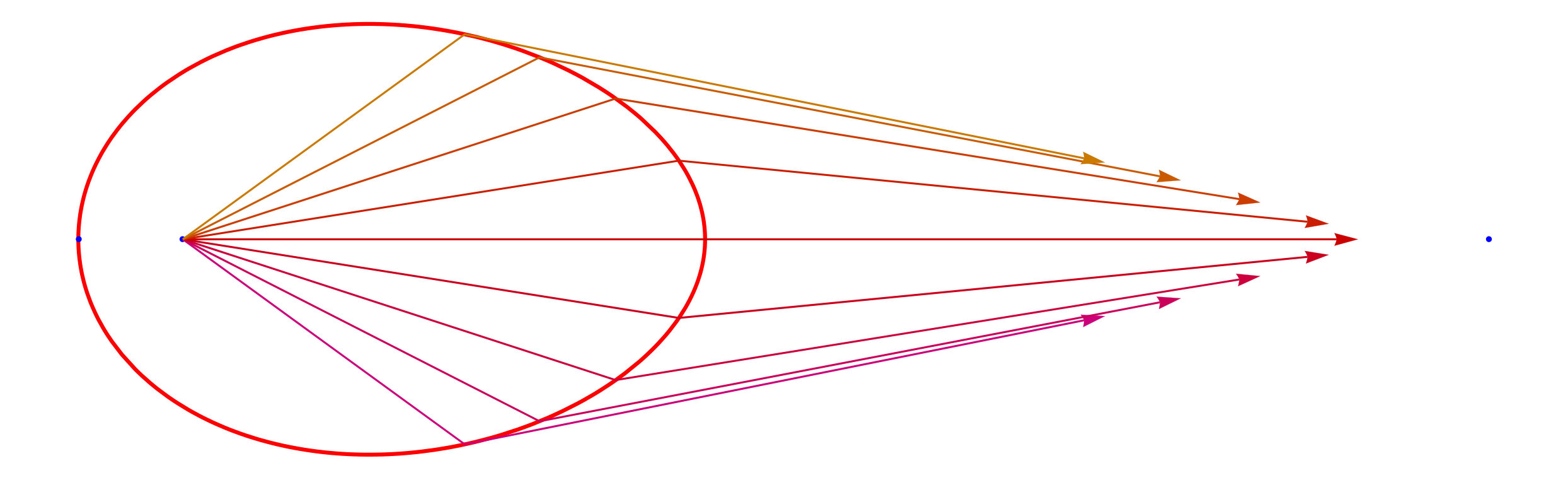 Figure 1
Peer Reviews
No public reviews on file for this paper yet. If you reviewed it on a platform where reviews are public (OpenReview, ICLR, NeurIPS, ICML), you can paste yours below so the community can read it here.
Videos
No videos yet. Explain this paper in a talk, walkthrough, or lecture? Add one.
On the Numerical Solution of the
Near Field Refractor Problem
Cristian E. Gutiérrez and Henok Mawi
Department of Mathematics
Temple University
Philadelphia, PA 19122
Department of Mathematics, Howard University, Washington, D.C. 20059
Abstract.
A numerical scheme is presented to solve the one source near field refractor problem to arbitrary precision and it is proved that the scheme terminates in a finite number of iterations. The convergence of the algorithm depends upon proving appropriate Lipschitz estimates for the refractor measure. The algorithm is presented in general terms and has independent interest.
.
The first author was partially supported by NSF grant DMS–1600578, and the second author was partially supported by NSF grant HRD–1700236.
Contents
1. Introduction
Let be a domain and suppose for each point a light ray with direction emanates from a punctual source at the origin with intensity density function where on and . Suppose , the target we want to illuminate, is a domain contained in an dimensional hyper-surface, with compact and Let be a Radon measure on satisfying the mass balance condition
[TABLE]
Given two homogeneous and isotropic media and with refractive indices , respectively, so that the point source at is surrounded by medium and the target domain is surrounded by medium , the near field refractor problem is to find an interface between media and parametrized by so that each ray with direction is refracted into according to Snell law and so that the energy conservation condition
[TABLE]
holds for all , where represents the directions that are refracted into , see Definition 2.2. Existence of solutions to this problem is obtained in [GH14].
The purpose of this paper is to present an iterative scheme to find approximate solutions for this problem with arbitrary precision when is discrete measure and prove that the scheme gives the desired result in finite number of iterations. The physical problem is three dimensional, but we carry out the analysis in dimensions.
A similar iterative scheme was developed in [DGM17] to solve the far field refractor problem, extended in [AG17] to deal with generated Jacobian equations, and in particular, used in [K14] for mass transport problems with cost functions satisfying the MTW condition given in [MTW05]. The algorithm originates in pioneering works by Caffarelli, Kochengin and Oliker [CKO99] for reflectors and by Bertsekas [B79] for the assignment problem. However, a major advance and simplification to solve these kind of problems numerically is introduced in [DGM17] and [AG17] by showing that an appropriate mapping satisfies a Lipschitz condition. This essential step guarantees that the algorithm converges in a finite number of iterations, and we stress that this does not require smoothness of the density function .
The difficulty in extending these ideas when dealing with the near field refractor problem is that it has a complicated geometrical structure given by Descartes ovals requiring non trivial analytical estimates for the derivatives of these ovals, and it does not have a mass transport structure. Moreover, we present an abstract form of the algorithm having independent interest that might be useful to solve other problems with similar features.
The plan of the paper is as follows. Section 2 contains preliminary results, the set up, and definitions needed in the rest of the paper. In Section 3 we present estimates of the derivatives of Descartes ovals and lower gradient estimates under structural conditions on the discretization of the target , Proposition 3.1. We will use these estimates in Section 4 to prove a one sided Lipschitz estimate of the refractor measure, Theorem 4.1. A Lipschitz estimate is a crucial ingredient to prove that the abstract algorithm introduced in Section 6, terminates in finitely many steps as shown in Section 6.3; in particular, when applied to the near field refractor problem. In Section 5, we introduce a class of admissible vectors that will be used to apply the abstract algorithm to the near field refractor. Finally, in Section 7 we show the application of the algorithm to solve the near field refractor problem.
2. Set up and Definitions
In this section, we shall recall Snell’s law of refraction, discuss some properties of the building blocks from which we construct near field refractors, and state geometric conditions between the set of incident directions and target to guarantee existence of solutions. In addition, we give the precise statement of the problem solved in the paper.
2.1. Snell’s Law of refraction
If from a point source of light located at the origin and surrounded by media , with refractive index , a ray of light emanates with unit direction and strikes an interface between medium I and medium II at a point , then this light ray is refracted into the unit direction in medium , with refractive index , according to Snell’s law given in vector form as
[TABLE]
with and , where is the unit normal at pointing towards medium . From this the standard Snell’s law follows: , with the angle of incidence between and , and the angle of refraction between and . When , depending on the angle of incidence total internal reflection may occur, i.e., incident light may be totally reflected back into medium and not transmitted to medium II. If or equivalently, , then there is no total internal reflection; see [GH09, Sect. 2.1].
We will assume throughout the paper that . The analysis for is similar.
2.2. Descartes Ovals
The treatment of the near field refractor problem requires the use of Descartes ovals, which have a special refraction property. For and a refracting Descartes oval is the surface
[TABLE]
where
[TABLE]
If the region inside the oval is made of a material with refractive index and the outside made of material with refractive index , then using Snell’s law it can be shown that each light ray emanating from the origin and having direction with is refracted by the oval into the point See [GH14, Sect. 4] for detailed discussion.
2.3. Statement of the Problem
As in [GH14] we will impose the following two geometric configuration conditions on and to formulate the main problem. The first condition is to avoid total internal reflection and the second is to guarantee that the target doesn’t block itself:
- H.1
there exists , with , such that for all and ; 2. H.2
let and . Then given each ray emanating from intersects in at most one point.
Note that if satisfies H.2, then for . We shall prove that if
[TABLE]
then the oval refracts all directions into . For this, we only need to verify that there is no internal reflection, that is, for all . Indeed,
[TABLE]
Near field refractors are then defined as follows.
Definition 2.1**.**
A surface is said to be a near field refractor if for any point there exist point and such that the refracting oval supports at , i.e. for all with equality at
We remark that if (H.1) and (H.2) hold, then each near field refractor is Lipschitz [GH14, Lemma 5.3].
The refractor map is as follows.
Definition 2.2**.**
Given a near field refractor the near field refractor mapping of is the multi-valued map defined for by
[TABLE]
Given the near field tracing mapping of is defined by
[TABLE]
Suppose that we are given a nonnegative , represents the intensity of the light ray emanating from with direction . We recall the definition of near field refractor measure, see [GH14, Formula (5.5)].
Definition 2.3**.**
The near field refractor measure associated with the near field refractor and the function is the finite Borel measure given by
[TABLE]
for every Borel set
Given a Radon measure defined on and the energy conservation condition the near field refractor problem is to find a near field refractor such that
[TABLE]
for any Borel set Under conditions H.1 and H.2 above, the existence of such a surface is proved in [GH14]. In particular, given distinct points in positive numbers a nonnegative function such that
[TABLE]
and ( in Hypothesis H.2 above) there exists a unique vector such that the poly-oval
[TABLE]
is a near field refractor satisfying
[TABLE]
see [GH14, Thm. 5.7].
The main purpose of this paper is to discuss an iterative scheme to construct this refractor with arbitrary precision and to show that the scheme converges in a finite number of steps. That is, given satisfying and we seek a vector , which depends on , such that the poly-oval refractor satisfies
[TABLE]
2.4. Properties of the refractor mapping
In this subsection we will prove some results that will be needed to apply the algorithm from Section 6 to solve the main problem. In the proof of these results, and in the subsequent sections, the following part of [GH14, Lemma 4.1] will be used frequently.
Lemma 2.4**.**
Let , given by (2.2), and assume that . Then
[TABLE]
We begin with the following monotonicity property.
Lemma 2.5**.**
Let and be in Suppose that for some , and for all , where Then
[TABLE]
and
[TABLE]
where the inclusions are up to a set of measure zero. Consequently
[TABLE]
Proof.
From its definition, is differentiable a.e., so the set of singular points has surface measure zero. We use here that if is not a singular point, then the oval supports at ; this holds for any near field refractor and any ; see [GH14, Proof of Lemma 5.4].
We first prove (2.10) when is not a singular point of . Since , we obviously have for all , where is the parametrization of and is the parametrization of . Suppose and let . Then, since is not a singular point of , the oval with polar radius supports at . We have . Therefore
[TABLE]
that is, .
We now prove (2.9). That is, we prove that if is neither a singular point of nor a singular point of , and , then . We may assume . We have that the oval supports at . We claim that the oval with polar radius supports at . Suppose this is not true. Since by definition , we would have . So for some , and therefore supports at . Since is not a singular point of , then by the inclusion previously proved we get that . Since we obtain that is a singular point of , a contradiction. ∎
Lemma 2.6**.**
Let . Consider the family of refractors obtained from by changing only and fixing for all Then as .
Proof.
We have and also for all , from Lemma 2.4. Let . For with , we then get for all and . So and so and (a) follows.
∎
3. Estimates for derivatives of the polar radii of ovals
In this section, we will obtain bounds for the derivatives of the polar radius In particular, we will prove the lower gradient estimate 3.11 which will be used in the next section to prove a Lipschitz property of the refractor measure. From (2.2) we have
[TABLE]
where
[TABLE]
By calculation
[TABLE]
As a function of , is increasing in the interval and decreasing in the interval . Let with , so , and we have
[TABLE]
Let be such that . Since , it follows that . Therefore
[TABLE]
and
[TABLE]
We have
[TABLE]
for , so
[TABLE]
Let us estimate from below. For this, we assume satisfies (2.3) and recall assumptions H.1 and H.2.
We write
[TABLE]
We have
[TABLE]
since from H.1. Since is a bounded set, for all , and since for small, we get
[TABLE]
choosing small enough.
Therefore we obtain that there are structural constants and such that
[TABLE]
for all , and satisfying (2.3), consequently, the formula (2.2) can be extended and is then well defined for all these values. In particular, (2.2) can be differentiated with respect to for all obtaining
[TABLE]
Upper bound for . From (3.4), we only need to estimate the extension from above and from below. To estimate we have from (3.2) that
[TABLE]
and to estimate from below we use (3.3) obtaining
[TABLE]
when satisfies (2.3) and conditions H.1 and H.2 hold.
Bounds for :
[TABLE]
From (3.1), for . If satisfies (2.3), then from (2.3) (that avoids internal reflection), and so . Therefore
[TABLE]
Bounds for :
For , , , and let’s define
[TABLE]
From the analysis above this function is differentiable with respect to for . Suppose at some and for some with we would have
[TABLE]
Then from (3.4)
[TABLE]
and since the coefficients in front of and are not zero it follows that is a multiple of , violating the visibility Condition H.2 taking .
Therefore by continuity
[TABLE]
for all .
The estimate in the following proposition will be used in the proof of Theorem 4.1 via Proposition 4.4. Its proof requires the structural condition (3.10). denotes a point in the unit sphere with being spherical coordinates.
Proposition 3.1**.**
Fix with and , with .
We assume the following structural condition: if is the plane containing the origin and the points , then
[TABLE]
If are positive, then there exists a constant depending on and such that
[TABLE]
*for all .**Notice that the minimum in (3.11) over the full range is zero. Because, if for example, , then since . On the other hand, as . Therefore from (3.4), as ; and similarly as .
Proof.
By contradiction. Suppose at some and for some with we have
[TABLE]
That is, for . Since is an orthogonal frame, we get that the vector is parallel to . From (3.4) we then get that
[TABLE]
which is a contradiction with (3.10). ∎
Remark 3.2**.**
Therefore, if the target points satisfy
[TABLE]
then (3.11) holds for all . To understand this condition, let be a normal to , that is, is parallel to the vector . Given in the upper sphere, let the orthogonal set of vectors
[TABLE]
So (3.11) holds for all if the set of vectors is contained in the complement of .
For example, if the points lie on a plane through the origin that does not intersect , and so that any pair is not aligned with the origin, then (3.13) holds.
Remark 3.3**.**
To illustrate (3.13), suppose the target is contained on the plane . We can select points in in the following way so that (3.13) holds. Let so that the line does not intersect and consider the collection of all planes containing the points and that intersect . Pick with . Let be the collection of all planes containing the points and that intersect . Pick such that . Next let be the collection of all planes containing the points and that intersect , and pick with . Continuing in this way we choose points in so that (3.13) holds.
4. Lipschitz estimate of the refractor map
In this section, we will prove the one sided Lipschitz estimate 4.6, for the refractor measure. This result is a crucial ingredient to prove that the algorithm converges to the desired result in finitely many steps when applied to near field refractor problem.
Let and let be the unit direction in the -th coordinate. For , define . The domain of incident directions is identified with so that where and spherical coordinates. Next we define the sets
[TABLE]
[TABLE]
[TABLE]
where .
Since , from (3.6) is increasing in the last variable so for all . Hence . Since in the arguments in this section the vector will be fixed, we adopt the short-hand
[TABLE]
With this notation, for the refractor measure map given in Definition 2.3, we have
[TABLE]
If for brevity we denote by we have ,
[TABLE]
Our goal is to prove the following one-sided Lipschitz estimate for .
Theorem 4.1**.**
Assume that H.1 and H.2 in Section 2.3 hold, and the target points satisfy (3.13). Let be positive numbers and satisfying
[TABLE]
Then for each we have
[TABLE]
for all with , where . is a positive constant depending only on the bounds for the derivatives up to order two of the functions over and over satisfying (2.3); in addition depends also on , , , and the constants in H.1 and H.2.
Proof.
We have from Lemma 2.5 that
[TABLE]
Using (4.3) we obtain
[TABLE]
Hence,
[TABLE]
It follows that
[TABLE]
where denotes the area measure in the sphere . We proceed to estimate for . Notice that, by definition of ,
[TABLE]
If is a subset of the upper part of the sphere , and with spherical coordinates, then there is such that and from the formula of change of variables
[TABLE]
where , , . Recall with . Since , let
[TABLE]
and so the surface measure
[TABLE]
where denotes the -dimensional Lebesgue measure and a constant. If
[TABLE]
then from the bound (3.6) for - only depending on - and the mean value theorem we get
[TABLE]
for all . Therefore
[TABLE]
for all satisfying (4.9) and , with from (3.7).
The last set is a region contained between two level sets of the function and we now estimate the measure of this set. Let us first recall the co-area formula, [EvG92, Section 3.4.2, Theorem 1].
Proposition 4.2**.**
Let be Lipschitz, and measurable. Then
[TABLE]
where denotes -dimensional Hausdorff measure.
This has the following simple corollary.
Corollary 4.3**.**
Let be Lipschitz, with , and a bounded set. Then
[TABLE]
* being the -dimensional Lebesgue measure.*
From (3.5) and the lower bound (3.11) we can apply the corollary to the function , , to conclude that
[TABLE]
We now show that the integrand on the right hand side of (4.13) is uniformly bounded for each in the range of . For this, we need the following [AG17, Prop. 5.5].
Proposition 4.4**.**
Suppose is a smooth, bounded domain and satisfies and are both finite. For any , let . Then there exists a constant such that
[TABLE]
We can now complete the proof of the desired Lipschitz estimate. Assuming (3.13), then (3.11) holds and so we can apply Proposition 4.4 when , with replaced by , to the function , for and satisfying , , provided are both finite. That follows from (4.5) and (3.5), and that follows computing using (3.4), (3.3), and (3.5). Therefore (4.13) implies
[TABLE]
Hence from (4.10)
[TABLE]
for each satisfying (4.9). Finally, adding these inequalities over , from (4.8) we then obtain the desired Lipschitz estimate (4.6) with a constant depending on , , , , and bounds for the derivatives up to order two of . ∎
5. Admissible vectors for the iterative method
Recall we have distinct points in , , satisfying the conservation condition (2.5) where a.e. in . And also assume the configuration conditions H.1 and H.2.
In the following proposition we introduce the set of admissible vectors that will be used in the iterative method. We remark that the Proposition gives that vectors in the admissible set have components bounded uniformly away from .
Proposition 5.1**.**
Suppose satisfies
[TABLE]
and let . Consider the set‡‡‡Notice that the bounds for imply from (2.3) that the oval refracts all into .
[TABLE]
Notice that from H.1 and H.2, .
Then and for we have
[TABLE]
Proof.
Let us first prove the second part of the proposition. Let and consider Since and has surface measure zero for , we have
[TABLE]
which from (2.5) implies that
[TABLE]
Since a.e., we then get that the surface measure of the set is positive. From [GH14, Lemma 5.3], is Lipschitz and so the set of singular points has measure zero. Hence there exists a point non singular for . That is, there exists such that the oval with radius supports at , that is, for all with equality at . On the other hand, by definition of , and so implying . We claim that . If it were , then for all . Hence , and so at there would exist , for some , supporting at . That is, the ovals and with would support at and therefore would be a singular point, a contradiction. The claim is then proved. Hence for . From the estimates for the ovals in Lemma 2.4 we have
[TABLE]
implying
[TABLE]
with . From (5.1) and since , for , showing (5.2).
Finally, to show , let satisfy (5.1) and construct . For this, it is enough to show the existence of such that for and . Because with this choice we would have that has surface measure zero for . We write for some , and let , for . Then, once again from the estimates for the ovals Lemma 2.4,
[TABLE]
for and we are done. ∎
6. Abstract Algorithm
We present here an algorithm, that in conjunction with the results previously obtained, will be applied in Section 7 to obtain a near field refractor satisfying (2.7). This type of algorithm has been used in [B79], [CO08], [DGM17], [AG17], and [K14]. Here the presentation is in an abstract setting so that it can be applied to solve other problems.
Let be a function, , , satisfying the following properties:
- (a)
is continuous on ; 2. (b)
for each , and
[TABLE]
[TABLE] 3. (c)
for each there is such that
[TABLE]
for all .
Let be positive numbers satisfying
[TABLE]
and let us fix and define the set
[TABLE]
Our purpose is to present an iterative procedure to construct a vector so that
[TABLE]
This will be done by successively decreasing the coordinates of the vectors involved. In addition, we will show also that if the function satisfies a Lipschitz condition, then the procedure terminates in a finite number of iterations.
6.1. Description of the algorithm
Suppose and pick . We will construct intermediate consecutive vectors associated with in the following way.
Step 1. We first test if satisfies the inequalities:
[TABLE]
Notice that the last inequality in (6.2) holds since . If satisfies (6.2), then we set and we proceed to Step 2 below. If does not satisfy (6.2), then
[TABLE]
We shall pick , and leave all other components fixed, so that the new vector , and satisfies
[TABLE]
Let us see this is possible. From (b) above, and since ,
[TABLE]
From (c) above
[TABLE]
From (a), is continuous for . Since
[TABLE]
then by the intermediate value theorem there is such that
[TABLE]
and therefore (6.4) holds and .
Therefore, if the vector does not satisfy (6.2), we have then constructed a vector that satisfies (6.4) which is stronger than (6.2).
Step 2. Next we proceed to test the inequality
[TABLE]
with the vector constructed in Step 1. If satisfies (6.5), we set and we proceed to the next step. If does not satisfy (6.5), then
[TABLE]
From (a), (b), (c) above, we proceed as before, now decreasing the value of , the third component of the vector , and since
[TABLE]
construct a vector such that
[TABLE]
and in particular, (6.5) holds for . Notice that because of condition (b) we cannot conclude that the newly constructed vector satisfies (6.2).
Step . We proceed to test the inequality
[TABLE]
where is the vector from Step . If this holds we set . Otherwise, we have
[TABLE]
and proceeding as before, by decreasing the th-component of , we obtain a vector
[TABLE]
as long as
[TABLE]
In this way, if
[TABLE]
starting from a fixed vector , we have constructed intermediate vectors all belonging to and satisfying the inequalities:
[TABLE]
Notice that if , then the vector satisfies 6.1. If not, we repeat the above steps starting with the last vector
It is important to notice that by construction, the -th components of and are all equal for . If for some , , then the -th component of is strictly less than the -th component of . And so if we needed to decrease the -th component of to construct it’s because
[TABLE]
and then by construction satisfies
[TABLE]
Therefore combining the last two inequalities we obtain the following important inequality
[TABLE]
In summary, we started from a vector and constructed intermediate vectors using the procedure described. So we obtain in the first stage the finite sequence of vectors
[TABLE]
For the second stage we repeat the construction now starting with the vector and we get the finite sequence of vectors
[TABLE]
with . For the third stage we repeat the process now starting with the last intermediate vector obtained in the previous stage, obtaining the finite sequence of vectors
[TABLE]
with . Continuing in this way we obtain a sequence of vectors, in principle infinite,
[TABLE]
with . If for some , the vectors in the th-stage are all equal, i.e., , then from the construction
[TABLE]
Therefore, if we show that for some the intermediate vectors are all equal, we obtain the desired approximation (6.1).
Let us see what happens for . Suppose111For the application to the near field refractor so (6.9) holds for each vector because
\displaystyle=\int_{\cup_{i=1}^{N}\mathcal{T}_{\mathcal{S}({\bf b})}(P_{i})}f(x)\,d\sigma(x)\quad\text{since \mathcal{T}{\mathcal{S}({\bf b})}(P{i})\cap\mathcal{T}{\mathcal{S}({\bf b})}(P{j})i\neq jf>0 a.e.}
[TABLE]
Then
[TABLE]
Therefore the vector satisfies
[TABLE]
Summarizing, if satisfy (a), (b), (c), (6.9) and
[TABLE]
choosing , we then obtain
[TABLE]
6.2. Convergence of the algorithm
We will show here that the procedure described will always give, in an infinite number of steps, a vector satisfying (6.1) provided the following holds:§§§We remark that for the application to the near field refractor , see Proposition 5.1.
[TABLE]
As pointed out in (6.8), by using the procedure described above we obtain a sequence of vectors
[TABLE]
and which can be listed as
[TABLE]
Notice that in this listing, for a fixed the sequence of the entries is non-increasing; that is,
[TABLE]
and for we have for all and for all Moreover, since the vectors belong to by assumption (6.10), each entry is bigger than or equal to for . Therefore for any the limit of the entries exists and the limit is strictly bigger than .
Let be the limit of the entries, . Then the vector
[TABLE]
satisfies
[TABLE]
In fact, fix , the vector is the limit of the vectors as . But the vectors verify
[TABLE]
From assumption (a), is continuous for each , taking the limit as we obtain (6.11).
Assuming (6.9) for all vectors , we conclude that (6.11) holds with and with replaced by .
Remark 6.1**.**
Notice that the argument above always gives a solution satisfying (6.11). To handle the case when we need an extra condition. In fact, for (6.11) to hold for , the conservation of energy condition (6.9) is sufficient.
Also notice that if the conservation of energy condition (6.9) is assumed, then the second condition in (b) implies the first condition in (b). This is all applicable to the near field refractor in view of the Footnote 1 before (6.9).
6.3. If satisfies a Lipschitz estimate then the algorithm terminates in a finite number of steps
Suppose that given positive there is a constant such that
[TABLE]
for and for each and for all . Notice that from assumption (b) above, .
We shall prove that the estimate (6.12) together with the assumption that satisfies (6.10), implies that there is such that the vectors in the th group are all equal, and we will also show an upper bound for the number of iterations.
Suppose we originate the iteration at Since by construction the coordinates of the vectors in the sequence (6.8) are decreased or kept constant, the th coordinate of any vector in the sequence is less than or equal to , . In addition, from (6.10), points in have first coordinate and their coordinates bounded below by for . Therefore, all terms in the sequence (6.8) are contained in the compact box . We want to show that there is such that the intermediate vectors are all equal. Otherwise, for each the intermediate vectors are not all equal. This implies that for each there are two consecutive intermediate vectors and , that are different. By construction of intermediate vectors, they can only differ in one coordinate, say that . Notice that depends on , but there is and a subsequence such that there are two consecutive intermediate vectors and in each group such that their -th coordinates satisfy , and all other coordinates are equal. Also notice that since the coordinates are chosen in a decreasing manner we have for . From (6.7) we then get
[TABLE]
for each . We write
[TABLE]
and let . Since the vectors belong to , from (6.10) for . Then from (6.12) we obtain
[TABLE]
On the other hand,
[TABLE]
which contradicts (6.13). Therefore, the intermediate vectors are all equal for some .
Let us now estimate the number of iterations used. Consider the groups of vectors (6.8) in the construction. We have proved the process stops at some , i.e., all vectors in this group are equal. Let us estimate . Fix a coordinate . Notice that in each group , the coordinate of any vector in the group can decrease at most only once and only when passing from a vector to the vector . Here denotes the group and the location in the group. The coordinate of all vectors are at most , the coordinate of the initial vector, and since the vectors belong to and so (6.10) holds, the coordinates are at least . So the change in the coordinate of a vector in the group one to the group , is at most . On the other hand, on each group if the coordinate is decreased, from (6.14), it is decreased by at least . Having groups, the total decrease of the coordinate in passing from group one to group is at least
[TABLE]
which is in turn smaller than the total possible decrease, that is, we have
[TABLE]
Since this must hold for all the coordinates we obtain the bound
[TABLE]
7. Application of the algorithm to the near field refractor
We set with given in (4.4), , and , . The continuity property (a) for is contained in the proof of Step 2 in [GH14, Theorem 2.5]. Properties (b) and (c) follow from Lemmas 2.5 and 2.6, with . The set in Proposition 5.1, and so assumption (6.10) is (5.2) for the near field refractor problem. Finally, the Lipschitz estimate (6.12) follows applying Theorem 4.1 with and for . We then have everything in place to be able to apply the abstract algorithm to the near field refractor problem and we can obtain the poly-oval refractor that satisfies 2.7.
Acknowledgments
It is a pleasure to thank Farhan Abedin for a careful reading of this paper and for very useful suggestions.
The reference list from the paper itself. Each links out to its DOI / PubMed record.
- 1[AG 17] F. Abedin and C. E. Gutiérrez, An iterative method for generated Jacobian equations, Calc. Var. PD Es, 56(101), 1-14, (2017).
- 2[B 79] D. I. Bertsekas, A distributed algorithm for the assignment problem , Laboratory for Information and Decision Sciences Working Paper, MIT, Cambridge, Mass., March 1979.
- 3[BW 80] M. Born, and E. Wolf, Principles of Optics, Sixth ed., Pergamon Press, 1980.
- 4[CKO 99] L.A. Caffarelli, S.A. Kochengin, and V. Oliker, On the numerical solution of the problem of reflector design with given far-field scattering data , Contemp. Math., 226, 13–32, 1999.
- 5[DGM 17] R. De Leo, C. E. Gutiérrez and H. Mawi, On the numerical solution of the far field refractor problem , Nonlinear Anal. 157 (2017), 123–145.
- 6[Ev G 92] L. C. Evans and R. F. Gariepy, Measure Theory and Fine Properties of Functions, CRC Press, Boca Raton, FL, 1992.
- 7[Gu 01] C. E. Gutiérrez, The Monge-Ampère Equation, Birkhaüser, 2nd ed., 2016.
- 8[GH 09] C. E. Gutiérrez and Q. Huang, The refractor problem in reshaping light beams, Arch. Rational Mech. Anal, 193(2009).