Obtaining binary perfect codes out of tilings
Gabriella Akemi Miyamoto, Marcelo Firer

TL;DR
This paper investigates conditions under which tilings of the Hamming cube produce perfect codes under specific metrics, characterizes these tilings, and introduces a method to construct new perfect codes through concatenation.
Contribution
It identifies which known tilings lead to perfect codes with TS-metrics and proposes a new concatenation method for constructing perfect codes.
Findings
Certain tilings of the Hamming cube yield perfect codes with TS-metrics.
All TS-metrics turning known tilings into perfect codes are characterized.
A new concatenation approach for building larger perfect codes is introduced.
Abstract
A tiling of the -dimensional Hamming cube gives rise to a perfect code (according to a given metric) if the basic tile is a metric ball. We are concerned with metrics on the -dimensional Hamming cube which are determined by a weight which respects support of vectors (TS-metrics). We consider the known tilings of the Hamming cube and first determine which of them give rise to a perfect code. In the sequence, for those tilings that satisfy this condition, we determine all the TS-metrics that turns it into a perfect code. We also propose the construction of new perfect codes obtained by the concatenation of two smaller ones.
Click any figure to enlarge with its caption.
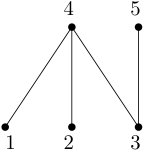 Figure 1
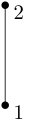 Figure 2
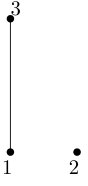 Figure 3
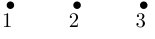 Figure 4
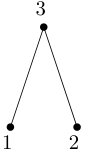 Figure 5
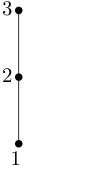 Figure 6
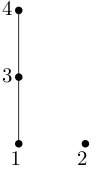 Figure 7
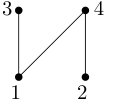 Figure 8
| Elements | Counter-example | |
|---|---|---|
| Tile | Rank | Elements | Radius | Non trivial relations of the Poset |
|---|---|---|---|---|
| 3 | , | |||
| 1 | only trivial relations |
| Tile | Rank | Elements | Radius | Combinatorial metric |
|---|---|---|---|---|
| 4 | 1 | |||
| 4 | 1 | |||
| 5 | 1 | |||
| 6 | 1 |
Peer Reviews
No public reviews on file for this paper yet. If you reviewed it on a platform where reviews are public (OpenReview, ICLR, NeurIPS, ICML), you can paste yours below so the community can read it here.
Videos
No videos yet. Explain this paper in a talk, walkthrough, or lecture? Add one.
Obtaining binary perfect codes out of tilings
Gabriella Akemi Miyamoto and Marcelo Firer A reduced version of this paper was presented at ISIT 2019.
Abstract
A tiling of the -dimensional Hamming cube gives rise to a perfect code (according to a given metric) if the basic tile is a metric ball. We are concerned with metrics on the -dimensional Hamming cube which are determined by a weight which respects support of vectors (TS-metrics). We consider the known tilings of the Hamming cube and first determine which of them give rise to a perfect code. In the sequence, for those tilings that satisfy this condition, we determine all the TS-metrics that turns it into a perfect code. We also propose the construction of new perfect codes obtained by the concatenation of two smaller ones.
I Introduction
Perfect codes have been extensively studied in the literature, due to the optimality condition imbued in its definition and to the interesting challenges they pose. Nevertheless, considering the Hamming metric, perfect codes are rare and they are classified in the case of linear binary codes: It has the same parameters of binary repetition codes with odd length, -ary Hamming codes, binary or ternary Golay codes, [21, 16]. The situation is not the same for the Lee metric. There are few results (see [17, 18, 33]), but there is not a complete characterization. Two good surveys about perfect codes in Hamming metric are [28, 22].
The most primary definition of a perfect code is the geometrical one: a code is perfect if its packing radius equals its covering radius. This definition is interesting in our setting since it depends directly on the metric invariants, which are naturally defined in general settings. To be more explicit, given a metric space and a subset , we define its packing radius as the maximal such the balls of radius centered at elements of are disjoint and its covering radius as the minimum such that the balls of radius centered at elements of covers the space . The set is called a -perfect code if . Set this, it is understandable that the study of perfect codes can be undertaken considering a more vast family of metrics and it can be valuable to do so for any metric that has some relevance in the context of coding theory.
Considering this scarcity of perfect codes under the Hamming metric, the introduction of the poset metrics by Brualdi et al. in 1995 [6] drawn the attention since, in general, there is a relative abundance of perfect codes (depending on the poset metric). The study of perfect codes in this context is done in different approaches. One of them is to fix a particular family of posets (chain, crown or hierarchical) and to classify all the perfect codes for the particular family, as done in [25, 26, 31]. Another approach is to consider a family of well known codes and asks to classify all the poset metrics which turn the code to be perfect. This is what is done, for example, with the extended Hamming and Golay codes for poset metrics (in [23, 24]) and for poset-block metrics ([2, 8]). Our approach resembles more the second one, but instead of looking at the codes, we fix the tiles.
We wish to find new families of perfect codes, but our approach is somehow different. We consider some configurations of points in the -dimensional Hamming cube (called tilings) defined by some properties that are similar to the ones that defines a perfect code in a vector space, except for one point: the tiles may not be metric balls. A priori, we fix no metric, but rather look for metrics which turns the tiles into a metric ball and we get a perfect code for this metric.
We do not consider the whole universe of metrics that can be defined on , but restrict ourselves to a (vast) family of metrics, which we call TS-metrics. The T stands for a metric that is invariant by translations, or equivalently, determined by a weight (as the Hamming metric is determined by the Hamming weight and vice-versa). The S stands for a metric that respects the support, in the sense that if are vectors such that the -th coordinate of is nonzero implies that the -th coordinate of is also nonzero, then the weight of is not greater than the weight of .
Among the TS-metrics, there are two important and large families: the poset metrics (introduced in [6]) and the combinatorial metrics (introduced in [15]).
Our main working scheme consists of the following steps:
Look for a tiling of the Hamming cube ; 2. 2.
Consider the tile and discharge all those ones that can not be a ball by considering any TS-metric; 3. 3.
For those that can not be discharged we should look for a metric that turns it into a ball; 4. 4.
We try to classify (in a sense that will be explained later) all such metrics; 5. 5.
Finally, considering the tiles that are balls, we consider them as a kind of basic bricks and try to determine some ways we can use them to build “larger” perfect codes.
The starting point of this script is to find tilings of the Hamming cube, either considering as a vector space or as a graph. Not much is known on the subject. Despite the existence of some very constructions ([19, 14]), these constructions are discharged at the second step, so that it does not push over our purpose. So, our source to start the procedure is essentially the remarkable paper [7] by Cohen, Lystin, Vardy and Zémor. In this work the authors characterized all the 193 tiles with 8 elements and also tilings where the tiles have high rank (see details in Section II-D). This will be our starting point.
This work is organized as follows: In Section II we introduce all the preliminary definitions and notations, about TS-metrics II-A, including poset and combinatorial metrics, perfect codes II-B, tiles and tilings II-C and concatenation of tilings II-D; in Section III we develop the first four steps of our program, that is, how to obtain perfect codes out of tilings; finally, the last step, that is, how to build new perfect codes out of known one is studied in Section IV.
II Preliminaries
Let be the -dimensional vector space over and let and denote the Hamming weight and the Hamming metric, respectively. The support of a vector is the set , where .
In this section we introduce the basic concepts, definitions and notations used in this work: the translation-invariant and respecting support metrics (TS-metrics) together with the two best known families of TS-metrics (poset and combinatorial metrics) in Section II-A; perfect codes and TS-perfect codes (Section II-B); tilings of and polyhedrominoes (Section II-C) and concatenation of tilings (Section II-D).
II-A TS-metrics
The Hamming metric has two important properties, expressed in the next two definitions.
Definition 1
A metric is said to be translation-invariant if
[TABLE]
for every .
It is well known and worth noting that a metric is translation-invariant iff it is defined by a weight 111A function is a weight if it satisfies the following axioms: for every ; iff ; . A weight determines a metric by defining . .
Definition 2
A weight function respects the support of vectors if
A translation-support metric (TS-metric) is a metric which satisfies both the properties, that is, it is translation-invariant and it respects the support of vectors.
In this work we restrict ourselves to TS-metrics, a restriction that is reasonable because: 1) being translation-invariant is a key property for decoding linear codes, since syndrome decoding depends exclusively on this property; 2) respecting the support of vectors is a property that is crucial in coding theory (for binary codes), once it means that making extra errors cannot lead to a better situation, in the sense that making an error on the -th coordinate of a message cannot be worse than making two errors, one on the -th coordinate and the other on the -th.
The set of all possible TS-metrics on is not well described or studied, but it contains two well understood large families that can be used as bricks out of which every TS-metric can be build (for details see [29]). Those are the families of poset and combinatorial metrics, which we now introduce.
II-A1 Poset metric
In its full generality, the poset metrics were introduced by Brualdi et al. in [6]. For more details, see a recent survey on [13].
Let be a partially ordered set (poset). An ideal in a poset is a nonempty subset such that, for and , if then . We denote by the ideal generated by .
An element of an ideal is called a maximal element of if for some implies .
We say that covers if , and there is no extra element such that . If covers , then is said the covering pair.
Definition 3
The -weight of a vector is defined by
[TABLE]
where is the cardinality of .
The -weight clearly respects support, since implies . The -distance in is the metric induced by : .
It is possible to geometrically describe a poset using the so called Hasse diagram. The Hasse diagram of a poset is the directed graph with vertex set and whose edges are the covering pairs in . The Hasse diagram is picturing assuming that, given a covering pair with then is “above” .
Example 1
Consider and the poset . The Hasse diagram of is given by
II-A2 Combinatorial metric
The combinatorial metrics were introduced by Gabidulin in [15]. For more details see [4, 12, 32].
Let be the power set of . We say that a family is a covering of a set if .
If is a covering of , then the -combinatorial weight of is the integer-valued map defined by
[TABLE]
The function is a distance, which defines the -combinatorial metric.
We denote by and , respectively, the sets of all poset and combinatorial metrics on . It is worth to noting that and are both subsets of .
II-B Perfect codes
Given a metric on , the ball of radius and center is A code is a -perfect code if its covering radius coincides with its packing radius, that is,
[TABLE]
We approach now the first of our key definitions.
Definition 4
Given a subset , we say that is a TS-ball if is a ball for some TS-metric, that is, , for some , and some . If is a -perfect code for some we say that it is a TS-perfect code. In case the radius is not taken into consideration, we say that is -perfect.
Example 2
Let be a set. Consider the poset represented by the Hasse diagram
Then, we have . Notice that is not the only poset that turns into a ball. If we consider given by the Hasse diagram in Figure 3, we would also have that .
Now, consider
[TABLE]
Given we have that .
II-C Tiles, tilings and polyhedrominoes
We are interested in building perfect codes out of tilings of the Hamming cube, so we need some basic definitions about tilings and polyhedrominoes.
A path in , with initial point and final point , is a sequence of points , where , and . The length of is defined by . A path is called a geodesic path if it is a path of minimum length between the initial and final points. It is easy to see that a path from to is geodesic iff .
Definition 5
A set is a polyhedromino if for all there is a (possibly not unique) geodesic path connecting to . We say that is a convex polyhedromino if, for every , every geodesic path connecting to is contained in .
The concept of tiling is used in many different continuous and discrete contexts, in particular in graph theory (see references [20, 1, 27]). Given a graph and a subgraph of , an -tiling in is a collection of vertex-disjoint copies of in , that is, is tiled (covered) by disjoint copies of , all the copies being identical or isomorphic in some relevant sense. The idea of tiling for finite fields is quite similar to the one in graph theory. The definition we adopt for the particular case of considers the vectorial structure of the space (we consider translated copies of a given tile) but considering the Hamming cube as a graph, it coincides with the most usual definition of tiling of a graph (see reference [3]).
Definition 6
[5]** A tiling of is a pair , where are subsets satisfying
[TABLE]
for all .
Despite the fact that the role of and are interchangeable, we shall call as a tile and as the code, since this is the role it will play in the context of coding theory. If is a polyhedromino, we say is a poly-tiling of . If is a convex polyhedromino, then is a convex-tiling.
Notice that only translated copies of are considered, which is very reasonable in the context of TS-metrics, since in this case all the translated copies of the tile are isometric. Also, as we shall see, it is also reasonable the use of polyhedrominoes to tile .
Since we are working with TS-metrics, a translation of a (convex) polyhedromino is also a (convex) polyhedromino, so we may exchange a tiling by a tiling where and . So, from here on, without loss of generality we assume that and .
It is trivial to see that given a tiling , we have that . A trivial (and not interesting) way of obtaining a poly-tiling is to consider and letting and .
Our main reference is the work [7, Cohen et al., 1995] which adopts a different, but equivalent, definition of tiling. To present it, we set the notation .
Definition 7
[7]** The pair is a tiling of if and , where both and contain the element .
We now show that definitions 6 and 7 are equivalent.
Proposition 1
Definitions 6 and 7 are equivalent.
Proof:
Let be a tiling in the sense of Definition 6. It means that , for all . Suppose there exists . It means there are and such that . It follows that and since we are considering the binary case, we have that . We note that . Since and the sum is binary, we get that , a contradiction.
The reciprocal follows in the same manner and therefore, the two definitions are equivalent. ∎
II-D Concatenation of tilings
Given and , the concatenation of the vectors and is . Similarly, for and , the set is the concatenation of the sets and .
The rank of a set is the dimension of the vector subspace spanned by , ie, ; the rank of a tiling is .
Given two tilings and of and , respectively, it was proved in [7] that the concatenation results in a tiling. If and , then .
As we shall see in Section IV, if and give rise to perfect codes on and , the concatenated tiling also gives rise to a perfect code on .
III Obtaining perfect codes out of tilings
Tilings are frequently studied in the context of graph theory and the Hamming cube is a particular case of a graph. Tilings and perfect codes are two relevant research problems, that although distinct are closely related. We start this part of the work by establishing this relation and then proceed as follows:
In Section III-A, we consider all the equivalence classes of tilings where , which were characterized in [7] and we determine each of those is a ball of a -metric, giving rise to a perfect code ; in Section III-B, we present necessary and sufficient conditions for a tiling of maximal rank (as presented in [7]) to be a TS-ball; in Section III-C given a tiling , with , we show how simple concatenations can lead tilings with , and out of a -metric on that turns into a perfect code we define a metric on that does the same to ; finally, in Section III-D we classify all TS-metrics that turn into a ball or equivalently, turn into a TS-perfect code.
The next proposition establishes a connection between tilings and perfect codes.
Before we continue, we need some notations. We denote by the (unique in a binary space) vector in such that and call the standard basis of .
Proposition 2
Given a tiling of , suppose that for some . Then:
* is a polyhedromino;* 2. 2.
* is a -perfect code.*
Proof:
We remark that the first part of the proposition demands the metric to respect support, while the second part demands it to be translation-invariant.
Since is a -ball for some metric , we have that for every , if , then . We need to prove that there is a path where .
If the problem is trivial, at every step we just adjoin a different vector of the basis which is contained in , that is, we just define .
If , then for every we have that and . So, we choose and set .
We remark that in both cases we have that , since either or with and we assumed that is a ball of a metric which respects support.
Now we proceed as before, considering instead of . We set , where if and otherwise.
Since at each step we have that we get a geodesic path from to contained in and therefore, is a polyhedromino. 2. 2.
We have that is a ball and since is a translation-invariant metric, is also a ball. Since the pair is a tiling of and is a ball for all , then is a -perfect code.
∎
In the case where the conditions of the proposition holds, we say that the tiling determines a TS-perfect code.
Example 3
We consider the trivial repetition code . This is a -perfect code (relatively to the Hamming metric) for every odd . If is any poset having a unique maximal element then is a -perfect code (independently of ). If we assume that the maximal element is , then and are the two disjoint metric balls. It is important to remark that, as we have just seen, may be a -perfect code and also to be a - perfect code for a different poset metric. However, in this case, . In our example of the trivial repetition code, for odd we have while .
The rest of this section is based on Proposition 2 and in the work [7], where the authors classified tiles of that are either “small” (and here small means ) or of maximal rank. We remark that, since a tiling satisfies , by a “small” tile we mean a tile with cardinality or .
III-A Classifying small tiles that determine TS-perfect codes
We start this point by giving a single example of many ways how to turn a tile into a metric ball.
Example 4
Let be a tile of . Then, considering the posets, represented, respectively, by the Hasse diagrams
we have that .
We start considering the possibilities for “very small” tiles, that is, tiles with or elements.
Proposition 3
Let be a TS-ball with or elements. Then, is one of the following:
[TABLE]
Proof:
All convex polyhedrominoes of size or are the listed ones: and . Hence, by Proposition 2 these are all the possible candidates for a TS-ball with or elements. We need to show that these are indeed balls of some TS-metric. In fact, each one may be realized as a ball of a poset metric, determined, respectively, by the non-trivial sets of relations:
[TABLE]
∎
Notice that, if the condition of respecting support was not required, there would exist other polyhedrominoes with 2 or 4 elements. For example, is a polyhedromino, but it is not a ball, since does not respect support.
In [7] there is a complete classification of small tiles of . In that work, the authors consider tilings of assuming that and that has full rank, in the sense that the linear space spanned by has dimension . Considering all the possibilities presented in this classification, there is a total of different tiles. However, many of those tiles are equivalent, in the sense that they can be obtained one from the other by a permutation of the coordinates. To be more precise, two tiles are said to be equivalent if there is a permutation such that , where the action is on the coordinates of each element of the tile: for we have . By carefully looking at each case and finding an appropriate permutation, it is possible to reduce the list to equivalence classes, which are presented in the next Proposition. The proof is lengthly (it considers cases) but simple, so it is omitted in this work. The details, that is, the list of tiles and permutations, can be found in [30], which should be considered as an appendix of this work.
Proposition 4
Every tile presented in [7], with is equivalent to one of the tiles in Tables I, II and III.
If we wish to determine which of the 193 tiles presented in [7] give rise to a TS-perfect code, Proposition 5 ensures that it is enough to check it for the 15 cases presented in the tables I, II and III.
Proposition 5
Let be a tile and a permutation of and let . Then iff , where is the metric determined by the weight , defined by .
The proof is needles, since is, by definition, the metric induced by the map , a standard procedure.
The list of tiles representing the equivalence classes is divided into three separated tables because they play different roles.
Table I contains all tiles that cannot be a ball for any TS-metric. We remark that, if is a ball for some TS-metric and , then for all such that . This simple remark makes possible to eliminate all the tiles of Table I, since they do not satisfy this condition. As an example, consider the tile
[TABLE]
in the first line of the table. Note that but , what leads to a contradiction: If was to be a metric ball, we would have .
On each row of the table, in the last column we present a vector which will lead to a similar contradiction.
The remaining tiles are presented in Tables II and III. They are denoted by , where and is just a counting index. These six tilings lead to perfect codes since the basic tiles can be realized as a metric ball of a TS-metric: The tiles on Table II are balls of some poset metric while the tiles in Table III are realized by combinatorial metrics. The proof of this fact is constructive, we just present (in the last column of each table) a poset structure (actually its non-trivial relations) or an appropriate covering.
As a consequence, we have the following:
Theorem 1
A tile of rank and cardinality is a metric ball of some TS-metric iff it is equivalent to a tile presented in Table II or III.
Due to Proposition 2, Theorem 1 concerning tilings can be re-stated as a result about the existence of perfect codes.
Theorem 2
Given a tiling of , where has rank and cardinality , the code is a TS-perfect code iff is equivalent to a tile presented in Table II or Table III.
Proof:
It follows straightforward from Theorem 1 and Proposition 2. ∎
Remark 1
The tiles listed in Tables II and III are considered as subsets of , where . In Section III-C we show a process used to extend them to , .
III-B Classifying tiles with large rank that determine TS-perfect codes
In the previous section, we presented small tilings of the binary space. Despite the fact that the tiles had full rank, the rank was always small, since . Now, we give necessary and sufficient to a tile of rank and cardinality to determine a TS-perfect code. For that, we use a proposition proved in [7, Proposition 4.5] which states that a set , for some with is a tile iff . We shall determine a necessary and sufficient condition for it to define a TS-perfect code.
Proposition 6
Suppose that is a tiling of . Then, there is a TS-metric that turns it into a perfect code iff .
Proof:
If , then cannot be a ball in a metric that respects support, since in this case there would be some subset with and the vector defined by is not contained in .
For , we have that , for some . We define and we have that and, by Proposition 2 it follows that is a -perfect code. ∎
III-C Extending tilings from to
In Sections III-A and III-B, we considered tilings of where . Since can be seen as a linear subspace of for , we can extend that to a tiling of . We denote the null element in and let and . As can be found in [7] we have that is a tiling of . We remark that since we are concatenating with the null space, the cardinality and rank of are the same as those of ( and ).
As a code construction, this is a rather not interesting situation. Nevertheless, in Section IV we shall present some non-trivial concatenations. For this reason, we shall see here that a TS-metric which turns into a perfect code can be extended to do the same for the concatenated code, that is, we can extend it to a TS-metric which turns into a metric ball in .
Theorem 3
Given , , there is such that .
Proof:
Given a weight on , let . We define, for ,
[TABLE]
It is not difficult to see that is a weight. Let and be the metrics determined by and respectively. It is not difficult to prove that respects the support of vectors iff does it. Moreover,
[TABLE]
for every . In other words, if determines a TS-perfect code, so does . ∎
Remark 2
In the two cases considered in Table II, where the metrics were determined by a poset over , it is possible to extend it to a metric defined by a poset over , leading to a more natural construction, as follows: is defined by the (non-trivial) relations and for all . The poset is defined by the (non-trivial) relations for all . These are actually the minimal poset metrics which extend the original ones and it is not difficult to classify all the poset extensions that do it.
III-D Classifying the TS-metrics which turn a tiling into a perfect code
If determines a perfect code, by definition there is that turns into a metric ball. Actually, there are infinitely many such metrics (takes, for example, any positive multiple of ), so when we wish to classify all such metrics, we mean up to an adequate equivalence relation. The most natural equivalence relation in the context of coding theory is to say that two metrics on are equivalent if they determine the same minimum distance decoding for every code and every received message . To be more precise:
Definition 8
Two metrics (or distances) and defined over are decoding equivalent, denoted by , if
[TABLE]
for any code and any .
It is not difficult to see that iff , for all . Details about this equivalence relation can be found in [10] and [11].
Let , be the distance matrix of a metric , defined by . Our goal is to determine necessary and sufficient conditions (on the matrix ) to determine a TS-metric that turns a tiling into a perfect code. This is what is done in the next theorem.
Theorem 4
Let be a tiling of . Let be a TS-metric for which . Let be a matrix, with , satisfying the following conditions:
- C1)
* for .* 2. C2)
* for .* 3. C3)
* for all .*
Then, the following holds:
- i)
The matrix defines a distance which is decoding equivalent to a metric that is a translation-invariant metric. 2. ii)
The tile is a metric ball of the metric , to be more precise, . 3. iii)
It is possible to choose the values of for in such a way that the metric . 4. iv)
Any TS-metric which turns into a metric ball is equivalent to a metric described by a matrix satisfying conditions C1, C2, C3.
Proof:
- i)
Since we are considering the binary space, we have that , then is symmetric. Moreover, conditions C1 and C2 ensures the positivity condition on the first row of the matrix. Condition C3 ensures the positivity on the other rows of . So, we have that determines a distance. But on a finite space, any distance is equivalent to a metric (see [9, Chapter 1.1]) and we have that defines a distance which is decoding-equivalent to a metric . The translation invariance follows from the fact that the first row determines all the others (Condition C3). 2. ii)
For all , we have since . Then, condition C1 ensures that for all and condition C2 ensures for all , therefore . 3. iii)
This item is made constructively. For all , if then take . Then, respects support. On item i), it was proved that is a translation-invariant metric, thus . 4. iv)
It follows from the algorithm presented in [10] to obtained a reduced form of a metric that any two metrics satisfying those conditions have the same reduced form and hence are equivalent.
∎
IV Concatenation of tilings: extending perfect codes to larger dimensions
In this section, we present some constructions to obtain new perfect codes out of a given pair of perfect codes. The main tool to achieve this goal is the concatenation of tiles. Notice that the extension made in Section III-C is a particular (and trivial, concatenation with the null space) case of what will be presented in this section.
Since we are working with poly-tilings, the first step is to prove that the concatenation of poly-tilings results in a poly-tiling. That is what is stated in the next two results.
Proposition 7
Let , and let be the concatenation of and . Then, is a polyhedromino iff and are polyhedrominoes.
Proof:
Suppose that and are polyhedrominoes. Let , and . We need to prove that there exists a geodesic path connecting to . Since is a polyhedromino there exists a geodesic path connecting to . So, we can use to connect to in the following way: define . We remark that a path is not only a set of points in the Hamming cube, but an ordered set of points. Using this set notation for we are actually considering on it the order determined by . Recalling that a geodesic path is characterized by the fact that its length equals the Hamming distance between any pair of its points, since is a geodesic path then so is . Hence, we have that is a geodesic path connecting to . Similarly, since is a polyhedromino, there exists connecting to . Define , then connects to . Defining we have that is a geodesic path connecting to and thus is a polyhedromino.
Suppose now that is a polyhedromino. By definition, we have . Consider , then there exists such that . Since is a polyhedromino, there exists , connecting to . Define and use it to connect to . Then, we have is a polyhedromino. In the same way we can prove that is a polyhedromino. ∎
Remark 3
If and are convex polyhedrominoes, the concatenation is not, necessarily, a convex polyhedromino. For example, let be convex polyhedrominoes in . Consider . Notice that hence every path connecting to with is a geodesic path. Consider defined by . We have (then is a geodesic path), but and thus . Therefore, is not a convex polyhedromino. However, the converse is true and it is stated in the next proposition.
Proposition 8
Let . If is a convex polyhedromino then and are convex polyhedrominoes.
Proof:
Proposition 7 ensures that both and are polyhedrominoes, we just need to prove the convexity. We let and let be a geodesic path connecting to . We need to prove that . We let and define . It is immediate to see that is a geodesic path connecting to . Since we are assuming that is convex, we have that and it follows that . The case for follows in the same manner, by considering a path with and . ∎
In [7, Theorem 7.5], it was shown that given two tilings and of and , respectively, the concatenation is a tiling of . The same holds for poly-tilings. From this and Proposition 7, we have the following:
Corollary 1
Let and be poly-tilings of and , respectively. Then, is a poly-tiling of iff and are poly-tilings.
IV-A Extension of TS-perfect codes
We proved (Corollary 1) that the concatenation of two poly-tilings results in a poly-tiling. But, what happens in the case of convex poly-tilings, which give rise to perfect codes? If two tilings determine perfect codes, then the concatenation will be a perfect code? The answer is affirmative and we present two different constructive results. The first one, in Theorem 5, is in a more restrictive setting, where we consider the concatenation of tiles that are balls of the same radius of two arbitrary TS-metrics. In Theorem 6 we may consider balls of different radii. Some results are valid only for combinatorial metrics and they will be show in the next section.
Notice that the concatenation of two sets can be seen as a direct product between them. Then, it would be natural to consider the product metric. But, in a general case, the concatenated tile is not a metric ball in the product metric. For that reason, we define other metrics to accomplish our goal.
From here on, given , express , where , .
Lemma 1
Consider two metrics defined on and , respectively, and define . Then is a metric on and , implies .
Proof:
The proof follows directly from the definition of a metric. The only sensitive points to pay attention are the following: 1) A translation on by a vector can be seen as the composition of the translation by the vector followed by the translation by , where and ; 2) . ∎
Now we consider the concatenation of two balls with same radius.
Theorem 5
Let be poly-tilings of and , respectively. Suppose that and , where are TS-metrics. Let . Then, is a poly-tiling of and .
Proof:
By Corollary 1 we have that is a poly-tiling. If then , since and . Thus, . If we have that or , so that or . But this implies that and . Therefore, . ∎
Example 5
Let be a tiling of , where
[TABLE]
The poset can be represented by the Hasse diagram
Notice that, . That is, is a -perfect code.
Let be a tiling of , with
[TABLE]
**
Given we have , which means that is a -perfect code.
The concatenation is given by
[TABLE]
Notice that and , for all .
Moreover, for all we have
[TABLE]
and, for .
It follows that . In other words, is a -perfect code.
We have just shown in the previous theorem that the concatenation of two TS-balls (which are poly-tilings) of same radius (possibly determined by different metrics) is a TS-ball. A natural question arises: is it possible to have different radii and be a ball? To answer this question we start constructing a TS-weight, made out of a conditional sum of weights.
Lemma 2
Let and be TS-weights on and , respectively, and let be the TS-metric determined by , . Given , let , and , where is the metric determined by . We define the -sum
[TABLE]
Then, is a weight and it respects support.
Proof:
- i)
Given . If , then . Otherwise, , which implies that , for every . 2. ii)
Let . Since , then . Conversely, if then and . Since and are weights, we have . 3. iii)
Given . If then .
Now, suppose . Then .
To complete the proof, it remains to show that respects support.
Let such that . If then and . Since and , we have that .
If and , then .
Finally, if then .
Therefore, is a weight which respects the support of vectors. ∎
Theorem 6
Let be TS-perfect codes. Then, is a TS-perfect code.
Proof:
Given that are TS-perfect codes, there are such that the balls and , for some are such that and are convex poly-tilings of and respectively. We denote by the weights determined by respectively.
Let be the concatenated tiling. Corollary 1 ensures that is a poly-tiling of . Let be defined as in Lemma 2. The definition of ensures that . The lemma ensures that is the ball of radius of the metric determined by . Since this is a TS-metric, Proposition 2 ensures that is a -perfect code. ∎
IV-B Concatenation of balls: the case of combinatorial metrics
In the previous section, it was proved that, given two balls of two TS-metrics, its concatenation is also a metric ball of a third TS-metric, obtained by a conditional sum of the given ones. In this section, we prove that if the original metrics are combinatorial ones, also the former metric (used to turn the concatenated code to be perfect) can be taken as a combinatorial metric.
Proposition 9
Let and be poly-tilings of and , respectively. Suppose that and . Then, the concatenation is a poly-tiling of and , where .
Proof:
First of all, we note that, for , we have that , and since is a covering of , we have that is a covering of .
By Corollary 1, we have is a poly-tiling of and we need to prove that .
Given let us write , where . Notice that and , since . In other words, there exists such that and is a covering of and there is such that and is a covering of . Let us write for , possibly having some of the in case . There is some abuse of notation in here, since we are admitting the possibility that more than one element of the family to be the empty set, but this shall cause no harm. Now, we notice that and it follows that
[TABLE]
that is, it is possible to use elements of to cover , thus .
Let and write . Since , there are such that
[TABLE]
For each we can write where , for . But can be expressed as the disjoint union and implies that and . It follows that and . ∎
Proposition 9 demands that both the original perfect codes to have the same radius. But what happens when the radii are different? In this case, an alternative is to define a new covering that reduces any ball into a ball with radius 1.
Definition 9
Let be a covering of and be a ball, . The -covering of is defined as
[TABLE]
It is pretty intuitive that turns into a ball of radius . Nevertheless, we prove it in the next lemma.
Lemma 3
Let , with positive. Then, .
Proof:
Given , it is clear that , since , hence .
Let us now consider . Then, for , there is such that . If we have that . If this is not the case, there is such that . But the metric respects the support and since and , we have that also , that is, . ∎
Proposition 10
If is a -ball, then is a -ball, where .
Proof:
By Lemma 3 we have that if and then and . By Proposition 9 we have is a -ball with radius 1, that is, . ∎
The tool used in Definition 9 is a way to solve the concatenation problem when two balls have distinct radius, because Proposition 9 is applicable only to the case when the balls have the same radius. This is a somehow artificial construction and we tried to make it better by reducing the largest radius in order to make it fits the smaller. However, this is not always possible if the smaller radius is greater than , as we can see in the next example.
Example 6
Let be a covering of , which defines the Hamming metric on . Suppose that is a cover of such that .
Let us consider a vector such that and . This implies the existence of a vector with , and .
The vector also has Hamming weight (the -weight) equals to . Assuming that we get that there is a vector with , and or .
Let . We have that but equals or , according to the -weight of being equal to or .
Acknowledgment
Gabriella Akemi Miyamoto was supported by Capes (finance code 001) and CNPq. Marcelo Firer was partially supported by Sao Paulo Research Foundation, (FAPESP grant 2013/25977-7) and CNPq.
The reference list from the paper itself. Each links out to its DOI / PubMed record.
- 1[1] N. Alon and R. Yuster. H-factors in dense graphs . J. Combin. Theory Ser. B 66, pp. 269–282, n. 2, 1996.
- 2[2] M. M. S. Alves, L. Panek, and M. Firer. Error-block codes and poset metrics . Adv. Math. Commun., pp. 95, vol. 2, 2008.
- 3[3] J. Balogh, A. Treglown, and A. Z. Wagner. Tilings in Randomly Perturbed Dense Graphs . Combinatorics, Probability and Computing, Cambridge University Press, vol. 28, pp. 159–176, 2019.
- 4[4] M. Bossert and V. Sidorenko. Singleton-type bounds for blot-correcting codes . IEEE Trans. Inf. Theory 42 (3), pp. 1021–1023, 1996.
- 5[5] G. Branko and G. C. Shephard. Tilings and Patterns . W. H. Freeman & Co., 1986.
- 6[6] R. A. Brualdi, S. Graves, and K. M. Lawrence. Codes with a poset metric . Discrete Mathematics, pp. 57–72, v. 147, 1995.
- 7[7] G. Cohen, S. Litsyn, A. Vardy, and G. Zémor. Tilings of binary spaces . SIAM J. Discrete Math. 9-3, pp. 393-412, 1996.
- 8[8] B.K. Dass, N. Sharma, and R. Verma. Perfect codes in poset spaces and poset block spaces . Finite Fields Appl., pp. 90-106, vol. 46, 2017.