Absence of magnetic thermal conductivity in the quantum spin liquid candidate EtMe3Sb[Pd(dmit)2]2 -- revisited
J. M. Ni, B. L. Pan, Y. Y. Huang, J. Y. Zeng, Y. J. Yu, E. J. Cheng,, L. S. Wang, R. Kato, S. Y. Li

TL;DR
This study revisits the quantum spin liquid candidate EtMe3Sb[Pd(dmit)2]2, revealing no magnetic field-dependent thermal conductivity despite a finite specific heat, challenging previous claims of mobile gapless excitations like spinons.
Contribution
The paper provides new ultralow-temperature thermal conductivity data showing absence of magnetic thermal transport, prompting a reassessment of the ground state of the material.
Findings
Finite specific heat linear term observed
No residual linear thermal conductivity detected
Thermal conductivity unaffected by magnetic field
Abstract
We present the ultralow-temperature specific heat and thermal conductivity measurements on single crystals of triangular-lattice organic compound EtMeSb[Pd(dmit)], which has long been considered as a gapless quantum spin liquid candidate. In specific heat measurements, a finite linear term is observed, consistent with the previous work [S. Yamashita , Nat. Commun. {\bf 2}, 275 (2011)]. However, we do not observe a finite residual linear term in the thermal conductivity measurements, and the thermal conductivity does not change in a magnetic field of 6 Tesla. These results are in sharp contrast to previous thermal conductivity measurements on EtMeSb[Pd(dmit)] [M. Yamashita Science {\bf 328}, 1246 (2010)], in which a huge residual linear term was observed and attributed to highly mobile gapless excitations, likely the spinons of a quantum spin…
Click any figure to enlarge with its caption.
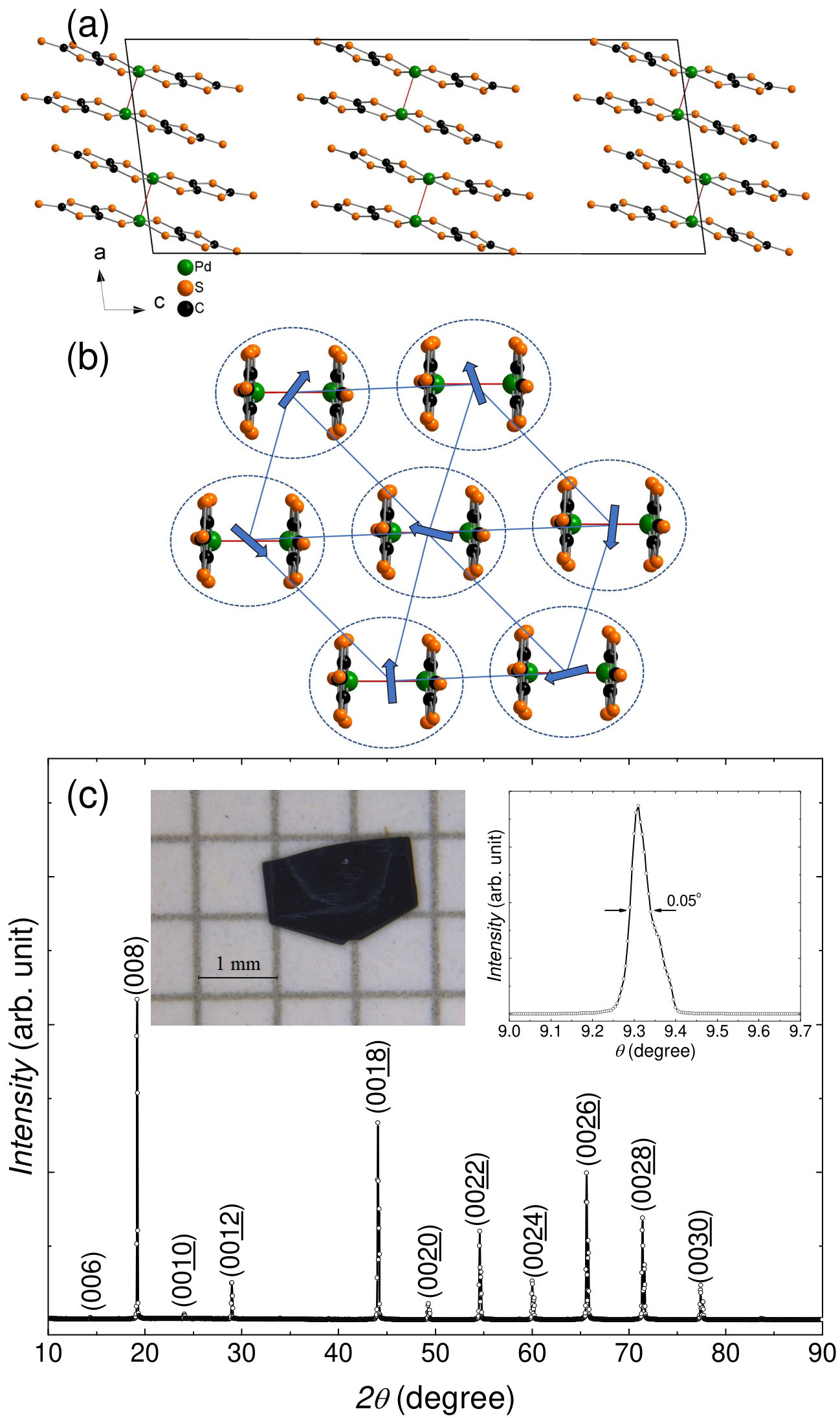 Figure 1
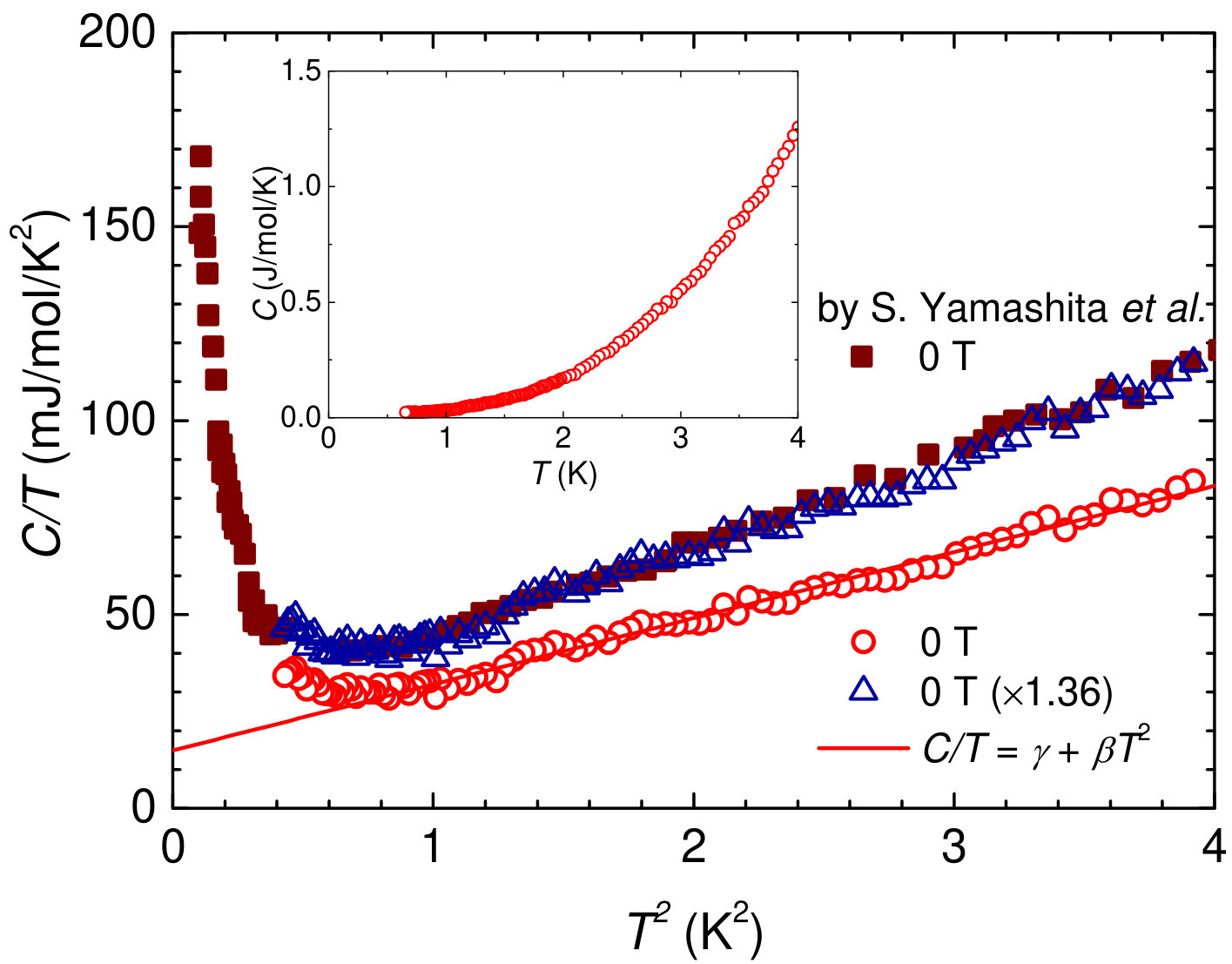 Figure 2
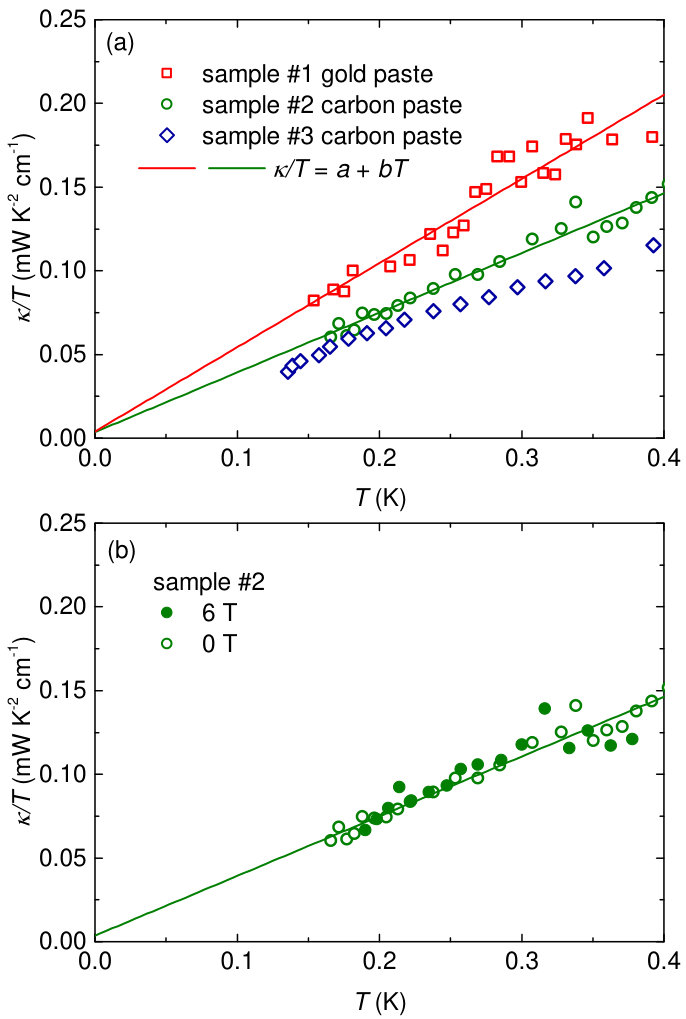 Figure 3
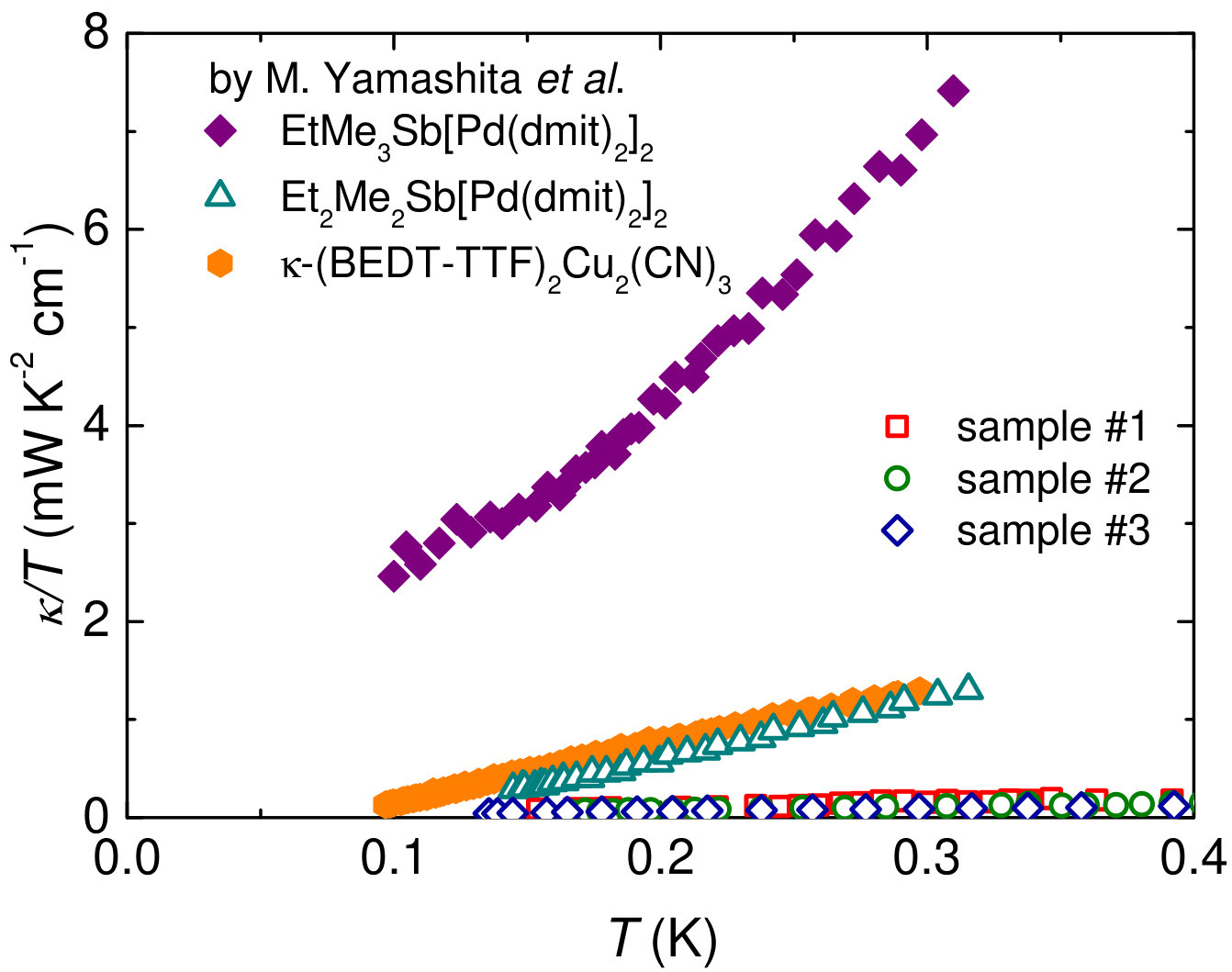 Figure 4
Peer Reviews
No public reviews on file for this paper yet. If you reviewed it on a platform where reviews are public (OpenReview, ICLR, NeurIPS, ICML), you can paste yours below so the community can read it here.
Videos
No videos yet. Explain this paper in a talk, walkthrough, or lecture? Add one.
Absence of magnetic thermal conductivity in the quantum spin liquid candidate EtMe3Sb[Pd(dmit)2]2 – revisited
J. M. Ni,1 B. L. Pan,1 Y. Y. Huang,1 J. Y. Zeng,1 Y. J. Yu,1 E. J. Cheng,1 L. S. Wang,1 R. Kato,2 and S. Y. Li1,3,∗
1State Key Laboratory of Surface Physics, Department of Physics, and Laboratory of Advanced Materials, Fudan University, Shanghai 200438, China
2RIKEN, Condensed Molecular Materials Laboratory, Wako 351-0198, Japan
3Collaborative Innovation Center of Advanced Microstructures, Nanjing 210093, China
Abstract
We present the ultralow-temperature specific heat and thermal conductivity measurements on single crystals of triangular-lattice organic compound EtMe3Sb[Pd(dmit)2]2, which has long been considered as a gapless quantum spin liquid candidate. In specific heat measurements, a finite linear term is observed, consistent with the previous work [S. Yamashita , Nat. Commun. 2, 275 (2011)]. However, we do not observe a finite residual linear term in the thermal conductivity measurements, and the thermal conductivity does not change in a magnetic field of 6 Tesla. These results are in sharp contrast to previous thermal conductivity measurements on EtMe3Sb[Pd(dmit)2]2 [M. Yamashita Science 328, 1246 (2010)], in which a huge residual linear term was observed and attributed to highly mobile gapless excitations, likely the spinons of a quantum spin liquid. In this context, the true ground state of EtMe3Sb[Pd(dmit)2]2 has to be reconsidered.
Quantum spin liquid (QSL) states have been one of the central issues in condensed matter physics since the seminal proposal by Anderson anderson73 ; anderson87 . Due to the strong geometrical frustration and quantum fluctuations, the spins do not order even down to zero temperature and remain highly entangled, and fractionalized excitations called spinons are the most pronounced characteristic in QSL states balents10 ; savary17 ; zhourmp . The detection and study of these excitations are of great importance to give information about the nature of QSL states. As the prototype of a QSL in Anderson’s resonating valence bond (RVB) model anderson73 , the spin 1/2 triangular-lattice Heisenberg antiferromagnet is a platform for searching the QSL candidates. Among those triangular-lattice QSL candidates, the two organic compounds -(BEDT-TTF)2Cu2(CN)3 and EtMe3Sb[Pd(dmit)2]2 seem to be promising ETprl03 ; ETprb06 ; ETC ; ETk ; dmitJPCM ; dmitprb08 ; dmitk ; dmitNMR1 ; dmitNMR2 ; dmitC ; dmittorque , while the inorganic compound YbMgGaO4 is under hot debate YMGOsr ; YMGOneutron1 ; YMGOneutron2 ; YMGOk ; YZGO .
EtMe3Sb[Pd(dmit)2]2 (Me = CH3, Et = C2H5, dmit = 1,3-dithiole-2-thione-4,5-dithiolate) is a compound of the series of layered organic salts ’-X[Pd(dmit)2]2, where X is a nonmagnetic cation, and Pd(dmit)2 is highly dimerized forming the spin 1/2 anion [Pd(dmit)2]2- katoreview04 ; katoreview11 . Each Pd(dmit)2 layer is parallel to the plane and is separated by the EtMe3Sb+ cation layer, as seen in Fig. 1(a) (cation layers are not shown for clarity). The dimerized Pd(dmit)2 are arranged to form a quasi-triangular lattice in the layer, causing a strong geometrical frustration of spins on the dimers, illustrated in Fig. 1(b). No signature of long range magnetic order was observed down to about 20 mK by nuclear magnetic resonance (NMR) measurements dmitNMR1 ; dmitNMR2 , in spite of the large effective antiferromagnetic exchange interactions of the order of 250 K dmitprb08 . However, inhomogeneity gradually develops on cooling dmitNMR1 ; dmitNMR2 . As for the study of excitations in this putative QSL candidate, the spin-lattice relaxation was found to follow the temperature dependence below 1 K, indicating a nodal spin gap dmitNMR1 ; dmitNMR2 . In contrast, a finite linear term of 19.9 mJ K*-2* mol*-1* was observed in the specific heat measurements, implying the existence of gapless fermionic excitations dmitC . The gapless nature was further confirmed by the torque magnetometry, which revealed residual paramagnetic susceptibility comparable to that in metal dmittorque .
Ultralow-temperature thermal conductivity measurement is a very useful technique to study the low-lying excitations, even for charge-neutral quasiparticles. The previous thermal conductivity work of EtMe3Sb[Pd(dmit)2]2 single crystals by M. Yamashita reported the observation of a huge residual linear term of 2 mW K*-2* cm*-1*, which is attributed to highly mobile gapless fermionic excitations with the mean free path as long as 1000 inter-spin distances dmitk . This is a strong evidence for the existence of a spinon Fermi surface in such a QSL candidate, stimulating a number of theoretical studies savary17 ; zhourmp . The enhancement of above 2 T was also observed dmitk . However, for other two triangular-lattice QSL candidates -(BEDT-TTF)2Cu2(CN)3 and YbMgGaO4, no residual linear terms were found in thermal conductivity measurements ETk ; YMGOk , although they also display gapless nature in specific heat measurements (i.e. a linear term of 15 mJ K*-2mol-1* in -(BEDT-TTF)2Cu2(CN)3 and a power-law temperature dependence in YbMgGaO4, respectively) ETC ; YMGOsr ; YMGOk . One may raise the question why EtMe3Sb[Pd(dmit)2]2 is so different from other triangular-lattice QSL candidates. Therefore, as the vital experimental foundation of many theoretical works, it is desired to revisit these thermodynamic and transport properties of EtMe3Sb[Pd(dmit)2]2.
In this Letter, we report the ultralow-temperature specific heat and thermal conductivity measurements on high-quality EtMe3Sb[Pd(dmit)2]2 single crystals. A linear term of 14.9 mJ K*-2* cm*-1* is found in the specific heat, which is consistent with the previous work dmitC . However, it is unsuccessful to reproduce previous thermal conductivity results reported in Ref. dmitk . Negligible residual linear term is observed, implying the absence of mobile gapless fermionic excitations. This raises the question about the true ground state of this triangular-lattice QSL candidate.
Single crystals of EtMe3Sb[Pd(dmit)2]2 were grown by air oxidation of (EtMe3Sb)2[Pd(dmit)2] (60 mg) in acetone (100 ml) containing acetic acid (7-10 ml) at low temperatures in the range of -11 to 5 ∘C, provided by the same group at RIKEN as in Ref. dmitk . The photo of a typical sample is shown in the left inset of Fig. 1(c). The x-ray diffraction (XRD) measurement was performed on a EtMe3Sb[Pd(dmit)2]2 sample by using an x-ray diffractometer (D8 Advance, Bruker), and determined the natural surface to be (00) plane, as seen in Fig. 1(c). The quality of EtMe3Sb[Pd(dmit)2]2 single crystals was checked by the x-ray rocking scan, shown in the right inset of Fig. 1(c). The full width at half-maximum (FWHM) is only 0.05∘, indicating the high quality of the samples. The specific heat of a sample with 0.4 0.1 mg was measured by the relaxation method in a physical property measurement system (PPMS, Quantum Design) equipped with a 3He cryostat. Samples for thermal conductivity measurements have the dimensions of 1.34 0.60 0.05 mm3 for sample 1, 2.00 1.17 0.05 mm3 for sample 2, and 1.34 0.88 0.02 mm3 for sample 3, respectively. Note that the samples used for thermal conductivity measurements come from three different batches. All samples were prepared in almost same conditions as samples in Ref. dmitk . As for sample 3, especially, the conditions were the same including the reagents. For EtMe3Sb[Pd(dmit)2]2 single crystals, no change in properties was observed with time. Contacts of sample 1 were made by gold paste (PELCO Conductive Gold Paste, Product No 16022) with the thinner of Diethyleneglycol monoethyl ether. Contacts of samples 2 and 3 were made by carbon paste (Dotite paint XC-12 from JEOL) with the thinner of Dimethyl Succinate. The thermal conductivity was measured in a dilution refrigerator, using a standard four-wire steady-state method with two RuO2 chip thermometers, calibrated against a reference RuO2 thermometer. Samples were cooled slowly from room temperature to the lowest temperature for 2 days in order to avoid cracks. Magnetic fields were applied perpendicular to plane.
The temperature dependence of the specific heat of EtMe3Sb[Pd(dmit)2]2 single crystal from 0.65 to 4 K at zero field is shown in the inset of Fig. 2. The main panel of Fig. 2 plots the vs below 2 K. The upturn at low temperatures is attributed to the Schottky anomaly which comes from the rotational tunneling of methyl groups in the cation layer dmitC . can be well fitted by the formula = + \beta$$T^{2} between 0.9 K and 2 K, giving = 14.9 0.5 mJ K*-2* mol*-1* and = 17.1 0.2 mJ K*-4* mol*-1*. This behavior is similar to that in Ref. dmitC , which is also plotted Fig. 2. Actually, if we scale our data by a factor of 1.36, they are on top of the curve in Ref. dmitC . Thus the previous specific heat result is well reproduced by us, and the slight difference is likely due to the uncertainty in determining the mass of samples. The finite linear term in the specific heat, which is unexpected for an insulator, was considered as the evidence of gapless excitations with fermionic statistics dmitC .
Since specific heat result may be contaminated by nuclear contributions ETC ; dmitC , the thermal transport measurement, a tool insensitive to localized excitations, would be more advantageous to identify the low-energy excitations in a QSL candidate. Figure 3(a) presents the in-plane zero-field thermal conductivity of EtMe3Sb[Pd(dmit)2]2 single crystals with two kinds of contacts, respectively made with gold paste and carbon paste. The thermal conductivity of an insulating QSL candidate at very low temperatures usually can be fitted by = + , in which the two terms and represent the contributions from itinerant gapless fermionic magnetic excitations (if they do exist) and phonons, respectively. For phonons, the power is typically between 2 and 3, due to the specular reflections at the sample surfaces fit1 ; fit2 . As can be seen in Fig. 3(a), contrary to Ref. dmitk where shows temperature dependence, a linear fitting = + is more suitable for our samples 1 and 2. The fitting gives the value of of 0.004 0.009 mW K*-2* cm*-1* and 0.004 0.005 mW K*-2* cm*-1* for sample 1 and sample 2, respectively. Considering the experimental error bar of 5 W K*-2* cm*-1*, the of both samples at = 0 T are virtually zero. To further confirm our results, we also measure sample 3 prepared from the same conditions including the reagents as those in Ref. dmitk . The behavior is very similar to sample and . Due to the slightly sublinear temperature dependence, it extrapolates to a small negative value of . Therefore previous huge of EtMe3Sb[Pd(dmit)2]2 in Ref. dmitk can not be reproduced in any of our samples.
The in-plane thermal conductivities of sample 2 at = 0 T and 6 T are plotted in Fig. 3(b). They basically overlap with each other. In other words, the magnetic field barely has any effect on the thermal conductivity of EtMe3Sb[Pd(dmit)2]2 up to 6 T. This magnetic field dependence, again, is in stark contrast to the previous measurements that report a gradual increase of thermal conductivity above approximately 2 T below 1 K dmitk . For example, the observed magneto-thermal conductivity TT is larger than 20% at 6 T at 0.23 K, which was suggested as a consequence of additional excitations with a spin gap closing at 2 T dmitk . Due to the coexistence of gapless and gapped excitations, a type-II spin liquid was proposed for EtMe3Sb[Pd(dmit)2]2 RPP11 . Considering the negligible field effect presented here, one may reexamine the existence of this gapped excitations and the proposal of type-II spin liquid.
Figure 4 displays the comparison of our thermal conductivity data with the data of EtMe3Sb[Pd(dmit)2]2 and Et2Me2Sb[Pd(dmit)2]2 in Ref. dmitk and -(BEDT-TTF)2Cu2(CN)3 in Ref. ETk . The absolute value of our data are much smaller than that in Ref. dmitk , even 10 times smaller than the nonmagnetic reference compound Et2Me2Sb[Pd(dmit)2]2 dmitk . The lack of , negligible field effect in = 6 T, and very small absolute value, all these results demonstrate that the thermal conductivity is entirely contributed by phonons in our samples, and the phonons are strongly scattered. This is supported by the estimation of the mean free path of phonons by the kinetic formula = \frac{1}{3}$${C_{p}}$$v_{p}$$l_{p}, where = (2\pi^{2}k_{B}/5)$$(k_{B}T/\hbar v_{p})^{3} = is the phonon specific heat and is the velocity of phonons. With = 17.1 mJ K*-4* mol*-1* obtained by our specific heat measurement, is estimated as 1.55 103 m/s, giving of sample 3 only about 5.88 m at 0.3 K. Usually when the sample enters boundary scattering limit at sub-Kelvin temperature, should only be limited by the physical dimensions of the sample, resulting in a temperature independent = 2, where is the cross-sectional area of the sample fit2 . For sample 3, the boundary limited is 150 m. This is 25 times larger than estimated from our thermal conductivity data, and consistent with the fact that the thermal conductivity of magnetic EtMe3Sb[Pd(dmit)2]2 is 10 times lower than the nonmagnetic Et2Me2Sb[Pd(dmit)2]2. It is likely that the phonons are strongly scattered by those frustrated spins in EtMe3Sb[Pd(dmit)2]2. Note that in another triangular-lattice system, the thermal conductivity of magnetic YbMgGaO4 is about half of the nonmagnetic LuMgGaO4, again showing the scattering of phonons by the spins YMGOk . There is a difference in the field dependence of the phonon thermal conductivity. In YbMgGaO4, is enhanced by about 25% in 5 T, due to the suppression of phonon-spin scattering YMGOk . In EtMe3Sb[Pd(dmit)2]2, the field effect on thermal conductivity is negligible in = 6 T, which is likely due to its much higher antiferromagnetic exchange interactions than YbMgGaO4.
Now we would like to discuss the implications of the negligible in EtMe3Sb[Pd(dmit)2]2 according to our new results. A gapless QSL may have fermionic spinons, which can form a Fermi surface like a metal, and provide a large density of states at low energies. Therefore, a sizable is expected ktheory1 ; ktheory2 ; ktheory4 ; ktheory3 . In Ref. dmitk , from the observed huge = 2 mW K*-2* cm*-1*, the authors estimated the mean free path of gapless fermionic excitations as long as 1000 inter-spin distances. However, according to the fitting result = 0.004 mW K*-2* cm*-1* of our samples 1 and 2, an upper bound of around 10 Å is estimated, comparable to the inter-spin distance. In this context, the negligible observed in our experiments is inconsistent with the existence of highly mobile gapless fermionic excitations and spinon Fermi surface in EtMe3Sb[Pd(dmit)2]2. The reason for such a huge discrepancy between our results and those in Ref. dmitk is not clear for us, but it is clearly not due to sample dependence since we have achieved similar results in three samples from different batches, especially including one prepared from the same conditions including the reagents as those in Ref. dmitk . Below we only discuss the feasibility of possible scenarios in light of our experimental data on low-lying excitations.
One possible scenario is that EtMe3Sb[Pd(dmit)2]2 has a fully gapped ground state. This scenario was initially used to explain the absence of in -(BEDT-TTF)2Cu2(CN)3 ETk . By fitting the sublinear temperature-dependent at low temperature, a gap of about 0.46 K was obtained ETk . However, such a gapped scenario is inconsistent with the finite linear term in the specific heat. Therefore, the authors in Ref. ETk pointed out that the heat capacity measurements incorrectly suggest the presence of gapless excitation, possibly owing to the large Schottky contribution at low temperatures. Now that the similar phenomena appear in EtMe3Sb[Pd(dmit)2]2 according to our thermodynamic and heat transport results, one may take both two compounds into account for this scenario.
Another possible scenario is that gapless excitations do exist in EtMe3Sb[Pd(dmit)2]2 and -(BEDT-TTF)2Cu2(CN)3, indicated by specific heat measurements, but they are localized. Organic molecular compounds are generally thought as extremely clean with a very low level of crystallographic defects. However, the exponent in the stretched-exponential fitting of the relaxation curve in NMR measurements of -(BEDT-TTF)2Cu2(CN)3 deviates from unity substantially below 6 K, indicating some inhomogeneity therein ETprb06 . This scenario was considered as an alternative explanation for the negligible in -(BEDT-TTF)2Cu2(CN)3 kreview . For EtMe3Sb[Pd(dmit)2]2, the inhomogeneity was observed below 10 K in NMR measurements dmitNMR1 ; dmitNMR2 . Although the stretching exponents which characterize the degree of inhomogeneity start to recover towards the homogeneous value below 1 K, they are only about 0.6 which still deviates from the value of a homogeneous system dmitNMR1 ; dmitNMR2 . Thus, the inhomogeneity still cannot be ruled out in sub-Kelvin temperature region zhourmp . Therefore, our thermal conductivity results raise the question about to what extent does the inhomogeneity play a role in the heat transport of EtMe3Sb[Pd(dmit)2]2.
Finally, including our current work on EtMe3Sb[Pd(dmit)2]2, no reproducible was observed in any QSL candidates so far, despite that power-law temperature dependence of specific heat was observed in some cases. In this context, one may need to consider scenarios other than QSL for these frustrated magnetic systems. Recently, a random-singlet state is proposed based on the quenched disorder on spin-1/2 quantum magnets, which can induce the gapless QSL-like state RSjpsj ; RSprx ; RSnc . The linear temperature dependence of specific heat may be an evidence for a power-law density of states of randomness RSprx ; RSnc . Interestingly, the linear or sublinear temperature dependence of our thermal conductivity is in agreement with the theoretical prediction for a random-singlet state RSprx . This power law is a consequence of the scattering of acoustic phonons by quantum two-level systems from the distribution of random singlets RSprx , which may account for the huge suppression of our thermal conductivity shown in Fig. 4. However, we also notice that the specific heat is insensitive to the magnetic field and the susceptibility goes to a constant at low temperatures for EtMe3Sb[Pd(dmit)2]2 dmitC ; dmitprb08 , which are not consistent with the random singlet model.
In summary, we have revisited the thermodynamic and heat transport properties of triangular-lattice organic QSL candidate EtMe3Sb[Pd(dmit)2]2. A linear term in the specific heat is well reproduced, as in previous report dmitC , but the thermal conductivity shows a completely different behavior from Ref. dmitk . No residual linear term is observed at zero-temperature limit, suggesting the absence of mobile gapless fermionic excitations in EtMe3Sb[Pd(dmit)2]2. A magnetic field of 6 T does not affect the thermal conductivity, and its absolute value is even 10 times smaller than the nonmagnetic reference compound Et2Me2Sb[Pd(dmit)2]2. We conclude that there is no magnetic thermal conductivity but only the phonon thermal conductivity in EtMe3Sb[Pd(dmit)2]2, and the phonons are strongly scattered by the frustrated spins. The absence of reproducible in any QSL candidates so far presents a direct challenge to the realization of a gapless QSL with highly mobile spinons in frustrated quantum magnets.
We are aware of a similar thermal conductivity study of EtMe3Sb[Pd(dmit)2]2 single crystals by the Taillefer group in Sherbrooke Louis . This work was supported by the Ministry of Science and Technology of China (Grant No: 2016YFA0300503 and 2015CB921401), the Natural Science Foundation of China (Grant No. 11421404), and the NSAF (Grant No: U1630248). It was also partially supported by the JSPS Grant-in-Aids for Scientific Research (S) (grant no. JP16H06346).
∗ E-mail: shiyanlifudan.edu.cn
The reference list from the paper itself. Each links out to its DOI / PubMed record.
- 1(1) P. W. Anderson, Resonating valence bonds: A new kind of insulator?, Mater. Res. Bull. 8 , 153 (1973).
- 2(2) P. W. Anderson, The resonating valence bond state in La 2 Cu O 4 and superconductivity, Science 235 , 1196 (1987).
- 3(3) L. Balents, Spin liquids in frustrated magnets, Nature (London) 464 , 199 (2010).
- 4(4) L. Savary and L. Balents, Quantum spin liquids: A review, Rep. Prog. Phys. 80 , 016502 (2017).
- 5(5) Y. Zhou, K. Kanoda, and T. K. Ng, Quantum spin liquid states, Rev. Mod. Phys. 89 , 025003 (2017).
- 6(6) Y. Shimizu, K. Miyagawa, K. Kanoda, M. Maesato, and G. Saito, Spin-Liquid State in an Organic Mott Insulator with a Triangular Lattice, Phys. Rev. Lett. 91 , 107001 (2003).
- 7(7) Y. Shimizu, K. Miyagawa, K. Kanoda, M. Maesato, and G. Saito, Emergence of inhomogeneous moments from spin liquid in the triangular-lattice Mott insulator κ 𝜅 \kappa -(BEDT-TTF) 2 Cu 2 (CN) 3 , Phys. Rev. B 73 , 140407(R) (2006).
- 8(8) S. Yamashita, Y. Nakazawa, M. Oguni, Y. Oshima, H. Nojiri, Y. Shimizu, K. Miyagawa, and K. Kanoda, Thermodynamic properties of a spin-1/2 spin-liquid state in a κ 𝜅 \kappa -type organic salt, Nat. Phys. 4 , 459 (2008).