Momentum-resolved lattice dynamics of parent and electron-doped Sr$_{2}$IrO$_{4}$
C. D. Dashwood, H. Miao, J. G. Vale, D. Ishikawa, D. A. Prishchenko,, V. V. Mazurenko, V. G. Mazurenko, R. S. Perry, G. Cao, A. de la Torre, F., Baumberger, A. Q. R. Baron, D. F. McMorrow, M. P. M. Dean

TL;DR
This study uses high-resolution inelastic x-ray scattering to measure lattice dynamics in Sr$_{2}$IrO$_{4}$ and its electron-doped variant, revealing phonon behaviors consistent with density functional theory and no detectable anomalies related to magnetic or charge order.
Contribution
First momentum-resolved lattice dynamics measurements for Sr$_{2}$IrO$_{4}$ and its doped form, providing insights into phonon behavior and couplings in this spin-orbit coupled material.
Findings
Phonon dispersions match density functional theory calculations.
No phonon anomalies detected across magnetic and charge ordering.
Lattice properties are similar in parent and doped compounds.
Abstract
The mixing of orbital and spin character in the wave functions of the iridates has led to predictions of strong couplings among their lattice, electronic and magnetic degrees of freedom. As well as realizing a novel spin-orbit assisted Mott-insulating ground state, the perovskite iridate SrIrO has strong similarities with the cuprate LaCuO, which on doping hosts a charge-density wave that appears intimately connected to high-temperature superconductivity. These phenomena can be sensitively probed through momentum-resolved measurements of the lattice dynamics, made possible by meV-resolution inelastic x-ray scattering. Here we report the first such measurements for both parent and electron-doped SrIrO. We find that the low-energy phonon dispersions and intensities in both compounds are well described by the same nonmagnetic density functional…
Click any figure to enlarge with its caption.
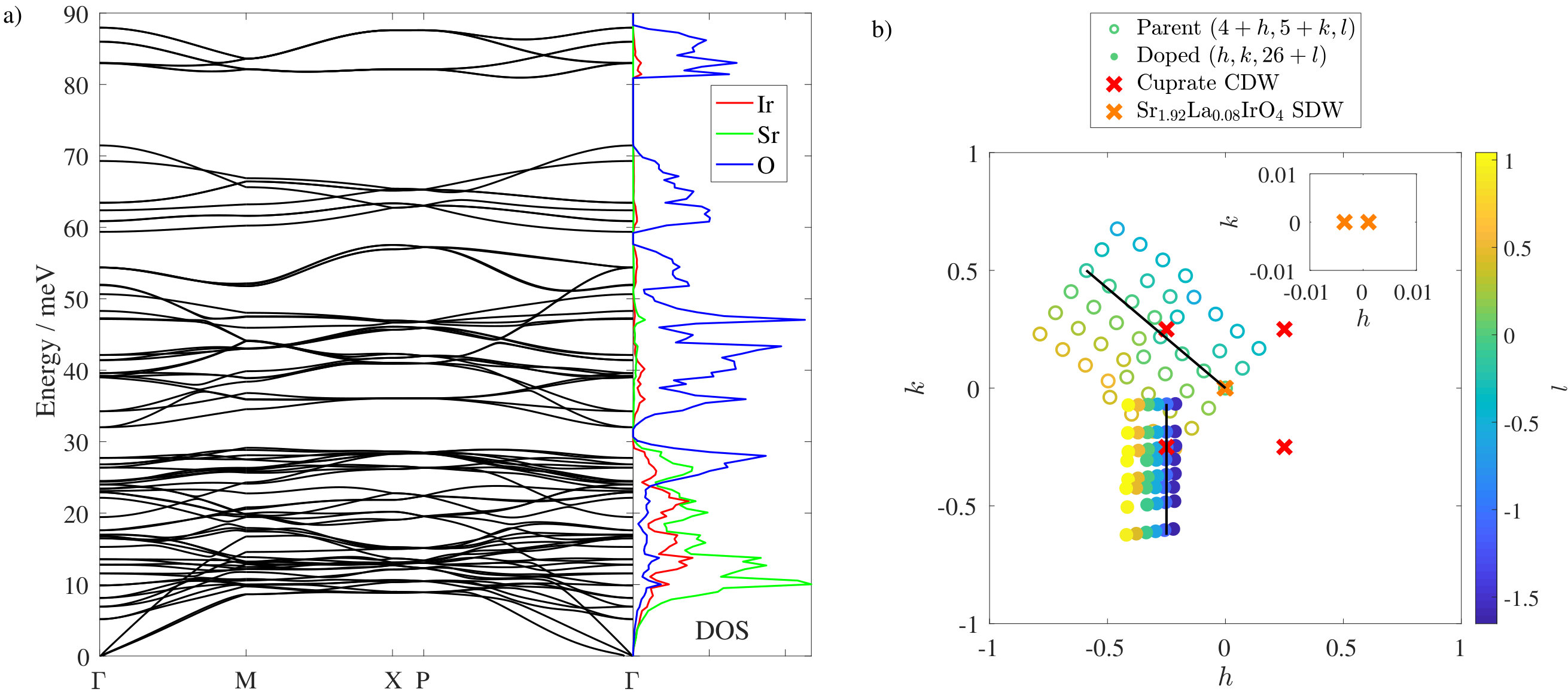 Figure 1
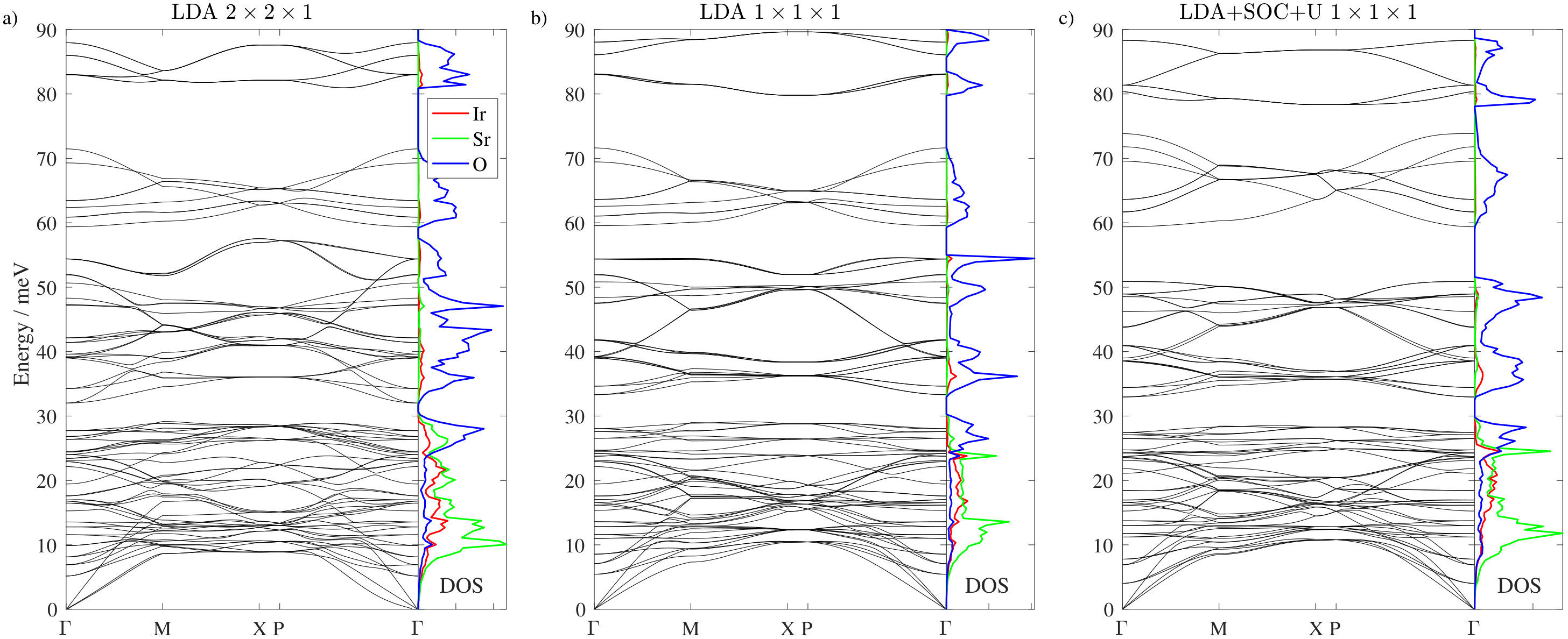 Figure 2
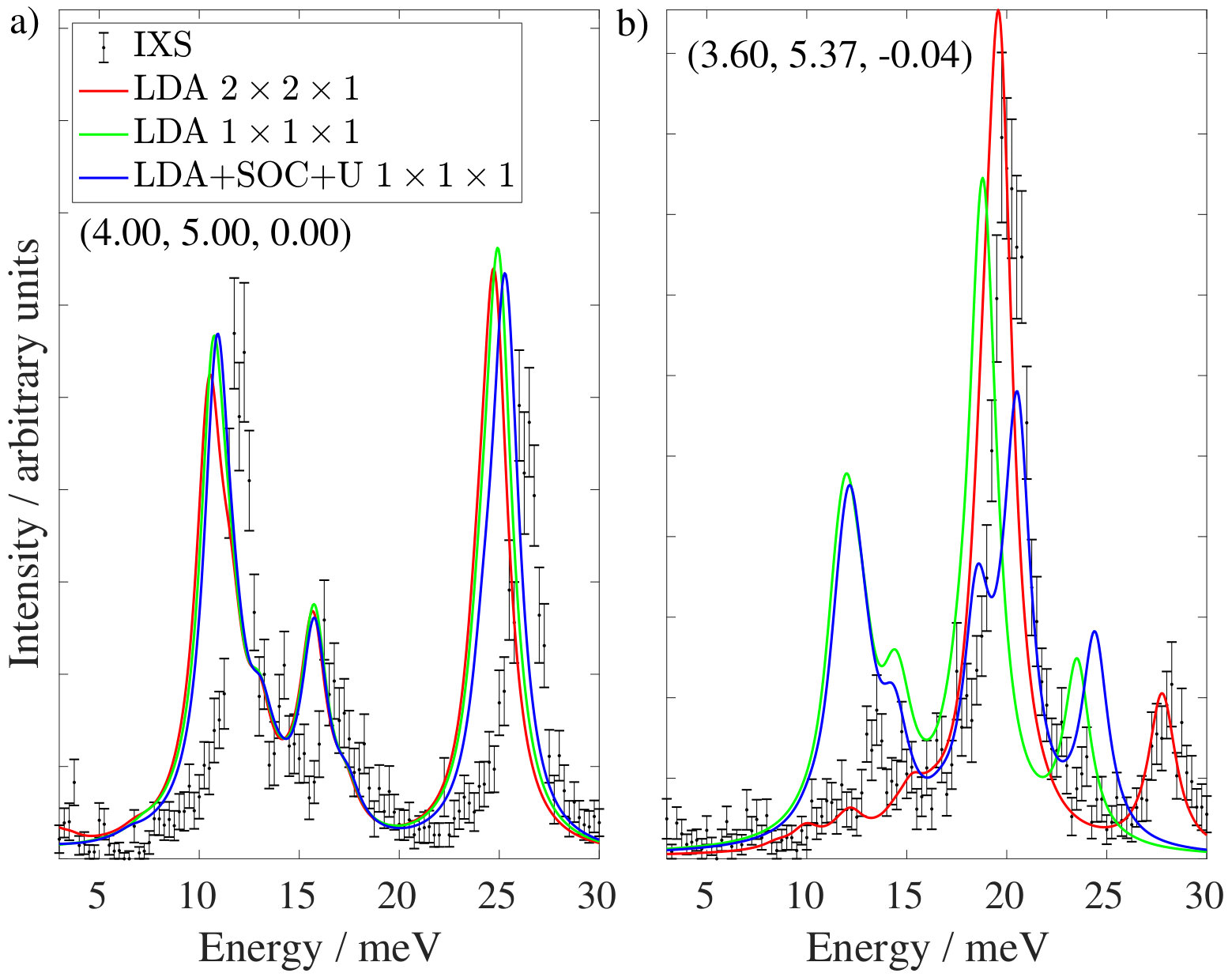 Figure 3
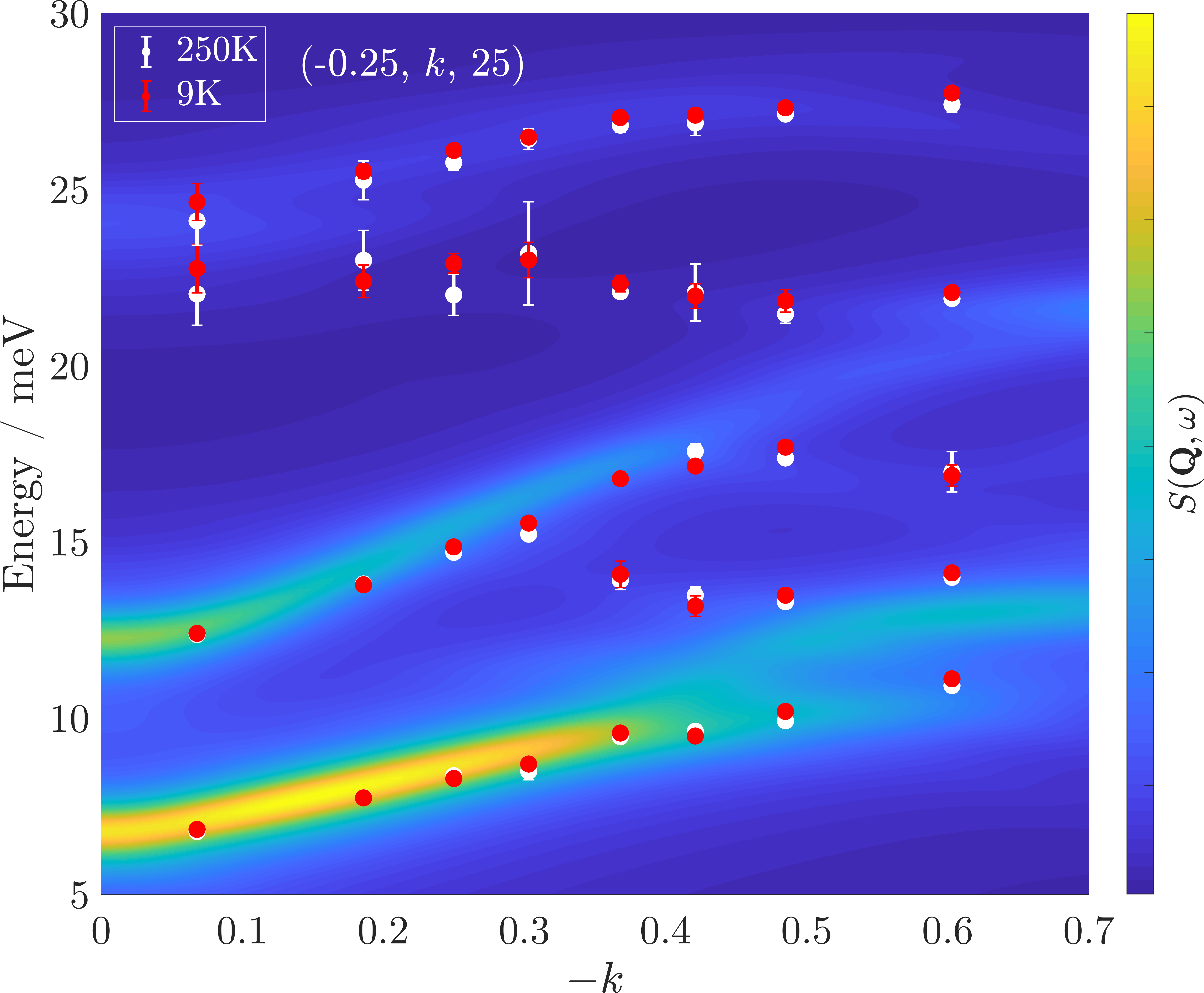 Figure 4
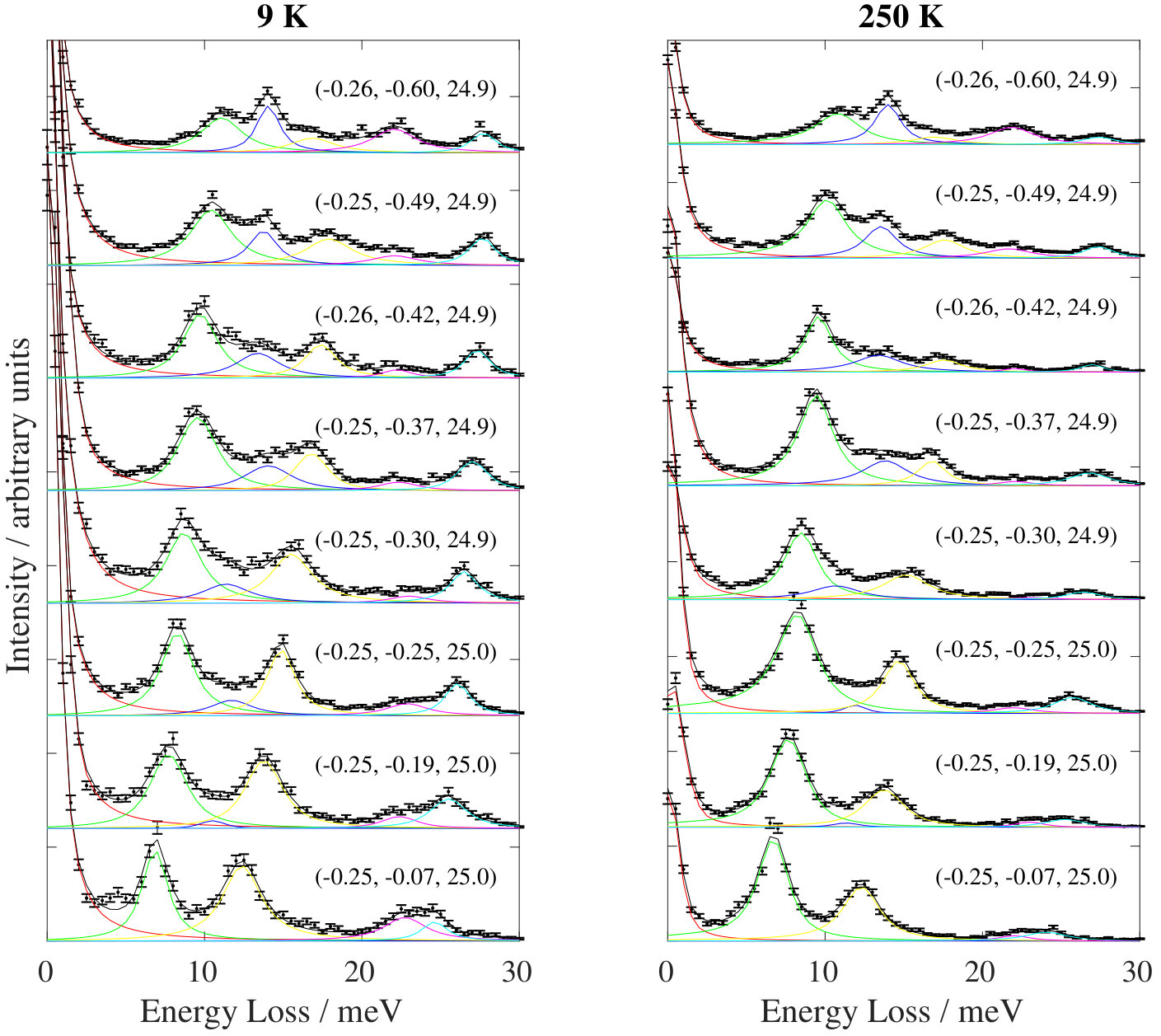 Figure 5
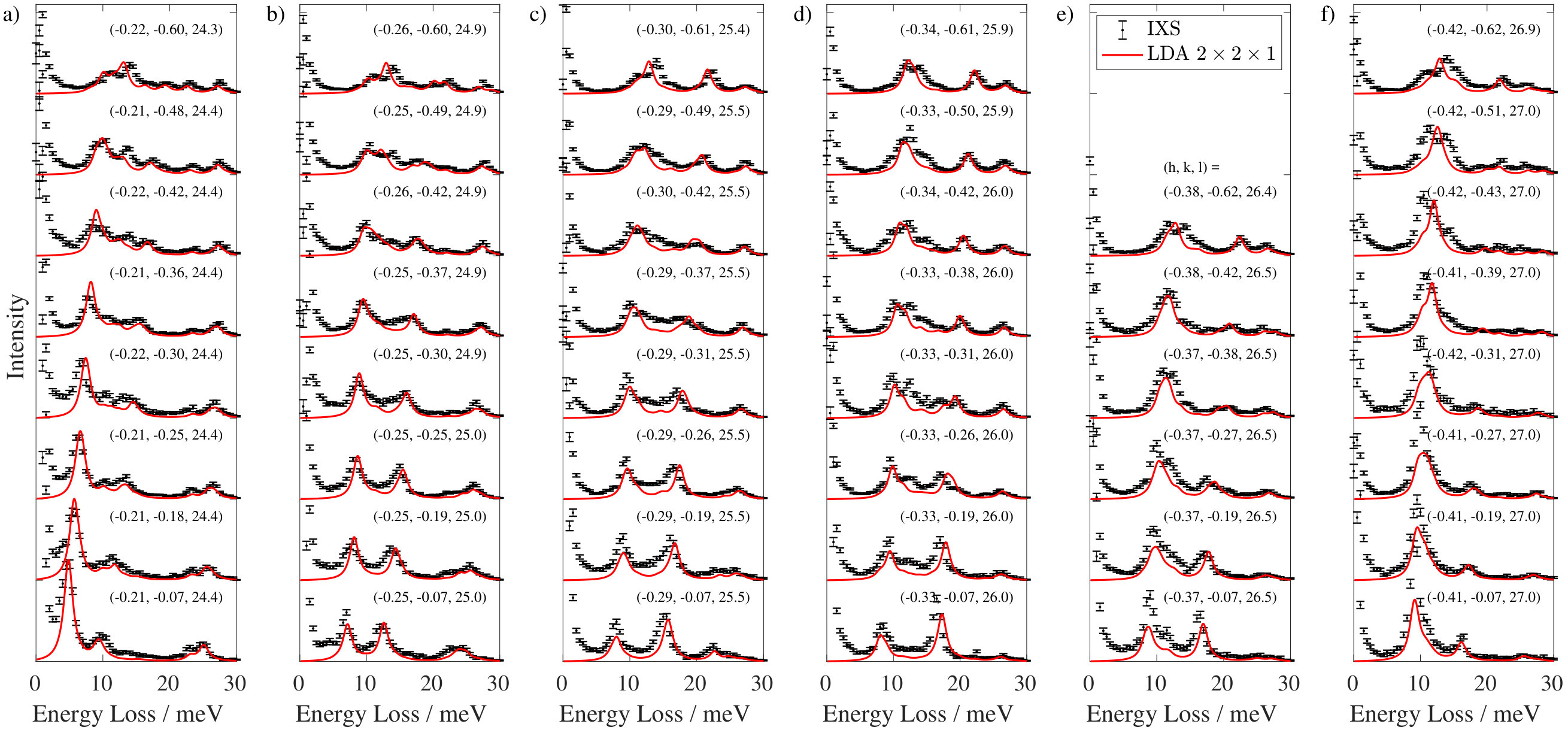 Figure 6
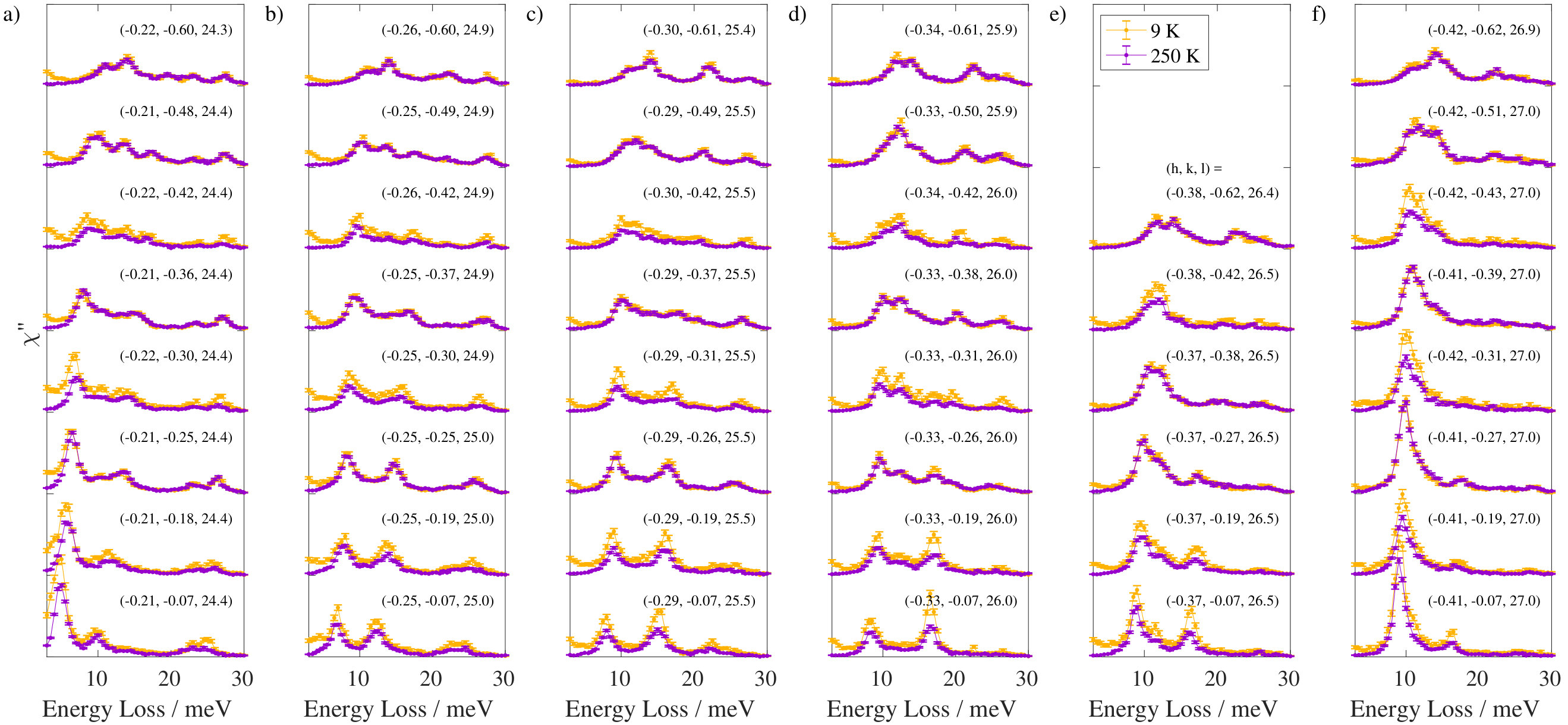 Figure 7
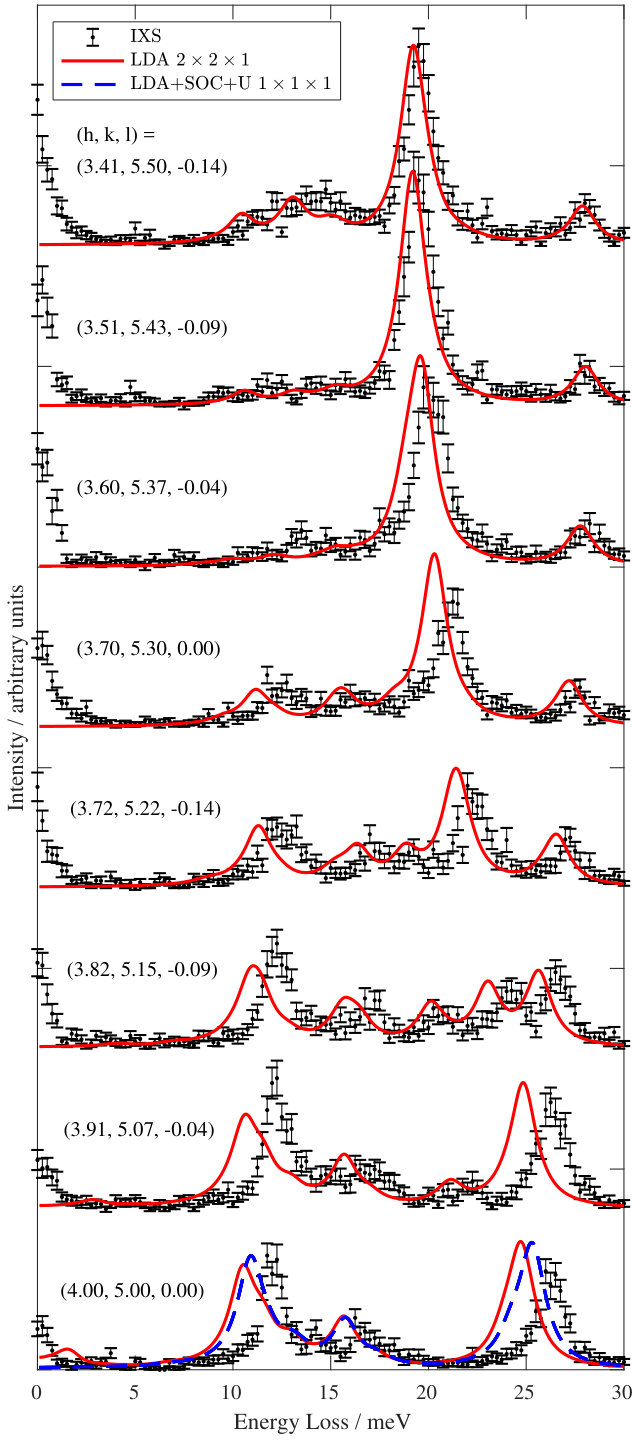 Figure 8
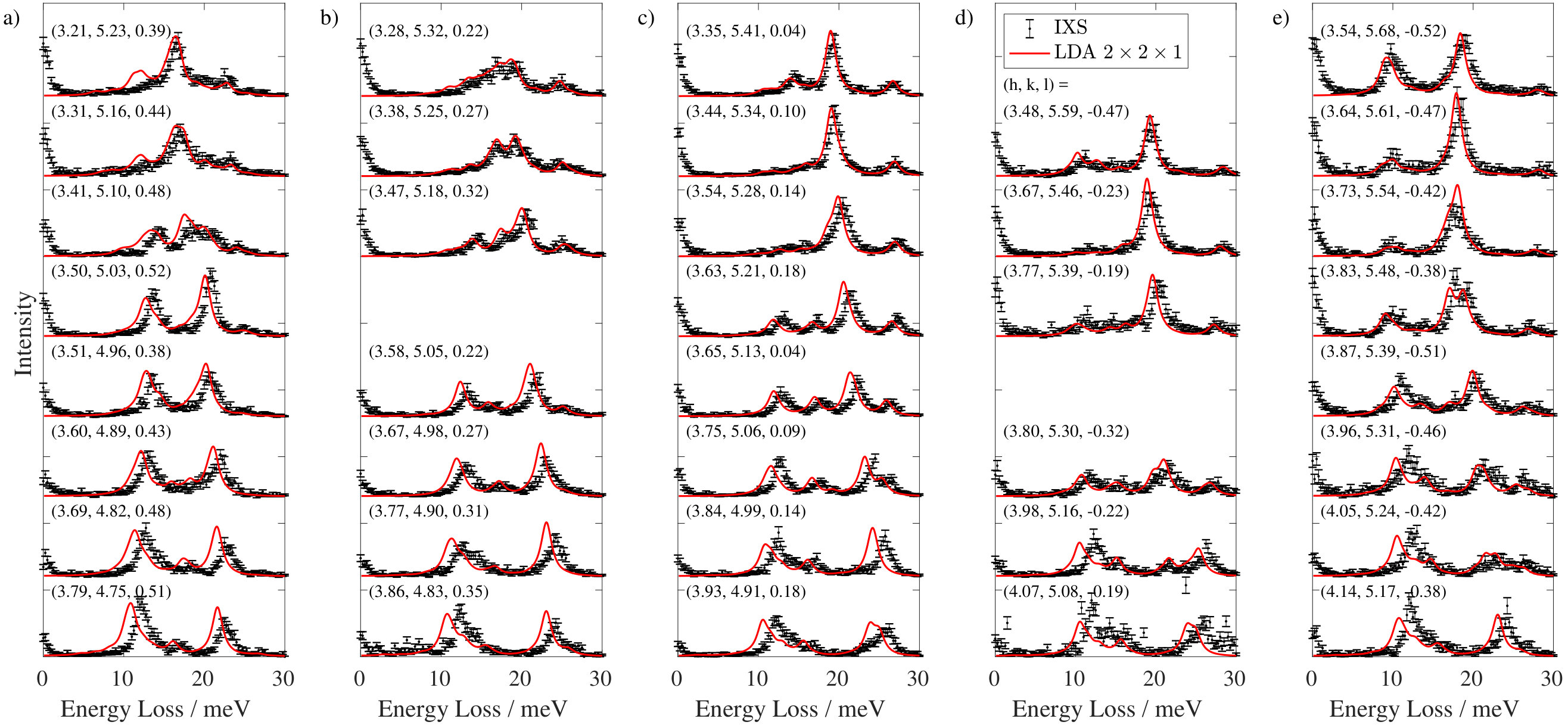 Figure 9
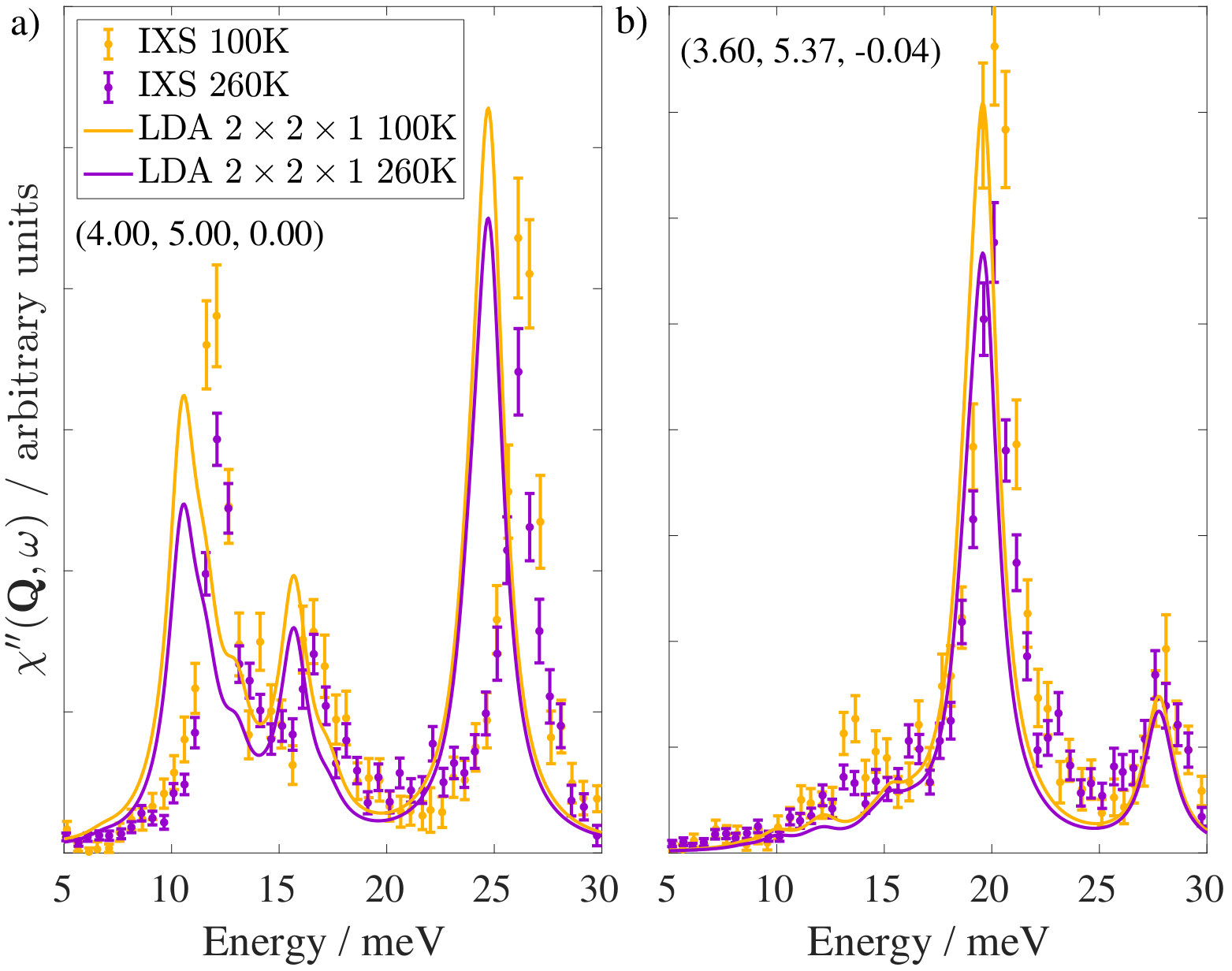 Figure 10
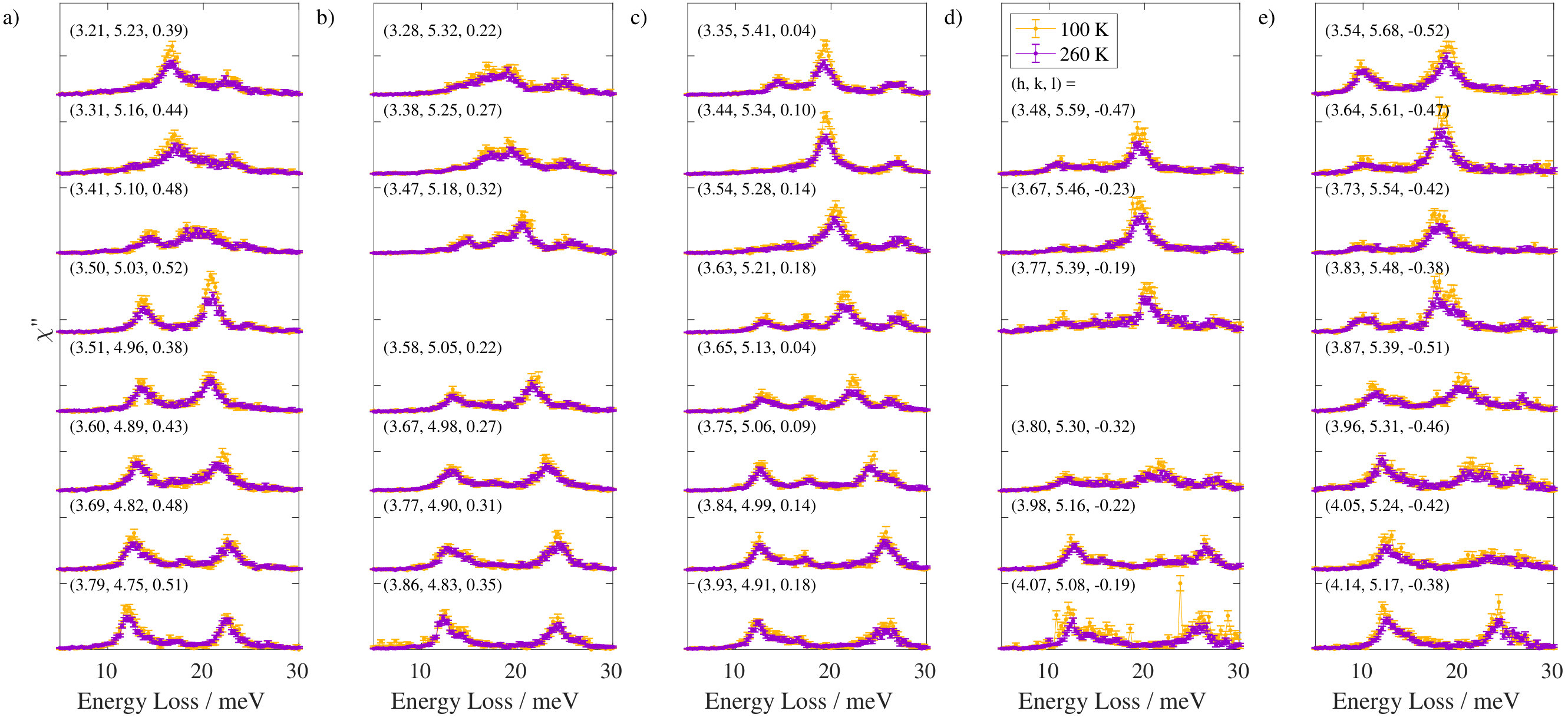 Figure 11
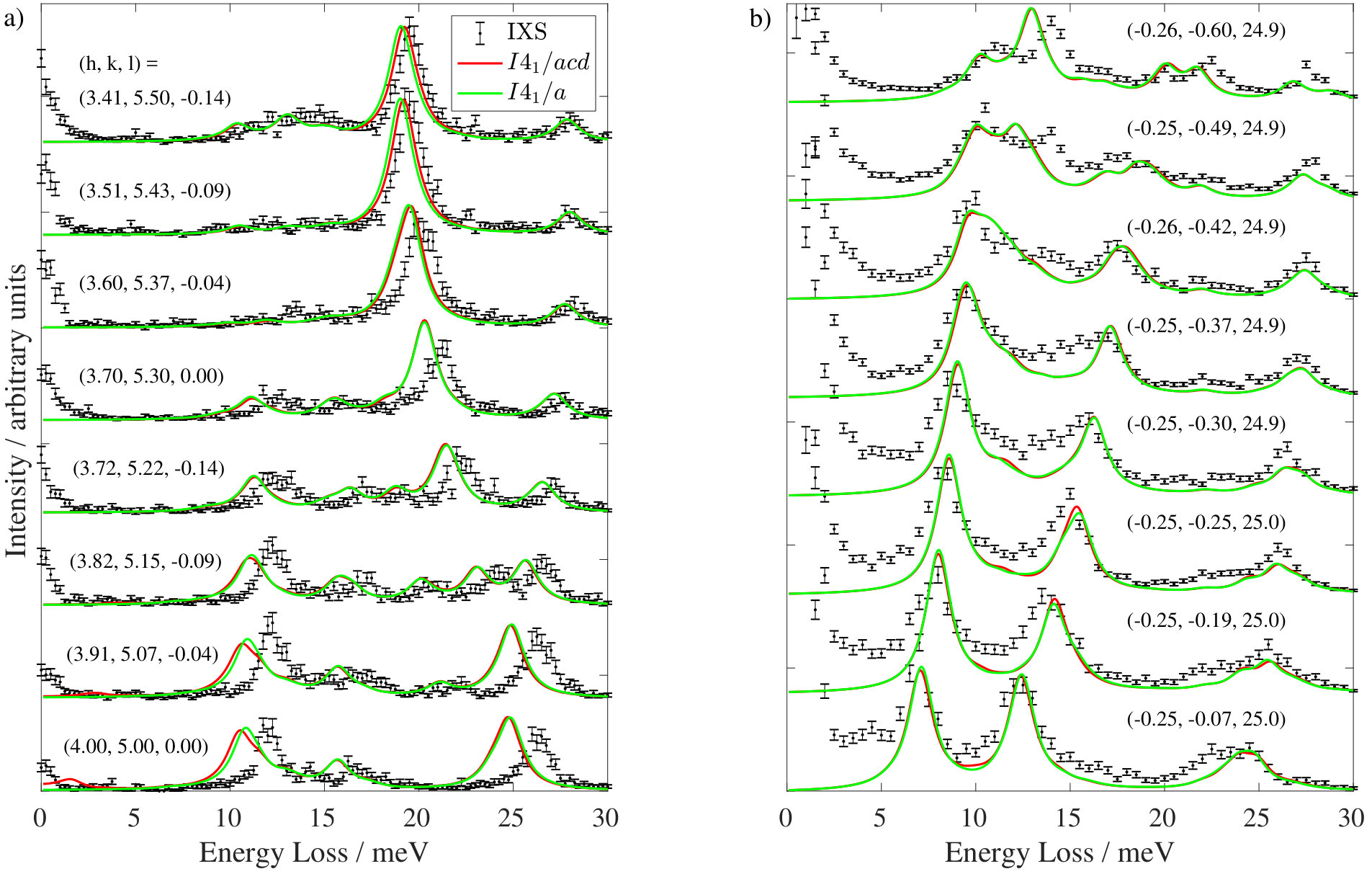 Figure 12
Peer Reviews
No public reviews on file for this paper yet. If you reviewed it on a platform where reviews are public (OpenReview, ICLR, NeurIPS, ICML), you can paste yours below so the community can read it here.
Videos
No videos yet. Explain this paper in a talk, walkthrough, or lecture? Add one.
Momentum-resolved lattice dynamics of parent and electron-doped Sr2IrO4
C. D. Dashwood
London Centre for Nanotechnology and Department of Physics and Astronomy, University College London, London WC1E 6BT, UK
H. Miao
Department of Condensed Matter Physics and Materials Science, Brookhaven National Laboratory, Upton, New York 11973, USA
J. G. Vale
London Centre for Nanotechnology and Department of Physics and Astronomy, University College London, London WC1E 6BT, UK
D. Ishikawa
Materials Dynamics Laboratory, RIKEN SPring-8 Center, RIKEN, Sayo Hyogo 697-5148, Japan
D. A. Prishchenko
Department of Theoretical Physics and Applied Mathematics, Ural Federal University, 19 Mira Street, Ekaterinburg 620002, Russia
V. V. Mazurenko
Department of Theoretical Physics and Applied Mathematics, Ural Federal University, 19 Mira Street, Ekaterinburg 620002, Russia
V. G. Mazurenko
Department of Theoretical Physics and Applied Mathematics, Ural Federal University, 19 Mira Street, Ekaterinburg 620002, Russia
R. S. Perry
London Centre for Nanotechnology and Department of Physics and Astronomy, University College London, London WC1E 6BT, UK
G. Cao
Department of Physics, University of Colorado at Boulder, Boulder, Colorado 80309, USA
A. de la Torre
Institute for Quantum Information and Matter and Department of Physics, California Institute of Technology, Pasadena, California 91125, USA
Department of Quantum Matter Physics, University of Geneva, 24 Quai Ernest-Ansermet, 1211 Geneva 4, Switzerland
F. Baumberger
Department of Quantum Matter Physics, University of Geneva, 24 Quai Ernest-Ansermet, 1211 Geneva 4, Switzerland
A. Q. R. Baron
Materials Dynamics Laboratory, RIKEN SPring-8 Center, RIKEN, Sayo Hyogo 697-5148, Japan
D. F. McMorrow
London Centre for Nanotechnology and Department of Physics and Astronomy, University College London, London WC1E 6BT, UK
M. P. M. Dean
Department of Condensed Matter Physics and Materials Science, Brookhaven National Laboratory, Upton, New York 11973, USA
Abstract
The mixing of orbital and spin character in the wave functions of the iridates has led to predictions of strong couplings among their lattice, electronic and magnetic degrees of freedom. As well as realizing a novel spin-orbit assisted Mott-insulating ground state, the perovskite iridate Sr2IrO4 has strong similarities with the cuprate La2CuO4, which on doping hosts a charge-density wave that appears intimately connected to high-temperature superconductivity. These phenomena can be sensitively probed through momentum-resolved measurements of the lattice dynamics, made possible by -resolution inelastic x-ray scattering. Here we report the first such measurements for both parent and electron-doped Sr2IrO4. We find that the low-energy phonon dispersions and intensities in both compounds are well described by the same nonmagnetic density functional theory calculation. In the parent compound, no changes of the phonons on magnetic ordering are discernible within the experimental resolution, and in the doped compound no anomalies are apparent due to charge-density waves. These measurements extend our knowledge of the lattice properties of (Sr1-xLax)2IrO4 and constrain the couplings of the phonons to magnetic and charge order.
I Introduction
The delicate balance of spin-orbit coupling (SOC), crystal fields and electron correlations (U) in the iridates makes them a fruitful class of materials in the search for novel electronic and magnetic phases Jackeli and Khaliullin (2009); Witczak-Krempa et al. (2014); Cao and Schlottmann (2018); Bertinshaw et al. (2018). Most prominently, the layered perovskite Sr2IrO4 has been shown to be a spin-orbit Mott insulator where the orbital degeneracy of the Ir4+ levels is lifted by SOC, enabling a moderate to open a charge gap Kim et al. (2008, 2009). Moreover, it has striking structural, electronic and magnetic similarities to the parent of the cuprate high-temperature superconductors La2CuO4 Crawford et al. (1994); Wang and Senthil (2011); Kim et al. (2012); Boseggia et al. (2013). Doping the bulk of Sr2IrO4 with electrons leads to the suppression of long-range antiferromagnetic order Pincini et al. (2017), while surface-doping has been shown to produce Fermi arcs Kim et al. (2014) and a low-temperature gap with d-wave symmetry Kim et al. (2016).
One difference from the cuprates is the orbital character of the wave function, which results in the couplings between the pseudospins being highly sensitive to lattice geometry Jackeli and Khaliullin (2009). Recent theoretical Liu and Khaliullin (2019) and experimental Porras et al. (2019) works have shown that this coupling is crucial to understanding the magnetic structure and in-plane magnon gap of Sr2IrO4. Lattice distortions can result in significant admixture of the wave function into the ground state, which has led to expectations of strong interactions among lattice, orbital, and magnetic excitations in the iridates.
Changes in the frequencies and linewidths of phonon modes on magnetic ordering are seen in a variety of transition metal oxides, including the pyrochlore iridate Y2Ir2O7 Son et al. (2019), and the osmates NaOsO3 Calder et al. (2015) and Ca2Os2O7 Sohn et al. (2017). The frequency shift in NaOsO3 is the largest measured in any material, at Calder et al. (2015). Gretarsson et al. Gretarsson et al. (2016) conducted Raman measurements on Sr2IrO4, finding a broadening of \sim$$1\text{\,}\mathrm{meV} and Fano asymmetry in the phonon mode at the zone center above , that is indicative of coupling between the lattice and a continuum of pseudospin fluctuations due to unquenched orbital dynamics.
A notable feature of the underdoped cuprates is the appearance of charge-density wave (CDW) order above a critical doping, which appears to be connected to the superconductivity in these compounds Tranquada et al. (1995); Comin and Damascelli (2016). CDW order has long been proposed to be an intrinsic instability of doped Mott insulators Zaanen and Gunnarsson (1989); Poilblanc and Rice (1989), but despite reports of spin-density wave (SDW) order Chen et al. (2018) in doped Sr2IrO4 and a dynamic CDW-like instability in its bilayer cousin Sr3Ir2O7 Chu et al. (2017); Jin et al. (2019), as yet there has been no evidence for a CDW in doped Sr2IrO4. The presence of CDW order can be inferred, inter alia, from the softening of phonon modes around the CDW wave vector Weber et al. (2011); Reznik et al. (2006); Miao et al. (2018).
There is therefore a clear interest in momentum-resolved measurements of the phonons in Sr2IrO4, extending the previous zone-center studies. Nonresonant inelastic x-ray scattering (IXS) allows such measurements to be performed with \sim$$1\text{\,}\mathrm{meV} energy resolution and 0.01 reciprocal lattice units (r.l.u.) momentum resolution across a large volume of reciprocal space Baron (2009, 2016). We have performed extensive IXS measurements on parent and La-doped Sr2IrO4 across regions of reciprocal space carefully chosen to maximize the signatures of coupling to magnetic or CDW order. In the parent compound, we find that our IXS spectra are well reproduced by a nonmagnetic density functional theory (DFT) calculation, which allows us to identify the dominant atomic displacements and interrogate modes with strong modulation of the magnetic exchange pathways. Evaluation of the dynamic structure factor from this DFT calculation allows us to quantify the expected temperature dependence of the spectra and reveal that there are no changes due to magnetic ordering within our experimental resolution. We observe minimal changes to the phonons on doping, with the dispersions well reproduced by the same DFT calculation. A careful fitting of the IXS spectra reveals no anomalies due to CDW order between and .
II Methods
Single crystals of both parent () and 5% doped () (Sr1-xLax)2IrO4 were flux grown using standard methods and characterized by energy-dispersive x-ray spectroscopy, resistivity, and susceptibility measurements de la Torre et al. (2015). The crystalline quality of the samples was checked during the IXS measurements, with mosaics of around for the parent compound and for the doped. Throughout this manuscript, we use the space group with and . The true space group of Sr2IrO4 is now known to be Ye et al. (2013); Dhital et al. (2013); Torchinsky et al. (2015); Ye et al. (2015), although this makes negligible difference to the phonon dispersions (see supplemental material sup ).
DFT calculations were performed using the plane-wave basis projector augmented wave method Blöchl (1994) as implemented in the Vienna ab-initio Simulation Package (vasp) Kresse and Furthmüller (1996). The exchange-correlation functional was treated in the local density approximation (LDA) Perdew and Wang (1992), with unit cell relaxations carried out over an reciprocal lattice mesh. The force constants were calculated over a mesh using a supercell. The phonon frequencies and eigenvectors were then obtained with the phonopy package Togo and Tanaka (2015) using an mesh for the Debye-Waller factor, and these were used to calculate the dynamic structure factor (see supplemental material sup ). The resulting phonon band structure and projected density of states (DOS) is shown in Fig. 1(a). As expected, the modes involving motion of mostly the heavier Sr and Ir atoms lie at lower energies, while the modes involving lighter O atoms dominate above . The calculated energies at the point compare well to previous Raman and infrared spectroscopy studies Samanta et al. (2018); Gretarsson et al. (2017); Pröpper et al. (2016) (see supplemental material sup ).
Calculations were also performed including the effects of SOC+U with the full noncollinear magnetic structure Ye et al. (2013), but the computational complexity of this meant that the supercell size had to be reduced to , at which point agreement between the calculated and IXS spectra away from the zone center became unsatisfactory (see Fig. 2 for a comparison with the above LDA calculation on a supercell, and the Appendix for further discussion).
High-resolution IXS measurements of the phonon dispersions were performed at beamline BL43LXU of the SPring-8 synchrotron in Japan Baron (2010). The incident energy was set to and the reflection of Si was used as both a monochromator and analyzer, giving an energy resolution of around (depending on analyzer). A analyzer array allowed the simultaneous measurement of many momentum transfers, so that a large area of the Brillouin zone, shown in Fig. 1(b), could be surveyed despite the long counting times necessitated by the high energy and momentum resolutions. Given these counting times, we chose to investigate the high-intensity phonon modes below , giving us the best chance of observing the small changes expected from magnetic or CDW order.
The parent compound was measured in transmission with the and reciprocal directions in the scattering plane, allowing access to in-plane momentum transfers in order to maximize the intensity of low-energy modes that involve modulation of the Ir-O-Ir superexchange bond. The vertical columns of the analyzer array traced out adjacent trajectories along out from the magnetic Bragg peak position [open circles in Fig. 1(b)]. As well as avoiding points near the structural Bragg peaks and at which the IXS spectra would be dominated by strong elastic contributions (which does not occur at the magnetic Bragg peak off resonance), this is also the direction along which the dynamic CDW is expected in Sr3Ir2O7 Jin et al. (2019). The atomic displacements of modes with significant IXS intensity were calculated using DFT for a range of other points in the plane, but no modes could be found with significantly larger modulation of the Ir-O-Ir bond that we would expect to be more strongly influenced by magnetism. The black lines in Fig. 1(b) indicate the points with equal for which spectra are shown in this manuscript. Spectra for the other points are contained in the supplemental material sup .
The strongest coupling to CDW order is usually found for phonon modes whose displacements mirror those of the CDW, and for this reason the early work investigating such coupling in the cuprates focused on in-plane modes with strong distortion of the Cu-O bond McQueeney et al. (1999); Uchiyama et al. (2004); Reznik et al. (2006, 2008); Graf et al. (2008). These modes are at high energies, however, with IXS intensities too low to allow practical measurement. We therefore focused on low-energy modes involving motion of all atoms in the unit cell, which should also show appreciable coupling. This was confirmed by recent IXS measurements on La1.875Ba0.125CuO4, which found that the coupling is strongest for low-energy modes with the large -axis displacements Miao et al. (2018). These modes are enhanced by having a large out-of-plane momentum transfer (), so for the doped iridate sample we used a reflection geometry with the and directions in the scattering plane, measuring points in the Brillouin zone [filled circles in Fig. 1(b)]. A vertical column of the analyzer array then followed the direction (black line) through the equivalent cuprate CDW in-plane wave vector (filled red circles).
A consequence of the analyzer geometry is that varies horizontally across the array, as indicated by the color of the points in Fig. 1(b). The layered nature of Sr2IrO4, however, means that the electronic Wilkins et al. (2011) and magnetic Kim et al. (2012) behavior of interest is only weakly dependent. We therefore set the analyzer slits to 40\text{\,}$$\times$$80\text{\,}\mathrm{mm} to improve the in-plane momentum resolutions while relaxing the out-of-plane resolution. The momentum resolutions are reported below for each set of measurements.
Other points where one might expect the presence of phonon anomalies is at the intersections of the phonon and magnon dispersions. Unfortunately, the high spin-wave velocity and slight gap Pincini et al. (2017) places it at energies above those of the phonon modes measured in this work.
III Results
III.1 Parent compound
Figure 2 shows a series of representative IXS spectra along the direction out from the magnetic Bragg peak position in the parent compound at 100 K. The average momentum resolutions along each direction are r.l.u. The IXS spectra (black points) are overlaid with calculated with DFT in the LDA on a supercell (red lines). At all momenta, the calculation reproduces the relative intensities of the modes reasonably well, with the consistent underestimate of the mode frequencies improving further out into the Brillouin zone.
The calculation allows us to identify the atomic motion associated with each prominent peak of the IXS spectra. As expected from the in-plane momentum transfer, the modes mostly involve atomic motions in the plane. At the zone center, the prominent mode with an LDA energy of has large displacements of the Sr atoms with smaller Ir and O motion, while the mode at has dominant in-plane O motion along with smaller out-of-plane Sr oscillations. Toward the zone boundary, the mode around has roughly equal in-plane displacements of all atoms. Animations of these modes can be found in the supplemental material sup .
While there is unlikely to be any detectable influence from magnetism on the low-energy mode with dominant Sr motion, the higher-energy zone-center mode involves significant changes to the angle of the Ir-O-Ir bond that is responsible for magnetic superexchange. There are no apparent discrepancies between the experimental data and calculated spectrum for the high-energy mode that are not also present for the low-energy mode, however.
As mentioned above, we also performed DFT calculations including SOC+U with the full magnetic structure of Sr2IrO4. At the zone center, where the reduction to a supercell size should make a minimal difference (see the Appendix for further discussion), this simply causes a \sim$$0.5\text{\,}\mathrm{meV} increase in the predicted energies of both modes with very little change to the intensities (blue dashed line in Fig. 2).
We repeated these measurements at , above , in order to search for any changes caused by long-range magnetic ordering. To reliably compare spectra at different temperatures, the imaginary part of the dynamic susceptibility was calculated by subtracting the elastic line and dividing through by the Bose factor Miao et al. (2018)
[TABLE]
Figure 3 shows at and for two different representative momentum transfers. The intensity of the modes in the spectra are lower than those at due to the reduced Debye-Waller factor, as can be seen through comparison with calculated with DFT. The observed hardening of the phonon modes of \sim$$0.5\text{\,}\mathrm{meV} can be attributed to reduced anharmonic phonon-phonon interactions on cooling. There is no clear evidence for changes in the linewidth through , as seen in Raman measurements by Gretarsson et al. Gretarsson et al. (2016) which would be indicative of coupling to spin fluctuations. Although the asymmetric broadening of the mode at reported by Gretarsson et al. Gretarsson et al. (2016) is of a magnitude comparable to our energy resolution, and would therefore be visible in our data, it should be noted that this particular mode has vanishing IXS intensity at the points measured here.
The spectra and temperature comparisons for the other momentum transfers shown in Fig. 1(c) can be found in the supplemental material sup . The same conclusions discussed above can be made for all of these data sets.
III.2 Doped compound
In the cuprates, a signature of the presence of CDW order is the softening and linewidth changes of phonon peaks in IXS spectra at the CDW wave vector. IXS measurements on (La1-xBax)2CuO4 with 0.048 - 0.063 revealed that precursor CDW fluctuations are responsible for a broadening and softening of the phonon modes Pintschovius et al. (1991); McQueeney et al. (1999); Uchiyama et al. (2004); Reznik et al. (2006, 2008); Graf et al. (2008); d’Astuto et al. (2008); Miao et al. (2018). On the onset of CDW ordering the softening is still present while there is a sharp reduction in the phonon linewidths.
To investigate whether CDW order is present in electron-doped Sr2IrO4 in analogy with the hole-doped cuprates, we performed IXS measurements on 5% La-doped Sr2IrO4 along the direction through with average momentum resolutions of r.l.u. In order to extract the phonon dispersions, the IXS spectra were fitted to a sum of damped harmonic oscillator line shapes weighted by the Bose factor and convoluted with a Voigt resolution function
[TABLE]
plus an additional Voigt function for the quasielastic peak (see supplemental material sup for a representative fit). The fitted dispersions at and are shown in Fig. 4 as white and red circles respectively, overlaid on a colormap of from the same LDA calculation on a supercell as above.
This nonmagnetic DFT calculation actually provides a better description of the metallic ground state of the doped sample, in which long-range magnetic order is destroyed by the free carriers Pincini et al. (2017), and so as expected there is good agreement between the fitted and calculated dispersions. As for the parent compound, the calculations allow us to identify the atomic motions associated with each mode, which at these wave vectors involve significant out-of-plane displacements for all three elements.
Crucially, the fitted dispersions are identical (within one standard deviation) at both temperatures, with no anomalies present at the equivalent in-plane wave vector to the cuprate CDW. Anomalies are also not apparent at any other points measured in this work (see supplemental material sup ). It should be noted, however, that this does not preclude the presence of a CDW for other doping levels (the purported spin density wave only occurs over a very narrow doping range Chen et al. (2018)), at wave vectors away from those measured here, or one that couples to a phonon modes with low IXS intensity.
A further signature of CDW order in the cuprates is visible in the intensity of the quasielastic peak centered at zero energy in the IXS spectra. Le Tacon et al. Le Tacon et al. (2014) saw a contribution to the integrated intensity of this peak in the underdoped cuprate YBa2Cu3O6.6 over a narrow momentum range around the CDW wave vector and over a broad temperature range around the CDW transition temperature. At both 9 K and 250 K, however, the fitted integrated intensity of the quasielastic peak in our IXS spectra varies smoothly with .
IV Conclusions
We have conducted momentum-resolved measurements of the phonons in parent and electron-doped Sr2IrO4. In both compounds, our IXS spectra are well reproduced by a nonmagnetic DFT calculation in the LDA, despite the destruction of the spin-orbit assisted Mott-insulating and long-range ordered antiferromagnetic ground state in the latter. In the parent compound, there is no apparent change in the linewidths of the modes on passing through the Néel temperature, while the slight changes in frequencies and intensities are fully accounted for by anharmonic interactions and the calculated Debye-Waller factors respectively. In the doped compound, the dispersions of all the measured modes are identical within experimental resolution at both and , again with no softening or linewidth changes apparent, nor any peaks in the quasielastic intensity.
Knowledge of the lattice dynamics and their momentum dependence is fundamental to the understanding of the structural, electronic, and magnetic behavior of (Sr1-xLax)2IrO4. Therefore, our measurements will be important in guiding future theoretical and experimental investigations into the coupled degrees of freedom of this topical material.
Acknowledgements.
C.D.D. thanks Atsushi Togo for assistance with the phonopy calculations. C.D.D. was supported by the Engineering and Physical Sciences Research Council (EPSRC) Centre for Doctoral Training in the Advanced Characterisation of Materials under Grant No. EP/L015277/1. The IXS measurements were supported by the U.S. Department of Energy (DOE), Office of Basic Energy Sciences, Early Career Award Program under Award No. 1047478. The DFT calculations were carried out using high performance computing resources at Moscow State University Sadovnichy et al. (2013). Work at Brookhaven National Laboratory was supported by the U.S. DOE, Office of Science, Office of Basic Energy Sciences, under Contract No. DE-SC00112704. Work at UCL was supported by the EPSRC under Grants No. EP/N027671/1 and EP/N034872/1. Work at Ural Federal University was supported by the Russian Science Foundation under Grant No. 18-12-00185. G.C. was supported by the U.S. National Science Foundation under Grant No. DMR-1712101. The IXS experiments were performed at beamline BL43LXU at the SPring-8 synchrotron with the approval of RIKEN under Proposal No. 20180059.
Appendix A Density Functional Theory Calculations
The DFT calculation in the LDA discussed above did not take into account the effects SOC, U, or the magnetic structure, and therefore does not predict an electronic structure in agreement with the known spin-orbit Mott-insulating state of parent Sr2IrO4 (the metallic ground state that it predicts is in fact a better description of the doped compound). We repeated this calculation including SOC+U, using and to reproduce the measured charge gap Solovyev et al. (2015), and the noncollinear antiferromagnetic structure given by Ye et al. Ye et al. (2013). Due to the additional memory requirements of this calculation, however, the supercell had to be reduced to .
Figure 5 shows the phonon band structures and projected DOS for these two calculations, as well as for an LDA calculation on a supercell for comparison. Comparing the calculations on the minimal unit cell in Fig. 5(b) and (c), it can be seen that the addition of SOC+U mostly affects the O modes above , whose IXS intensities were too low to be measured in this work. Comparing these to the LDA calculation on the larger supercell in Fig. 5(a), by contrast, shows more significant changes across all of the modes.
We also calculated the dynamic structure factor for these three different cases in order to compare with our IXS measurements. Figure 6 shows this comparison at two representative momentum transfers. At the zone center the supercell size should be of minimal importance, and Fig. 6(a) shows that the calculations differ by only a small shift in the mode energies (\sim$$0.5\text{\,}\mathrm{meV}) and intensities. Further out into the Brillouin zone, however, the supercell size becomes critical, with the calculations on the minimal supercell showing prominent modes that are not present in the IXS spectra [Fig. 6(b)].
These comparisons highlight the inadequacy of the minimal supercell in simulating the lattice dynamics of Sr2IrO4. In oxides with large unit cells such as these, therefore, where LDA+SOC+U calculations involving noncollinear magnetic structures are prohibitively computationally demanding for larger supercells, a DFT perturbation approach may be more suitable.
The reference list from the paper itself. Each links out to its DOI / PubMed record.
- 1Jackeli and Khaliullin (2009) G. Jackeli and G. Khaliullin, Phys. Rev. Lett. 102 , 017205 (2009) . · doi ↗
- 2Witczak-Krempa et al. (2014) W. Witczak-Krempa, G. Chen, Y. B. Kim, and L. Balents, Annu. Rev. Condens. Matter Phys. 5 , 57 (2014) . · doi ↗
- 3Cao and Schlottmann (2018) G. Cao and P. Schlottmann, Reports Prog. Phys. 81 , 42502 (2018) . · doi ↗
- 4Bertinshaw et al. (2018) J. Bertinshaw, Y. K. Kim, G. Khaliullin, and B. J. Kim, Annu. Rev. Condens. Matter Phys. 10 , 315 (2018) . · doi ↗
- 5Kim et al. (2008) B. J. Kim, H. Jin, S. J. Moon, J.-Y. Kim, B.-G. Park, C. S. Leem, J. Yu, T. W. Noh, C. Kim, S.-J. Oh, J.-H. Park, V. Durairaj, G. Cao, and E. Rotenberg, Phys. Rev. Lett. 101 , 076402 (2008) . · doi ↗
- 6Kim et al. (2009) B. J. Kim, H. Ohsumi, T. Komesu, S. Sakai, T. Morita, H. Takagi, and T. Arima, Science 323 , 1329 (2009) . · doi ↗
- 7Crawford et al. (1994) M. K. Crawford, M. A. Subramanian, R. L. Harlow, J. A. Fernandez-Baca, Z. R. Wang, and D. C. Johnston, Phys. Rev. B 49 , 9198 (1994) . · doi ↗
- 8Wang and Senthil (2011) F. Wang and T. Senthil, Phys. Rev. Lett. 106 , 136402 (2011) . · doi ↗