Dynamical Pruning of the Non-Equilibrium Quantum Dynamics of Trapped Ultracold Bosons
F. K\"ohler, K. Keiler, S. I. Mistakidis, H.-D. Meyer, P., Schmelcher

TL;DR
This paper introduces a dynamic pruning method within the multi-configuration time-dependent Hartree framework to efficiently simulate non-equilibrium quantum dynamics of trapped ultracold bosons, reducing computational costs while maintaining accuracy.
Contribution
The authors develop a novel dynamical pruning scheme that adaptively selects relevant states and modifies the Hamiltonian, improving simulation efficiency for complex bosonic systems.
Findings
Accurately reproduces unpruned results
Significant reduction in simulation time
Most effective in optical lattice scenarios
Abstract
The investigation of the nonequilibrium quantum dynamics of bosonic many-body systems is very challenging due to the excessively growing Hilbert space and poses a major problem for their theoretical description and simulation. We present a novel dynamical pruning approach in the framework of the multi-configuration time-dependent Hartree method for bosons to tackle this issue by dynamically detecting the most relevant number states of the underlying physical system and modifying the many-body Hamiltonian accordingly. We discuss two different number state selection criteria as well as two different ways to modify the Hamiltonian. Our scheme regularly re-evaluates the number state selection in order to dynamically adapt to the time evolution of the system. To benchmark our methodology, we study the nonequilibrium dynamics of bosonic particles confined in either an optical lattice or in a…
Click any figure to enlarge with its caption.
 Figure 1
 Figure 2
 Figure 3
 Figure 4
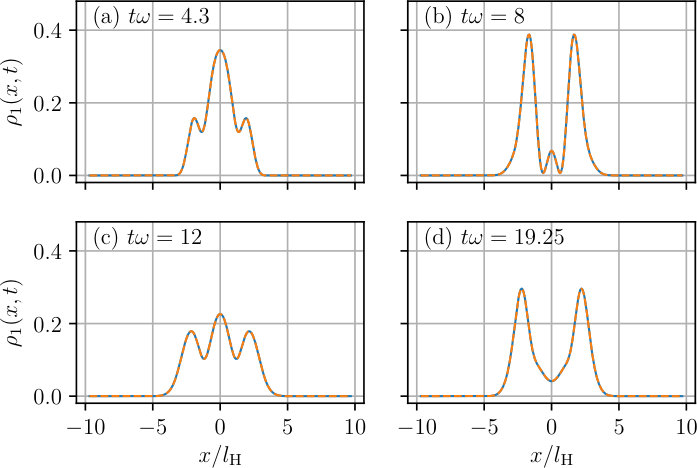 Figure 5
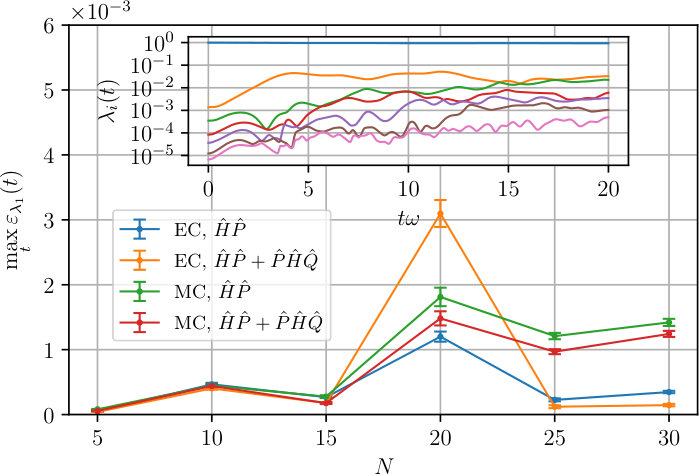 Figure 6
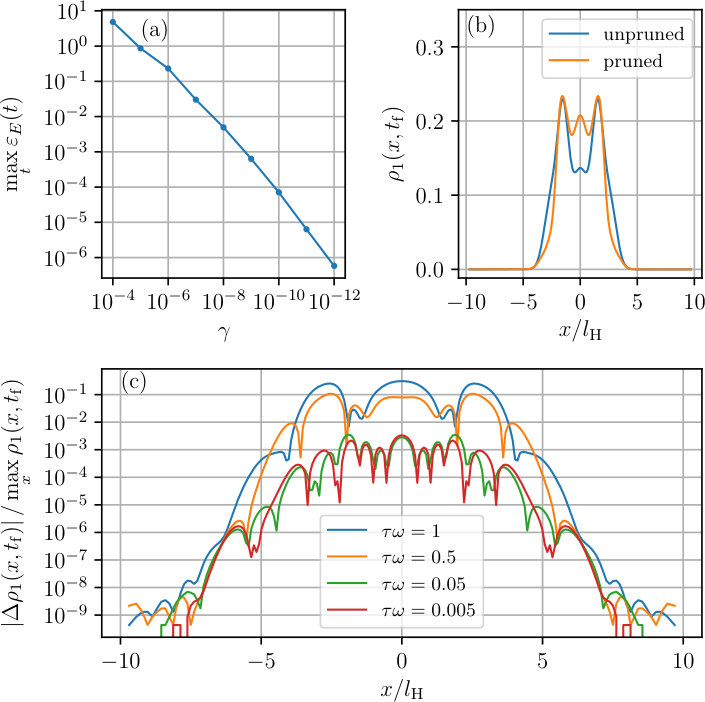 Figure 7
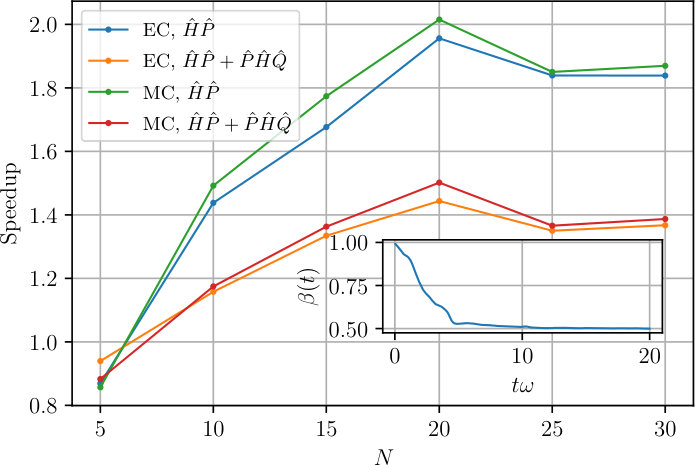 Figure 8
 Figure 9
 Figure 10
 Figure 11
 Figure 12
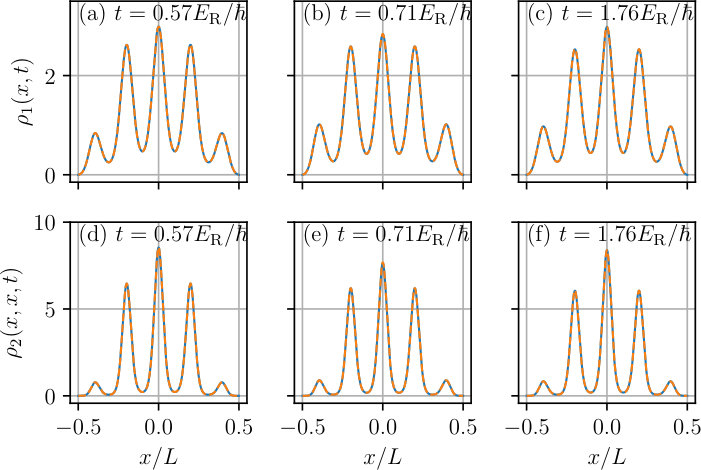 Figure 13
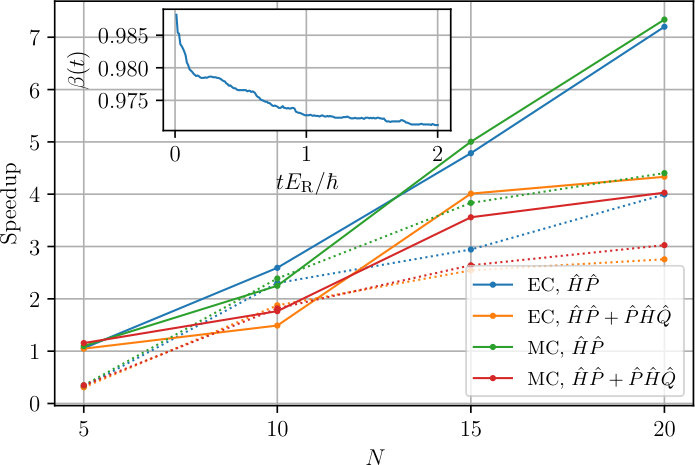 Figure 14
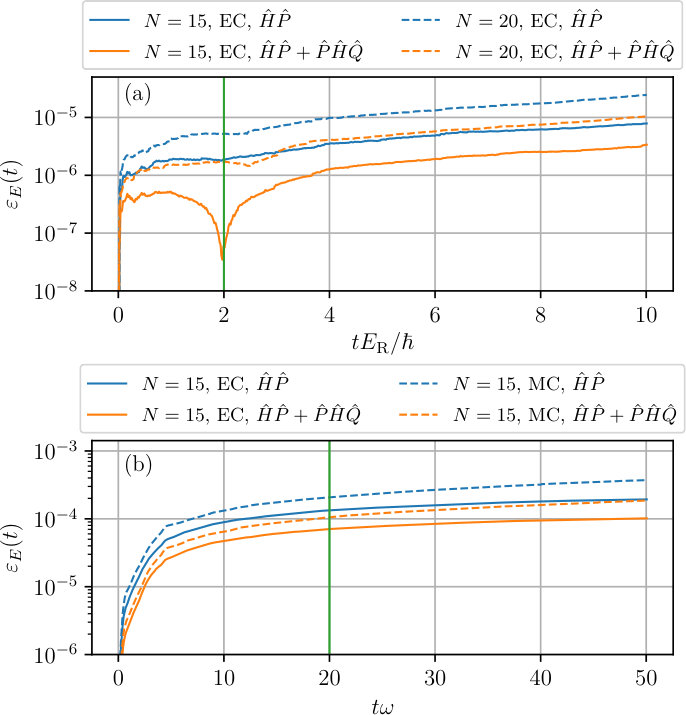 Figure 15
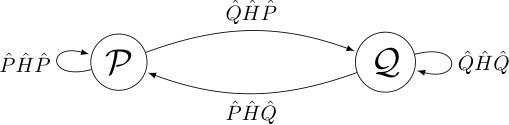 Figure 16
Peer Reviews
No public reviews on file for this paper yet. If you reviewed it on a platform where reviews are public (OpenReview, ICLR, NeurIPS, ICML), you can paste yours below so the community can read it here.
Videos
No videos yet. Explain this paper in a talk, walkthrough, or lecture? Add one.