
TL;DR
This paper extends the Wriggle polynomial to virtual tangles, demonstrating it as a Vassiliev invariant of order one for virtual knots and exploring properties related to tangle connected sums.
Contribution
The paper introduces a generalized Wriggle polynomial for virtual tangles, establishing it as a Vassiliev invariant of order one and analyzing its properties.
Findings
The generalized polynomial is a Vassiliev invariant of order one.
It applies to virtual tangles considering self-crossings.
Properties related to tangle connected sums are studied.
Abstract
We generalize the Wriggle polynomial, first introduced by L. Folwaczny and L. Kauffman, to the case of virtual tangles. This generalization naturally arises when considering the self-crossings of the tangle. We prove that the generalization (and, by corollary, the original polynomial) are Vassiliev invariants of order one for virtual knots, and study some simple properties related to the connected sum of tangles.
Click any figure to enlarge with its caption.
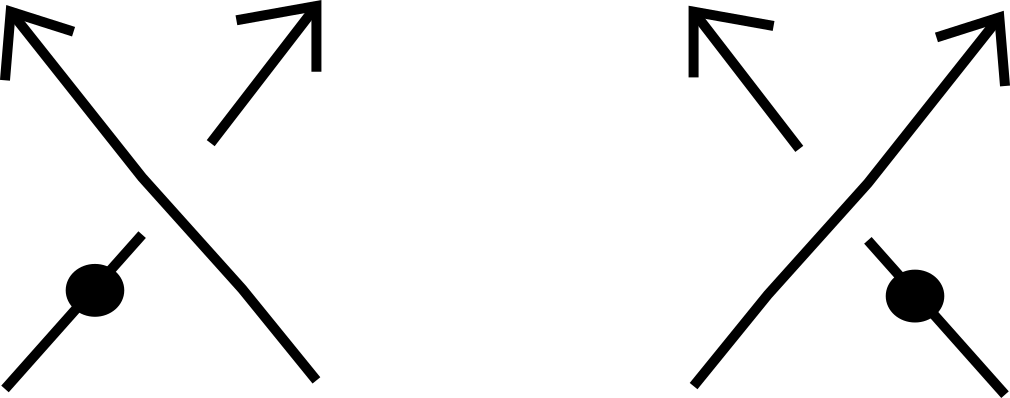 Figure 1
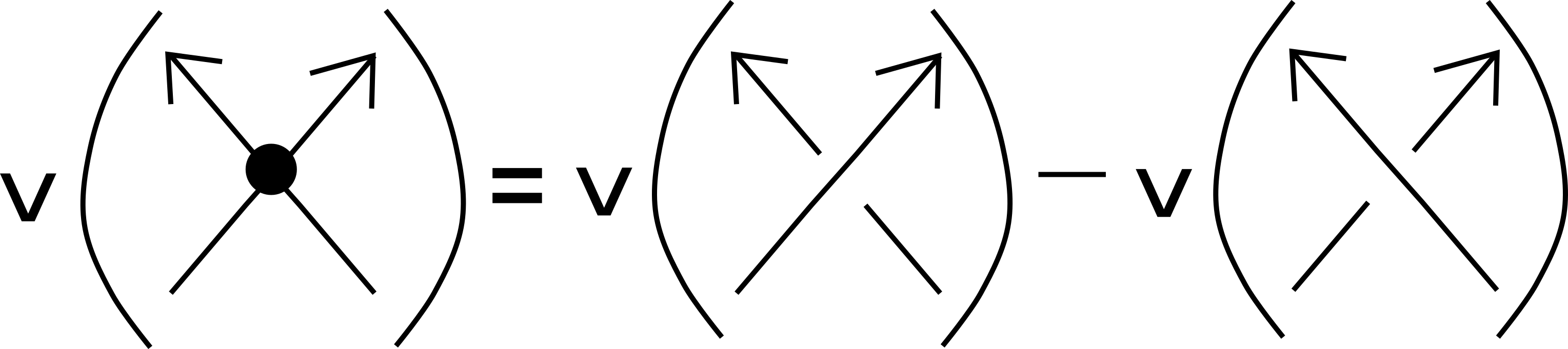 Figure 2
 Figure 3
 Figure 4
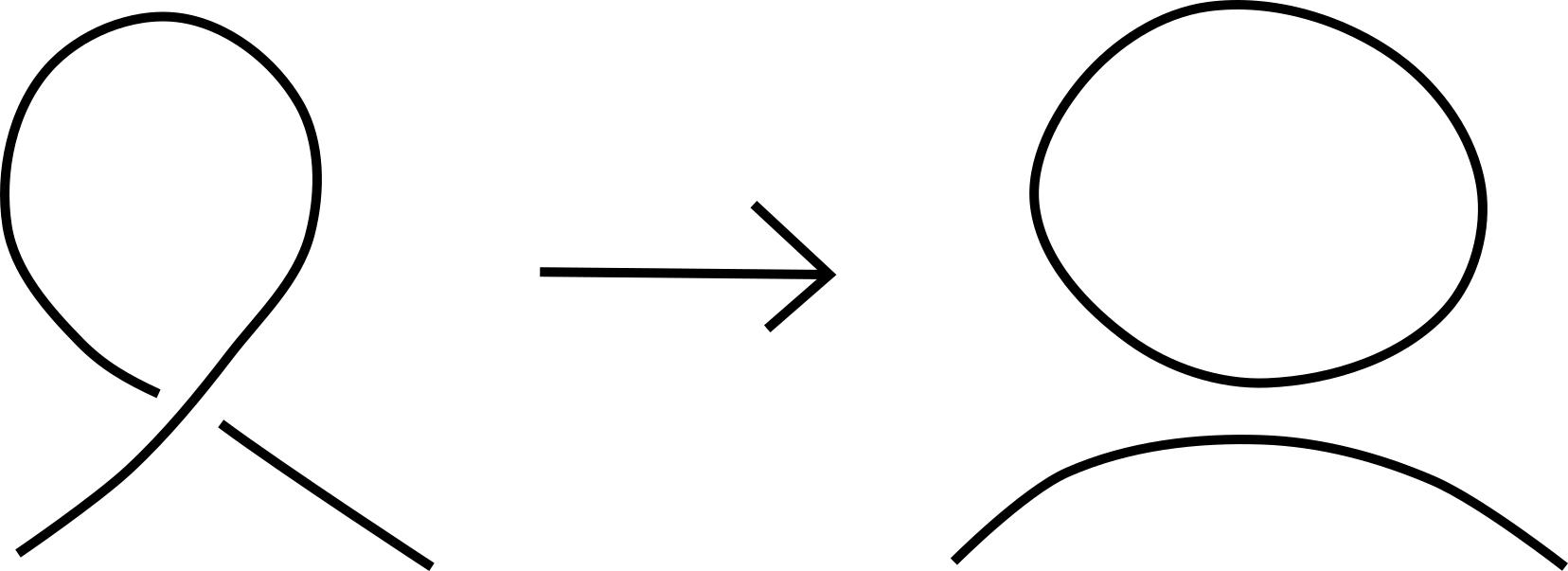 Figure 5
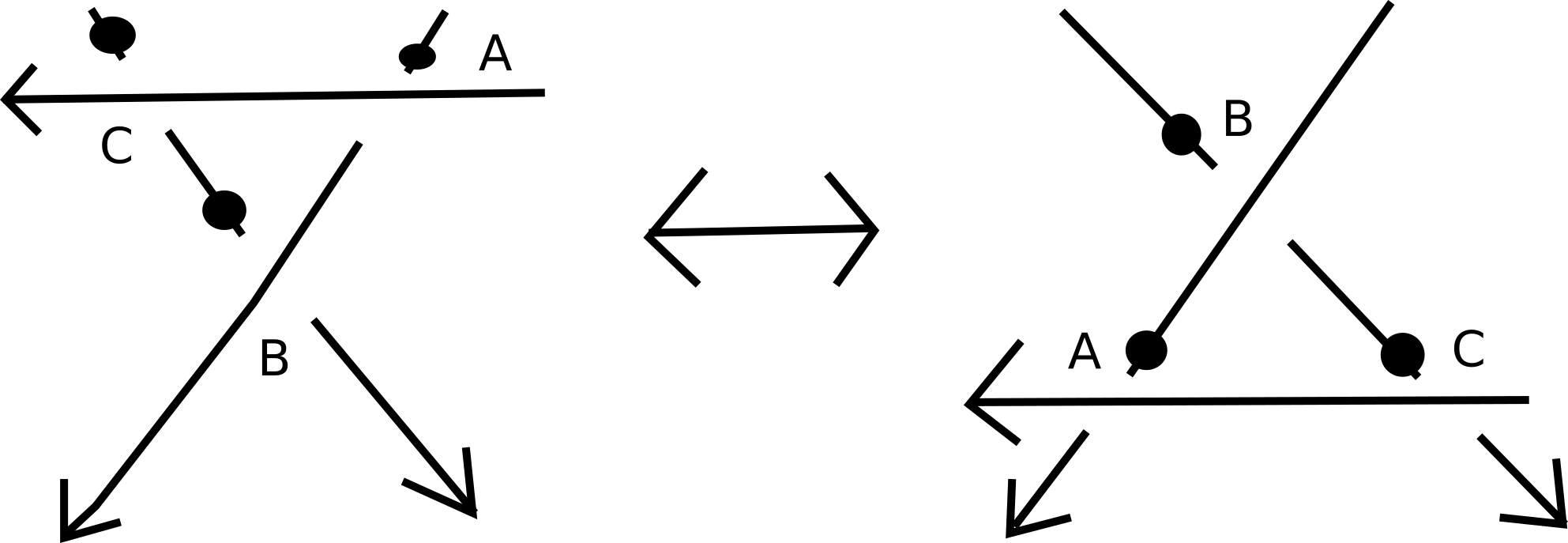 Figure 6
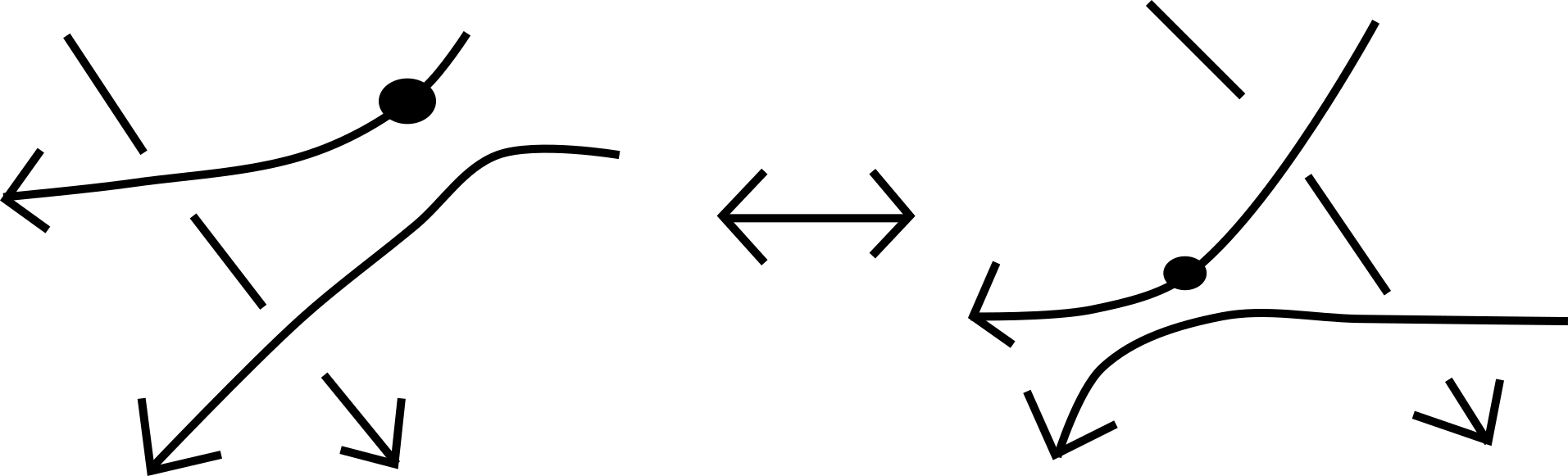 Figure 7
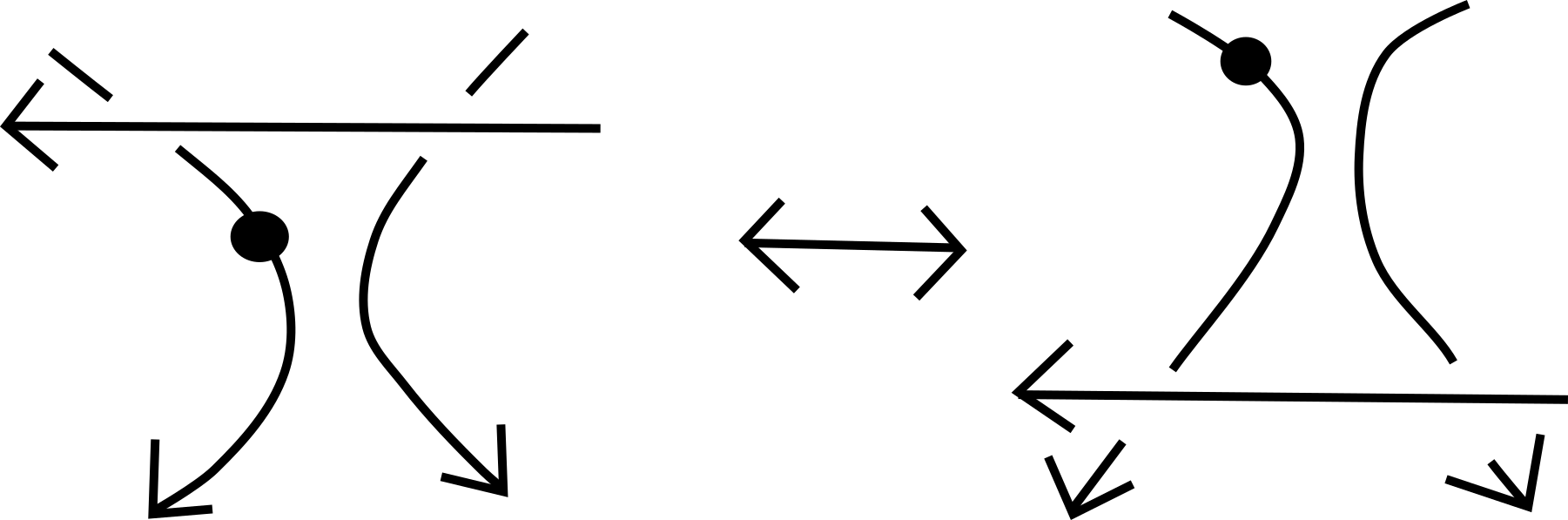 Figure 8
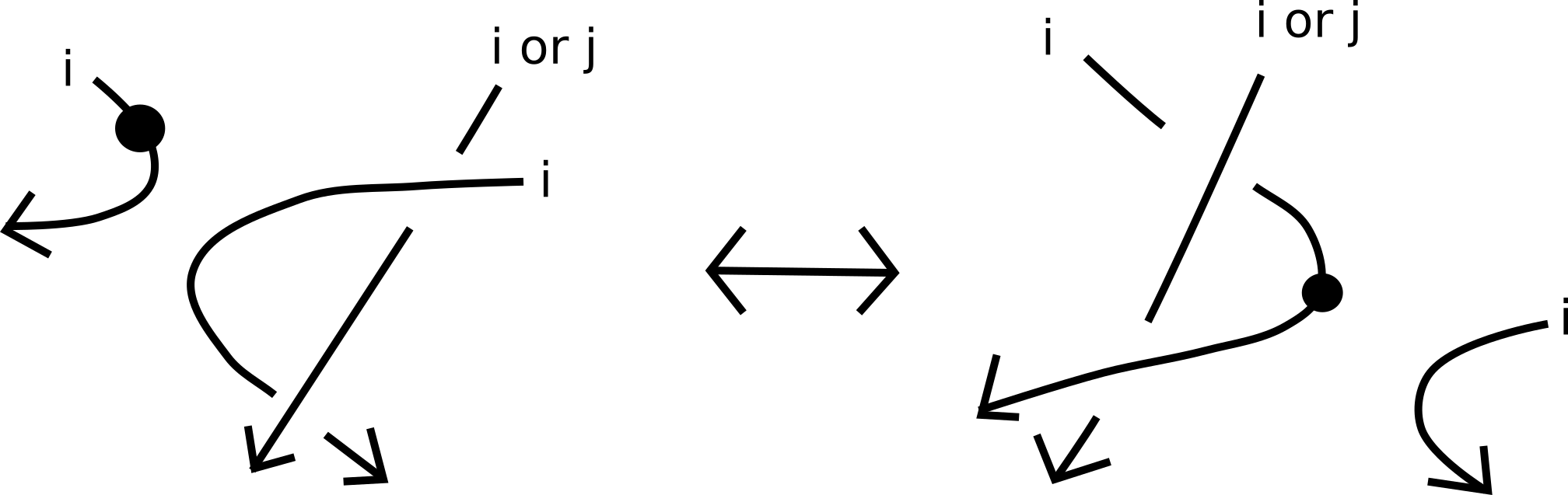 Figure 9
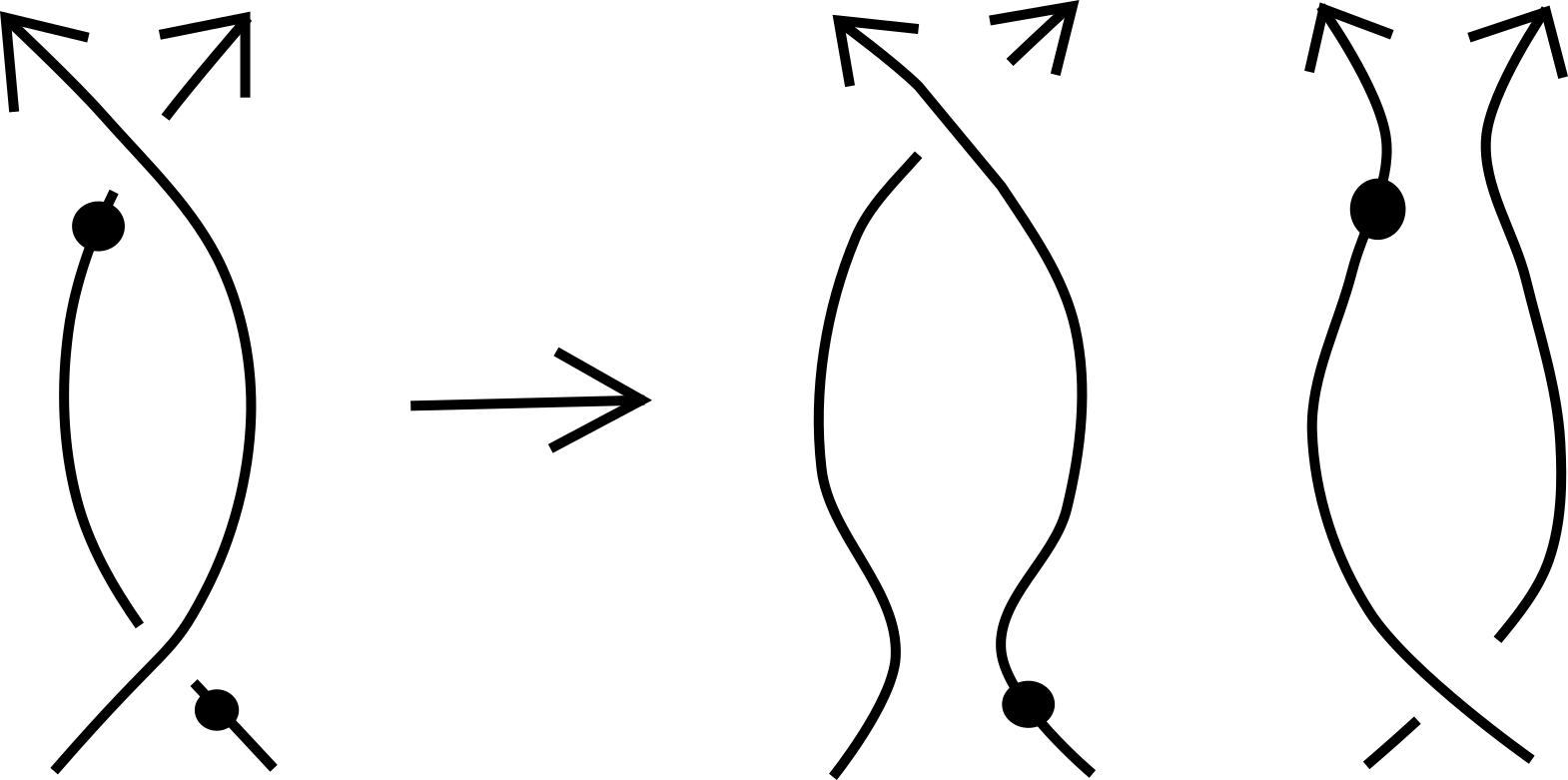 Figure 10
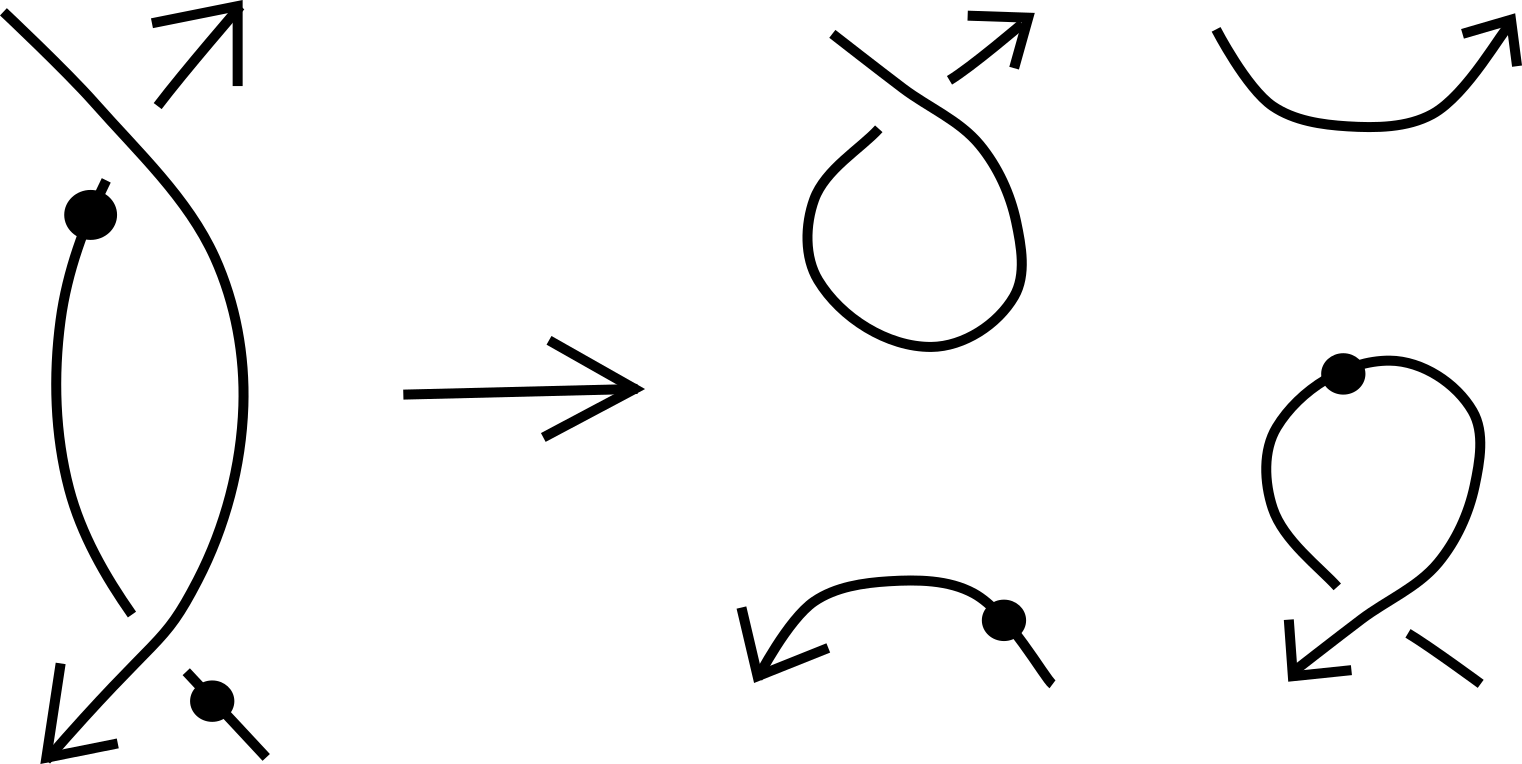 Figure 11
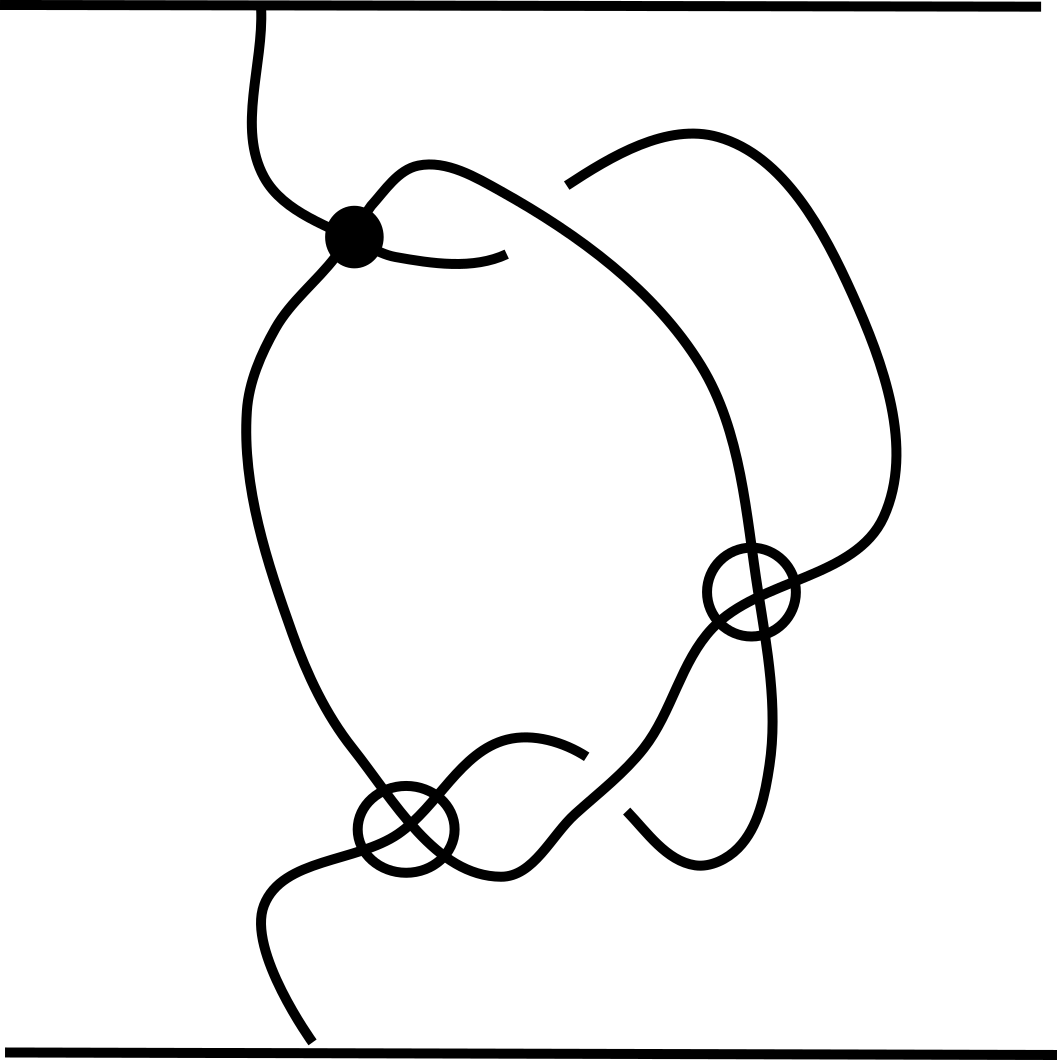 Figure 12
 Figure 13
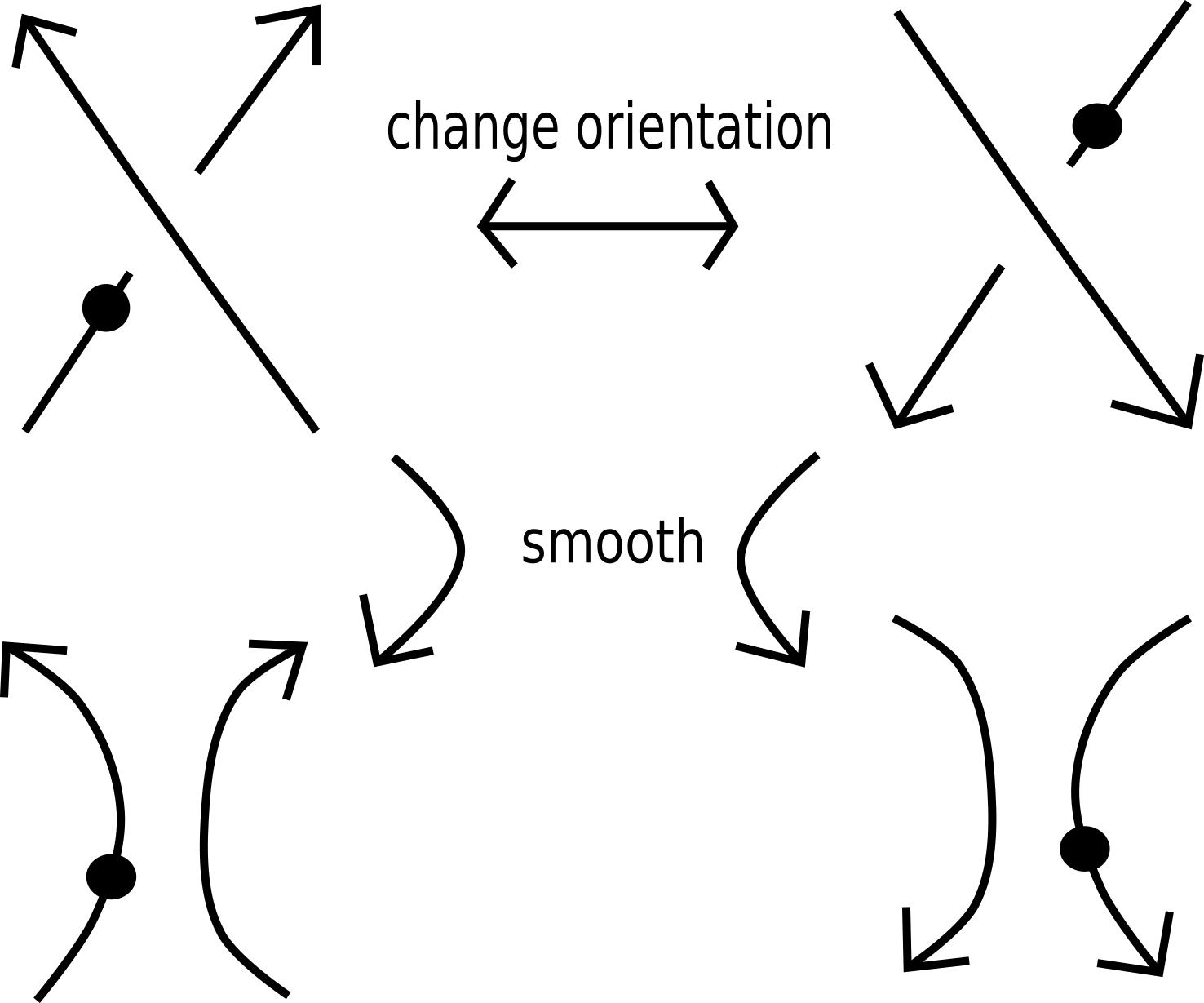 Figure 14
 Figure 15
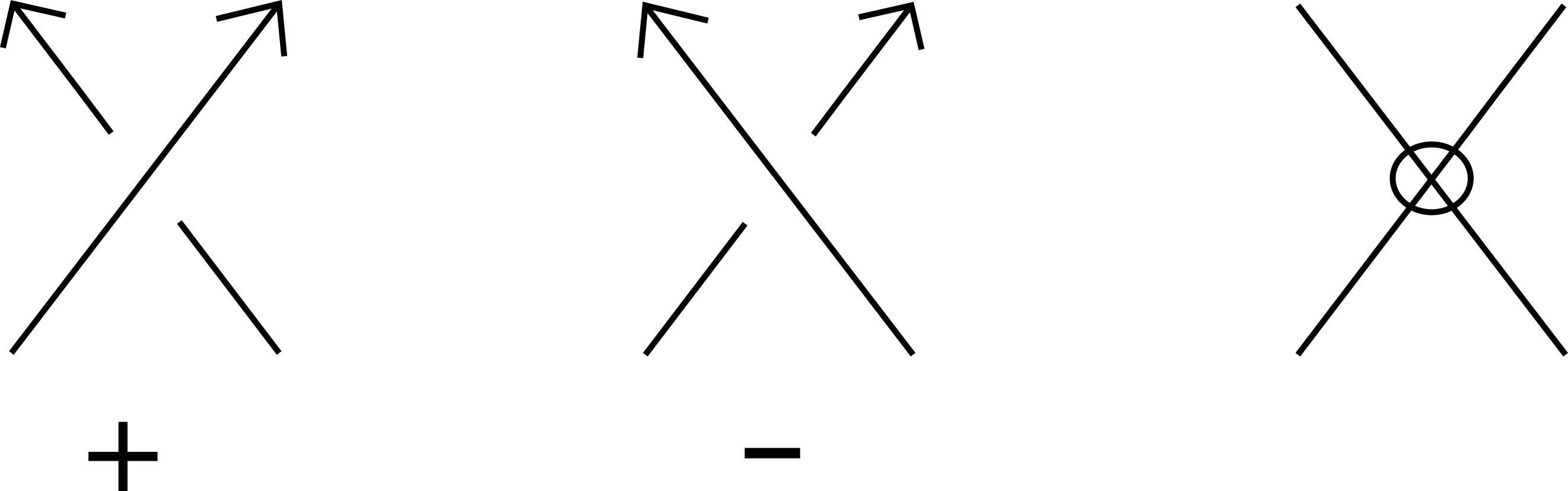 Figure 16
 Figure 17
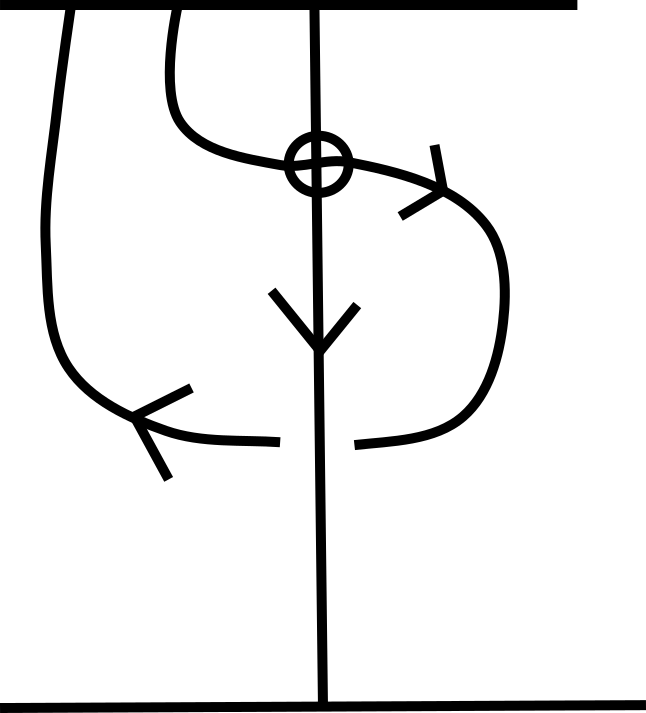 Figure 18
 Figure 19
Peer Reviews
No public reviews on file for this paper yet. If you reviewed it on a platform where reviews are public (OpenReview, ICLR, NeurIPS, ICML), you can paste yours below so the community can read it here.
Videos
No videos yet. Explain this paper in a talk, walkthrough, or lecture? Add one.
The Wriggle Polynomial for Virtual Tangles
Nicolas Petit
Abstract
We generalize the Wriggle polynomial, first introduced by L. Folwaczny and L. Kauffman, to the case of virtual tangles. This generalization naturally arises when considering the self-crossings of the tangle. We prove that the generalization (and, by corollary, the original polynomial) are Vassiliev invariants of order one for virtual knots, and study some simple properties related to the connected sum of tangles.
Oxford College of Emory University ([email protected])
1 Introduction
The aim of this note is to present a generalization of the Wriggle polynomial for virtual knots, introduced in [FK13], to the case of oriented virtual tangles (of the most general type). The interest in this topic came from the author’s previous paper [Pet18], in search of an index-type polynomial invariant for virtual tangles that would behave nicely under connected sum. While we don’t think the invariant we found fulfills our wish, we believe it to be a stepping stone in the right direction, because of its connections with the Affine Index polynomial.
This paper is organized as follows: section 2 provides a brief review of the definitions of virtual tangles, linking number, and Vassiliev invariants, that will be needed in the rest of the paper. In section 3.1 we review the construction of [FK13], then define the polynomial invariants for tangles. We prove our main proposition in section 3.2, and conclude by studying some of the properties of the invariant in section 3.3.
2 Background
2.1 Virtual knots and tangles
Virtual knots were first introduced by Kauffman in [Kau99]. They can be defined in multiple ways: we can think of a virtual knot as a knot projection (that is, an immersion of into the plane) where every double point is equipped with one of three types of crossing (classical positive, classical negative and virtual), up to Reidemeister moves and virtual Reidemeister moves. We can also think of virtual knots as equivalence classes of Gauss diagrams up to Reidemeister moves, or as equivalence classes of knots in thickened surfaces up to stabilization/destabilization. We will mostly focus on the diagrammatic approach in this paper.
A long virtual knot differs from a virtual knot in that we’re considering immersions of into the plane that are constant outside of a ball of finite radius (where all the “knottiness” is contained). We assign to every double point one of the three types of crossing, and consider this long virtual knot diagram up to Reidemeister and virtual Reidemeister moves. These virtual knots also possess the other two interpretations: they are Gauss diagrams with a distinguished point, representing the “point at infinity”, modulo Reidemeister moves; and can be interpreted as knots in thickened surfaces with boundary, up to stabilization/destabilization. For the way these approaches to long knots are connected, see [Chr], [Pet16].
A virtual tangle is a collection of virtual knots and long virtual knots, usually linked with each other in some fashion. We will typically represent tangles in a square, where the ends of the long component are fixed distinguished points on the top or bottom sides of the square. If the tangle has endpoints at the top and endpoints at the bottom, we say that the tangle is an tangle. We usually draw the top and bottom of the square, but not the sides, see Fig. 4.
We can define the connected sum of two virtual tangles as the “stacking” of one tangle above another. Of course, this operation is only defined if the two tangles have the same number of distinguished points alongside the common boundary, and their orientations match; because of this, the operation is, generally speaking, not commutative. We will denote the connected sum of tangle and by , in which we stack above .
Remark 2.1.1*.*
When talking about a “tangle” we will typically work in the most general setting: we allow our tangle to contain closed components, and we don’t assume that it has the same number of distinguished points in both boundaries, or that long components necessarily connect top to bottom.
Finally, let’s briefly review the notion of linking number of a virtual link. For oriented classical links, we have three equivalent definitions of the linking number between two components: we can either take the writhe of all the crossings where component one goes over component two, or take the writhe of all crossings where component two goes over component one, or take the overall writhe of the two components and divide by two.
[TABLE]
As a result of the definition, we clearly have that , so the linking number only depends on the pair of components.
However, that fact is not true anymore for virtual links, as the number of times goes over need not be the same as the number of times goes over . To see this, just take any classical link and change one crossing from classical to virtual; this operation will change one of the last two expressions of equation 1 but not the other. To be able to talk about a virtual linking number we must then pick one of the definitions. Throughout this paper, we will follow the literature and use the “over” definition, for which
[TABLE]
Note that the above observations imply that , so we need to consider the ordered pair of components when computing a virtual linking number. The difference is called the wriggle number of the pair of components [FK13]; clearly the wriggle number is an invariant of the ordered pair, and , so is an invariant of the (unordered) pair of components.
2.2 Vassiliev invariants of virtual knots
Vassiliev invariants for virtual knots were first introduced by Kauffman in [Kau99] as a natural generalization of the notion of a finite-type invariant for classical knots. Formally, a Vassiliev invariant of virtual knots is the extension of a virtual knot invariant to the category of singular virtual knots. These are virtual knots with an extra type of crossing (transverse double points), modulo the Reidemeister moves for virtual knots and some extra moves, called rigid vertex isotopy.
We extend the virtual knot invariant to singular virtual knots by resolving every double point as a weighted average of its two possible resolution, a positive and a negative crossing, see Fig. 5. We then say that is a finite-type invariant, or Vassiliev invariant, of order if it vanishes on every knot with more than double points. Examples of finite-type invariants according to this definition are the coefficient of in the Conway polynomial or the Birman coefficients.
We can naturally extend the above ideas to the case of virtual tangles. A finite-type or Vassiliev invariant of virtual tangles will be an extension of a virtual tangle invariant to virtual tangles with double points, where we resolve a double point with the same relation pictured in Fig. 5. Then is a Vassiliev invariant of order for virtual tangles if it vanishes on any tangle with more than double points; we say is of order if it is of order but not of order .
Remark 2.2.1*.*
Around the same time, Goussarov, Polyak and Viro [GPV00] were independently developing a different generalization to virtual knots of finite-type invariants, in terms of a new type of crossing called semi-virtual. We will not work with these finite-type invariants in this paper.
Remark 2.2.2*.*
We typically smooth crossings according to orientation and give the resulting object the inherited orientation, see Fig. 6. If both stands belong to the same component, as a result of the smoothing we will get a two-component object.
3 The self-crossing wriggle polynomial for virtual tangles
3.1 Definition of the invariant
We will briefly recall the definition of the Wriggle polynomial from [FK13], to then extend this invariant to the virtual tangle case.
Definition 3.1.1**.**
Let be a virtual knot. At every classical crossing of , denote the incoming understrand with a black dot, see Figure 7.
Smooth each crossing according to orientation, and compute the wriggle number of the resulting two-component link (see Remark 2.2.2), where the component that inherits the dot is labeled to be component one. We define the Wriggle polynomial as
[TABLE]
Figure 8 shows an example of computing the wriggle polynomial for the virtualized trefoil. Smoothing the left crossing yields a link where component has a positive crossing going under component , so ; smoothing the right crossings gives a link where component has a positive crossing going over component , so . Both crossings are positive, so the Wriggle polynomial of the knot is
[TABLE]
Proposition 3.1.1** ([FK13]).**
The Wriggle polynomial is a virtual knot invariant. It coincides with the affine index polynomial of [Kau13].
Remark 3.1.1*.*
Before talking about the general virtual tangles case, we should observe that the wriggle polynomial of a long virtual knot is the same as the wriggle polynomial of its closure. This is easy to see if we look at the Gauss diagram version of the wriggle polynomial, which is explained in detail in [FK13] while showing that the wriggle polynomial coincides with the affine index polynomial. We can rewrite the wriggle number as the difference of the number of chords that intersect positively and the ones that intersect negatively; since the presence of the point at infinity does not affect either of these numbers, the wriggle polynomial of the long knot will be the same as the one of its closure. As a consequence, if two long knots have the same closure they can’t be distinguished by the wriggle polynomial.
Definition 3.1.2**.**
Let be an -component oriented virtual tangle, where the components have been ordered , and assign to each component a variable . Let be a self-crossing of the component ; mark the incoming understand of this self-crossing with a black dot. Smooth the self-crossing according to orientation, and compute the wriggle number of the two-component link obtained by smoothing , ignoring every other component of T and any crossings they might have with .
The self-crossing wriggle polynomial is then defined as
[TABLE]
where the second sum is over all self-crossings of component .
Theorem 3.1.1**.**
The wriggle polynomial for virtual tangles is an order one Vassiliev invariant of virtual tangles.
3.2 Proof of Theorem 3.1.1
To successfully prove the theorem, we need to show three things: the polynomial is invariant under Reidemeister moves, its extension vanishes on any virtual tangle with two double points, and there is a virtual tangle with one double point on which the extension is nonzero. Let us first prove that the polynomial is, in fact, a virtual tangle invariant, by checking its invariance under Reidemeister moves.
Proof.
We should note that, since the invariant only cares about self-crossings, we only need to consider the strand configurations in Reidemeister moves that form at least one self-crossing. In Fig. 9 we can easily see that, no matter which component inherits the dot, the wriggle number of the two resulting components is zero, so the contribution of the kink is , which is the same as the contribution of the strand without the kink; this shows invariance under the first Reidemeister move.
The cases of the second Reidemeister move are covered in Fig. 10: the links that result after the smoothing are isotopic (up to Reidemeister move one), and the dot ends up in the same component, so their wriggle number is identical. Since one crossing is positive and the other is negative, the two contributions cancel out, which shows that the invariant doesn’t change under Reidemeister move two.
Let’s look at Reidemeister move three: there is a correspondence between the crossings before and after the move, as pictured by Fig. 11. If all three strands belong to the same component of the tangle we’ll need to consider the contributions of all crossings, otherwise the two strands that belong to the same component will only intersect in one of the crossings. For two of these crossings the smoothing yields homotopic links with the same choice of component one, as pictured in Fig. 12(a) and 12(b); these crossings will then contribute the same amount before and after the move.
The case of crossing C, pictured in Fig. 13, deserves a few more words: because is a self-crossing, we assume that the two strands that cross there belong to the same component, say . If the third strand belongs to a different component , we can ignore it in computing the invariant, and the resulting links are clearly isotopic, so the wriggle polynomial on either side of the move is the same. In the case that the third strand also belongs to component , the other two crossings are self-crossings, so we must look at their contribution to the wriggle number, and that contribution will depend on whether after the smoothing the third strand is part of component one or component two. Let’s suppose it belongs to component one: the picture on the left of Fig. 13 then contains two positive crossings, one going over component two and one going under component two, so its wriggle number contribution is , while the picture on the right contains two self-crossings of component one of the link, which are not counted in the wriggle number, so the two crossings also contribute [math] to the wriggle number. All the other crossings outside the small region contribute the same to the wriggle number before and after the move (since the same component is chosen as component one), so both sides of Fig. 13 have the same wriggle number.
Overall, we proved that the corresponding crossings on both sides of Fig. 11 have the same wriggle number, so the self-crossing wriggle polynomial is left unchanged by Reidemeister move three.
Finally, the case of the mixed Reidemeister move is pictured in Fig. 14. For both versions of the move, the resulting links are isotopic and the same component is picked as component one, so the polynomial is invariant under this move as well. This completes the proof that the self-crossing wriggle polynomial is an invariant of virtual tangles.
∎
The next step of the proof requires showing that the extension of the invariant to virtual tangles with double points always vanishes on tangles with two double points.
Proof.
Let’s consider a tangle with two double points , and resolve said double points according to the rule of section 2.2. We will get the following expression (where, for notational convenience, we replaced the variables with the double points and their resolution):
[TABLE]
A schematic version of the resulting expression is shown in Fig. 15, where the top crossing is and the bottom crossing is .
Note that a priori each of could either be a self-crossing of a given component, or a crossing involving multiple components, and we will need to account for any possible combination. Let’s start by looking at the terms we get from and themselves. Clearly, if either of the double points is at a crossing of two components, its resolutions are not self-crossings and as such do not contribute to the invariant. Now let’s look at the case where is a self-crossing of component and is a self-crossing of component . If we smooth in the first two terms of the expansion we get isotopic links, and the same thing is true when we smooth the last two terms of the expansion; since these terms come with alternating signs, the total contribution of is zero, and an analogous argument shows that the total contribution of is also zero.
In the case where both and are self-crossings of component , we need to be a little more careful. Once again, let’s focus on the first two terms of the expansion: it turns out that the contribution of to the wriggle number is the same in both terms. Either is a self-crossing of the link after the smoothing, and it doesn’t contribute to the wriggle number; or both the sign of AND which strand goes over change from one term to another, so it contributes the same amount () in both terms. Every other crossing that is not clearly contributes the same amount to both terms, so the wriggle number of the first two terms is the same; because of the alternating sign in front, the contribution of in the first two terms cancels out, and for similar reasons the contribution of the last two terms also cancels out. We can also use a similar argument with the third and fourth term of the expansion, as well as in the case of smoothing , pairing the first and third term and the second and fourth term. As a result, the net contribution of the crossings and to the invariant is zero.
Now we need to look at how resolving and affects the contribution of any other crossing. Once again, the idea will be to pair up the terms.
- •
if are not self-crossings, they will not contribute to any wriggle number, so each term in the expansion has the same invariant. Because of the alternating signs, the total contribution of every other crossing is zero.
- •
if is a self-crossing of component and is a self-crossing of component , might affect the wriggle number from smoothing any self-crossing of component , and similarly might affect the wriggle number from smoothing self-crossings of component . Looking at and (since the case is analogous) shows that the contribution of to is always the same (either zero if is a self-crossing of , or always depending which strand in belongs to component one of ). Since all terms have the same wriggle number, by the alternating signs the total contribution of is zero. This argument applies to every crossing that is not or , so the total contribution of every other crossing is zero.
- •
Finally, in the case where and both belong to component , we need to make sure that the contribution of any self-crossing of component ultimately cancels out in the expansion. If in either or is a self-crossing the argument of the previous case applies; otherwise a straightforward check of every possible choice of which strand in and belongs to component one of shows that the wriggle number of is the same in every term, so once again the total contribution of every other crossing is zero because of the alternating sign.
In all of the above cases, the total contribution of any crossing is zero; this means , completing this part of the proof. ∎
Finally, to show that the invariant doesn’t vanish on a tangle with one double point we will consider a one-component tangle, i.e. a long virtual knot. It is easy to see that the extension of to the tangle of Fig. 16 is . This completes the proof of the theorem.
Remark 3.2.1*.*
It is easy to see that if the tangle has only one component, this invariant reduces to the wriggle polynomial invariant of [FK13]. As a consequence of Theorem 3.1.1, the wriggle polynomial for virtual knots is also an order one Vassiliev invariant of virtual knots. The proof that it vanishes on any knot with two double points is identical to the one for the tangle version, and the long knot in Fig. 16 is a long virtual knot with one double point whose wriggle polynomial is nonzero.
3.3 Properties of the invariant
In this section we will study a couple of properties of the self-crossing wriggle polynomial.
Proposition 3.3.1**.**
Let be a virtual tangle on components, and a virtual tangle obtained from by reversing the orientation of component . Then
[TABLE]
Proof.
Consider the effect of swapping the orientation of a component on a self-crossing of said component, pictured in Fig. 17. Changing the orientation of the component will change the direction of both strands of a self-crossing, thus preserving their sign.
After smoothing a self-crossing, the resulting links are isotopic as unoriented links. Since both strands of the link swap orientation, the sign of every other crossing is also preserved; so the only difference in computing the two wriggle numbers comes from the choice of component one. As mentioned in section 2, exchanging components one and two will change the sign of the wriggle number. So turns into for each self-crossing of , which means we’re replacing with .
∎
Proposition 3.3.2**.**
Let and be two oriented virtual tangles such that is well-defined, neither of them containing a long component whose two ends belong to the same boundary (i.e. no “cups” or “caps” allowed). Assume that in the connected sum component glues to component for all for the appropriate permutation . Then
[TABLE]
where is the set of relations
Corollary 3.3.1**.**
The self-crossing wriggle polynomial is additive and commutative under connected sum of virtual string links: if are virtual string links on strands, then .
Proof.
Suppose we’re dealing with two tangles with no closed component; each tangle has its own self-crossing polynomial , (we use different variables to keep track of the components more easily). Assuming that the connected sum is well-defined, each long component of must be connected to a long component of ; suppose is glued to for an appropriate permutation to form the -th component of . Let be the set of relations of the form that come from the above identification. Note that any closed components of or do not glue to anything, so their contribution to the self-crossing wriggle polynomial is unchanged by the glueing. Let us now consider the long components: on the one hand the -th long component of contributes to the self-crossing polynomial the terms
[TABLE]
But the self-crossings of are the union of the self-crossings of with those of . We can then rewrite the above expression as
[TABLE]
On the other hand, the sum of the contributions of the self-crossings of and the self-crossings of is
[TABLE]
The key observation is that the glueing has no effect on the wriggle number. Because the knottedness of each tangle is contained in its own square, glueing does not add any new crossings to any of the links obtained by smoothing a self-crossing of , and the same thing is true reversing the roles of and . So up to identifying the dummy variables and (which we do by quotienting out by ), the terms in equation 3 are the same as the contribution of ; if we took the sum over all components, we would thus get
[TABLE]
The reason we need to avoid “cups” and “caps” in our glueing is that they identify two distinct components of the tangle the get glued to. This potentially changes some mixed crossings into self-crossings, and can affect the value of the polynomial in unexpected ways. Also note that and are not necessarily both defined, and even when they are there is no guarantee that the components glue in the same way. This means that, generally speaking, .
∎
Proof of Corollary 3.3.1.
In a virtual string link the endpoints don’t permute; this means that in Proposition 3.3.2, which shows that the invariant is simply additive. Moreover, the self-crossings of component are the same as those of component , so we also get commutativity under connected sum. ∎
4 Future work
The invariant we defined in section 3 has one major flaw: it does not detect the way that the components of are linked together, and it is really just the sum of the wriggle polynomials of each separate component. We are currently investigating ways of strengthening the invariant to detect the linking between components in a way that generalizes the self-crossing wriggle polynomial. We are at the same also pursuing a slightly different approach, derived from the following fact: in the virtual knot case, the Wriggle polynomial coincides with the Affine Index polynomial, as shown in [FK13]. It is easy to see that this is also true for long virtual knots, since the point at infinity does not affect either the labeling or the smoothing of the crossings. We can then construct a “self-crossing” affine index polynomial in the obvious way, ensuring it coincides with the self-crossing wriggle polynomial, and take that as a starting point for our generalization.
We have completed preliminary work on defining an affine index polynomial for virtual tangles, in a way that extends the already existing generalization for compatible virtual links found in [Kau18], by using a bi-label for every arc of the tangle, separately keeping track of the self-crossings and the mixed crossings. We are currently studying some of the properties of the new invariant. We are currently hard at work in studying the properties of said invariant, other possible ways of generalizing it, and if it is possible to convert these results to the wriggle polynomial setting.
The author would like to acknowledge his institution, Oxford College of Emory University, for research support during the development of this paper.
The reference list from the paper itself. Each links out to its DOI / PubMed record.
- 1[Chr] M. W. Chrisman, Prime decomposition and non-commutativity in the monoid of long virtual knots , ar Xiv:math.GT/1311.5748.
- 2[FK 13] L. C. Folwaczny and L. H. Kauffman, A linking number definition of the affine index polynomial , Journal of Knot Theory and Its Ramifications 22 (2013), no. 12.
- 3[GPV 00] M. Goussarov, M. Polyak, and O. Viro, Finite-type invariants of classical and virtual knots. , Topology 39 (2000), no. 5, 1045–1068.
- 4[Kau 99] L. H. Kauffman, Virtual knot theory , European J. Comb 20 (1999), no. 7, 663–690.
- 5[Kau 13] , An affine index polynomial invariant of virtual knots , Journal of Knot Theory and Its Ramifications 22 (2013), no. 04, 1340007.
- 6[Kau 18] Louis H. Kauffman, Virtual knot cobordism and the affine index polynomial , Journal of Knot Theory and Its Ramifications 27 (2018), no. 11, 1843017.
- 7[Pet 16] N. Petit, Finite-type invariants of long and framed virtual knots , https://arxiv.org/abs/1610.03825; submitted for publication, 2016.
- 8[Pet 18] , Index polynomials for virtual tangles , Journal of Knot Theory and Its Ramifications 27 (2018), no. 12, 1850073.