New insight on Young Stellar Objects accretion shocks -- a claim for NLTE opacities
Lionel de S\'a, Jean-Pierre Chi\`eze, Chantal Stehl\'e, Ivan Hubeny,, Thierry Lanz, V\'eronique Cayatte

TL;DR
This study investigates how including NLTE opacities and radiation-hydrodynamics coupling affects the structure, dynamics, and X-ray emission of accretion shocks in young stellar objects, revealing significant impacts on their observable properties.
Contribution
It introduces a novel simulation approach that incorporates NLTE ionization and radiation-hydrodynamics coupling to better model accretion shocks in CTTSs.
Findings
Chromospheric acoustic heating influences the shock cycle duration.
Radiation-hydrodynamics coupling heats the accretion flow and chromosphere.
X-ray luminosity varies significantly with model parameters, between 30% and 94% of mechanical energy.
Abstract
Context. Accreted material onto CTTSs is expected to form a hot quasi-periodic plasma structure that radiates in X-rays. Simulations of this phenomenon only partly match with observations. They all rely on a static model for the chromosphere model and on the assumption that radiation and matter are decoupled. Aims. We explore the effects on the structure and on the dynamics of the accretion flow of both a shock-heated chromosphere and of the coupling between radiation and hydrodynamics. Methods. We simulate accretion columns falling onto a stellar chromosphere using the 1D ALE code AstroLabE. This code solves the hydrodynamics equations along with the two first momenta equations for radiation transfer, with the help of a dedicated opacity table for the coupling between matter and radiation. We derive the total electron and ions densities from collisional-radiative NLTE ionisation…
Click any figure to enlarge with its caption.
 Figure 1
 Figure 2
 Figure 3
 Figure 4
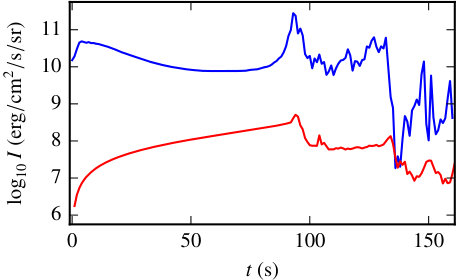 Figure 5
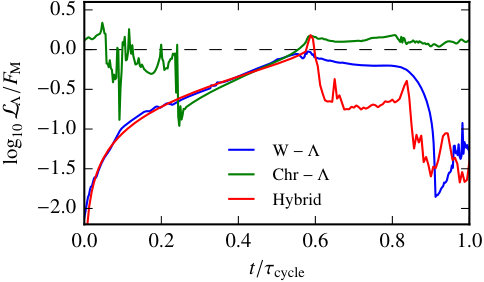 Figure 6
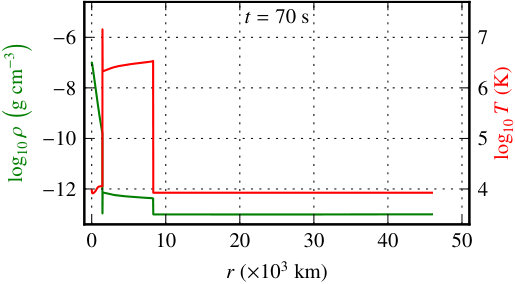 Figure 7
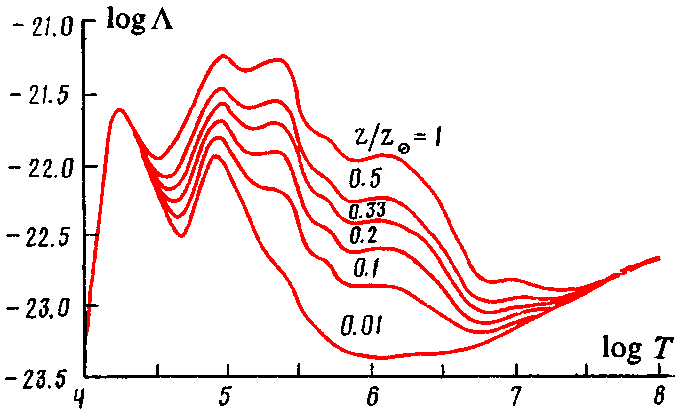 Figure 8
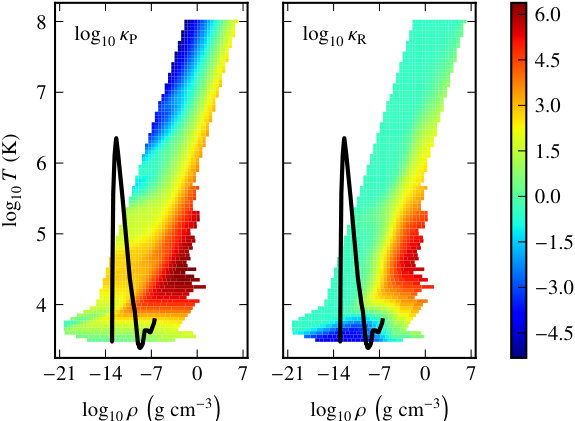 Figure 9
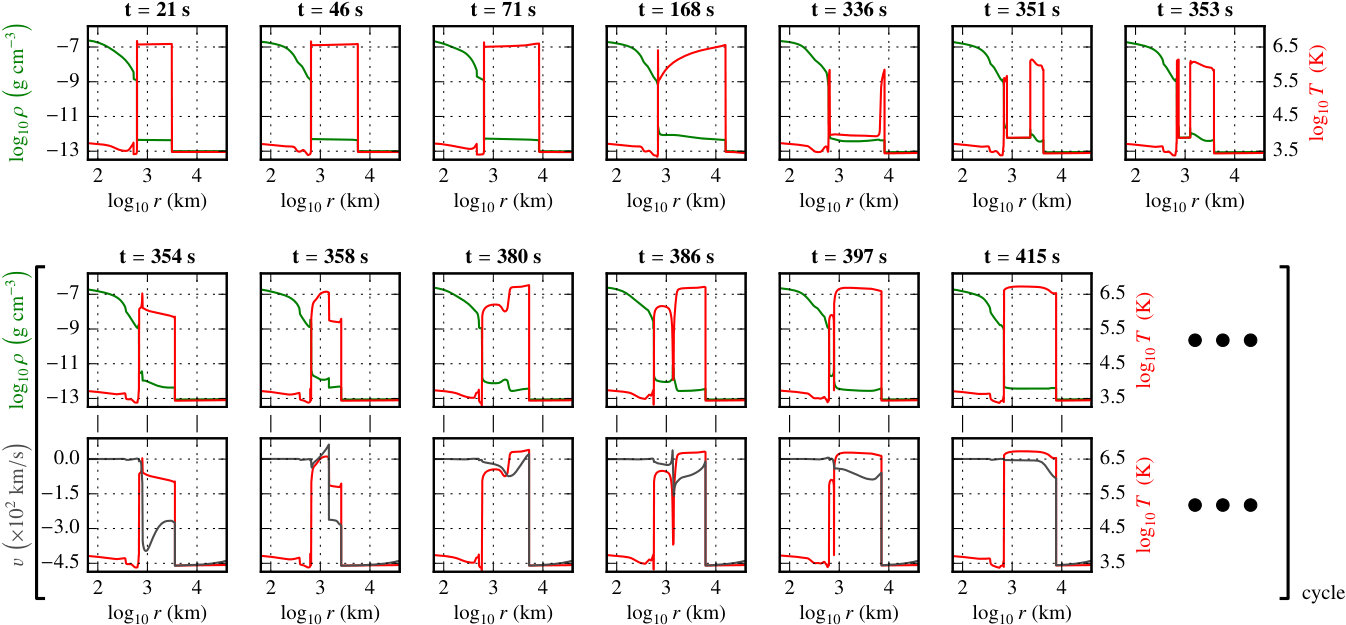 Figure 10
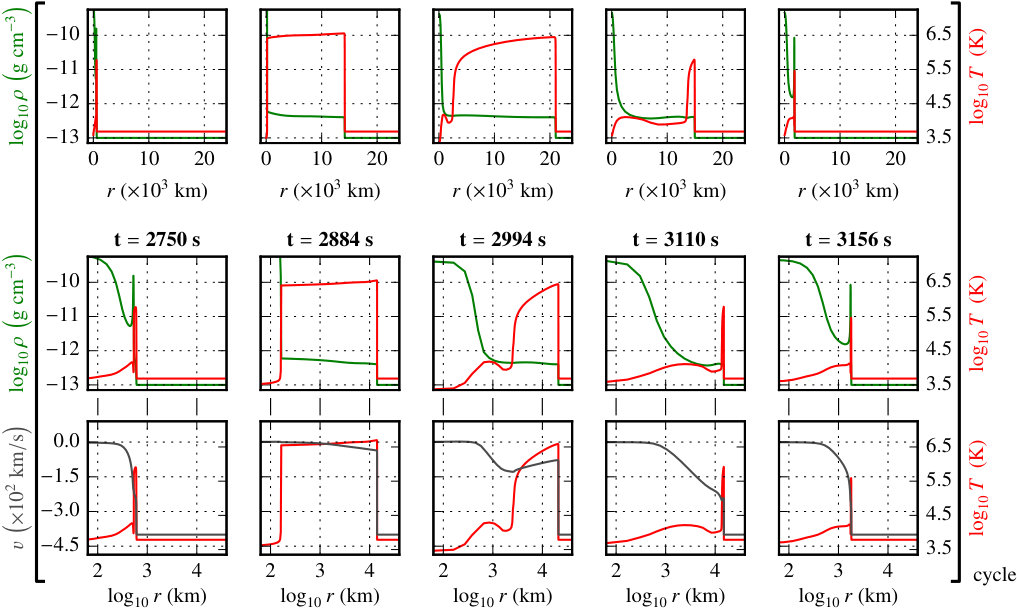 Figure 11
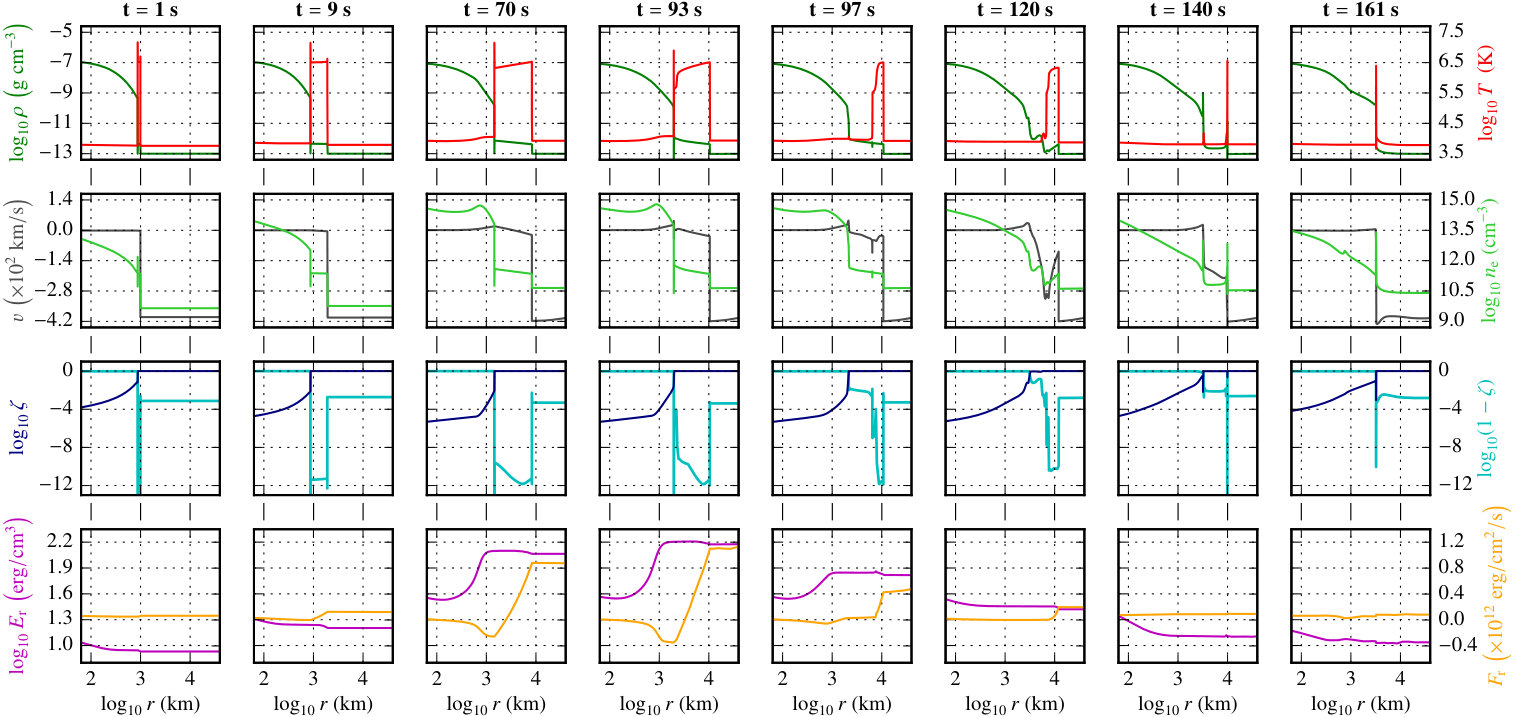 Figure 12
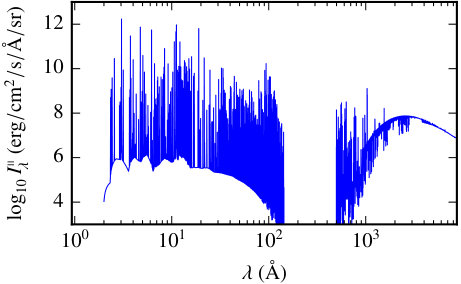 Figure 13
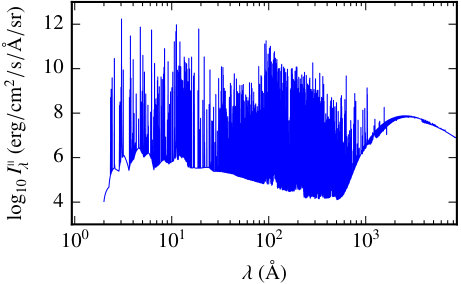 Figure 14
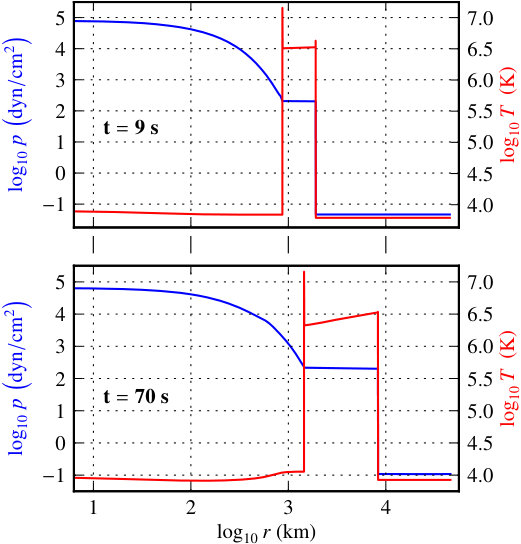 Figure 15
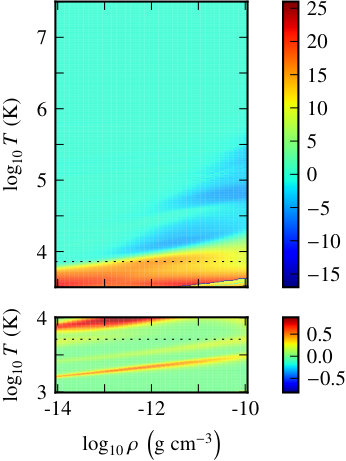 Figure 16
 Figure 17
 Figure 18
Peer Reviews
No public reviews on file for this paper yet. If you reviewed it on a platform where reviews are public (OpenReview, ICLR, NeurIPS, ICML), you can paste yours below so the community can read it here.
Videos
No videos yet. Explain this paper in a talk, walkthrough, or lecture? Add one.
Taxonomy
TopicsAstrophysical Phenomena and Observations · Astrophysics and Star Formation Studies · Astronomy and Astrophysical Research