Subaru High-z Exploration of Low-Luminosity Quasars (SHELLQs). VI. Black Hole Mass Measurements of Six Quasars at 6.1<z<6.7
Masafusa Onoue, Nobunari Kashikawa, Yoshiki Matsuoka, Nanako Kato,, Takuma Izumi, Tohru Nagao, Michael A. Strauss, Yuichi Harikane, Masatoshi, Imanishi, Kei Ito, Kazushi Iwasawa, Toshihiro Kawaguchi, Chien-Hsiu Lee,, Akatoki Noboriguchi, Hyewon Suh, Masayuki Tanaka, Yoshiki Toba

TL;DR
This study measures black hole masses in six low-luminosity quasars at redshifts 6.1 to 6.7, revealing the presence of billion-solar-mass black holes and suggesting early rapid growth in the universe's first billion years.
Contribution
First black hole mass measurements of low-luminosity z>6 quasars, showing a wide range of accretion rates and challenging models of black hole growth from stellar remnants.
Findings
Black hole masses range from 10^7.6 to 10^9.3 solar masses.
Most quasars are powered by ~10^9 Msun black holes with sub-Eddington accretion.
Eddington ratio distribution is broader and skewed towards lower rates than previous studies.
Abstract
We present deep near-infrared spectroscopy of six quasars at 6.1<z<6.7 with VLT/X-Shooter and Gemini-N/GNIRS. Our objects, originally discovered through a wide-field optical survey with the Hyper Suprime-Cam (HSC) Subaru Strategic Program (HSC-SSP), have the lowest luminosities (-25.5< M1450<-23.1 mag) of the z>5.8 quasars with measured black hole masses. From single-epoch mass measurements based on MgII2798, we find a wide range in black hole masses, from M_BH=10^7.6 to 10^9.3 Msun. The Eddington ratios L_bol/L_Edd range from 0.16 to 1.1, but the majority of the HSC quasars are powered by M_BH=10^9 Msun supermassive black holes (SMBHs) accreting at sub-Eddington rates. The Eddington ratio distribution of the HSC quasars is inclined to lower accretion rates than those of Willott et al. (2010a), who measured the black hole masses for similarly faint z=6 quasars. This suggests that the…
Click any figure to enlarge with its caption.
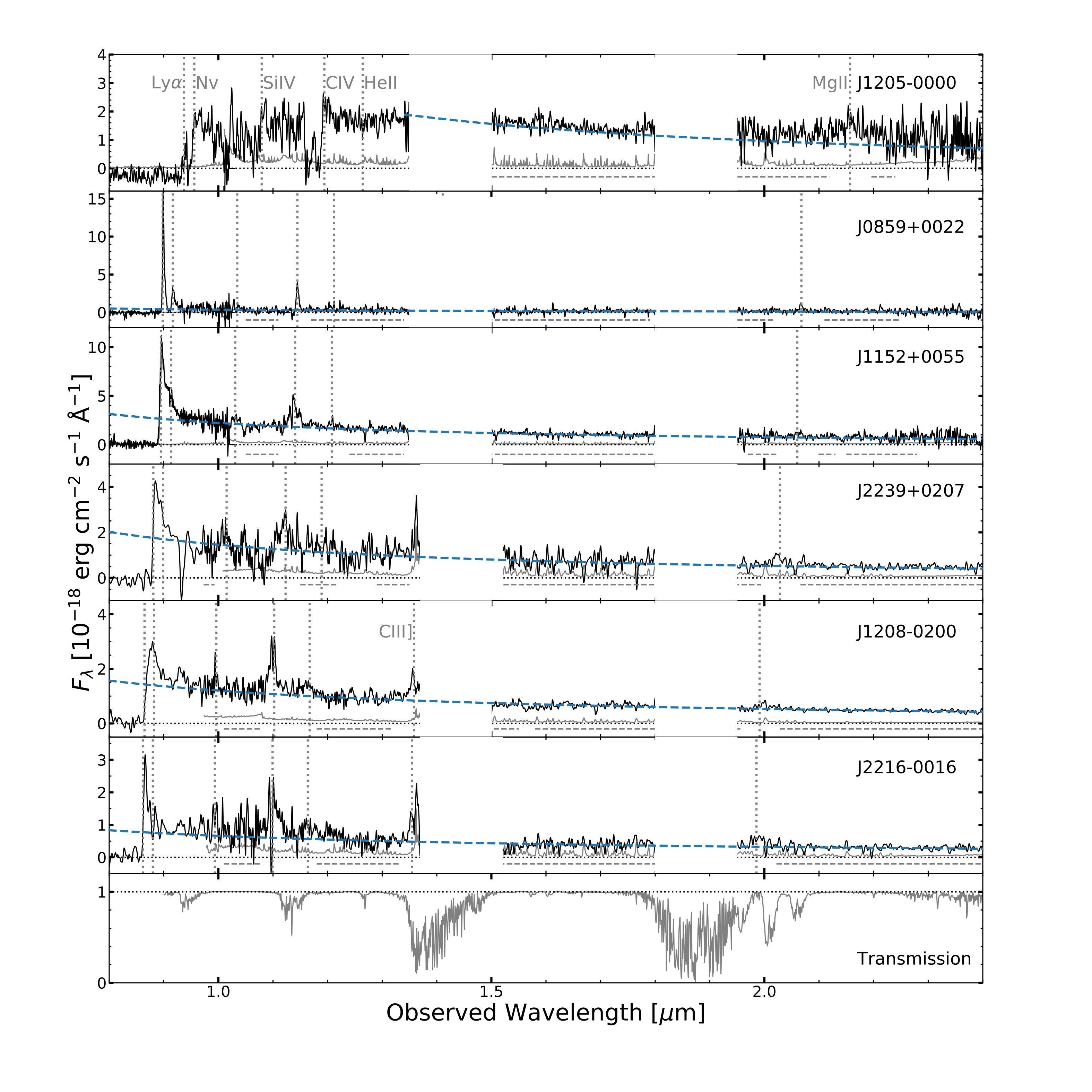 Figure 1
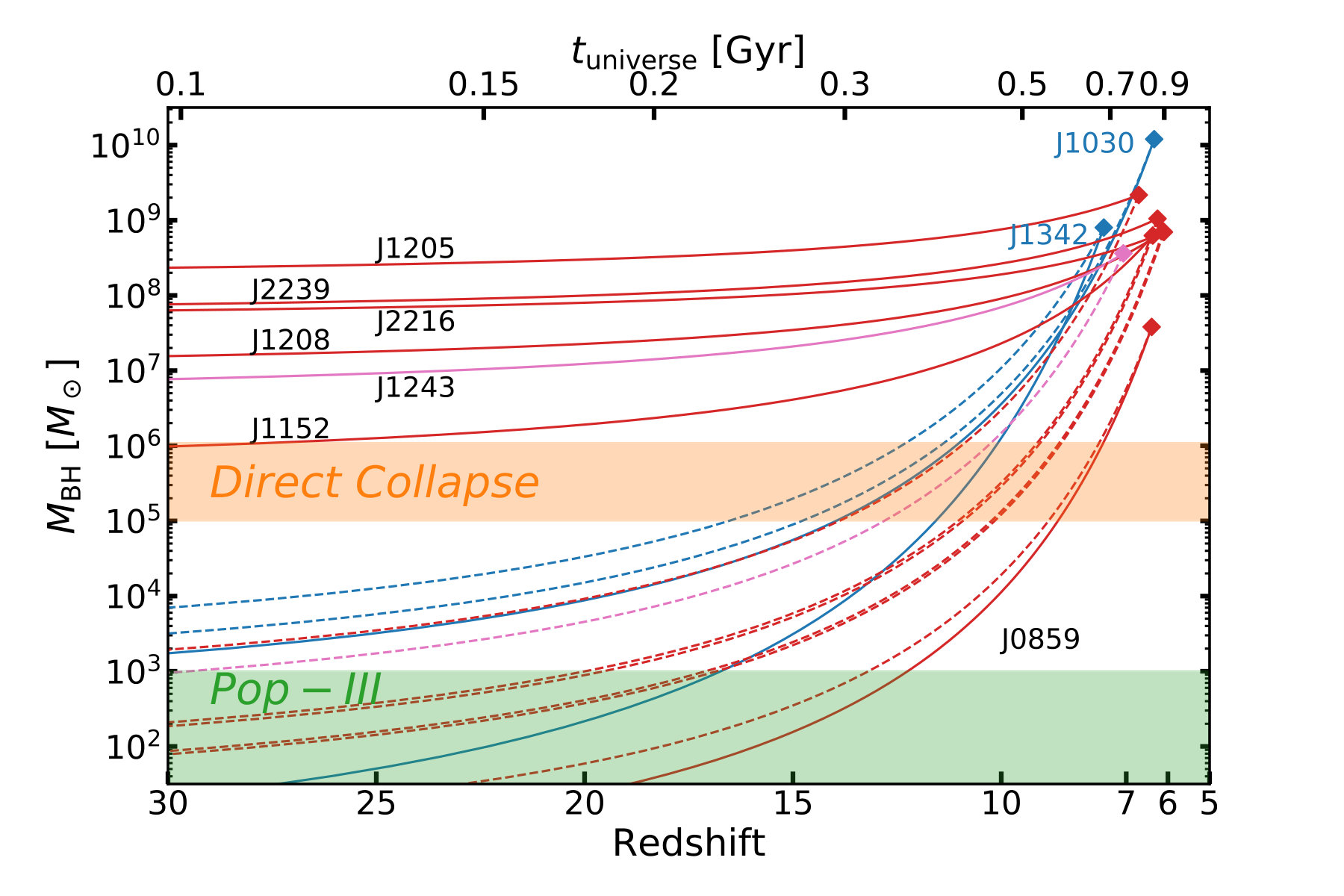 Figure 10
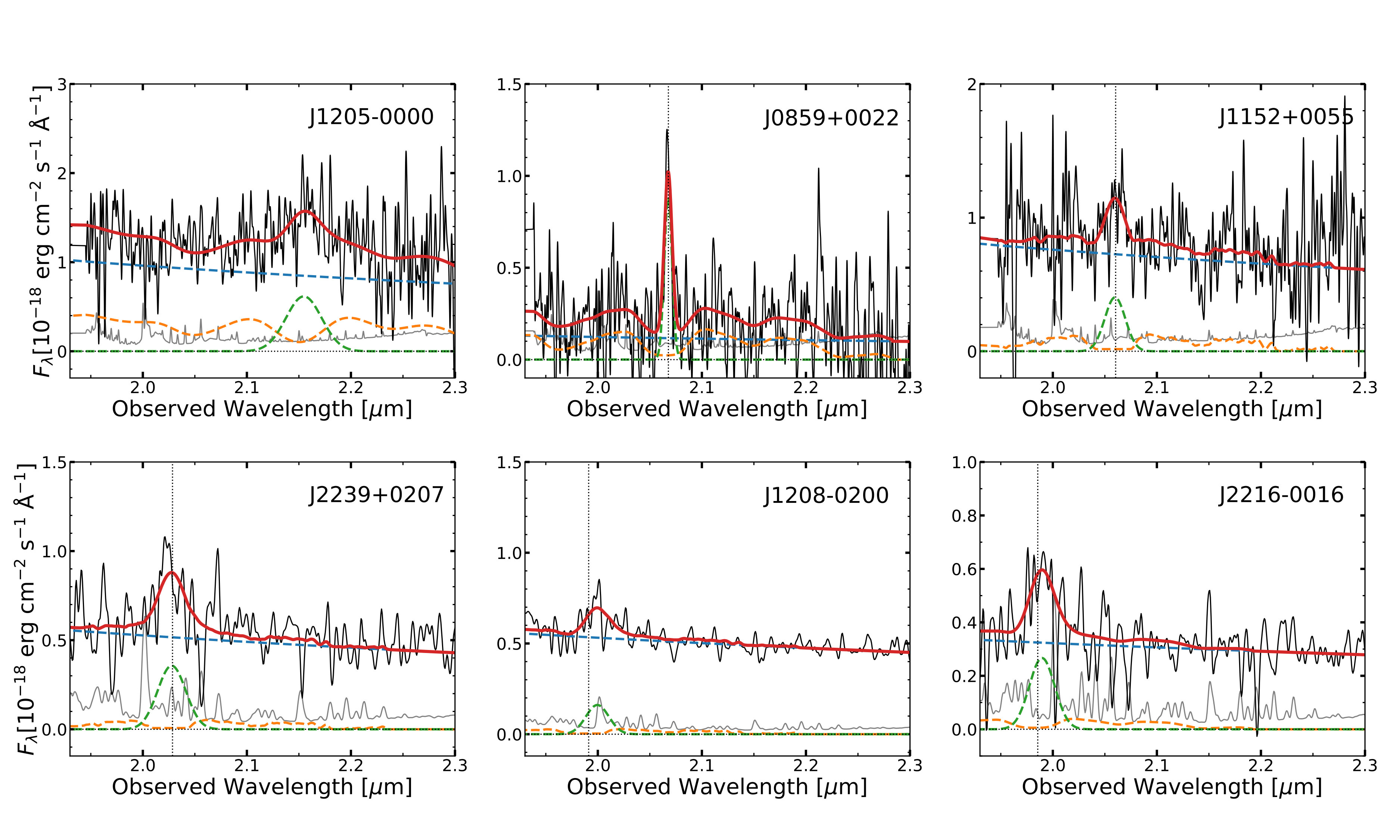 Figure 2
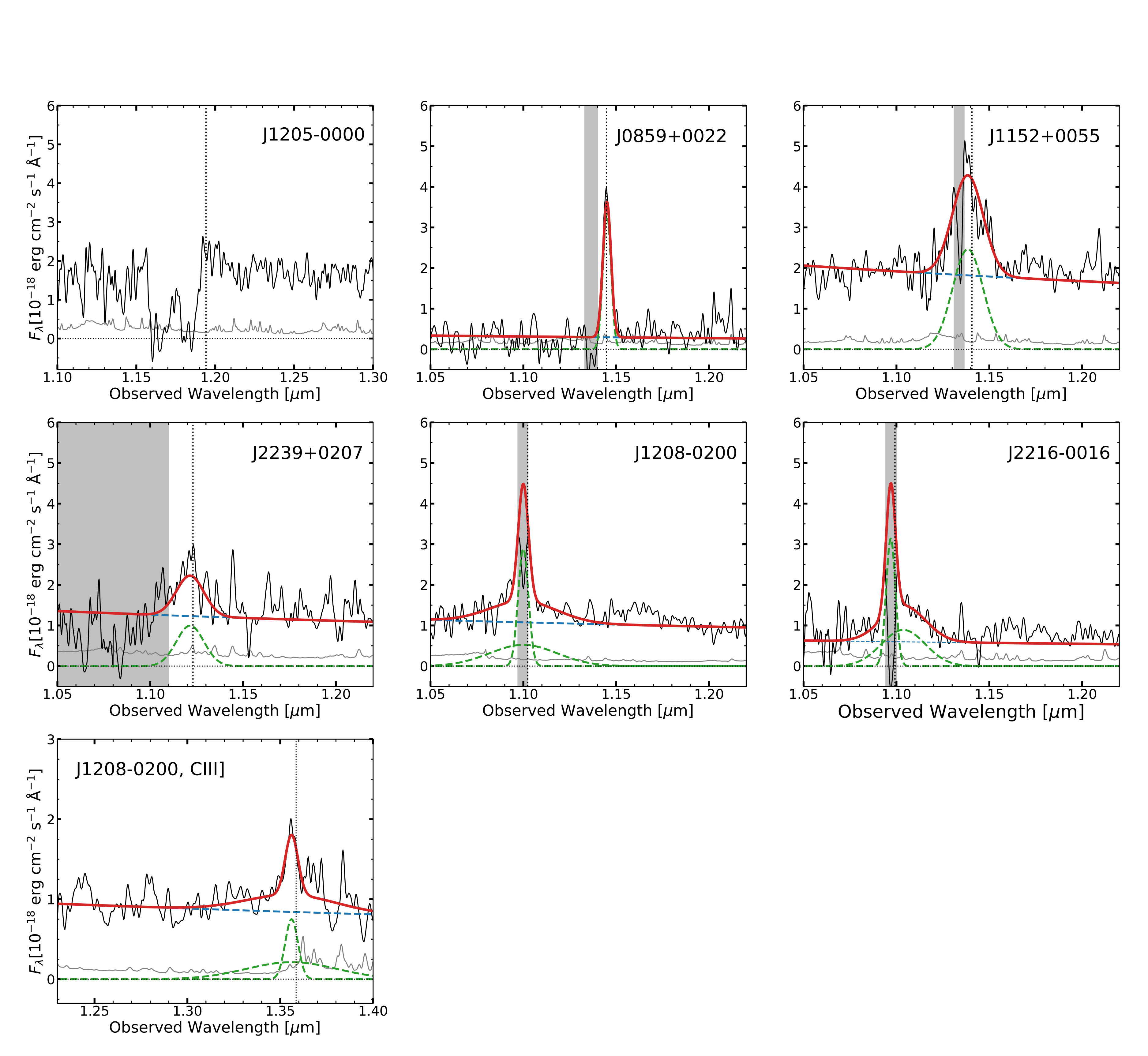 Figure 3
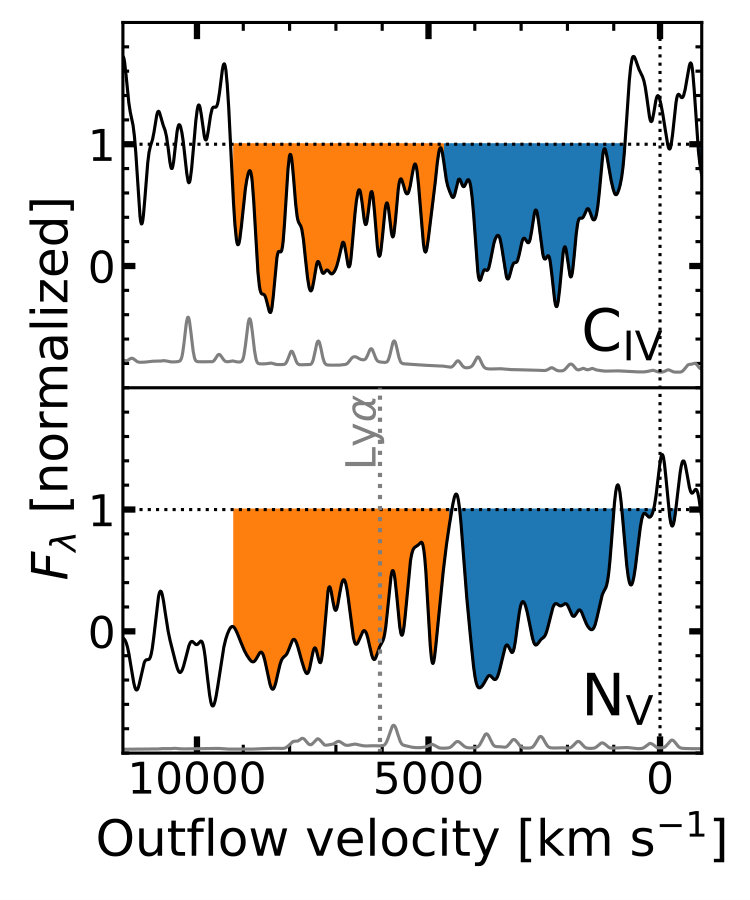 Figure 4
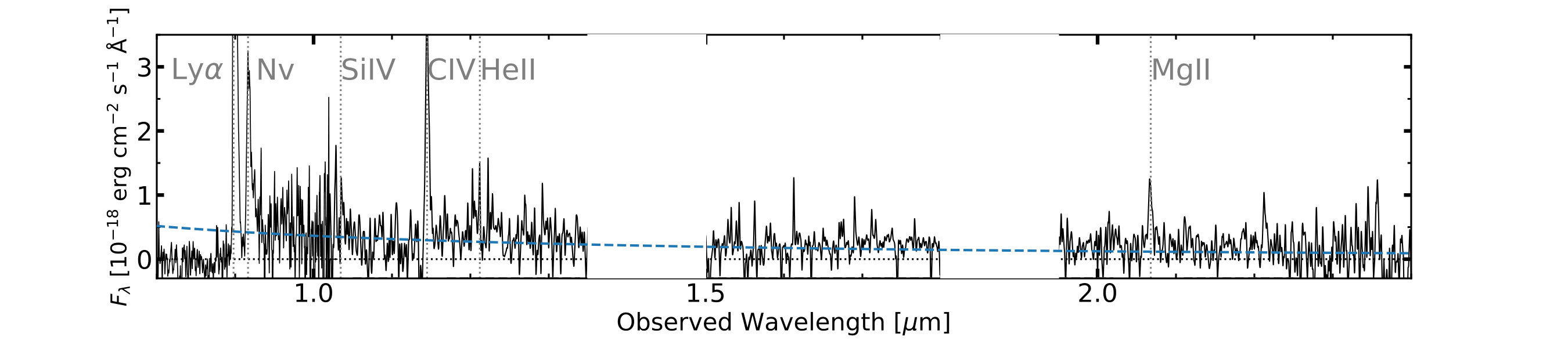 Figure 5
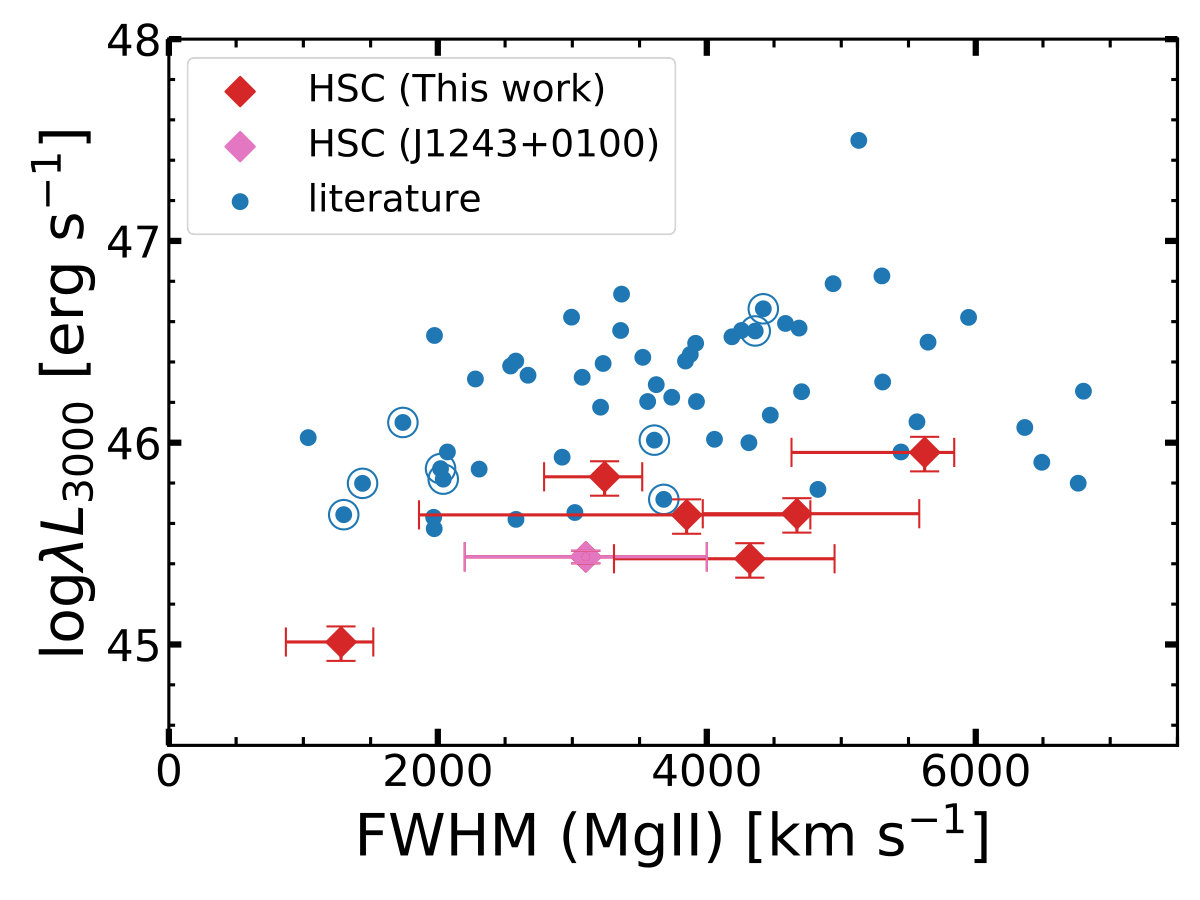 Figure 6
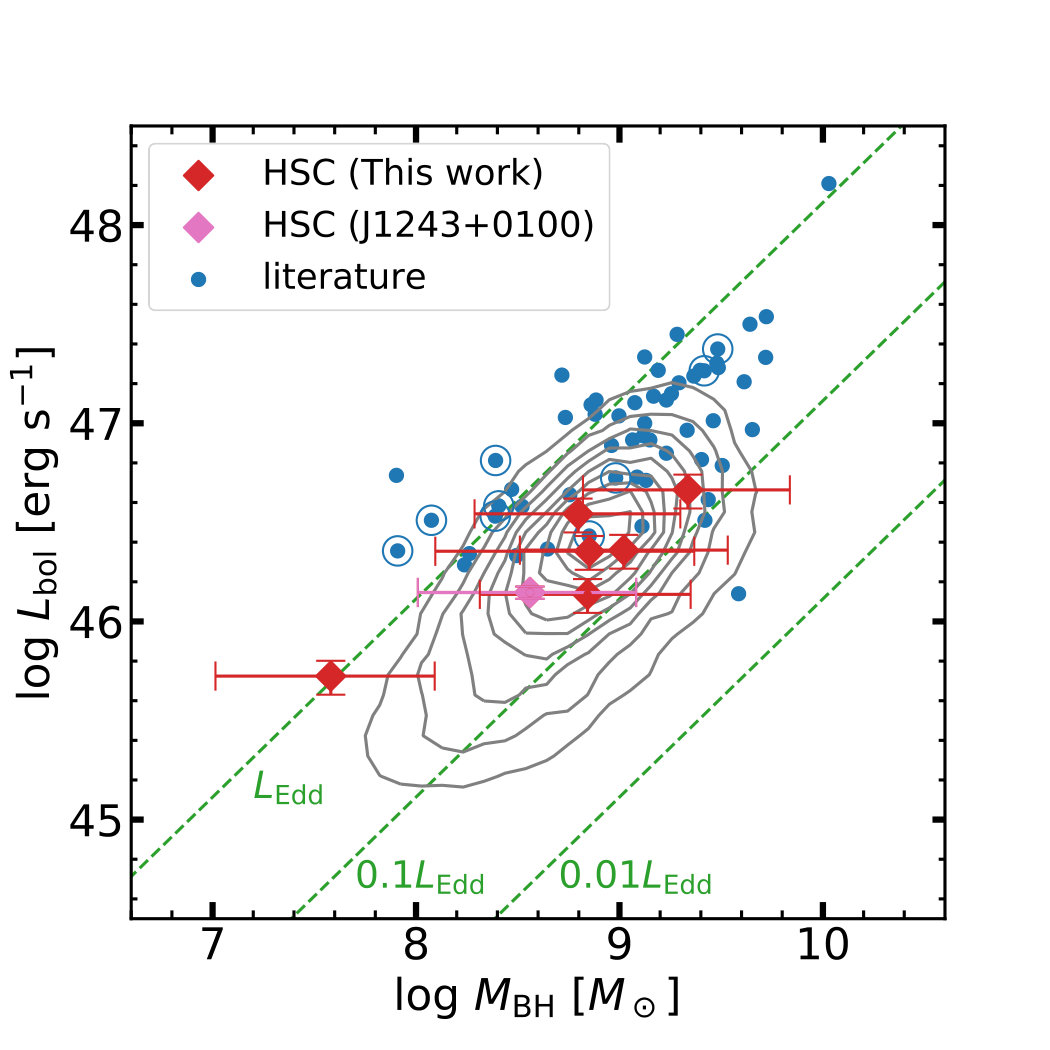 Figure 7
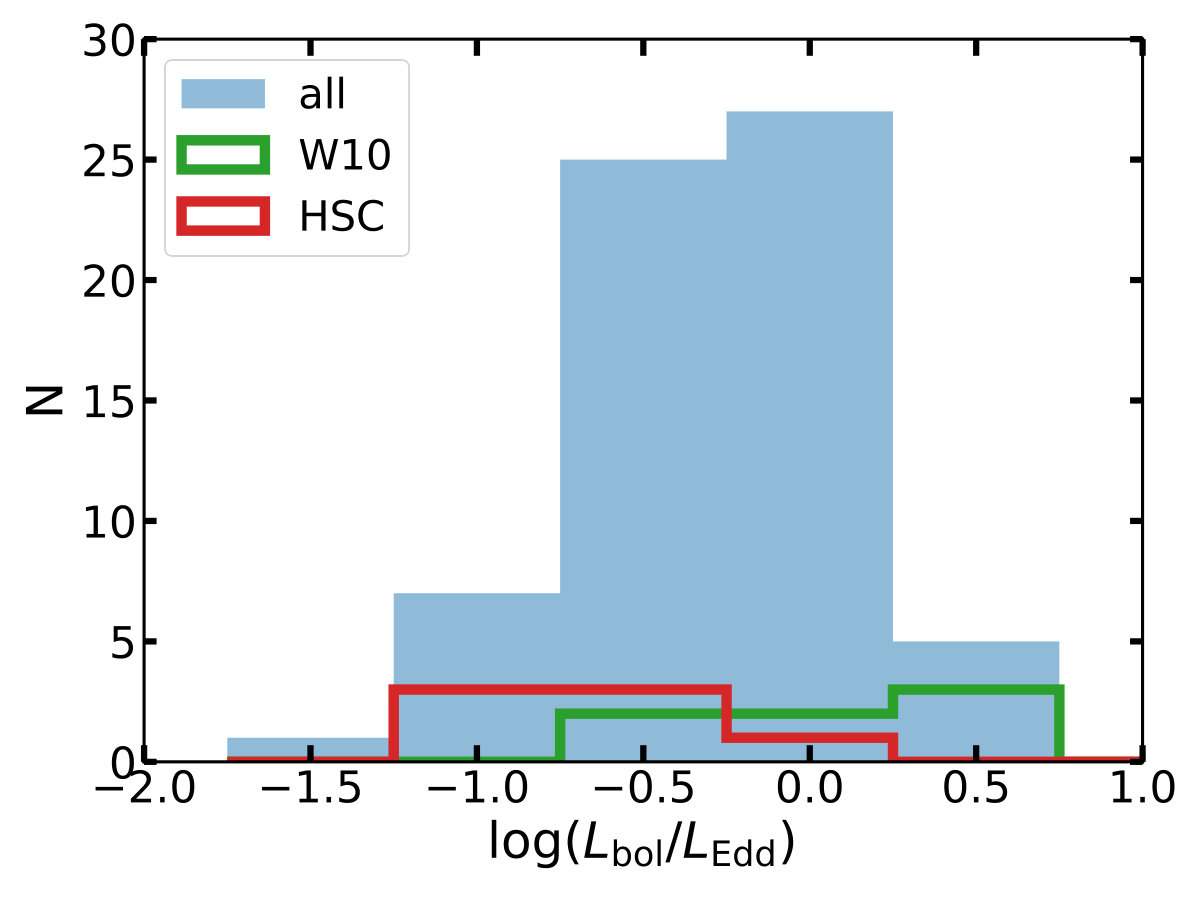 Figure 8
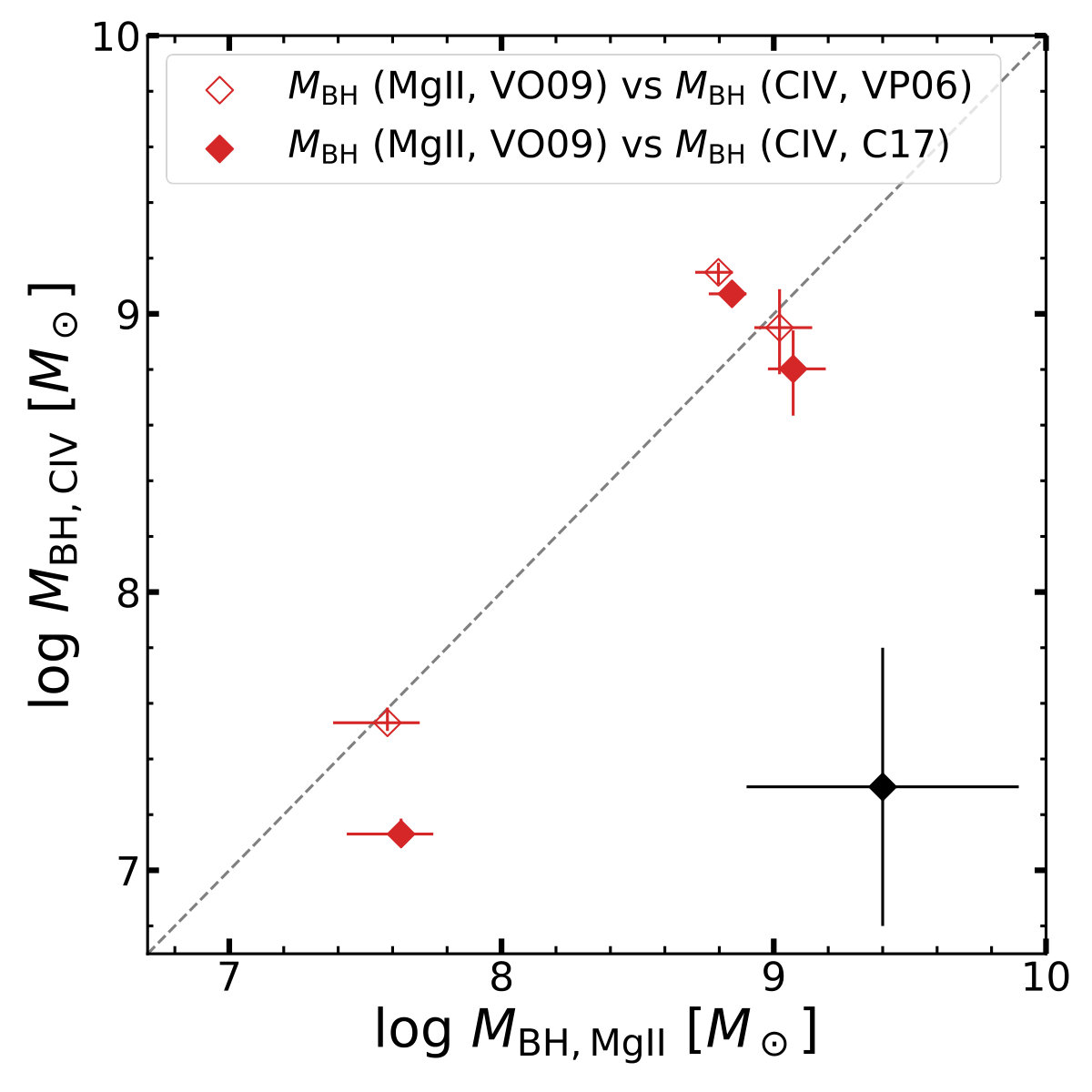 Figure 9
Peer Reviews
No public reviews on file for this paper yet. If you reviewed it on a platform where reviews are public (OpenReview, ICLR, NeurIPS, ICML), you can paste yours below so the community can read it here.
Videos
No videos yet. Explain this paper in a talk, walkthrough, or lecture? Add one.