Cyberbullying and Traditional Bullying in Greece: An Empirical Study
Maria Papatsimouli, John Skordas, Lazaros Lazaridis, Eleni Michailidi,, Vaggelis Saprikis, George F. Fragulis

TL;DR
This empirical study investigates the prevalence and characteristics of cyberbullying and traditional bullying among Greek youth, highlighting the influence of childhood factors on aggressive behaviors.
Contribution
It provides new empirical data on cyberbullying in Greece and examines how childhood factors influence aggressive reactions in bullying scenarios.
Findings
Cyberbullying is increasing among Greek youth.
Childhood factors significantly affect aggressive reactions.
Both cyber and traditional bullying are prevalent in Greece.
Abstract
The rapid evolution of technology is a preferred method of interacting. A new world was created for young people who are sending emails, visiting websites, using webcams and chat rooms, and instant messaging through social media. In the past years, people used face-to-face communication though, in recent years, people are using internet technology in order to communicate with each other. As a consequence the communication change, created a new type of bullying, cyberbullying, in which bullying is taking place by using internet technology. Cyberbullying is a phenomenon which is increasing day by day over the world. This was one of the reasons that prompted us to do this survey. Furthermore, bullies aggressive reaction is affected by four factors which are conductive during childhood.
Click any figure to enlarge with its caption.
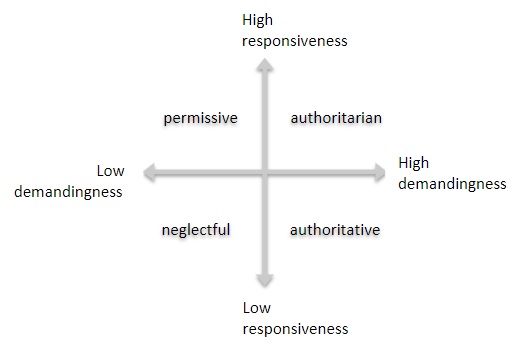 Figure 1
 Figure 2
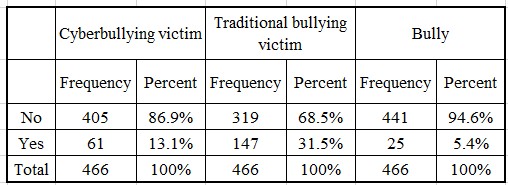 Figure 3
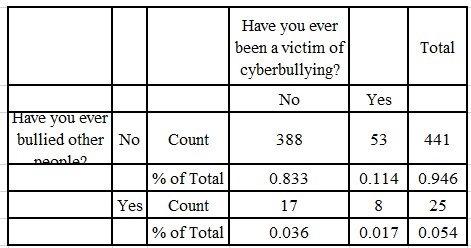 Figure 4
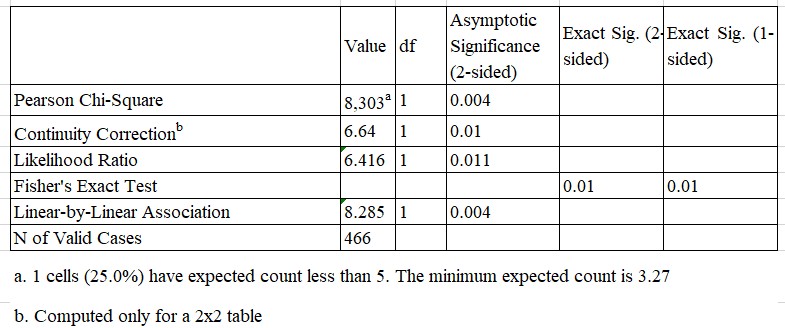 Figure 5
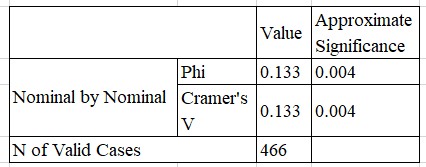 Figure 6
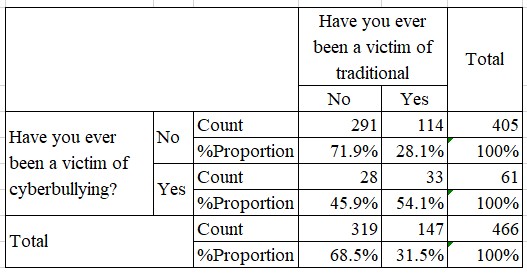 Figure 7
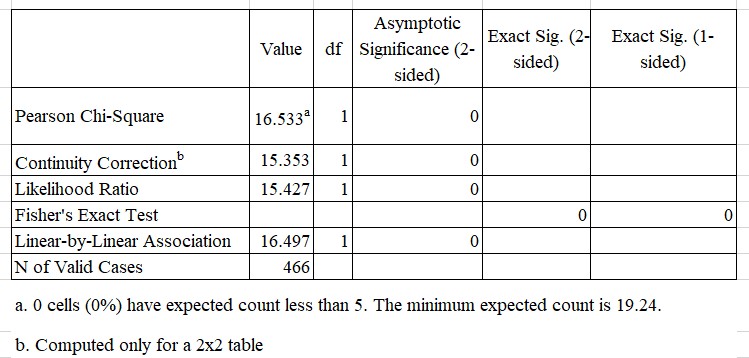 Figure 8
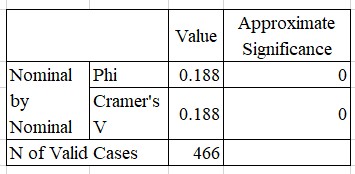 Figure 9
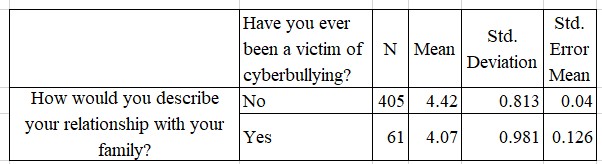 Figure 10
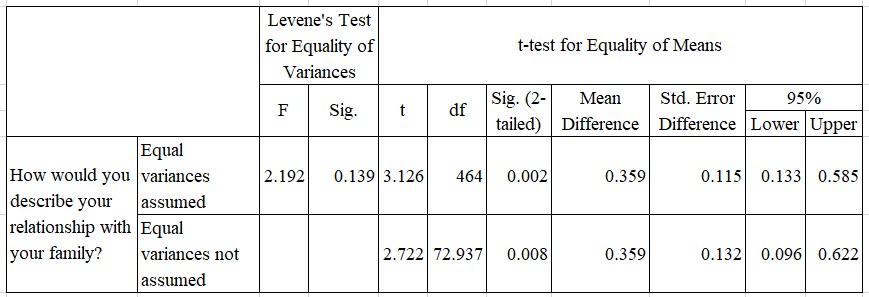 Figure 11
Peer Reviews
No public reviews on file for this paper yet. If you reviewed it on a platform where reviews are public (OpenReview, ICLR, NeurIPS, ICML), you can paste yours below so the community can read it here.
Videos
No videos yet. Explain this paper in a talk, walkthrough, or lecture? Add one.
Cyberbullying and Traditional Bullying in Greece: An Empirical Study
Maria Papatsimouli,
John Skordas,
Lazaros Lazaridis,
Eleni Michailidi
Lab. of Web Technologies
& Applied Control Systems
Dept. Of Electrical Engineering
Western Macedonia Univ.
of Applied Sciences,
Kozani, Hellas
Vaggelis Saprikis
Dept. Of Business Administriation
Western Macedonia Univ.
of Applied Sciences,
Kozani, Hellas
George F. Fragulis
Lab. of Web Technologies
& Applied Control Systems
Dept. Of Electrical Engineering
Western Macedonia Univ. of Applied Sciences,
Kozani, Hellas
Abstract
The rapid evolution of technology is a preferred method of interacting. A new world was created for young people who are sending emails, visiting websites, using webcams and chat rooms, and instant messaging through social media. In the past years, people used face-to-face communication though, in recent years, people are using internet technology in order to communicate with each other. As a consequence the communication change, created a new type of bullying, cyberbullying, in which bullying is taking place by using internet technology. Cyberbullying is a phenomenon which is increasing day by day over the world. This was one of the reasons that prompted us to do this survey. Furthermore, bullies’ aggressive reaction is affected by four factors which are conductive during childhood.
Index Terms:
Cyberbullying, traditional bullying, victims, adolescents, victimization, Bullies.
I Introduction
According to [13], and [8] Bullying is described as an aggressive or intentional act or behavior that is carried out in a repeatedly way against a victim who cannot defend himself. By using the previous definition, we can define the term of cyberbullying such as an aggressive or intentional act or behavior that is carried out in a repeatedly by using an electronic form of contact. It can be said that cyberbullying is the evolution of bullying.
The Internet has become the new Wild West of the 21st century and has to be explored because it provides excitement and adventure, thus as Wild West, Internet is full of dangers. Also, [14] mentioned that “We need to be sheriffs in this new Wild West – a cyber – world buzzing with kids just a few keystrokes away from harming other people, often for no other reason than that the sheriffs are sleeping. As anyone who has ever been a victim of bullying and harassment will tell you the bullets may not be real, but they can hurt” .
II Bullying
According to [6], bullying can be defined as a student is being bullied or victimized when he or she is exposed, repeatedly and over time, to negative actions on one or more students. A negative action, with the aggressive behavior definition, when someone intentionally inflicts or attempt to inflict, injury upon another [5]. In bullying, there is the physical contact with bully and victim, in which negative actions carried out by words or in other ways, for examples such as making grimaces or unpleasant gestures, spreading rumors and intentional excluse him/her from a group.
II-A Bullies aggressive reaction
According to [7], there are four factors that affect bullies aggressive reaction. These factors are the answers to the question “What kind of rearing and other conditions during childhood are conductive to the development of an aggressive reaction pattern?”.
The factors that mentioned before are:
The basic emotional attitude of the caretaker, who usually is the mother, to the child during the early years. A negative emotional attitude can be characterized by the absence of warmth and involvement. 2. 2.
The aggressive behavior level of the child is increasing when there is a tolerant attitude from the caretaker. Caretakers have to set clear limits when there is an aggressive behavior towards peers, brothers and sisters, and other adults. Power-assertive methods which are using to child upbringings such as physical punishment and violent emotional outbursts are likely to make children more aggressive than the average child. In other words, “violence begets violence”. 3. 3.
Physical punishment and violent emotional outbreaks methods are likely to affect children to have an aggressive attitude. When parents use those kinds of methods, children are more likely to become aggressive. It is already known that ”violence begets violence” 4. 4.
The way of treatment to a child is inherited. A child who has a “short-tempered” temperament is more likely to be an aggressive youngest than a child with a common temperament.
According to above factors, it can be deduced that the child who had too little love and care, and too much freedom in his childhood is more likely to become aggressive. Thus, the socio-economic conditions of the family are not related to the aggressive behavior of the child.
III Cyberbullying
Cyberbullying is the evolution of traditional bullying by using the internet technology. According to researchers, cyberbullying refers to bullying of others by using mobile phones and the internet [9]. Such as bullying, can take part in all countries, without being relevant to the culture and the religion of the victim [2].
The anonymity, the invasion of personal life, and the fact that the victim cannot hide from torturers in the electronic world are characteristics that make electronic bullying more painful to the victims [4].
III-A Cyberbulling and parenting
The role of parenting in cyberbullying is something new which cannot provide us a lot of information.
Children exclude their parents from internet activities because it is considered that their privacy is valued [15]. Thus, cyberbullying is not as visible as traditional bullying. Furthermore, young people are not telling their parents about the involvement in cyberbullying because they are afraid of the punishment, the loss of computer privileges and the isolation of peers ([16], [17], [4]). These means that parents are often unaware of their child is a cyberbully or is cyberbullied ([18], [3]).
There are studies that examined the relationship between parenting characteristics and cyberbullying. They found that children who cyberbully experience limited parental monitoring, stronger parental discipline and a weaker emotional bond with their parents than children who do not cyberbully [10], [12].
Insufficient parenting reduces the social competence of their children as an example, the ability to develop positive friendships. On the contrary, parents who oversee their children and get involved in them, the aggressive behavior of the children within and without family is more likely to be reduced [19], [20], [21]. The way that parents interact with their children affects children to interact with others in the same way. If parents interact with their children in a hostile and cold manner, encourage them to use the same manner in their interactions. This affect children socialization and children are more likely to be a bully [22].
Anti-social behavior is unlikely to happen in a child who has grown up with supervision, discipline, and affection ([23], [24], [25], [26], [20], [27]).
There were a lot of researchers who investigated parental responsiveness and traditional bullying. A negative association is the result of these elements relation in which as parents were less responsive, their children are more likely to have a bullying behavior and victimization is increased ([28], [29], [30]). Some other researchers compared bullies, bully-victims and victims and found that bullies and bully-victims experienced less parental responsiveness than victims ([31], [32], [33]).
Both dimensions however co-exist and influence each other [39], [34]. Figure 1, shows the four parenting styles and the combination of both dimensions results [3].
Various researches examined the relation between the characteristics of parenting and cyberbullying. The results were that children with cyberbully experience had limited parental monitoring, stronger parental discipline and weaker emotional bond with their parents, in contrast to children with no cyberbully experience [10], [12],[11].
III-B Cyberbullying and Traditional Bullying
Traditional bullying and cyberbullying have the same features which are repetitiveness, intentionality and power balance. In the case of cyberbullying, is appeared the risk of misunderstanding as is bereft of non-verbal cues. This means that a joke may be misunderstanding and could be perceived as intentional and hurtful. Further, the cyberbullying perpetrators may be unknown, contrary to traditional bullying [3], [35], [36], [10], [38].
IV Survey Methodology
This section presents the design of the survey, the process of designing the questionnaire, its structure, the sampling method, the sample as well as the data analysis techniques used.
Non-probable sampling method was applied. The data was collected via an electronic questionnaire which was developed based on extended literature review. Specifically, it was developed by the use of Google forms and distributed via e-mail and social media. Our questions based on the sub-scales from the bully/Victim Questionnaire, and parenting with an adjusted version of the parenting style Questionnaire.
Regarding the respondents, anyone could complete it anonymously with our aim to ensure confidentiality.
In the present survey, the primary data collection method, which is known as a quantitative method and based on a sample survey using a standardized questionnaire, was also selected.
This questionnaire included closed-ended questions. Closed type questions are the questions that are accompanied by a series of suggested answers to the respondent from which to select one. In the present questionnaire, there are ”yes-no” questions, multiple choice questions, and Likert scale questions. In the Likert scale questions the Likert scale with 5 grades was used, where option 1 does not indicate any option and option 5 means very high.
IV-A Questionnaire Structure
The questionnaire consists of six units. The first unit consists of the demographic questions.
In the second, questions about internet use and the reasons for were applied. The third unit consists of questions about cyberbullying. In this section, the form, the feelings, the consequences and the way that came up against the cyberbullying phenomenon were asked to be completed.
The next unit consists of questions about traditional bullying. In this section, the respondents asked to answer questions about the genre of traditional bullying, if victims had a solution to this problem and in which way.
The fifth unit consists of questions about cyber bullies. In this unit, respondents have to answer if they became bullies, for which the reasons and in each way.
Finally, in the sixth section there was a validation question in order to verify that a human completed the measurement item and not a machine.
The questions about cyberbullying and traditional bullying were adjusted and based on [6] questionnaire, and questions about the parenting dimensions were measured by using adjusted questions of the parenting style questionnaire of [40].
Prior to the study, the questionnaire was pre-tested by 20 students who did not participate in the study. As a result of the pretest, some questions were adjusted to facilitate clarity, understanding,and ease in answering the questions.
IV-A1 Research Questions
- •
To what extent is cyberbullying represented in Greece?
- •
Which gender is more vulnerable to bullying?
- •
Which is the family relationship associated with the cyberbullying victims?
- •
Is cyberbullying associated with the hours spent on the internet?
- •
Is there an association between traditional bullying victims and cyberbullying victims?
- •
Is there an association between cyberbullying victims and bullies?
Data gathering period was from March up to April 2018. 525 responses were collected; but only 466 of them were valid. Afterwards, data were encoded and analysed using the SPSS Statistical program.
V Main Results
V-A Gender Results
The sample consisted of 466 valid questionnaires.
Of 466 participants, 282 participants (60.5%) were women and 184 (39.5%) were men.
V-B *Age results *
About the age of the participants we had:
- •
128 (27.5%) participants were under the age of 18
- •
191 (41%) participants were between 19-25
- •
32 (6.9%) participants were between 26-30
- •
38 (8.2%) participants were between 36-40
- •
53 (11.4%) participants were over the age of 40 years old
V-C Hours that spends online results
About the hours that our respondents spend online, we have:
- •
193 (41.4%) of our participants spent 1-3 hours online
- •
179 (38.4%) of our participants spend 4-6 hours online
- •
64 (13.7%) of our participants spend 7-9 hours online
- •
30 (6.4%) of our participants spend more than 9 hours online
V-D Gender and cyberbullying victims results
In order to examine which gender is more vulnerable to cyberbullying, we used cross-tabulation in SPSS. The results are:
- •
61 of our respondents have been cyberbullying victims.
- •
18 cyberbullying victims were male (29.5%).
- •
42 cyberbullying victims were female (70.5%).
One of the research questions was to identify which gender is more vulnerable to cyberbullying. The answer to this question is that women are more vulnerable to cyberbullying as 70.5% of cyberbullying victims were women, in contrast to 29.5% of men victims.
V-E Age and cyberbullying victims
Getting results about the age of cyberbullying victims, SPSS cross-tabulation was used.
The results were:
- •
<18 age scale, 14 of our respondents were cyberbullying victims (23%)
- •
19-25 age scale, 31 of our respondents were cyberbullying victims (50.8%).
- •
26-30 age scale, 4 of our respondents were cyberbullying victims (6.6%).
- •
31-35 age scale, 4 of our respondents were cyberbullying victims (6.6%).
- •
36-40 age scale, 2 of our respondents were cyberbullying victims (3.3%).
- •
40 age scale, 6 of our respondents were cyberbullying victims (9.7%).
Our survey showed that the weakest age group is the 19-25 with 31 participants to be victims of cyberbullying. Continuing, the age group with the less cyberbullying victims is the age group of 36-40 with 0.4%.
V-F Cyberbullying victims and hours that spend online results
SPSS cross-tabulation was used in order to examine the hours that cyberbullying victims spend online. Our survey showed that most of the cyberbullying victims (41%) spend 4-6 hours online. The next following percentage is 27.9% where cyberbullying victims spend 1-3 hours online. So the answer to our research question is that most cyberbullying victims spend online 4-6 hours.
V-G Cyberbullying victims and faced the problem results.
In order to examine if cyberbullying victims faced their problem, we used cross-tabulation in SPSS. The results that we have from crosstabulation were:
- •
48 of the cyberbullying victims (78.7%) faced up their problem.
- •
13 of the cyberbullying victims (21.3%) didn’t find a solution to their problem.
V-H Cyberbullying victims and traditional bullying victims results
In order to examine the number of cyberbullying victims and traditional bullying victims, cross-tabulation was used in SPSS. The results showed us:
- •
291 (62.4%) respondents haven’t been cyberbullying victims and haven’t been traditional bullying victims as well.
- •
114 (24.5%) respondents haven’t been cyberbullying victims but have been traditional bullying victims.
- •
28 (6%) respondents have been cyberrbullying victims but they haven’t been traditional bullying victims.
- •
33 (7.1%) respondents have been cyberbullying victims and traditional bullying victims too.
V-I Cyberbullying victims and traditional bullying victims
Figure 2 shows that 13.1% of our respondents were cyberbullying victims in contrast to the traditional bullying victims who were the 31.5%. Also, 5.4% of our participants bullied other people.
According to Figure 2, the answer to our research inquiry about the extension of cyberbullying in Greece is that, cyberbullying appears in half of the proportion compared to the traditional bullying.
V-J Cyberbullying victims and bullies
According to Figure 2, 61 of our respondents have been cyberbullying victims and 8 respondents have been bullying someone else too.
From the Figures 3, 4 and 5, we can see that the significance value is lower than the “a” value (0.0040.05) and there is a statistical dependence between the variables on the level of significance a=0.05. Statistically significant dependence was identified and it is following the assessment of its intensity. For this reason, we used the causation coefficients Phi Cramer’s V in order to compare the strength of the coefficient between the variables. Phi and Cramer’s V are estimated factors of the intensity (size) of the connection between two quality variables. In the case of independence between the two variables, the value of the factors is close to zero (0). In our case, Phi Coefficient is 0.133 and this means that there is a relationship between bullies and cyberbullying victims.
Finally, in order to determine the existence of dependence between bullied other people and cyberbullying victims, the Chi-square test of independence was used to determine if there is a significant relationship between the two variables. Also, Phi and Cramer’s V coefficients were calculated. According to the results, there is a significant relationship on the Level of significance a=0.05 between the bullied other people and cyberbullying victims(x2=8.303, sig=0.004). As Phi dependence coefficient is 0.133, there is a small dependence between the bullied other people and the cyberbullying victims.
V-K Cyberbullying victims and traditional bullying victims
According to Figures 6, 7 and 8 respondents have been traditional bullying victims and 33 respondents have been cyberbullying victims too.
We can see that the sig. value is lower than the “a” value (0.0000.05). According to this, the null hypothesis is rejected and there is a statistical dependence between the variables on the level of significance a=0.05:
Statistically, significant dependence was identified and it is following the assessment of its intensity.
For this reason, we are using the causation coefficients Phi Cramer’s V in order to compare the strength of the coefficient between the variables.
Phi Coefficient is 0.188 and this means that there is a relationship between traditional bullying victims and in cyberbullying victims.
Finally, for determining the existence of dependence between traditional bullying victims and cyberbullying victims, the Chi-square test of independence was used to determine if there is a significant relationship between the two variables. Also, Phi and Cramer’s V coefficients were calculated. According to the results, there is a significant relationship in the Level of significance a=0.05 between the bullied other people and cyberbullying victims(x2=16.533, sig.=0.004). As Phi dependence coefficient is 0.188, there is a small dependence between the bullied other people and the cyberbullying victims. Therefore, we reject the null hypothesis.
According to Figures 9 and 10, we have the following research hypothesis.
H0: There is no difference between the family relation with the cyberbullying victims
H1: There is a difference between the family relation with the cyberbullying victims
Also, we have the following research hypothesis.
H00: Family relation is not related to the cyberbullying victims
H10: Family relation is related to the cyberbullying victims
Sig value of the Levene’s Test for Equality of Variances is 0.139(0.05). This means that we reject hypothesis H10 and we accept H10 hypothesis.
Also, we accept the hypothesis H1 because of Sig. (2-tailed) value is 0.002 (0.05). This means that there is a correlation between the cyberbullying victims and the family relation. From Figure 9 we can see that respondents who have been cyberbullying victims were less well connected with their family (M=4.07) compared with the respondents who were cyberbullying victims (M=4.42). Therefore, we can say that family relation is related to cyberbullying victimization.
VI Conclusions
Cyberbullying is based on the bullying by using the technology. Also, technology offer opportunities and can be painful for those who are targets of cyberbullying.
Our survey aimed to explore the extent of bullying and cyberbullying in Greece. In order to answer the research questions, we collected data which analyzed by SPSS statistical program. The important results that we have are:
- •
Cyberbullying has a small extent in Greece, in contrast to traditional bullying which has a larger area.
- •
Girls are more vulnerable to cyberbullying.
- •
Cyberbullying victims spend 4-6 hours online.
- •
There is a statistical dependence between cyberbullying victims and traditional bullying victims.
- •
There is a correlation between cyberbullying victims and family relation.
From our research results, it can be said that parents and schools need to help and prepare children from the hazards of the new technology as cyberbullying will evolve as technology continues to evolve. Future studies need to explore a larger sample size. Also elements such as cyberbullying and bullying relation and the parenting styles of cyberbullying and bullying victims need to be explored deeper.
The reference list from the paper itself. Each links out to its DOI / PubMed record.
- 1[1] Kowalski, R., Limber, S. and Agatston, P. (2012), Cyberbullying, Malden, MA: Wiley-Blackwell.
- 2[2] Berger, K. S. (2007). Update on bullying at school: Science has forgotten? Development Review,27,90-126.
- 3[3] Dehue, Francine & Bolman, Catherine & Ullink, Trijntje & Pouwelse, Mieneke. (2012). Cyberbullying and traditional bullying in relation to adolescents’perception of parenting. Journal of Cybertherapy and Rehabilitation. 5. 25-33.
- 4[4] Mishna, F., Saini, M., & Solomon, S. (2009). Ongoing and online: Children and youth’s perceptions of cyberbullying. Children and Youth Services Review, 31(12), 1222-1228.
- 5[5] Olweus, D. (1973 b). Personality and aggression. In J.K. Cole, & D.D. Jensen (Eds), Nebraska Symposium on Motivation 1972 (pp. 261-321). Lincoln: University of Nebraska Press.
- 6[6] Olweus, D. (1993 a). Bullying at school: What we know and what we can do. Oxford, UK, and Cambridge, MA, USA: Blackwell Publishers.
- 7[7] Olweus, D. (1996). Bully/victim problems in school. Prospects,26, 331-359
- 8[8] Olweus, D. (1997). Bully/victim problems in school: Facts and intervention, European Journal of Psychology of Education University of Bergen, Norway.