Fatigue design load calculations of the offshore NREL 5MW benchmark turbine using quadrature rule techniques
L.M.M. van den Bos, W.A.A.M. Bierbooms, A. Alexandre, B. Sanderse,, G.J.W. van Bussel

TL;DR
This paper introduces a quadrature rule-based method to efficiently estimate fatigue loads on offshore wind turbines, significantly reducing computational effort while maintaining accuracy, by leveraging environmental measurements and advanced numerical integration techniques.
Contribution
The paper presents a novel quadrature rule approach for fatigue load calculations that reduces the number of aeroelastic simulations needed, improving efficiency over traditional binning methods.
Findings
Accurate load estimations with fewer simulations.
Significant reduction in computational time demonstrated.
Effective incorporation of environmental measurement data.
Abstract
A novel approach is proposed to reduce, compared to the conventional binning approach, the large number of aeroelastic code evaluations that are necessary to obtain equivalent loads acting on wind turbines. These loads describe the effect of long-term environmental variability on the fatigue loads of a horizontal-axis wind turbine. In particular Design Load Case 1.2, as standardized by IEC, is considered. The approach is based on numerical integration techniques and, more specifically, quadrature rules. The quadrature rule used in this work is a recently proposed "implicit" quadrature rule, which has the main advantage that it can be constructed directly using measurements of the environment. It is demonstrated that the proposed approach yields accurate estimations of the equivalent loads using a significantly reduced number of aeroelastic model evaluations (compared to binning).…
Click any figure to enlarge with its caption.
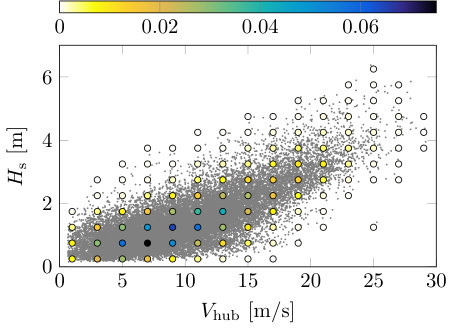 Figure 1
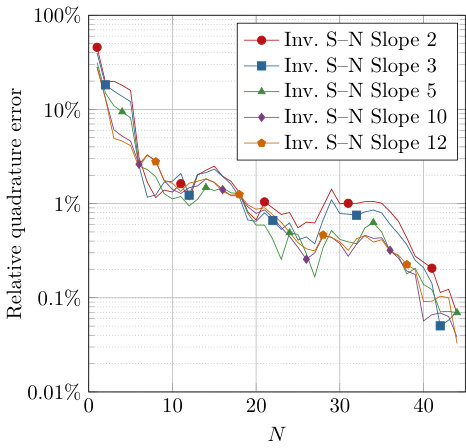 Figure 2
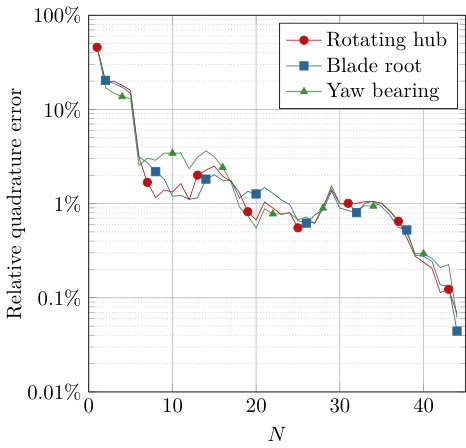 Figure 3
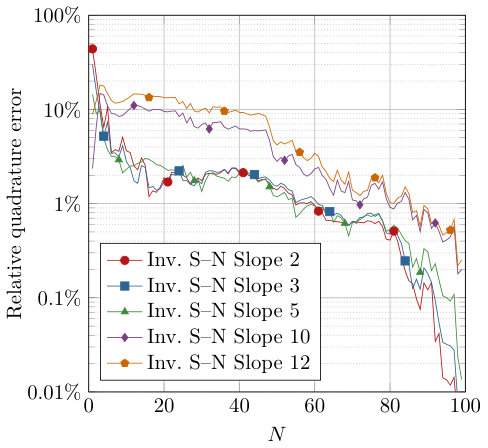 Figure 4
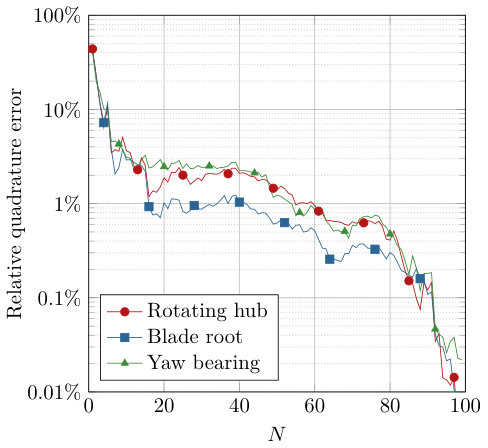 Figure 5
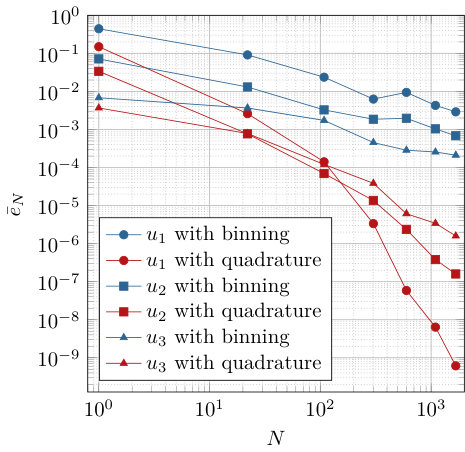 Figure 6
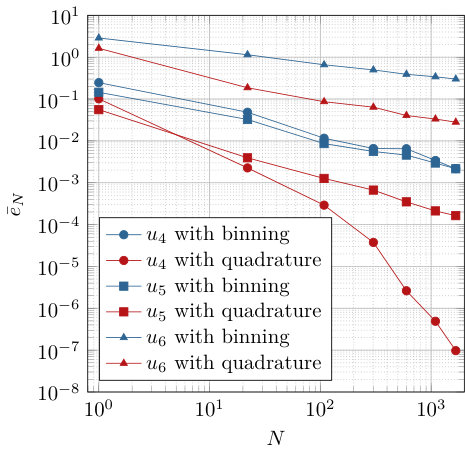 Figure 7
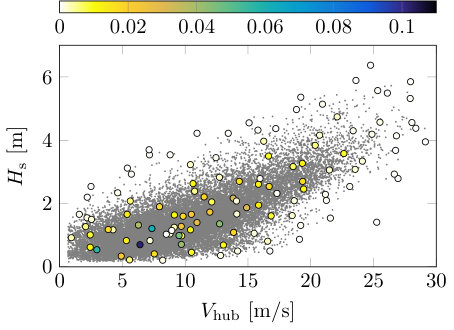 Figure 8
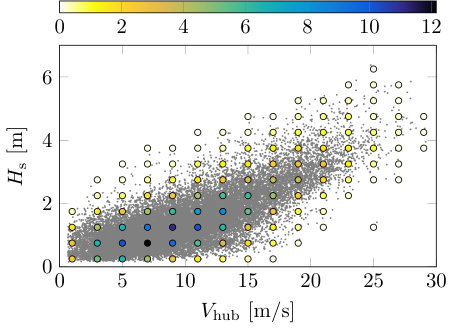 Figure 9
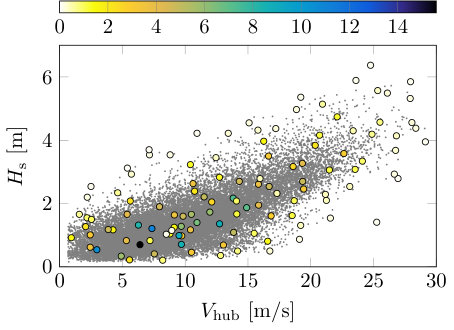 Figure 10
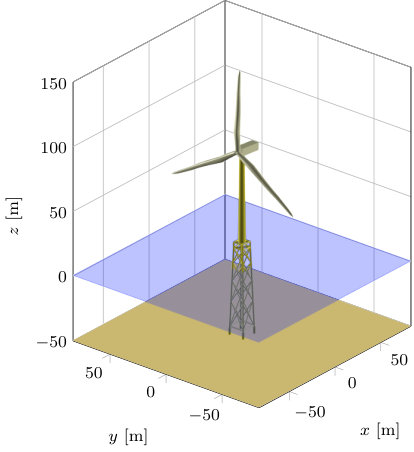 Figure 11
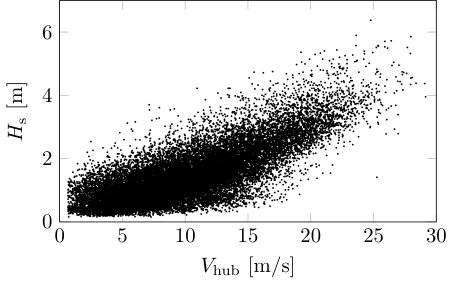 Figure 12
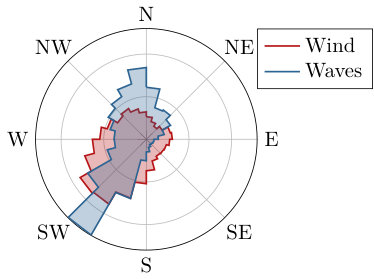 Figure 13
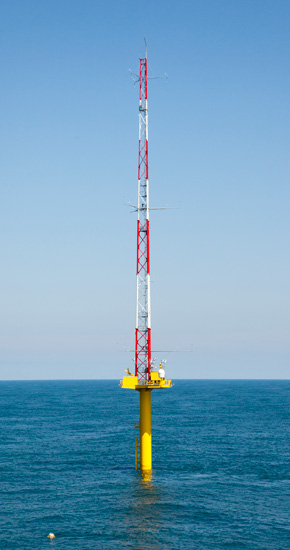 Figure 14
Peer Reviews
No public reviews on file for this paper yet. If you reviewed it on a platform where reviews are public (OpenReview, ICLR, NeurIPS, ICML), you can paste yours below so the community can read it here.
Videos
No videos yet. Explain this paper in a talk, walkthrough, or lecture? Add one.