Correlations with fluctuating strings
Wojciech Broniowski, Martin Rohrmoser

TL;DR
This paper introduces a semi-analytic method to analyze forward-backward multiplicity correlations in high-energy nuclear collisions, accounting for string endpoint fluctuations, and applies it to Au+Au and d+Au collisions at 200 GeV.
Contribution
It provides a generic approach to estimate fluctuation bounds using particle emission from fluctuating strings, validated with the wounded quark model.
Findings
Bounds for fluctuation measures derived from rapidity spectra.
Method applicable to independent source production models.
Applied successfully to Au+Au and d+Au collision data.
Abstract
We present a semi-analytic approach to forward-backward multiplicity correlations in ultra-relativistic nuclear collisions, based on particle emission from strings with fluctuating end-points. We show that with the constraints from rapidity spectra, one can obtain bounds for the magnitude of the standard measures of the forward-backward fluctuations. The method is generic under the assumption of independent production from sources. For definiteness, we use the wounded quark model for Au+Au and d+Au collisions at the energy of GeV.
Click any figure to enlarge with its caption.
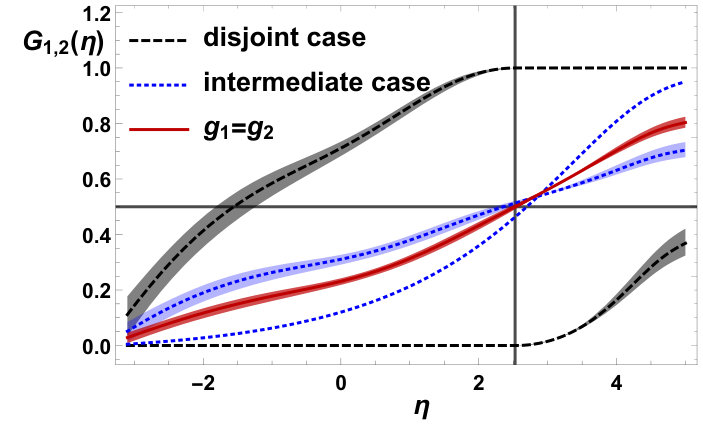 Figure 1
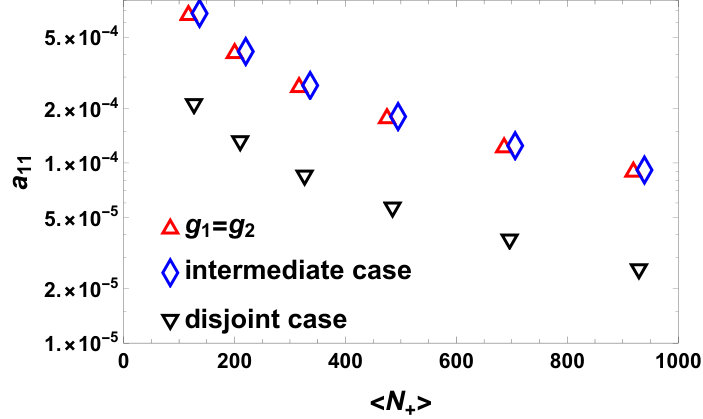 Figure 2
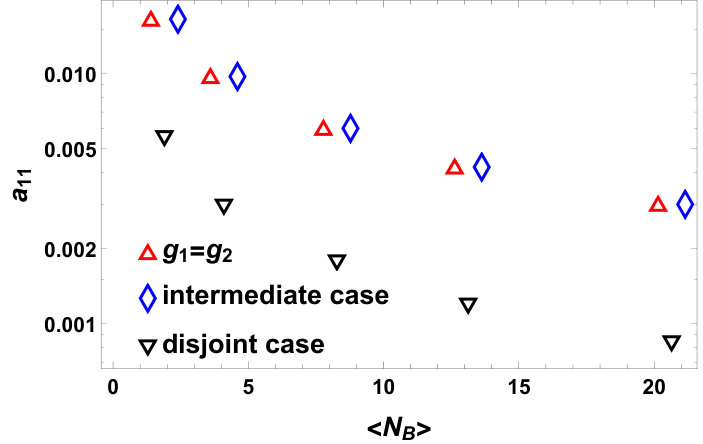 Figure 3
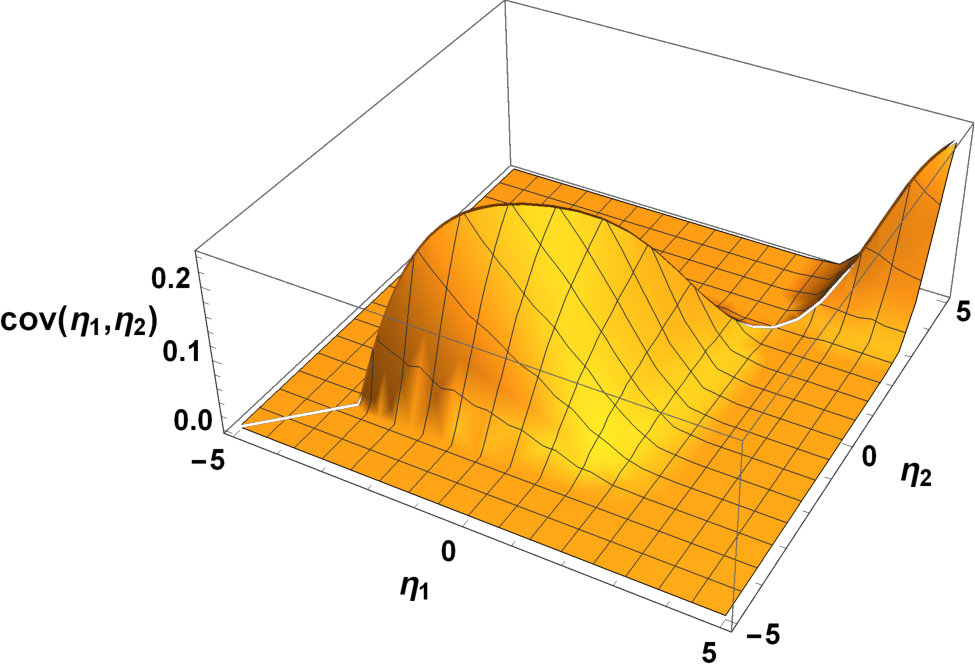 Figure 4
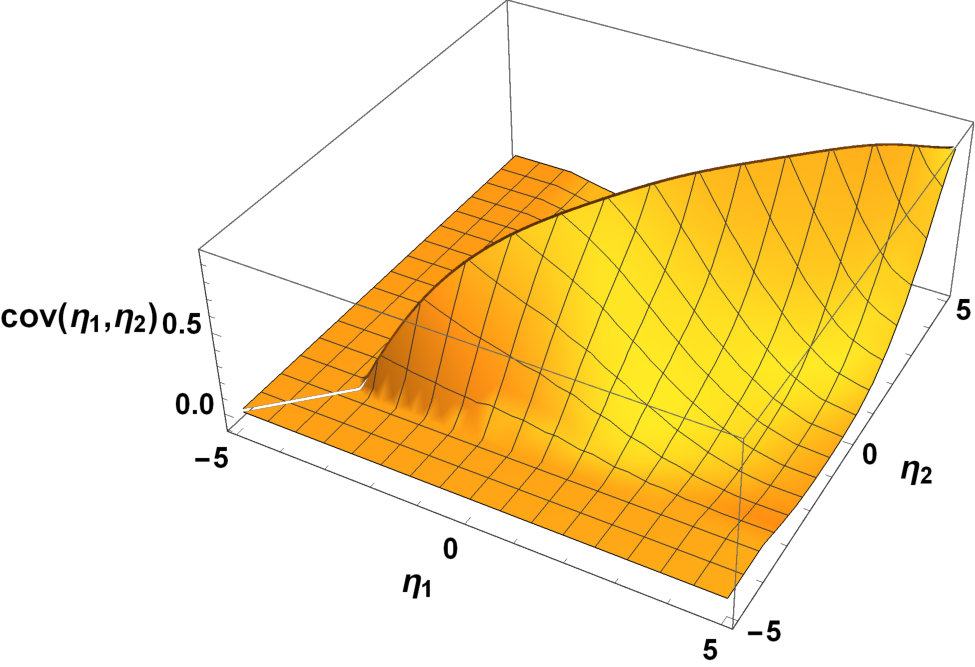 Figure 5
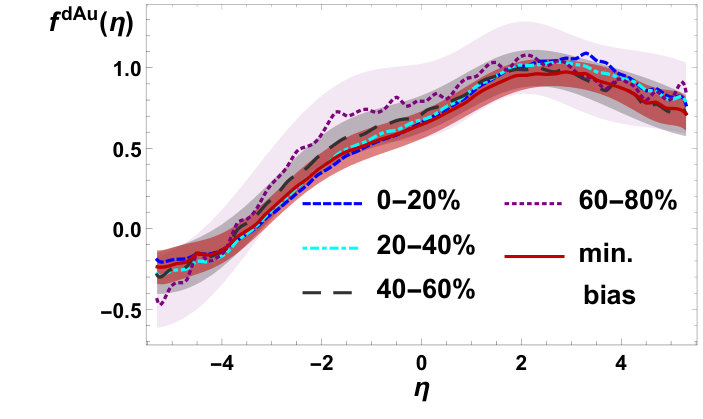 Figure 6
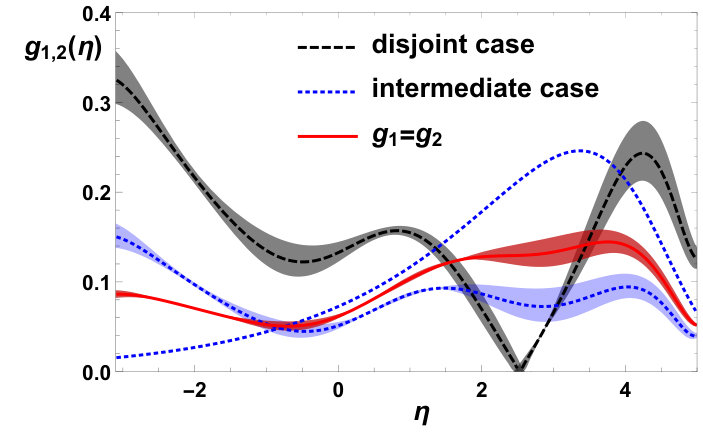 Figure 7
Peer Reviews
No public reviews on file for this paper yet. If you reviewed it on a platform where reviews are public (OpenReview, ICLR, NeurIPS, ICML), you can paste yours below so the community can read it here.
Videos
No videos yet. Explain this paper in a talk, walkthrough, or lecture? Add one.
Correlations with fluctuating strings††thanks: Talk presented by WB at XXV Cracow Epiphany Conference on Advances in Heavy Ion Physics, 8-11 January 2019
††thanks: Supported by Polish National Science Center grant 2015/19/B/ST/00937
Wojciech Broniowski1,2 [email protected]
Martin Rohrmoser1 [email protected] 1Institute of Physics, Jan Kochanowski University, PL-25406 Kielce, Poland
2The H. Niewodniczański Institute of Nuclear Physics,
Polish Academy of Sciences, PL-31342 Cracow, Poland
Abstract
We present a semi-analytic approach to forward-backward multiplicity correlations in ultra-relativistic nuclear collisions, based on particle emission from strings with fluctuating end-points. We show that with the constraints from rapidity spectra, one can obtain bounds for the magnitude of the standard measures of the forward-backward fluctuations. The method is generic under the assumption of independent production from sources. For definiteness, we use the wounded quark model for Au+Au and d+Au collisions at the energy of GeV.
This talk is based on our recent work [1], where more details may be found. Our primary goal is to understand in simple terms the mechanism of generation of the forward-backward multiplicity fluctuations in ultra-relativistic nuclear collisions. The presented approach generalizes in a natural way the analysis of [2], where only one-end fluctuations of strings were incorporated.
The QCD-motivated string models are being used all over the particle physics phenomenology. In particular, numerous and successful Monte Carlo codes are based on the Lund model of the string formation and decay (see, e.g., [3, 4, 5, 6, 7, 8]), or on the Dual Parton Model involving Pomeron and Regge exchange [9, 10, 11]. A shared feature is the formation of a collection of strings in the early stage of the collision. The string end-points span the color field and have opposite color charges (triplet with the quark-diquark or quark-antiquark, or octet with the gluon-gluon strings). The location of the end-points in spatial rapidity fluctuates randomly according to appropriate parton distribution functions, which together with other incorporated effects (such as the nuclear shadowing or baryon stopping) leads to predictions of the one-body spectra and the forward-backward event-by-event fluctuations.
On the other hand, multiplicity in hadron production is successfully described within the wounded picture [12], where the Glauber model [13] is adopted to describe inelastic collisions [14]. It has been found that the scaling based on wounded quarks [15, 16, 17, 18] rather than nucleons works surprisingly well [19, 20, 21, 22, 23, 24, 25, 26, 27, 28, 29, 30, 31, 32, 33, 34, 35] at RHIC and the LHC.
The approach of [2, 1] used here merges the two above concepts in the following manner:
Each wounded quark pulls a string; 2. 2.
The end-points of the strings are generated from appropriate distributions in such a way that the experimental one-body pseudorapidity spectra, serving as a constraint, are reproduced; 3. 3.
The emission of particles from a string between its end-points is uniform in space-time rapidity; 4. 4.
The strings emit particles independently of one-another; 5. 5.
For clarity, we consider only one type of strings, which leads to a simple semi-analytic analysis.
Modeling the rapidity spectra in the adopted approach is based on the key formula holding in the nucleon-nucleon () center-of-mass frame (CM),
[TABLE]
where at a given collision energy should be a universal (i.e., independent of the number of participants) emission profile of a string pulled by a wounded quark (we use the convention that nucleus moves to the right and to the left). Whereas from symmetric collisions () one can only obtain the symmetric part of , as then , from asymmetric collisions one can also extract the antisymmetric component [36, 37, 38]. It has been found that is a widely spread function in essentially the whole available range of , with a broad peak in the forward direction. A simplified triangular shape of has been used in several works [39, 40, 41, 42, 43].
We use the original method of [36] (recently applied also to the wounded quarks [37]) to extract of Eq. (1) from the PHOBOS experimental data [44, 45, 46]. The needed valence quark multiplicities and in the specified centrality classes were obtained from GLISSANDO [47]. We note that the results for various centrality classes basically overlap within the experimental uncertainties, hence we may conclude that the approach yields a universal profile function which reproduces the PHOBOS rapidity spectra at GeV. We thus confirm the results of [37].
From the point of view of QCD, the roughly triangular shape of seen in Fig. 1 finds its motivation in string models, where one end-point of the string is associated to a valence parton, whereas the other one is randomly generated along the space-time rapidity and is associated to a wee parton [48]. Note that linking the string to a leading (wounded) parton is very much in the spirit of the Lund model [3]. We thus have in each event and “wounded strings” associated to wounded valence quarks in nuclei and .
Next, following our recent work [1] we show how the end-point fluctuations relate to the emission profile. Let the emission of a particle with pseudorapidity from the string fragmentation process be uniformly distributed along the string between its end-points at and . Then the emission probability distribution is
[TABLE]
where is the production rate. After a short calculation we find that
[TABLE]
with the shifted cumulative distribution function defined as
[TABLE]
where are the standard cumulative distribution functions (CDFs) of the string-end points. Of course, .
It is clear from Eq. (3) that the procedure of extracting and when is known is not unique, as the product of two unknown functions is related to a known function. Nevertheless, we will show that interesting bounds may be determined in the considered mathematical problem, since and are monotonic, continuous, and grow from to as increases in its domain. Thus far to the left, where , and far to the right, where , we have , as it should be. In between, there must exist somewhere the zeros and of and , respectively. At these special points, as immediately follows from Eq. (3), , which is also the lowest possible value for the maximum of . We make a technical assumption here that is unimodal, i.e., has a single maximum at (this assumption is justified phenomenologically by the PHOBOS data). The situation where corresponds to the special case , where we can assume equal distributions for the two end-points:
[TABLE]
We label this case “”.
On the other hand, when the maximum of is (the highest possible value, assumed when ), one may choose
[TABLE]
The supports of and are disjoint, since is flat for and is flat for . Thus we term this case “disjoint”.
Finally, there are intermediate cases for . For instance, one may take a given form of and then adjust to satisfy Eq. (3), namely
[TABLE]
As , flipping the sign at , Eq. (7) yields
[TABLE]
(and symmetrically for ), hence formulas (6) give the upper and lower bounds for any solution.
Figure 2 presents the distributions of the string end-points and the corresponding CDFs for the three cases: , disjoint, and intermediate, where one end-point is distributed according to a suitable valence quark distribution function [1]. The bands provide uncertainties propagated from the experimental errors. For (single solid line), the distribution peaks at forward rapidity (i.e., the Au side), as expected from the shape of the one-body profile in Fig. 1. In the disjoint case (pairs of dashed lines), the supports for and are separated. In the intermediate case the dotted curve corresponds to the valence quark. It is peaked in the forward direction, as expected. With the used parametrization of the valence quark distribution [1], the intermediate case is not far from the case. We have verified that this holds for other parameterizations of the valence quark parton distribution functions. We remark that all the substantially different cases of Fig. 2 reproduce by construction the “experimental” emission profile .
We are ready to pass to the two-particle distributions, which is the main subject of this talk. We have now for the two-body probability distribution the formula [1]
[TABLE]
The covariance of the emission from a single string is defined in a standard way as
[TABLE]
It is displayed in Fig. 3 for the disjoint and cases, which are widely different in shape as well as in magnitude, with the former significantly smaller than the latter. The covariance in the intermediate case (not shown) is very close to the case.
In a nuclear collision, a collection of strings is formed; they “belong” either to the valence quarks from nucleus A or B. With the key assumption of independent emission from different strings, the expressions for the one- and two-body distributions account for simple combinatorics. For the one-body density in A-B collisions one has for the whole system (cf. Eq. (1))
[TABLE]
where and , as A moves forward and B backward in the CM frame. Analogously,
[TABLE]
We also introduce the customary correlation defined as
[TABLE]
and the coefficients [49, 50, 51]
[TABLE]
Here denotes the covered pseudorapidity range, where for RHIC we use , whereas ( denote the Legendre polynomials).
Equation (Correlations with fluctuating strings††thanks: Talk presented by WB at XXV Cracow Epiphany Conference on Advances in Heavy Ion Physics, 8-11 January 2019 ††thanks: Supported by Polish National Science Center grant 2015/19/B/ST/00937) contains terms with two different kinds of fluctuations: those originating from the string end-point fluctuations, with , and terms with moments of fluctuations of the numbers of wounded quarks, and . We have found that the string end-point fluctuations largely dominate over the and fluctuations, which contribute to at the level of 10-20% only.
Figure 4 presents the predicted for Au-Au and d-Au collisions at GeV. We note that the results for the and for the intermediate cases are nearly identical, while the result for the disjoint case is about a factor of 3 smaller. In view of the previous discussion, the and the disjoint cases represent the upper and lower bounds. From Eq. (Correlations with fluctuating strings††thanks: Talk presented by WB at XXV Cracow Epiphany Conference on Advances in Heavy Ion Physics, 8-11 January 2019 ††thanks: Supported by Polish National Science Center grant 2015/19/B/ST/00937) it is clear that to a good approximation scales, as expected, with the inverse of the number of sources.
In summary, here are our main points:
- •
Semi-analytic approach to the analysis of two-body correlations with constraint from the one-body pseudorapidity spectra yields nontrivial bounds for the forward-backward correlation measures;
- •
Fluctuations of the string end-points yield much larger forward-backward correlations and dominate over fluctuations of the number of strings;
- •
The Legendre coefficients scale as the inverse of the number of sources (strings).
The reference list from the paper itself. Each links out to its DOI / PubMed record.
- 1Rohrmoser and Broniowski [2019] M. Rohrmoser and W. Broniowski, Phys. Rev. C 99 , 024904 (2019) , ar Xiv:1809.08666 [nucl-th] . · doi ↗
- 2Broniowski and Bożek [2016] W. Broniowski and P. Bożek, Phys. Rev. C 93 , 064910 (2016) , ar Xiv:1512.01945 [nucl-th] . · doi ↗
- 3Andersson et al. [1983] B. Andersson, G. Gustafson, G. Ingelman, and T. Sjostrand, Phys. Rept. 97 , 31 (1983) . · doi ↗
- 4Wang and Gyulassy [1991] X.-N. Wang and M. Gyulassy, Phys. Rev. D 44 , 3501 (1991).
- 5Lin et al. [2005] Z.-W. Lin, C. M. Ko, B.-A. Li, B. Zhang, and S. Pal, Phys. Rev. C 72 , 064901 (2005) , ar Xiv:nucl-th/0411110 [nucl-th] . · doi ↗
- 6Sjöstrand et al. [2015] T. Sjöstrand, S. Ask, J. R. Christiansen, R. Corke, N. Desai, P. Ilten, S. Mrenna, S. Prestel, C. O. Rasmussen, and P. Z. Skands, Comput. Phys. Commun. 191 , 159 (2015) , ar Xiv:1410.3012 [hep-ph] . · doi ↗
- 7Bierlich et al. [2018] C. Bierlich, G. Gustafson, L. Lönnblad, and H. Shah, (2018), ar Xiv:1806.10820 [hep-ph] .
- 8Ferreres-Solé and Sjöstrand [2018] S. Ferreres-Solé and T. Sjöstrand, (2018), ar Xiv:1808.04619 [hep-ph] .