Is Symmetry Breaking into Special Subgroup Special?
Taichiro Kugo111Electronic address: [email protected]
and
Naoki Yamatsu222Electronic address: [email protected]
Department of Physics and Maskawa Institute for Science and Culture,
Kyoto Sangyo University, Kyoto 603-8555, Japan∗
Department of Physics, Kyoto University, Kyoto 606-8502,
Japan*†*
Abstract
The purpose of this paper is to show that the symmetry breaking into
special subgroups is not special at all, contrary to the usual wisdom.
To demonstrate this explicitly, we examine dynamical symmetry breaking
pattern
in 4D SU(N) Nambu–Jona-Lasinio type models in which the fermion matter
belongs to an irreducible representation of SU(N). The potential
analysis shows that for almost all cases at the potential minimum the
SU(N) group symmetry is broken to its special subgroups such as
SO(N) or USp(N) when symmetry breaking occurs.
1 Introduction
Symmetries and their
breaking[1, 2, 3] are
important to consider not only the Standard Model (SM) but also
unified theories beyond the SM in particle physics. In the framework of
quantum field theories (QFTs),
several symmetry breaking mechanisms have been already known, e.g.,
the Higgs mechanism[4, 5, 6],
and the dynamical symmetry breaking
mechanism[1, 2, 7, 8, 9, 10, 11, 12, 13, 14, 15, 16, 17, 18];
in higher dimensional and string-inspired theories, the Hosotani
mechanism[19, 20, 21],
magnetic flux [22, 23]
and orbifold breaking mechanism[24, 25].
For SU(n) and its breaking via the Higgs mechanism[26],
it is well-known that SU(n) symmetry is broken to SU(n−1) and
SU(m)×SU(n−m)×U(1) by the non-vanishing vacuum expectation
value (VEV) of a scalar field in an SU(n) fundamental representation
n and an SU(n) adjoint representation n2−1,
respectively.
On the other hand, SU(n) symmetry is broken to SU(n−1) or SO(n)
and SU(n−2) or USp(2ℓ)(ℓ:=[n/2]) by the non-vanishing VEV of
a scalar field in an SU(n) 2nd-rank symmetric tensor representation
n(n+1)/2 and an SU(n) 2nd-rank anti-symmetric tensor
representation n(n−1)/2, respectively.
The above subgroups SU(n−1), SU(m)×SU(n−m)×U(1),
SU(n−1), and SU(n−2) are regular subgroups of
SU(n), while the SO(n) and USp(2ℓ) are special
subgroups (or irregular subgroups) of SU(n)
[27, 28].
Note that a subgroup H of a group G is called a regular subgroup if
all the Cartan subgroups of H are also the Cartan subgroups of G;
otherwise, the subgroup H is called a special subgroup.
For example, SU(2)×U(1) of SU(3) is a regular subgroup, while
SO(3)≃SU(2) of SU(3) is a special subgroup.
If we use the familiar Gell-Mann matrices λa (a=1−8) for
the SU(3) generators, the regular subgroup SU(2)×U(1) has the
generators λ1,λ2,λ3,λ8 when the SU(2)
is the usual isospin subgroup, while the generators of the special
subgroup SO(3) are the three anti-symmetric (hence, purely imaginary)
matrices λ2,λ5,λ7.
Note that all regular subgroups are obtained by deleting circles
from (extended) Dynkin diagrams, while all special subgroups are not
done so. (For review, see e.g.,
Refs. [29, 30, 31].)
For grand unified theories (GUTs)
in 4 dimensional (4D) theories
[32, 33, 34, 35, 36, 37, 30, 38, 31]
and higher dimensional theories
[39, 40, 41, 42, 43, 44, 45, 46, 47, 48, 49, 50, 51, 52, 53],
a lot of GUT models use the Lie groups and their regular subgroups in a series:
[TABLE]
where GSM:=SU(3)C×SU(2)L×U(1)Y, and
we omitted several U(1) subgroups.
A few GUT models
[54, 55, 56]
are known to use not only the regular subgroups but also special subgroups
such as
[TABLE]
where we omitted several U(1) subgroups for regular subgroups.
The SU(16) group has a maximal special subgroup SO(10), 16
spinor of which is
identified with the defining 16 representation of SU(16).
The SU(16) symmetry can be broken to SO(10) via the VEV of
the SU(16) 5440 representation corresponding to a Young tableau
.
Note that a subgroup H of G is called maximal if there is no
larger subgroup containing it except G itself.
For example, U(1)×U(1) of SU(3) is not a maximal subgroup
because one of U(1) is contained in
the regular subgroup SU(2)⊂SU(3).
Some typical examples of the maximal special subgroups of
SU(n) are listed in Table 1.
When we discuss spontaneous symmetry breaking, it is important to know
not only subgroups but also little groups.
A little group Hϕ of a
vector ϕ in a representation R of G is defined by
[TABLE]
This little group Hϕ of G depends not only on the
representation R of ϕ but also the vector (value) ϕ
itself. The vector ϕ must be an Hϕ-singlet, so that a
subgroup H can be a little group of G for some representation R
only when R contains at least one H-singlet.
For example, the maximal little groups of SU(3) 3, 6,
and 8 representations are SU(2)(R), SU(2)(R) and SO(3)(S),
and SU(2)×U(1)(R), where (R) and (S) stand for regular and special
subgroups, respectively. Practically, the so-called Michel’s conjecture
[57] are very useful.
The Michel’s conjecture tells us that a potential that consists of a
scalar field in an irreducible representation R of
a group G has its
potential minimum that preserves one of its maximal little groups H
of R.
This conjecture drastically reduces the number of states especially for
higher rank group cases.
Many people vaguely believe that symmetry groups are broken to
only regular subgroups, not to special subgroups.
The main purpose of this paper is to show that
symmetry breaking into special subgroups are not special
by using 4D Nambu–Jona-Lasinio (NJL) type model in the framework of
dynamical symmetry breaking scenario
[58].
This paper is organized as follows. In Sec. 2
we first review a 4D NJL type model to show the method of potential
analysis.
In Secs. 3 and 4,
we apply the method for two cases in which the fermion belongs to the
defining representation and rank-2 anti-symmetric representations of
SU(n), respectively. For the latter NJL model with rank-2
anti-symmetric fermion, we will show, in particular, that SU(16)
symmetry breaks into two degenerate vacua of special subgroups SO(16)
and SO(10) for a certain region of coupling constants. However,
this degeneracy actually turns out to cause the mixing of the two
vacua and leads to the total breaking of the SU(16) symmetry,
generally. Some detailed identification of the scalar VEVs is necessary
to discuss this mixing phenomenon of the degenerate vacua, so the task
will be given in the Appendix.
Section 5 is devoted to a summary and discussions,
where we
also note the similarity of the present results to the previous one in
Ref. [58] for the
E6 NJL model with fundamental 27 fermion.
2 Nambu–Jona-Lasinio type model
We consider a 4D Nambu-Jona-Lasinio (NJL) type model
[1, 2]
in which the fermion
matter ψ=(ψI) (I=1,2,⋯,dimR=d) belongs to an
irreducible representation R of dimension d of the group G. The
each fermion field ψI is the two-component left-handed spinor
ψIα with an undotted spinor index α running over 1
to 2. Then the Lorentz scalar fermion bilinears
ψIψJ:=ψIαψJα:=εαβψIβψJα and
ψˉIψˉJ:=ψˉα˙IψˉJα˙=(ψIψJ)∗
are symmetric under exchange I↔J
owing to the Fermi statistics of ψI.
Assume that the
symmetric tensor product (R×R)S is decomposed into
nR irreducible representations Rp:
[TABLE]
Then the NJL Lagrangian has nR independent 4-fermion interaction
terms:
[TABLE]
where \bigl{(}\psi_{I}\psi_{J}\bigr{)}_{{\boldsymbol{R}}_{p}} denotes the projection of the
fermion bilinear into the irreducible component Rp.
Introducing auxiliary complex scalar fields
ΦRp (p=1,⋯,nR) standing for each of the irreducible
components -(G_{{\boldsymbol{R}}_{p}}/2)\bigl{(}\psi_{I}\psi_{J}\bigr{)}_{{\boldsymbol{R}}_{p}}
[59, 60],
we rewrite this Lagrangian into
[TABLE]
where \bar{{\ooalign{\hfil/\hfil\crcr\partial}}}:=\bar{\sigma}^{\mu}\partial_{\mu},
MRp2:=1/GRp, ΦIJ without
irreducible index Rp was introduced in
the second line to denote the sum
[TABLE]
which now stands for the general symmetric d×d complex matrix
with no more constraint. Now, noting that the kinetic and Yukawa terms
of the fermion can be rewritten into
[TABLE]
up to the total derivative terms, one can calculate the effective
potential in the leading order in 1/N 333We regard each
ψI as N-plet of a certain fictitious ‘color’ group U(N) and do
the expansion in 1/N. We, however, set N=1.
as
[TABLE]
where det4⊗d denotes the determinant of
4d×4d matrix. Now inserting
[TABLE]
the 1-loop potential part reads
[TABLE]
where trd denotes the trace of d×d matrix and the last
relation follows
from ΦΦ†=(Φ†Φ)T since Φ is a
symmetric matrix. Since the Φ-independent constant
V1-loop(0) can be discarded for our purpose finding the
potential minimum, we henceforth redefine the 1-loop part
V1-loop(Φ) actually to be
V1-loop(Φ)−V1-loop(0) by subtracting it.
Then, if we define the loop momentum integration by imposing the
UV cutoff Λ on the Euclideanized momentum
p0→ipE4 as pE2<Λ2, we have the
formula
[TABLE]
This formula is valid even when m2 is a general Hermitian matrix if
f(m2) is understood to be a matrix-valued function of the matrix.
So the final form of the 1-loop part is
[TABLE]
where mI2 are d eigenvalues of the Hermitian matrix
Φ†Φ, which stand for d mass-square eigenvalues of the
fermion ψI.
This 1-loop function f(m2) is monotonically increasing
upward-convex function.
In Fig. 1, we plot the rescaled dimensionless
function
fˉ(x):=Λ416π2f(m2) of x=m2/Λ2≥0
as well as the first and second derivatives:
[TABLE]
They lead to fˉ′(x)>0, fˉ′′(x)<0
in the whole region x>0.
For the single component ΦΦ†=v2 case the leading
potential is given by
[TABLE]
From the behavior of fˉ(x) in Fig. 1, we see
that the critical coupling constant Gcrt=Mcrt−2
for d=dimR=1 case is given by
[TABLE]
as determined by the decreasing
condition of the function Vleading∝M2x−f(x)≃(M2−Λ2/16π2)x (x≪Λ2)
around x=0.
It is convenient to rewrite the tree part potential into the following
form by picking up one particular representation, say R1, from
Rp’s:
[TABLE]
This is because Φ=∑pΦRp is the general
(unconstrained) symmetric
d×d matrix which solely appears in the 1-loop part potential
V1-loop, while ΦRp’s are constrained matrices
subject to non-trivial condition belonging to the irreducible
representation Rp, so satisfying the orthogonality
tr(ΦRp†ΦRp′)=0 for p=p′.
Whether a symmetry breaking pattern G→H is possible or
not is found as follows. Expand each G-irreducible representation
Rp into H-irreducible components rpH(i):
[TABLE]
If there is an H-singlet contained in this decomposition for one p
or more, then the possibility for the breaking G→H exists.
So assuming the non-zero VEV for all the H-singlets and identifying
how those singlet VEV(’s) is contained in the scalars ΦRp,
we can calculate the potential and find the potential values at the
minimum points of the potential. We do this calculation for all
possibilities of the subgroup H.
Then we can find the true minimum, comparing those minimum values for
all possible choices of H.
To find the symmetry breaking that realizes the lowest minimum of the potential,
we should note that the present potential V(Φ) in Eq.(2.6) consists
of negative definite
monotonically decreasing 1-loop potential
V1-loop(Φ†Φ)=−∑If(mI2)
and positive definite tree potential
∑pMRp2tr(ΦRp†ΦRp). So,
to realize the lower values of the potential, it is preferable that
[TABLE]
To examine all the possibilities systematically, we consider all the
maximal little groups for every ΦRp where the maximal little groups
of ΦRp are defined as follows: The little group of the VEV
⟨ΦRp⟩ of the group G is
H⟨ΦRp⟩ defined in Eq. (1.3)
for the vector ϕ=⟨ΦRp⟩, so that
the VEV ⟨ΦRp⟩ belongs to an
H⟨ΦRp⟩-singlet. As the VEV ⟨ΦRp⟩
changes, the little group
H⟨ΦRp⟩ also changes. A little group H of some VEV
⟨ΦRp⟩0
is called
maximal little group of ΦRp if there are no VEV ⟨ΦRp⟩ whose
little group H⟨ΦRp⟩ satisfies G⊃H⟨ΦRp⟩⊃H.
For certain systems of restricted class of potentials of scalar fields,
there is Michel’s conjecture[57, 30] which
claims that the group symmetry can breaks down only to one of the
maximal little groups of the considered scalar field
ΦRp. Our system does
not fall into such a restricted system, so that the lowest potential
needs not be realized by one of the maximal little groups. But we can
anyway consider the breaking possibilities starting with maximal little
group cases, and consider their successive breakings into smaller
subgroups if necessary in view of the above criterion
(2.30).
3 G=SU(N), ${\boldsymbol{R}}=\ {\vbox{\hrule height=0.5pt\hbox{\vrule width=0.5pt,height=8.0pt\kern 8.0pt\vrule width=0.5pt}
\hrule height=0.5pt}} ;definingrepresentation\psi_{i}$ case
First consider the simplest case in which the fermion belongs to the
defining representation {\boldsymbol{R}}=\rule{8.0pt}{0.5pt}\hskip-8.0pt\rule{0.5pt}{8.0pt}\hskip 8.0pt\hskip-0.5pt\hskip-8.0pt\rule[8.0pt]{8.0pt}{0.5pt}\rule[8.0pt]{0.5pt}{0.5pt}\hskip-0.5pt\rule{0.5pt}{8.0pt}\hskip-0.5pt\,\ of G=SU(N);
ψI=ψi. Then, d:=dim=N and the irreducible
decomposition of the symmetric product of R×R is now
trivial, since Rp is unique:
[TABLE]
So, in this case, the irreducible scalar ΦIJ is
identical with the general unconstrained symmetric complex
N×N matrix
ΦIJ, so that
the leading order potential is given by
[TABLE]
where vI2 is the eigenvalues of the d×d Hermitian matrix
Φ†Φ. The point here is that the d eigenvalues vI2
are all independent and are independently determined by the minimum
condition of the common function F(x;M2). Since the
minimum point x0 is uniquely fixed by f′(x0)=M2,
we can conclude that
[TABLE]
This common mass-square is, of course, non-vanishing only when
G=1/M2 is larger than the critical coupling
Gc=16π2/Λ2. That is, as far as the dynamical
spontaneous breaking occurs, the subgroup H to which the G=SU(N) is
broken down must be
such that
[TABLE]
The first condition alone already excludes the dynamical
breaking into regular subgroup H! This is because, if H is a regular
subgroup of SU(N), the defining representation necessarily splits
into plural H-irreducible representations.
And, the special subgroups H of G=SU(N) satisfying this condition i)
are only SO(N) and USp(N) (for only even N cases for the latter),
aside from very special
subgroups like SO(10) for the case of G=SU(16). In any cases, it is
only SO(N) that can also satisfy the second condition ii), since the
symmetric tensor ΦIJ realizes the common mass
⟨ΦIJ⟩∝δIJ for ψI but
δIJ is an invariant tensor only of SO(N).
We thus conclude: For G=SU(N) NJL theory with fermion ψI in
defining representation R= , SU(N) is spontaneously broken to
the special subgroup H=SO(N).
[TABLE]
in which the N-plet fermion ψI of SU(N) becomes N-plet of
SO(N) and the N(N+1)/2 dimensional scalars ΦIJ∈ splits
into an SO(N) singlet trace part trΦ=∑IΦII and
traceless symmetric part ΦIJ−(1/N)δIJtrΦ of
dimension N(N+1)/2−1=(N−1)(N+2)/2; the latter scalars are the
Nambu-Goldstone bosons for this breaking SU(N) →
SO(N). Indeed, dimSU(N)−dimSO(N)=(N2−1)−N(N−1)/2=(N+2)(N−1)/2.
Before closing this section, we note an interesting general conclusion
valid for a special coupling case, which can be drawn
from this simple example; that is, for the general NJL model with
fermions of general irreducible representation R, we always have
dynamical breaking into a special subgroup, if the coupling
constants GRp=1/MRp2 for G-irreducible channels
Rp are all degenerate (i.e., Rp-independent).
Indeed, in such a case, potential V
depends only on the unconstrained scalar Φ because of the identity
(2.28), so that all the fermions get a common mass just in the
same way as in the simplest model in this section.
4 G=SU(N), {\boldsymbol{R}}=\
; rank-2 anti-symmetric ψij case
Next consider the case where the fermion belongs to the rank-2
anti-symmetric representation R=, so that the index I now
stands for the anti-symmetric pair
[ij] (i,j=1,⋯,N;N≥2);
ψI=ψij=−ψji. Then the
fermion bilinear scalar ΦIJ∼ψIψJ gives symmetric
product (R×R)S decomposed into the following
two irreducible representations Rp:
[TABLE]
Namely, we have two irreducible auxiliary scalar fields in this case:
[TABLE]
There are the following six maximal little groups H
of G=SU(N), under which these two SU(N) irreducible
scalars have H-singlet components listed in
Table 2.
As explained before, we start the analysis of the potential with these
breakings into maximal little groups and consider the possibility of
successive breakings into further smaller subgroups when necessary.
First, we consider symmetry breaking of the cases 1), 3), 5), and 6)
since their breakings are caused by the condensation alone,
so, independent of the coupling
constant G=M−2.
As far as the coupling constant G=M−2 is larger
than its critical coupling, we can compare the potential energies for
those breaking cases with one another irrespectively of the
coupling strength G . From Tables 3
and 4,
we see that the original fermion 2N(N−1)plet ,
ψI=ψij, of G=SU(N) is also an H-irreducible
2N(N−1)plet in the case 3) H=SO(N), and also
in the very special
case 6) of N=16, H=SO(10). The potential for those cases is clearly
given by, for any N,
[TABLE]
for N=16,
[TABLE]
Since V2 can be chosen to be the minimum of the function
F(V2;M2), then this potential clearly realizes the
lowest possible value for the
breakings into this channel scalar Φ. We can thus forget
about the other possibilities of 1) and 5), henceforth.
For the other coupling strength cases, M2≤M2,
we need to consider the condensations into the channel Φ
also and evaluate the potential in more detail by identifying the
explicit form of the scalar VEVs. So let us now turn to this task.
4.1 Scalar VEV and potential for each case
Here we identify the explicit form of the scalar VEVs for
the cases 2), 3), 4), and 6) one by one to evaluate the potential in
detail.
- For the regular breaking case 2) into H=SU(4)×SU(N−4)
(N≥4),
the H-singlet scalar is contained only in Φ and
the VEV takes the form:
[TABLE]
where ϵijkl56⋯N is a rank-N totally anti-symmetric
tensor of SU(N) so that it is non-vanishing only when the first four indices
i,j,k,l all take the values 1 to 4 belonging to the SU(4) subgroup.
This VEV (4.5) gives the following form of fermion mass
matrix for the 6 independent components
ψi<j (1≤i<j≤4) {ψ12,ψ34,ψ13,ψ24,ψ14,ψ23}∈ of SU(4):
[TABLE]
So, in this case of regular breaking into SU(4)×SU(N−4), only
these six fermions get mass square v2, so the potential is given by
[TABLE]
For N≥6, the remaining subgroup SU(N−4) can be further broken
by the nonvanishing VEV of the scalar field components
Φij,kl and Φij,kl with
5≤i,j,k,l≤N, keeping the first SU(4) intact. This breaking
again lowers the potential energy since more fermions becomes massive.
This successive breaking also can be discussed by simply applying our
present argument for SU(N) to the case N→N−4.
- We already know the potential (4.3) for the third case 3)
breaking into H=SO(N). For completeness, however,
we explicitly write the form of the H-singlet scalar component in
Φ, which is easily guessed to take the form
[TABLE]
where the multi-index Kronecker’s delta is defined by
[TABLE]
These deltas are SU(N)-invariant tensors if the upper and lower
indices are distinguished as Hermitian conjugate to each other, while,
if such a distinction of upper and lower indices is neglected, then they
are only invariant under SO(N). Thus the VEV (4.8) only
keeps SO(N) while violating the G=SU(N). Under the VEV
(4.8), however, all N(N−1)/2 components of fermions
ψij get the same mass square V2 and the potential takes the form as
given in the above Eq. (4.3).
- The breaking into USp(N=2n) for even N=2n is most
non-trivial, since both the G-irreducible components Φ
and Φ of the scalar Φ have an H-singlet component.
We should note that USp(2n) groups have, aside from the usual SU(N)
invariant tensors δji and ϵi1i2⋯iN,
an additional invariant tensor Ωij, UTΩU=Ω for
∀U∈USp(2n), called symplectic metric whose explicit
2n×2n matrix form can be taken to be
[TABLE]
Then the H-singlet component in Φ is clearly given by
using the totally anti-symmetric tensor ϵi1i2⋯iN and
the symplectic metric Ωij n−2 times:
[TABLE]
Note that this VEV for N=4, possessing no symplectic metric Ω,
is SU(4)-invariant rather than USp(4)-invariant.
The H-singlet component in Φ is given by using Ω
twice and by acting the Young symmetrizer Y
to satisfy the required index symmetry:
[TABLE]
with (ij) denoting transposition operator between the indices i and
j. So we have
[TABLE]
With these H-singlet VEVs, we can calculate the fermion mass terms by
a straightforward calculation.
But, before doing so for general N=2n case, it is helpful to calculate
these VEV matrices explicitly for the simplest G=SU(6) (i.e., n=3)
case.
Then, among the independent fermions ψI=ψi<j,
we find it convenient to distinguish the
‘diagonal’ components ψ2ℓ−1,2ℓ(ℓ=1,2,⋯,n),
which appear in the symplectic trace
(1/2)Ωijψij=ψ12+ψ34+⋯+ψ2n−1,2n, from the other
2n(n−1) ‘off-diagonal’ fermions
ψ2ℓ−1,j or ψ2ℓ,j with j≥2ℓ+1.
We put them in the following order explicitly for n=3 case:
[TABLE]
With this independent fermion basis, the H-singlet VEV matrices are
explicitly written as
[TABLE]
Note that these matrices are orthogonal to each other, \mathop{\text{tr}}\bigl{(}\langle\Phi_{{\raisebox{-3.0pt}{\raisebox{-1.5pt}{\rule{3.0pt}{0.4pt}\hskip-3.0pt\rule{0.4pt}{3.0pt}\hskip 3.0pt\hskip-0.4pt\hskip-3.0pt\rule[3.0pt]{3.0pt}{0.4pt}\rule[3.0pt]{0.4pt}{0.4pt}\hskip-0.4pt\rule{0.4pt}{3.0pt}\hskip-0.4pt}\hskip-3.0pt\raisebox{1.5pt}{\rule{3.0pt}{0.4pt}\hskip-3.0pt\rule{0.4pt}{3.0pt}\hskip 3.0pt\hskip-0.4pt\hskip-3.0pt\rule[3.0pt]{3.0pt}{0.4pt}\rule[3.0pt]{0.4pt}{0.4pt}\hskip-0.4pt\rule{0.4pt}{3.0pt}\hskip-0.4pt}}\hskip-3.0pt\raisebox{3.0pt}{\raisebox{-1.5pt}{\rule{3.0pt}{0.4pt}\hskip-3.0pt\rule{0.4pt}{3.0pt}\hskip 3.0pt\hskip-0.4pt\hskip-3.0pt\rule[3.0pt]{3.0pt}{0.4pt}\rule[3.0pt]{0.4pt}{0.4pt}\hskip-0.4pt\rule{0.4pt}{3.0pt}\hskip-0.4pt}\hskip-3.0pt\raisebox{1.5pt}{\rule{3.0pt}{0.4pt}\hskip-3.0pt\rule{0.4pt}{3.0pt}\hskip 3.0pt\hskip-0.4pt\hskip-3.0pt\rule[3.0pt]{3.0pt}{0.4pt}\rule[3.0pt]{0.4pt}{0.4pt}\hskip-0.4pt\rule{0.4pt}{3.0pt}\hskip-0.4pt}}}}\rangle\langle\Phi_{{\raisebox{-1.5pt}{\rule{3.0pt}{0.4pt}\hskip-3.0pt\rule{0.4pt}{3.0pt}\hskip 3.0pt\hskip-0.4pt\hskip-3.0pt\rule[3.0pt]{3.0pt}{0.4pt}\rule[3.0pt]{0.4pt}{0.4pt}\hskip-0.4pt\rule{0.4pt}{3.0pt}\hskip-0.4pt\rule{3.0pt}{0.4pt}\hskip-3.0pt\rule{0.4pt}{3.0pt}\hskip 3.0pt\hskip-0.4pt\hskip-3.0pt\rule[3.0pt]{3.0pt}{0.4pt}\rule[3.0pt]{0.4pt}{0.4pt}\hskip-0.4pt\rule{0.4pt}{3.0pt}\hskip-0.4pt}\hskip-6.0pt\raisebox{1.5pt}{\rule{3.0pt}{0.4pt}\hskip-3.0pt\rule{0.4pt}{3.0pt}\hskip 3.0pt\hskip-0.4pt\hskip-3.0pt\rule[3.0pt]{3.0pt}{0.4pt}\rule[3.0pt]{0.4pt}{0.4pt}\hskip-0.4pt\rule{0.4pt}{3.0pt}\hskip-0.4pt\rule{3.0pt}{0.4pt}\hskip-3.0pt\rule{0.4pt}{3.0pt}\hskip 3.0pt\hskip-0.4pt\hskip-3.0pt\rule[3.0pt]{3.0pt}{0.4pt}\rule[3.0pt]{0.4pt}{0.4pt}\hskip-0.4pt\rule{0.4pt}{3.0pt}\hskip-0.4pt}}}\rangle\bigr{)}=0,
as they should be.
Taking these explicit matrix forms into account, we can now write down
the result for the general n case:
[TABLE]
where the first lines of Eqs. (4.17) and (4.18)
are for the terms containing only the
n ‘diagonal’ fermions ψ2ℓ−1,2ℓ(ℓ=1,2,⋯,n),
and the second lines are
for the bilinear terms of the other 2n(n−1) ‘off-diagonal’ fermions.
Note that the second lines consist of n(n−1)
bilinear terms so that all the off-diagonal fermions appear only once
there.
We can now find the eigenvalues of these matrices
⟨Φ⟩ and
⟨Φ⟩. Calculating
separately the ‘diagonal’ component sector and ‘off-diagonal’
component sector, we find the eigenvalues for SU(2n) case
[TABLE]
Recall that the fermion mass-square eigenvalues are given by the
eigenvalues of ⟨Φ†⟩⟨Φ⟩ with the
total scalar field Φ=Φ+Φ.
We, therefore, have the fermion mass-square eigenvalues as
[TABLE]
Note that this splitting pattern of fermion mass-squared eigenvalues
correctly reflects the decomposition of SU(2n) into
USp(2n)-irreducible representations: that is, under
SU(2n)⊃USp(2n)
[TABLE]
where the USp(2n)-singlet component is given by
the symplectic trace ∝Ωijψij.
Then, noting
[TABLE]
we thus find the potential for this breaking SU(2n)→USp(2n):
[TABLE]
where the identity (2.28) has been used in going to the second and third
expressions.
- Finally, for the case 6) of SU(16)→SO(10), the potential is the
same as that in Eq. (4.3) with N=16 for the case 3) of
SU(16)→SO(16). But the form of the H-singlet scalar component in
Φ is of course different from the latter case one
(4.8), and is given by
[TABLE]
where σabc=σ[aσˉbσc] of SO(10) Weyl
spinor γ-matrices with a,b,c being SO(10)-vector indices
and C being the charge conjugation matrix.
The potential degeneracy between the two breakings SU(16)→SO(10)
and SU(16)→SO(16) actually causes a very interesting
mixing phenomenon of
the two vacua, SO(16) and SO(10) ones, which totally breaks
SU(16) symmetry while keeping the
mass degeneracy of 120 fermions realizing the lowest
potential value. We explain this phenomenon in Appendix
A in some detail.
4.2 Which symmetry breaking is chosen?
Now that the potentials are obtained for the cases 2), 3), 4), and 6),
we can compare them and decide which case realizes the lowest potential
value for various cases of coupling constants.
Let us discuss three cases,
(a) M2>M2 (G<G),
(b) M2=M2 (G=G), and
(c) M2<M2 (G>G), separately.
It is also necessary to discuss even and odd N(≥3) cases,
separately, since
the maximal little group USp(N′=2n) for the case 4) is also
a maximal subgroup of SU(N=2n) for even N, but not so for odd
N=2n+1. In evaluating the potential henceforth,
we assume that the theory shows the spontaneous symmetry breaking; that
is, the larger coupling constant, at least, is larger than the critical
coupling constant, Min(G,G)>Gcr.
Even N≥4
We have already known that for N=16 the potentials for the cases 3) and
6) are the same. Here, we need to consider only the potentials for the
cases 2), 3) and 4).
(a) M2>M2 case
We first compare the potential for 2) SU(4)×SU(N−4) (N≥4)
and 3) SO(N) cases.
[TABLE]
where V02 is the minimum point x=V02 of the function
F(x;M) as introduced above.
Note that F(V02;M2)<0
because of the symmetry breaking assumption.
The above inequality holds for ∀v.
Therefore, we find for N≥4
[TABLE]
Next, we compare the potential for 3) SO(N) and 4) USp(N) cases.
From Eq. (4.23)
[TABLE]
So, since (M2−M2)n(n−1)V2>0 in this case, we
have for even N=2n,
[TABLE]
Thus, the SO(N) vacuum realizes the lowest potential value and we can
conclude that the symmetry breaking in this case is also a breaking to
special subgroup:
[TABLE]
(b) M2=M2 case
We first compare the potential for 2) SU(4)×SU(N−4) (N≥4)
and 3) SO(N) cases. From the same discussion
as in Eq. (4.25) for the previous
(a) M2>M2 case,
we find for N≥4
[TABLE]
where the equality holds only for N=4.
Next, we compare the potential for 3) SO(N) and 4) USp(N)
cases. This case of degenerate couplings was already discussed generally
at the end of the previous section. We know that all the fermions get a
common mass after symmetry breaking so that the breaking must be down to a
special subgroup. In this case, we have two possibilities for the
special subgroup, SO(N) and USp(N=2n), which correspond to cases 3)
and 4) breaking, respectively.
At first sight, the latter SU(N)→USp(N=2n) breaking case seems not
realizing a common mass for all the fermions ψij but
gives two mass square values, since the N(N−1)/2-plet
fermion ψij splits into a singlet 1 and the rest
(2n+1)(n−1) under
H=USp(N=2n) as already seen in Eq. (4.21).
In the absence of the term
(M_{{\raisebox{-3.0pt}{\raisebox{-1.5pt}{\rule{3.0pt}{0.4pt}\hskip-3.0pt\rule{0.4pt}{3.0pt}\hskip 3.0pt\hskip-0.4pt\hskip-3.0pt\rule[3.0pt]{3.0pt}{0.4pt}\rule[3.0pt]{0.4pt}{0.4pt}\hskip-0.4pt\rule{0.4pt}{3.0pt}\hskip-0.4pt}\hskip-3.0pt\raisebox{1.5pt}{\rule{3.0pt}{0.4pt}\hskip-3.0pt\rule{0.4pt}{3.0pt}\hskip 3.0pt\hskip-0.4pt\hskip-3.0pt\rule[3.0pt]{3.0pt}{0.4pt}\rule[3.0pt]{0.4pt}{0.4pt}\hskip-0.4pt\rule{0.4pt}{3.0pt}\hskip-0.4pt}}\hskip-3.0pt\raisebox{3.0pt}{\raisebox{-1.5pt}{\rule{3.0pt}{0.4pt}\hskip-3.0pt\rule{0.4pt}{3.0pt}\hskip 3.0pt\hskip-0.4pt\hskip-3.0pt\rule[3.0pt]{3.0pt}{0.4pt}\rule[3.0pt]{0.4pt}{0.4pt}\hskip-0.4pt\rule{0.4pt}{3.0pt}\hskip-0.4pt}\hskip-3.0pt\raisebox{1.5pt}{\rule{3.0pt}{0.4pt}\hskip-3.0pt\rule{0.4pt}{3.0pt}\hskip 3.0pt\hskip-0.4pt\hskip-3.0pt\rule[3.0pt]{3.0pt}{0.4pt}\rule[3.0pt]{0.4pt}{0.4pt}\hskip-0.4pt\rule{0.4pt}{3.0pt}\hskip-0.4pt}}}}^{2}-M_{{\raisebox{-1.5pt}{\rule{3.0pt}{0.4pt}\hskip-3.0pt\rule{0.4pt}{3.0pt}\hskip 3.0pt\hskip-0.4pt\hskip-3.0pt\rule[3.0pt]{3.0pt}{0.4pt}\rule[3.0pt]{0.4pt}{0.4pt}\hskip-0.4pt\rule{0.4pt}{3.0pt}\hskip-0.4pt\rule{3.0pt}{0.4pt}\hskip-3.0pt\rule{0.4pt}{3.0pt}\hskip 3.0pt\hskip-0.4pt\hskip-3.0pt\rule[3.0pt]{3.0pt}{0.4pt}\rule[3.0pt]{0.4pt}{0.4pt}\hskip-0.4pt\rule{0.4pt}{3.0pt}\hskip-0.4pt}\hskip-6.0pt\raisebox{1.5pt}{\rule{3.0pt}{0.4pt}\hskip-3.0pt\rule{0.4pt}{3.0pt}\hskip 3.0pt\hskip-0.4pt\hskip-3.0pt\rule[3.0pt]{3.0pt}{0.4pt}\rule[3.0pt]{0.4pt}{0.4pt}\hskip-0.4pt\rule{0.4pt}{3.0pt}\hskip-0.4pt\rule{3.0pt}{0.4pt}\hskip-3.0pt\rule{0.4pt}{3.0pt}\hskip 3.0pt\hskip-0.4pt\hskip-3.0pt\rule[3.0pt]{3.0pt}{0.4pt}\rule[3.0pt]{0.4pt}{0.4pt}\hskip-0.4pt\rule{0.4pt}{3.0pt}\hskip-0.4pt}}}^{2})\bigl{(}3n(n-1)V^{2}\bigr{)}, however,
VUSp(2n) potential (4.23) takes the form
[TABLE]
Since v and V are two independent variables
corresponding to the VEVs \bigl{\langle}\Phi_{{\raisebox{-3.0pt}{\raisebox{-1.5pt}{\rule{3.0pt}{0.4pt}\hskip-3.0pt\rule{0.4pt}{3.0pt}\hskip 3.0pt\hskip-0.4pt\hskip-3.0pt\rule[3.0pt]{3.0pt}{0.4pt}\rule[3.0pt]{0.4pt}{0.4pt}\hskip-0.4pt\rule{0.4pt}{3.0pt}\hskip-0.4pt}\hskip-3.0pt\raisebox{1.5pt}{\rule{3.0pt}{0.4pt}\hskip-3.0pt\rule{0.4pt}{3.0pt}\hskip 3.0pt\hskip-0.4pt\hskip-3.0pt\rule[3.0pt]{3.0pt}{0.4pt}\rule[3.0pt]{0.4pt}{0.4pt}\hskip-0.4pt\rule{0.4pt}{3.0pt}\hskip-0.4pt}}\hskip-3.0pt\raisebox{3.0pt}{\raisebox{-1.5pt}{\rule{3.0pt}{0.4pt}\hskip-3.0pt\rule{0.4pt}{3.0pt}\hskip 3.0pt\hskip-0.4pt\hskip-3.0pt\rule[3.0pt]{3.0pt}{0.4pt}\rule[3.0pt]{0.4pt}{0.4pt}\hskip-0.4pt\rule{0.4pt}{3.0pt}\hskip-0.4pt}\hskip-3.0pt\raisebox{1.5pt}{\rule{3.0pt}{0.4pt}\hskip-3.0pt\rule{0.4pt}{3.0pt}\hskip 3.0pt\hskip-0.4pt\hskip-3.0pt\rule[3.0pt]{3.0pt}{0.4pt}\rule[3.0pt]{0.4pt}{0.4pt}\hskip-0.4pt\rule{0.4pt}{3.0pt}\hskip-0.4pt}}}}\bigr{\rangle} and \bigl{\langle}\Phi_{{\raisebox{-1.5pt}{\rule{3.0pt}{0.4pt}\hskip-3.0pt\rule{0.4pt}{3.0pt}\hskip 3.0pt\hskip-0.4pt\hskip-3.0pt\rule[3.0pt]{3.0pt}{0.4pt}\rule[3.0pt]{0.4pt}{0.4pt}\hskip-0.4pt\rule{0.4pt}{3.0pt}\hskip-0.4pt\rule{3.0pt}{0.4pt}\hskip-3.0pt\rule{0.4pt}{3.0pt}\hskip 3.0pt\hskip-0.4pt\hskip-3.0pt\rule[3.0pt]{3.0pt}{0.4pt}\rule[3.0pt]{0.4pt}{0.4pt}\hskip-0.4pt\rule{0.4pt}{3.0pt}\hskip-0.4pt}\hskip-6.0pt\raisebox{1.5pt}{\rule{3.0pt}{0.4pt}\hskip-3.0pt\rule{0.4pt}{3.0pt}\hskip 3.0pt\hskip-0.4pt\hskip-3.0pt\rule[3.0pt]{3.0pt}{0.4pt}\rule[3.0pt]{0.4pt}{0.4pt}\hskip-0.4pt\rule{0.4pt}{3.0pt}\hskip-0.4pt\rule{3.0pt}{0.4pt}\hskip-3.0pt\rule{0.4pt}{3.0pt}\hskip 3.0pt\hskip-0.4pt\hskip-3.0pt\rule[3.0pt]{3.0pt}{0.4pt}\rule[3.0pt]{0.4pt}{0.4pt}\hskip-0.4pt\rule{0.4pt}{3.0pt}\hskip-0.4pt}}}\bigr{\rangle}, respectively,
the two mass-square parameters ((2n+1)V+(n−1)v)2 and (V−v)2 can
be varied independently so as to choose the minimum V02 of the function
F(x;M2). Indeed, two points
[TABLE]
and
[TABLE]
realize the minimum, and then 1+(2n+1)(n−1)=N(N−1)/2 fermions all have
a degenerate mass-square V02 also in these USp(N=2n) vacua.
(We notice that the latter USp(N=2n) vacuum (4.32) for
N=4 reduces to the SU(4)×SU(N−4)=SU(4) vacuum realized by
⟨Φ⟩=v alone, i.e., with V=0).
Recalling the expression
(4.3) for the SO(N) potential,
we see that both USp(2n) and SO(N) vacua realize the degenerate
lowest potential minimum in this case:
[TABLE]
and we again conclude the breaking into special subgroups also in this
case:
[TABLE]
and, for N=4 case, in particular,
[TABLE]
although the last SU(4) vacuum breaks no symmetry but is merely a
bilinear fermion condensation.
(c) M2<M2 case
Since the coupling G becomes stronger in this region,
we can intuitively
guess that the USp(N=2n) vacuum realizes the lower potential value
than the SO(N) one. It can indeed be shown explicitly as follows.
If we put the above two points (4.31) and (4.32)
into the expression (4.23) for
the potential VUSp(2n)(v,V), then, we have
[TABLE]
Since the first terms on the RHSs are negative in this case, USp(2n)
potential VUSp(2n)(v,V) at these points
already take values lower than the minimum of the SO(N) potential.
The true minimum of VUSp(2n)(v,V) must be lower than these,
implying
[TABLE]
So, we next compare the values of VSU(4)×SU(N−4)
and VUSp(2n) for cases 2) SU(4)×SU(N−4)
(N≥4) and 4) USp(N).
We should first consider a special case N=2n=4 (i.e., n=2),
in which H=SU(4)×SU(N−4) is just H=SU(4) implying no breaking
of G=SU(4). However, the SU(4) vacuum is realized by the
condensation into the channel ⟨Φ⟩=v and
the potential is given by
6F(v2;M2). All the 6 components of fermion
get a common mass square v02 realizing the minimum of the function
F(x;M2), so it is clear that this SU(4) vacuum
realizes the lowest potential in this coupling region
M2<M2. (As noted above, the
second USp(4) vacuum (4.32) for n=2 is identical with this
SU(4) vacuum since V=0.) We thus conclude for N=4 that
[TABLE]
Now, we have to consider the general cases N=2n≥6 (i.e., n≥3).
We here want to show that the opposite to the N=4 case holds for this
general case N≥6; that is,
V_{{SU(4)\times SU(N-4)}}\big{|}_{\text{min}}>V_{{USp(N=2n)}}\big{|}_{\text{min}}.
To show this, we first define the difference as a function of M2
[TABLE]
and examine its behavior over the region M2>M2≥0,
where we have simply written M2 to denote M2 for brevity
and use it for a while hereafter.
We denote v0 as the minimum point of the function
F\bigl{(}x;M^{2}\bigr{)}=M^{2}x-f(x) so that it is a function
v02(M2) implicitly determined by
[TABLE]
At the boundary M2=M2, we already know
that Δ(M2) is negative for n≥3;
indeed, using the values V_{{USp(2n)}}(v,V)\big{|}_{\text{min}} in
Eq. (4.33) and
V_{{SU(4)\times SU(N-4)}}\big{|}_{\text{min}}=6F(v_{0}^{2};M^{2})
in Eq. (4.7)
we have, at M2=M2,
[TABLE]
since n(2n−1)−6≥9 for n≥3 and F\bigl{(}v_{0}^{2};M^{2}\bigr{)}<0.
We will show that dΔ(M2)/dM2≥0 in the present
region M2≥M2≥0.
Then, if we see Δ(M2) in the region
M2≥M2≥0 from M2=M2
toward the direction of M2 going to smaller to zero
(the direction of the coupling constant G=M−2 going to
stronger to ∞), it decreases monotonically from the
initial negative value Eq. (4.41) at M2=M2,
implying that it is always negative
in M2≥M2≥0.
The derivative of Δ(M2)
with respect to M2 is evaluated as
[TABLE]
where (vˉ,Vˉ) is the value of (v,V) at the minimum
point of VUSp(2n)(v,V), and the explicit M2-dependence
has been found in the expressions
(4.23) for VUSp(2n)(vˉ,Vˉ)
and (4.7) for VSU(4)×SU(N−4)(v0).
Note that the implicit M2-dependence here through
vˉ(M2),Vˉ(M2) and v0(M2) does not contribute
because of the stationarity of the potential at the minimum:
[TABLE]
The minimum point (vˉ,Vˉ) of VUSp(2n)(v,V)
is found by the first and second equations in
Eq. (4.43) by using Eq. (4.23):
[TABLE]
where v1:=(2n+1)Vˉ+(n−1)vˉ and v2:=vˉ−Vˉ are
(square root of) the arguments of the two f functions in Eq. (4.23)
at the minimum
point. Inserting the inverse relation
[TABLE]
Eq. (4.44) can be rewritten into
[TABLE]
In order for this simultaneous Eqs. (4.46) and (4.47)
to have non-vanishing solution,
[TABLE]
must vanish, so that we obtain
[TABLE]
where we have defined a parameter
[TABLE]
From Eq. (4.47), we also have
[TABLE]
From these equations, we can now discuss the size ordering among v12,v22
and v02.
If the coupling G is moved below the critical value
Gcr, i.e.,
M2>f′(0), while keeping G>Gcr, then
the parameter α in Eq. (4.52) is clearly positive.
So we henceforth consider only the solution (v1,v2) of
Eqs. (4.46) and (4.47) which satisfies
α>0.444When both coupling constants G and G are above
critical, there are actually two solutions to the simultaneous
Eqs. (4.46) and (4.47):
One realizes α>0 and reduces to the solution Eq. (4.32)
in the limit M2→M2, and the other realizes
α<0 and reduces to the solution Eq. (4.31). However, one can
convince oneself
that the latter solution with α<0 has the size-ordering
v12<v2<v22<v02 \big{(}f^{\prime}(v_{\,{\raisebox{-1.5pt}{\rule{3.0pt}{0.4pt}\hskip-3.0pt\rule{0.4pt}{3.0pt}\hskip 3.0pt\hskip-0.4pt\hskip-3.0pt\rule[3.0pt]{3.0pt}{0.4pt}\rule[3.0pt]{0.4pt}{0.4pt}\hskip-0.4pt\rule{0.4pt}{3.0pt}\hskip-0.4pt\rule{3.0pt}{0.4pt}\hskip-3.0pt\rule{0.4pt}{3.0pt}\hskip 3.0pt\hskip-0.4pt\hskip-3.0pt\rule[3.0pt]{3.0pt}{0.4pt}\rule[3.0pt]{0.4pt}{0.4pt}\hskip-0.4pt\rule{0.4pt}{3.0pt}\hskip-0.4pt}\hskip-6.0pt\raisebox{1.5pt}{\rule{3.0pt}{0.4pt}\hskip-3.0pt\rule{0.4pt}{3.0pt}\hskip 3.0pt\hskip-0.4pt\hskip-3.0pt\rule[3.0pt]{3.0pt}{0.4pt}\rule[3.0pt]{0.4pt}{0.4pt}\hskip-0.4pt\rule{0.4pt}{3.0pt}\hskip-0.4pt\rule{3.0pt}{0.4pt}\hskip-3.0pt\rule{0.4pt}{3.0pt}\hskip 3.0pt\hskip-0.4pt\hskip-3.0pt\rule[3.0pt]{3.0pt}{0.4pt}\rule[3.0pt]{0.4pt}{0.4pt}\hskip-0.4pt\rule{0.4pt}{3.0pt}\hskip-0.4pt}}}^{2}):=M_{{\raisebox{-1.5pt}{\rule{3.0pt}{0.4pt}\hskip-3.0pt\rule{0.4pt}{3.0pt}\hskip 3.0pt\hskip-0.4pt\hskip-3.0pt\rule[3.0pt]{3.0pt}{0.4pt}\rule[3.0pt]{0.4pt}{0.4pt}\hskip-0.4pt\rule{0.4pt}{3.0pt}\hskip-0.4pt\rule{3.0pt}{0.4pt}\hskip-3.0pt\rule{0.4pt}{3.0pt}\hskip 3.0pt\hskip-0.4pt\hskip-3.0pt\rule[3.0pt]{3.0pt}{0.4pt}\rule[3.0pt]{0.4pt}{0.4pt}\hskip-0.4pt\rule{0.4pt}{3.0pt}\hskip-0.4pt}\hskip-6.0pt\raisebox{1.5pt}{\rule{3.0pt}{0.4pt}\hskip-3.0pt\rule{0.4pt}{3.0pt}\hskip 3.0pt\hskip-0.4pt\hskip-3.0pt\rule[3.0pt]{3.0pt}{0.4pt}\rule[3.0pt]{0.4pt}{0.4pt}\hskip-0.4pt\rule{0.4pt}{3.0pt}\hskip-0.4pt\rule{3.0pt}{0.4pt}\hskip-3.0pt\rule{0.4pt}{3.0pt}\hskip 3.0pt\hskip-0.4pt\hskip-3.0pt\rule[3.0pt]{3.0pt}{0.4pt}\rule[3.0pt]{0.4pt}{0.4pt}\hskip-0.4pt\rule{0.4pt}{3.0pt}\hskip-0.4pt}}}^{2}\big{)}
and realizes higher potential value than that realized by the former solution
with α>0 discussed here. In any case, it is enough to prove
VUSp∣min<VSU(4)×SU(N−4)∣min for
one solution for the present purpose.
Then,
Eqs. (4.51), (4.52) and
M2<M2 tell us that
either i) f′(v12)<M2<f′(v22)<M2 with α>1
or ii) f′(v22)<M2<f′(v12)<M2 with 1>α>0
holds, which corresponds to either
i) v12>v02>v22 or ii) v22>v02>v12, respectively,
since f′(x) is a monotonically decreasing
function and M2=f′(v02).
However, the case ii) is inconsistent with Eq. (4.53),
which says v12>v22 since (n−1)α−1>1 for α<1,n≥2.
Thus we have only the case i), which is consistent with
Eq. (4.53) if n−1>α>1.
Now to prove the positivity of Eq. (4.42), we need
an inequality. Recall that f′(x) is a monotonically decreasing
downward-convex function, so it satisfies the following inequality for
∀λ∈[0,1],
[TABLE]
Noting the ordering v22<v02<v12, we take
x1=v12, x2=v22 and λ=(v02−v22)/(v12−v22),
this leads to
[TABLE]
Multiplying this by v12−v22>0 and inserting
Eq. (4.51) with M2=f′(v02) there, and dividing it
with the positive factor f′(v22)−M2>0, we find
[TABLE]
Further, inserting Eq. (4.53), v1=(n−1)α−1v2,
we finally find
[TABLE]
Now, we can evaluate dΔ(M2)/dM2 in
Eq. (4.42); the first term is given by
[TABLE]
where we have used Eqs. (4.53) and
(4.57).
An elementary analysis for the function G(α−1) over the
region n−1>α>1, i.e., (n−1)−1<α−1<1, shows that
G(α−1) is maximum at the starting point α−1=(n−1)−1
and is a monotonically decreasing function in this region. So
the minimum of the function G(α−1) is
located at α−1=1 for n≥3;G(1)=27n2/(n2−3n+5).
Therefore, we have
[TABLE]
Together with the boundary value Δ(M2)<0 in
Eq. (4.41), this positivity proves that Δ(M2) is negative
definite in the region M2≥M2≥0 and hence we can conclude that,
for N=2n≥6,
[TABLE]
We thus again conclude the breaking into special subgroups also in this
case N≥6:
[TABLE]
The SU(2n) phase diagrams are shown in the coupling constant
plane
(G, G) for N=2 and n≥3 =8 and
n=8 cases in Figure 2.
Here, however, we should comment on the possibility of further breaking
of the SU(N−4) part of SU(4)×SU(N−4), which exists for n≥3 and
can actually make
the potential lower as remarked before. However, in this coupling
region, we now know that the breaking SU(N−4)→USp(N−4) realizes the
lowest potential energy, so we should consider the possibility of the
successive breaking
SU(N)→SU(4)×SU(N−4)→SU(4)×USp(N−4). But, since the
first and second breakings have no interference, we have
[TABLE]
This should be compared with the value
V_{{USp(N=2n)}}\big{|}_{\text{min}}.
Although we do not show an explicit proof here, it is almost evident that
[TABLE]
This is because the number of the massive fermions on the USp(2n)
vacuum is much larger than that on the SU(4)×USp(N−4) vacuum;
the difference is
[TABLE]
which is larger than 8 already at the lowest value n=3 here. So the
above conclusion of the SU(2n)→USp(2n) breaking is still valid even
if the possibility of the breaking into non-maximal little groups is
taken into account.
Odd N≥3
From Table 2, for N=3, only the case 3)
is possible; for N≥5, the cases 2), 3) and 4) are possible.
Obviously, for N=3, SU(3) is broken to the maximal special subgroup
SO(3) as far as G is larger than its critical coupling.
We will discuss the potentials for N≥5 in detail.
(a) M2>M2 and (b) M2=M2 cases
We first compare the potentials for cases 2) SU(4)×SU(N−4)
(N≥5) and 3) SO(N=2n+1). The inequality in
Eq. (4.25) holds also for odd
N≥5. Therefore, we find for N=2n+1≥5
[TABLE]
Next, we compare the potentials for cases 3) SO(N=2n+1) and 4)
USp(N′=2n) (N≥5). From Eq. (4.28) for (a)
M2>M2 case and
Eq. (4.33) for (b) M2=M2 case, we know
[TABLE]
with equality for the case (b). But, since
Eq. (4.3) tells us the inequality
[TABLE]
we have anyway
[TABLE]
Thus, the SO(N=2n+1) (N≥5) vacuum realizes the lowest potential
value and we can conclude that the symmetry breaking in
these cases M2≥M2 is
also a breaking to special subgroup:
[TABLE]
(c) M2<M2 case
In this coupling region, the condensation into Φ is preferred to
into Φ.
Here we first compare the potentials for 2) SU(4)×SU(N−4)
and 4) USp(N′=N−1) for (N≥5).
The same discussion as in even N, given from Eq. (4.39)
to Eq. (4.60), holds if n≥3, so that
we have, for N=2n+1≥7,
[TABLE]
For N=5, however, USp(N′=4) is not the maximal little group of
, for which the SU(4)×SU(N−4)=SU(4) is the maximal
little group. Since six fermions of SU(4) 6 all can get a common
mass square realizing the minimum of the potential
F(v2;M2) for the SU(4) vacuum case, while they must
split into 5+1 under the subgroup USp(4)⊂SU(4)
so leading necessarily to the higher energy than the SU(4) case,
[TABLE]
This is the same inequality as the first part of Eq. (4.38).
Next, we compare the potentials for 3) SO(N) and 2)
SU(4)×SU(N−4) for N=5; 4) USp(N′=N−1) for N≥7.
If M2 becomes much smaller than M2 ,
i.e., the coupling G becomes much stronger than
G ,
then the minimum value F(v02;M) becomes much lower than
the minimum value F(V02;M).
The minimum value of the SU(4)×SU(N−4) potential
VSU(4)×SU(N−4)∣min=6F(v02;M2)
or the USp(N′=N−1) potential VUSp(N′=N−1)∣min, for
which the number of the massive fermions is smaller than that for the
SO(N) case, can become lower than the minimum value of the SO(N)
potential VSO(N)∣min=(N(N−1)/2)F(V02;M)
for N≥5. Thus, we conclude that, for odd N≥5, the symmetry
breaking pattern depends on whether M2 is larger or smaller
than a certain value M02 which depends on N:
for N=5
[TABLE]
for N≥7,
[TABLE]
The SU(2n+1) phase diagrams are shown in the coupling constant
(G,G) plane for n=2 and n≥3 cases,
in Figure 3.
5 Summary and discussions
We have performed the potential analysis of the SU(N) NJL type
models for two cases
with a fermion in an SU(N) defining representation R= and an
SU(N) rank-2 anti-symmetric representation {\boldsymbol{R}}={\raisebox{-3.5pt}{\rule{7.0pt}{0.5pt}\hskip-7.0pt\rule{0.5pt}{7.0pt}\hskip 7.0pt\hskip-0.5pt\hskip-7.0pt\rule[7.0pt]{7.0pt}{0.5pt}\rule[7.0pt]{0.5pt}{0.5pt}\hskip-0.5pt\rule{0.5pt}{7.0pt}\hskip-0.5pt}\hskip-7.0pt\raisebox{3.5pt}{\rule{7.0pt}{0.5pt}\hskip-7.0pt\rule{0.5pt}{7.0pt}\hskip 7.0pt\hskip-0.5pt\hskip-7.0pt\rule[7.0pt]{7.0pt}{0.5pt}\rule[7.0pt]{0.5pt}{0.5pt}\hskip-0.5pt\rule{0.5pt}{7.0pt}\hskip-0.5pt}}\,\,
respectively.
The former case with R= fermion shows that at the potential
minimum the SU(N) group symmetry is always broken to its special
subgroup SO(N) as far as the symmetry breaking occurs.
The latter case with {\boldsymbol{R}}={\raisebox{-3.5pt}{\rule{7.0pt}{0.5pt}\hskip-7.0pt\rule{0.5pt}{7.0pt}\hskip 7.0pt\hskip-0.5pt\hskip-7.0pt\rule[7.0pt]{7.0pt}{0.5pt}\rule[7.0pt]{0.5pt}{0.5pt}\hskip-0.5pt\rule{0.5pt}{7.0pt}\hskip-0.5pt}\hskip-7.0pt\raisebox{3.5pt}{\rule{7.0pt}{0.5pt}\hskip-7.0pt\rule{0.5pt}{7.0pt}\hskip 7.0pt\hskip-0.5pt\hskip-7.0pt\rule[7.0pt]{7.0pt}{0.5pt}\rule[7.0pt]{0.5pt}{0.5pt}\hskip-0.5pt\rule{0.5pt}{7.0pt}\hskip-0.5pt}}\,\ also shows that
the SU(N) symmetry for N≥4 is, if broken, always broken to its
special subgroup
SO(N) or USp(2[N/2]) aside from some exceptional cases;
for N=4 the SU(4) symmetry is broken to its special subgroup SO(4)
or is not broken although the condensation into SU(4)-singlet occurs;
for N=16 the SU(16) is broken to its special subgroup SO(16) or
SO(10) or USp(16);
for N=5 the SU(5) is broken to its special subgroup SO(5) or to a
regular subgroup SU(4);
for N=3 the SU(3) is broken to its special subgroup SO(3).
That is, aside from the only breaking SU(5)→SU(4) for
N=5, all the SU(N) symmetry breakings for N≥3
is down to its special subgroups in the case {\boldsymbol{R}}={\raisebox{-3.5pt}{\rule{7.0pt}{0.5pt}\hskip-7.0pt\rule{0.5pt}{7.0pt}\hskip 7.0pt\hskip-0.5pt\hskip-7.0pt\rule[7.0pt]{7.0pt}{0.5pt}\rule[7.0pt]{0.5pt}{0.5pt}\hskip-0.5pt\rule{0.5pt}{7.0pt}\hskip-0.5pt}\hskip-7.0pt\raisebox{3.5pt}{\rule{7.0pt}{0.5pt}\hskip-7.0pt\rule{0.5pt}{7.0pt}\hskip 7.0pt\hskip-0.5pt\hskip-7.0pt\rule[7.0pt]{7.0pt}{0.5pt}\rule[7.0pt]{0.5pt}{0.5pt}\hskip-0.5pt\rule{0.5pt}{7.0pt}\hskip-0.5pt}}\,\.
This result clearly shows that symmetry breaking into special
subgroups is not special at all at least for the dynamical symmetry
breaking in the 4D NJL type model.
One might, however, suspect that this may be a special situation specific
to the classical group G=SU(N) model.
But, actually, this tendency of symmetry breaking to special subgroups
was found previously for the exceptional group G=E6 model in
Ref. [58]. They analyzed the potential in the 4D E6 NJL
model with fundamental representation R=27 fermion, which have
two coupling constants G27 and G351′ since
(27×27)S=27+351′. The
result of their potential analysis is summarized in the E6 phase
diagram shown in Figure 4.
This result is very similar to the breaking pattern in our SU(16) case
with fermion shown in Figure 2.
First of all, all the groups F4, USp(8), G2 and SU(3)
appearing here in Figure 4 are special
subgroups, and the breaking into the regular subgroup SO(10)=E5 does
not occur at all despite that SO(10) is one of the maximal little
groups of scalar Φ27 or Φ351′.
Moreover, the 27 fermion falls into a single irreducible
representation 27 under the special subgroups USp(8), G2 and
SU(3)
while it splits into two 26+1 under F4. This is very much
parallel to the situation in our SU(16) case that
the fermion 120 falls into a single representation 120
also under the SO(16) and SO(10) subgroups, while it splits into
119+1 under USp(16). In particular, the fact that the
irreducible representation fermion of G also falls into a single
irreducible representation under distinct plural subgroups H
implies in this NJL model the special existence of degenerate
broken vacua; USp(8), G2 and SU(3) vacua for the G=E6 case,
and SO(16) and SO(10) vacua for G=SU(16) case.
For the E6 case, however, numerical study showed the surprising fact
that the general vacuum does not show any of the symmetries USp(8), or
G2 or SU(3). The authors of Ref. [58] conjectured the
existence of the continuous path in the scalar Φ351′ space
connecting those three vacua of USp(8), G2
and SU(3) through which the potential is flat and the E6 symmetry
is totally broken in between those three points. Although this was a
conjecture for the E6 case, we can show explicitly that it is really
the case for our SU(16)→SO(16),SO(10) breaking case. We
have shown this analytically in Appendix by constructing the
one-parameter vacua which connect the SO(16) and SO(10) vacua and
realize the degenerate lowest potential energy. Explicit computation of
the SU(16) gauge boson mass square matrix was given for the SO(16)
and SO(10) vacua which suggests the total breaking of SU(16)
symmetry for the general parameter vacua between the SO(16) and
SO(10) vacua.
Acknowledgment
This work was supported in part by the MEXT/JSPS KAKENHI Grant Number
JP18K03659 (T.K.), and JP18H05543 (N.Y.)
Appendix A Degeneracy between SO(16) and SO(10) vacua in the SU(16) NJL model
As stated in the text, the NJL model with rank-2 anti-symmetric fermion
ψ=ψI=ψij for G=SU(N=16),
is broken into the SO(N=16)-invariant vacuum, when
G>G as usual for any N, realizing the VEV
[TABLE]
For this N=16 case, however, G=SU(16) can also be broken to the
SO(10) vacuum possessing the VEV
[TABLE]
which also realizes the degenerate mass-square eigenvalue for
16⋅15/2=120 fermions ψij determined by the minimum of
M2x−f(x), so realizing the same lowest vacuum energy value
as the above SO(16) vacuum. The 16×16 matrix σabcC
will be explained shortly below.
To understand the reason why these two vacua, SO(16) and SO(10), can
realize the same degenerate 120 fermion mass-square is interesting
and important, since these two vacua turn out to be continuously
connected with each other via one-parameter family of vacua with
non-vanishing VEV in 5440 Φ which all realize the
same degenerate 120 fermion mass-square but nevertheless violate
completely the SU(16) symmetry.
Similar phenomenon was previously observed in Ref. [58]
which considered the G=E6 NJL model with 27 fermion: there, the
system has three degenerate broken vacua into USp(8), G2 and
SU(3), respectively, which all realize the degenerate 27 fermion
mass-square and hence the lowest vacuum energy for the coupling region
G351′>G27. The authors of Ref. [58]
performed the numerical search for the potential minimum and actually
found the degenerate mass-square for the 27 fermion there. But,
they also computed the E6 gauge boson mass eigenvalues on those vacua
to identify the residual unbroken symmetries, and, surprisingly found
that the gauge bosons are all massive and non-degenerate, implying no
symmetries remain there. They interpreted it that there exist a path in
Φ351′ space connecting those three vacua of USp(8), G2
and SU(3) through which the potential is flat and the E6 symmetry
is totally broken in between those three points. This was merely their
interpretation of the numerical results but was not shown
analytically. Here, in this G=SU(16) case, we can show this explicitly
as we now do so.
The SU(16) indices i,j,⋯ taking values
1,2,⋯,N(=16) are identified with the spinor indices of the
special subgroup SO(10). So, it is now necessary to recall some
properties of the SO(10) Clifford algebra, which was explicitly
constructed in the Appendix of Ref. [58]: Its ten
generators, i.e., ten 32×32 gamma matrices Γa and charge
conjugation matrix 10C are given in the following form in terms
of the 16×16 ‘Weyl’ submatrices σa and C:
[TABLE]
The matrix C is chosen real as
[TABLE]
and the 16×16 σa matrices satisfy
[TABLE]
with ε(abc):=ε(a)ε(b)ε(c),
where the signature factors ε(a) are +1 for five a’s and
−1 for the other five a’s; for the explicit choice of σa in
Ref. [58], we have
[TABLE]
The anti-symmetric spinor pair index [ij]
can equivalently be expressed by the rank-3 antisymmetric SO(10)
vector indices [abc] (a,b,c,⋯=1,2,⋯,10) by the
transformation tensor (σabcC)ij and
(Cσˉabc)ij, where
[TABLE]
This is because the 10C3=120 matrices (σabcC)ij (or
their complex conjugates (Cσˉabc)ij) span a complete set
of anti-symmetric 16×16 matrices for which exist
16⋅15/2=120 independent ones, and satisfy the completeness
relation:
[TABLE]
Thus our scalar field Φij,kl can be equivalently
expressed by
[TABLE]
They both possess the same norms:
∥Φ abc,def∥2=∥Φ ij,kl∥2, where
[TABLE]
Now, using the relation (A.9), we can express the SO(16) VEV
(A.1) and SO(10) VEV (A.2) in terms of
Φabc,def of SO(10) rank-3 antisymmetric tensor
basis:
[TABLE]
We can now see that these VEVs are simple diagonal matrices
∝δabcdef in this SO(10) tensor basis, whose 120
diagonal elements are all v/2 for SO(10) vacuum while 60 v/2 and
60 −v/2 for SO(16) vacuum. The sign factor ε(abc)=±1
for the latter in Eq. (A.12) came from Eq. (A.5) for
rewriting Cσˉabc into σabcC for the SO(16)
vacuum. For both vacua, the fermion mass square matrix
⟨Φ⟩†⟨Φ⟩ becomes exactly
the same one (v/2)2δabcdef=(v/2)21120 for both
vacua.
Now we can find the one-parameter family of more general vacua
connecting these two vacua: that is, the vacua ∣0⟩t
parameterized by t∈[0,1] which realize the scalar field VEV
⟨Φabc,def⟩t:=t⟨0∣Φabc,def∣0⟩t as
[TABLE]
If we introduce a diagonal unitary 120×120 matrix Ut
[TABLE]
this VEV can be written as
[TABLE]
Let us now show that
-
Although being a unitary matrix, Ut does not belong to the SU(16)
transformation so that the G=SU(16) symmetry is totally broken on
the vacua ∣0⟩t for t∈(0,1).
2. 2.
The vacua ∣0⟩t have non-vanishing VEV only in the
channel Φ :
[TABLE]
The first point immediately follows from the fact that the vacuum
∣0⟩t is SO(10) vacuum at t=0 and SO(16) vacuum at t=1.
That is, the isometry group changes as t changes, while the isometry
group cannot change if Ut is an SU(16) transformation.
The second point is proved as follows. Since the general 120×120
symmetric matrix Φ is decomposed into two irreducible components,
Φ and Φ, it is sufficient to show that
Φ component is vanishing on the vacua ∣0⟩t, which
is given by
[TABLE]
where Aijkl and Bijkl are the sum over the 60 sets of
(a,b,c) with ε(abc)=±1,
respectively. We already know that ⟨Φ⟩t belongs to
Φ at the end points t=0 and t=1, so we have
[TABLE]
Thus, ⟨Φ⟩t vanishes for any t,
proving the second point.
This property ⟨Φ⟩t=0 guarantees that
all the vacua ∣0⟩t realize the lowest energy states degenerate with
the SO(10) and SO(16) vacua at the endpoints t=0 and t=1; this
is because the potential is commonly calculated by
M2tr(Φ†Φ)−trf(Φ†Φ)
since Φ=Φ for these vacua.
A.1 Mass square matrix of SU(16) gauge boson
In order to see which symmetry actually remains on a vacuum with given
VEV, one way is to see the mass spectrum of the gauge boson for (gauged)
G symmetry. It is also necessary to calculate the gauge boson masses
in order to see how the degeneracy of the vacuum energy due to the
fermion loop is lifted by the gauge boson loop contribution.
It is actually difficult to analytically calculate the gauge boson mass
square matrix for the general vacua ∣0⟩t given above, since all
the G=SU(16) symmetry is expected lost there. So we calculate it
only at the two end points, SO(16) and SO(10) vacua and guess the
spectrum by interpolation.
The scalar kinetic term (DμΦ)†(DμΦ) gives
the gauge boson mass term (1/2)MAB2AμAABμ by substituting
the VEV for the scalar field Φ. Since the derivative term
∂μΦ does not contribute for the constant VEV, this
implies that we can find the mass square matrix MAB2 by simply
calculating the square of the gauge transformation δ(θ):
[TABLE]
The G=SU(N=16) transformation for this case is given by
[TABLE]
where
[TABLE]
Here g is the gauge coupling and the second line is
the particular choice of the SU(16) generators
respecting the SO(10) subgroup: SU(16) adjoint
255=45+210 of SO(10). We adopt the convention
tr(TATB)=(1/2)δAB for Hermitian generators
TA†=TA, then,
[TABLE]
The G=SU(16) transformation on the SO(16) vacuum is most easily
computed by using the VEV (A.1),
⟨Φij,kl⟩SO(16)=(v/2)δijkl:
[TABLE]
The norm square is computed as
[TABLE]
with N=16. Note that Θ+ΘT=2gθSATSA is given by the sum only over the
symmetric matrices TSA, which stand for the broken
generators for G=SU(16)→SO(16) and recall that the
generators of unbroken SO(16) consist of all the antisymmetric
N×N matrices whose dimension is N(N−1)/2=120. Using also
trΘ=trΘT=0 for SU(N) case, and
tr(TSATSB)=(1/2)δAB, we find
[TABLE]
Namely, the gauge bosons for the SO(16) 135 broken generators
∈SU(16)/SO(16) get a
common mass square
[TABLE]
while gauge bosons for the unbroken 45 SO(16) generators of course
remain massless.
Next compute the gauge boson masses for the SO(10) vacuum case, for
which the VEV is simpler in the SO(10) vector index basis:
[TABLE]
So the computation is simpler if we first convert the G=SU(16)
transformation law (A.21) in SU(16) spinor index i,j basis
into that in SO(10) vector index a,b,c basis by using the conversion
formula (A.9) and (A.10):
[TABLE]
Using the fusion rule for the gamma matrices
[TABLE]
and the SO(10) decomposition (A.22) of the SU(16)
transformation parameter,
Θ=ϕabσab/2!+θabcdσabcd/4!, we find
[TABLE]
Substituting this into (A.30) and taking the VEV on the
SO(10) vacuum, we find
[TABLE]
In the last expression, the factors
ϵabcdefαβγδ and
δ[de[abϕf]c] are seen to be anti-symmetric
under the exchange (a,b,c)↔(d,e,f), so the
first and the third terms in the first square bracket
are canceled by the (a,b,c)↔(d,e,f)
exchanged terms while the second term is doubled. Thus, finally, we obtain
[TABLE]
The norm square is calculated as
[TABLE]
Expanding
[TABLE]
we have
[TABLE]
This tells us that the SO(10) 210 gauge bosons corresponding to
the broken generators Tabcd ∈SU(16)/SO(10) get a common mass
square
[TABLE]
while the other SO(10) 45 gauge bosons for the unbroken generators
Tab remain massless.
Finally, two comments are in order: First, for the interpolating vacua
∣0⟩t, the gauge transformation (A.33) is replaced by
[TABLE]
Then, the cancellation between the (a,b,c)↔(d,e,f)
exchanged terms no longer occur and it seems that all the generators are
broken. The [ε(def)]t factors do not cancel in the
computation of norm square, and the analytical calculation becomes very
complicated.
Second comment is on the gauge boson 1-loop contribution to the vacuum
energy as a perturbation. Since the boson 1-loop contribution of mass
m is expected to be +f(m2), the SO(16) and SO(10) vacua have
the following additional contribution to the degenerate vacuum energy:
[TABLE]
Since the total sum of gauge boson mass squares is the same between the
two vacua, 135×14=210×9=1890, the upward convexity of the
function f(x) leads to the inequality,
210f(29g2v2)>135f(214g2v2). This implies that the
gauge boson 1-loop contribution lifts the degeneracy between the two
vacua SO(16) and SO(10), and SO(16) vacuum will be realized as the
lowest energy vacuum.

 Figure 1
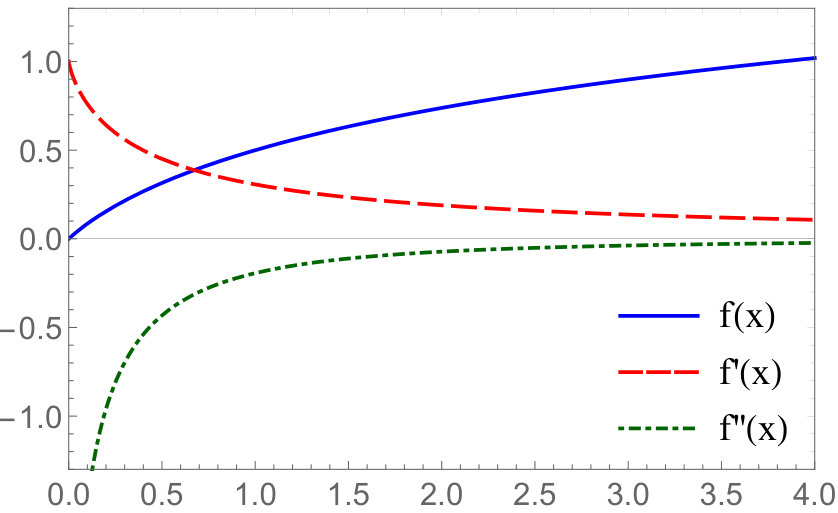 Figure 2
 Figure 3
 Figure 4
 Figure 5
 Figure 6
 Figure 7