Dramatic implications of unitarity for meson spectroscopy
George Rupp, Eef van Beveren

TL;DR
This paper emphasizes the importance of unitarity in meson spectroscopy, showing that traditional Breit-Wigner parametrizations can significantly misrepresent resonance parameters, and introduces unitary models that better explain meson phenomena.
Contribution
It demonstrates the limitations of Breit-Wigner parametrizations and presents a manifestly unitary model for meson spectroscopy, highlighting significant deviations from traditional methods.
Findings
Breit-Wigner masses can differ from pole masses by nearly 5 MeV for certain resonances.
Discrepancies are larger for broad scalar mesons like $f_0(500)$ and $K_0^*(700)$.
Unitary models can explain meson enhancements as non-resonant threshold effects.
Abstract
An unambiguous definition of meson resonance masses requires a description of the associated phase shifts in terms of a manifestly unitary -matrix and its complex poles. However, the commonly used Breit-Wigner (BW) parametrisations can lead to appreciable deviations. We demonstrate this for a simple elastic resonance, viz. , whose pole and BW masses turn out to differ by almost 5 MeV. In the case of the very broad and scalar mesons, the discrepancies are shown to become much larger, while also putting question marks at the listed PDG BW masses and widths. Furthermore, some results are reviewed of a manifestly unitary model for meson spectroscopy, which highlight the potentially huge deviations from static model predictions. Finally, a related unitary model for production amplitudes is shown to explain several meson enhancements as non-resonant…
Click any figure to enlarge with its caption.
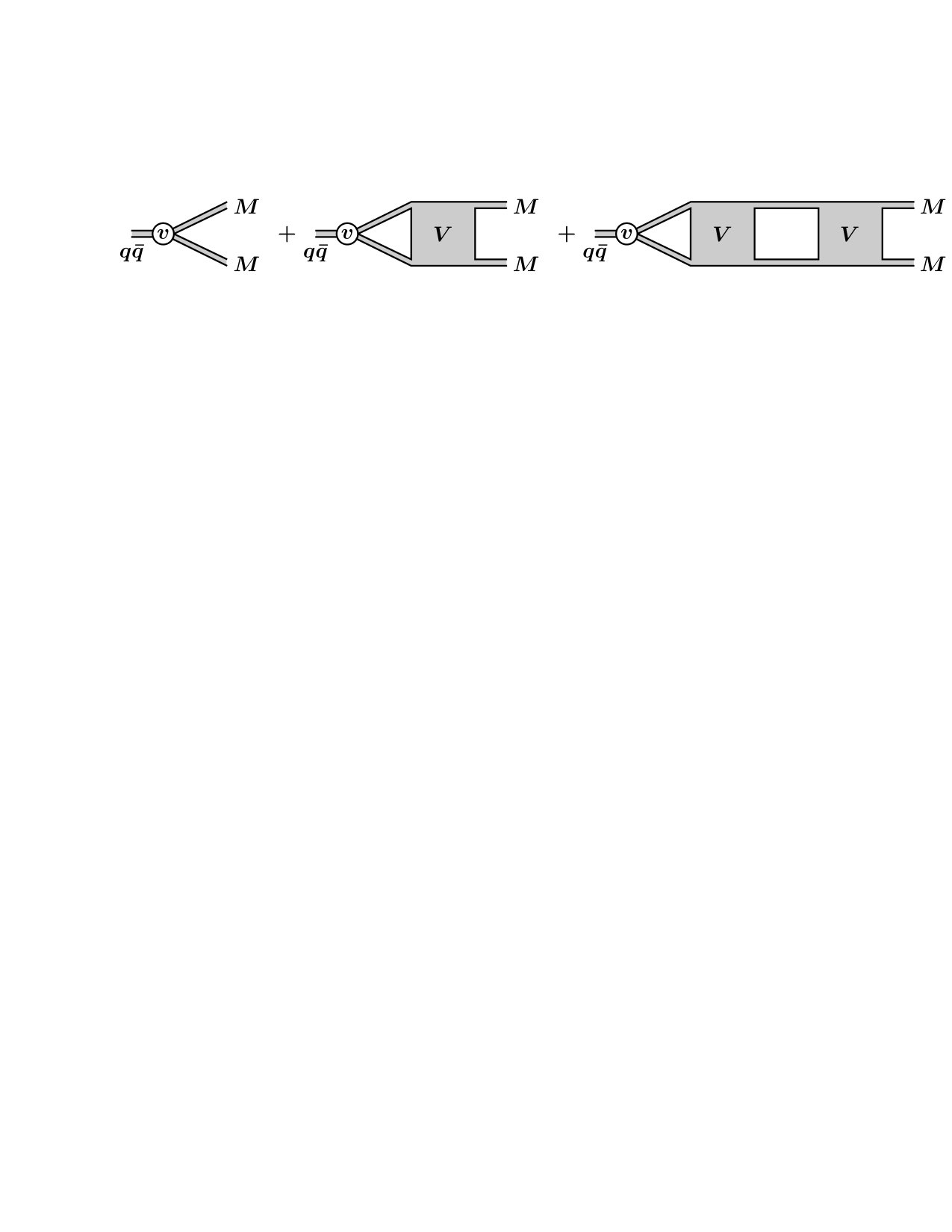 Figure 1
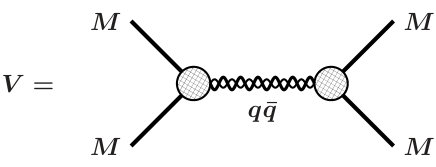 Figure 2
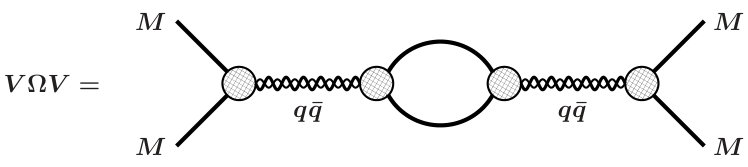 Figure 3
Peer Reviews
No public reviews on file for this paper yet. If you reviewed it on a platform where reviews are public (OpenReview, ICLR, NeurIPS, ICML), you can paste yours below so the community can read it here.
Videos
No videos yet. Explain this paper in a talk, walkthrough, or lecture? Add one.
Taxonomy
TopicsQuantum Chromodynamics and Particle Interactions · Particle physics theoretical and experimental studies · High-Energy Particle Collisions Research
Dramatic implications of unitarity for meson spectroscopy††thanks: Presented by G. Rupp at Workshop “Excited QCD 2019”,
Schladming, Austria, Jan. 30 – Feb. 3, 2019.
George Rupp
Eef van Beveren
Centro de Física e Engenharia de Materiais Avançados, Instituto Superior Técnico, Universidade de Lisboa, P-1049-001, Portugal
Centro de Física da UC, Departamento de Física, Universidade de Coimbra, P-3004-516, Portugal
Abstract
An unambiguous definition of meson resonance masses requires a description of the associated phase shifts in terms of a manifestly unitary -matrix and its complex poles. However, the commonly used Breit-Wigner (BW) parametrisations can lead to appreciable deviations. We demonstrate this for a simple elastic resonance, viz. , whose pole and BW masses turn out to differ by almost 5 MeV. In the case of the very broad and scalar mesons, the discrepancies are shown to become much larger, while also putting question marks at the listed PDG BW masses and widths. Furthermore, some results are reviewed of a manifestly unitary model for meson spectroscopy, which highlight the potentially huge deviations from static model predictions. Finally, a related unitary model for production amplitudes is shown to explain several meson enhancements as non-resonant threshold effects, with profound implications for spectroscopy.
1 Introduction
The most fundamental cornerstone of the PDG tables is the uniqueness of -matrix pole positions of unstable particles, as a consequence of quantum-field-theory principles. Therefore, the unitarity property of the -matrix should ideally be respected in whatever description of mesonic resonances in experiment, on the lattice, and in quark models. However, simple Breit-Wigner (BW) parametrisations that not always satisfy unitarity continue to be widely used in data analyses of mesonic processes. In this short paper, the resulting discrepancies will be studied for three elastic meson resonances, viz. , (alias ), and (alias ).
Now, quark models usually treat mesons as permanently bound states, ignoring the dynamical effects of strong decay, be it real or virtual. Only a model that respects -matrix unitarity of the decay products can be reliably compared to resonances in experiment. A few important results of models employed by us since long ago will be reviewed here. Finally, some predictions of a strongly related unitary model of productions processes, with far-reaching consequences for meson spectroscopy, will be briefly revisited.
2 Pole mass vs. Breit-Wigner mass
Now we summarise very succinctly how to relate the pole mass of an elastic resonance to its typical Breit-Wigner (BW) mass, with some applications. A detailed derivation will be published elsewhere.
A partial-wave -matrix, being a function of the relative momentum , can be written as [1] , where is the so-called Jost function. A resonance then corresponds to a simple pole in for complex with positive real part and negative imaginary part, that is, a pole lying in the fourth quadrant of the complex -plane. So the simplest ansatz for the -matrix and thus for the Jost function is to write , with . Note that this requires to have a zero in the second quadrant, viz. for . But then the -matrix cannot be unitary [2], for real , i.e., . It will only satisfy unitarity if [1] the Jost function obeys , for real . Consequently, the Jost function should read [2] . So has a symmetric pair of poles in the 3rd and 4th quadrants, corresponding to an equally symmetric pair of zeros in the 1st and 2nd quadrants. Note that in the complex-energy plane, given by in the case of two equal-mass particles, this amounts to one pole and one zero lying symmetrically in the 4th and 1st quadrants, respectively. Since a -matrix can generally be written as ), we can use the unitary expression for the Jost function above to derive [2]
[TABLE]
When the partial-wave phase shift reaches , we get for the modulus of the corresponding amplitude , for . The associated maximum energy is different from the maximum in a typical Breit-Wigner (BW) amplitude , which is called the BW mass and just given by the real part of the pole in the fourth quadrant of the complex-energy plane, viz. . Such a BW amplitude, in spite of being unitary in the case of an isolated resonance, can give rise to significant differences compared to -matrix approaches.
Next we illustrate the consequences of these unitarity considerations in the simple case of the very well-known meson [3], which is an elastic -wave resonance in scattering. The PDG lists its mass and total width as [3] MeV and MeV, where the width follows almost exclusively (%) from the decay mode , with MeV.
In the following, we shall refer to BW mass () for the energy where the resonance’s phase shift passes through and so the modulus of the amplitude is maximum. This also holds for the standard BW amplitude given above, though in the latter case it corresponds to the real part of the resonance pole’s complex energy. In contrast, here we want to determine the difference between pole mass and (unitary) BW mass for the . After some lengthy yet straightforward algebra, we can express the pole mass explicitly in terms of the BW mass and the pole width as
[TABLE]
Note that it is not possible to write as a simple closed-form expression in terms of both and . Assuming for the moment that , we substitute in Eq. (2) the PDG values for and , which yields MeV. This is 4.5 MeV lower than the PDG mass of 775.25 MeV! Now we check whether indeed , by calculating the half-width of the peak from the modulus squared of the amplitude , starting from Eq. (1). The result is MeV, so indeed very close to the assumed MeV. Finally, we compare pole mass and width vs. BW mass and width for the very broad scalar mesons and [3]. As the latter resonance decays into , we must now deal with the unequal-mass case, which does not allow to derive simple expressions. Yet on the computer the real and imaginary parts of can be simply obtained, allowing to derive and as before.
Let us now check what the consequences are for and . Their pole positions as well as BW masses and widths are listed in the PDG Meson Tables as [3]
[TABLE]
But using our equations imposed by elastic -matrix unitarity, we obtain
[TABLE]
The conclusion is that the PDG seems to underestimate the BW masses of both and , as well as the BW width of . We stress again that here “BW” refers to the energy at which , in the context of the present simple pole model. Note that reality is more complicated, since the resonance overlaps with [3] and with [3], besides the influence of Adler zeros on the amplitudes [4]. Nevertheless, the need for a uniform and unitary treatment of especially broad resonances in experimental analyses is undeniable.
To conclude this section, we note that calculating for and via the cross section instead of the amplitude’s modulus becomes already problematic, while no can even be defined at all. Also, for inelastic resonances the mass discrepancy due to the use of a non-unitary parametrisation can become as large as 170 MeV in the case of [5].
3 Unitarity distortions of spectra
Fully accounting for unitarity when describing meson resonances, or just computing mass shifts of states from real and virtual meson loops, can give rise to enormous distortions of confinement spectra [6]. Moreover, it can even lead to the dynamical generation of additional states. This allowed the unitarised multichannel quark model of Ref. [7] to predict for the first time a complete nonet of light scalar-meson resonances, whose predicted masses and widths are still compatible with present-day PDG limits [3]. More recently, a strongly related model was formulated [8] in -space, called Resonance-Spectrum Expansion (RSE), resulting in a coupled-channel -matrix for non-exotic meson-meson scattering diagrammatically given by
Here, the wiggly lines represent a tower of bare states, which couple to two-meson channels via a vertex. For more details and closed-form multichannel expressions, see e.g. Ref. [9]. Using the RSE formalism, a coupled-channel calculation of light and intermediate scalar mesons was carried out in Ref. [10], yielding the poles
MeV, MeV;
MeV, MeV;
MeV, MeV;
MeV, MeV.
These results are close to those found in the -space model of Ref. [7]. Note again the generation of two scalar resonances for each bare -wave state.
The possible doubling of resonances due to unitarisation becomes yet more peculiar in cases where it is not even clear which is the intrinsic one and which the dynamically generated state. For example, the [3] scalar meson showed up as a dynamical state in a simple RSE model [11] with only the channel included, but as a strongly mass-shifted intrinsic state in the multichannel RSE calculation of Ref. [12]. This cross-over is demonstrated in more detail for the [3] (old ) axial-vector state in Ref. [13], with being an intrinsic or dynamical state depending on fine details of the model’s parameters. Clearly, this ambiguity in the quark-model assignment of and , as well as of probably several other mesons, has severe implications for spectroscopy.
4 Non-resonant peaks from unitary production amplitudes
Most meson resonances are nowadays not observed in meson-meson scattering, mainly extracted from meson-proton data, but rather in production processes, like e.g. annihilation or -meson decays. In these situations no initial annihilation takes place, as the starting point is already an isolated pair, resulting from a virtual photon in or as a decay product from a heavier meson like e.g. or . The corresponding production amplitude is defined [14] in the RSE formalism as a non-resonant, lead term plus its infinite rescattering series via the above RSE -matrix, i.e.,
or , with the being purely kinematical functions related to the –meson-meson vertex. In the RSE model of Ref. [14], where the detailed expressions can be found, the are spherical Hankel*(1)* functions and their real parts spherical Bessel functions. The components satisfy [14, 15] the extended-unitarity relation . Note that this can be rewritten in terms of purely imaginary functions , so without the inhomogeneous term, but then the real functions would necessarily include elements of the -matrix itself and so not be purely kinematical anymore [16].
There can be many applications of our production formalism in hadron spectroscopy. In Ref. [17] several structures are analysed in , , , and data. The most dramatic conclusions are that and (now called [3]) are probably not genuine resonances but rather enhancements rising from the and thresholds, respectively.
5 Conclusions
We have shown unitarity to be an essential constraint in analysing scattering data in order to allow an unambiguous determination of resonance parameters, even in the elastic case. On the other hand, in quark models a unitary description of meson resonances may lead to enormous deviations from the naive bound-state spectra, and moreover give rise to extra states not present in the bare spectra. Finally, unitarity also plays a fundamental role in production processes, by relating them to scattering and yielding threshold enhancements that may be mistaken for true resonances. The consequences for modern meson spectroscopy are far-reaching.
The reference list from the paper itself. Each links out to its DOI / PubMed record.
- 1[1] J. R. Taylor, Scattering Theory: The Quantum Theory of Nonrelativistic Collisions, John Wiley & Sons, Inc., New York, London, Sydney, Toronto, 1972, pp. 477, ISBN 0-471-84900-6; see page 220.
- 2[2] R. Kamiński, in: Seminar at Ce FEMA/IST in Lisbon, May 29, 2018.
- 3[3] M. Tanabashi et al. [Particle Data Group], Phys. Rev. D 98 , 030001 (2018).
- 4[4] D. V. Bugg, Phys. Lett. B 572 , 1 (2003) [ Erratum-ibid. 595 , 556 (2004)].
- 5[5] E. Bartoš et al. , Phys. Rev. D 96 , 113004 (2017) (see Table II).
- 6[6] G. Rupp, E. van Beveren, Chin. Phys. C 41 , 053104 (2017) [ar Xiv:1611.00793 [hep-ph]].
- 7[7] E. van Beveren et al. , Z. Phys. C 30 , 615 (1986) [ar Xiv:0710.4067 [hep-ph]].
- 8[8] E. van Beveren, G. Rupp, Int. J. Theor. Phys. Group Theor. Nonlin. Opt. 11 , 179 (2006) [ar Xiv:hep-ph/0304105].