Properties of Inconsistency Measures for Databases
Ester Livshits, Rina Kochirgan, Segev Tsur, Ihab F. Ilyas, Benny, Kimelfeld, and Sudeepa Roy

TL;DR
This paper systematically analyzes various inconsistency measures for databases, examining their properties, behavior, and introducing a new measure that satisfies all desired properties and is computationally efficient.
Contribution
It provides a comprehensive analysis of existing inconsistency measures, their properties, and introduces a novel measure with optimal properties and polynomial-time computability.
Findings
Existing measures vary in properties and behavior
The new measure satisfies all analyzed properties
The new measure can be computed in polynomial time
Abstract
How should we quantify the inconsistency of a database that violates integrity constraints? Proper measures are important for various tasks, such as progress indication and action prioritization in cleaning systems, and reliability estimation for new datasets. To choose an appropriate inconsistency measure, it is important to identify the desired properties in the application and understand which of these is guaranteed or at least expected in practice. For example, in some use cases the inconsistency should reduce if constraints are eliminated; in others it should be stable and avoid jitters and jumps in reaction to small changes in the database. We embark on a systematic investigation of properties for database inconsistency measures. We investigate a collection of basic measures that have been proposed in the past in both the Knowledge Representation and Database communities, analyze…
Click any figure to enlarge with its caption.
 Figure 1
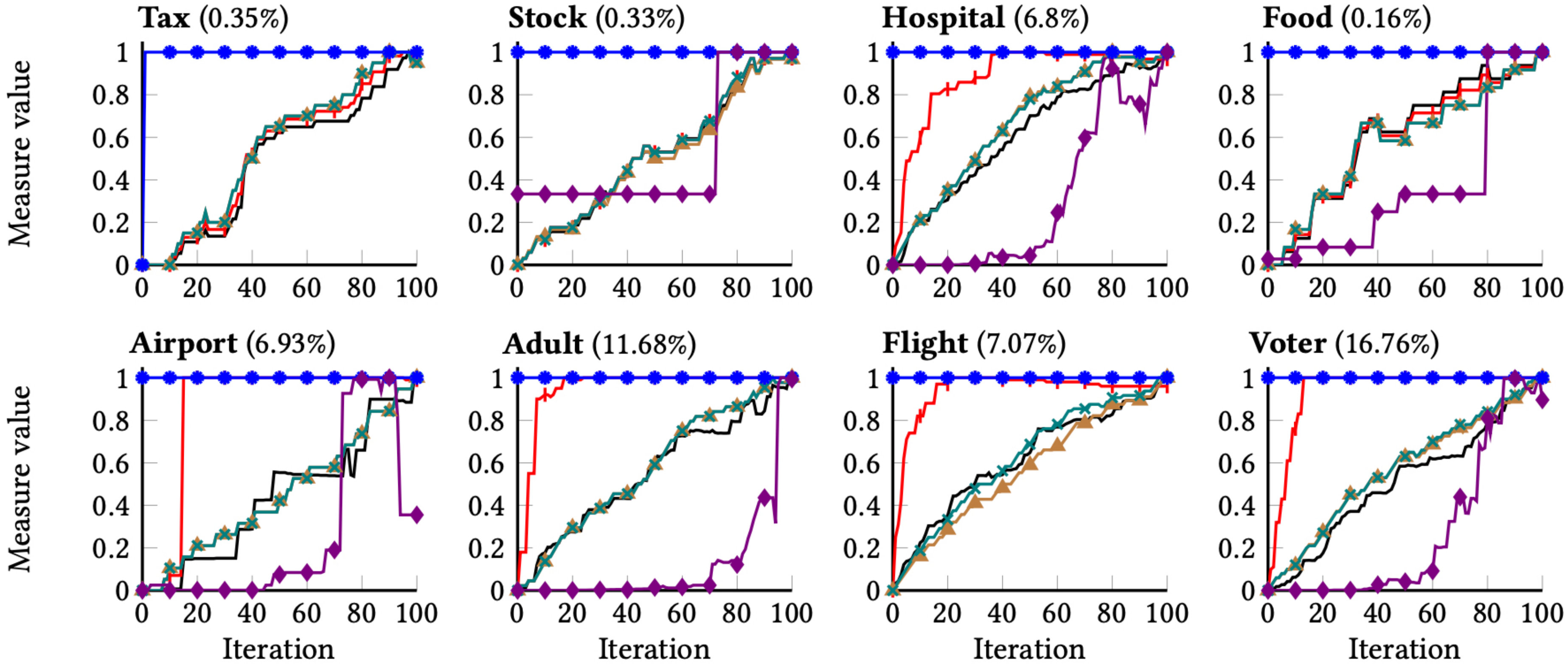 Figure 2
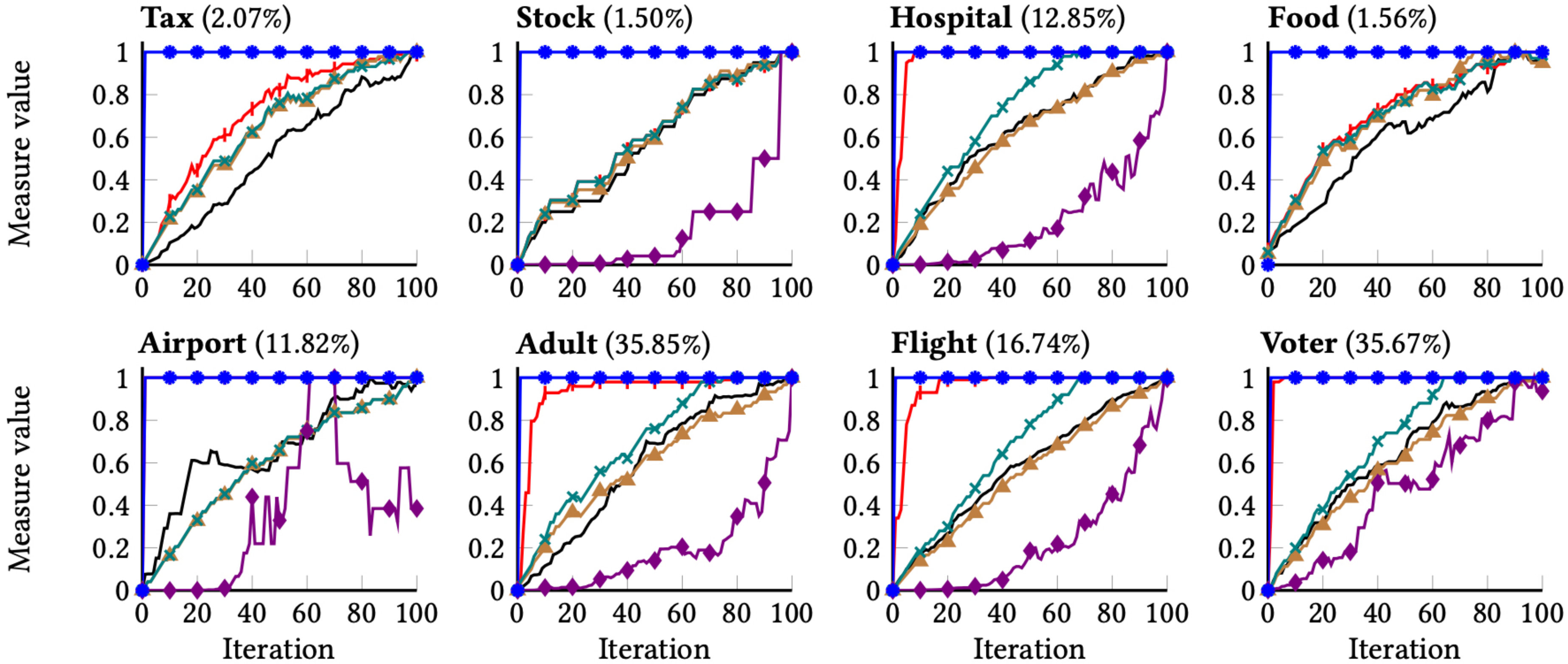 Figure 3
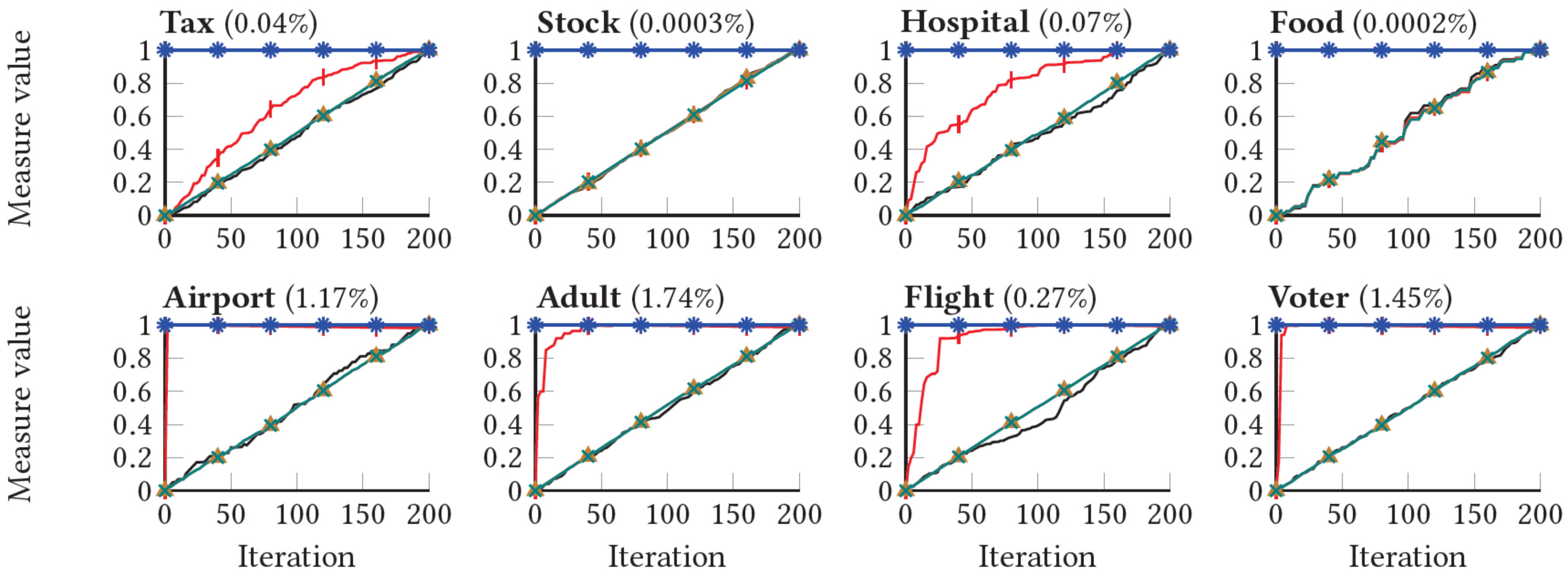 Figure 4
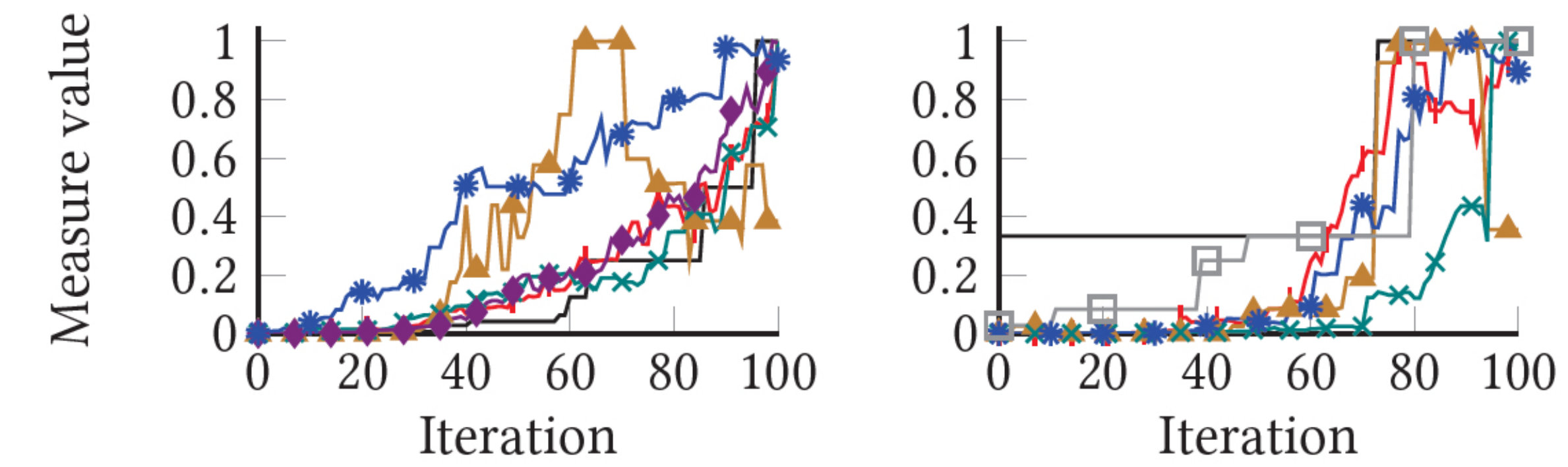 Figure 5
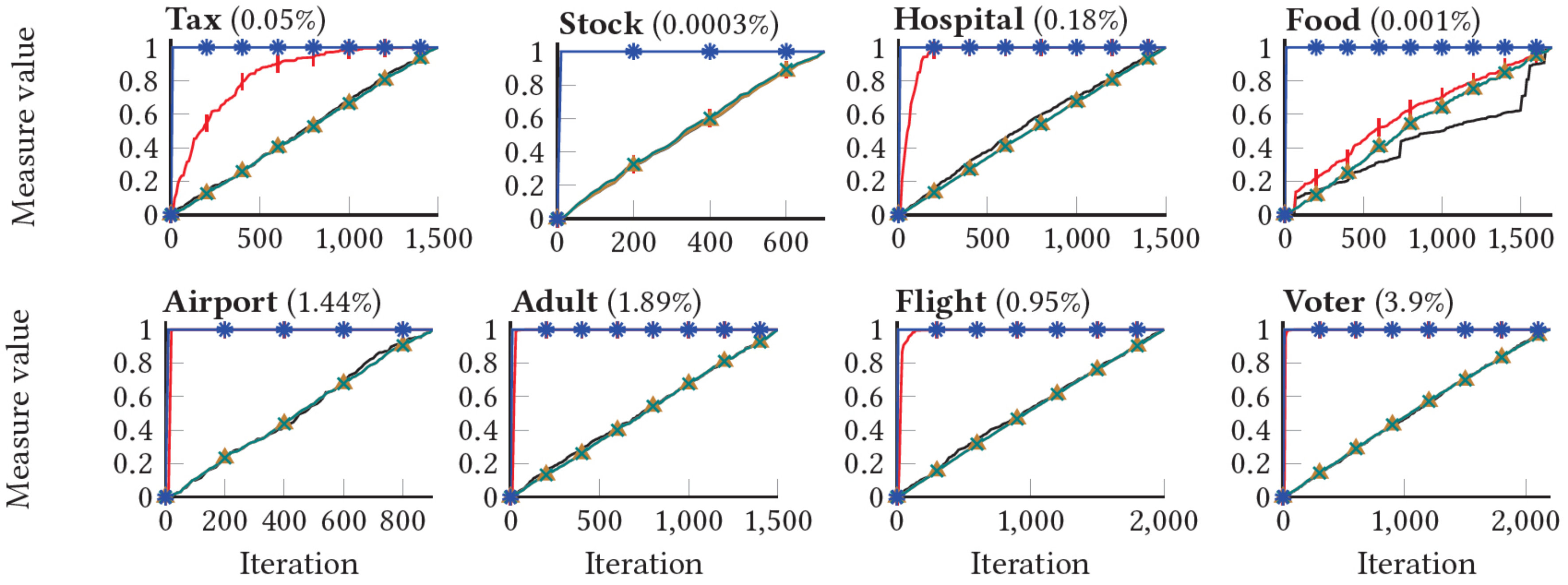 Figure 6
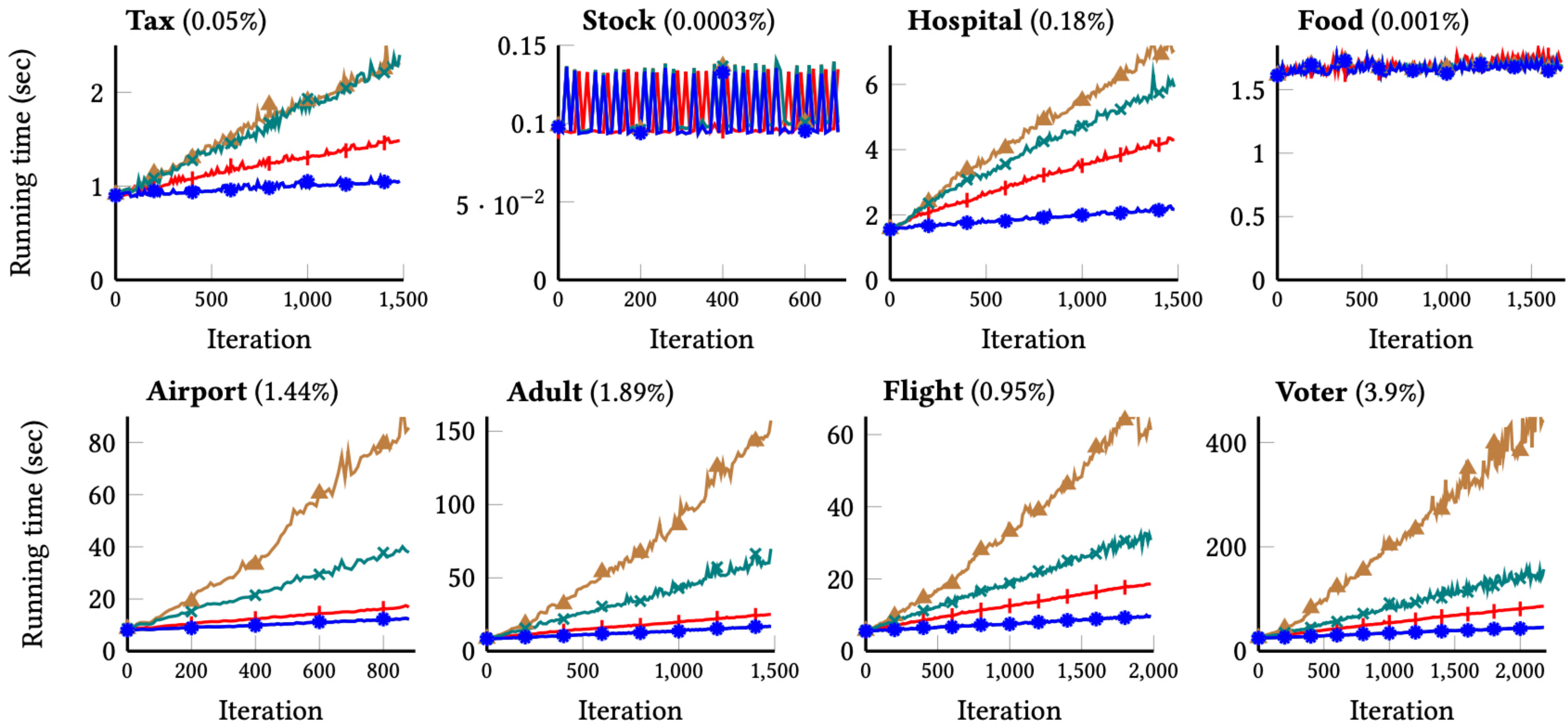 Figure 7
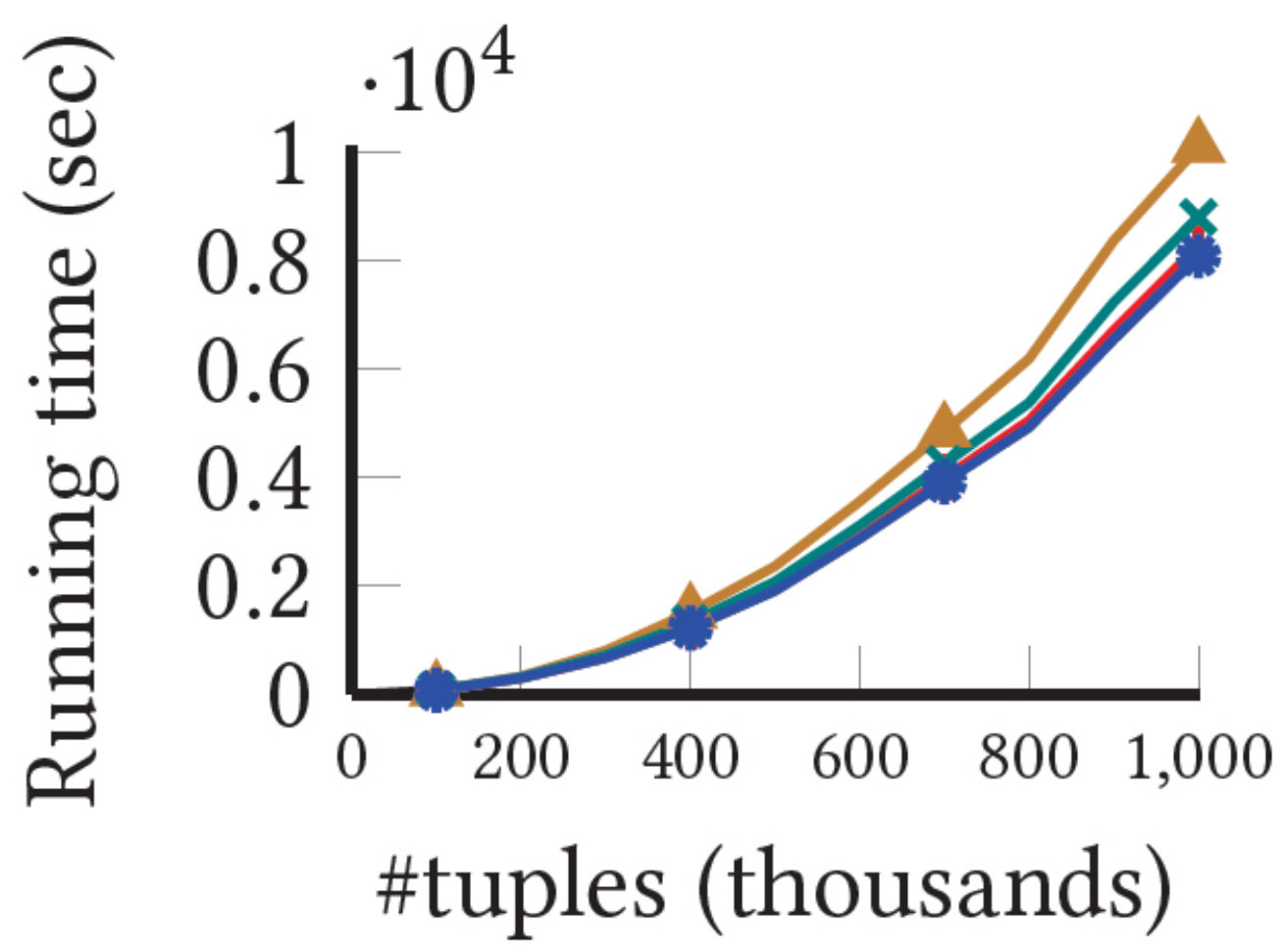 Figure 8
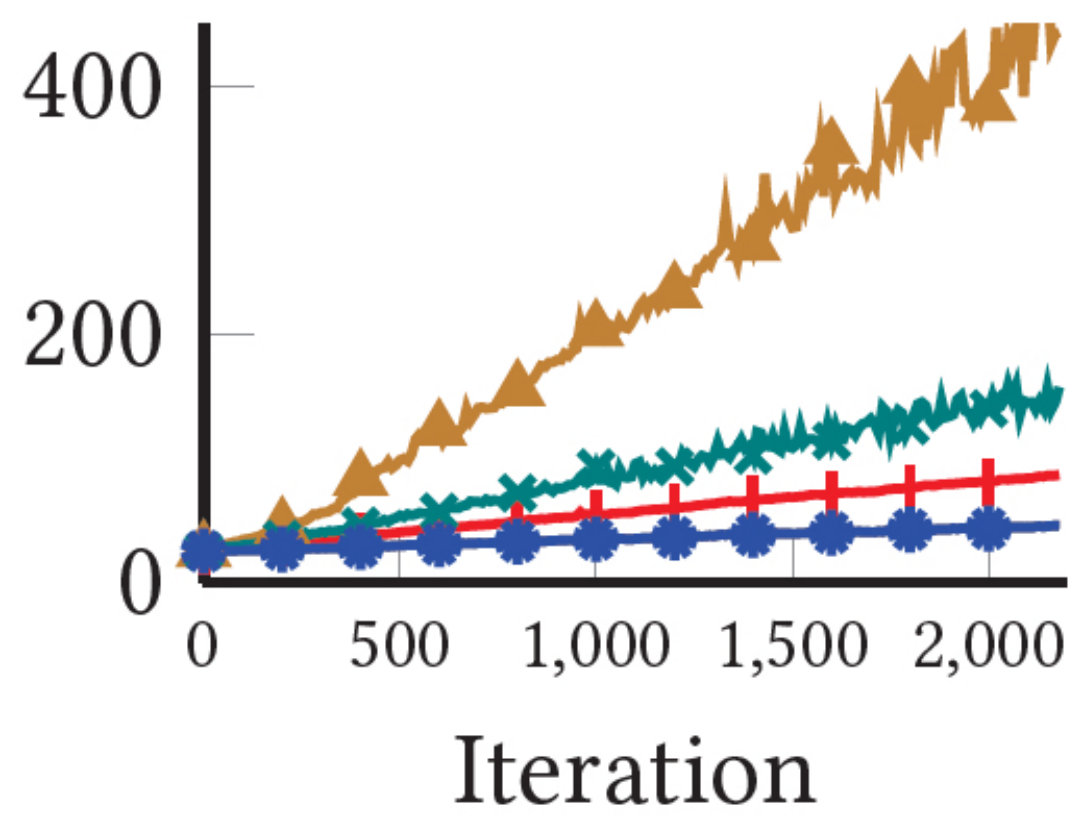 Figure 9
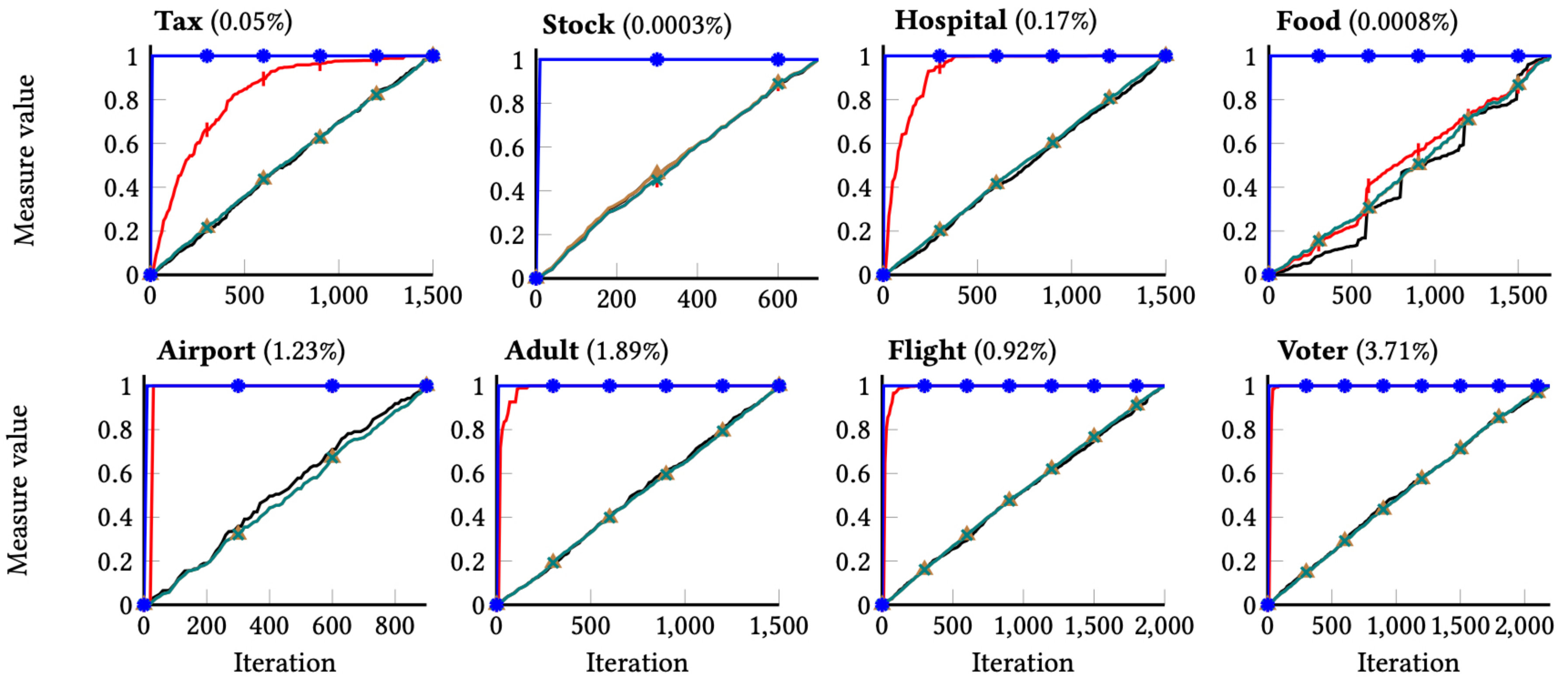 Figure 10
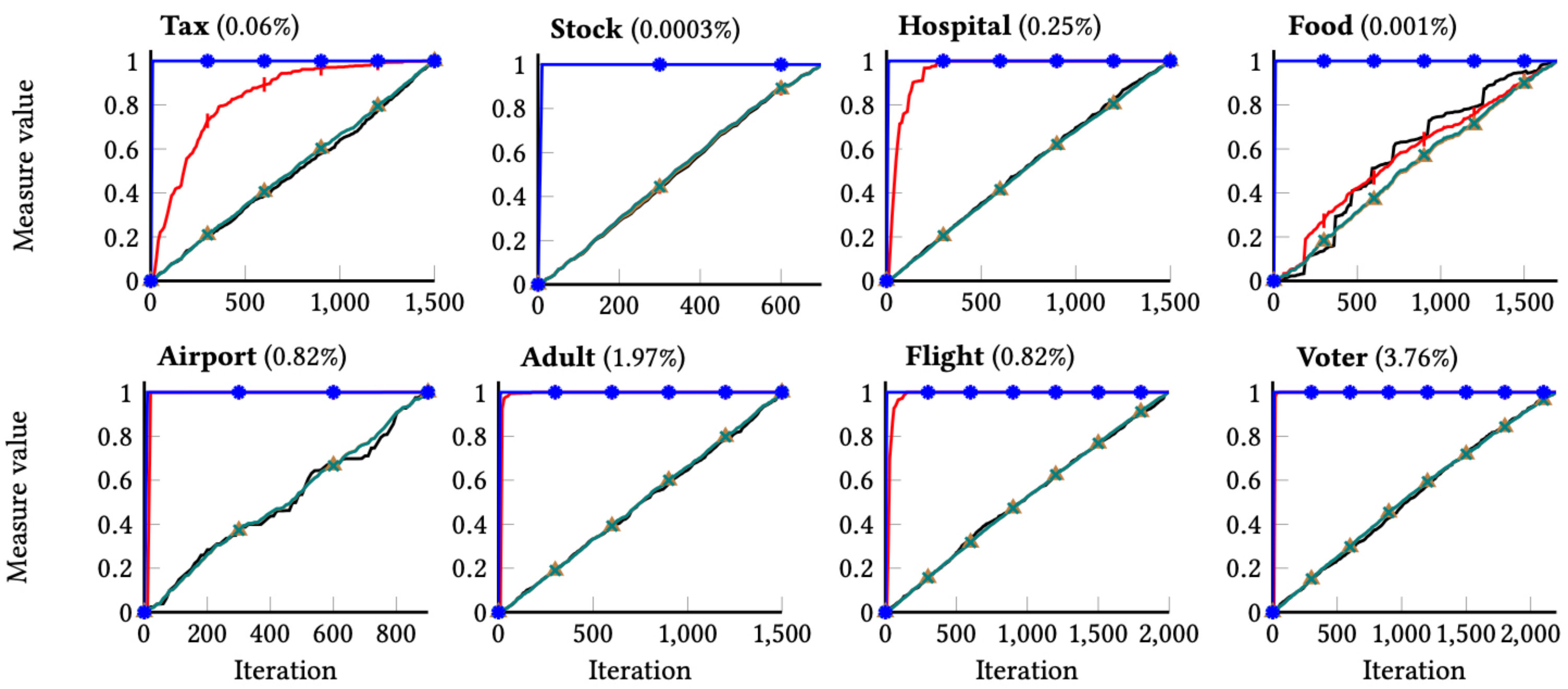 Figure 11
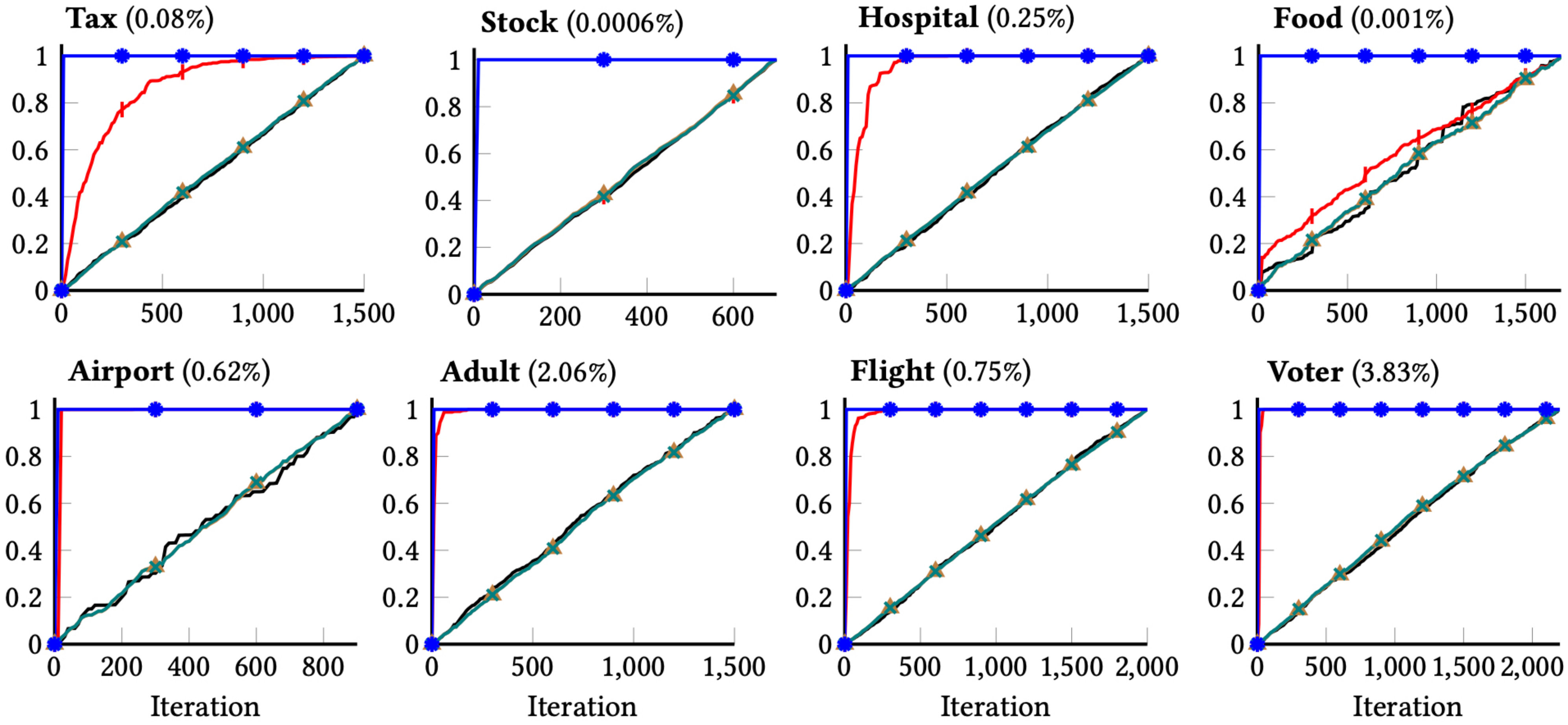 Figure 12
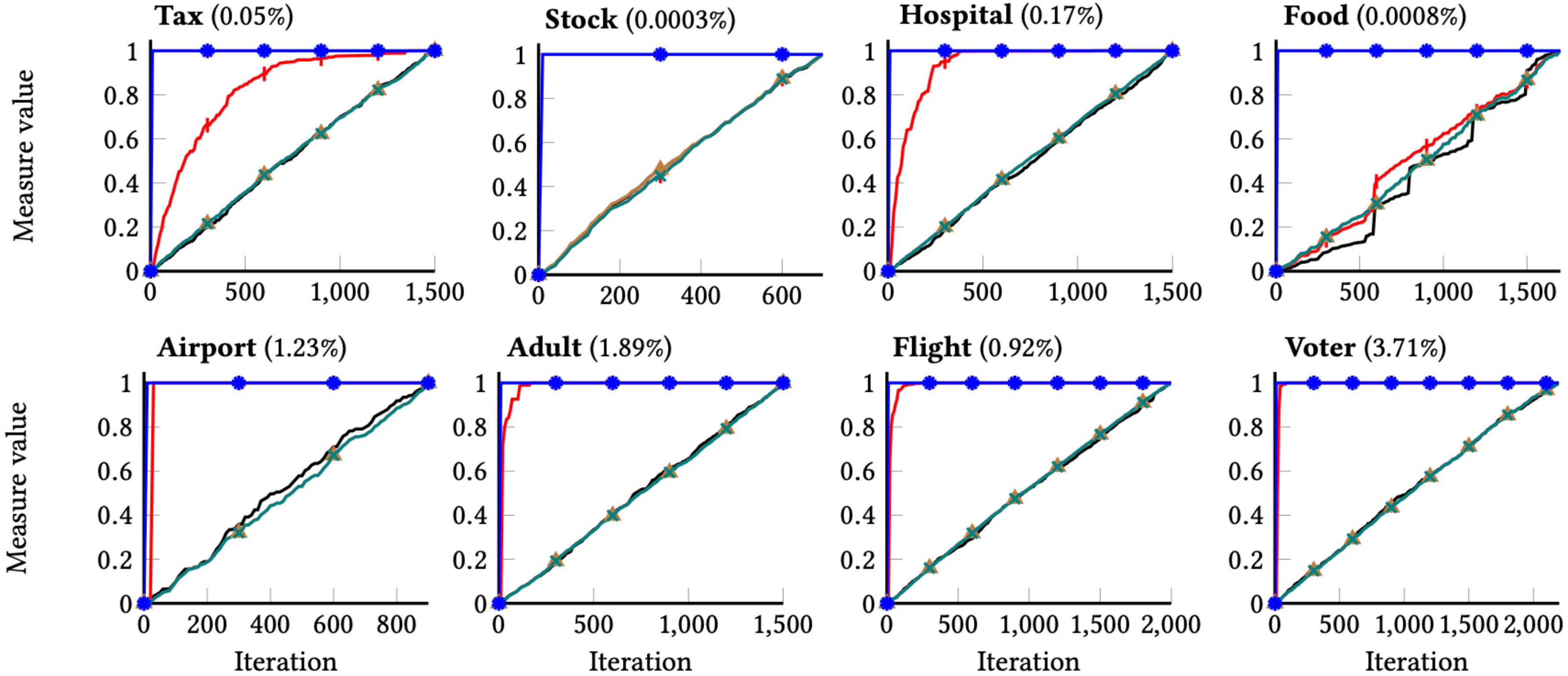 Figure 13
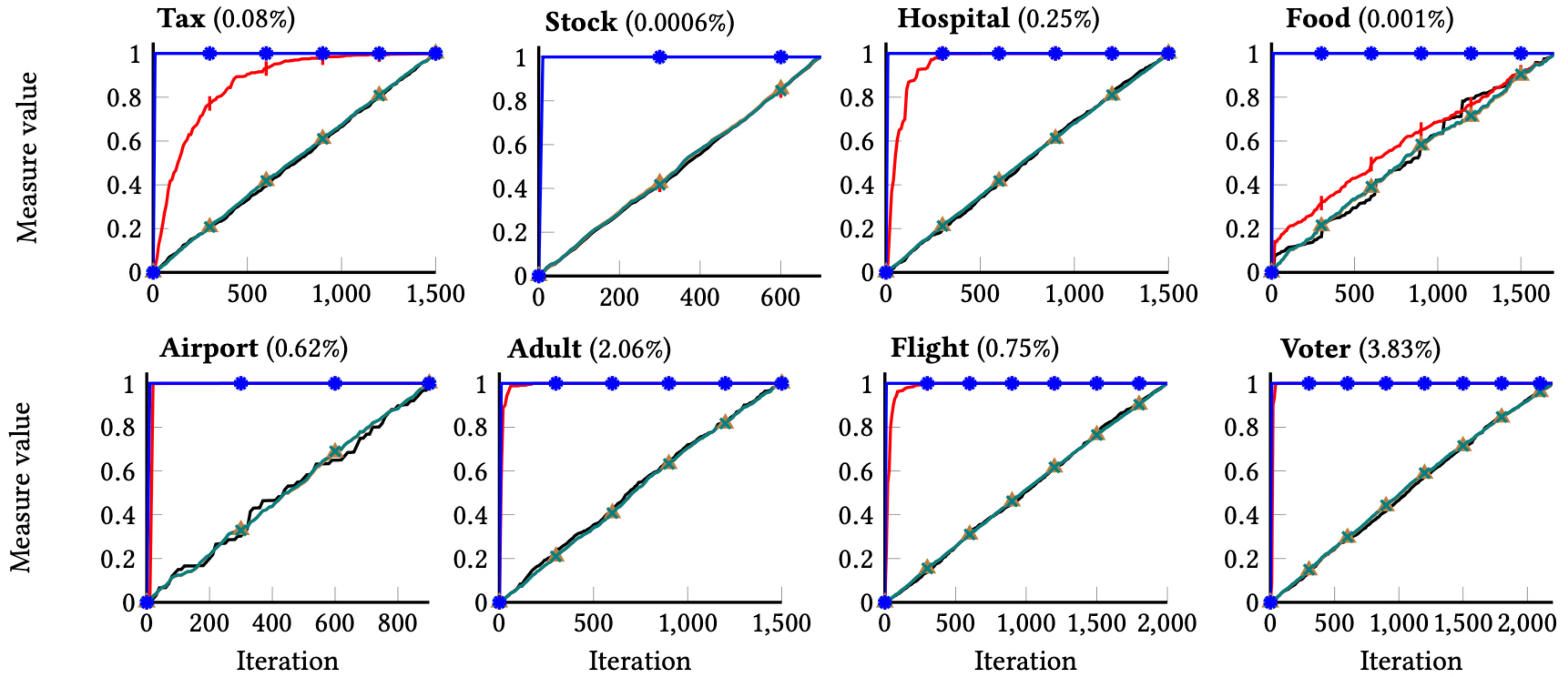 Figure 14
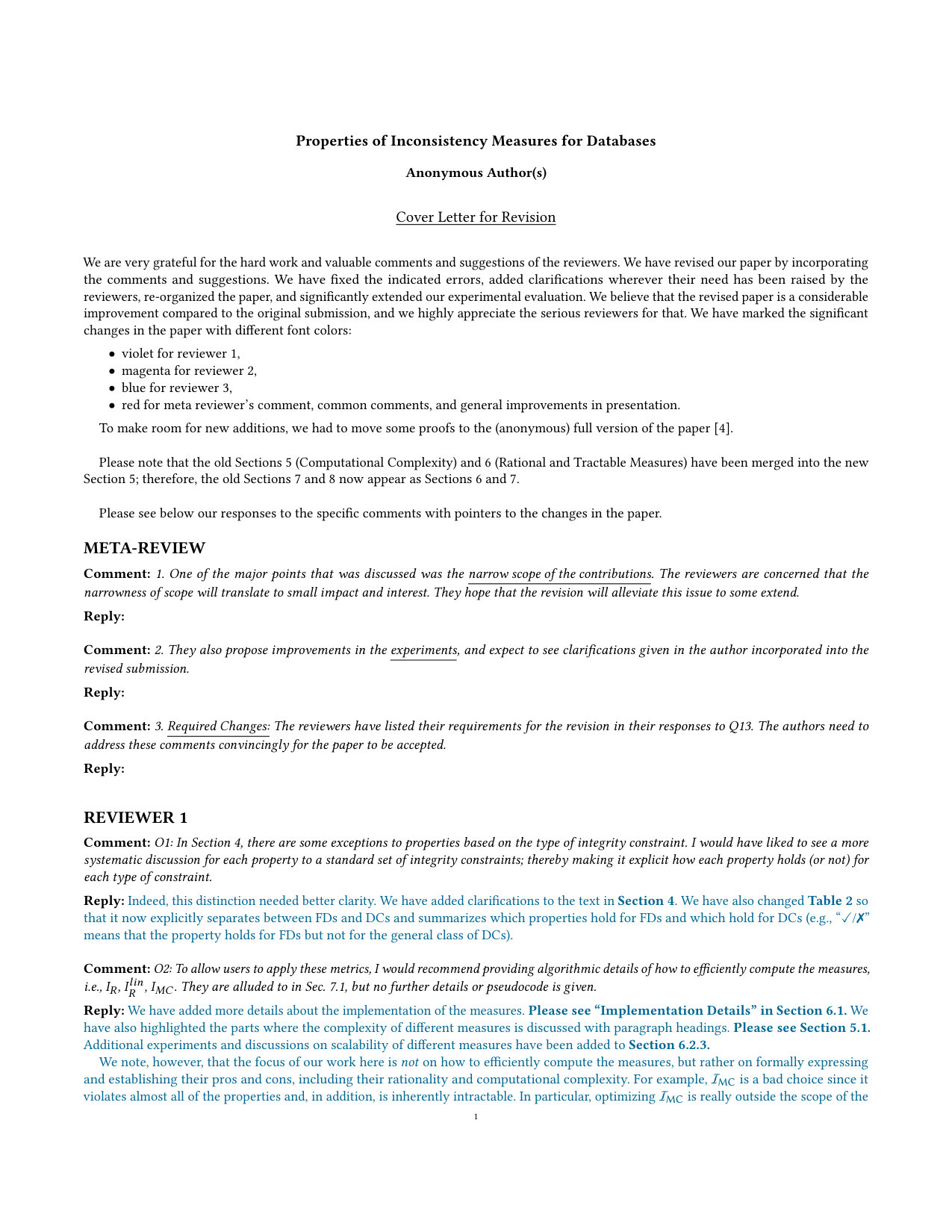 Figure 15
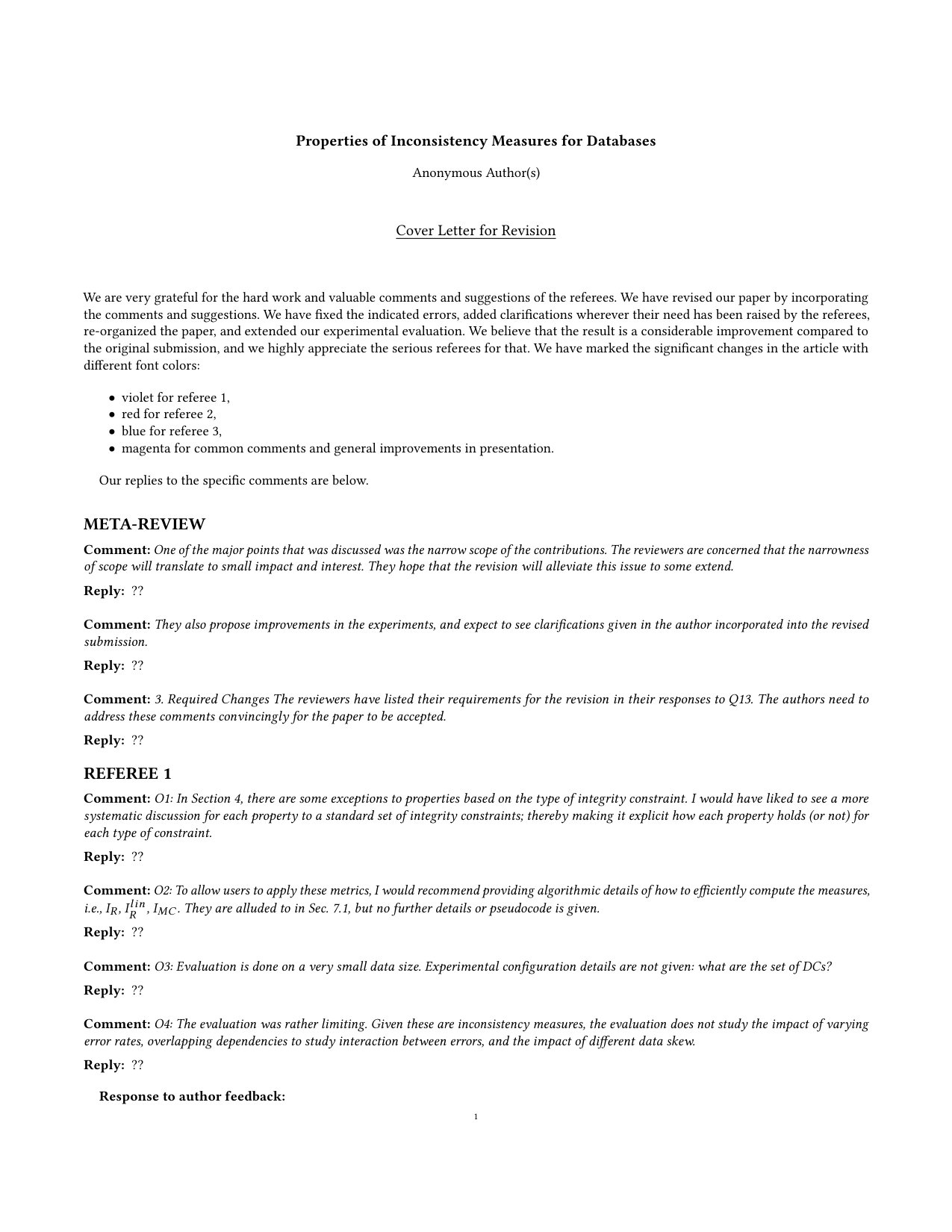 Figure 16
Peer Reviews
No public reviews on file for this paper yet. If you reviewed it on a platform where reviews are public (OpenReview, ICLR, NeurIPS, ICML), you can paste yours below so the community can read it here.
Videos
No videos yet. Explain this paper in a talk, walkthrough, or lecture? Add one.