A Search for Cosmic Neutrino and Gamma-Ray Emitting Transients in 7.3 Years of ANTARES and Fermi LAT Data
H. A. Ayala Solares, D. F. Cowen, J. J. DeLaunay, D. B. Fox, A., Keivani, M. Mostaf\'a, K. Murase, C. F. Turley, A. Albert, M. Andr\'e, M., Anghinolfi, G. Anton, M. Ardid, J.-J. Aubert, J. Aublin, B. Baret, J., Barrios-Mart{\i}, S. Basa, B. Belhorma, V. Bertin, S. Biagi

TL;DR
This study analyzed 7.3 years of ANTARES neutrino and Fermi LAT gamma-ray data to search for transient cosmic sources emitting both neutrinos and gamma rays, finding no significant individual events but setting constraints on source populations.
Contribution
It introduces a novel analysis method combining ANTARES and Fermi LAT data to search for transient { u}+{\gamma} sources and establishes sensitivity thresholds for detecting such events.
Findings
No high-significance { u}+{\gamma} transient events detected.
Two events exceeded a once per decade false alarm rate threshold.
The analysis is sensitive to sources responsible for over 5 ext{ extperthousand} of gamma-coincident neutrinos.
Abstract
We analyze 7.3 years of ANTARES high-energy neutrino and Fermi LAT {\gamma}-ray data in search of cosmic neutrino + {\gamma}-ray ({\nu}+{\gamma}) transient sources or source populations. Our analysis has the potential to detect either individual {\nu}+{\gamma} transient sources (durations {\delta}t < 1000~s), if they exhibit sufficient {\gamma}-ray or neutrino multiplicity, or a statistical excess of {\nu}+{\gamma} transients of lower multiplicities. Treating ANTARES track and cascade event types separately, we establish detection thresholds by Monte Carlo scrambling of the neutrino data, and determine our analysis sensitivity by signal injection against scrambled datasets. We find our analysis is sensitive to {\nu}+{\gamma} transient populations responsible for 5\% of the observed gamma-coincident neutrinos in the track data at 90\% confidence. Applying our analysis to the…
Click any figure to enlarge with its caption.
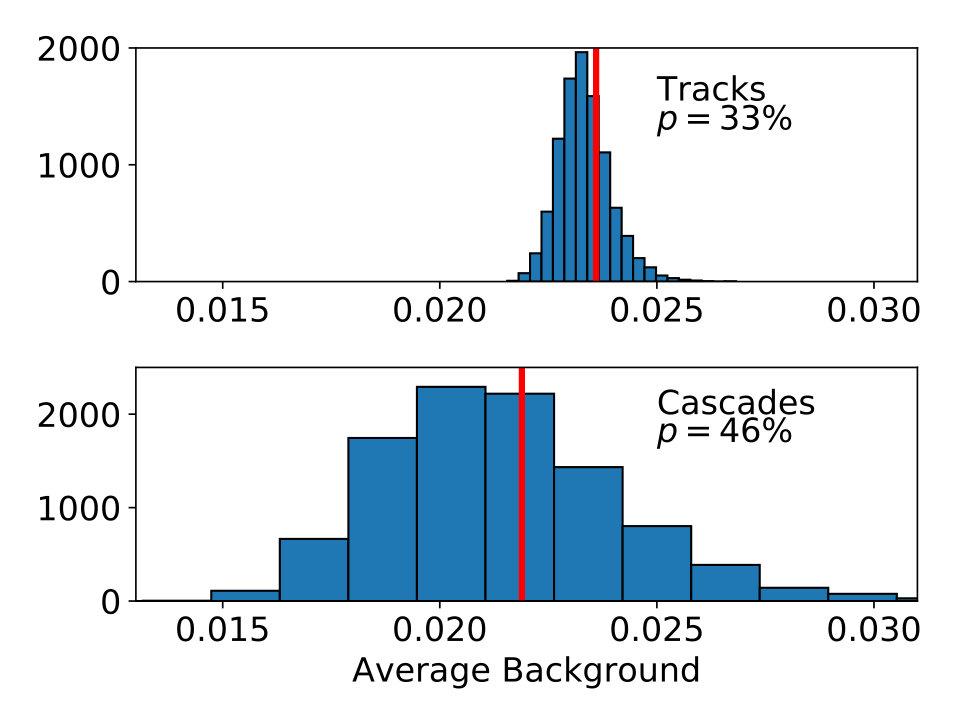 Figure 1
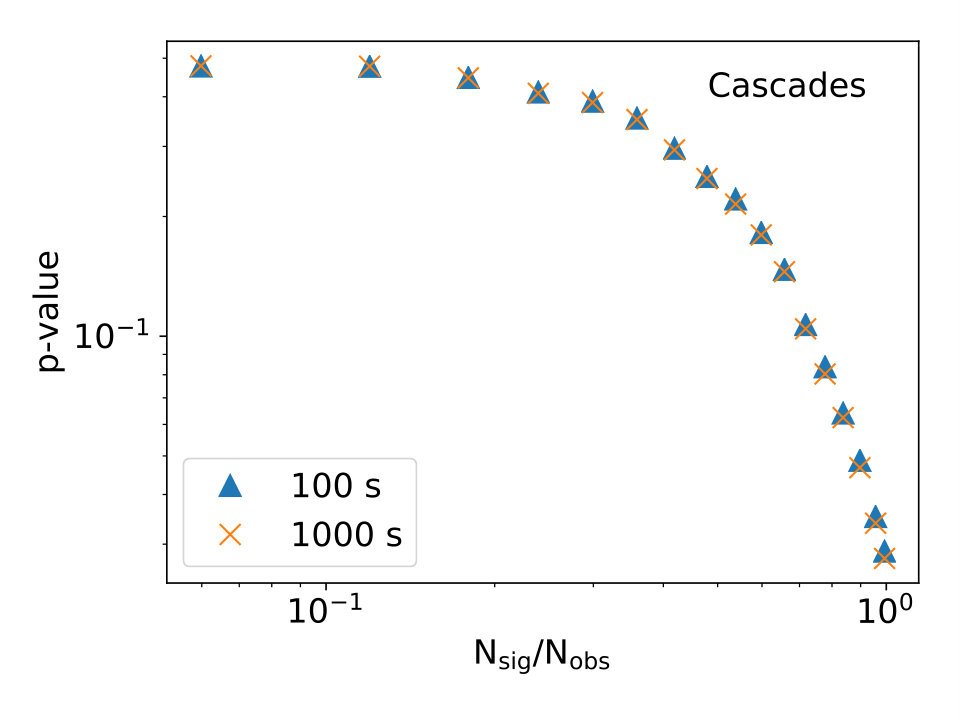 Figure 2
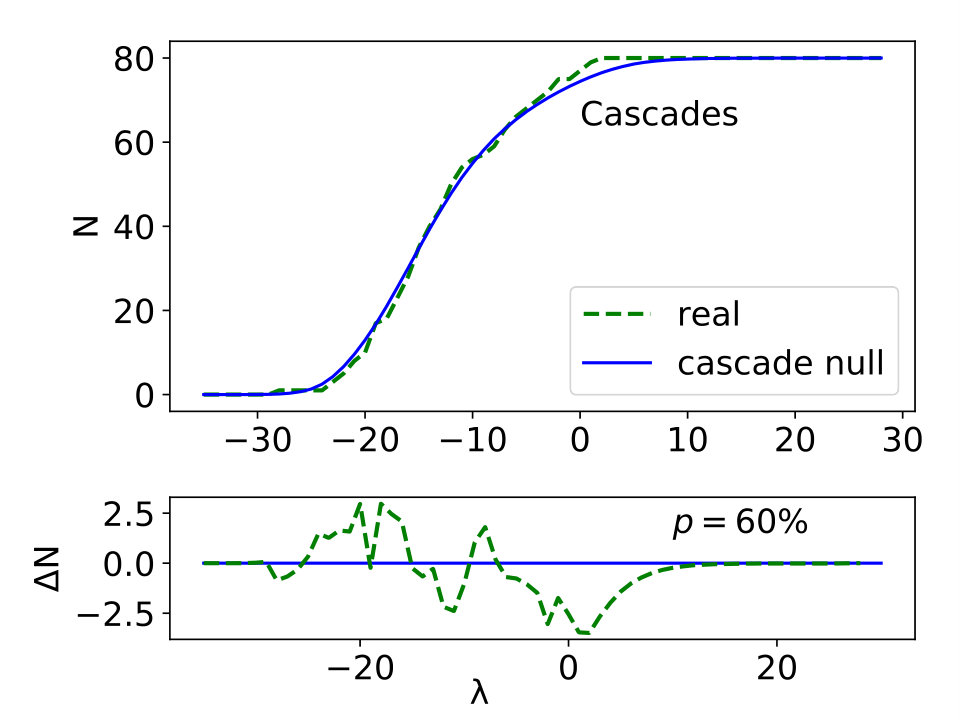 Figure 3
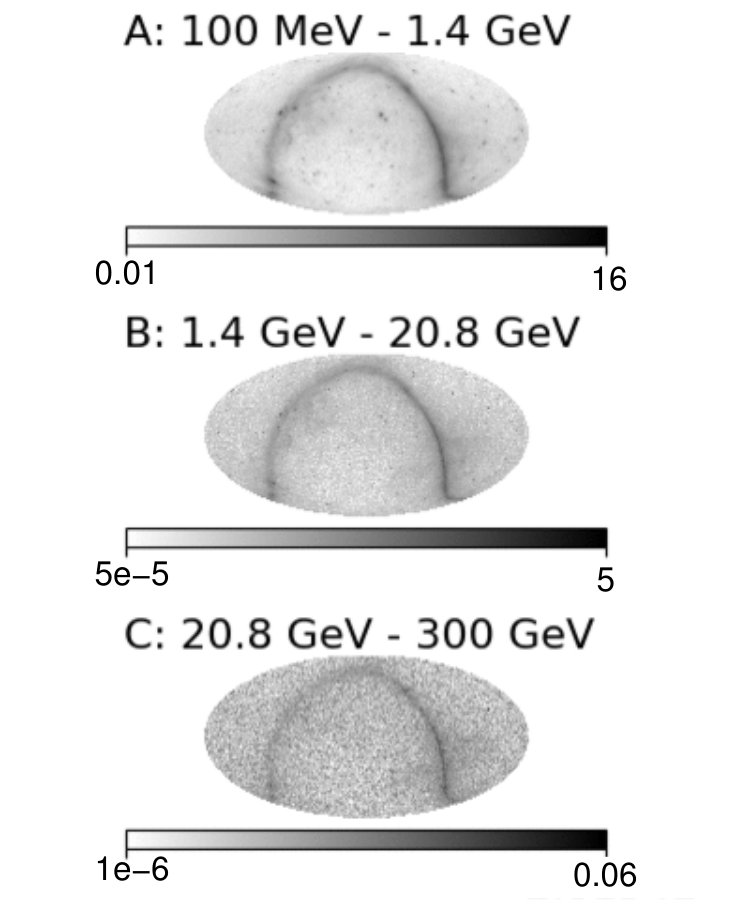 Figure 4
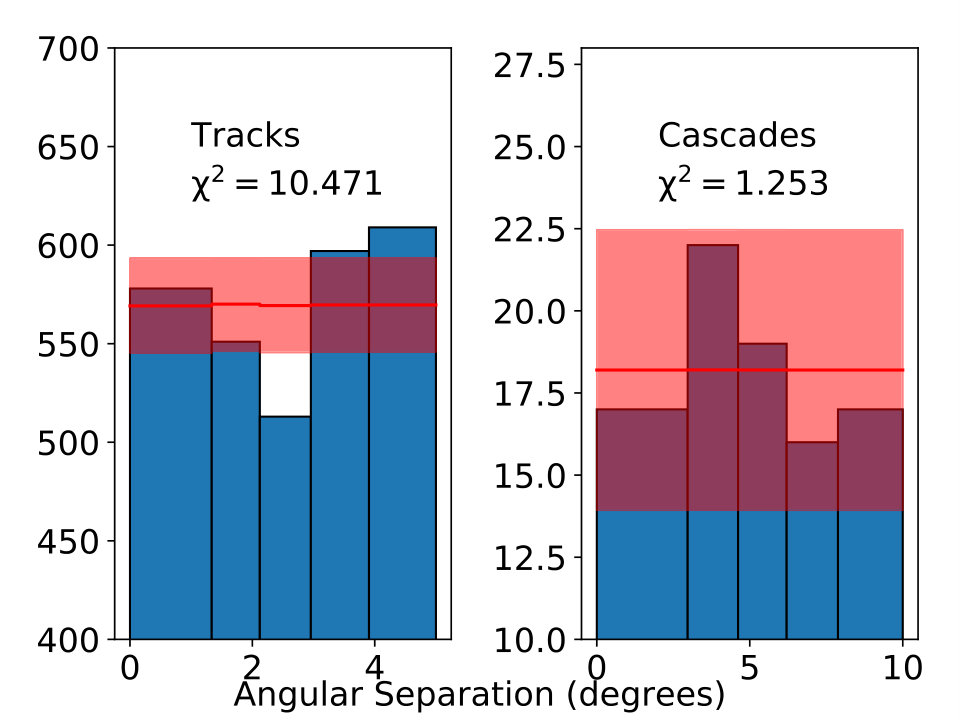 Figure 5
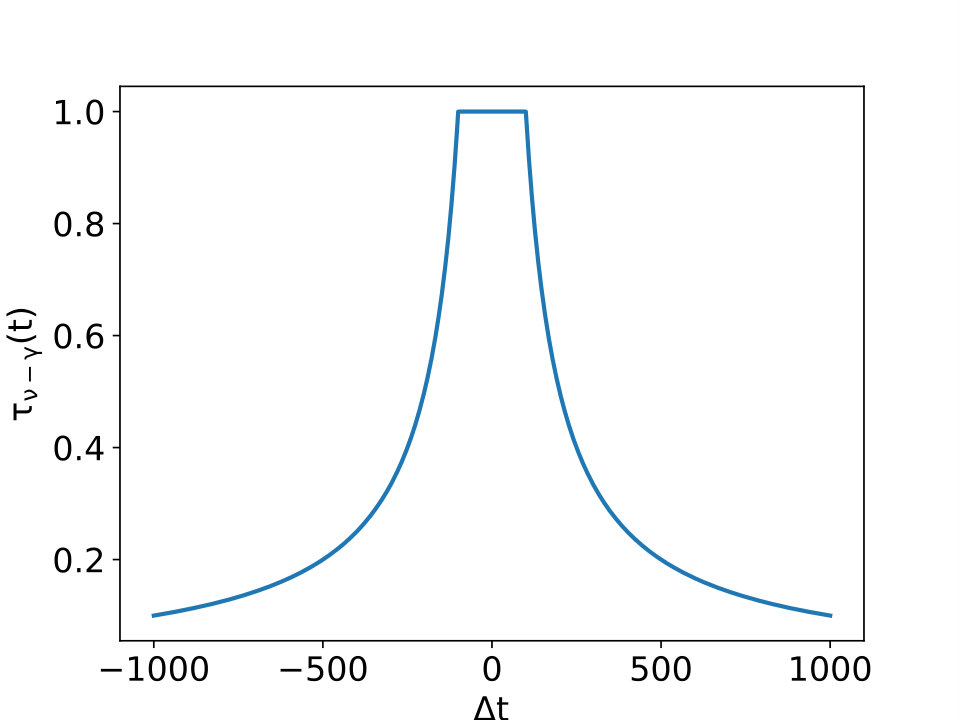 Figure 6
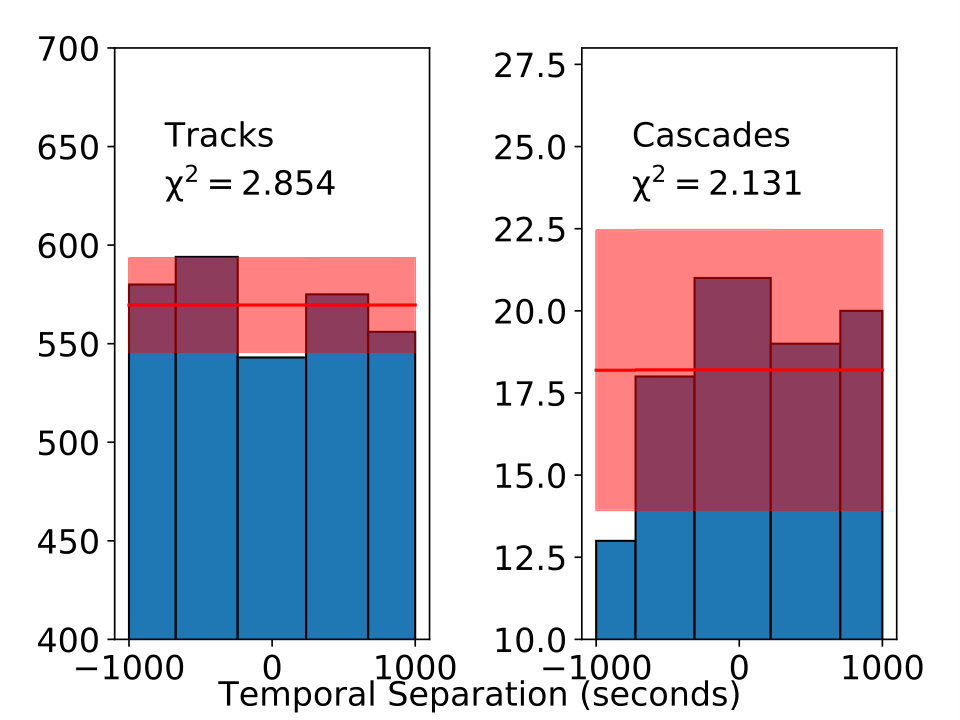 Figure 7
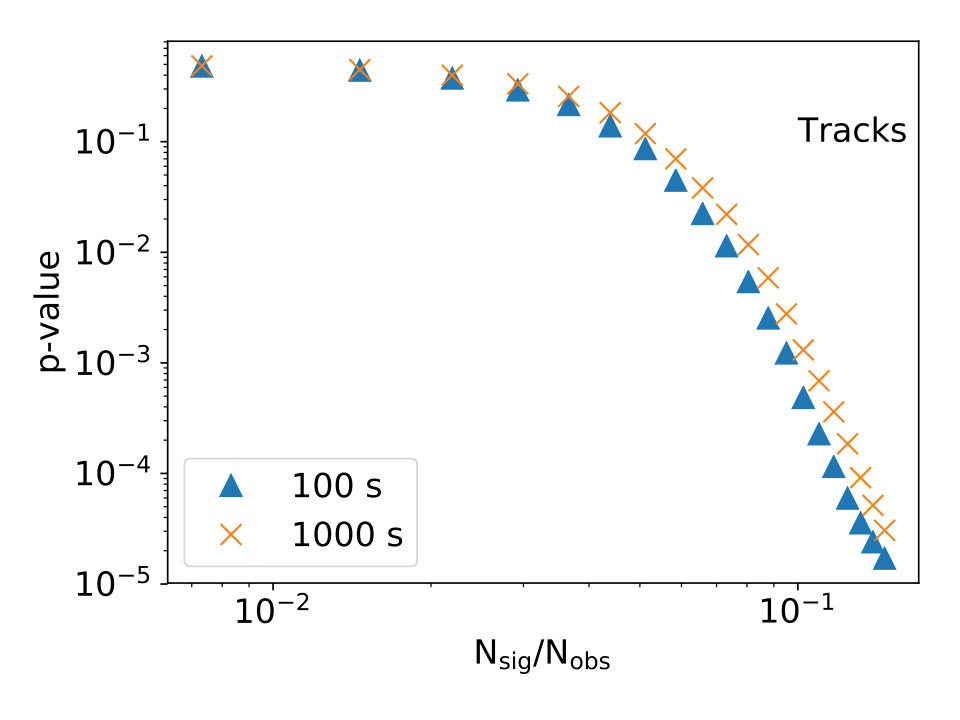 Figure 8
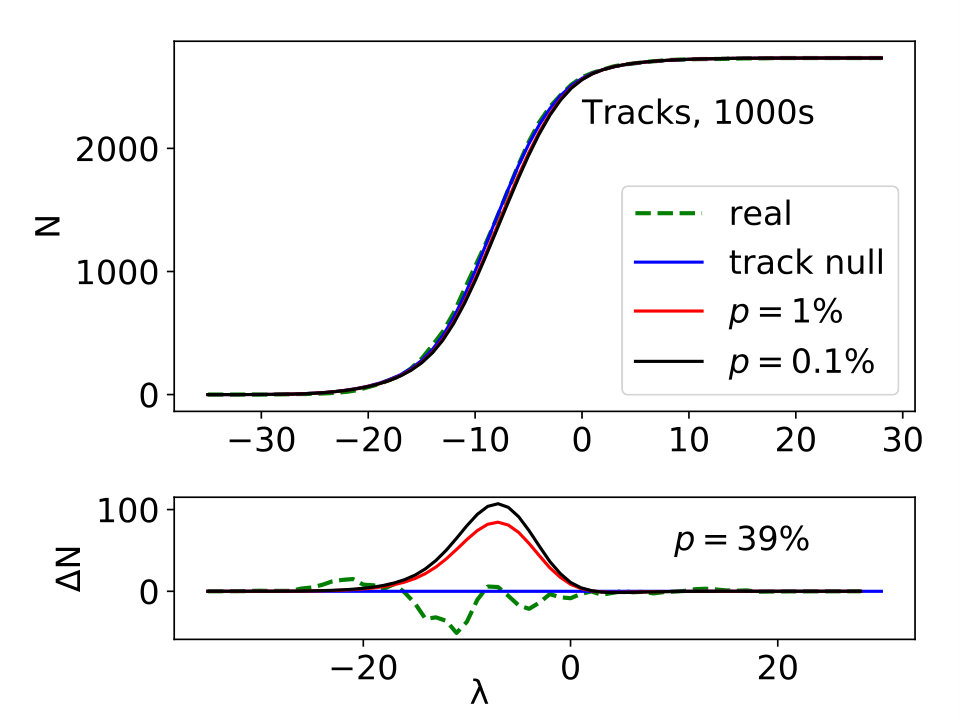 Figure 9
| Thresholds | Observed Values | |||||||
|---|---|---|---|---|---|---|---|---|
| Dataset | ||||||||
| Tracks, 100 s | 18.5 | 25.4 | 205 | 260 | 2734 | 18.94 | 39% | |
| string 1000 s | ” | ” | ” | 220 | 285 | ” | ” | ” |
| Cascades | 8.1 | 14.6 | - | - | 80 | 2.7 | 60% | |
| Track Multiplets | - | 9.3 | - | - | 0 | - | - | |
| Date | Time (UTC) | MJD | t (s) | Position (J2000) | FAR (yr-1) | |||
|---|---|---|---|---|---|---|---|---|
| 2012 Nov 21 | 20:19:52 | 56252.8471 | 307 | 2′ | 1 | 18.9 | 0.09 | |
| 2014 Aug 05 | 11:13:33 | 56874.4677 | 750 | 3′ | 2 | 18.8 | 0.09 |
Peer Reviews
No public reviews on file for this paper yet. If you reviewed it on a platform where reviews are public (OpenReview, ICLR, NeurIPS, ICML), you can paste yours below so the community can read it here.
Videos
No videos yet. Explain this paper in a talk, walkthrough, or lecture? Add one.
A Search for Cosmic Neutrino and Gamma-Ray Emitting Transients
in 7.3 Years of ANTARES and Fermi LAT Data
H. A. Ayala Solares
Department of Physics, Pennsylvania State University, University Park, PA 16802, USA
Center for Particle & Gravitational Astrophysics, Institute for Gravitation and the Cosmos, PennsylvaniaState University, University Park, PA 16802, USA
D. F. Cowen
Department of Physics, Pennsylvania State University, University Park, PA 16802, USA
Department of Astronomy & Astrophysics, Pennsylvania State University, University Park, PA 16802, USA
Center for Particle & Gravitational Astrophysics, Institute for Gravitation and the Cosmos, PennsylvaniaState University, University Park, PA 16802, USA
J. J. DeLaunay
Department of Physics, Pennsylvania State University, University Park, PA 16802, USA
Center for Particle & Gravitational Astrophysics, Institute for Gravitation and the Cosmos, PennsylvaniaState University, University Park, PA 16802, USA
D. B. Fox
Department of Astronomy & Astrophysics, Pennsylvania State University, University Park, PA 16802, USA
Center for Particle & Gravitational Astrophysics, Institute for Gravitation and the Cosmos, PennsylvaniaState University, University Park, PA 16802, USA
Center for Theoretical & Observational Cosmology, Institute for Gravitation and the Cosmos, Pennsylvania State University, University Park, PA 16802, USA
A. Keivani
Department of Physics, Pennsylvania State University, University Park, PA 16802, USA
Center for Particle & Gravitational Astrophysics, Institute for Gravitation and the Cosmos, PennsylvaniaState University, University Park, PA 16802, USA
M. Mostafá
Department of Physics, Pennsylvania State University, University Park, PA 16802, USA
Department of Astronomy & Astrophysics, Pennsylvania State University, University Park, PA 16802, USA
Center for Particle & Gravitational Astrophysics, Institute for Gravitation and the Cosmos, PennsylvaniaState University, University Park, PA 16802, USA
K. Murase
Department of Physics, Pennsylvania State University, University Park, PA 16802, USA
Department of Astronomy & Astrophysics, Pennsylvania State University, University Park, PA 16802, USA
Center for Particle & Gravitational Astrophysics, Institute for Gravitation and the Cosmos, PennsylvaniaState University, University Park, PA 16802, USA
C. F. Turley
Department of Physics, Pennsylvania State University, University Park, PA 16802, USA
Center for Particle & Gravitational Astrophysics, Institute for Gravitation and the Cosmos, PennsylvaniaState University, University Park, PA 16802, USA
A. Albert
Université de Strasbourg, CNRS, IPHC UMR 7178, F-67000 Strasbourg, France
M. André
Technical University of Catalonia, Laboratory of Applied Bioacoustics, Rambla Exposició, 08800 Vilanova i la Geltrú, Barcelona, Spain
M. Anghinolfi
INFN - Sezione di Genova, Via Dodecaneso 33, 16146 Genova, Italy
G. Anton
Friedrich-Alexander-Universität Erlangen-Nürnberg, Erlangen Centre for Astroparticle Physics, Erwin-Rommel-Str. 1, 91058 Erlangen, Germany
M. Ardid
Institut d’Investigació per a la Gestió Integrada de les Zones Costaneres (IGIC) - Universitat Politècnica de València. C/ Paranimf 1, 46730 Gandia, Spain
J.-J. Aubert
Aix Marseille Univ, CNRS/IN2P3, CPPM, Marseille, France
J. Aublin
APC, Univ Paris Diderot, CNRS/IN2P3, CEA/Irfu, Obs de Paris, Sorbonne Paris Cité, France
B. Baret
APC, Univ Paris Diderot, CNRS/IN2P3, CEA/Irfu, Obs de Paris, Sorbonne Paris Cité, France
J. Barrios-Martí
IFIC - Instituto de Física Corpuscular (CSIC - Universitat de València) c/ Catedrático José Beltrán, 2 E-46980 Paterna, Valencia, Spain
S. Basa
LAM - Laboratoire d’Astrophysique de Marseille, Pôle de l’Étoile Site de Château-Gombert, rue Frédéric Joliot-Curie 38, 13388 Marseille Cedex 13, France
B. Belhorma
National Center for Energy Sciences and Nuclear Techniques, B.P.1382, R. P.10001 Rabat, Morocco
V. Bertin
Aix Marseille Univ, CNRS/IN2P3, CPPM, Marseille, France
S. Biagi
INFN - Laboratori Nazionali del Sud (LNS), Via S. Sofia 62, 95123 Catania, Italy
R. Bormuth
Nikhef, Science Park, Amsterdam, The Netherlands
Huygens-Kamerlingh Onnes Laboratorium, Universiteit Leiden, The Netherlands
J. Boumaaza
University Mohammed V in Rabat, Faculty of Sciences, 4 av. Ibn Battouta, B.P. 1014, R.P. 10000 Rabat, Morocco
S. Bourret
PC, Univ Paris Diderot, CNRS/IN2P3, CEA/Irfu, Obs de Paris, Sorbonne Paris Cité, France
M. Bouta
University Mohammed I, Laboratory of Physics of Matter and Radiations, B.P.717, Oujda 6000, Morocco
M.C. Bouwhuis
Nikhef, Science Park, Amsterdam, The Netherlands
H. Brânzaş
Institute of Space Science, RO-077125 Bucharest, Măgurele, Romania
R. Bruijn
Nikhef, Science Park, Amsterdam, The Netherlands
Universiteit van Amsterdam, Instituut voor Hoge-Energie Fysica, Science Park 105, 1098 XG Amsterdam, The Netherlands
J. Brunner
Aix Marseille Univ, CNRS/IN2P3, CPPM, Marseille, France
J. Busto
Aix Marseille Univ, CNRS/IN2P3, CPPM, Marseille, France
A. Capone
INFN - Sezione di Roma, P.le Aldo Moro 2, 00185 Roma, Italy
Dipartimento di Fisica dell’Università La Sapienza, P.le Aldo Moro 2, 00185 Roma, Italy
L. Caramete
Institute of Space Science, RO-077125 Bucharest, Măgurele, Romania
J. Carr
Aix Marseille Univ, CNRS/IN2P3, CPPM, Marseille, France
S. Celli
INFN - Sezione di Roma, P.le Aldo Moro 2, 00185 Roma, Italy
Dipartimento di Fisica dell’Università La Sapienza, P.le Aldo Moro 2, 00185 Roma, Italy
Gran Sasso Science Institute, Viale Francesco Crispi 7, 00167 L’Aquila, Italy
M. Chabab
LPHEA, Faculty of Science - Semlali, Cadi Ayyad University, P.O.B. 2390, Marrakech, Morocco
R. Cherkaoui El Moursli
University Mohammed V in Rabat, Faculty of Sciences, 4 av. Ibn Battouta, B.P. 1014, R.P. 10000 Rabat, Morocco
T. Chiarusi
INFN - Sezione di Bologna, Viale Berti-Pichat 6/2, 40127 Bologna, Italy
M. Circella
INFN - Sezione di Bari, Via E. Orabona 4, 70126 Bari, Italy
A. Coleiro
APC, Univ Paris Diderot, CNRS/IN2P3, CEA/Irfu, Obs de Paris, Sorbonne Paris Cité, France
IFIC - Instituto de Física Corpuscular (CSIC - Universitat de València) c/ Catedrático José Beltrán, 2 E-46980 Paterna, Valencia, Spain
M. Colomer
APC, Univ Paris Diderot, CNRS/IN2P3, CEA/Irfu, Obs de Paris, Sorbonne Paris Cité, France
IFIC - Instituto de Física Corpuscular (CSIC - Universitat de València) c/ Catedrático José Beltrán, 2 E-46980 Paterna, Valencia, Spain
R. Coniglione
INFN - Laboratori Nazionali del Sud (LNS), Via S. Sofia 62, 95123 Catania, Italy
H. Costantini
Aix Marseille Univ, CNRS/IN2P3, CPPM, Marseille, France
P. Coyle
Aix Marseille Univ, CNRS/IN2P3, CPPM, Marseille, France
A. Creusot
APC, Univ Paris Diderot, CNRS/IN2P3, CEA/Irfu, Obs de Paris, Sorbonne Paris Cité, France
A. F. Díaz
Department of Computer Architecture and Technology/CITIC, University of Granada, 18071 Granada, Spain
A. Deschamps
Géoazur, UCA, CNRS, IRD, Observatoire de la Côte d’Azur, Sophia Antipolis, France
C. Distefano
INFN - Laboratori Nazionali del Sud (LNS), Via S. Sofia 62, 95123 Catania, Italy
I. Di Palma
INFN - Sezione di Roma, P.le Aldo Moro 2, 00185 Roma, Italy
Dipartimento di Fisica dell’Università La Sapienza, P.le Aldo Moro 2, 00185 Roma, Italy
A. Domi
INFN - Sezione di Genova, Via Dodecaneso 33, 16146 Genova, Italy
Dipartimento di Fisica dell’Università, Via Dodecaneso 33, 16146 Genova, Italy
R. Donà
INFN - Sezione di Bologna, Viale Berti-Pichat 6/2, 40127 Bologna, Italy
C. Donzaud
APC, Univ Paris Diderot, CNRS/IN2P3, CEA/Irfu, Obs de Paris, Sorbonne Paris Cité, France
Université Paris-Sud, 91405 Orsay Cedex, France
D. Dornic
Aix Marseille Univ, CNRS/IN2P3, CPPM, Marseille, France
D. Drouhin
Université de Strasbourg, CNRS, IPHC UMR 7178, F-67000 Strasbourg, France
T. Eberl
Friedrich-Alexander-Universität Erlangen-Nürnberg, Erlangen Centre for Astroparticle Physics, Erwin-Rommel-Str. 1, 91058 Erlangen, Germany
I. El Bojaddaini
University Mohammed I, Laboratory of Physics of Matter and Radiations, B.P.717, Oujda 6000, Morocco
N. El Khayati
University Mohammed V in Rabat, Faculty of Sciences, 4 av. Ibn Battouta, B.P. 1014, R.P. 10000 Rabat, Morocco
D. Elsässer
Institut für Theoretische Physik und Astrophysik, Universität Würzburg, Emil-Fischer Str. 31, 97074 Würzburg, Germany
A. Enzenhöfer
Friedrich-Alexander-Universität Erlangen-Nürnberg, Erlangen Centre for Astroparticle Physics, Erwin-Rommel-Str. 1, 91058 Erlangen, Germany
Aix Marseille Univ, CNRS/IN2P3, CPPM, Marseille, France
A. Ettahiri
University Mohammed V in Rabat, Faculty of Sciences, 4 av. Ibn Battouta, B.P. 1014, R.P. 10000 Rabat, Morocco
F. Fassi
University Mohammed V in Rabat, Faculty of Sciences, 4 av. Ibn Battouta, B.P. 1014, R.P. 10000 Rabat, Morocco
P. Fermani
INFN - Sezione di Roma, P.le Aldo Moro 2, 00185 Roma, Italy
Dipartimento di Fisica dell’Università La Sapienza, P.le Aldo Moro 2, 00185 Roma, Italy
G. Ferrara
INFN - Laboratori Nazionali del Sud (LNS), Via S. Sofia 62, 95123 Catania, Italy
L. Fusco
APC, Univ Paris Diderot, CNRS/IN2P3, CEA/Irfu, Obs de Paris, Sorbonne Paris Cité, France
Dipartimento di Fisica e Astronomia dell’Università, Viale Berti Pichat 6/2, 40127 Bologna, Italy
P. Gay
Laboratoire de Physique Corpusculaire, Clermont Université, Université Blaise Pascal, CNRS/IN2P3, BP 10448, F-63000 Clermont-Ferrand, France
APC, Univ Paris Diderot, CNRS/IN2P3, CEA/Irfu, Obs de Paris, Sorbonne Paris Cité, France
H. Glotin
LIS, UMR Université de Toulon, Aix Marseille Université, CNRS, 83041 Toulon, France
R. Gozzini
IFIC - Instituto de Física Corpuscular (CSIC - Universitat de València) c/ Catedrático José Beltrán, 2 E-46980 Paterna, Valencia, Spain
T. Grégoire
APC, Univ Paris Diderot, CNRS/IN2P3, CEA/Irfu, Obs de Paris, Sorbonne Paris Cité, France
R. Gracia Ruiz
Université de Strasbourg, CNRS, IPHC UMR 7178, F-67000 Strasbourg, France
K. Graf
Friedrich-Alexander-Universität Erlangen-Nürnberg, Erlangen Centre for Astroparticle Physics, Erwin-Rommel-Str. 1, 91058 Erlangen, Germany
S. Hallmann
Friedrich-Alexander-Universität Erlangen-Nürnberg, Erlangen Centre for Astroparticle Physics, Erwin-Rommel-Str. 1, 91058 Erlangen, Germany
H. van Haren
Royal Netherlands Institute for Sea Research (NIOZ) and Utrecht University, Landsdiep 4, 1797 SZ ’t Horntje (Texel), the Netherlands
A.J. Heijboer
Nikhef, Science Park, Amsterdam, The Netherlands
Y. Hello
Géoazur, UCA, CNRS, IRD, Observatoire de la Côte d’Azur, Sophia Antipolis, France
J.J. Hernández-Rey
IFIC - Instituto de Física Corpuscular (CSIC - Universitat de València) c/ Catedrático José Beltrán, 2 E-46980 Paterna, Valencia, Spain
J. Hößl
Friedrich-Alexander-Universität Erlangen-Nürnberg, Erlangen Centre for Astroparticle Physics, Erwin-Rommel-Str. 1, 91058 Erlangen, Germany
J. Hofestädt
Friedrich-Alexander-Universität Erlangen-Nürnberg, Erlangen Centre for Astroparticle Physics, Erwin-Rommel-Str. 1, 91058 Erlangen, Germany
G. Illuminati
IFIC - Instituto de Física Corpuscular (CSIC - Universitat de València) c/ Catedrático José Beltrán, 2 E-46980 Paterna, Valencia, Spain
C. W. James
International Centre for Radio Astronomy Research - Curtin University, Bentley, WA 6102, Australia
ARC Centre of Excellence for All-sky Astrophysics (CAASTRO), Australia
M. de Jong
Nikhef, Science Park, Amsterdam, The Netherlands
Huygens-Kamerlingh Onnes Laboratorium, Universiteit Leiden, The Netherlands
M. Jongen
Nikhef, Science Park, Amsterdam, The Netherlands
M. Kadler
Institut für Theoretische Physik und Astrophysik, Universität Würzburg, Emil-Fischer Str. 31, 97074 Würzburg, Germany
O. Kalekin
Friedrich-Alexander-Universität Erlangen-Nürnberg, Erlangen Centre for Astroparticle Physics, Erwin-Rommel-Str. 1, 91058 Erlangen, Germany
U. Katz
Friedrich-Alexander-Universität Erlangen-Nürnberg, Erlangen Centre for Astroparticle Physics, Erwin-Rommel-Str. 1, 91058 Erlangen, Germany
N.R. Khan-Chowdhury
IFIC - Instituto de Física Corpuscular (CSIC - Universitat de València) c/ Catedrático José Beltrán, 2 E-46980 Paterna, Valencia, Spain
A. Kouchner
APC, Univ Paris Diderot, CNRS/IN2P3, CEA/Irfu, Obs de Paris, Sorbonne Paris Cité, France
Institut Universitaire de France, 75005 Paris, France
M. Kreter
Institut für Theoretische Physik und Astrophysik, Universität Würzburg, Emil-Fischer Str. 31, 97074 Würzburg, Germany
I. Kreykenbohm
Dr. Remeis-Sternwarte and ECAP, Friedrich-Alexander-Universität Erlangen-Nürnberg, Sternwartstr. 7, 96049 Bamberg, Germany
V. Kulikovskiy
INFN - Sezione di Genova, Via Dodecaneso 33, 16146 Genova, Italy
Moscow State University, Skobeltsyn Institute of Nuclear Physics, Leninskie gory, 119991 Moscow, Russia
R. Lahmann
Friedrich-Alexander-Universität Erlangen-Nürnberg, Erlangen Centre for Astroparticle Physics, Erwin-Rommel-Str. 1, 91058 Erlangen, Germany
R. Le Breton
APC, Univ Paris Diderot, CNRS/IN2P3, CEA/Irfu, Obs de Paris, Sorbonne Paris Cité, France
D. Lefèvre
Mediterranean Institute of Oceanography (MIO), Aix-Marseille University, 13288, Marseille, Cedex 9, France; Université du Sud Toulon-Var, CNRS-INSU/IRD UM 110, 83957, La Garde Cedex, France
E. Leonora
INFN - Sezione di Catania, Via S. Sofia 64, 95123 Catania, Italy
G. Levi
INFN - Sezione di Bologna, Viale Berti-Pichat 6/2, 40127 Bologna, Italy
Dipartimento di Fisica e Astronomia dell’Università, Viale Berti Pichat 6/2, 40127 Bologna, Italy
M. Lincetto
Aix Marseille Univ, CNRS/IN2P3, CPPM, Marseille, France
D. Lopez-Coto
Dpto. de Física Teórica y del Cosmos & C.A.F.P.E., University of Granada, 18071 Granada, Spain
M. Lotze
IFIC - Instituto de Física Corpuscular (CSIC - Universitat de València) c/ Catedrático José Beltrán, 2 E-46980 Paterna, Valencia, Spain
S. Loucatos
IRFU, CEA, Université Paris-Saclay, F-91191 Gif-sur-Yvette, France
APC, Univ Paris Diderot, CNRS/IN2P3, CEA/Irfu, Obs de Paris, Sorbonne Paris Cité, France
G. Maggi
Aix Marseille Univ, CNRS/IN2P3, CPPM, Marseille, France
M. Marcelin
LAM - Laboratoire d’Astrophysique de Marseille, Pôle de l’Étoile Site de Château-Gombert, rue Frédéric Joliot-Curie 38, 13388 Marseille Cedex 13, France
A. Margiotta
INFN - Sezione di Bologna, Viale Berti-Pichat 6/2, 40127 Bologna, Italy
Dipartimento di Fisica e Astronomia dell’Università, Viale Berti Pichat 6/2, 40127 Bologna, Italy
A. Marinelli
INFN - Sezione di Pisa, Largo B. Pontecorvo 3, 56127 Pisa, Italy
Dipartimento di Fisica dell’Università, Largo B. Pontecorvo 3, 56127 Pisa, Italy
J.A. Martínez-Mora
Institut d’Investigació per a la Gestió Integrada de les Zones Costaneres (IGIC) - Universitat Politècnica de València. C/ Paranimf 1, 46730 Gandia, Spain
R. Mele
INFN - Sezione di Napoli, Via Cintia 80126 Napoli, Italy
Dipartimento di Fisica dell’Università Federico II di Napoli, Via Cintia 80126, Napoli, Italy
K. Melis
Nikhef, Science Park, Amsterdam, The Netherlands
Universiteit van Amsterdam, Instituut voor Hoge-Energie Fysica, Science Park 105, 1098 XG Amsterdam, The Netherlands
P. Migliozzi
INFN - Sezione di Napoli, Via Cintia 80126 Napoli, Italy
A. Moussa
University Mohammed I, Laboratory of Physics of Matter and Radiations, B.P.717, Oujda 6000, Morocco
S. Navas
Dpto. de Física Teórica y del Cosmos & C.A.F.P.E., University of Granada, 18071 Granada, Spain
E. Nezri
LAM - Laboratoire d’Astrophysique de Marseille, Pôle de l’Étoile Site de Château-Gombert, rue Frédéric Joliot-Curie 38, 13388 Marseille Cedex 13, France
C. Nielsen
APC, Univ Paris Diderot, CNRS/IN2P3, CEA/Irfu, Obs de Paris, Sorbonne Paris Cité, France
A. Nuñez
Aix Marseille Univ, CNRS/IN2P3, CPPM, Marseille, France
LAM - Laboratoire d’Astrophysique de Marseille, Pôle de l’Étoile Site de Château-Gombert, rue Frédéric Joliot-Curie 38, 13388 Marseille Cedex 13, France
M. Organokov
Université de Strasbourg, CNRS, IPHC UMR 7178, F-67000 Strasbourg, France
G.E. Păvălaş
Institute of Space Science, RO-077125 Bucharest, Măgurele, Romania
C. Pellegrino
INFN - Sezione di Bologna, Viale Berti-Pichat 6/2, 40127 Bologna, Italy
Dipartimento di Fisica e Astronomia dell’Università, Viale Berti Pichat 6/2, 40127 Bologna, Italy
M. Perrin-Terrin
Aix Marseille Univ, CNRS/IN2P3, CPPM, Marseille, France
P. Piattelli
INFN - Laboratori Nazionali del Sud (LNS), Via S. Sofia 62, 95123 Catania, Italy
V. Popa
Institute of Space Science, RO-077125 Bucharest, Măgurele, Romania
T. Pradier
Université de Strasbourg, CNRS, IPHC UMR 7178, F-67000 Strasbourg, France
L. Quinn
Aix Marseille Univ, CNRS/IN2P3, CPPM, Marseille, France
C. Racca
GRPHE - Université de Haute Alsace - Institut universitaire de technologie de Colmar, 34 rue du Grillenbreit BP 50568 - 68008 Colmar, France
N. Randazzo
INFN - Sezione di Catania, Via S. Sofia 64, 95123 Catania, Italy
G. Riccobene
INFN - Laboratori Nazionali del Sud (LNS), Via S. Sofia 62, 95123 Catania, Italy
A. Sánchez-Losa
INFN - Sezione di Bari, Via E. Orabona 4, 70126 Bari, Italy
A. Salah-Eddine
LPHEA, Faculty of Science - Semlali, Cadi Ayyad University, P.O.B. 2390, Marrakech, Morocco
I. Salvadori
Aix Marseille Univ, CNRS/IN2P3, CPPM, Marseille, France
D. F. E. Samtleben
Nikhef, Science Park, Amsterdam, The Netherlands
Huygens-Kamerlingh Onnes Laboratorium, Universiteit Leiden, The Netherlands
M. Sanguineti
INFN - Sezione di Genova, Via Dodecaneso 33, 16146 Genova, Italy
Dipartimento di Fisica dell’Università, Via Dodecaneso 33, 16146 Genova, Italy
P. Sapienza
INFN - Laboratori Nazionali del Sud (LNS), Via S. Sofia 62, 95123 Catania, Italy
F. Schüssler
IRFU, CEA, Université Paris-Saclay, F-91191 Gif-sur-Yvette, France
M. Spurio
INFN - Sezione di Bologna, Viale Berti-Pichat 6/2, 40127 Bologna, Italy
Dipartimento di Fisica e Astronomia dell’Università, Viale Berti Pichat 6/2, 40127 Bologna, Italy
Th. Stolarczyk
IRFU, CEA, Université Paris-Saclay, F-91191 Gif-sur-Yvette, France
M. Taiuti
INFN - Sezione di Genova, Via Dodecaneso 33, 16146 Genova, Italy
Dipartimento di Fisica dell’Università, Via Dodecaneso 33, 16146 Genova, Italy
Y. Tayalati
University Mohammed V in Rabat, Faculty of Sciences, 4 av. Ibn Battouta, B.P. 1014, R.P. 10000 Rabat, Morocco
T. Thakore
IFIC - Instituto de Física Corpuscular (CSIC - Universitat de València) c/ Catedrático José Beltrán, 2 E-46980 Paterna, Valencia, Spain
A. Trovato
INFN - Laboratori Nazionali del Sud (LNS), Via S. Sofia 62, 95123 Catania, Italy
B. Vallage
IRFU, CEA, Université Paris-Saclay, F-91191 Gif-sur-Yvette, France
APC, Univ Paris Diderot, CNRS/IN2P3, CEA/Irfu, Obs de Paris, Sorbonne Paris Cité, France
V. Van Elewyck
APC, Univ Paris Diderot, CNRS/IN2P3, CEA/Irfu, Obs de Paris, Sorbonne Paris Cité, France
Institut Universitaire de France, 75005 Paris, France
F. Versari
INFN - Sezione di Bologna, Viale Berti-Pichat 6/2, 40127 Bologna, Italy
Dipartimento di Fisica e Astronomia dell’Università, Viale Berti Pichat 6/2, 40127 Bologna, Italy
S. Viola
INFN - Laboratori Nazionali del Sud (LNS), Via S. Sofia 62, 95123 Catania, Italy
D. Vivolo
INFN - Sezione di Napoli, Via Cintia 80126 Napoli, Italy
Dipartimento di Fisica dell’Università Federico II di Napoli, Via Cintia 80126, Napoli, Italy
J. Wilms
Dr. Remeis-Sternwarte and ECAP, Friedrich-Alexander-Universität Erlangen-Nürnberg, Sternwartstr. 7, 96049 Bamberg, Germany
D. Zaborov
Aix Marseille Univ, CNRS/IN2P3, CPPM, Marseille, France
J.D. Zornoza
IFIC - Instituto de Física Corpuscular (CSIC - Universitat de València) c/ Catedrático José Beltrán, 2 E-46980 Paterna, Valencia, Spain
J. Zúñiga
IFIC - Instituto de Física Corpuscular (CSIC - Universitat de València) c/ Catedrático José Beltrán, 2 E-46980 Paterna, Valencia, Spain
Abstract
We analyze 7.3 years of ANTARES high-energy neutrino and Fermi LAT -ray data in search of cosmic neutrino + -ray (+) transient sources or source populations. Our analysis has the potential to detect either individual + transient sources (durations \delta t\mathrel{\hbox{\hbox to0.0pt{\hbox{\lower 4.0pt\hbox{\sim}}\hss}\hbox{<}}}1000 s), if they exhibit sufficient -ray or neutrino multiplicity, or a statistical excess of + transients of individually lower multiplicities. Individual high -ray-multiplicity events could be produced, for example, by a single ANTARES neutrino in coincidence with a LAT-detected -ray burst. Treating ANTARES track and cascade event types separately, we establish detection thresholds by Monte Carlo scrambling of the neutrino data, and determine our analysis sensitivity by signal injection against these scrambled datasets. We find our analysis is sensitive to + transient populations responsible for 5% of the observed gamma-coincident neutrinos in the track data at 90% confidence. Applying our analysis to the unscrambled data reveals no individual + events of high significance; two ANTARES track + Fermi -ray events are identified that exceed a once per decade false alarm rate threshold (). No evidence for subthreshold + source populations is found among the track () or cascade () events. Exploring a possible correlation of high-energy neutrino directions with Fermi -ray sky brightness identified in previous work yields no added support for this correlation. While TXS 0506+056, a blazar and variable (non-transient) Fermi -ray source, has recently been identified as the first source of high-energy neutrinos, the challenges in reconciling observations of the Fermi -ray sky, the IceCube high-energy cosmic neutrinos, and ultra-high energy cosmic rays using only blazars suggest a significant contribution by other source populations. Searches for transient sources of high-energy neutrinos thus remain interesting, with the potential for either neutrino clustering or multimessenger coincidence searches to lead to discovery of the first + transients.
BL Lacertae objects: general — cosmic rays — gamma-rays: bursts — gamma-rays: general — neutrinos
††software: Astropy (The Astropy Collaboration et al., 2018), Matplotlib (Hunter, 2007), HEASoft (Nasa High Energy Astrophysics Science Archive Research Center (2014), Heasarc), HEALPix (Górski et al., 2005), SciPy (Jones et al., 2001–)
1 Introduction
The ANTARES telescope (Ageron et al., 2011) is a deep-sea Cherenkov neutrino detector, located 40 km off shore from Toulon, France, in the Mediterranean Sea. The detector comprises a three-dimensional array of 885 optical modules, each one housing a 10 in photomultiplier tube, and distributed over 12 vertical strings anchored in the sea floor at a depth of about 2400 m. The detection of light from up-going charged particles is optimized with the photomultipliers facing 45∘ downward. Completed in May 2008, the telescope aims primarily at the detection of neutrino-induced muons that cause the emission of Cherenkov light in the detector (track-like events). Charged current interactions induced by electron neutrinos (and, possibly, by tau neutrinos of cosmic origin) or neutral current interactions of all neutrino flavors can be reconstructed as cascade-like events (Albert et al., 2017a).
Due to its location, the ANTARES detector mainly observes the Southern sky ( sr at any time). Events arising from sky positions in the declination band are always visible as upgoing. Neutrino-induced events in the declination band are visible as upgoing with a fraction of time decreasing from 100% down to 0%. While ANTARES has a substantially smaller volume than IceCube, the use of sea water as detection medium (rather than ice) provides better pointing resolution for individual events, especially those of cascade type, and its geographic location enables reduced-background studies of the Southern hemisphere including the Galactic center region. On the other hand, natural light emission in the water leads to higher background levels (ANTARES Collaboration et al., 2005).
Chief scientific results from ANTARES include searches for neutrino sources using track- and cascade-like events in data collected between 2007 and 2015 (Albert et al., 2017b); dedicated studies along the Galactic Plane (Albert et al., 2017c), also in collaboration with the IceCube telescope (Albert et al., 2018a); searches for an excess of high-energy cosmic neutrinos over the background of atmospheric events (Albert et al., 2018b). No cosmic neutrinos have been positively identified in the ANTARES data. Despite this, by integrating the cosmic neutrino spectrum from IceCube Collaboration et al. (2017) over the ANTARES effective area (Albert et al., 2017b), we estimate an expected 6.8 neutrinos of cosmic origin are detected each year, though all but the most energetic will be indistinguishable from the atmospheric background. Among all the possible astrophysical sources, transient sources increase the observation possibilities thanks to the suppression of atmospheric background in a well-defined space-time window. For this reason, the Collaboration is involved in a broad multimessenger program to exploit the connection between neutrinos and other cosmic messengers, including: follow-up analyses associated with gravitational wave events (Albert et al., 2017d, 2019); coincidence searches against electromagnetic observations from radio (Croft et al., 2016; Albert et al., 2019) and visible (Adrián-Martínez et al., 2016) to X- and -rays (Ageron et al., 2012); blazar flare episodes (Adrian-Martinez et al., 2015); and the neutrino source TXS 0506+056 (Albert et al., 2018c). To date, there have been no high-confidence counterparts identified for any ANTARES neutrino event.
In parallel, members of the Astrophysical Multimessenger Observatory Network (AMON111AMON website: http://www.amon.psu.edu/; Smith et al. 2013; Cowen et al. 2016) have been exploring the possibility of neutrino + -ray (+) source identification via coincidence analysis, publishing analyses of Fermi Large Area Telescope (LAT; Atwood et al. 2009) and public IceCube 40-string (Keivani et al., 2015) and 59-string (Turley et al., 2018) data. Although no high-confidence + transients, nor evidence of subthreshold + source populations, were identified in these works, the latter revealed mild evidence for correlation between IceCube neutrino positions and the Fermi -ray sky.
Within the last year, a coincidence between the neutrino IceCube-170922A (Kopper et al., 2017) and the flaring blazar TXS 0506+056 (Tanaka et al., 2017) led to multimessenger (IceCube Collaboration et al., 2018a) and time-dependent neutrino clustering (IceCube Collaboration et al., 2018b) analyses suggesting this BL Lac-type object as the first known source of high-energy neutrinos and the first identified extragalactic cosmic ray accelerator. Further blazar source identifications can certainly be anticipated; however, the absence of point source excesses in the ANTARES (Albert et al., 2017b) and IceCube (Aartsen et al., 2017a; Albert et al., 2018a) time-integrated datasets set strict limits on the fraction of the cosmic high-energy neutrinos that can originate in these observed sources.
Possible alternative source populations include star-forming galaxies, starburst galaxies, galaxy groups and clusters, supernovae, and standard and low-luminosity gamma-ray bursts (see Murase 2015 for a review). Of these source possibilities, the transient and highly-variable source populations will likely require time-sensitive searches for identification. Hadronic models foresee that neutrinos and -rays are co-generated through the production and subsequent decay of mesons, mainly pions. -rays then result from the decay of neutral pions, while the decay of charged pions produces neutrinos. Additional processes in dense astrophysical regions can then degrade the energy of individual -rays to lower energies while leaving the neutrino energy spectrum almost unaffected, resulting in correlated emission of higher-energy neutrinos and lower-energy -rays.
The present paper is organized as follows: Details of the datasets are provided in Sec. 2. Our statistical approach and signal injection studies are discussed in Sec. 3. Unscrambled results and interpretation are presented in Sec. 4, and our conclusions in Sec. 5.
2 Datasets
The Fermi LAT dataset is highly complementary for cross-reference with high-energy neutrino datasets. The LAT offers a 1.4 steradian field of view, provides all sky coverage every three hours on average, and exhibits good sensitivity over the {\rm 100\,MeV}\mathrel{\hbox{\hbox to0.0pt{\hbox{\lower 4.0pt\hbox{\sim}}\hss}\hbox{<}}}\varepsilon_{\gamma}\mathrel{\hbox{\hbox to0.0pt{\hbox{\lower 4.0pt\hbox{\sim}}\hss}\hbox{<}}}{\rm 300\,GeV} energy band.
This analysis was performed using publicly available Fermi LAT data. The relevant Fermi data were the Pass 8 photon reconstructions available from the LAT FTP server222LAT data located at ftp://legacy.gsfc.nasa.gov/fermi/data/lat/weekly/photon/. These photon events were filtered using the Fermi Science Tools, keeping only photons with a zenith angle smaller than 90∘, energies between 100 MeV and 300 GeV, detected during good time intervals (GTI) as provided in the LAT satellite files333Fermi satellite files located at ftp://legacy.gsfc.nasa.gov/fermi/data/lat/weekly/spacecraft/.
The point spread function (PSF) of the LAT is given by a so-called double King function (King, 1962) with the parameters depending on the photon energy, conversion type, and incident angle with respect to the LAT boresight (Ackermann et al., 2013). At energies in the hundreds of MeV, the angular uncertainty can be several degrees, especially for off-axis photons. At GeV the average uncertainty drops below 1∘, and at \varepsilon_{\gamma}\mathrel{\hbox{\hbox to0.0pt{\hbox{\lower 4.0pt\hbox{\sim}}\hss}\hbox{>}}}100 GeV angular uncertainties are better than 0.1∘.
The ANTARES data used spans from February 2007 to December 2015. Data from this 8.9 year interval are divided into track and cascade events, all of which are upgoing. According to the selection criteria defined in (Albert et al., 2017b), during this period 7622 track and 180 cascade neutrino candidates were identified. The Fermi mission has public data available starting from 4 August 2008. The ANTARES data is coincident with weeks 9 through 396 of the Fermi data, with 6774 track-like events and 162 cascade-like events falling within that 7.3 year window. For the ANTARES data, the average PSFs for tracks and cascades are derrived from Monte-Carlo simulation, and then interpolated. For track and cascacde events, the 90% containment radii for the PSFs are 15 and 10∘ respectively.
A healpix (Górski et al., 2005) map of resolution 8 (NSide=256, mean spacing of 023) was constructed using the entire Fermi data set (weeks 9 to 495 at the time of creation) with aforementioned photon selection criteria. Using the HEASoft software444HEASoft website: https://heasarc.gsfc.nasa.gov/docs/software/lheasoft/, events were binned into three logarithmically uniform energy bins. Each energy bin was then further binned into a healpix map, with the live time calculated via a Monte Carlo simulation. Dividing the counts map by the live time map produced the Fermi exposure map. Zero-valued (low-exposure) pixels were replaced by the average of the nearest neighbor pixels. Our three resulting all-sky Fermi maps are shown in Fig. 1. Due to the additional reconstruction uncertainty in the Fermi PSF for high-inclination events (inclination angle greater than 60∘), three additional maps for analysis of these events were generated by further averaging all pixels with their nearest neighbors.
3 Methods
3.1 Significance Calculation
Our analysis follows as an extension to the methods presented in Turley et al. (2018). Different from previous work, our analysis allows for coincidences with both multiple photons and multiple neutrinos. Our analysis also covers both the track and cascade events detected by ANTARES. For track-like events, we use an angular acceptance window of 5∘, while for cascade-like events, we use a 10∘ window. For both event types, the temporal acceptance window is 1000 s. Neutrino multiplets are constrained to have each neutrino within both the angular and temporal separation of each other neutrino. Photons must fall within the angular and temporal window as measured from the average neutrino position and time. For each coincidence, a pseudo-log-likelihood test statistic, , is calculated as follows:
[TABLE]
where is the product of the point spread functions (PSF) of each LAT photon and each ANTARES neutrino at the best position, , with each PSF normalized to have units of probability per square degree. The LAT PSF for each photon additionally depends on the photon energy, inclination angle, and conversion type. In general, the closer the PSF centers are, the larger the resulting value. The and terms are respectively the number of neutrinos and -rays in the coincidence. The term is the product of the temporal weighting function (Fig. 2) evaluated for each neutrino and -ray in the coincidence.
For particles within 100 s of the average arrival time, this function is identically one, while it scales as for times between 100 s and 1000 s. This allows the search to address the possibility of longer-timescale associations (as might result from low-luminosity GRBs) while maintaining a preference for shorter-timescale associations, if and when they are also present.
The term is the product of LAT -ray backgrounds for each photon at the coincidence location, taken from the background maps shown in Fig 1. Together with the factorial terms, this acts like a Poisson probability of observing photons from background. The factor, similar to the IceCube signalness (Aartsen et al., 2017b), is an energy proxy calculated by the ANTARES collaboration. The for a neutrino event is computed on an event-by-event basis using the normalised anti-cumulative distribution of the number of hits from the full ANTARES 2012-2017 neutrino dataset. This probability represents the fraction of ANTARES events with a number of hits larger than that observed for the event: the larger the number of hits, the smaller the value. Overall, larger values of the statistic suggest a greater likelihood of a physically associated multiplet from a cosmic source, rather than a coincidence of uncorrelated events.
The best fit position is numerically calculated as the location of maximum PSF overlap. The photon multiplicity of each coincidence is calculated iteratively: Beginning with a coincidence including all photons passing the temporal and proximity cuts, the photon with the lowest PSF density at the best-fit position is removed and a new , for the new best-fit position, is calculated. This process is repeated until one photon is left ( iterations), with the iteration yielding the maximum selected as the coincidence multiplicity.
This analysis presents two ways to identify a potential signal. First, with unbounded, the null distribution provides threshold values which can be used to identify individually-significant coincidences and calculate their estimated false alarm rates. In this work, we use two such thresholds, and , corresponding to false alarm rates of one per decade and one per century, respectively. Second, the presence of a subthreshold population of + emitting sources can be identified by a difference in the cumulative distributions of values between the observed and scrambled (null) populations. By design, true coincidences will be biased to higher values, and a population containing a sufficient number of signal events can be distinguished from the null distribution via an Anderson-Darling -sample test (Scholz & Stephens, 1987).
3.2 Background Generation
We generate a set of 10,000 Monte Carlo scrambled versions of each of our datasets in order to characterize their null distributions and define analysis thresholds, prior to performing any study of the unscrambled datasets. Our scrambling procedure begins by first converting the coordinates of each neutrino to detector coordinates. The arrival time and azimuthal angle of each original neutrino are then exchanged with another randomly selected neutrino . Each neutrino retains its original elevation. Finally, the coordinates are converted back to the equatorial system. This approach is similar to the method used in our previous work (Turley et al., 2016), with the primary difference being the use of detector coordinates for the scrambling procedure. Fermi LAT photons are not scrambled as the LAT data contains known sources and extensive (complex) structure. Coincidence analysis is carried out for each scrambled dataset and values are calculated for the resulting + coincidences via Eq. 1. Thresholds from this analysis for false alarm rates of 1 per decade () and 1 per century () are presented in Table 1.
In contrast to previous work (Turley et al., 2018), due to the sensitivity to multi-neutrino events and the use of both track and cascade events, we split the analysis into three separate parts. The first part is to detect all coincidences with single-neutrino track-like events. The second looks for coincidences with multi-neutrino track like events. The third and final part is a search for coincidences with all single-neutrino cascade-like events. Multi-neutrino cascades are not considered, as there are no cascade-like events within the temporal acceptance window of each other.
3.3 Signal Injection
To estimate the sensitivity of our analysis to subthreshold populations of cosmic + emitting sources, we generate a population of signal-like events. These events are injected into the scrambled datasets so that the injected distributions can be compared to the null distribution.
We determine the multiplicity of a generated signal event following the methods used in Turley et al. (2018). This method assumes a population of sources emitting one neutrino, with associated photon fluence distributed according to . In this formulation, is the number of events observed with a fluence greater than the threshold fluence . Setting this minimum to 0.001 photons, we can invert this relationship and generate the expectation value for the multiplicity of an arbitrary event in terms of a uniform random variable as \mbox{\langle n_{\gamma}\rangle}=S_{0}\,u^{-2/3}. The distribution of is then calculated by drawing randomly from a Poisson distribution with the expectation value . Excluding events with zero photons, this yields the following distribution: 93.8% singlet, 4.5% doublet, 0.9% triplet, and 0.38%, 0.19%, 0.095%, 0.0567%, 0.0365%, 0.0244%, and 0.0174% for multiplicities four through ten.
A signal event of photon multiplicity is then generated by choosing a random right ascension and drawing a random declination from the list of all ANTARES events. These coordinates serve as a sky position for the coincidence. The PSFs for LAT photons and neutrinos are then centered on this point, and placed randomly according to their respective PSFs. All photons are chosen to have the same inclination angle, which is drawn from the full set of inclination angles within the Fermi dataset. A conversion type for each photon is similarly drawn from the Fermi dataset. Photon energies are drawn from a power law with a photon index . Using the photon background maps, the number of unassociated photons expected to arrive within the temporal and spatial windows for that section of sky is calculated. From this Poisson probability, photons are randomly placed uniformly within the spatial window. Energy and conversion type for the background photons are chosen in the same manner as for the signal photons. All background photons are given the same inclination angle as the signal photons. Each particle is also given an arrival time randomly selected from a uniform distribution. Using this information, a value is calculated following the methods of Sec 3. Due to the iterative rejection of one or more low-significance -rays, events can end up with some of the injected photons excluded.
Because the varied physical models predicting + coincidences have different characteristic timescales, we generate two sets of signal events for each of the three null distributions. One set draws the timestamps from a uniform distribution 100 s wide, while the other draws from a uniform distribution 1000 s wide.
To calculate the sensitivity of our analysis, we inject an increasing number of signal events and plot the median resulting Anderson-Darling -value (Scholz & Stephens, 1987) against n_{\rm inj}$$/n_{\rm obs} for the track and cascade data, as shown in Fig. 3.
For the tracks, this provides an estimate of the threshold value of that is needed to yield a statistically significant deviation from the null distribution (see columns and in Table 1). For the cascades, the size of each individual scramble is small enough that replacing 100% of the dataset with signal events yields a -value of 2.8% on average, making it very unlikely that this sample would yield a high-confidence demonstration of an underlying + source population. At 90% confidence, our analysis is sensitive to 130 source-like + coincidences in the 100 s track data, 145 in the 1000 s track data, and 60 in the 100 s and 1000 s cascade data. Relevant statistics from these analyses are provided in Table 1.
In previous work, Turley et al. (2018) found that scrambled neutrinos coincident with LAT-detected GRBs, in particular GRB 090902B (Abdo et al., 2009), yielded values well above the threshold. To quantify our analysis sensitivity to GRB + neutrino coincidences, we carried out a Monte-Carlo simulation for each LAT-detected GRB555LAT GRB catalog: https://fermi.gsfc.nasa.gov/ssc/observations/types/grbs/lat_grbs/ that occurred within our data collection period. Neutrinos were injected following our signal injection procedures, with the GRB position and trigger time as reference, and with a 1000-second box-window temporal distribution for neutrino arrival times. For each LAT GRB, we carried out 10,000 such neutrino signal injections and calculated the value for the resulting association in each instance.
The maximum generated through this search was , resulting from a 368-photon coincidence with GRB 130427A (Zhu et al., 2013). Of the 128 individual bursts in this simulation, 58 have median values from these neutrino injection trials of \lambda_{\rm med}>\mbox{\lambda_{\rm C}}, and a further five bursts have \mbox{\lambda_{\rm C}}>\lambda_{\rm med}>\mbox{\lambda_{\rm D}}.
4 Results
Applying our analysis to the two unscrambled neutrino datasets yields the results summarized in Table 1. Fig. 4 shows the distributions for the unscrambled data for the track and cascade data, along with the null distributions, and distributions for signal injections (where possible) yielding -values of 1% and 0.1%, respectively.
All distributions are normalized to the number of coincidences in the unscrambled distribution. Note that due to the small size of the cascade coincidence sample, it is not possible to inject enough signal events into a random scramble to differentiate from other random scrambles at better than =2.8% (97.2% confidence).
Two coincidences above the threshold were observed in the track data. From Poisson statistics, two or more such coincidences would be observed 16.6% of the time given the 7.3 year span of the data. Details of these two coincidences are presented in Table 2. No values above the threshold were observed in the cascade data. The subthreshold population search demonstrated that both unscrambled distributions were consistent with background, with test statistics of 39% for the tracks, and 60% for the cascades. Results from the track multiplet analysis are not shown as there were, on average, only 0.48 such coincidences per scramble, and none in the unscrambled analysis.
Turley et al. (2018) also tested for correlation between neutrino and Fermi LAT photon sky positions without any temporal correlation. Repeating this analysis using the ANTARES data, we first construct a single Fermi background map covering the full energy range. We then measure the background value at the location of every neutrino in the track and cascade data to compute an average photon background for each neutrino map. Carrying this out on the scrambled neutrino datasets yields an average background of photons deg*-2* m*-2* per 200 s for the track data, and photons deg*-2* m*-2* per 200 s for the cascade data. The observed backgrounds (in the same units) from the unscrambled data are (+0.44 ; = 33%) for the track data, and (+0.09 ; = 46%) for the cascade data. Both results are consistent with background (Fig. 5.)
The dispersion in the cascade background from scrambled datatsets is far larger than that for the tracks because of the much-reduced sample size (180 cascade events compared to 7622 track events); however, the two average backgrounds are consistent, as the mean of the track background is 0.47 larger than the mean of the cascade background, as measured using the standard deviation of the cascade background distribution. Recalling the IC59 Northern (=28.1%), IC59 Southern (=4.7%), and IC40 (=58.3%) results from Turley et al. (2018), we can calculate a unified -value of 19.7% from these values using Fisher’s method (Mosteller & Fisher, 1948).
5 Conclusions
We have carried out a search for + transients using publicly available Fermi LAT -ray data and ANTARES neutrino data. Our analysis used archival data from both observatories over the period August 2008 to December 2015. As with previous work (Turley et al., 2018), our analysis was designed to be capable of identifying either individual high-significance + transients or a population of individually subthreshold events, via statistical comparison to uncorrelated (scrambled) datasets.
Our Monte Carlo simulations demonstrate a sensitivity to single-neutrino events of sufficient -ray multiplicity, as demonstrated by signal injection against multiple bright LAT-detected -ray bursts. Signal injection against scrambled datasets established our sensitivity to subthreshold populations of transient + sources at the 7% level (200 coincidences) for tracks; however, due to the small sample size, we were not able to place meaningful limits on a subthreshold + source population within the cascades data. Our limit of 200 coincidences in the full dataset is equivalent to 27 LAT-associated cosmic neutrinos per year in the ANTARES data. Since IceCube estimates of the cosmic neutrino flux and spectrum lead us to expect 6.8 cosmic ANTARES neutrinos per year (Sec. 1), our limit is not physically constraining in this context.
Analysis of the observed (unscrambled) data reveals two + coincidences above a nominal threshold (false alarm rate yr*-1*; Table 2). Due to the 7.3 year span of the data, we anticipate observing two or more \lambda>\mbox{\lambda_{\rm D}} coincidences 16.6% of the time (). We observe no statistically-significant deviation of the observed distributions from their associated null distributions, with observed -values of and for the track and cascade events, respectively.
Independently, we performed the first test for correlation between ANTARES neutrino positions and persistently bright portions of the Fermi -ray sky. Our test found no significant excess in either the tracks () or cascades (). Combining these values with previous results (28.1% for IC59 north, 4.7% for IC59 south, 58.3% for IC40; Turley et al. 2018) by Fisher’s method yields a joint -value of .
While our results show no significant evidence of + coincidences, we look forward to the results of future searches using additional neutrino data. We also continue our work with Astrophysical Multimessenger Observatory Network (Smith et al., 2013; Cowen et al., 2016) partner facilities and the Gamma-ray Coordinates Network (Barthelmy et al., 1998) to generate low-latency + alerts from Fermi LAT -ray and high-energy neutrino data. Once these alerts are deployed, they will be distributed in real time to AMON follow-up partners.
The authors thank David Thompson for helpful discussions. We gratefully acknowledge support from Penn State’s Office of the Senior Vice President for Research, the Eberly College of Science, and the Penn State Institute for Gravitation and the Cosmos. This work was supported in part by the National Science Foundation under Grant Number PHY-1708146. K. M. is supported by the Alfred P. Sloan Foundation and by the National Science Foundation under Grant Number PHY-1620777. The authors acknowledge the financial support of the funding agencies: Centre National de la Recherche Scientifique (CNRS), Commissariat à l’énergie atomique et aux énergies alternatives (CEA), Commission Européenne (FEDER fund and Marie Curie Program), Institut Universitaire de France (IUF), IdEx program and UnivEarthS Labex program at Sorbonne Paris Cité (ANR-10-LABX-0023 and ANR-11-IDEX-0005-02), Labex OCEVU (ANR-11-LABX-0060) and the A*MIDEX project (ANR-11-IDEX-0001-02), Région Île-de-France (DIM-ACAV), Région Alsace (contrat CPER), Région Provence-Alpes-Côte d’Azur, Département du Var and Ville de La Seyne-sur-Mer, France; Bundesministerium für Bildung und Forschung (BMBF), Germany; Istituto Nazionale di Fisica Nucleare (INFN), Italy; Nederlandse organisatie voor Wetenschappelijk Onderzoek (NWO), the Netherlands; Council of the President of the Russian Federation for young scientists and leading scientific schools supporting grants, Russia; Executive Unit for Financing Higher Education, Research, Development and Innovation (UEFISCDI), Romania; Ministerio de Economía y Competitividad (MINECO): Plan Estatal de Investigación (refs. FPA2015-65150-C3-1-P, -2-P and -3-P, (MINECO/FEDER)), Severo Ochoa Centre of Excellence and Red Consolider MultiDark (MINECO), and Prometeo and Grisolía programs (Generalitat Valenciana), Spain; Ministry of Higher Education, Scientific Research and Professional Training, Morocco. We also acknowledge the technical support of Ifremer, AIM and Foselev Marine for the sea operation and the CC-IN2P3 for the computing facilities.
The reference list from the paper itself. Each links out to its DOI / PubMed record.
- 1Aartsen et al. (2017 a) Aartsen, M. G., Abraham, K., Ackermann, M., et al. 2017 a, Ap J, 835, 151
- 2Aartsen et al. (2017 b) Aartsen, M. G., Ackermann, M., Adams, J., et al. 2017 b, Astroparticle Physics, 92, 30
- 3Abdo et al. (2009) Abdo, A. A., Ackermann, M., Ajello, M., et al. 2009, Ap J, 706, L 138
- 4Ackermann et al. (2013) Ackermann, M., Ajello, M., Allafort, A., et al. 2013, Ap J, 765, 54
- 5Adrian-Martinez et al. (2015) Adrian-Martinez, S., et al. 2015, JCAP, 1512, 014
- 6Adrián-Martínez et al. (2016) Adrián-Martínez, S., Ageron, M., Albert, A., et al. 2016, Journal of Cosmology and Astro-Particle Physics, 2016, 062
- 7Ageron et al. (2011) Ageron, M., Aguilar, J. A., Al Samarai, I., et al. 2011, Nuclear Instruments and Methods in Physics Research A, 656, 11
- 8Ageron et al. (2012) —. 2012, Astroparticle Physics, 35, 530