Theory of active particle penetration through a planar elastic membrane
Abdallah Daddi-Moussa-Ider, Benno Liebchen, Andreas M. Menzel, Hartmut, L\"owen

TL;DR
This paper develops an analytical theory and simulations to understand how active nanoparticles penetrate elastic membranes, revealing different dynamical states and thresholds relevant for biomedical applications.
Contribution
It introduces a novel analytical framework combining perturbative and discrete-to-continuum methods to characterize active particle-membrane interactions.
Findings
Identifies three distinct penetration scenarios.
Provides state diagrams for system behavior.
Predicts transition thresholds between trapping and penetration.
Abstract
With the rapid advent of biomedical and biotechnological innovations, a deep understanding of the nature of interaction between nanomaterials and cell membranes, tissues, and organs, has become increasingly important. Active penetration of nanoparticles through cell membranes is a fascinating phenomenon that may have important implications in various biomedical and clinical applications. Using a fully analytical theory supplemented by particle-based computer simulations, the penetration process of an active particle through a planar two-dimensional elastic membrane is studied. The membrane is modeled as a self-assembled sheet of particles, uniformly arranged on a square lattice. A coarse-grained model is introduced to describe the mutual interactions between the membrane particles. The active penetrating particle is assumed to interact sterically with the membrane particles. State…
Click any figure to enlarge with its caption.
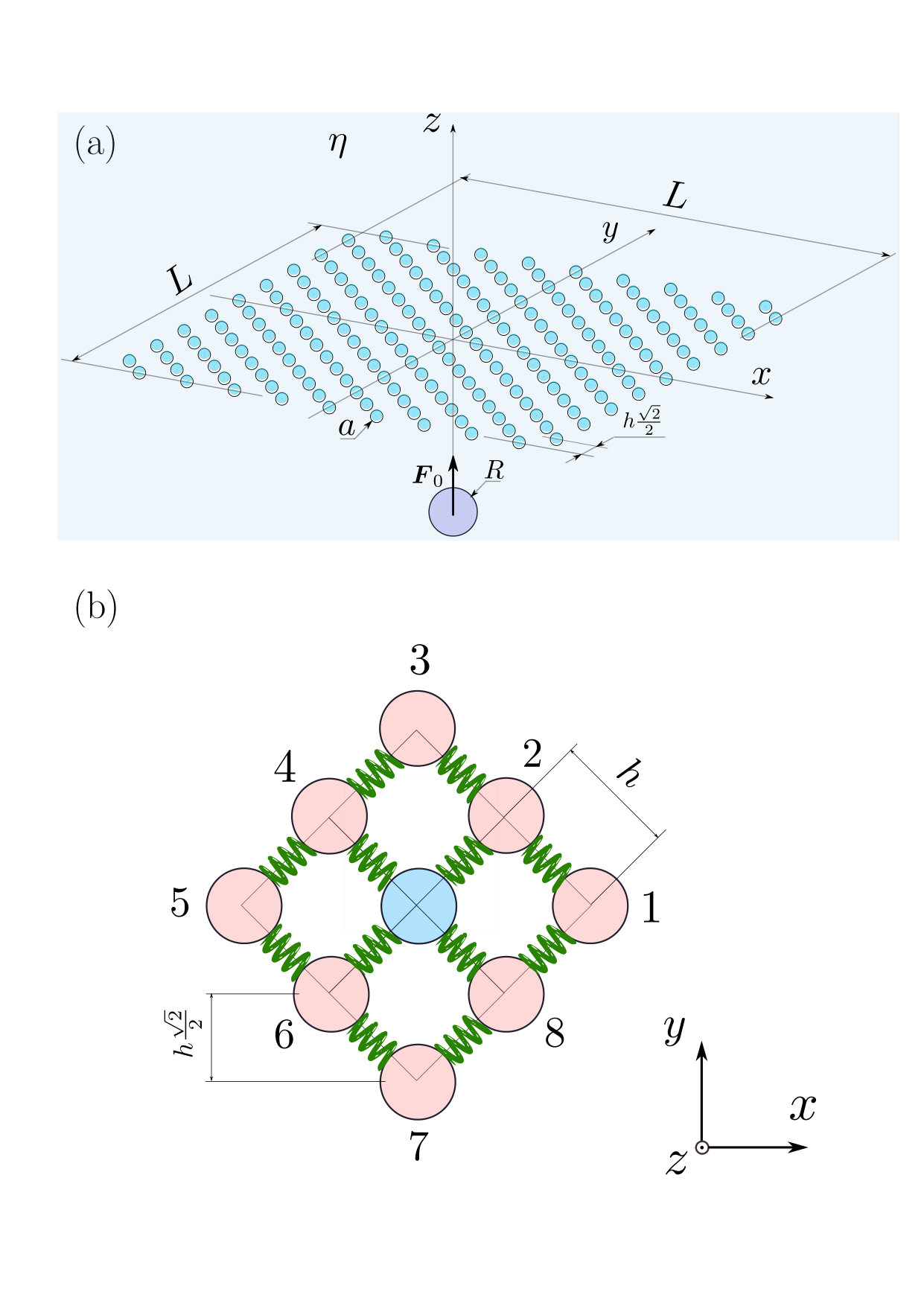 Figure 1
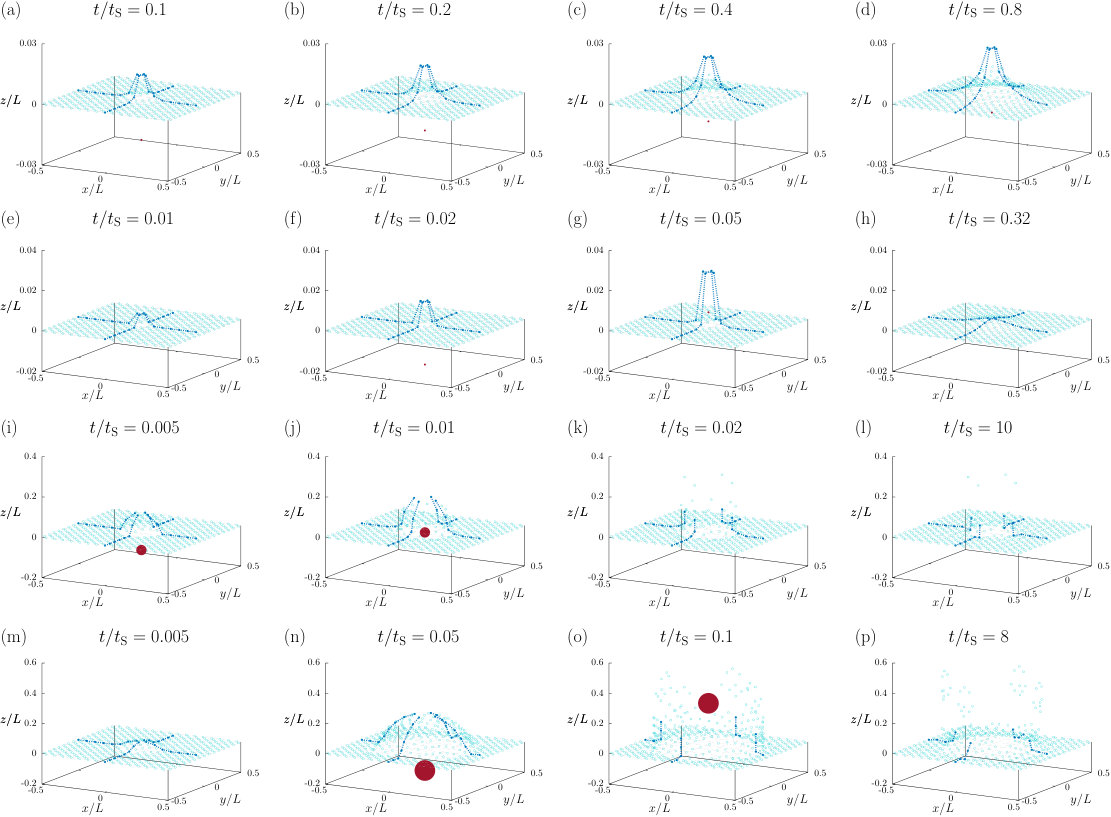 Figure 2
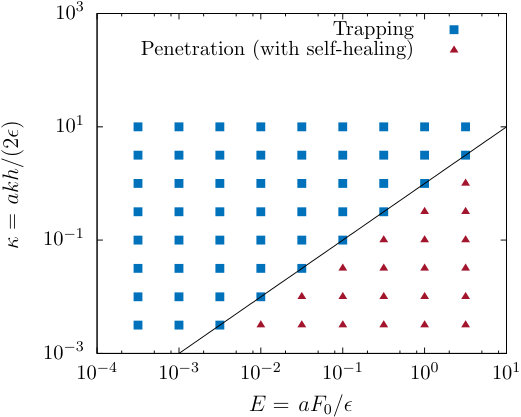 Figure 3
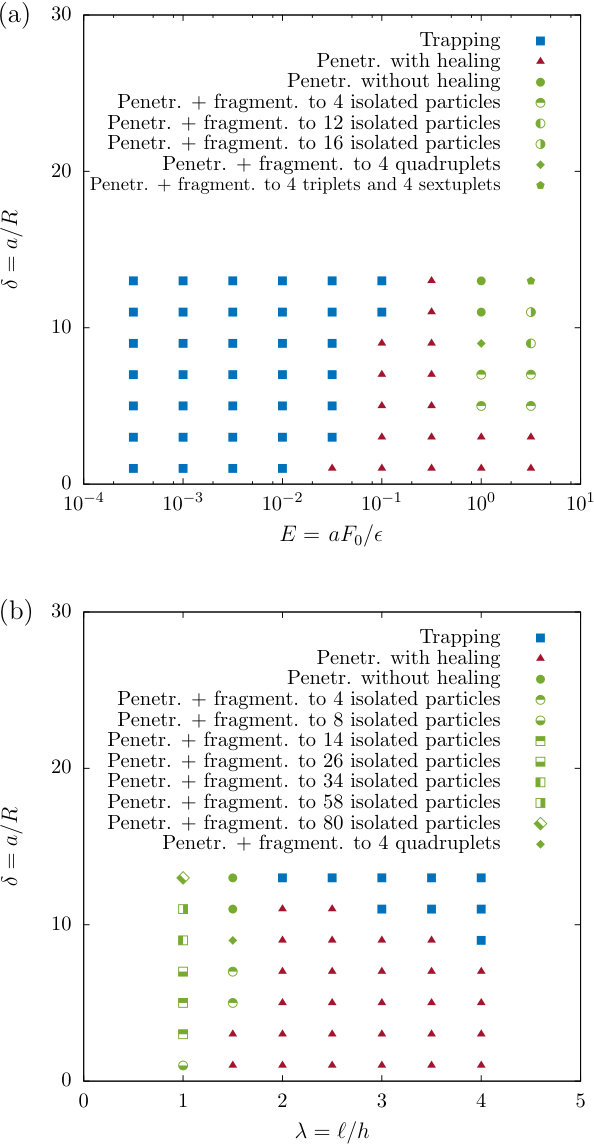 Figure 4
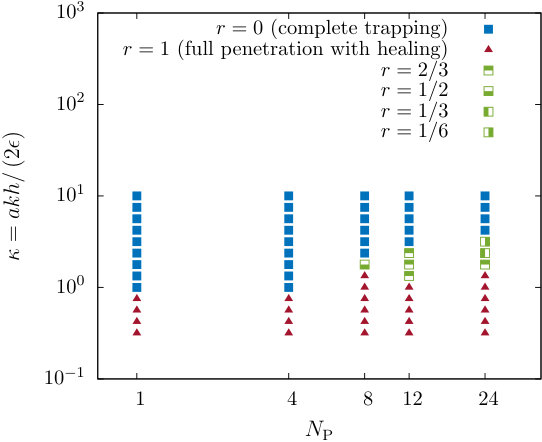 Figure 5
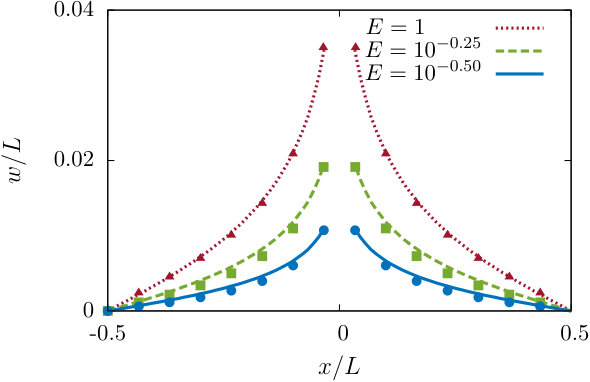 Figure 6
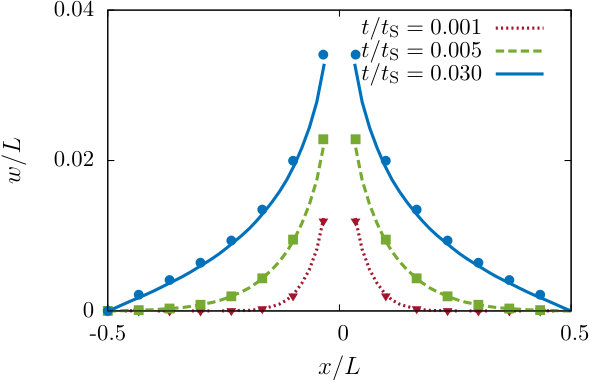 Figure 7
Peer Reviews
No public reviews on file for this paper yet. If you reviewed it on a platform where reviews are public (OpenReview, ICLR, NeurIPS, ICML), you can paste yours below so the community can read it here.
Videos
No videos yet. Explain this paper in a talk, walkthrough, or lecture? Add one.