Spin-momentum locking and Majorana fermions in charge carrier hole epitaxial wires
G.E. Simion, Y.B. Lyanda-Geller

TL;DR
This paper explores how epitaxial semiconductor nanowires with hole charge carriers can host topological superconductivity and Majorana fermions, highlighting unique spin-momentum locking properties distinct from traditional quantum wires.
Contribution
It demonstrates that hole-based epitaxial nanowires can support Majorana fermions under conditions similar to topological insulators, differing from conventional quantum wire criteria.
Findings
Holes exhibit an infinite effective mass and spin-locking due to a chiral linear spectrum.
Topological superconductivity criteria in hole wires match those of topological insulators.
Majorana fermions can emerge in these systems under specific coupling conditions.
Abstract
Epitaxial semiconductor nanowires with charge carrier holes can exhibit an infinite mass of holes and spin-locking due to chiral spectrum linear in momentum and spin. The criterion for emergence of topological superconductivity and Majorana fermions in these wires coupled to an s-type superconductors is the same as in topological insulators, and opposite to the criterion of onset of Majorana modes in quantum wires with parabolic spectrum in the presence of spin-orbit interactions.
Click any figure to enlarge with its caption.
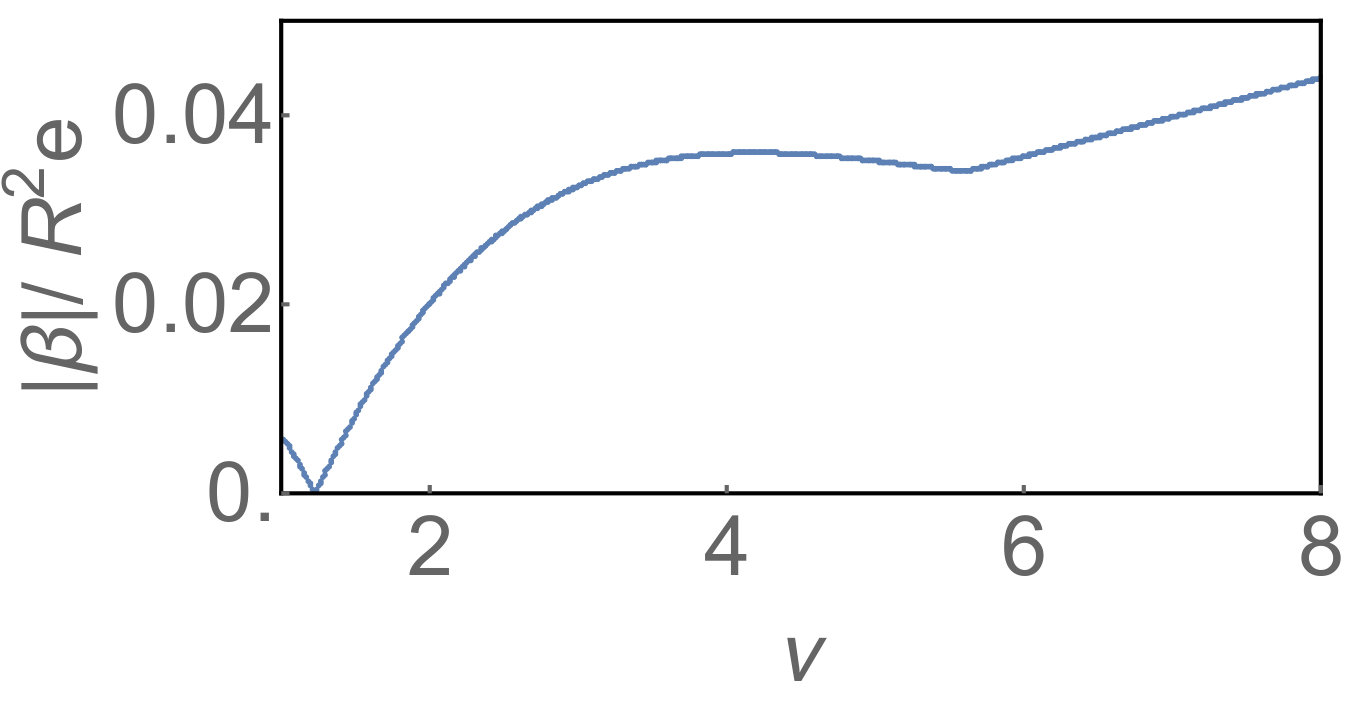 Figure 1
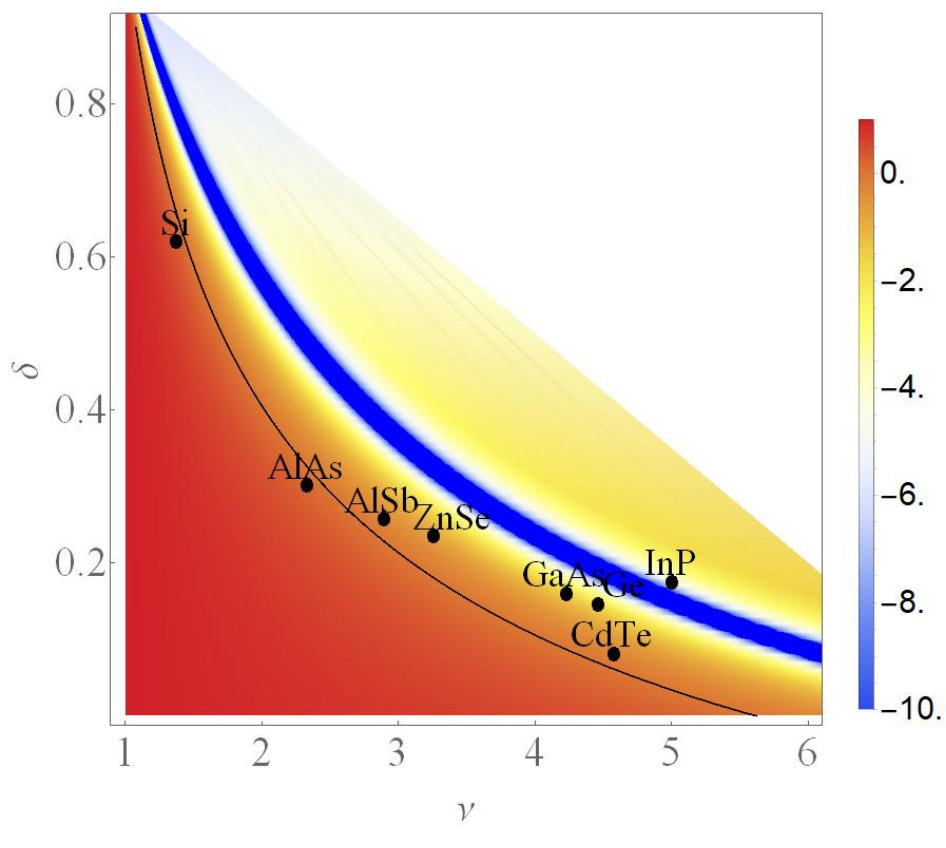 Figure 2
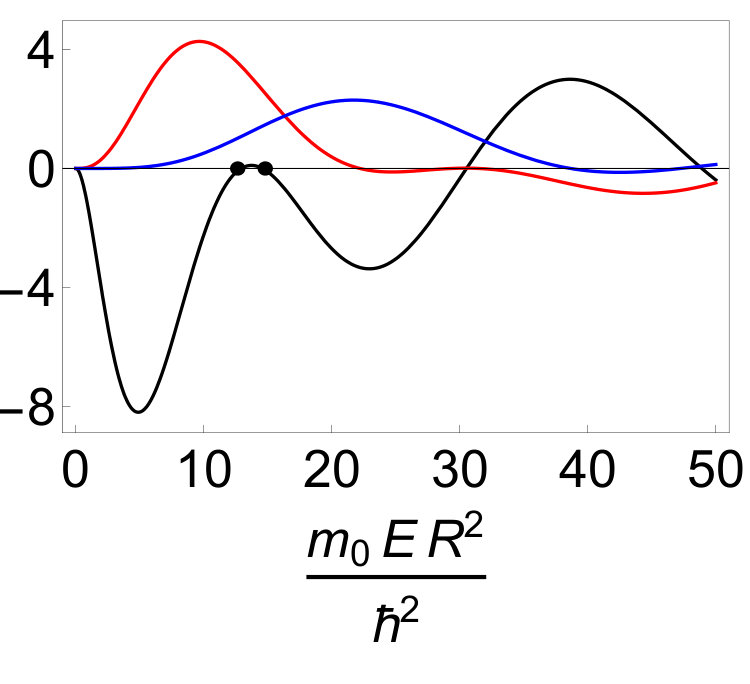 Figure 3
Peer Reviews
No public reviews on file for this paper yet. If you reviewed it on a platform where reviews are public (OpenReview, ICLR, NeurIPS, ICML), you can paste yours below so the community can read it here.
Videos
No videos yet. Explain this paper in a talk, walkthrough, or lecture? Add one.
Taxonomy
TopicsTopological Materials and Phenomena · Quantum, superfluid, helium dynamics · Physics of Superconductivity and Magnetism
††thanks: Now at IMEC , Kapeldreef 75, 3001, Leuven, Belgium
Spin-momentum locking and Majorana fermions in charge carrier hole epitaxial wires
G.E. Simion
Y.B. Lyanda-Geller
Department of Physics and Astronomy and Purdue Quantum Institute, Purdue University, West Lafayette IN, 47907 USA
(April, 10 2019)
Abstract
Epitaxial semiconductor nanowires with charge carrier holes can exhibit an infinite mass of holes and spin-locking due to chiral spectrum linear in momentum and spin. The criterion for emergence of topological superconductivity and Majorana fermions in these wires coupled to an s-type superconductors is the same as in topological insulators, and opposite to the criterion of onset of Majorana modes in quantum wires with parabolic spectrum in the presence of spin-orbit interactions.
Quantum wires proximity-coupled to a superconductor are one of the important settings for Majorana fermions, particles with non-Abelian statistics paving the way to topological fault-tolerant quantum computing. Of particular interest are wires with charge carrier holes, which promise to have strong spin-orbit interactions. These wires have various interesting properties, and are thought for applications in spintronics and quantum information science.
There are two types of wires with charge carrier holes. Wires based on quantum wells, which are obtained from wells lithographically or via electrostatic gating, as well as cleaved edge overgrowth wires belong to the first type, in which quantization along one of the directions perpendicular to the wire is much stronger than quantization in the other direction. Epitaxial or core-shell nanowires comprise a second type, in which size quantization in two directions perpendicular to the direction of free propagation of holes is comparable. Epitaxial and core shell nanowires attracted considerable attention recently. Epitaxial wires can form heterostructures with superconductor such as Al leading to superconducting proximity effect.
Theoretical treatment of low-dimensional holes have been controversial for a long time. It is important to recognize that the effect of mutual transformation of heavy and light holes upon reflection from the heteroboundaries of the quantum well generally cannot be taken into account perturbatively. This understanding came with the work of Nedorezov Nedorezov (1971), but was seldom applied afterwards Merkulov et al. (1991); Rashba and Sherman (1988). It was almost ignored over the past two decades, when holes were largely treated as electrons,Arovas and Lyanda-Geller (1998); Lyanda-Geller et al. (2004); Bulaev and Loss (2005); Bernevig and Zhang (2005); Quay et al. (2010); Mao et al. (2012). The nonperturbative approach, however, is important for determination of the effective masses, g-factors and spin-orbit constants, as discussed recently Simion and Lyanda-Geller (2014); Durnev et al. (2014); Liang and Lyanda-Geller (2017). In particular, mutual transformation of heavy and light holes is important in core-shell and epitaxial nanowires Kloeffel et al. (2011); Maier et al. (2014); Csontos et al. (2009).
In the present paper we show that hole spectrum in epitaxial nanowires can be characterized by a wide range of values of the effective hole mass, including an infinite value. In this case there is locking of spin to momentum, because the principal term in Hamiltonian of the wires becomes chiral, linear in momentum and spin. As a result, the criterion for the emergence of Majorana fermions and topological superconductivity becomes the same as in topological insulators in proximity of a superconductor Fu and Kane (2008); Alicea (2012), and topological superconductivity and Majorana fermions in these wires can emerge in small and even zero magnetic field. This is in contrast to large magnetic fields with Zeeman energy comparable to superconducting gap and chemical potential in spin-orbit quantum wires with parabolic spectrum Lutchyn et al. (2010); Oreg et al. (2010). We illustrate the emergence of an infinite mass in a model case with hard-wall boundary conditions. The obtained phase diagram implies that for certain solid solutions or in the presence of strain the infinite hole mass in wires can show up experimentally.
The Luttinger Hamiltonian for holes is
[TABLE]
where are the angular momentum matrices, and , , are Luttinger parameters. Holes are confined to a cylindrical wire of radius and -direction is the wire axis. The hole wavefunctions satisfy the boundary condition .
We employ the axial approximation, in which the terms containing in the off-diagonal matrix elements of Eq. (Spin-momentum locking and Majorana fermions in charge carrier hole epitaxial wires) are ignored. In this approximation, projection of total angular momentum is a conserved quantity.
We solve the Schrödinger equation corresponding to Hamiltonian Eq. (Spin-momentum locking and Majorana fermions in charge carrier hole epitaxial wires), . The eigenfunction is a 4 component spinor:
[TABLE]
where and are integers, is the Bessel function of the first kind of order . The radial wavevectors satisfy the following secular equation:
[TABLE]
The determinant has four positive roots , and their opposites are also the solutions. As integer order Bessel functions and are not independent, only the positive ’s are needed. Coefficients are determined from the boundary and normalization conditions. The Dirichlet boundary conditions are written as
[TABLE]
In order for the coefficients be non-zero, the conditions
[TABLE]
have to be satisfied. Equations (3) and (5) uniquely determine the eigenenergies of the problem. We note that the Kramers degeneracy occurs for states with indexes and .
We solve the eigenvalue problem in the limit of small . The eigenevalues of can be expanded as: . Using this expansion, we compute from Eq. (3), retaining only terms up to . We also expand Eq. (5) in series of and solve the resulting equation for . Following this procedure, the zeroth order part of the energy is obtained as a solution of the transcendental equation:
[TABLE]
where
[TABLE]
A plot of the above expression and energies of the ground state and the first excited state are shown in the Fig. 1.
The ground state energy is obtained as the first solution of Eq. (Spin-momentum locking and Majorana fermions in charge carrier hole epitaxial wires) for and . We denote for and . The second solution of Eq. (Spin-momentum locking and Majorana fermions in charge carrier hole epitaxial wires)is the first excited state. The wavefunctions of the double-degenerate ground state are given by
[TABLE]
where , is the normalization factor and
[TABLE]
The dominant component in these wavefunctions corresponds to the angular momentum .
The first order in , the expansion does not lead to any corrections to energy, as it should be on symmetry grounds in the absence of the linear in hole momentum spin-orbit interactions; . However corrections to the ground state wavefunctions are non-zero and are given by
[TABLE]
where
[TABLE]
Thus the two degenerate ground state wavefunctions are given by
[TABLE]
The expansion of Eqs. (3) and (5) up to terms defines the effective mass of holes. A tedious but straightforward calculation gives the coefficient in front of , . The effective mass for motion along the wire is , . Its analytic expression is rather complicated but a simplified one can be written for . Using the notations and , we obtain
[TABLE]
The analysis of this expression shows that the effective mass can be infinite, so that there are no terms in the energy spectrum. In Fig. 2 we plot the inverse effective mass as a function of the ratio of the bulk light and heavy hole masses and anisotropy coefficient . The black line corresponds to the infinite mass. In the dark blue region the mass is very small due to the crossing of the ground state and the first excited level. We have calculated the effective masses for wires made of the several semiconductor compounds.
When the mass is infinite (or, in other terms, the inverse mass vanishes or is close to zero), the leading terms in the spectrum of holes are linear in momentum and spin terms. These terms can emerge due to asymmetry of the confining potential of the wire or due to the bulk inversion asymmetry. We now consider asymmetry of the confining potential, which can be described by the presence of the electric field. The effect of an electric field that is perpendicular to the wire axis is described by Hamiltonian
[TABLE]
where is the angle between and the -axis.The matrix elements of on the two degenerate wavefunctions of the ground state (expanded up to first order in ) are given by
[TABLE]
where is evaluated using Eqs. (15-31). In addition to , the electric field in the presence of mixing of higher bands in III-V or Ge and Si semiconductors leads to a standard spin-orbit Hamiltonian for bulk holes
[TABLE]
where is the Rashba coefficient characterizing bulk interaction (39) Liang and Lyanda-Geller (2017). The matrix elements of this Hamiltonian between degenerate ground states of Eqs. (15) and (20) are given by
[TABLE]
where
[TABLE]
In the Hilbert space of the two degenerate ground state wavefunctions and , acts as an effective Rashba and Zeeman Hamiltonian
[TABLE]
When the inverse mass vanishes, matrix element is very close to unity while coefficient depends on the radius of the wire and is plotted in Fig. 3
The wire Hamiltonian is similar to Hamiltonian describing an edge in topological insulators Fu and Kane (2008); Alicea (2012),
[TABLE]
where velocity is defined as
[TABLE]
and adds an electron with spin at a coordinate . In the presence of superconducting proximity effect described by the induced order parameter , which couples charge carriers with opposite spins, given by
[TABLE]
the Bogoliubov-DeGennes Hamiltonian leads to quasiparticle energies
[TABLE]
describing a gapped topological superconductor. In contrast to conventional semiconducting wires with shifted parabolic Rashba/Dresselhaus spectrum, where topological superconductivity and Majorana fermions at the end of the wire arise at Zeeman splitting of order to superconducting gap, here they emerge even at zero magnetic field. In a finite magnetic field , e.g., along , the quasiparticle energies are given by
[TABLE]
where , is the Zeeman energy, is the Bohr magneton and is the longitudinal factor along the direction of the wire, is the strength of induced s-paring in the wire. Notably, is nonzero only in the presence of magnetic field. The quasiparticle gap vanishes at magnetic field corresponding to . At a higher magnetic fields the gap reopens, but the the superconductivity is no longer topological, while at a smaller fields the superconductivity is topological. If the proximity pairing amplitude varies along the wire, then at a certain magnetic field, the topological superconductor will be in the region of the wire with , while the conventional superconductor will be in the region with . Tuning can make possible moving the Majorana zero modes, localized at the boundaries between topological and non-topological regions. In the Rashba wires with parabolic spectrum, the situation is the opposite: the topological superconductivity persists at the Zeeman energy larger than .
It is known that parameters of the valence band, such as masses can be tuned not only varying the composition of heterostructure materials, but also tuning external parameters, e.g. such as strain. This potentially opens a possibility to induce an infinite mass in the wire by strain, and to observe transition between the cases of Rashba wire and spin-locked wire.
I Acknowledgement
This work is supported by the U.S. Department of Energy, Office of Basic Energy Sciences, Division of Materials Sciences and Engineering under Award DE-SC0010544.
The reference list from the paper itself. Each links out to its DOI / PubMed record.
- 1Nedorezov (1971) S. Nedorezov, Sov. Phys. Solid State 12 , 1814 (1971).
- 2Merkulov et al. (1991) I. A. Merkulov, V. I. Perel, and M. E. Portnoi, Zh. Exper. Teor. Fiz 99 , 1202 (1991).
- 3Rashba and Sherman (1988) E. Rashba and E. Y. Sherman, Physics Letters A 129 , 175 (1988).
- 4Arovas and Lyanda-Geller (1998) D. P. Arovas and Y. B. Lyanda-Geller, Phys. Rev. B 57 , 12302 (1998).
- 5Lyanda-Geller et al. (2004) Y. B. Lyanda-Geller, T. L. Reinecke, and M. Bayer, Phys. Rev B. 69 , 161308 (2004).
- 6Bulaev and Loss (2005) D. V. Bulaev and D. Loss, Phys. Rev. Lett. 95 , 076805 (2005).
- 7Bernevig and Zhang (2005) B. A. Bernevig and S.-C. Zhang, Phys. Rev. Lett. 95 , 016801 (2005).
- 8Quay et al. (2010) C. H. L. Quay, T. Hughes, J. Sulpizion, L. Pfeiffer, K. Baldwin, K. West, D. Goldhaber-Gordon, and R. de Picciotto, Nature Physics 6 , 336 (2010).