Magnetization-polarization cross-control near room temperature in hexaferrite single crystals
Vilmos Kocsis, Taro Nakajima, Masaaki Matsuda, Akiko Kikkawa, Yoshio, Kaneko, Junya Takashima, Kazuhisa Kakurai, Taka-hisa Arima, Fumitaka Kagawa,, Yusuke Tokunaga, Yoshinori Tokura, and Yasujiro Taguchi

TL;DR
This study demonstrates near-room-temperature electric control of magnetization in a Y-type hexaferrite single crystal, advancing the potential for low-power multiferroic device applications.
Contribution
The paper reports the stabilization of a ferrimagnetic and ferroelectric phase up to 450K and electric field-induced reversal of magnetization at near-room temperature in a single crystal.
Findings
Magnetization can be reversed by electric field near room temperature.
A ferrimagnetic and ferroelectric phase exists up to 450K.
Magnetic domains manipulated by electric field visualized by magnetic force microscopy.
Abstract
Mutual control of the electricity and magnetism in terms of magnetic (H) and electric (E) fields, the magnetoelectric (ME) effect, offers versatile low power-consumption alternatives to current data storage, logic gate, and spintronic devices. Despite its importance, E-field control over magnetization (M) with significant magnitude was observed only at low temperatures. Here we have successfully stabilized a simultaneously ferrimagnetic and ferroelectric phase in a Y-type hexaferrite single crystal up to T=450K and demonstrated the reversal of large non-volatile M by E field close to room temperature. Manipulation of the magnetic domains by E field is directly visualized at room temperature by using magnetic force microscopy. The present achievement provides an important step towards the application of bulk ME multiferroics.
Click any figure to enlarge with its caption.
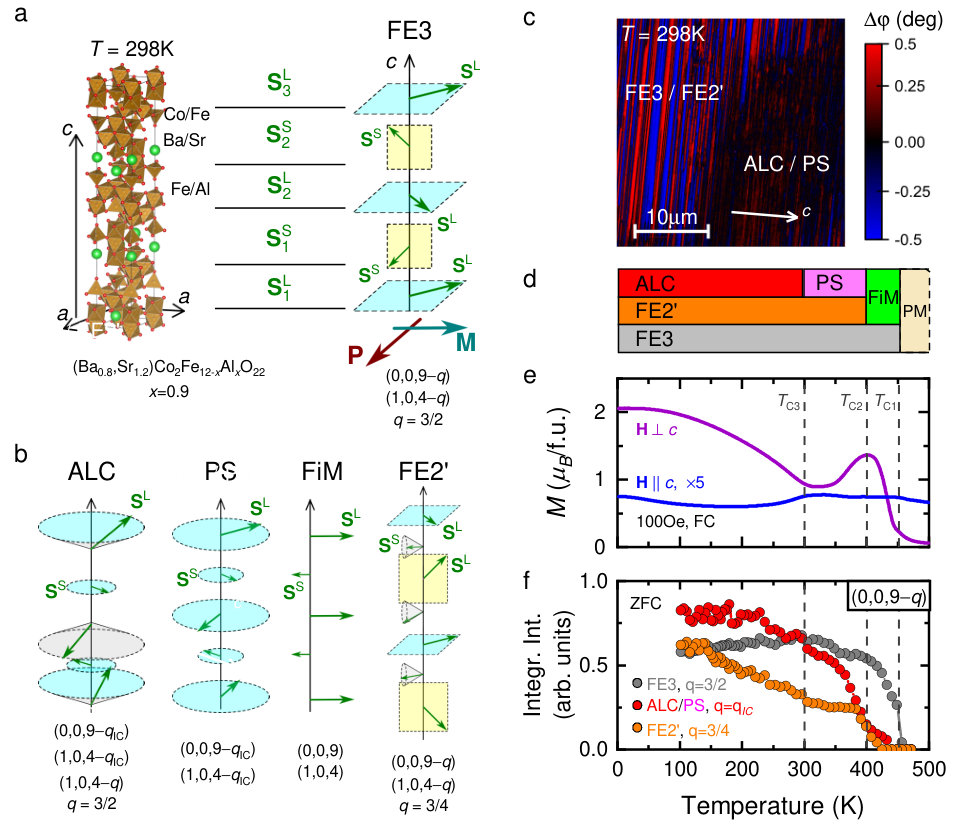 Figure 1
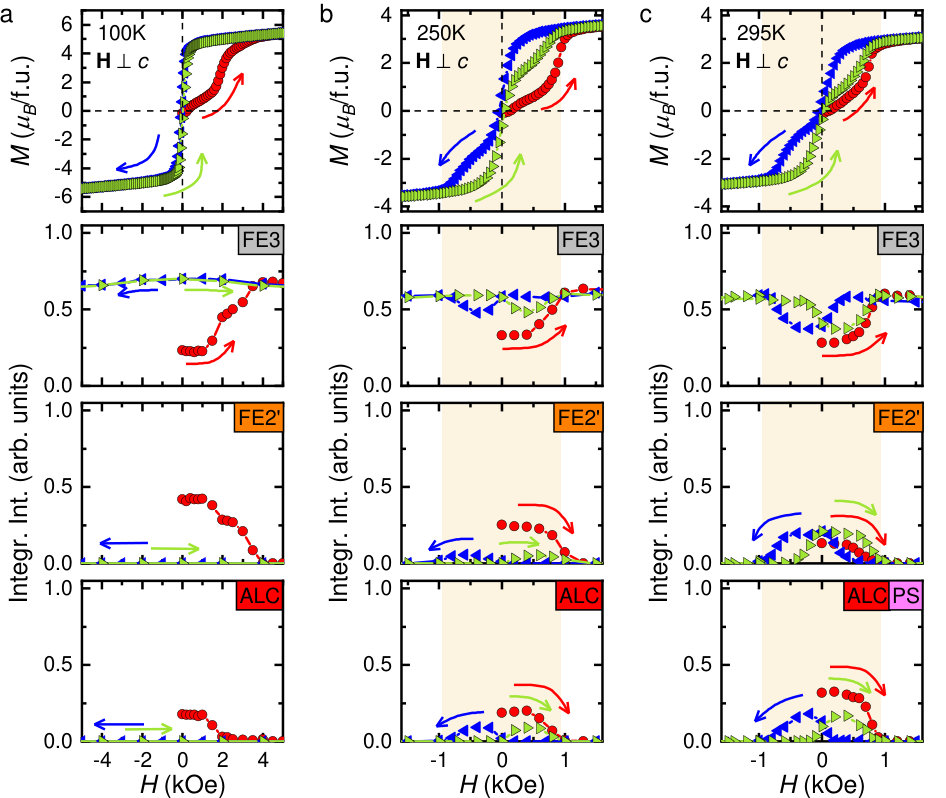 Figure 2
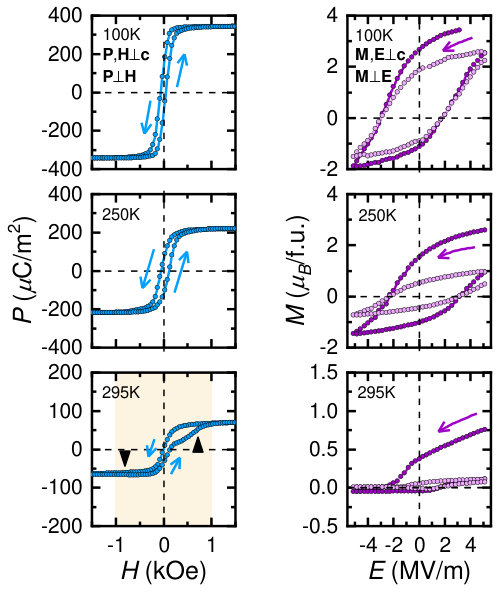 Figure 3
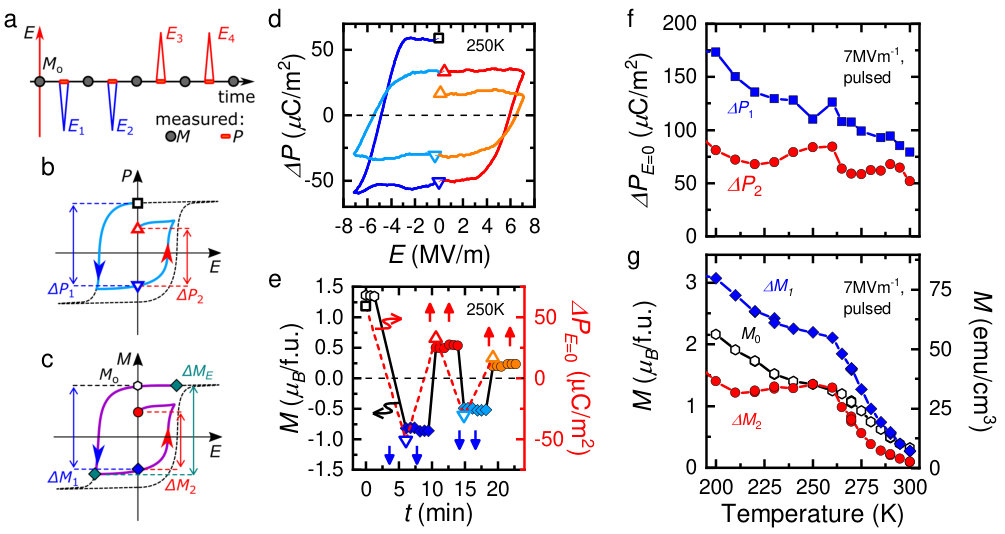 Figure 4
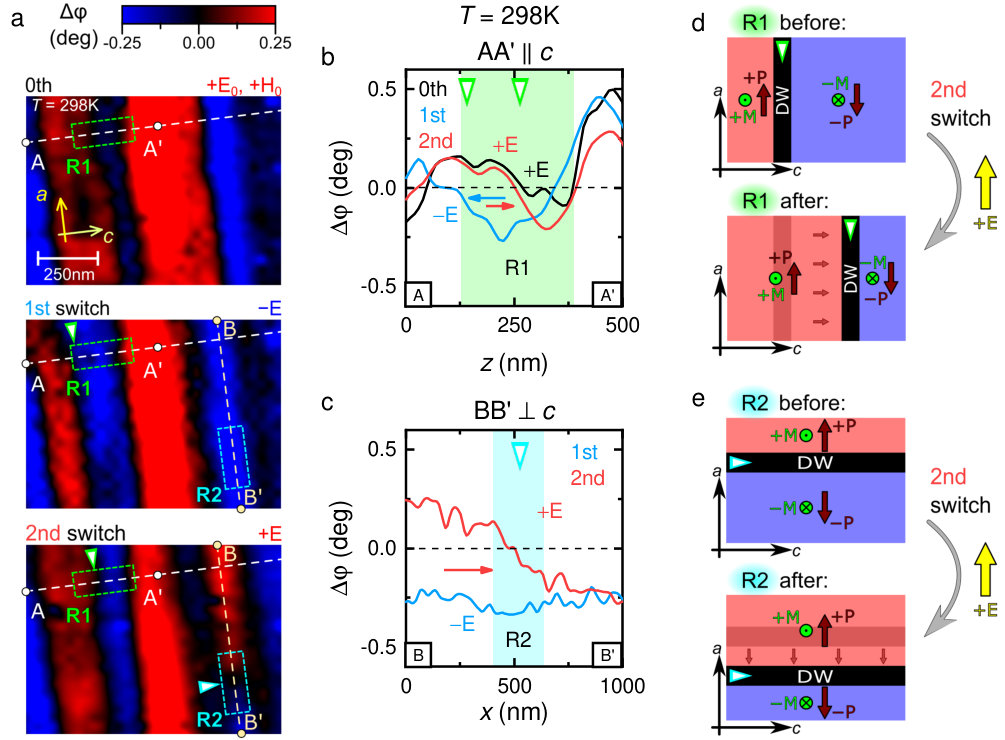 Figure 5
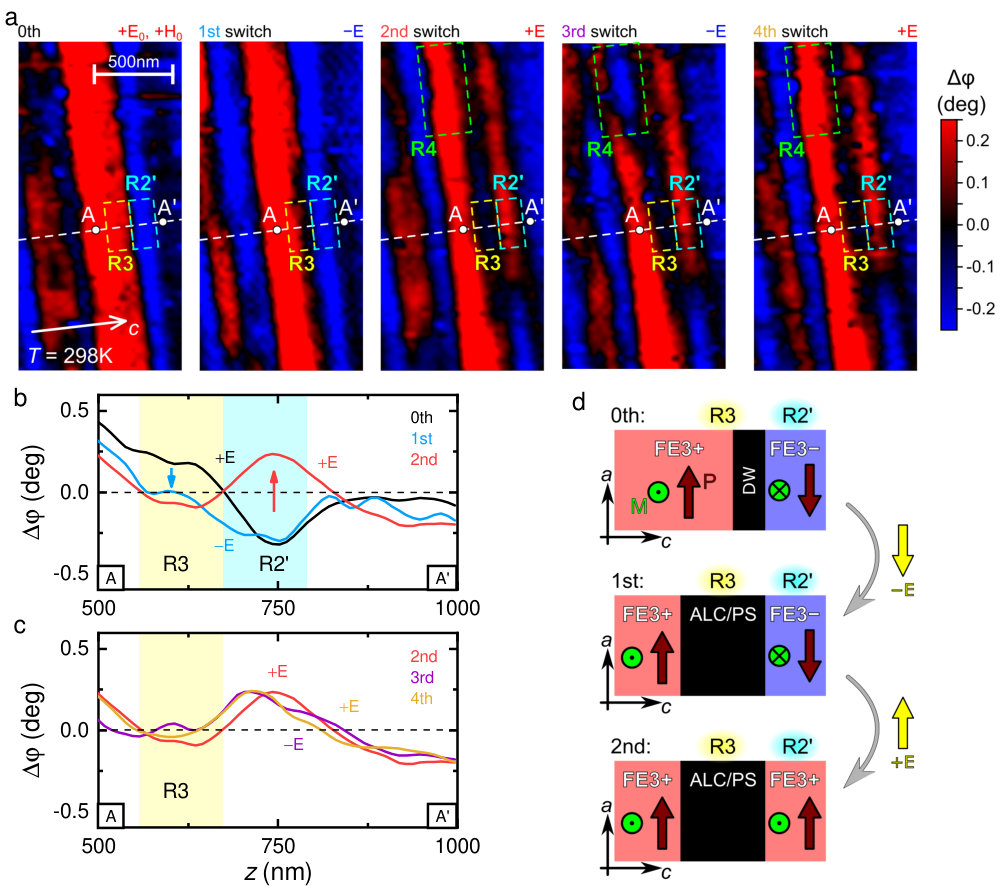 Figure 10
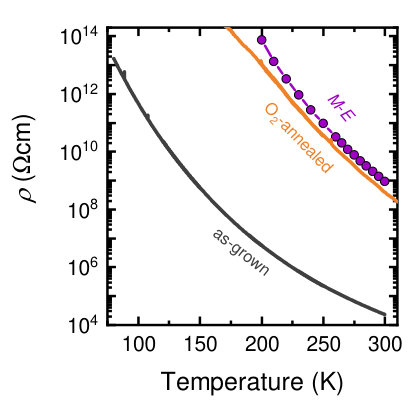 Figure 1
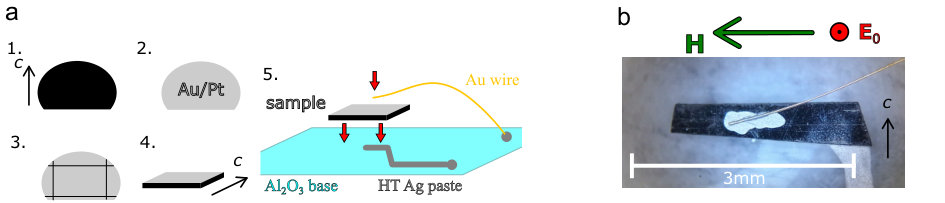 Figure 2
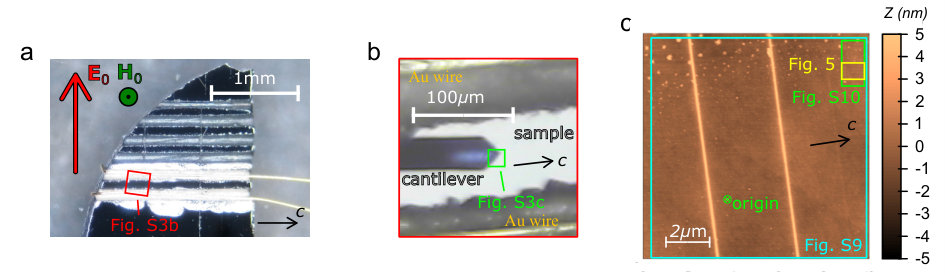 Figure 3
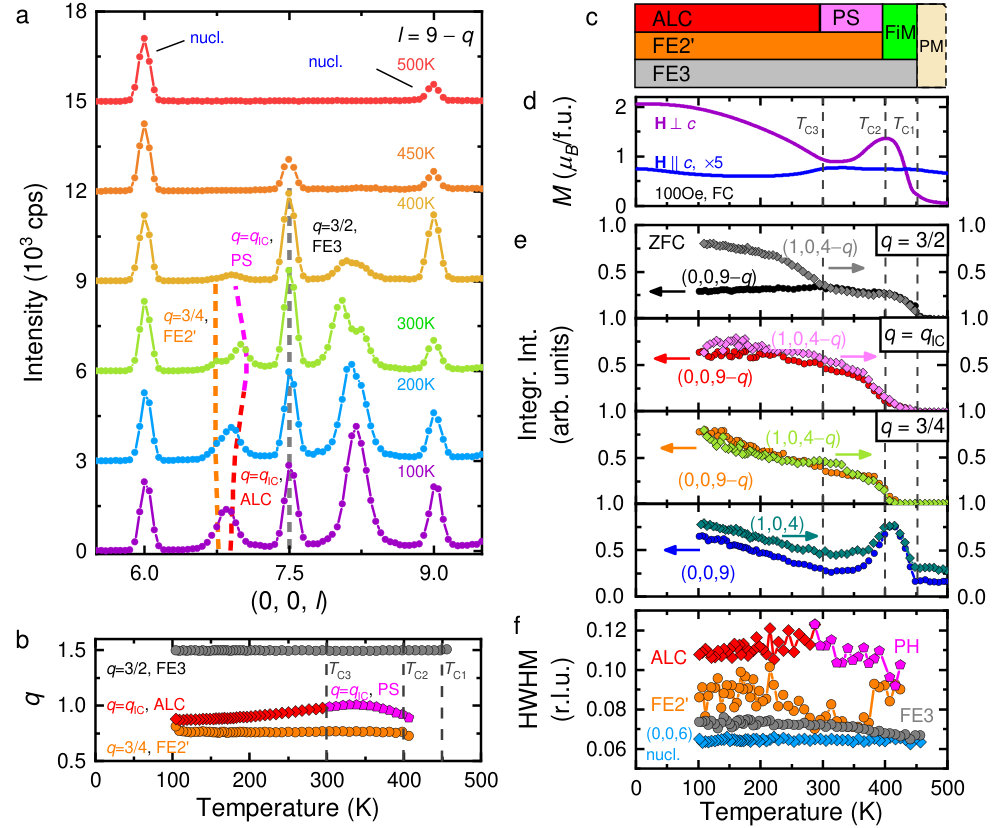 Figure 4
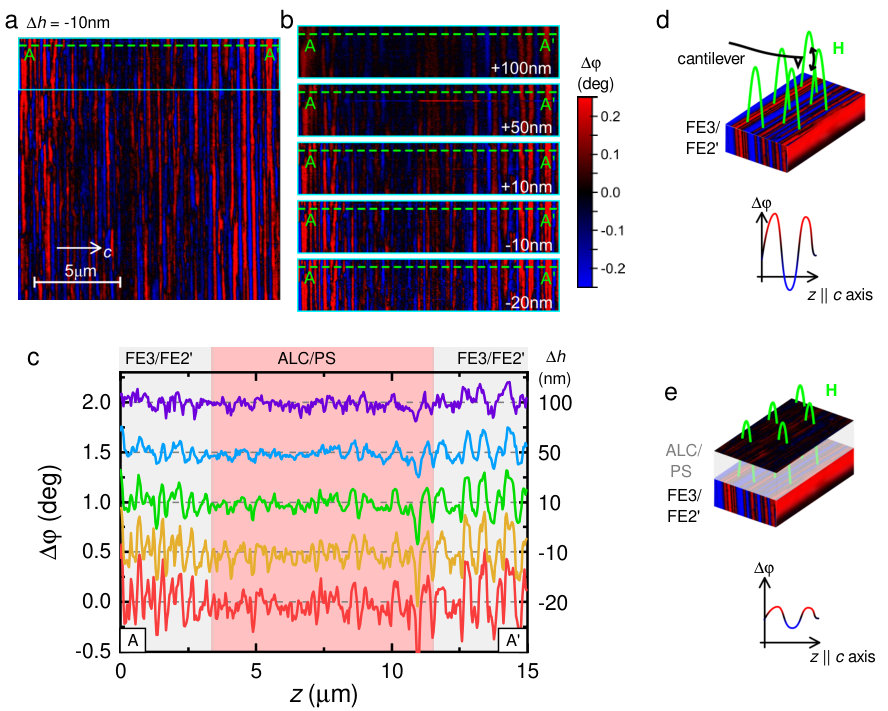 Figure 5
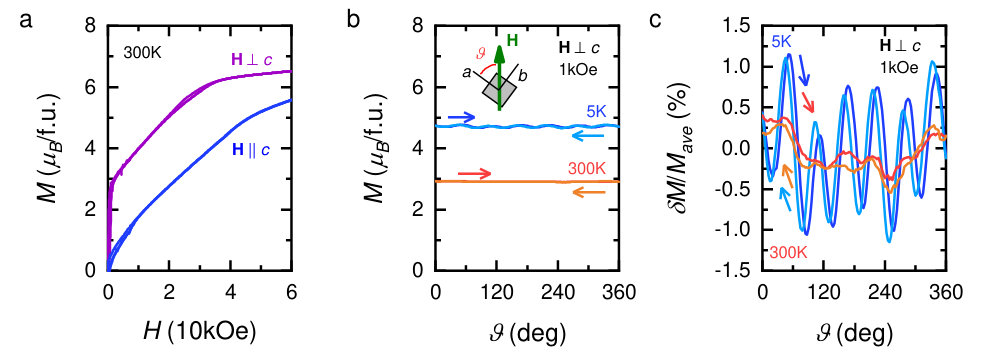 Figure 6
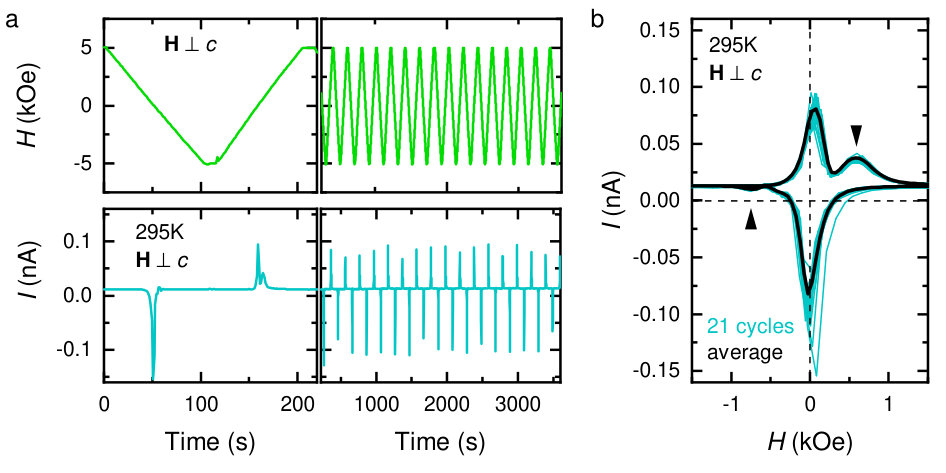 Figure 7
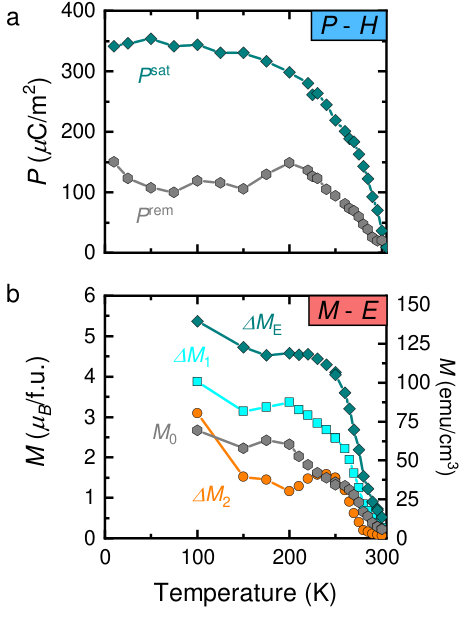 Figure 8
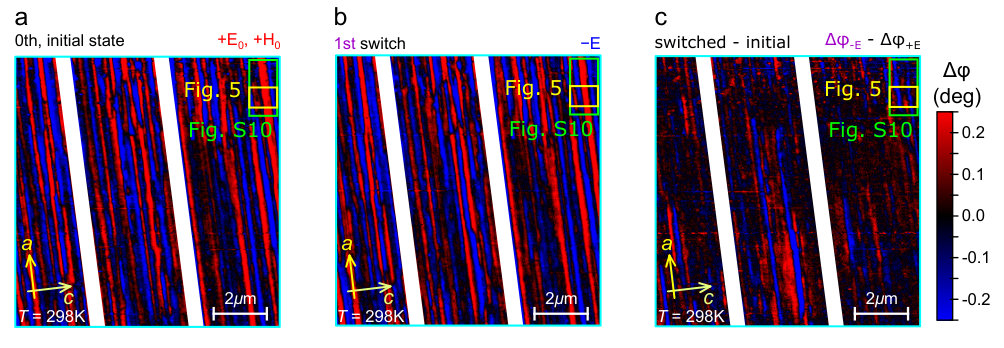 Figure 9
Peer Reviews
No public reviews on file for this paper yet. If you reviewed it on a platform where reviews are public (OpenReview, ICLR, NeurIPS, ICML), you can paste yours below so the community can read it here.
Videos
No videos yet. Explain this paper in a talk, walkthrough, or lecture? Add one.
Magnetization-polarization cross-control near room temperature in hexaferrite single crystals
V. Kocsis
RIKEN Center for Emergent Matter Science (CEMS), Wako, Saitama 351-0198, Japan
T. Nakajima
RIKEN Center for Emergent Matter Science (CEMS), Wako, Saitama 351-0198, Japan
M. Matsuda
Neutron Scattering Division, Oak Ridge National Laboratory, Oak Ridge, Tennessee 37831, USA
A. Kikkawa
RIKEN Center for Emergent Matter Science (CEMS), Wako, Saitama 351-0198, Japan
Y. Kaneko
RIKEN Center for Emergent Matter Science (CEMS), Wako, Saitama 351-0198, Japan
J. Takashima
RIKEN Center for Emergent Matter Science (CEMS), Wako, Saitama 351-0198, Japan
Engineering R D Group, NGK SPARK PLUG CO., LTD. Minato-ku, Tokyo 108-8601, Japan
K. Kakurai
RIKEN Center for Emergent Matter Science (CEMS), Wako, Saitama 351-0198, Japan
Neutron Science and Technology Center, Comprehensive Research Organization for Science and Society (CROSS), Tokai, Ibaraki 319-1106, Japan
T. Arima
RIKEN Center for Emergent Matter Science (CEMS), Wako, Saitama 351-0198, Japan
Department of Advanced Materials Science, University of Tokyo, Kashiwa 277-8561, Japan
F. Kagawa
RIKEN Center for Emergent Matter Science (CEMS), Wako, Saitama 351-0198, Japan
Department of Applied Physics, University of Tokyo, Hongo, Tokyo 113-8656, Japan
Y. Tokunaga
RIKEN Center for Emergent Matter Science (CEMS), Wako, Saitama 351-0198, Japan
Department of Advanced Materials Science, University of Tokyo, Kashiwa 277-8561, Japan
Y. Tokura
RIKEN Center for Emergent Matter Science (CEMS), Wako, Saitama 351-0198, Japan
Department of Applied Physics, University of Tokyo, Hongo, Tokyo 113-8656, Japan
Y. Taguchi
RIKEN Center for Emergent Matter Science (CEMS), Wako, Saitama 351-0198, Japan
Abstract
Mutual control of the electricity and magnetism in terms of magnetic () and electric () fields, the magnetoelectric (ME) effect, offers versatile low power-comsumption alternatives to current data storage, logic gate, and spintronic devices Kimura2003 ; Hur2004 ; Matsukura2015NatNano ; Fusil2014 . Despite its importance, -field control over magnetization () with significant magnitude was observed only at low temperatures Tokunaga2012NatPhys ; Chai2014 ; Zhai2017NatMat ; Chu2008 ; Heron2014a . Here we have successfully stabilized a simultaneously ferrimagnetic and ferroelectric phase in a Y-type hexaferrite single crystal up to 450 K, and demonstrated the reversal of large non-volatile by field close to room temperature. Manipulation of the magnetic domains by field is directly visualized at room temperature by using magnetic force microscopy. The present achievement provides an important step towards the application of ME multiferroics.
Multiferroic materials, endowed with both orders of polarization () and , exhibit various intriguing phenomena due to the interplay of magnetic and electric degrees of freedom, such as -induced flop Kimura2003 ; Hur2004 , -control of magnetic helicity Yamasaki2007 ; Tokunaga2010PRL , and optical non-reciprocal directional dichroism Arima2008JPCM ; Kezsmarki2011 . The cross-coupling phenomena can greatly expand the functions of materials, and hence the multiferroic materials are anticipated to be applied to technological devices. In particular, non-volatile, -driven reversal of without significant dissipation will lead to magnetic memory devices with ultra-low power-consumption.
To accomplish this goal, strong coupling between and is necessary. In general, depending on the microscopic mechanism of generation, the strength of the cross-coupling is different: In type-I multiferroics where emerges potentially at a high temperature, but independently of the magnetic ordering, the coupling between and is weak, while in type-II multiferroics where is induced by magnetic ordering, the coupling between and is strong Khomskii2009 . Thus far, the -induced reversal has been investigated for both type-I and type-II mutiferroics. Heterostructures based on BiFeO3 belonging to the type-I category have been demonstrated to be promising Chu2008 ; Heron2014a ; Sosnowska2013 ; Hojo2017 , while -induced reversal is difficult Tokunaga2015 . In the type-II category, good performance has been reported for hexaferrite materials Kimura2005PRL ; Ishiwata2008 ; Ishiwata2010PRB ; Kimura2012 ; Chai2014 ; S (3); Zhai2017NatMat with various structural types, including those at room temperatureKitagawa2010 ; Song2014 ; Chun2012 . Among them, the largest switching (/f.u.) by was obtained in Y-type hexaferrites Chai2014 ; Zhai2017NatMat at cryogenic temperatures, which is attributed to the simultaneous reversal of the ferroelectric and ferrimagnetic order parameters in a particular multiferroic phase, termed FE3 phase. Moreover, this FE3 phase was found to emerge as a metastable state even at room temperature Hirose2014 ; S (3). Here we demonstrate that by choosing appropriate chemical composition and performing high-pressure oxygen annealing, the FE3 phase can be partially stabilized up to above room temperature. This enables us to observe reversal of with considerable magnitude by field as well as the nearly-full reversal of by field in a single-component material near room temperature. By using magnetic force microscopy (MFM) technique, magnetic domain switching by field is visualized.
Figure 1a shows the structural unit cell of the Y-type hexaferrite studied in the present work, Ba0.8Sr1.2Co2Fe12-xAlxO22 with =0.9 (BSCFAO), which is composed of Fe3+/Co2+ and Fe3+/Al3+ ions in tetrahedral and octahedral oxygen coordinations, respectively, similarly to the other members of the material family. It has been known Kimura2012 that the magnetic structure in the hexaferrites is well described by ferrimagnetically-ordered spin-blocks with large () and small () net magnetizations alternately stacked along the axis. As a result of complex magnetic interactions among the adjacent magnetic blocks, various magnetic structures have been identified Ishiwata2010PRB ; S (3). These structures, such as commensurate phases FE3 and FE2’ (Ref. Ishiwata2010PRB, ), alternating longitudinal conical (ALC) S (4), proper screw (PS), and collinear ferrimagnetic (FiM) phases (schematically illustrated in Fig. 1a and 1b) are also observed in the present material. The magnetic ground state reached via zero-field cooling was reported to be ALC for a hexaferrite with a similar composition Chang2012PRB ; S (5). The FE3 phase is induced by field applied within the magnetic easy-plane, but preserved as a metastable state even after the field is removed Hirose2014 ; S (3). In the FE3 phase the magnetic moments of the and blocks form a double fan structure S (3), lying in the plane and a plane containing -axis, respectively. Spin-driven emerges within the plane and perpendicular to the net , due to the the inverse Dzyaloshinskii-Moriya mechanism Ishiwata2008 ; Ishiwata2010PRB .
The magnetic phases in BSCFAO have been investigated by the zero-field-cooled (ZFC) MFM, low-field-cooled magnetization, and neutron diffraction measurements as shown in Figs. 1c to 1f. The neutron diffraction measurements revealed a complex magnetic phase diagram with several co-existing magnetic orders (Fig. 1d and see Supplementary Information), which was determined by taking also the previous results into account Ishiwata2010PRB ; S (3); Sagayama2009 . Below =450 K, a magnetic peak with a commensurate wavevector of appears together with the onset of for , which indicates the coexistence of the FE3 and the collinear FiM phases. At =400 K, the magnetic peaks with commensurate and incommensurate wavenumbers emerge, while for decreases, indicating that the FiM phase is turned into the PS and FE2’ phases. Finally at =300 K, the PS order changes to the ALC phase as for shows a slight decrease. Real-space MFM image of an surface at room temperature indicates the phase separation between the strongly magnetic (large averaged-magnetization hosting) FE3/FE2’ and weakly magnetic (little averaged-magnetization hosting) ALC/PS phases as shown in Fig. 1c (for details see the Supplementary Information). A prominent feature of the present-composition compound, being distinct from the previous report S (3) on a similar Y-type hexaferrite, is the presence of stable FE3 phase among the zero-field-cooled states.
Magnetic state under applied within the -plane was investigated by magnetization and neutron-diffraction experiments. In Fig. 2, and the neutron diffraction intensities corresponding to each of the co-existing phases are separably plotted. Prior to the application of , three phases coexist in the ZFC initial state in agreement with the temperature-dependent measurements. At 100 K (Fig. 2a), the ALC and FE2’ phases disappear at =2 kOe and =4 kOe, respectively, while the FE3 phase takes over their places. Once the single-phase state of FE3 is attained, it is fully preserved even when the field is removed or reversed. On the contrary, at 250 K (Fig. 2b) and 295 K (Fig. 2c), both the ALC and FE2’ phases reappear upon the reversal of the field. At relatively high temperatures, thermal agitation is large enough to overcome the energy barriers between the competing phases with almost degenerated free energies, while not at low temperatures. It is noted that magnetic anisotropy within the -plane is negligible at room temperature (Fig. S6), and hence the - curve as well as the diffraction intensity are least affected by the anisotropy.
-induced and -controlled are shown in Fig. 3. Prior to the measurements, the single-domain ME state was attained by the application of poling fields in a crossed configuration (). Below =250 K both and show anti-symmetric dependence on and fields, respectively, indicating that the - coupling is conserved throughout the reversal of the fields. Magnitude of the saturation value of the spin-driven polarization () is significantly larger than the earlier observations in other Y-type hexaferrites Ishiwata2008 ; Chun2010 ; Chai2014 ; S (3), while comparable to TbMnO3 Yamasaki2007 and the spin-driven component of BiFeO3 which can be controlled by the field of more than =100 kOe Tokunaga2015 . Correspondingly, the magnetization change between fields, =5.5 /f.u., at =100 K is larger than in any former experiments performed at lower temperatures Tokunaga2012NatPhys ; Chai2014 ; Zhai2017NatMat . Even at 250 K, a significant portion of can be reversed (/f.u.) by the field. Near room temperature, symmetry of the - and - loops begins to change to a symmetric butterfly shape, indicating that the - clamping is not fully preserved during the reversal. Moreover, - loops show a secondary hysteresis (indicated with black triangles), which is attributed to the re-emergence and disappearance of the PS and FE2’ phases as shown in Fig. 2c.
Importantly, the remanent of BSCFAO can be switched in a non-volatile manner between positive and negative values by field even at 250 K, which is favourable for ME memory and spintronic applications. Changes in the remanent for the first two - loops are as large as =3.9 /f.u. and =3.0 /f.u. at 100 K and =2.5 /f.u. and =1.5 /f.u. at 250 K. Correspondingly, the remanent is also switched between positive and negative values with =95 C/m2 at 250 K. As for the retention, - loop exhibit good characteristics for the repeated reversal processes even at 295 K (see Fig. S7). However, - loops are subject to deterioration at higher temperatures than 250 K. This decrease in the magnitude of the reversible is attributed to the weakened - coupling as well as insufficient magnitude of the applicable field.
To further clarify the behaviour of the - coupling, and reversal was investigated simultaneously in pulsed field experiments (Fig. 4). Similarly to the quasi-static measurements, the single-domain FE3 state was initially prepared with poling fields (). After the removal of the poling fields, triangular-shaped -field pulse pairs were applied anti-parallel, then parallel with respect to the poling field (see Fig. 4a). was measured before and after the pulses, while was measured during the same period as the -field pulses were applied (see Methods for details). The - curve of magnetic origin at =250 K is displayed in Fig. 4d, where the partial reversal of the ferroelectric is attained by the pulsed field.
Figure 4e shows simultaneous reversal of the remanent and by four pairs of -field pulses at 250 K. Upon the first negative -field pulse, both the remanent and change from positive to negative, causing the magnetization change =2.3 /f.u.. The is almost completely reversed at this point, and there is only a small change in for the second negative -field pulse. For the subsequent two positive -field pulses, and were again reversed from negative to positive, with the change of =1.8 /f.u.. Although the magnitudes of both and decrease as further pulses are applied, similarly to the quasi-static experiments, their parallel reduction demonstrates the strong - clamping in this temperature range ( K).
Temperature dependence of the and switched by the first negative and positive -field pulses, as defined as , , , and (Figs. 4b, 4c) respectively, are shown in Figs. 4f and 4g. Irrespective of the strength of the - coupling, can be reversed by the field. Magnitude of the reversed and slightly decreases as the temperature is increased, but remains finite at 300 K, since the multiferroic FE3 phase is present in the whole temperature region shown here. The initial value , and the switched magnetizations and show similar temperature dependence with the up to 260 K. In contrast to the , however, the exhibits more rapid decrease above 260 K, and almost vanishes at 300 K. Therefore, the -control over the is lost due to the weakened - coupling rather than to the reduced volume fraction of the FE3 phase.
Using the real-space MFM imaging, we have investigated -field induced motion of the magnetic domain walls (DW) at room temperature (Fig. 5). The measurement was started from an initial state (0 th in Fig. 5a), where poling and fields were once applied and then removed, and the evolution of the magnetic domain pattern of the same region was followed after several applications of the field (1st-2nd in Fig. 5a and 1st-4th Fig. S10). As displayed in Fig. 5a, magnetic domain pattern clearly shows changes in response to the applied fields with different sign, which demonstrates that these are composite - domain walls Tokunaga2009NatMat . The most typical cases of domain dynamics are observed in regions R1 and R2.
At region R1 in Fig. 5a, the negatively magnetized region expands and shrinks due to the successive applications of field with alternate sign, which corresponds to DW propagation along the axis. Figure 5b shows the MFM signals taken along the A-A’ line, clearly demonstrating the DW motion along axis. The process of switch is schematically illustrated in Fig. 5d, where one of the domains expands along the axis, so that the ME domain with parallel to expands. The small magnetic anisotropy within the plane (see Fig. S6) suggests that in this boundary between the oppositely magnetized regions, local net is likely to rotate around the axis.
The region R2 in Figs. 5a and 5c exemplifies a different process, where a positively magnetized domain is pushed in the image area from the upper side. This behaviour is clearly illustrated in the line profile of Fig. 5c. The process of switch (shown in Fig. 5e) is similar to the previous case, however, in this case the domains are separated by a DW, where local appears to form a cycloidal structure. Apart from these successful examples, change in the ratio between the majority and minority magnetic domains is relatively small, pointing to the the decreased - coupling at a relatively high temperature, e.g. room temperature.
In summary, we have demonstrated that the switching by -field in BSCFAO is realized via the propagation of magnetic domain walls that respond to the field throughout the material. At low temperatures and are tightly clamped and reversed simultaneously, while at high temperatures the - coupling becomes weaker and the domain walls are deconfined. To further improve the -field induced reversal in Y-type hexaferrites, the confinement-deconfinement crossover of the domain walls should be pushed to higher temperature, while the co-existing ALC, PS, and FE2’ phases have to be suppressed.
Methods
Single crystal growth, sample preparation and oxygen annealing procedures. Single crystals of Y-type hexaferrite, Ba0.8Sr1.2Co2Fe12-xAlxO22 with =0.9, were grown by the laser floating zone (LFZ) technique in 10 atm oxygen atmosphere. First, SrCO3, BaCO3, Co3O4, Fe2O3 and Al2O3 were mixed in stochiometric amount and sintered in air at 1150 *∘*C for 24 h. Then the resulting product was pressed into rods and re-sintered for 14 h in the same conditions. Y-type hexaferrite single crystals from earlier growths were used as seeds for the LFZ growth. The single crystal rods were oriented with a back-scattering Laue camera and cut into discs with the surfaces containing -axis. To increase the resistivity of the samples for the ME as well as neutron diffraction measurements, the cut pieces were annealed in 10 atm O2 at 1000 *∘*C for 100 h in sealed quartz tubes, by adopting the technique described in Ref. S, 2 (see the Supplementary Information and Fig. S1).
Neutron diffraction measurements. Neutron diffraction measurements were carried out at the triple-axis neutron spectrometer (PTAX) in the High Flux Isotope Reactor of Oak Ridge National Laboratory. Sliced and O2-annealed single crystal of BSCFAO (approximately 25 mm3) were placed in a cryomagnet with applied along the axis, while plane was set to be the scattering plane.
-, - and - measurements. For each type of experiments, single crystals with the surface containing -axis were coated with Au/Pt as electrodes, thus field was applied in the plane while field was perpendicular to both the field and the axis (). field dependence of the polarization was measured in a PPMS (Quantum Design) with an electrometer (Keithley 6517A) by monitoring the displacement current as the field was swept with 100 Oe/s continuously between 5 kOe for 11-21 cycles, depending on the signal to noise ratio. Current peaks around 0 Oe did not show degradation, therefore the - curves were obtained by integrating the current after averaging. Magnetization measurement under field was carried out in an MPMS-XL (Quantum Design), while the electrometer (Keithley 6517A) was used as a voltage source. The thickness, surface area, and mass of the sample were 70 m, 1.64 mm2, and 0.71 mg, respectively. Pulsed field measurements were performed with a ferroelectric tester (Radiant Inc., Precision Premiere II) equipped with 500 V option. The ferroelectric polarization of magnetic origin was measured by the Positive-Up-Negative-Down (PUND) technique. At low temperatures, triangular-shaped -field pulses with 7 MV/m in amplitude and 50 ms in duration were applied. Above 280 K, however, the pulse duration was reduced to 1 ms due to the lower resistivity.
Magnetic force microscopy measurements. Magnetic force microscopy measurements were carried out with a commercially available scanning probe microscope (MFP-3D, Asylum Research) using Co-coated cantilever (MFMR-10, Nano World). For -field-dependent measurements, samples were poled to a single domain ME state using +3 MV/m and +4 kOe poling fields in configuration in a PPMS (for sample preparation see Supplementary Information). Static field (+3 MV/m or 3 MV/m) was applied to manipulate magnetic domains using a Keithley 6517A electrometer, and the MFM images were taken after the field was switched off. The sign and magnitude of MFM phase shift, , roughly correspond to those of the magnetization perpendicular to the plane.
Acknowledgements This research used resources at the High Flux Isotope Reactor, a DOE Office of Science User Facility operated by the Oak Ridge National Laboratory. This research was supported in part by the U.S.-Japan Cooperative Program on Neutron Scattering. Structural unit cell of the Y-type hexaferrite crystal was illustrated using the software VESTAMomma2011 . The authors are grateful for the technical assistance provided by Maximilian A. Hirschberger.
Author Contributions V.K., T.N., M.M., K.K., T.A. performed the measurements and analyzed the data; V.K., Y.K., A.K., Y. Tokunaga prepared the single crystal samples; J.T. investigated the O2 annealing; V.K., F.K. took the MFM images; V.K., Y. Taguchi wrote the manuscript; Y. Taguchi and Y. Tokura conceived the project; all the authors contributed to the discussion of the results.
References
- S (1)
Hirose, S., Haruki, K., Ando, A. & Kimura, T. Effect of high-pressure oxygen annealing on electrical and magnetoelectric properties of BaSrCo2Fe11AlO22 ceramics. J. Am. Ceram. Soc. 98, 2104-2111 (2015).
- S (2)
Inaguma, Y., et al. Synthesis and dielectric properties of a perovskite Bi1/2Ag1/2TiO3. Ferroelectrics 264, 127 (2001).
- S (3)
Nakajima, T., et al. Magnetic structures and excitations in a multiferroic Y-type hexaferrite BaSrCo2Fe11AlO22. Phys. Rev. B 94, 195154 (2016).
- S (4)
Lee, H. B., et al. Field-induced incommensurate-to-commensurate phase transition in the magnetoelectric hexaferrite Ba0.5Sr1.5Zn2(Fe1-xAlx)12O22. Phys. Rev. B 83, 144425 (2011).
- S (5)
Lee, H. B., et al. Heliconical magnetic order and field-induced multiferroicity of the Co2Y-type hexaferrite Ba0.3Sr1.7Co2Fe12O22. Phys. Rev. B 86, 094435 (2012).
The reference list from the paper itself. Each links out to its DOI / PubMed record.
- 1(1) Kimura, T., et al. Magnetic control of ferroelectric polarization. Nature 426 , 55 (2003).
- 2(2) Hur, N., Sharma, P. A., Ahn, J. S., Guha, S. & Cheong, S.-W. Electric polarization reversal and memory in a multiferroic material induced by magnetic fields, Nature 429 , 392-395 (2004).
- 3(3) Matsukura, F., Tokura, Y. & Ohno, H., Control of magnetism by electric fields. Nat. Nano. 10 , 209-220 (2015).
- 4(4) Fusil, S., Garcia, V., Barthélémy, A. & Bibes, M. Magnetoelectric devices for spintronics. Ann. Rev. Mater. Res. 44 , 91-116 (2014).
- 5(5) Tokunaga, Y., Taguchi, Y., Arima, T.-h. & Tokura, Y. Electric-field-induced generation and reversal of ferromagnetic moment in ferrites. Nat. Phys. 8 , 838-844 (2012).
- 6(6) Chai, Y. S., et al. Electrical control of large magnetization reversal in a helimagnet. Nat. Commun. 5 , 4208 (2014).
- 7(7) Zhai, K., et al. Giant magnetoelectric effects achieved by tuning spin cone symmetry in Y-type hexaferrites. Nat. Commun. 8 , 519 (2017).
- 8(8) Chu, Y.-H., et al. Electric-field control of local ferromagnetism using a magnetoelectric multiferroic. Nat. Mater. 7 , 478-482 (2008).