
TL;DR
This paper explores the range of simplicial volumes in high-dimensional manifolds, showing density in all dimensions above 3 and rational realizability in dimension 4, using group homology and manifold construction techniques.
Contribution
It introduces new methods to construct manifolds with prescribed simplicial volumes and establishes density results for all dimensions above 3, including rational values in dimension 4.
Findings
Simplicial volumes are dense in $ _{\geq 0}$ for dimensions > 3.
Every non-negative rational number is realizable as a simplicial volume in dimension 4.
Group theoretic results connect stable commutator length to homology semi-norms.
Abstract
New constructions in group homology allow us to manufacture high-dimensional manifolds with controlled simplicial volume. We prove that for every dimension bigger than 3 the set of simplicial volumes of orientable closed connected manifolds is dense in . In dimension 4 we prove that every non-negative rational number is the simplicial volume of some orientable closed connected 4-manifold. Our group theoretic results relate stable commutator length to the -semi-norm of certain singular homology classes in degree 2. The output of these results is translated into manifold constructions using cross-products and Thom realisation.
Click any figure to enlarge with its caption.
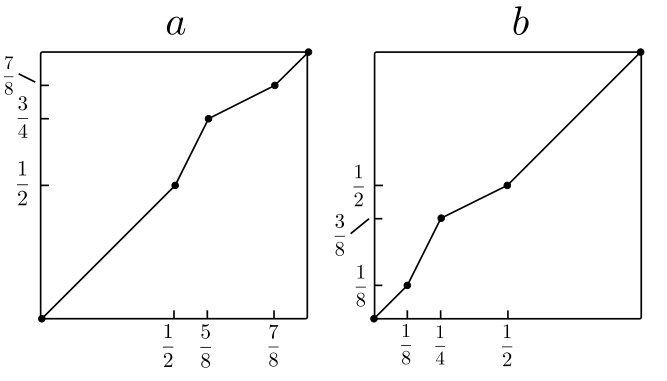 Figure 1
Peer Reviews
No public reviews on file for this paper yet. If you reviewed it on a platform where reviews are public (OpenReview, ICLR, NeurIPS, ICML), you can paste yours below so the community can read it here.
Videos
No videos yet. Explain this paper in a talk, walkthrough, or lecture? Add one.
ubsection]section 0
The spectrum of simplicial volume
Nicolaus Heuer, Clara Löh
(00footnotetext: © N. Heuer, C. Löh 2019. This work was supported by the CRC 1085 Higher Invariants (Universität Regensburg, funded by the DFG).
MSC 2010 classification: 57N65, 57M07, 20J05)
Abstract
New constructions in group homology allow us to manufacture high-dimensional manifolds with controlled simplicial volume. We prove that for every dimension bigger than the set of simplicial volumes of orientable closed connected manifolds is dense in . In dimension we prove that every non-negative rational number is the simplicial volume of some orientable closed connected -manifold. Our group theoretic results relate stable commutator length to the -semi-norm of certain singular homology classes in degree . The output of these results is translated into manifold constructions using cross-products and Thom realisation.
1 Introduction
The simplicial volume of an orientable closed connected (occ) manifold is a homotopy invariant that captures the complexity of representing fundamental classes by singular cycles with real coefficients (see Section 2 for a precise definition and basic terminology). Simplicial volume is known to be positive in the presence of enough negative curvature [Gro82, Thu97, IY82, LS06] and known to vanish in the presence of enough amenability [Gro82, Iva85, Yan82, BCL18]. Moreover, it provides a topological lower bound for the minimal Riemannian volume (suitably normalised) in the case of smooth manifolds [Gro82].
Until now, for large dimensions , very little was known about the precise structure of the set of simplicial volumes of occ -manifolds. The set is countable and closed under addition (Remark 2.3). However, the set of simplicial volumes is fully understood only in dimensions and with (Example 2.4) and , where ranges over all complete finite-volume hyperbolic -manifolds with toroidal boundary and where is a constant (Example 2.5).
This reveals that there is a gap of simplicial volume in dimensions and : For there is a constant such that the simplicial volume of an occ -manifold either vanishes or is at least . It was an open question [Sam99, p. 550] whether such a gap exists in higher dimensions. For example, until now the lowest known simplicial volume of an occ -manifold has been [BK08] (Example 2.6).
In the present paper, we show that dimensions and are the only dimensions with such a gap.
Theorem A** (no-gap; Section 8.2).**
Let be an integer. For every there is an orientable closed connected -manifold such that . Hence, the set of simplicial volumes of orientable closed connected -manifolds is dense in .
In dimension , we get the following refinement of Theorem A.
Theorem B** (rational realisation; Section 8.3).**
For every there is an orientable closed connected -manifold with .
Method
We first compute the -semi-norm of certain integral -classes in finitely presented groups by relating these semi-norms to stable commutator length.
To formulate this connection, we recall some definitions. For a group and a class , the -semi-norm of is the semi-norm induced by the -norm of chains in the singular chain complex of any model of (Section 2.1). The class is integral if it lies in the image under the change of coefficients map map induced by .
For an element in the commutator subgroup of , the commutator length of is the minimal number of commutators in needed to express as their product. The stable commutator length (scl) of is the limit . Stable commutator length is now well-understood for many classes of groups thanks largely to Calegari and others [Cal09a].
Theorem C** (Corollary 6.16).**
Let be a finitely presented group with and let be an element of infinite order. Then there is a finitely presented group and an integral class such that
[TABLE]
We apply Theorem C to the universal central extension of Thompson’s group . Recall that is the group of piecewise linear homeomorphisms of the circle with dyadic breakpoints and whose slopes are integer powers of . In Propostion 5.1, we show that the universal central extension of is a finitely presented group with and that every non-negative rational number may be realised by the stable commutator length of some element in . Using Theorem C this shows:
Theorem D** (Corollary 6.17).**
For every there is a finitely presented group and an integral class such that . In particular, for every there is a finitely presented group and an integral class such that .
We can now take cross-products in homology to obtain integral classes in degree greater than with crude norm control. An application of a normed version of Thom realisation (Theorem 8.1) proves Theorem A.
In dimension , we refine this construction by taking products with surfaces and using an exact computation of the product norm. This generalises a result of Bucher [BK08]. Theorem B will follow from these computations.
Theorem E** (Corollary 7.2).**
Let be a group, let , and let be the fundamental group of the oriented closed connected surface of genus with fundamental class . Then the -semi-norm of satisfies
[TABLE]
In particular, we establish the following connection between stable commutator length and simplicial volume in dimension :
Theorem F** (Corollary 8.3).**
Let be a finitely presented group that satisfies and let be an element in the commutator subgroup. Then there is an orientable closed connected -manifold with
[TABLE]
Organisation of this article
Sections 2, 3, and 4 recall basic properties and known results on simplicial volume, bounded cohomology and stable commutator length, respectively.
In Section 5 we compute on the universal central extension of Thompson’s group (Proposition 5.1). This will be used in Section 6 to construct integral -classes with controlled -semi-norms. There we also show Theorems C and D.
In Section 7 we get the refinement for dimension in group homology: We compute the -semi-norm of cross-products of general -classes with certain Euler-extremal -classes (Theorem 7.1). As a corollary we obtain Theorem E.
All manifolds constructed in this article will arise via a suitable version of Thom’s realisation theorem in Section 8. This allows us to manufacture manifolds with controlled simplicial volume and to prove Theorems A, B, and F.
A discussion of related problems may be found in Section 8.4.
Acknowledgements
The authors are grateful to the anonymous referee for carefully reading the paper and for many constructive suggestions. The authors would also like to thank Roberto Frigerio for pointing out an inconsistent use of the Euler cocycle in a previous version of this article. The first author would like to thank Martin Bridson for his invaluable support and very helpful discussions. He would further like to thank Lvzhou (Joe) Chen for many helpful discussions on stable commutator length.
2 Simplicial volume
We recall the -semi-norm on homology and simplicial volume and establish some notation. In particular, we collect basic properties related to classes in degree .
2.1 The -semi-norm and simplicial volume
The notion of simplicial volume of manifolds is based on the -semi-norm on singular homology. More precisely: Let be a topological space and let . Then the -semi-norm on is
[TABLE]
here, is the singular chain module of in degree with -coefficients and denotes the -norm on associated with the basis of singular simplices. More generally, if is a subspace, one can also consider the relative -semi-norm on induced by the -semi-norm on .
The -semi-norm is a functorial semi-norm in the sense of Gromov [Gro99, p. 302]:
Remark 2.1*.*
If is continuous, , and , then
[TABLE]
Definition 2.2** (simplicial volume [Gro82]).**
Let be an oriented closed connected -dimensional manifold. Then the simplicial volume of is defined by
[TABLE]
where denotes the -fundamental class of .
More generally, if is an oriented compact connected -manifold with boundary, then one defines the relative simplicial volume of by
[TABLE]
where denotes the relative -fundamental class of .
Because the definition of simplicial volume is independent of the chosen orientation, we will also speak of the simplicial volume of orientable manifolds.
On the one hand, simplicial volume clearly is a topological invariant of (orientable) compact manifolds that is compatible with mapping degrees. On the other hand, simplicial volume is related in a non-trivial way to Riemannian volume, e.g., in the case of hyperbolic manifolds [Gro82, Thu97]. Therefore, simplicial volume is a useful invariant in the study of rigidity properties of manifolds.
Basic examples of simplicial volumes are listed in Examples 2.4, 2.5, and 2.6. In addition to geometric arguments, a key tool for working with simplicial volume is bounded cohomology (see Proposition 3.4 below).
2.2 Simplicial volume in low dimensions and gaps
We collect the low-dimensional examples of simplicial volume as stated in the introduction. Recall that for we define via
[TABLE]
Remark 2.3*.*
As there are only countably many homotopy types of orientable closed connected (occ) manifolds [Mat65], the set is countable for every .
The set is also closed under addition. For , this follows from the additivity of simplicial volume under connected sums [Gro82][Fri17, Corollary 7.7] and for this follows from the explicit computation of as seen in Example 2.4.
Clearly, (the only relevant manifold being a single point) and (the only manifold being the circle).
Example 2.4** (dimension ).**
For an orientable closed connected surface of genus we have \|\Sigma_{g}\|=2\cdot\bigl{|}\chi(\Sigma_{g})\bigr{|}=4\cdot(g-1) [Gro82, BP92][Fri17, Corollary 7.5]. Hence,
[TABLE]
We observe that the gap in simplicial volume of dimension is .
Example 2.5** (dimension ).**
We have [Gro82, Som81][Fri17, Corollary 7.8]
[TABLE]
and where is the maximal volume of an ideal simplex in . This shows that there is a gap of simplicial volume in dimension , namely , where is the volume of the Weeks manifold [GMM09]. Moreover, the set has countably many accumulation points (because the set of hypbolic volumes has the order type [Thu97]).
Example 2.6** (dimension ).**
The smallest known Riemannian volume of an occ hyperbolic -manifold is [CM05]. In view of the computation of the simplicial volume of hyperbolic manifolds [Gro82, Thu97][Fri17, Chapter 7.3] this means that the smallest known simplicial volume of a hyperbolic occ -manifold is where is the maximal volume of an ideal -simplex in .
If , are orientable closed connected surfaces of genus , respectively, then Bucher [BK08] showed that . Hence, . This has been the smallest known non-trival simplicial volume of a -manifold. More general surface bundles over surfaces do not yield lower estimates [HK01, Buc09]. Also the recent computations/estimates for mapping tori in dimension [BN20] do not produce improved gap bounds.
2.3 The -semi-norm in degree
As classes in degree will play an important role in our constructions, we collect some basic properties concerning the -semi-norm in degree .
Proposition 2.7** **(-semi-norm in degree ;
[CL15, Proposition 2.4]).
Let be a topological space and let . Then
[TABLE]
Remark 2.8*.*
Let be a path-connected topological space, let , and let be the image of under the change of coefficients map . Then the description of from Proposition 2.7 simplifies as follows: We have
[TABLE]
where is the class of all pairs consisting of an orientable closed connected surface of genus and a continuous map with in for some integer .
In Section 6, we will relate -semi-norms of relative classes in degree to filling invariants and stable commutator length.
2.4 Simplicial volume of products
We recall basic results on -semi-norms of homological cross-products.
Proposition 2.9**.**
Let , be topological spaces, let , and let , . Then the cross-product satisfies
[TABLE]
Proof.
The lower estimate follows from the duality principle (Proposition 3.4) and an explicit description of the cohomological cross-product (in bounded cohomology), the upper estimate follows from an explicit description of the homological cross-product [Gro82][BP92, Theorem F.2.5] (this classical argument works also for general homology classes, not only for fundamental classes of manifolds). ∎
However, in general, it seems to be a hard problem to compute the exact values of -semi-norms of products. One of the few known cases are products of two orientable closed connected surfaces, whose simplicial volumes have been computed by Bucher:
Theorem 2.10** ([BK08, Corollary 3]).**
Let be orientable closed connected surfaces of genus . Then
[TABLE]
We will generalise this theorem in Section 7. For now, let us note that in combination with the description of the -semi-norm in degree in terms of surfaces, we obtain the following general, improved, upper bound:
Corollary 2.11**.**
Let and be path-connected topological spaces and let , . Then
[TABLE]
Proof.
We use the description of and from Proposition 2.7. Let
[TABLE]
be surface presentations of and as in Proposition 2.7. Then
[TABLE]
and so Therefore, by applying the triangle inequality, functoriality (Remark 2.1), and Theorem 2.10, we have
[TABLE]
By Proposition 2.7, taking the infimum over all such surface presentations of and , we obtain ∎
3 Bounded cohomology
Bounded cohomology of discrete groups and topological spaces was first systematically studied by Gromov [Gro82]. Gromov established the fundamental properties of bounded cohomology using so-called multicomplexes. Later, Ivanov developed a more algebraic framework via resolutions [Iva85, Iva17].
The reference to this introduction is the recent book by Frigerio [Fri17]. Having applications to stable commutator length and the -semi-norm in mind we will only define bounded cohomology for trivial real and integer coefficients.
Sections 3.1, 3.2 and 3.3 discuss the (relationships between) bounded cohomology of groups and topological spaces. In Section 3.4 we state the duality principle, which allows us to compute the semi-norm. In Section 3.6 we define the Euler class.
3.1 Bounded cohomology of groups
Let be or and let be a group. We will define the bounded cohomology of using the homogeneous resolution. There is also an inhomogeneous resolution, which is useful in low dimensions. We use this resolution only in Section 5 for central extensions and refer to the literature [Fri17, Chapter 1.7] for the definition.
Let be the set of set-theoretic maps from to . The group acts on via . We denote by the subset of elements in that are invariant under this action. Let be the -norm on and let be the corresponding subspaces of bounded functions.
Define the simplicial coboundary maps via
[TABLE]
where means that the -th coordinate is omitted. Then restricts to a map . The cohomology of the cochain complex is the group cohomology of with coefficients in and denoted by . Similarly, the cohomology of the cochain complex is the bounded cohomology of with coefficients in and denoted by . The embedding induces a map , the comparison map.
Bounded cohomology carries additional structure, the semi-norm induced by : For an element , we set
[TABLE]
Bounded cohomology is functorial in both the group and the coefficients.
3.2 Bounded cohomology of spaces
Let be a topological space and let be the set of singular -simplices in . Moreover, let be the set of maps from to . For an element we set
[TABLE]
and let be the subset of elements that are bounded with respect to this norm. Let be the restriction of the singular coboundary map to bounded cochains. Then the bounded cohomology of with coefficients in is the cohomology of the complex and denoted by . For we define
[TABLE]
and observe that is a semi-norm on . The bounded cohomology of spaces is also functorial in both spaces and coefficients.
3.3 Relationship between bounded cohomology of groups and spaces
Analogously to ordinary group cohomology, bounded cohomology of groups may also be computed using classifying spaces (and thus, we will freely switch between these descriptions).
Theorem 3.1** ([Fri17, Theorem 5.5]).**
Let be a model of the classifying space of the group . Then is canonically isometrically isomorphic to .
Remarkably, this statement holds true much more generally: every topological space with the correct fundamental group can be used to compute bounded cohomology of groups; moreover, bounded cohomology ignores amenable kernels [Gro82]:
Theorem 3.2** ([Fri17, Theorem 5.8][Iva17]).**
Let be a path-connected space. Then is canonically isometrically isomorphic to .
Theorem 3.3** (mapping theorem [Fri17, Corollary 5.11][Iva17]).**
Let be a continuous map between path-connected topological spaces. If the induced homomorphism is surjective and has amenable kernel, then is an isometric isomorphism.
3.4 Duality
Bounded cohomology of groups and spaces may be used to compute the -semi-norm of homology classes. For what follows, let be the map given by evaluation of cochains on chains.
Proposition 3.4** (duality principle [Fri17, Lemma 6.1]).**
Let be a topological space and let . Then
[TABLE]
Moreover, the supremum is achieved.
Cocycles that satisfy and are called extremal for .
Corollary 3.5** (mapping theorem for the -semi-norm).**
Let be a continuous map between path-connected topological spaces. If the induced homomorphism is surjective and has amenable kernel, then is isometric with respect to the -semi-norm.
Proof.
We only need to combine the duality principle (Proposition 3.4) with the mapping theorem in bounded cohomology (Theorem 3.3). ∎
3.5 Alternating cochains
Recall that denotes or and let be a bounded homogeneous cochain. We say that is alternating, if for every and every permutation we have that
[TABLE]
Every (bounded) cochain has an associated alternating (bounded) cochain defined via
[TABLE]
Observe that . The subcomplex of alternating cochains is denoted by . It is well-known that one can compute real bounded cohomology using alternating cochains:
Proposition 3.6** ([Fri17, Proposition 4.26]).**
Let be a group. The complex isometrically computes the bounded cohomology with real coefficients. Moreover, for every the cocycle represents the same class as in .
3.6 Euler class and the orientation cocycle
We describe the Euler class associated to a circle action. For details we refer to the literature [BFH16, Ghy87].
For three points on the circle let be the (respective) circular order. The group of orientation preserving homeomorphisms on the circle preserves and satisfies a (homogeneous) cocycle condition. Hence, induces a (bounded) cocycle on : For , the map
[TABLE]
is a cocycle in and the bounded cohomology class is independent of the choice of the point . It turns out that this class is divisible by , i.e., there is a cocycle , called Euler cocycle, with in .
Remark 3.7*.*
Let . For Euler classes (and the orientation cocycle) we will use the following notation: Capital letters () denote cocycles and lower case letters () denote classes. The classes , , and are the ones represented by in the corresponding cohomology groups. If a group acts on the circle by , and is a class or a cocycle defined on then will be the pullback of via . If is a subgroup of , then we will denote the restriction of a class or a cocycle to by . Hence, for example, denotes the restriction of the real bounded Euler class to .
Let be a group with a circle action . Then is called the Euler class associated to the action . The Euler class induces a central extension
[TABLE]
of by , the associated Euler extension . This group has the following explicit description. It is the group defined on the set with multiplication . Euler extensions are useful for constructing groups with controlled stable commutator length; see Section 5.
We note that is extremal (in the sense of Proposition 3.4) for surface groups:
Example 3.8**.**
Let and let be an oriented closed connected surface of genus . Recall that , where denotes the fundamental class and . Then induces an action on its boundary. By identifying , we obtain a circle action and
[TABLE]
i.e., is an extremal cocycle for the fundamental class . Indeed, it is the renormalised volume cocycle of ideal simplices in ; see [BK08].
4 Stable commutator length
In recent years the topic of stable commutator length () has seen a vast developemet thanks largely to Calegari and his coauthors [Cal09a]. In this section, we will only give a brief overview of . The definition and basic properties will be given in Section 4.1. A useful tool to compute is Bavard’s duality theorem, described in Section 4.2. We discuss examples and general properties of in Section 4.3.
4.1 Definition and basic properties
For a group let be its commutator subgroup. The commutator length of an element is defined as
[TABLE]
where . The stable commutator length of in is defined as
[TABLE]
If are such that , we will call a chain and define the corresponding (stable) commutator length on chains by
[TABLE]
If is a group homomorphism, then for all ; the analogous result holds for chains. In particular, is invariant under automorphisms, whence under conjugation. Thus, on single chains agrees with the usual definition of stable commutator length.
Stable commutator length has the following geometric interpretation: If is a connected topological space and is a loop, then the stable commutator length of the associated element measures the least complexity of the surface needed to bound (we will not use this interpretation in this paper). In Section 6.2, we will describe yet another interpretation of , namely as a topological stable-filling invariant.
4.2 Bavard’s duality theorem and bounded cohomology
Let be a group. A map is called a quasimorphism if there is a constant such that
[TABLE]
The smallest such is called the defect of and is denoted by . A quasimorphism is homogeneous if in addition we have that for all , . Every quasimorphism is in bounded distance to a unique homogeneous quasimorphism , defined by setting
[TABLE]
for every . Moreover, it is well-known that [Cal09a, Lemma 2.58]. Analogously to the duality principle (Proposition 3.4) we may compute using homogeneous quasimorphisms:
Theorem 4.1** (Bavard’s duality theorem [Bav91]).**
Let be a group and let . Then
[TABLE]
where the supremum is taken over all homogeneous quasimorphisms . Moreover, this supremum is achieved by an extremal quasimorphism.
Remark 4.2*.*
(Homogeneous) quasimorphisms are intimately related to second bounded real cohomology. Using the inhomogeneous resolution, it can be seen that the kernel of corresponds to the space of homogeneous quasimorphisms modulo . It follows then from Bavard’s dualtiy theorem that the comparison map is injective if and only if vanishes on .
It is well known that vanishes if is abelian [Gro82]. Thus every homogeneous quasimorphism on an abelian group is an honest homomorphism.
4.3 Examples
We collect some known results for stable commutator length.
In Sections 6 and 8 we will promote in a finitely presented group to the simplicial volume of manifolds in higher dimension. For this we need to assert that vanishes. Thus, we will have a particular emphasis on this condition in the examples.
4.3.1 Vanishing
An element may satisfy that for “trivial” reasons, such as if is torsion or if is conjugate to its inverse. There are many classes of groups where – besides these trivial reasons – stable commutator length vanishes on the whole group. Recall that this is equivalent to the injectivity of the comparison map . Examples include:
- •
amenable groups: This follows from the vanishing of for every amenable group by a result of Trauber [Gro82],
- •
irreducible lattices in semisimple Lie groups of rank at least [BM02], and
- •
subgroups of the group of piecewise linear transformations of the interval [Cal07].
4.3.2 Non-abelian free groups
In contrast, Duncan and Howie [DH91] showed that every element in the commutator subgroup of a non-abelian free group satisfies . In a sequence of papers [Cal09b, Cal11] Calegari showed that stable commutator length is rational in free groups and that every rational number mod is realised as the stable commutator length of some element in the free group. Moreover, he gave an explicit, polynomial time algorithm to compute stable commutator length in free groups. This revealed a surprising distribution of those values. We note that these results generalise to free products of cyclic groups [Wal13] and that all these groups satisfy .
4.3.3 Gaps and groups of non-positive curvature
A group has a gap in if there is a constant such that for every group element , we have unless for “trivial” reasons such as torsion or if is conjugate to its inverse.
In the previous example, we already have seen that non-abelian free groups have a gap in stable commutator length of . This result has recently been generalised to right-angled Artin groups [Heu19b]. Many classes of non-positively curved groups have a gap in , though this gap may not be uniform in the whole class of groups. Prominent examples include hyperbolic groups [CF10], mapping class groups [BBF16], free products of torsion-free groups [Che18] and amalgamated free products [CFL16, Heu19b, CH19].
4.3.4 Hyperelliptic mapping class groups
Let , let be the mapping class of a hyperelliptic involution of the orientable closed connected surface of genus , and let
[TABLE]
be the hyperelliptic mapping class group of . The group is finitely presented [BH71] and satisfies [Kaw97, Corollary 3.3][BC91, Theorem 1.1][BCP01]. We now let . Let be a Dehn twist about a -invariant non-separating curve on . Then we have
[TABLE]
the first estimate is a computation by Monden [Mon12, Theorem 1.2] (similar estimates also appear in the work of Endo and Kotschick [EK01, proof of Corollary 8]), the second estimate is due to Calegari, Monden, Sato [CMS14, Theorem 1.7].
5 The universal central extension of Thompson’s group
Thompson’s group was introduced in 1965 by Richard Thompson as the first example of an infinite but finitely presented simple group. It is the subgroup of which maps dyadic rationals to dyadic rationals, with dyadic breakpoints and where each derivative – if defined – is an integer power of (here, we identify ) [CFP96].
Stable commutator length on Thompsons’s group vanishes [Cal09a, Chapter 5], but interesting values for stable commutator length arise on the central extensions of and its generalisations associated to the Euler class [Zhu08] (for the definition of the Euler extension, see Section 3.6).
In this section, we extend these results about stable commutator length on these extensions to the universal central extension of . For a perfect group the universal central extension is the unique group that is a Schur covering group of . It satisfies that and and there is an explicit construction of in terms of and (which we recall during the proof of Proposition 5.1).
Proposition 5.1**.**
The universal central extension of Thompson’s group is finitely presented and satisfies that . For every non-negative rational number , there is an element with .
In Section 5.1, we recall results of Zhuang [Zhu08], which describe stable commutator length on the central extension of associated to the Euler class. Using information on the (bounded) -cohomology of Thompson’s group (Section 5.2), we reduce stable commutator length on to stable commutator length on and show Proposition 5.1 (Section 5.3).
5.1 The Euler central extension of Thompson’s group
We recall the connection between stable commutator length and rotation number. This connection has been established by Barge and Ghys [BG88] and has been used by Zhuang [Zhu08] to construct finitely presented groups with transcendental stable commutator length.
Theorem 5.2** ([BG88, Zhu08]).**
Let be the central extension of Thompson’s group associated to the Euler class . Then there is a homogeneous quasimorphism of defect , called rotation number, that generates the space of homogeneous quasimorphisms. Hence, for all ,
[TABLE]
The rotation number is well studied and has a geometric meaning [BFH16]. Hence, one obtains the full spectrum of stable commutator length for .
Corollary 5.3** ([Cal09a]).**
Let be the central extension of Thompson’s group by the Euler class. Then the image of stable commutator length on is .
Proof.
Ghys and Sergiescu [GS87] showed that the rotation number on is rational. Moreover, it is well known that every rational number is realised as such a rotation number. To see this observe that for every integer there is an element with a periodic orbit of size that cyclically permutes the elements of this orbit. An appropriate lift of this element to will satisfy . By taking powers of such elements we may realise every rational as a rotation number in . ∎
However, Ghys and Sergiescu [GS87] showed that . Thus, we cannot apply Theorem C to the group .
5.2 (Bounded) -cohomology of Thompson’s group
The cohomology of Thompson’s group was computed by Ghys and Sergiescu [GS87]. Ghys and Sergiescu showed that the -cohomology is generated by the Euler class (see Section 3.6) and another class , which has the following combinatorial description.
For a function that admits limits on both sides at every point in , let be the right and let be the left limit at . In this case, set . Moreover, for an element we denote by the right derivative of at , i.e., .
Definition 5.4** (discrete Godbillon-Vey cocycle [GS87, Theorem E]).**
The discrete Godbillon-Vey cocycle is defined as
[TABLE]
where the (finite) sum runs over all that are breakpoints of , or .
The map is an inhomogeneous cocycle. In this section only we will use inhomogeneous cocycles as they are better to work with in the context of central extensions; the precise definition can for instance be found in Frigerio’s book [Fri17, Chapter 1.7].
Theorem 5.5** ([GS87, Corollary C, Theorem E]).**
Thompson’s group satisfies that . Free generators are the Euler class and a class . This class satisfies that , where is the discrete Godbillon-Vey cocycle (Definition 5.4).
For what follows we will also need to compute the bounded cohomology of in degree .
Proposition 5.6**.**
The class from Theorem 5.5 cannot be represented by a bounded cocycle, i.e., is not in the image of the comparison map . In particular, we have that
[TABLE]
generated by the Euler class.
Proof.
Note that it is enough to show the unboundedness statement for as (Theorem 5.5). We will show the proposition by evaluating on the subgroup , where and are the elements depicted in Figure 1.
Claim 5.7**.**
The cocycle restricts on to a cocycle representing a non-trivial element of .
Proof of Claim 5.7.
This claim is implicitly stated in the work of Ghys and Sergiescu [GS87, proof of Lemma 4.6]. For the convenience of the reader we provide an explicit proof here.
Observe that is a (inhomogeneous) -cocycle on . Since , we see that there is a function such that for all . Similarly, we see that there is a function such that . Observe that we have
[TABLE]
for any and that
[TABLE]
This way we see that
[TABLE]
for all . Similarly, we see that
[TABLE]
We moreover calculate
[TABLE]
Putting the above calculations together, we can now compute the restriction of to . For all we see that
[TABLE]
where and . Hence, evaluating on a fundamental cycle shows that restricted to represents twice a generator of . This proves Claim 5.7. ∎
It is well-known that non-trivial elements of cannot be represented by a bounded cocycle ( is amenable). Hence, also cannot be represented by a bounded cocycle, which proves the first part of Proposition 5.6.
Stable commutator length vanishes on (Example 4.3.1) and so the comparison map is injective (Remark 4.2). We now assume for a contradiction that lies in the image of the comparison map and . As is bounded and is amenable, restricts to a trivial class on . Thus restricts to on and generates (by Claim 5.7). This is a contradiction as these classes are not bounded. Hence, the only classes in the image of are multiples of . We conclude that
[TABLE]
generated by the Euler class. This completes the proof of Proposition 5.6. ∎
5.3 Proof of Proposition 5.1
We will now prove Proposition 5.1 by explicitly computing the quasimorphisms on and then invoking Bavard’s duality theorem. We note that there is an alternative proof using diagrams by applying Gromov’s mapping theorem. A variation of this may be found in the forthcoming paper [HL19b, Section 3.3].
Proof of Proposition 5.1.
As arises as a group extension of finitely presented groups it is itself finitely presented. The group is simple [CFP96] and thus in particular perfect. The universal central extension of a perfect group always satisfies that [Wei94, Chapter 6.9].
It remains to show that every rational number is the stable commutator length of some element . For this note that may be explicitly described as the group on the set with multiplication
[TABLE]
where (resp. ) is an inhomogeneous cocycle representing (resp. ). Similarly may be described as the set with group multiplication .
Claim 5.8**.**
For every , we have that \operatorname{scl}_{\widetilde{T}}(i_{0},t_{0})=\operatorname{scl}_{E}\bigl{(}\left(\begin{smallmatrix}i_{0}\\ 0\end{smallmatrix}\right),t_{0}\bigr{)}.
Proof of Claim 5.8..
The homomorphism defined by \kappa\colon\bigl{(}\left(\begin{smallmatrix}i\\ j\end{smallmatrix}\right),t\bigr{)}\mapsto(i,t) shows by monotonicity of that \operatorname{scl}_{E}\bigl{(}\left(\begin{smallmatrix}i_{0}\\ 0\end{smallmatrix}\right),t_{0}\bigr{)}\geq\operatorname{scl}_{\widetilde{T}}\kappa\bigl{(}\left(\begin{smallmatrix}i_{0}\\ 0\end{smallmatrix}\right),t_{0}\bigr{)}=\operatorname{scl}_{\widetilde{T}}(i_{0},t_{0}). We now prove the converse inequality.
Let be a homogeneous extremal quasimorphism to the element \bigl{(}\left(\begin{smallmatrix}i_{0}\\ 0\end{smallmatrix}\right),t_{0}\bigr{)}. Then restricted to the centre of is a homogeneous quasimorphism on an abelian group, and thus a homomorphism; see Remark 4.2. Thus there are constants such that \phi\bigl{(}\left(\begin{smallmatrix}i\\ j\end{smallmatrix}\right),\operatorname{id}\bigr{)}=\lambda_{\operatorname{Eu}}\cdot i+\lambda_{\mathrm{A}}\cdot j for all .
We will first show that . For every element in the centre and an element , the group generated by and is abelian and hence restricts to a homomorphism on by again using Remark 4.2. Hence we have for all in the centre and . We define as \Delta(t,t^{\prime}):=\delta^{1}\phi\bigl{(}\bigl{(}\left(\begin{smallmatrix}0\\ 0\end{smallmatrix}\right),t\bigr{)},\bigl{(}\left(\begin{smallmatrix}0\\ 0\end{smallmatrix}\right),t^{\prime}\bigr{)}\bigr{)} for all . Then is uniformly bounded, because is a quasimorphism. We compute
[TABLE]
for all and for defined via . Thus
[TABLE]
and hence defines a bounded cocycle as the right hand side is uniformly bounded. If , then this would imply that may be represented by a bounded cocycle, which would contradict Proposition 5.6. Thus .
Define a quasimorphism on by setting and observe that is homogeneous as well and that . For all , we compute that
[TABLE]
and thus .
Using Bavard’s duality theorem we compute
[TABLE]
This proves the other inequality and thus finishes the proof of Claim 5.8. ∎
We may now finish the proof of Proposition 5.1. Every is the stable commutator length of some element by Corollary 5.3. Using Claim 5.8, we may construct an element with . ∎
6 Fillings
Stable commutator length can be interpreted as a homological filling norm (Section 6.2). After recalling the basic notions and properties, we will use this interpretation to compute the -semi-norm of classes related to decomposable relators and thus prove Theorem C (Section 6.3). This will allow us to establish the group-theoretic version of the no-gap theorem (Theorem D); for the proof of theorem C and Theorem D, we will only need the filling norm in dimension , as already considered by Bavard [Bav91] and Calegari [Cal09a, Chapter 2.5/2.6]. Moreover, we will explain how in the higher-dimensional case the simplicial volume of manifolds can also be viewed as a filling norm (Section 6.4).
6.1 Stable filling norms
We first recall the stable filling norm for the bar complex. We will then extend this notion to topological spaces and higher degrees. For a group , the bar complex (computing ) has the following form in low degrees: We have and as well as and
[TABLE]
Moreover, the chain modules of are endowed with the -norm corresponding to the bar bases.
Definition 6.1** ((stable) filling norm).**
Let be a group.
- •
If , the filling norm of is defined as
[TABLE]
- •
Let and let . The stable filling norm of is defined as
[TABLE]
Notice that the limit in the definition of the stable filling norm indeed exists [Cal09a, p. 34].
For the generalisation to topological spaces, we replace group elements by loops (or maps from simplicial spheres) and we replace taking powers of group elements by composition with self-maps of spheres of the corresponding degree.
Definition 6.2** (topological (stable) filling norms).**
Let , let be a topological space, and let be continuous.
- •
If , the filling norm of is defined as
[TABLE]
- •
The filling norm of is then defined as
[TABLE]
where is the canonical singular cycle associated with .
- •
The stable filling norm of is defined as
[TABLE]
where for , we write for “the” standard self-map of of degree and .
- •
If and are continuous maps, then we define
[TABLE]
Remark 6.3* (existence of the stabilisation limit).*
The limits in the situation of the definition above indeed exist: For notational convenience, we only prove the existence in the case of ; the general case can be proved in the same way (with additional indices). The argument is similar to the one for the stable filling norm in the bar complex. The only complication is that, in order to compare different “powers”, we will need to use the uniform boundary condition for .
Because is amenable, there exists a constant with the following property [MM85, FL19]: For every there is a with
[TABLE]
If , then the chains and are homologous in the complex (because ). Thus, there exists a chain such that
[TABLE]
Hence, for every continuous map we obtain
[TABLE]
and so
[TABLE]
Now elementary analysis shows that the limit does exist.
Remark 6.4* (change of the self-maps).*
The map is only unique up to homotopy, but homotopic choices for lead to the same stable filling norm; this can be seen using the uniform boundary condition as in the proof of the existence of the stable filling limits (Remark 6.3). Therefore, this ambiguity will be of no consequence for us.
Remark 6.5* (change of the singular models).*
In the situation of Definition 6.2, we could choose other singular cycle models of than : If is a fundamental cycle of , if satisfies , and if , then
[TABLE]
For the second equality, we use that holds for all (so that the difference in norm is negligible when taking ).
Remark 6.6* (bar filling vs. topological filling).*
Let be a group, let , and let . If is a model of and are loops representing , respectively, then
[TABLE]
This can be seen as follows: The standard constructions produce chain maps (choosing paths in for each group element and inductively filling the simplices) and (choosing a set-theoretic fundamental domain for the deck transformation action on and looking at the translates of that contain the vertices of the lifted simplices) with the following properties:
- •
,
- •
through a chain homotopy that is bounded in every degree,
- •
and .
The first and third conditions easily imply that
[TABLE]
moreover, we have for all and all . Hence,
[TABLE]
Conversely, if satisfies , then
[TABLE]
satisfies
[TABLE]
Thus, Taking the infimum over all such results in
[TABLE]
Passing to the stabilisation limit, we obtain
[TABLE]
6.2 Stable commutator length as filling invariant
The fact that every commutator consists of four pieces has the following generalisation in terms of filling norms:
Lemma 6.7** ( as filling invariant).**
Let be a group, let , and let . Then
[TABLE]
Proof.
In the case of a single relator, this observation goes back to Bavard [Bav91, Proposition 3.2][Cal09a, Lemma 2.69]. Calegari extended this equality to the case of linear combinations [Cal09a, Lemma 2.77]. ∎
Furthermore, as Calegari [Cal08b] puts it: “One can interpret stable commutator length as the infimum of the norm (suitably normalized) on chains representing a certain (relative) class in group homology.” We will prove this statement in Corollary 6.9 as a special case of the following generalisation:
Proposition 6.8** (relative -semi-norm as filling invariant).**
Let be a CW-complex, let , , let be a subspace that is homeomorphic to and such that the inclusions of the components of into are -injective (this is automatic if ).
If with , then
[TABLE] 2. 2.
If the connecting homomorphism is an isomorphism and if is the class with , then
[TABLE]
Proof.
We first show the estimate : Clearly, the group is amenable; because are -injective, the equivalence theorem [Gro82][BBF*+*14, Corollary 6] ensures that for every there exists a relative cycle representing in with
[TABLE]
Moreover, because the fundamental group of the components of are amenable, there exists a constant implementing the uniform boundary condition [MM85]: For every there is a with
[TABLE]
Let , let be a relative cycle as in (1), and let with . Then is a boundary (both summands are fundamental cycles of ). Hence, there exists a with
[TABLE]
The chain then witnesses that
[TABLE]
Taking first and then shows that .
Conversely, we will now prove that under the additional assumption that is an isomorphism: Let and let with . In particular, is a relative cycle for ; moreover, represents (because is a fundamental cycle of ). Hence,
[TABLE]
Taking first the infimum over all such and then yields the desired estimate . ∎
Corollary 6.9** ( as relative -semi-norm).**
Let be a group with , let , let be elements of infinite order, and let be a model of . Let
[TABLE]
be the mapping cylinder associated with (loops in representing) the elements , and let . Then there exists a unique relative homology class whose boundary class is the fundamental class of ; the class satisfies
[TABLE]
Proof.
The long exact homology sequence of the pair shows that the connecting homomorphism is an isomorphism (by hypothesis, , and the inclusion induces the trivial homomorphism on because are in the commutator subgroup of ). This shows the existence of .
Because all have infinite order, the corresponding inclusions of the components of into are -injective.
Applying Proposition 6.8 (using ), we obtain
[TABLE]
In combination with Remark 6.6 and Lemma 6.7, this shows that
[TABLE]
Corollary 6.10** ( as relative -semi-norm; free groups).**
Let be a set, let , let be non-trivial, let
[TABLE]
be the mapping cylinder associated with (loops representing) , and let . Moreover, let be the relative homology class whose boundary class is the fundamental class of . Then
[TABLE]
Proof.
Clearly, is a model of and . Therefore, we can apply Corollary 6.9. ∎
6.3 Decomposable relators
The filling view allows us to compute the -semi-norm for certain classes in degree associated to “decomposable relators” in terms of stable commutator length. Let us first describe these homology classes:
Setup 6.11** (decomposable relators I).**
Let and be groups that satisfy and and let , be elements of infinite order. We then consider the glued group
[TABLE]
where the amalgamation homomorphisms and are given by and , respectively.
Associated with this situation, there is a canonical homology class : Let and be classifying spaces for and , respectively. We consider the cylinder spaces
[TABLE]
for the relators and , respectively. Then
[TABLE]
is a CW-complex such that the canonical maps and induce an isomorphism .
Let and be the relative classes whose boundaries are fundamental classes of (corresponding to the relators and , respectively). Moreover, let be the class obtained by glueing and . Then, we define as the image of under the classifying map (which is induced by the canonical maps and ).
Remark 6.12* (integrality of the canonical class).*
In the situation of Setup 6.11, the canonical homology class is integral: It suffices to show that is integral. Comparing the long exact sequences of with - and -coefficients shows that is an integral class. Analogously, is integral. Thus, also the glued class is integral.
Setup 6.13** (decomposable relators II).**
Let be a group with and let be elements of infinite order. We then consider the group
[TABLE]
where is a fresh generator of .
Also here, there is a canonical homology class , which is defined as follows: Let be a model of and let
[TABLE]
be the cylinder space associated with and . Let be the relative “fundamental” class as in Corollary 6.9. Glueing the two cylindrical ends of by an orientation reversing homeomorphism leads to a CW-complex such that in the obvious way (the additional generator corresponds to the loop in the looped cylinder. Let be the class obtained by glueing to itself via the cylinder. Then we define as the image of under the classifying map (which is induced by the canonical map and the cylinder loop).
Theorem 6.14** (decomposable relators).**
Let be a group with and let be an element of infinite order.
Let also be a group with , let be an element of infinite order, and let be the canonical homology class (Setup 6.11). Then
[TABLE] 2. 2.
Let be an element of infinite order, let be the canonical class (Setup 6.13), and let be the fresh letter in . Then
[TABLE]
Proof.
In both cases, we will use that the stable commutator length and the canonical CW-complexes of decomposable relators can be expressed in terms of the stable commutator lengths and cylinder complexes of the sub-relators.
Ad 1. It is known that [Cal09a, Proposition 2.99]
[TABLE]
We will now show that equals . In the following, we will use the notation from Setup 6.11. By construction, we have
[TABLE]
where is the classifying map of . The mapping theorem (Corollary 3.5) shows that . Therefore, it suffices to compute .
Because and have infinite order, the inclusions of into and , respectively, are -injective. As is amenable, the amenable glueing theorem [BBF*+*14, Section 6] shows that
[TABLE]
the proofs of Bucher et al. carry over from the manifold case to this setting, because they established the necessary tools in bounded cohomology in this full generality. Moreover, we know that (Corollary 6.9)
[TABLE]
Putting it all together, we obtain , as claimed.
Ad 2. We argue in a similar way as in the first part: In this situation, it is known that [Cal09a, Theorem 2.101]
[TABLE]
We will now use the notation from Setup 6.13. The classifying map maps to the canonical class and the mapping theorem (Corollary 3.5) shows that .
Because and have infinite order, we can again use the amenable glueing theorem to deduce that
[TABLE]
Moreover, Corollary 6.9 shows that
[TABLE]
Therefore, we obtain . ∎
In the case that and are free groups, statements of this type are also contained in arguments of Calegari [Cal08a, p. 2004].
Unfortunately, there does not seem to be an easy way to remove the condition in Theorem 6.14: Without this condition, we have too much ambiguity in the proof of Proposition 6.8 to ensure integrality and norm control simultaneously.
6.4 Simplicial volume as filling invariant
We mention that also simplicial volume of higher-dimensional manifolds admits a description as a filling invariant (this result will not be used in the rest of the paper):
Theorem 6.15** (simplicial volume as filling invariant).**
Let , let be an orientable closed connected -manifold, let be an embedding of the standard -simplex into (i.e., is a homeomorphism onto its image), let , and let .
Then . 2. 2.
If , then . 3. 3.
If and , then .
Proof.
Ad 1. This is a special case of Proposition 6.8: We consider . The map is -injective (if , then is trivial; if , this holds by the classification of surfaces and the assumption ). In view of Poincaré duality, the hypothesis on is satisfied. We therefore can apply Proposition 6.8 to obtain
[TABLE]
Ad 2. In view of the first part, it suffices to show that . The amenable glueing theorem for simplicial volume [Gro82, BBF*+*14, FM18] shows that
[TABLE]
(because , both inclusions and are -injective). Moreover, [Gro82]. Hence, we obtain .
Ad 3. Again, in view of the first part, it suffices to show that . In this, two-dimensional, case, this equality follows from the classification of compact surfaces and the computation of the (relative) simplicial volume of compact surfaces in terms of their genus [Gro82, Thu97]. ∎
6.5 Proof of Theorems C and D
Theorem C is a special case of Theorem 6.14 with the decomposable relators of Setup 6.11. Let be a group that satisfies and let be an element of infinite order. Then we define the double of and by setting
[TABLE]
where and are isomorphic copies of and , are the elements corresponding to . Observe that if is finitely presented, then so is . As in Setup 6.11 there is a canonical integral class .
Corollary 6.16** (Theorem C).**
Let be a group with and let be of infinite order. Then the canonical integral class satisfies
[TABLE]
Proof.
This is an immediate corollary of Theorem 6.14 (1). ∎
Applying Theorem C to the universal central extension of Thompson’s group , we deduce Theorem D:
Corollary 6.17** (Theorem D).**
For every , there is a finitely presented group and an integral class such that . In particular, for every there is a finitely presented group and an integral class such that .
Proof.
Let . For we can take the zero class of the trivial group (or any integral -class in any finitely presented amenable group).
For , let be an element in the universal central extension of Thompson’s group with . Proposition 5.1 asserts that such an element exists, that is finitely presented and that and hence . As the element has infinite order.
Let be the double and let be the associated integral -class. Theorem C shows that
[TABLE]
We note that one can prove the second part of Theorem D also via previously known examples of stable commutator length (Example 4.3.4). ∎
7 The -semi-norm of products with surfaces: Proof of Theorem E
Bucher [BK08] computed the simplicial volume of the product of two surfaces (see Theorem 2.10). We will use her techniques to generalise this statement to the product of more general -classes. This will allow us to construct integral -classes whose -semi-norm can be expressed in terms of the -semi-norm of -classes. Theorem E will be a corollary (Corollary 7.2) of these constructions.
Theorem 7.1**.**
Let and be groups, let , and . Furthermore, let be a circle action of . Assume furthermore that is an extremal cocycle for ; see Section 3.6. Then the class satisfies
[TABLE]
Theorem 7.1 is a strict generalisation of Bucher’s result [BK08] and our proof follows the outline of Bucher’s work. Recall that for we denote the oriented closed connected surface of genus by , its fundamental group by , and its fundamental class by . Fix a hyperbolic structure on and let be the corresponding action on the boundary . The cocycle is extremal to (see Section 3.6) and satisfies
[TABLE]
Therefore, we obtain the following immediate corollary to Theorem 7.1:
Corollary 7.2** (Theorem E).**
Let , let be a group, let and let and be as above. Then the class satisfies
[TABLE]
Proof of Theorem 7.1.
In this proof, all cocycles will be given in the homogeneous resolution. The upper bound holds for all classes in degree (Corollary 2.11). For the lower bound we will use duality (Proposition 3.4):
Let be the orientation class for the given action . Moreover, let be an extremal cocycle for in the homogeneous resolution; see Proposition 3.4. By possibly replacing by , we may assume that is alternating; see Section 3.5. By assumption, and
[TABLE]
The cross-product of and is defined via
[TABLE]
and satisfies
[TABLE]
This recovers the estimate as seen in Proposition 2.9.
Claim 7.3**.**
Let be the associated alternating cocycle of ; see Section 3.5. Then .
Once Claim 7.3 is established, we can argue as follows: Recall that and represent the same class in by Proposition 3.6. Hence, . Moreover by the claim we have that and by duality we conclude that . Putting both estimates together, we will obtain
[TABLE]
as claimed in Theorem 7.1. To complete the proof, it thus only remains to show Claim 7.3. ∎
Proof of Claim 7.3.
We will follow the outline of Bucher’s proof [BK08, Proposition 7], quoting parts of the proof verbatim. Let and . Moreover, let be a point to define and set for all . We will give upper bounds to in different cases. By construction,
[TABLE]
may be written as
[TABLE]
where is the orientation; see Section 3.6. Every permutation may be written uniquely as , where and is a permutation with . Using that both and are alternating we obtain that
[TABLE]
where
[TABLE]
for . Observe also that we may assume that the are cyclically ordered, as is alternating.
In what follows we will estimate the terms , depending on the relative position of the :
- •
All are distinct. As all -terms in equal we have
[TABLE]
for , where in the last equation we used that
[TABLE]
by the cocycle condition. In particular, we see that as . Hence,
[TABLE]
- •
Two of the are identical and the others are distinct. Without loss of generality assume that . Observe that in this case whenever two of the are equal to or . We will estimate in different cases:
- –
: Then and hence .
- –
: Then and hence .
- –
: Then
[TABLE]
By the cocycle condition, it follows that
[TABLE]
Therefore, and so .
- –
: Then
[TABLE]
and hence .
- –
: Then
[TABLE]
and hence .
Putting things together we see that
[TABLE]
- •
Three of the are identical, the other ones are different. As is alternating we may assume that . A permutation for which the term in Equation (2) is non-trivial has to map exactly one of the elements in to one of the elements , and has to map the remaining two elements of to . We then have two more choices for and . We compute that the total number of such permutations is . For all other permutations, the -term in Equation (2) will vanish. We may then estimate
[TABLE]
- •
Two pairs are identical and one element is different from these pairs. Assume without loss of generality that , . A permutation for which the -term in Equation (2) is non-trivial has to map each of to different sets , , and . Moreover, there are two choices for the two elements that get mapped to the sets with two elements. Again, there are two more choices for and . We compute that there are a total of such permutations. For all other permutations the -term in Equation (2) will vanish. We may then estimate
[TABLE]
- •
If more than three of the are identical or if exactly three of the are identical and the two remaining are identical, then the -term in Equation (2) always vanishes and we get that
[TABLE]
In summary, in each case we have seen that
[TABLE]
and hence . This finishes the proof of Claim 7.3 (and also the proof of Theorem 7.1). ∎
8 Manufacturing manifolds with controlled simplicial volumes
The computation of -semi-norms of -classes in group homology allows us to construct manifolds with controlled simplicial volume.
This construction will involve a normed version of Thom’s realisation theorem, which we recall in Section 8.1. Theorem A is proven in Section 8.2 and the theorems for dimension (Theorems B and F) are proven in Section 8.3. Finally, in Section 8.4 we discuss related problems and further research topics.
8.1 Thom’s realisation theorem
In order to turn classes in group homology into manifolds with controlled simplicial volume, we will use the following normed version of Thom’s realisation theorem:
Theorem 8.1** (normed Thom realisation).**
For each , there exists a constant with the following property: If is a finitely presented group (with model of ) and is an integral homology class, then there is an oriented closed connected (smooth) -manifold , a continuous map and a number with
[TABLE]
Moreover, one can choose and .
Proof.
Everything except for the condition on the simplicial volume is contained in Thom’s classical realisation theorems [NT07, Theorems III.3, III.4]. (Thom’s original theorems apply to because every singular homology class of is supported on a finite subcomplex; as is finitely presented, we can choose the subcomplex in such a way that the inclusion into induces a -isomorphism.) One can then apply surgery to obtain a manifold representation of , where in addition is a -isomorphism [CL15, (proof of) Theorem 3.1] (this will not touch the multiplier ). Therefore, the mapping theorem for the -semi-norm (Corollary 3.5) shows that
[TABLE]
8.2 No gaps in higher dimensions: Proof of Theorem A
We promote the computations of -semi-norms in degree to higher dimensions using cross-products. The manifolds will then be provided by the normed Thom realisation (Theorem 8.1).
Proof of Theorem A.
Let . We fix an oriented closed connected hyperbolic -manifold ; in particular, . Moreover, let be the constant provided by Thom’s realisation theorem (Theorem 8.1).
Let . By Theorem D, there exists a finitely presented group and an integral class with Let be a model of . Then the product class
[TABLE]
is integral and satisfies (by Proposition 2.9)
[TABLE]
The normed version of Thom’s realisation theorem (Theorem 8.1) provides an orientable closed connected -manifold and a number with
[TABLE]
We conclude that
[TABLE]
As the constants on the right hand side just depend on , this shows that there is no gap at [math] in , the set of simplicial volumes of orientable closed connected -manifolds. By additivity (Remark 2.3), the set is also dense in . ∎
8.3 Dimension : Proofs of Theorems B and F
In dimension , we have more control on the -norm of integral -classes in group homology (Theorem E). This allows us to prove Theorems B and F.
Proposition 8.2**.**
Let be a finitely presented group and let be an integral class. Then there exists an orientable closed connected -manifold with
[TABLE]
Proof.
We proceed as in the proof of Theorem A and consider the product class
[TABLE]
of with the fundamental class of a surface of genus . Observe that is also integral. Then the normed Thom realisation (Theorem 8.1) shows that there exists an orientable closed connected -manifold with . We now apply the norm computation from Corollary 7.2 and obtain
[TABLE]
Proof of Theorem B.
We only need to combine Theorem D (which allows to realise any non-negative rational number as -semi-norm of an integral -class of a finitely presented group) with Proposition 8.2. ∎
Moreover, we can summarise the relation between stable commutator length and simplicial volumes in dimension as follows:
Corollary 8.3** (Theorem F, dimension , exact values via ).**
Let be a finitely presented group with and let be an element in the commutator subgroup. Then there exists an orientable closed connected -manifold with
[TABLE]
Proof.
We may assume without loss of generality that has infinite order (otherwise we can just take ). We again consider the doubled group (as in Corollary 6.16) and the canonical homology class , which is integral (Remark 6.12); as is finitely presented, also is finitely presented. Applying Corollary 6.16 shows that
[TABLE]
In combination with Proposition 8.2, we therefore obtain an orientable closed connected -manifold with
[TABLE]
Remark 8.4*.*
The concrete example manifolds in the proof of Theorem B, in general, might have different fundamental group; however, by construction, their first Betti numbers are uniformly bounded: For each , we have
[TABLE]
8.4 Related problems
The techniques of this paper may be adopted to construct -manifolds with transcendental simplicial volume. Theorem F reduces this problem to finding an appropriate finitely presented group with transcendental stable commutator length. By constructing such groups explicitly, we could show that there are -manifolds with arbitrarily small transcendental simplicial volume [HL19b, Theorem A]. Moreover, we could also show that the set of simplicial volumes is contained in the (countable) set of non-negative right-computable numbers [HL19b, Theorem B]. It is unkown which real numbers arise as the stable commutator length of elements in the class of finitely presented groups. However, it is known [Heu19a] that for the class of recursively presented groups this set is exactly .
Our techniques for manufacturing manifolds with controlled simplicial volumes are based on group-theoretic methods and not on genuine manifold-geometric constructions. One might wonder whether Theorem A also holds under additional topological or geometric conditions such as asphericity or curvature conditions.
Originally, we set out to study simplicial volume of one-relator groups and its relation with stable commutator length. However, we then realised that some of the techniques applied in a much broader context (with a weak homological condition). We discuss a connection between the -semi-norm of the relator-class in one-relator groups with the stable commutator length of the relator in the free group in a separate article [HL19a].
The reference list from the paper itself. Each links out to its DOI / PubMed record.
- 1[Bav 91] Christophe Bavard. Longueur stable des commutateurs. Enseign. Math. (2) , 37(1-2):109–150, 1991.
- 2[BBF + 14] M. Bucher, M. Burger, R. Frigerio, A. Iozzi, C. Pagliantini, and M. B. Pozzetti. Isometric embeddings in bounded cohomology. J. Topol. Anal. , 6(1):1–25, 2014.
- 3[BBF 16] Mladen Bestvina, Ken Bromberg, and Koji Fujiwara. Stable commutator length on mapping class groups. Ann. Inst. Fourier (Grenoble) , 66(3):871–898, 2016.
- 4[BC 91] D. J. Benson and F. R. Cohen. Mapping class groups of low genus and their cohomology. Mem. Amer. Math. Soc. , 90(443):iv+104, 1991.
- 5[BCL 18] Michelle Bucher, Chris Connell, and Jean-François Lafont. Vanishing simplicial volume for certain affine manifolds. Proc. Amer. Math. Soc. , 146(3):1287–1294, 2018.
- 6[BCP 01] C.-F. Bödigheimer, F. R. Cohen, and M. D. Peim. Mapping class groups and function spaces. In Homotopy methods in algebraic topology (Boulder, CO, 1999) , volume 271 of Contemp. Math. , pages 17–39. Amer. Math. Soc., Providence, RI, 2001.
- 7[BFH 16] Michelle Bucher, Roberto Frigerio, and Tobias Hartnick. A note on semi-conjugacy for circle actions. Enseign. Math. , 62(3-4):317–360, 2016.
- 8[BG 88] Jean Barge and Étienne Ghys. Surfaces et cohomologie bornée. Invent. Math. , 92(3):509–526, 1988.