ALMA 200-parsec Resolution Imaging of Smooth Cold Dusty Disks in Typical $z \sim 3$ Star-Forming Galaxies
W. Rujopakarn, E. Daddi, G. H. Rieke, A. Puglisi, M. Schramm, P. G., P\'erez-Gonz\'alez, G. E. Magdis, S. Alberts, F. Bournaud, D. Elbaz, M., Franco, L. Kawinwanichakij, K. Kohno, D. Narayanan, J. D. Silverman, T. Wang,, and C. C. Williams

TL;DR
This study uses high-resolution ALMA imaging to reveal that typical $z \,\sim\, 3$ star-forming galaxies have smooth, disk-like cold dust distributions without significant substructures, contrasting with more clumpy submillimeter galaxies.
Contribution
First high-resolution ALMA observations of typical $z\sim 3$ star-forming galaxies showing smooth dust disks without substructures, unlike more disturbed submillimeter galaxies.
Findings
Cold dust is smoothly distributed in galaxy centers.
No dust substructures or clumps detected down to 1-3 $M_\odot$/yr.
Clumpy substructures contribute at most 1-7% of star formation.
Abstract
We present high-fidelity, 30 milliarcsecond (200-pc) resolution ALMA rest-frame 240 m observations of cold dust emission in three typical main-sequence star-forming galaxies (SFGs) at in the Hubble Ultra-Deep Field (HUDF). The cold dust is distributed within the smooth disk-like central regions of star formation kpc in diameter, despite their complex and disturbed rest-frame UV and optical morphologies. No dust substructures or clumps are seen down to yr (1) per 200-pc beam. No dust emission is observed at the locations of UV-emitting clumps, which lie kpc from the bulk of star formation. Clumpy substructures can contribute no more than % of the total star formation in these galaxies (3 upper limits). The lack of star-forming substructures in our HUDF galaxies is to be contrasted with the multiple…
Click any figure to enlarge with its caption.
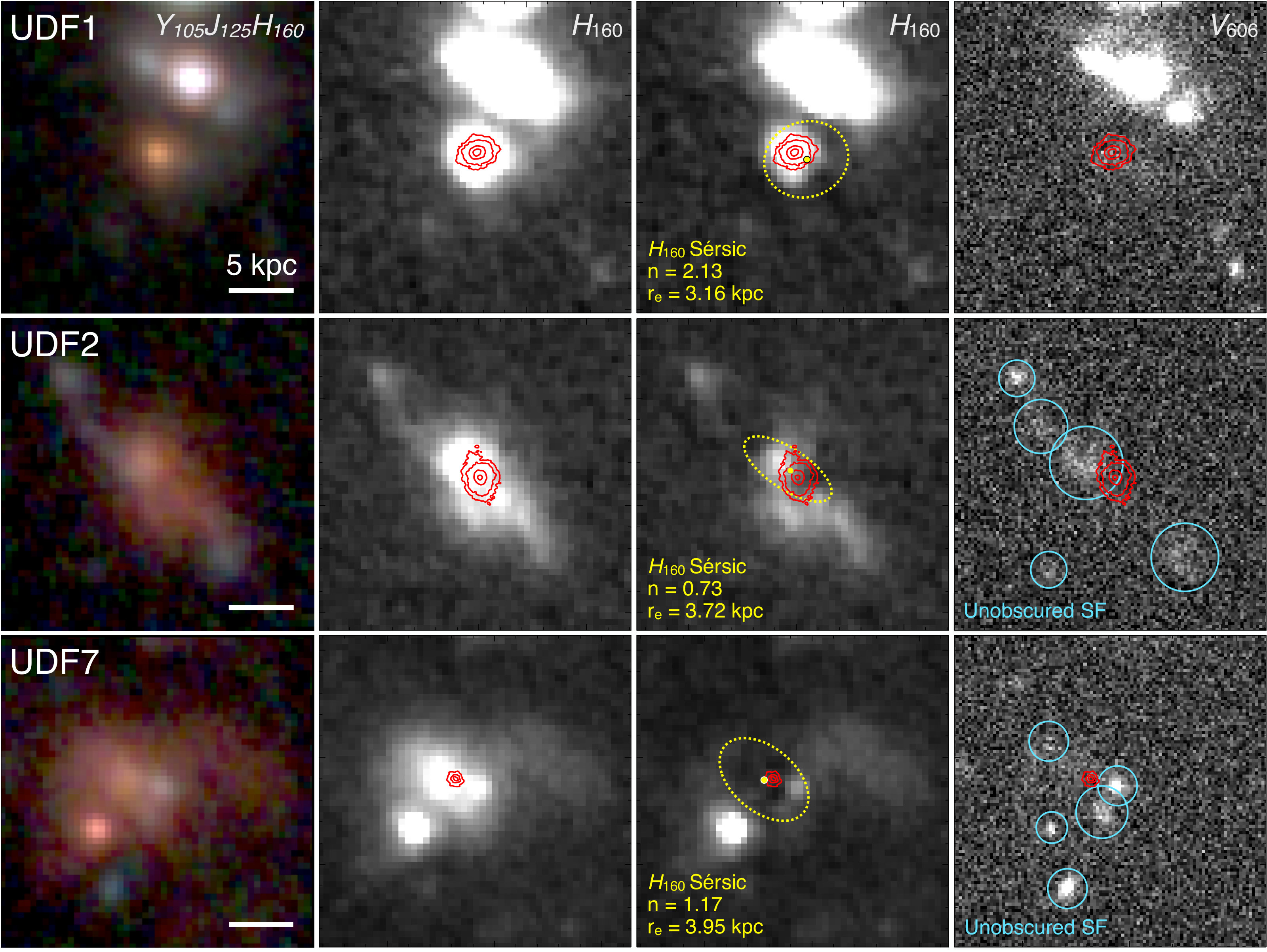 Figure 1
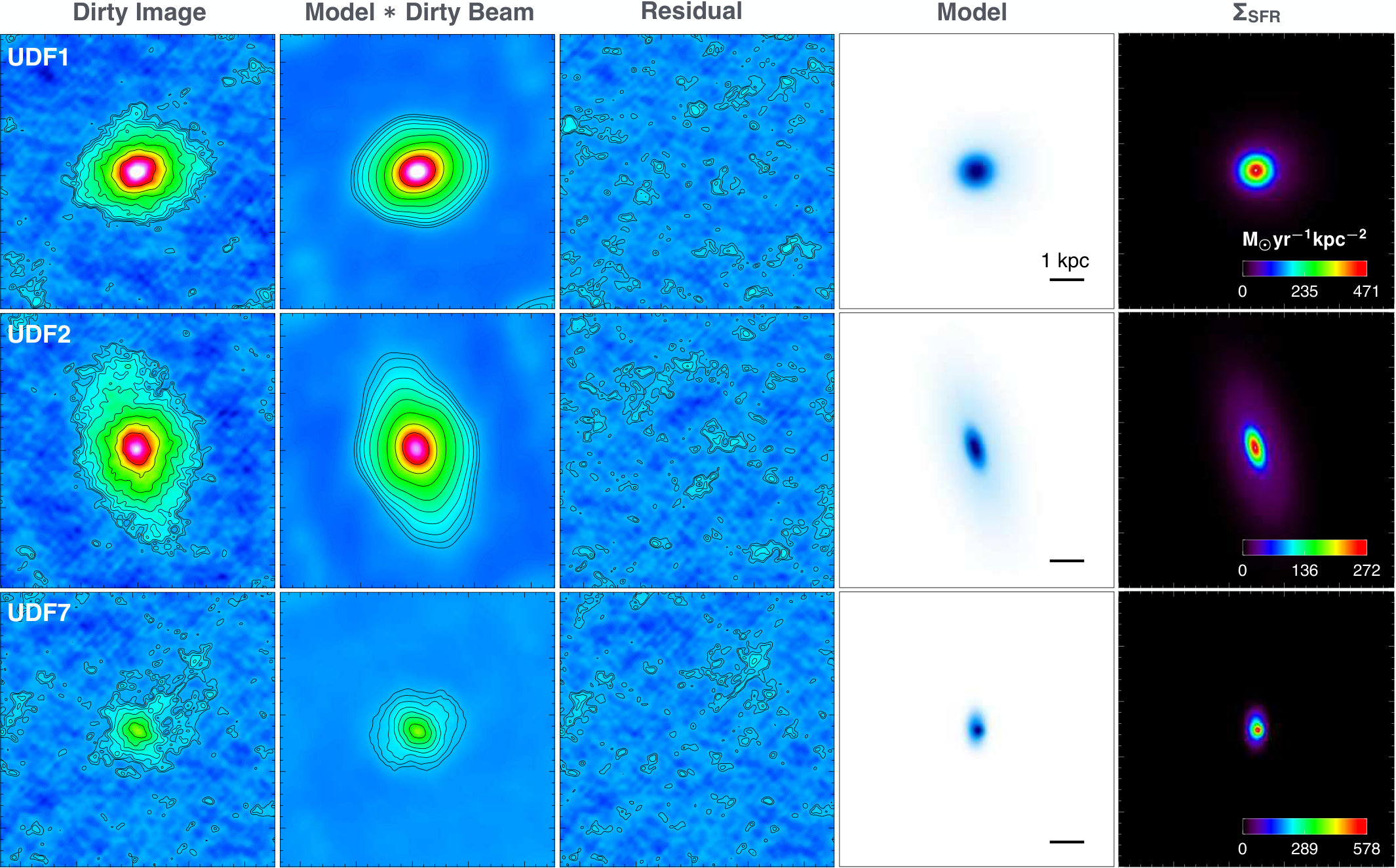 Figure 2
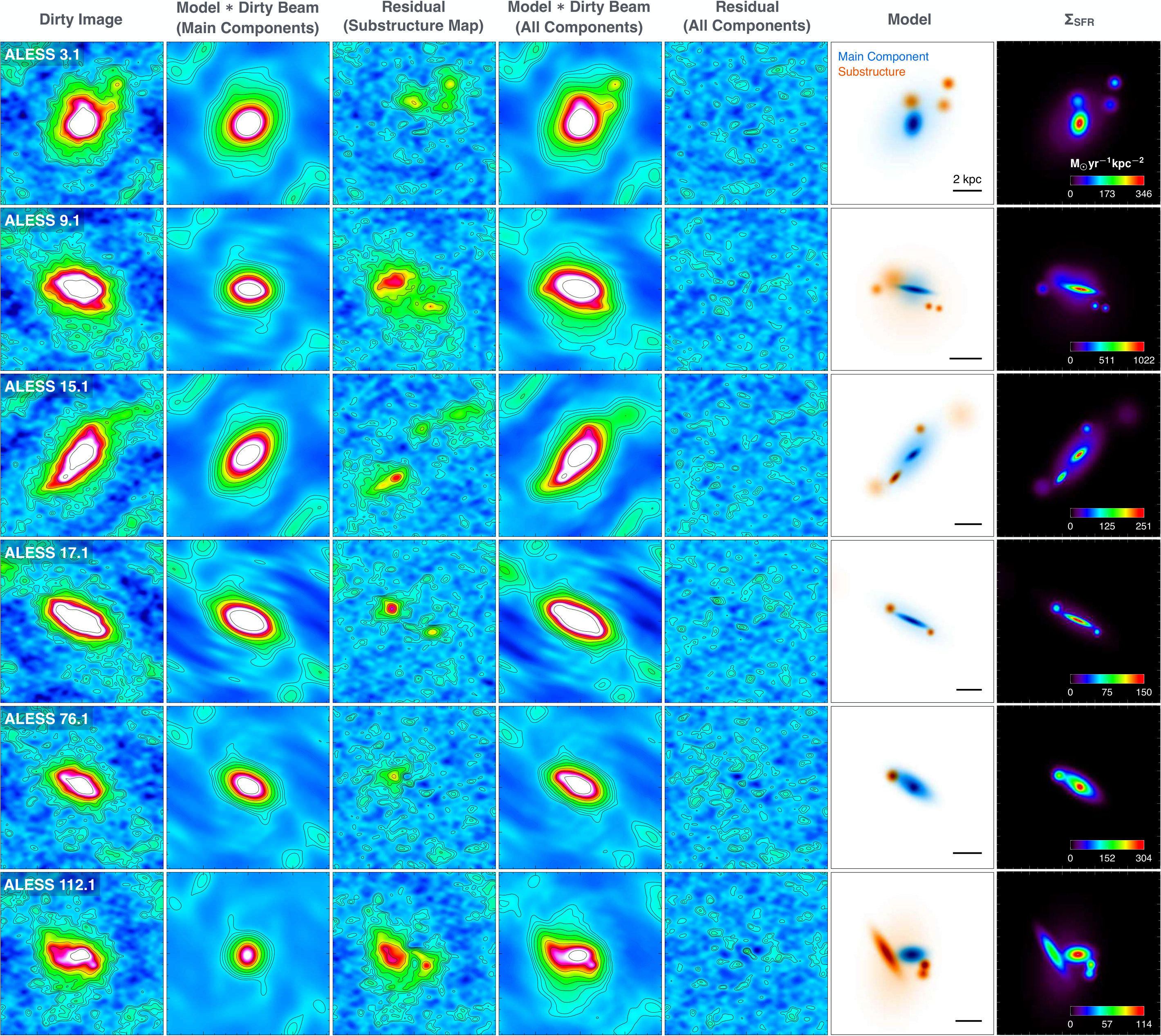 Figure 3
 Figure 4
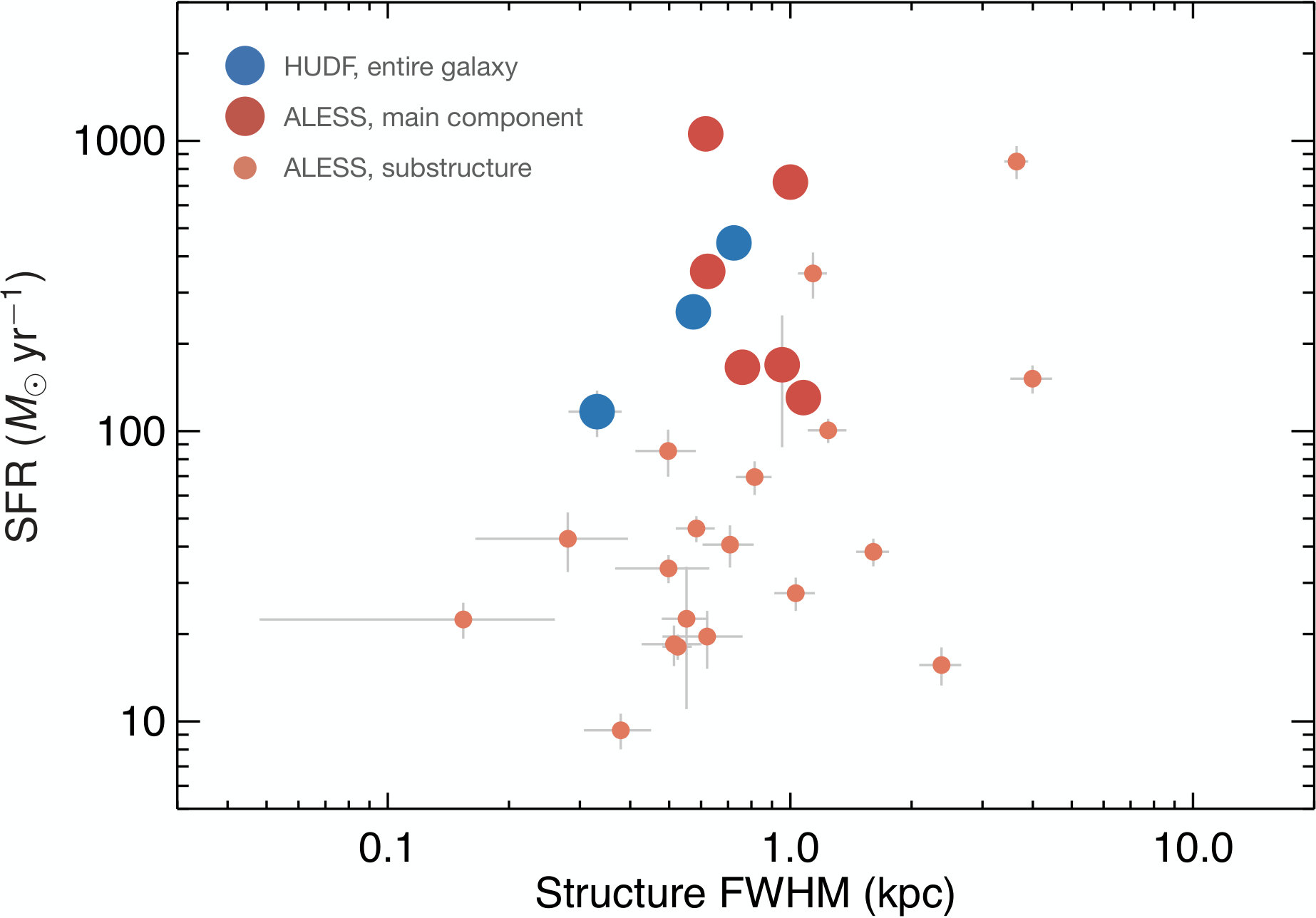 Figure 5
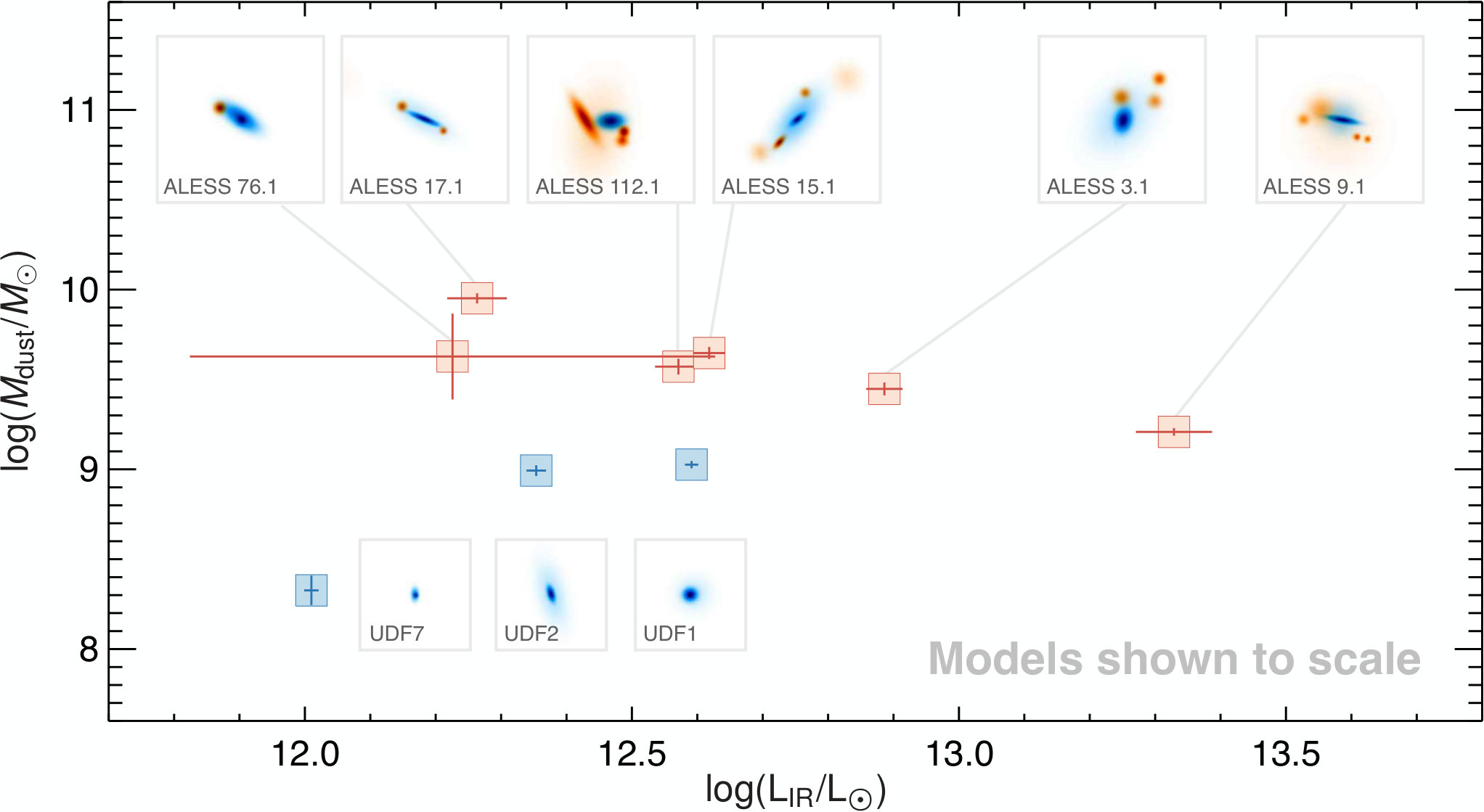 Figure 6
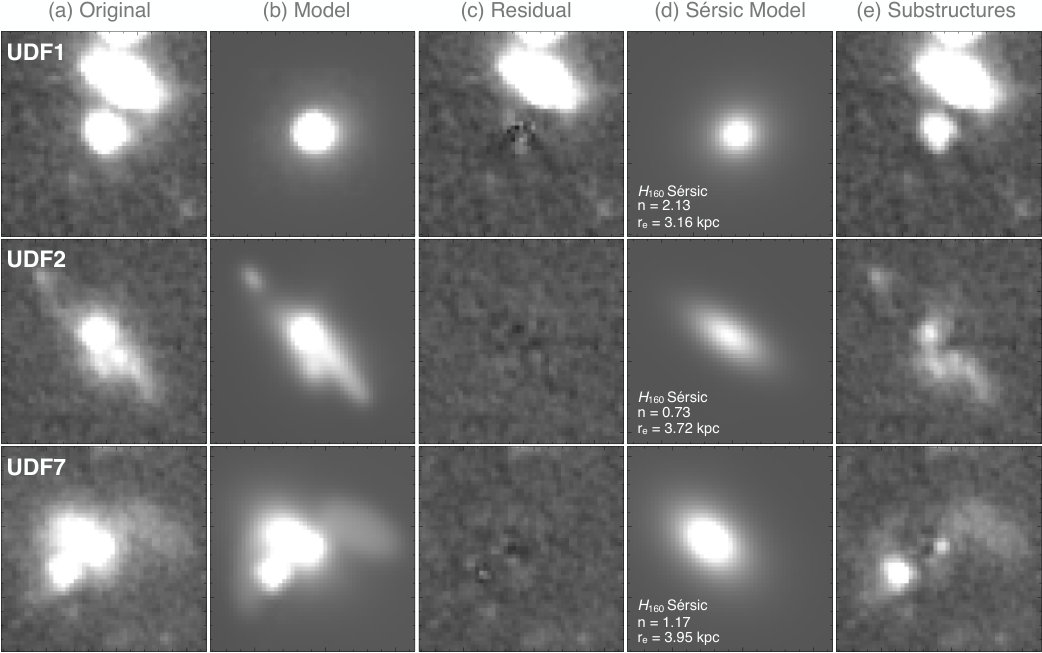 Figure 7
Peer Reviews
No public reviews on file for this paper yet. If you reviewed it on a platform where reviews are public (OpenReview, ICLR, NeurIPS, ICML), you can paste yours below so the community can read it here.
Videos
No videos yet. Explain this paper in a talk, walkthrough, or lecture? Add one.