Stellar rotation and the extended main sequence turnoff in the open cluster NGC 5822
Weijia Sun, Richard de Grijs, Licai Deng, Michael D. Albrow

TL;DR
This study confirms that stellar rotation causes the extended main sequence turnoff in the open cluster NGC 5822 by analyzing rotational velocities and their correlation with the eMSTO region.
Contribution
It provides the first spectroscopic evidence linking stellar rotation to the eMSTO phenomenon in an intermediate-age open cluster.
Findings
Fast rotators are on the red side of the eMSTO.
Slow rotators are on the blue side of the eMSTO.
Stellar rotation reproduces the observed eMSTO in models.
Abstract
The origin of extended main sequence turnoffs (eMSTOs) in intermediate-age (1-3 Gyr) clusters is one of the most intriguing questions in current star cluster research. Unlike the split main sequences found in some globular clusters. which are caused by bimodal populations in age and/or chemical abundances, eMSTOs are believed to be owing to stellar rotation. We present a spectroscopic survey of MSTO stars in a nearby, intermediate-age (\unit[0.9]{Gyr}), low mass () Galactic open cluster, NGC 5822. We derive a clean sample of member stars based on \textit{Gaia} proper motions and parallaxes and confirm the existence of an eMSTO. Using medium-resolution () Southern African Large Telescope (SALT) spectra, we derive the rotational velocities of 24 member stars (representing 20\% completeness around the eMSTO region) and find that the loci of the main…
Click any figure to enlarge with its caption.
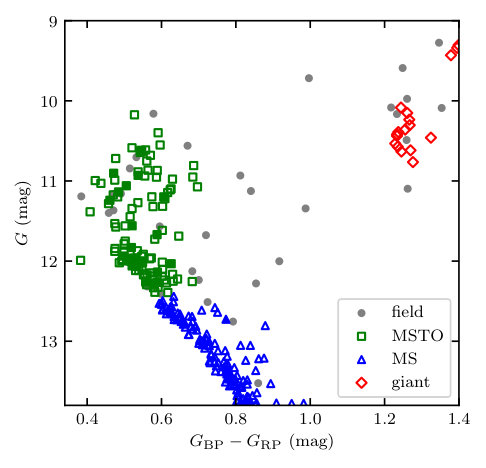 Figure 1
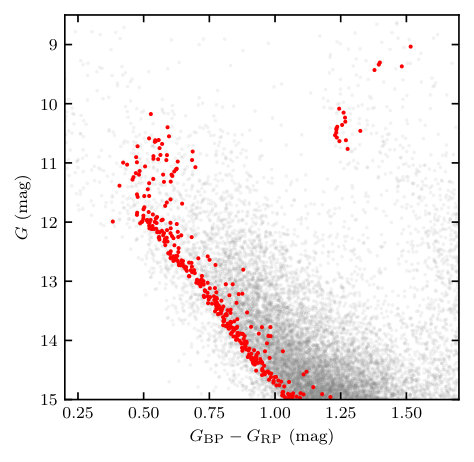 Figure 2
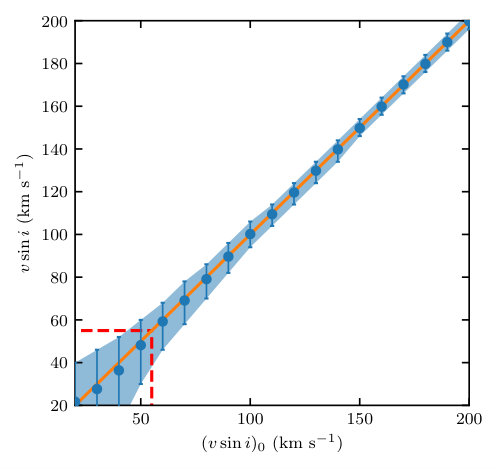 Figure 3
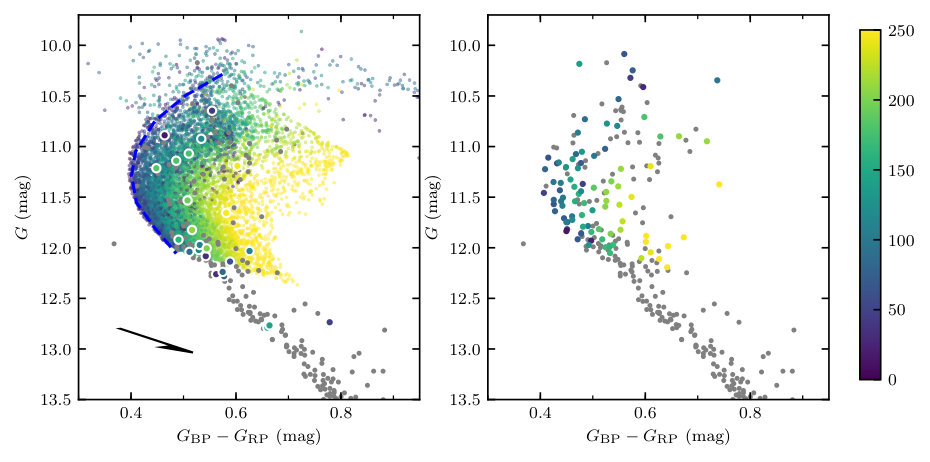 Figure 4
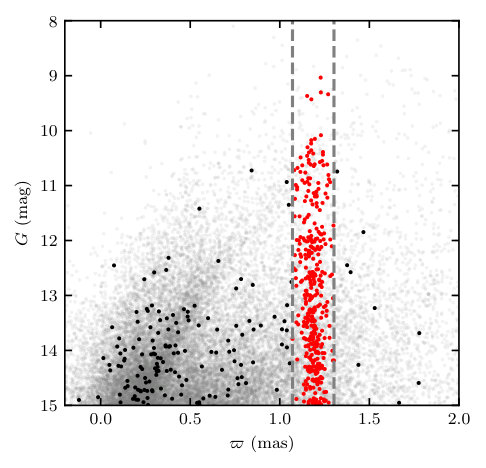 Figure 5
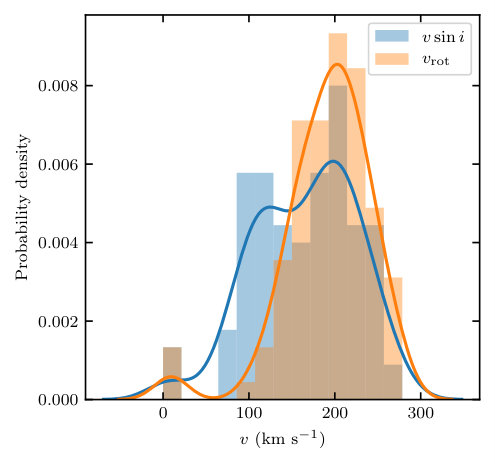 Figure 6
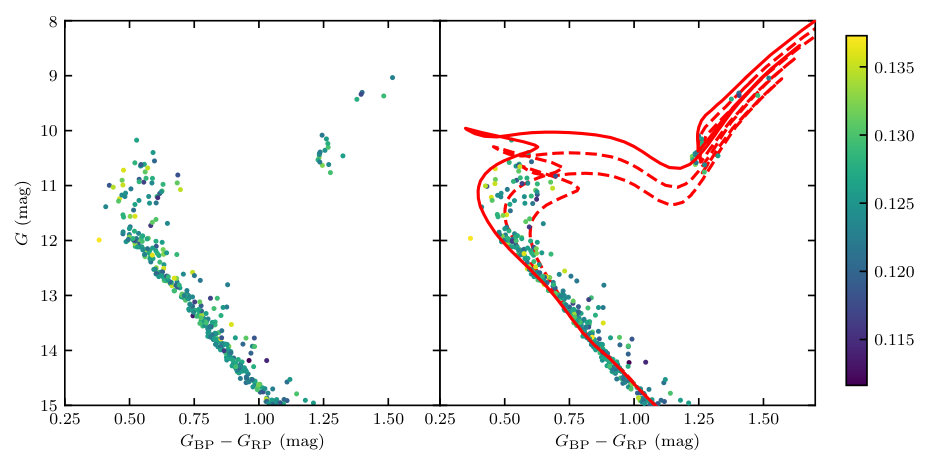 Figure 7
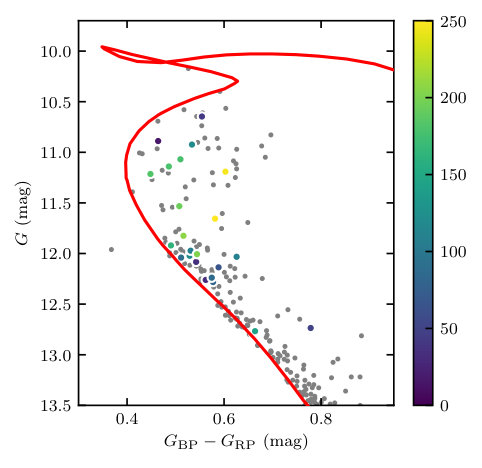 Figure 8
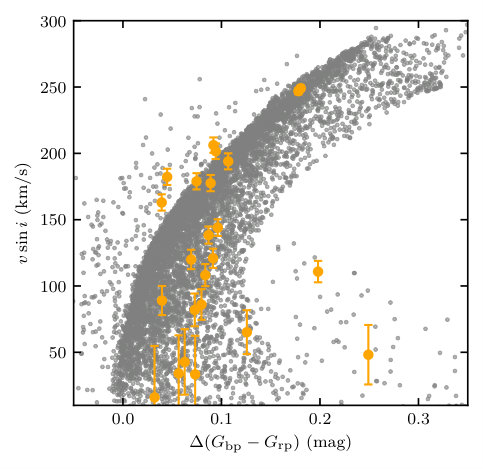 Figure 9
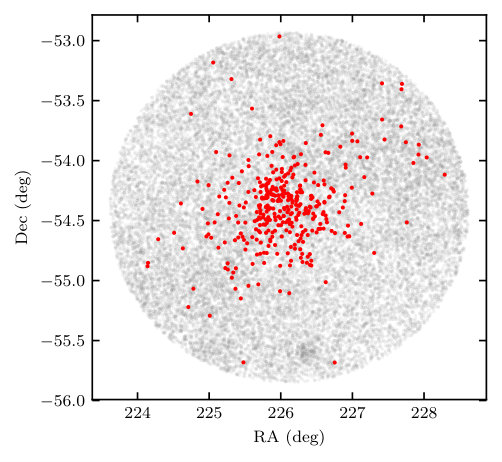 Figure 10
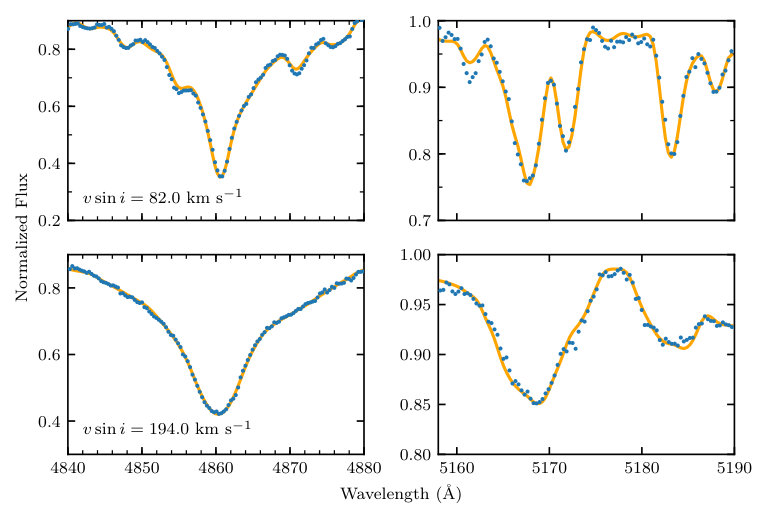 Figure 11
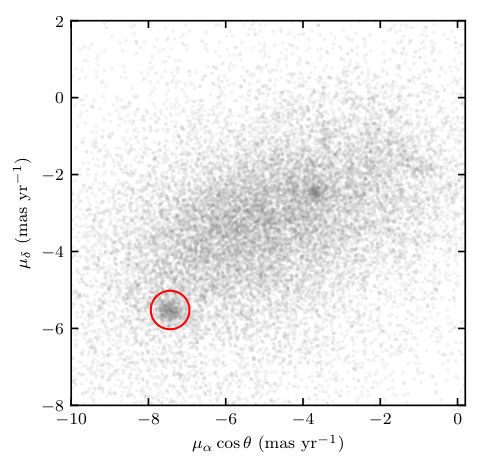 Figure 12
Peer Reviews
No public reviews on file for this paper yet. If you reviewed it on a platform where reviews are public (OpenReview, ICLR, NeurIPS, ICML), you can paste yours below so the community can read it here.
Videos
No videos yet. Explain this paper in a talk, walkthrough, or lecture? Add one.