A new class of change point test statistics of R\'enyi type
Lajos Horv\'ath, Curtis Miller, Gregory Rice

TL;DR
This paper introduces a new class of change point test statistics inspired by Re9nyi, which outperform traditional methods especially when changes occur near the sample endpoints, with applications in regression and GMM models.
Contribution
The paper proposes a novel Re9nyi-inspired change point test statistic with superior power near sample boundaries and extends it to various statistical models.
Findings
Re9nyi statistics outperform traditional methods near sample endpoints
Effective in detecting change points in regression and GMM models
Most effective in identifying changes in Fama-French factor models
Abstract
A new class of change point test statistics is proposed that utilizes a weighting and trimming scheme for the cumulative sum (CUSUM) process inspired by R\'enyi (1953). A thorough asymptotic analysis and simulations both demonstrate that this new class of statistics possess superior power compared to traditional change point statistics based on the CUSUM process when the change point is near the beginning or end of the sample. Generalizations of these "R\'enyi" statistics are also developed to test for changes in the parameters in linear and non-linear regression models, and in generalized method of moments estimation. In these contexts we applied the proposed statistics, as well as several others, to test for changes in the coefficients of Fama-French factor models. We observed that the R\'enyi statistic was the most effective in terms of retrospectively detecting change points that…
Click any figure to enlarge with its caption.
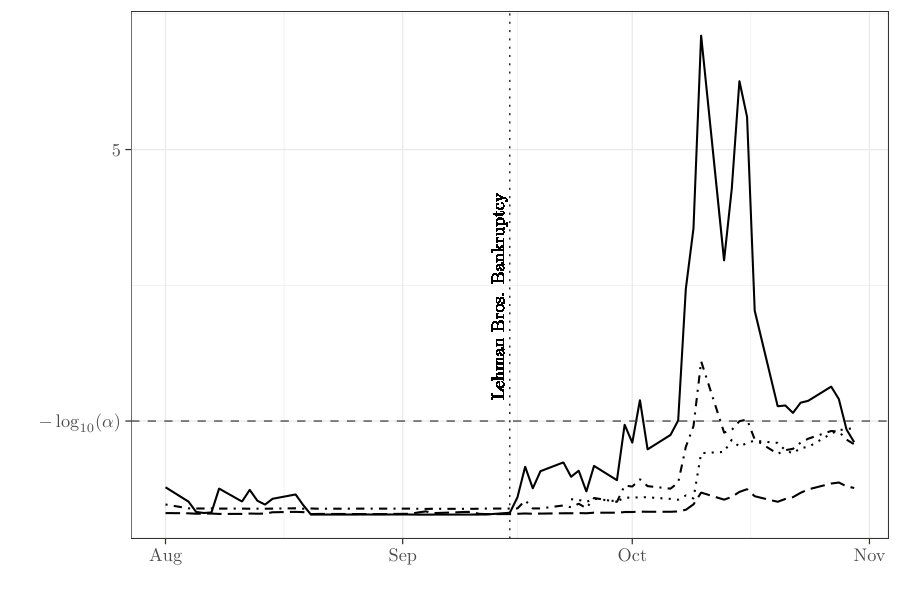 Figure 1
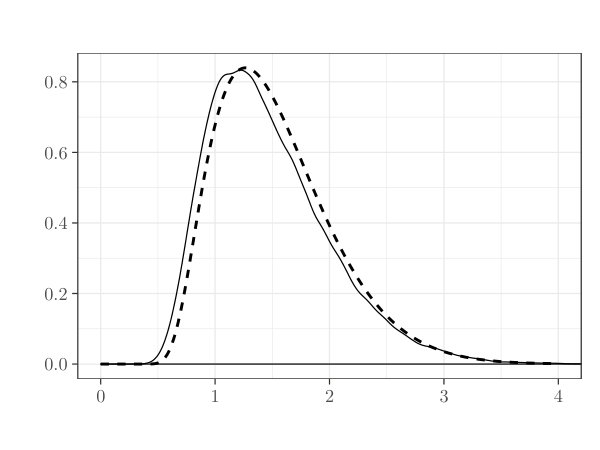 Figure 2
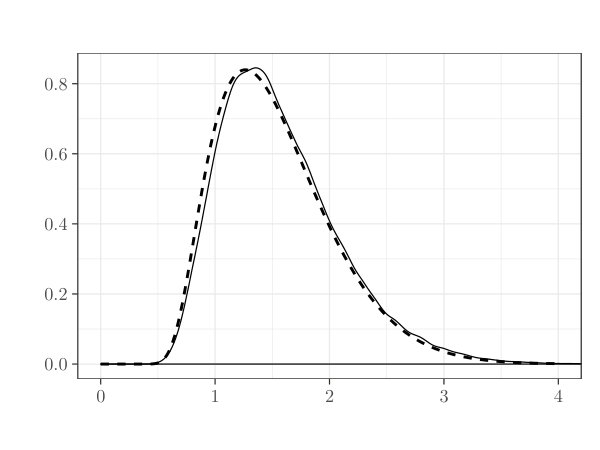 Figure 3
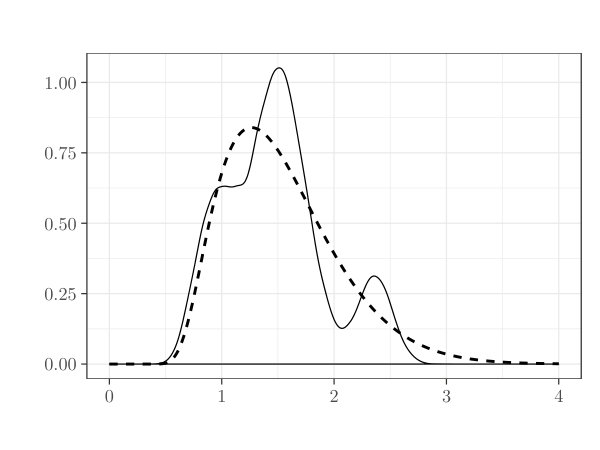 Figure 4
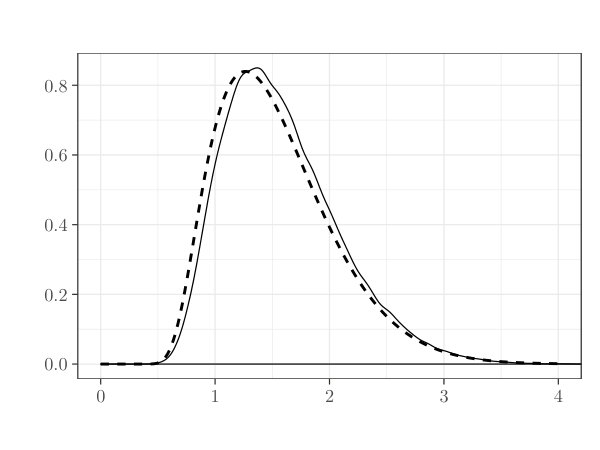 Figure 5
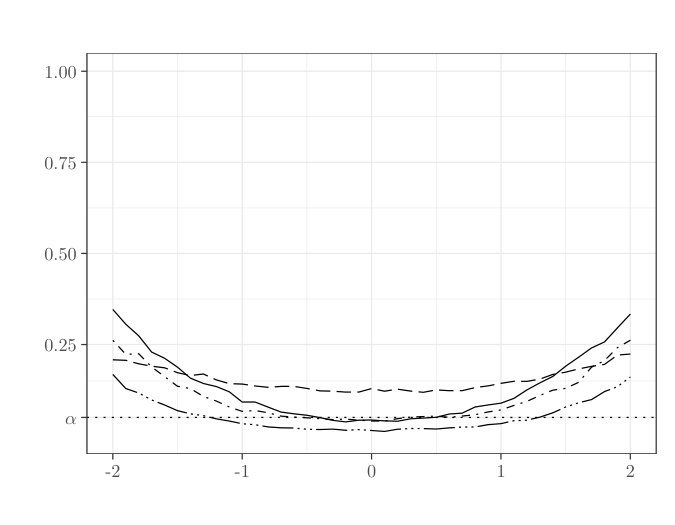 Figure 6
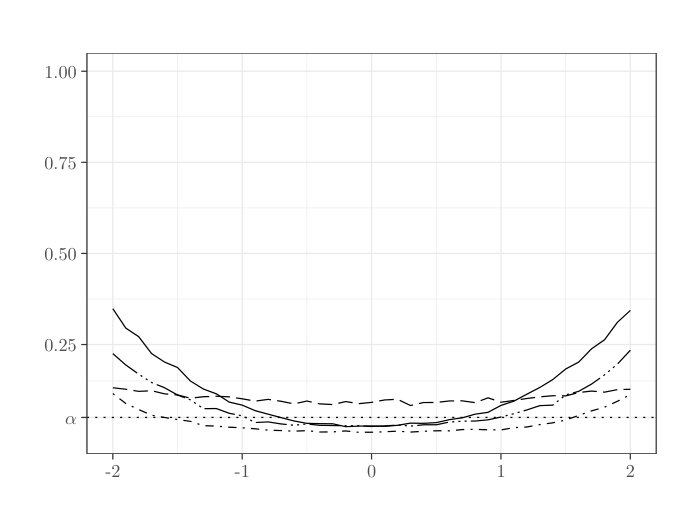 Figure 7
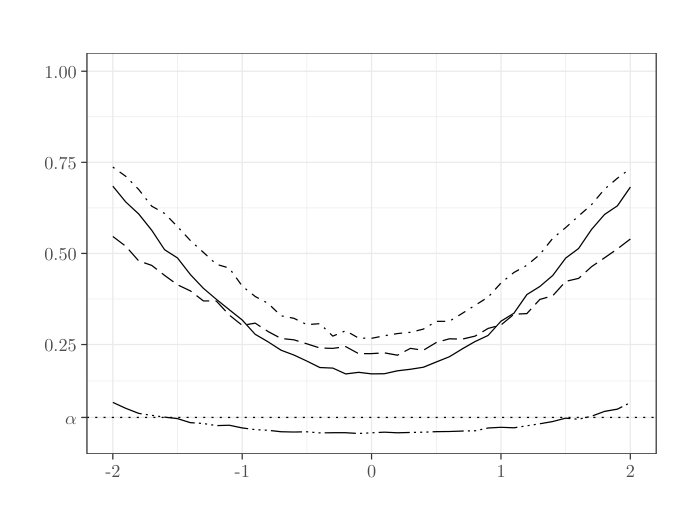 Figure 8
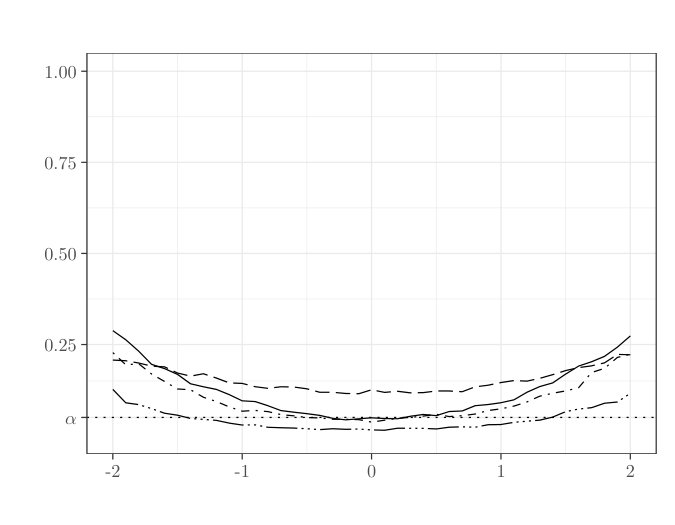 Figure 9
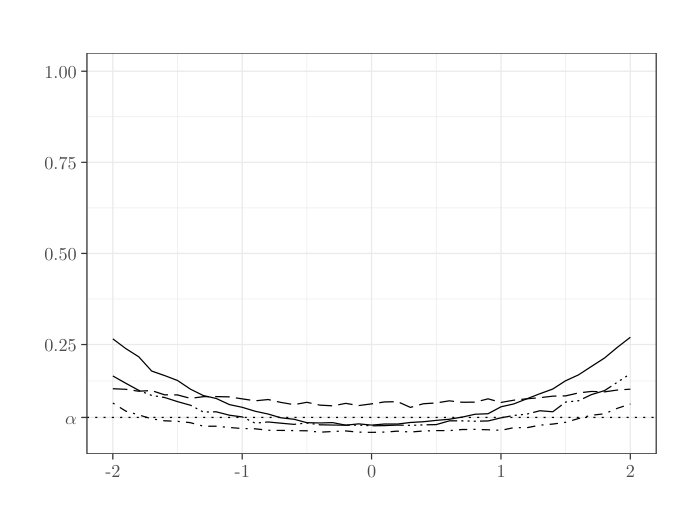 Figure 10
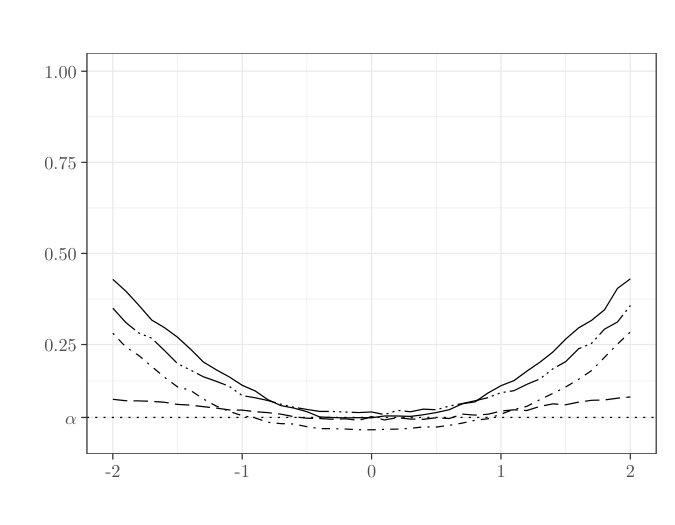 Figure 11
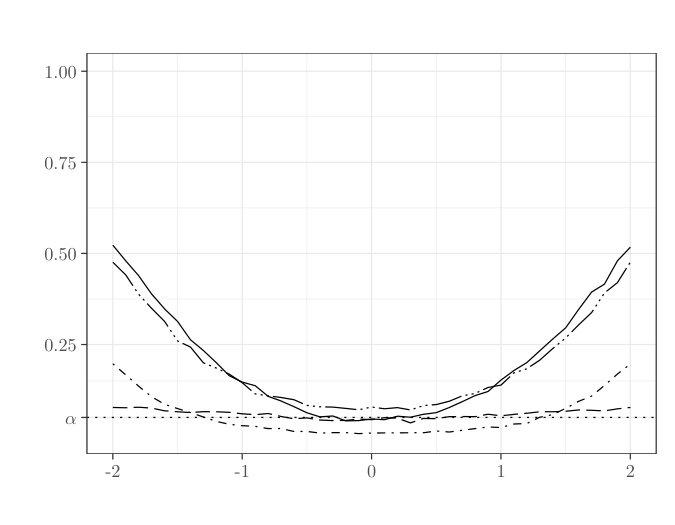 Figure 12
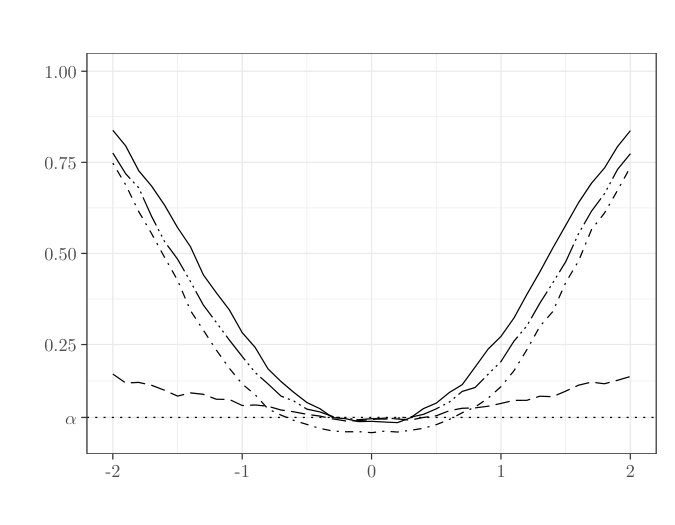 Figure 13
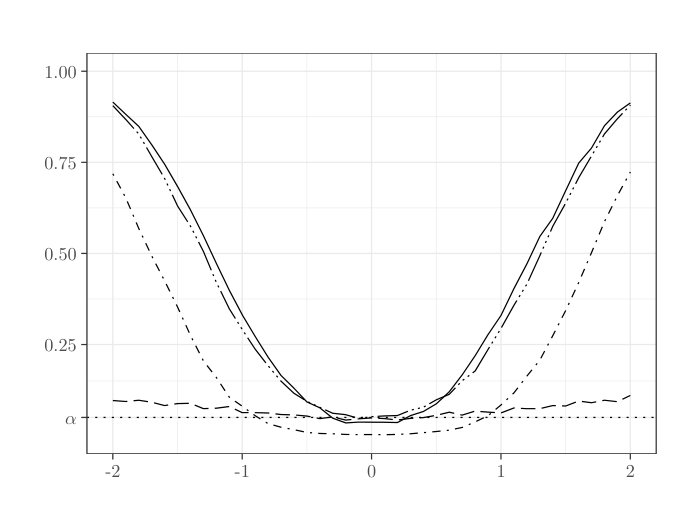 Figure 14
Peer Reviews
No public reviews on file for this paper yet. If you reviewed it on a platform where reviews are public (OpenReview, ICLR, NeurIPS, ICML), you can paste yours below so the community can read it here.
Videos
No videos yet. Explain this paper in a talk, walkthrough, or lecture? Add one.