The Born Supremacy: Quantum Advantage and Training of an Ising Born Machine
Brian Coyle, Daniel Mills, Vincent Danos, Elham Kashefi

TL;DR
This paper introduces the Ising Born Machine, a quantum generative model that cannot be efficiently simulated classically, and demonstrates novel training methods and potential quantum advantages in learning complex distributions.
Contribution
The paper proposes the Ising Born Machine, new training methods using Stein Discrepancy and Sinkhorn Divergence, and demonstrates quantum advantage in learning complex distributions.
Findings
The IBM cannot be efficiently simulated classically in the worst case.
The proposed training methods outperform MMD in numerical experiments.
Quantum kernels improve over classical kernels in the context of IBM.
Abstract
The search for an application of near-term quantum devices is widespread. Quantum Machine Learning is touted as a potential utilisation of such devices, particularly those which are out of the reach of the simulation capabilities of classical computers. In this work, we propose a generative Quantum Machine Learning Model, called the Ising Born Machine (IBM), which we show cannot, in the worst case, and up to suitable notions of error, be simulated efficiently by a classical device. We also show this holds for all the circuit families encountered during training. In particular, we explore quantum circuit learning using non-universal circuits derived from Ising Model Hamiltonians, which are implementable on near term quantum devices. We propose two novel training methods for the IBM by utilising the Stein Discrepancy and the Sinkhorn Divergence cost functions. We show numerically, both…
Click any figure to enlarge with its caption.
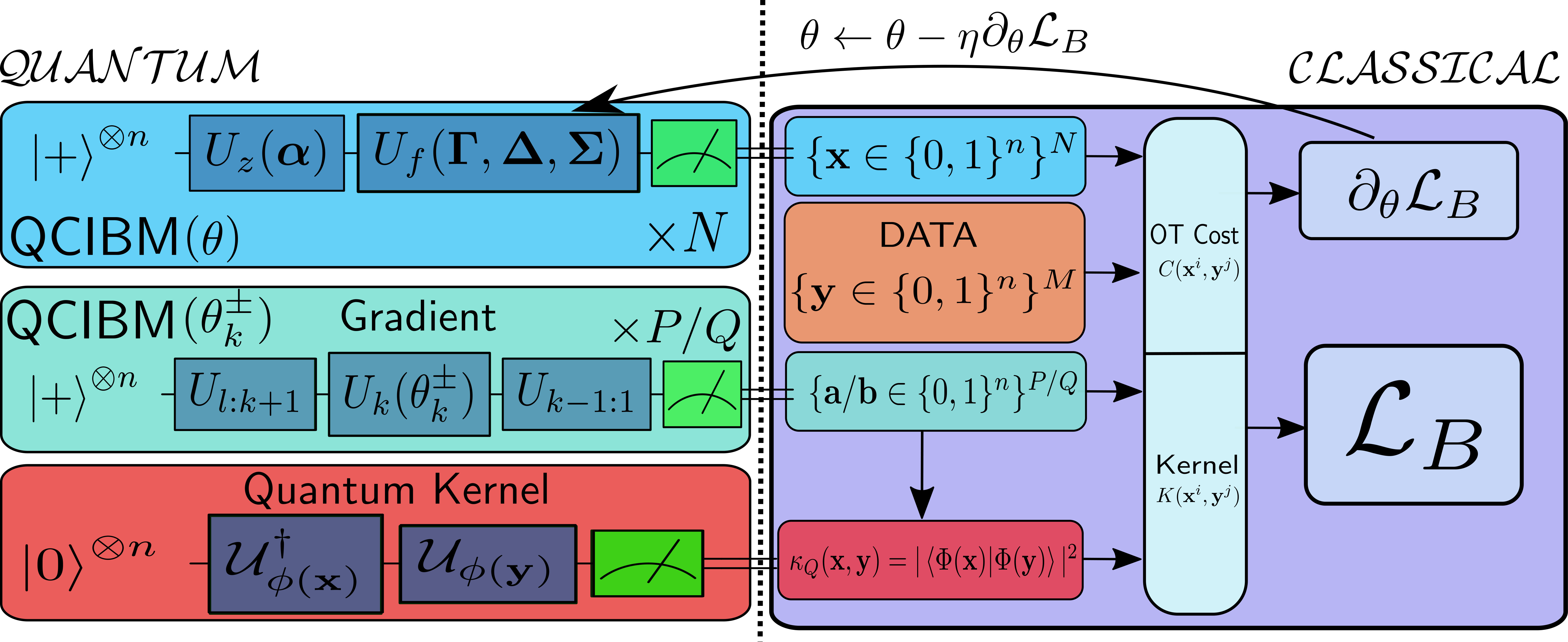 Figure 1
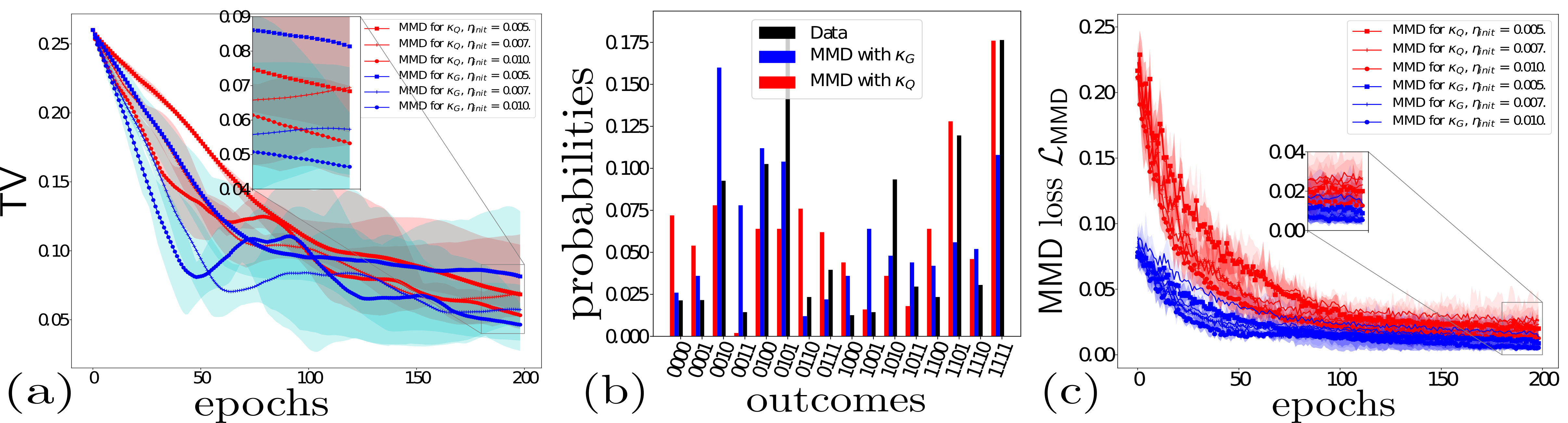 Figure 2
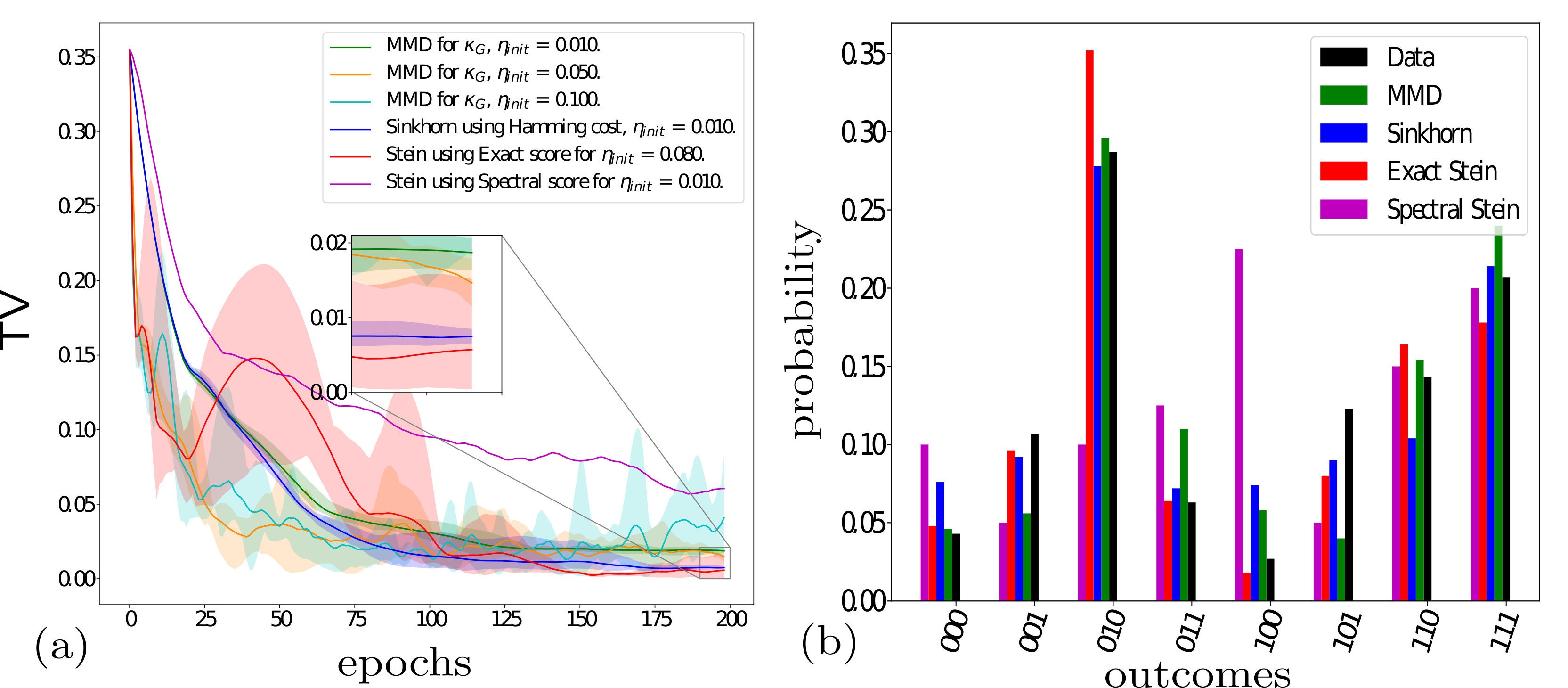 Figure 3
 Figure 4
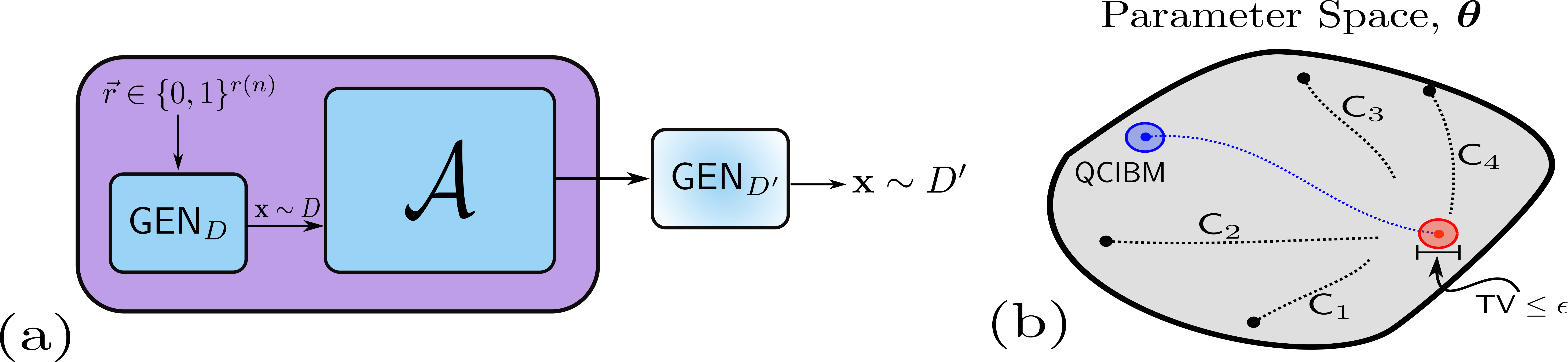 Figure 5
 Figure 6
 Figure 7
 Figure 8
 Figure 9
 Figure 10
 Figure 11
Peer Reviews
No public reviews on file for this paper yet. If you reviewed it on a platform where reviews are public (OpenReview, ICLR, NeurIPS, ICML), you can paste yours below so the community can read it here.
Videos
No videos yet. Explain this paper in a talk, walkthrough, or lecture? Add one.