On $\mathrm{H}-$trivial line bundles on toric DM stacks of dim $\geq3$
Lev Borisov, Chengxi Wang

TL;DR
This paper investigates conditions under which infinitely many line bundles on smooth toric Deligne-Mumford stacks have trivial cohomology, providing both sufficient and necessary conditions in certain cases.
Contribution
It establishes a sufficient condition for trivial cohomology of line bundles on toric DM stacks and proves its necessity in specific three-dimensional cases.
Findings
Identifies a sufficient condition for infinitely many line bundles to have trivial cohomology.
Shows that in dimension three, the sufficient condition is also necessary under certain geometric constraints.
Advances understanding of line bundle cohomology on toric DM stacks of arbitrary dimension.
Abstract
We study line bundles on smooth toric DM stacks of arbitrary dimension. A sufficient condition is given for when infinitely many line bundles on have trivial cohomology. In dimension three, the sufficient condition is also a necessary condition in the case that has no more than one pair of collinear rays.
Click any figure to enlarge with its caption.
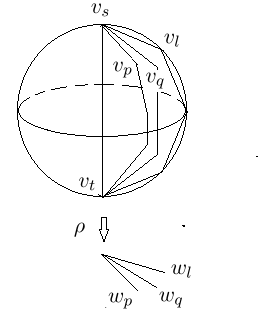 Figure 1
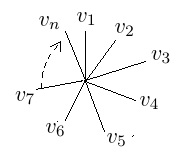 Figure 2
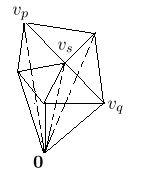 Figure 3
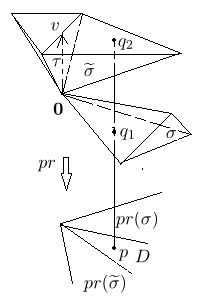 Figure 4
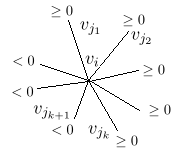 Figure 5
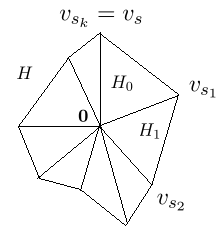 Figure 6
Peer Reviews
No public reviews on file for this paper yet. If you reviewed it on a platform where reviews are public (OpenReview, ICLR, NeurIPS, ICML), you can paste yours below so the community can read it here.
Videos
No videos yet. Explain this paper in a talk, walkthrough, or lecture? Add one.
Taxonomy
TopicsAlgebraic Geometry and Number Theory · Algebraic structures and combinatorial models · Commutative Algebra and Its Applications
On trivial line bundles on toric DM stacks of dim
Lev Borisov
Department of Mathematics
Rutgers University
Piscataway, NJ 08854
and
Chengxi Wang
Department of Mathematics
University of California Los Angeles
Los Angeles, CA 90095
Abstract.
We study line bundles on smooth toric Deligne-Mumford stacks of arbitrary dimension. We give a sufficient condition for when infinitely many line bundles on have trivial cohomology. In dimension three, this sufficient condition is also a necessary condition under the technical assumption that has no more than one pair of collinear rays.
Contents
- 1 Introduction
- 2 Line bundles on toric DM stacks and their cohomology
- 3 Proof of the first main result
- 4 Dimension three case
- 5 Comments
1. Introduction
Derived categories of coherent sheaves on algebraic varieties and stacks have attracted significant attention over the last several decades. Some of these categories can be generated by so-called full exceptional collections, often built from line bundles, [5, 10, 11, 12, 13, 14, 15].
A defining feature of an exceptional collection of line bundles is that for the cohomology spaces vanish for all . This prompts a problem, which is rather intriguing, even outside of the context of derived categories:
For a given variety/stack, characterize all line bundles on it with trivial cohomology.
These line bundles are called trivial in [18] and the current paper and immaculate in [1]. Unfortunately, the problem of classification of all -trivial line bundles is too hard in many cases. However, the following, more tractable question is the first step towards this goal.
Does a given variety/stack admit infinitely many trivial line bundles?
Our main focus in this paper is on smooth proper toric Deligne-Mumford (DM) stacks, where one can hope to translate the answer to the above question into a combinatorial criterion. For example, the paper [18] gives such criterion in the dimension two case.
Theorem 1.1**.**
[18]** Let be a proper smooth dimension two toric Deligne-Mumford stack associated to a complete stacky fan . Then there are infinitely many trivial line bundles on if and only if there exists such that and are collinear.
Remark 1.2**.**
The importance of pairs of collinear rays was already observed in the paper [16] in the related context of vanishing of cohomology of divisorial sheaves on toric varieties.
This paper came out of a project to extend the result of [18] to toric DM stacks in higher dimensions. While we have made significant progress, a complete criterion is still elusive, even in dimension three.
Our first result gives a sufficient condition for infinitude of trivial line bundles. We associate with each piecewise linear function a convex polytope in the real span of lattice of characters by looking at the corresponding restrictions to the maximum cones of , see Definition 2.13.
Theorem 2.14. Let be a proper smooth dimension toric DM stack associated to a complete stacky fan . If there exists a piecewise linear function such that , then there are infinitely many trivial line bundles on .
Remark 1.3**.**
If admits a non-trivial fibration structure then a pull-back of a non-trivial line bundle from provides the requisite piecewise linear function of Theorem 2.14. However, such may exist without a fibration structure, so existence of can be viewed as some weaker version of a fibration structure.
We also get a partial converse of Theorem 2.14 for smooth toric varieties and DM stacks in dimension three.
Theorem 4.12. Let be a proper smooth dimension three toric DM stack associated to a complete stacky fan . Assume there exists no more than one pair of collinear rays in . Then there are infinitely many trivial line bundles on if and only if there exists a piecewise linear function such that .
The paper is organized as follows. In Section 2, we give an overview of smooth toric DM stacks, their Picard groups and the cohomology of line bundles on the stacks. Then we define forbidden cones and forbidden sets and state the first main result Theorem 2.14. Section 3 focuses on the proof of Theorem 2.14. We first exhibit an important way of producing infinitely many trivial line bundles in Proposition 3.1. Then we relate it to the existence of a piecewise linear function such that . In Section 4, we consider the case of dimension three. We prove a sufficient and necessary condition for the existence of infinitely many trivial line bundles under the assumption that there is no more than one pair of collinear rays in . Section 5 describes our current state of knowledge and states some open questions related to infinitude of trivial line bundles on toric DM stacks.
Acknowledgements. L. Borisov was partially supported by NSF grant DMS-1601907. We thank Markus Perling for pointing out the paper [16] to us.
2. Line bundles on toric DM stacks and their cohomology
In this section, we introduce toric DM stacks and their Picard groups , and describe the cohomology spaces of line bundles on . These results are well known but we need to state them to set up the notation and terminology and to help the reader who is not familiar with previous work in the area.
To avoid the technicalities of the derived Gale duality of [3], we consider a lattice which is a free abelian group of finite rank. Let be a complete simplicial fan in . We choose a lattice point in each of the one-dimensional cones of . If has one-dimensional cones, we get a complete stacky fan , see [3]. The toric DM stack associated to this stacky fan is constructed in [3] as a stack version of the homogeneous coordinate ring construction of [4]. The description of line bundles on the DM stacks is analogous to the description of the Picard group that was given in [6, 8]. By [17], we know the line bundles on are in bijection with collections of integers, up to global linear functions, as described below.
Proposition 2.1**.**
The Picard group of is isomorphic to the quotient of with basis by the subgroup of elements of the form for all in the character lattice . We use the notation to denote these line bundles.
Proof.
See Proposition 3.3 in [2]. ∎
Now we remind the reader how to calculate the cohomology of a line bundle on . For each , we define to be the abstract simplicial complex on vertices as follows
[TABLE]
The following proposition gives a description of the cohomology of a line bundle on in terms of the reduced simplicial homology spaces of .
Proposition 2.2**.**
[2]** Let . Then
[TABLE]
where the sum is over all such that .
Proof.
See Proposition 4.1 in [2]. ∎
Remark 2.3**.**
We have if and only if there exists such that . The other extreme case of happens when the simplicial complex , i.e. when there exists such that with all .
Remark 2.4**.**
Let be a line bundle in . Assume there is another expression . Then by Proposition 2.1, there exists an element such that for . Thus the cohomology of can also be written as
[TABLE]
where .
In this paper, our primary objects of interest are trivial line bundles which we define below.
Definition 2.5**.**
Let be a line bundle in . We say that is trivial iff for all .
A combinatorial criterion for triviality is given in terms of forbidden sets introduced below, see [2, 7].
Definition 2.6**.**
For every subset , we denote to be the simplicial complex where for and for . Let . For each , the forbidden set associated to is defined by
[TABLE]
Remark 2.7**.**
Since is complete, contains and . This corresponds to the cases of Remark 2.3.
Proposition 2.8**.**
Let be a line bundle on . Then is trivial if and only if does not lie in for any .
Proof.
By Proposition 2.2, line bundle is trivial if and only if
[TABLE]
for all and all such that . By Definition 2.6, this is further equivalent to for any . ∎
We introduce which can be regarded as a quotient of with basis elements given by by the space of for .
Definition 2.9**.**
For each , we define the forbidden point by
[TABLE]
We define a cone associated to with vertex at the origin to be
[TABLE]
We define the forbidden cone by
[TABLE]
Remark 2.10**.**
By definition, for any the image of under the map is a subset of .
In dimension two, the set is especially simple.
Example 2.11**.**
Let be a complete simplicial fan in with one-dimensional cones and lattice points chosen in each of the one-dimensional cones of . In the case that , the maximal cones of are , see Figure 1. We describe . For example, we have if , if , but , for all , see Figure 1.
In dimension three we can describe as follows.
Example 2.12**.**
In the case , we have
[TABLE]
Indeed for a line bundle on , the cohomology is nontrivial iff is disconnected and is nontrivial iff is disconnected.
We are now ready to state the first main result of this paper. We associate to any real-valued piecewise linear function on a convex polytope in the character space .
Definition 2.13**.**
For each maximal dimensional cone , let be the linear function on such that in cone . We define to be the convex hull of the set in the character space .
Our first main result whose proof is given in the next section is a combinatorial condition for toric DM stacks in any dimension to have infinitely many trivial line bundles.
Theorem 2.14**.**
Let be a proper smooth dimension toric DM stack associated to a complete stacky fan . If there exists a piecewise linear function such that , then there are infinitely many trivial line bundles on .
3. Proof of the first main result
In this section, we prove Theorem 2.14. We start by describing a key method of constructing infinitely many trivial line bundles.
Proposition 3.1**.**
Let be a proper smooth dimension toric DM stack associated to a complete stacky fan and let be one of the . Suppose there exists a globally non-linear piecewise linear function which takes integer values on such that is constant on all lines parallel to . Then there are infinitely many trivial line bundles on .
In order to prove Proposition 3.1, we need several lemmas. For an element of , we define and . Let be a piecewise linear function on such that .
Lemma 3.2**.**
Let
[TABLE]
be the subset of the sphere \big{(}\mathrm{N}_{\mathbb{R}}\setminus\{\mathbf{0}\}\big{)}\diagup\mathbb{R}_{>0} on which is negative. Let be the subset of indices of the ray generators on which is negative and let be the corresponding simplicial complex from Definition 2.6. Then is homotopic to . Here we consider to be the geometric realization of an abstract simplicial complex [9].
Proof.
We think of as a subspace of topological space with the inclusion given by
[TABLE]
Now we consider a map which is defined as follows. For any point , let be a cone of that contains . We can write , where and all . Then we define
[TABLE]
Assume we choose another cone containing and write , where and all . Then if and if . Thus the map is well defined. Crucially, is continuous since change continuously when the point moves from one cone to another. We immediately see that , for any by definition of . Moreover for any and any since for all if . Therefore is a strong deformation retraction of topological space onto subspace . ∎
We have the following corollary.
Corollary 3.3**.**
The topological spaces and are homotopic.
Proof.
Since is a fibration with fiber over \{v\in\big{(}\mathrm{N}_{\mathbb{R}}\setminus\{\mathbf{0}\}\big{)}\diagup\mathbb{R}_{>0}|\varphi(v)<0\}, these spaces are homotopic to each other. Then we use Lemma 3.2. ∎
Lemma 3.4**.**
Let S_{\varphi\geq 0}=\{v\in\big{(}\mathrm{N}_{\mathbb{R}}\setminus\{\mathbf{0}\}\big{)}\diagup\mathbb{R}_{>0}|\varphi(v)\geq 0\} and , then is homotopic to .
Proof.
The proof is analogous to that of Lemma 3.2 and is left to the reader. ∎
Lemma 3.5**.**
Let . Then we have
[TABLE]
This implies that has nontrivial reduced homology if and only if has nontrivial reduced homology.
Proof.
Since the sphere is homeomorphic to \big{(}\mathrm{N}_{\mathbb{R}}\setminus\{\mathbf{0}\}\big{)}\diagup\mathbb{R}_{>0}, we have . By Alexander duality (Corollary 3.45 in [9]), we have an isomorphism of reduced homology and reduced cohomology . Using the Universal Coefficient Theorem, we get \mathrm{H}_{red}^{m-1-j}(S_{\varphi<0})=\big{(}\mathrm{H}_{m-1-j}^{red}(S_{\varphi<0})\big{)}^{*}. Since is homotopic to by Lemma 3.4 and is homotopic to by Lemma 3.2, we obtain H^{red}_{j-1}(C_{I})=\big{(}H^{red}_{m-j-1}(C_{I^{c}})\big{)}^{*}. ∎
We still need to prove a couple of easy statements before we proceed to prove Proposition 3.1. For some fixed , we consider all lines parallel to . The parametric equation of such a line is for some , where .
Lemma 3.6**.**
Let be a piecewise linear function on and be a parametric equation of a line parallel to . Then for any point in the interior of the cone , the derivative of the function equals where gives the restriction of to .
Proof.
The function restricts to the linear function with gradient and the claim follows. ∎
Corollary 3.7**.**
For a nonzero , we have for all cones if and only if is constant on all lines parallel to .
Proof of Proposition 3.1..
Without loss of generality, we assume . We claim that is trivial. We will prove it by looking at the behavior of the relevant piecewise linear functions on lines parallel to .
Let be the coefficient of in . By Remark 2.4, we have
[TABLE]
where . In order to show , it is sufficient to show that is contractible for each . We have
[TABLE]
Let and .
We consider two cases, and .
Case , equivalently . We regard and as different signs. Since is an integer, is non-negative when and is negative when . Thus the sign of is the same as the sign of for all . Let be the piecewise linear function such that for all . For any line parallel to , we have for some constant value since is constant on all lines parallel to . This implies that if then for any line parallel to there exists a unique (which depends continuously on the line) such that iff . Similarly, if , is negative precisely when for some that depends on . Therefore is contractible. So is contractible by Lemma 3.3. Thus has trivial reduced homology by Lemma 3.5.
Case . We have . Let be the piecewise linear function such that corresponds to , i.e. for and . Let be any line parallel to . For each there exists such that lies in the interior of a cone with the ray if and only if . By Lemma 3.6, the derivative of equals [math] since is constant on all lines parallel to . For any point in the interior of the region corresponding to , the derivative of the function equals . For any point in the interior of the region corresponding to , the derivative of the function equals . Thus is constant on for and the derivative of the function at is for . So is negative when is sufficiently large, or for all . Thus is again contractible. Then is contractible by Lemma 3.3. Thus has trivial reduced homology by Lemma 3.5.
Since the same argument applies to instead of , for any we have is trivial. These line bundles are non-isomorphic to one another because is non-linear. Thus there are infinitely many trivial line bundles on . ∎
In order to prove Theorem 2.14, we will show that implies that there exists such that .
Proposition 3.8**.**
The inequality holds if and only if there exist and a constant such that .
Proof.
We have that if and only if is inside an affine hyperplane in . Equivalently there exists a non-zero such that , where is a constant. The essence of this proposition is that may be chosen in . The “if” part is clear, so we focus on the “only if” part.
As a first step, we adjust by adding a linear function in such that for all cones and on the (unique) cone which contains in its interior. This clearly has no effect on the statement of the proposition, since adding a global linear function amounts to a parallel translation of . Another consequence of this shift is that is now constant on lines parallel to .
We now claim that for every , there exists a such that . To prove it, consider the projection and choose a maximum-dimensional cone such that and have overlapping interiors. Let , see Figure 2. There are linear functions and on such that and .
For any , we pick a point in such that and a point in such that . Since and are on a line parallel to , by Lemma 3.7, we get . Since and , we have
[TABLE]
So we get on which is a full-dimensional set. This implies on . Thus .
We choose a vertex of the cone . For any maximum-dimensional cone in , we have since . Then for all cones , we obtain . ∎
Now we are ready to prove Theorem 2.14.
Proof of Theorem 2.14..
By Proposition 3.8, there exists such that for some constant . By adding a global linear function, we may ensure that . Corollary 3.7 and Proposition 3.1 then imply the result. ∎
4. Dimension three case
In this section we focus on proper smooth dimension three toric DM stacks associated to a complete stacky fan in the lattice of rank three. We give a criterion for when there exist infinitely many trivial line bundles on for smooth toric varieties and DM stacks in dimension three under the (technical) assumption that there is no more than one pair of collinear rays in .
The arguments of this section are rather cumbersome. We start with several preliminary results. The following easy lemma highlights the importance of diagonals in , i.e., pairs such that and are collinear.
Lemma 4.1**.**
Let be an element in , where is a piecewise linear function on . Let . Then there exists a piecewise linear function on such that
- •
,
- •
,
- •
* for all ,*
- •
If , , then iff is linear on .
Proof.
We consider , where is a generic element in the affine plane . We immediately get and . The fact that is generic means that for all except possibly when . If , then is linear on iff , and g is linear on iff is linear on . ∎
Definition 4.2**.**
For a point , we denote the neighborhood of to be
Definition 4.3**.**
Let be the vectors in which are ordered clockwise when looking from to the origin. Let be a piecewise linear function on . We regard and as different signs. We count the number of pairs of vectors such that and have different signs. We call it the number of sign changes of among . For example, there are exactly two sign changes in in Figure 3.
Recall that in Definition 2.9, the cones are shifts of the forbidden cones to the origin. The following easy observation will be used below.
Remark 4.4**.**
An element of given by
[TABLE]
with for all and for all lies in the interior of . Indeed, any positive linear combination of generators of a polyhedral cone lies in its interior.
The nontrivial Lemma 4.5 below, which will be key to subsequent arguments, establishes some peculiar features of elements in which are not contained in the interior of any . Our interest in such elements of stems from the fact that if has infinitely many trivial line bundles, then their accumulation points in the sphere have this property (see [18]).
Lemma 4.5**.**
Let be a nonzero element in which is not contained in the interior of for any , where is a piecewise linear function on . Assume that there exists some such that and for all . Then there exist exactly two sign changes in , see Figure 3.
Proof.
The main idea is that one can perturb by a small global linear function to achieve or without changing signs of the other . Such perturbation changes the relevant simplicial complexes slightly and in most cases one of them will have a non-trivial reduced homology which would be inconsistent with not being in the interior of any .
Let be the simplicial complex and be the simplicial complex . The reduced simplicial homology complex is as follows:
[TABLE]
The reduced simplicial homology complex is as follows:
[TABLE]
We use inclusions for each to obtain an exact sequence of complexes:
[TABLE]
We now take a linear function such that and for all . Let , we have for . Thus
[TABLE]
in , where for all and . We also have by the definition . Since is not contained in the interior of for any , we get , in view of Remark 4.4. This implies has trivial reduced homology. Similarly, we consider to show that has trivial reduced homology.
Since and have trivial homology, by snake lemma and the exact sequence (4.1), the complex has trivial homology. Thus the Euler characteristic .
If for all , then , because the only nonzero space in is the contribution of the zero-dimensional cell . If for all , then we also have by observing that there is zero-dimensional cell, one-dimensional cells and two-dimensional cells.
Thus there exist at least two sign changes in . A length connected component of positive sign in provides one-dimensional cells and two-dimensional cells, so the Euler characteristic equals
[TABLE]
Thus there exists only one component of positive sign in . This implies that there are exactly two sign changes in . ∎
Let be an element in which is not contained in the interior of for any , where is a piecewise linear function on . Assume there is some such that . Then we can consider the projection along the line .
Under the projection, the neighborhood gives a two-dimensional complete stacky fan , where , and . We can think of as a piecewise linear function on since . Let be the generators of . Let . For any , let be the cone associated to with vertex at the origin which is obtained by shifting the forbidden cone .
Lemma 4.6**.**
The point is not contained in the interior of for any .
Proof.
Assume is contained in for some . This implies that there exists a linear function on such that for any and has non-trivial reduced homology. This would mean that the number of sign changes in is not two, which contradicts Lemma 4.5. ∎
Lemma 4.7**.**
Let be an element in which is not contained in the interior of for any , where is a piecewise linear function on . Assume is such that there is no with , ; or is not linear on . Then
- •
either is linear on
- •
or has two half spaces of linearity, i.e., there exists such that are coplanar and is linear on either side of this plane, see Figure 4.
Proof.
By Lemma 4.1, we can assume . Then by Lemma 4.6, we have not in the interior of for any . If in , then is linear on . Otherwise, by Lemma 4.1 in the paper [18], is a pullback of a piecewise linear function on with two half plane regions of linearity. Thus has two half spaces of linearity, see Figure 4. ∎
We will now consider the relatively easy case of dimension three fans with no collinear rays.
Proposition 4.8**.**
Assume that and are not collinear for any and there are infinitely many trivial line bundles on . Then there exists a plane which does not intersect with the interior of any maximal cone of .
Proof.
Since there are infinitely many trivial line bundles on , by the argument of proof in Proposition 3.8 in [18], there exists a non-zero element which is not contained in the interior of any for . 111The idea of the argument of [18] is that the infinite set of trivial line bundles will have an accumulation point in \Big{(}\mathrm{Pic}_{\mathbb{R}}(\mathbb{P}_{\mathbf{\Sigma}})\setminus\{0\}\Big{)}/{\mathbb{R}}_{>0}. If this point lies in the interior of some then we get trivial line bundles deep inside , which is impossible.
We will introduce a piecewise linear function on with .
Since , there exists a vertex such that is not linear in . By Lemma 4.7, has two half planes of linearity in . The line breaking the linearity corresponds to a plane in which we denote by . We know that passes through the vector , the origin and a point in which we denote by . Also, is linear on each side of plane in . Thus does not intersect with interior of any maximal cones of with as a ray. By assumption, we know and is not collinear for any . By Lemma 4.1 and the same argument for , we get a plane passing through such that is linear on each side of plane in . Thus equals and does not intersect with interior of any maximal cones of with as ray. We continue the process, and eventually come around to find a positive number such that . We get a plane for which does not intersect with interior of any maximal cones of . See Figure 5. ∎
Theorem 4.9**.**
Let be a proper smooth dimension three toric DM stack associated to a complete stacky fan . Assume there exist no collinear pairs of rays in and there are infinitely many trivial line bundles on . Then there is a piecewise linear function which takes integer values on such that .
Proof.
By Proposition 4.8, there is a plane which does not intersect the interior of any maximal cone of . Then a continuous piecewise linear function which is zero on one side of and is nonzero on the other side of it, has . Since is rational, a scalar multiple of takes integer values on . ∎
Now we consider the case when there exists exactly one collinear pair in .
Lemma 4.10**.**
Assume that and form the only collinear pair and there are infinitely many trivial line bundles on . Then either there is a plane which does not intersect the interior of any maximal cone of or there exist at least three half planes which contain and and do not intersect with the interior of any maximal cones of .
Proof.
Since there are infinitely many trivial line bundles on , by the argument of proof of Proposition 3.8 in [18], there exists a non-zero element which is not contained in any for , where is a piecewise linear function on .
If is not linear along the line , then by Lemma 4.1, it is the same case as the one without a collinear pair. By the same argument as in Proposition 4.8, there is a plane which does not intersect with interior of any maximal cones of .
Now we consider the case when is linear along the line . If has two half planes of linearity in and , then with the same argument as in the case without collinear pairs in Proposition 4.8 we deduce that there is a plane which does not intersect with the interior of any maximal cones of with as a ray. Thus without loss of generality, we assume has at least three regions of linearity in . Thus at least three vectors in break the linearity. Thus in , we can pick three , and such that is given by a linear function in the cone spanned by and is given by another linear function in the cone span by . This implies the two-dimensional cone spanned by break the linearity.
Now we consider and its neighborhood. By assumption, we know and is not collinear for any . By Lemma 4.1 and the same argument as in the proof of Proposition 4.8, we get a plane passing through such that is linear on each side of plane near . Thus is the plane of the cone spanned by and does not intersect with interior of any maximal cones of with as ray. We continue the process, there exits a positive number such that . We get a half plane which does not intersect with interior of any maximal cones of and passes through .
Similarly, we get half planes and which do not intersect with interior of any maximal cones of and passes through . See Figure 6. ∎
Theorem 4.11**.**
Let be a proper smooth dimension three toric DM stack associated to a complete stacky fan . Assume there exists only one collinear pair of rays in and there are infinitely many trivial line bundles on . Then there is a piecewise linear function such that .
Proof.
Let and be the only collinear pair. By assumption and Proposition 4.10, either there exists a projection along a plane which does not intersect with the interior of any maximal cones of or there are three vectors and a projection alone the line such the is a half plane which does not intersect with interior of any maximal cones of for each . In former case, with the same argument in Theorem 4.9, there is a piecewise linear function which is constant on all lines parallel to .
Let for each . In latter case, we pick a function on which is linear respectively on the cone spanned by , the cone spanned by and the cone spanned by . Let , see Figure 6. We get is a piecewise linear function on since the preimage of is which does not intersect with interior of any maximal cones of for each . Also, is a piecewise linear function which is constant on any line parallel to since the image of any line under is a point. Then Corollary 3.7 and Proposition 3.8 imply the result. ∎
Putting all of it together, we get our second main result.
Theorem 4.12**.**
Let be a proper smooth dimension three toric DM stack associated to a complete stacky fan . Assume there exists no more than one collinear pair of rays in . Then there are infinitely many trivial line bundles on if and only if there exists a piecewise linear function such that .
Proof.
Theorem 4.9, Theorem 4.11 and Theorem 2.14 imply the result. ∎
5. Comments
In this section, we discuss possible refinements and generalizations of the results of this paper. The dimension of is now arbitrary.
For a proper smooth dimension toric DM stack , we have the following three statements:
- (1)
There exists a piecewise linear function such that . 2. (2)
There are infinitely many trivial line bundles on . 3. (3)
There is a nonzero element which is not contained in the interior of for any .
By Theorem 2.14, implies without any additional assumptions. By the argument of [18], also implies in full generality. By Theorem 4.12, implies when and there exist no more than one collinear pair of rays in . By [18] all three conditions are equivalent for .
In the most optimistic scenario, implies in full generality, so all three conditions above are equivalent, but we currently have no methods to approach this problem, even in dimension three. Alternatively, it would be also interesting to find an example of a proper toric DM stack that satisfies but not .
Naturally, other questions to ask is whether implies in full generality or if implies . At present, we can neither prove these implications nor provide counterexamples. Still, we hope that the methods and the approach of this paper will be useful for settling these mysteries.
The reference list from the paper itself. Each links out to its DOI / PubMed record.
- 1[1] K. Altmann, J. Buczyński, L. Kastner, A.-L. Winz, Immaculate line bundles on toric varieties , preprint ar Xiv:1808.09312.
- 2[2] L. Borisov, Z. Hua, On the conjecture of King for smooth toric Deligne-Mumford stacks . Adv. Math. 221(2009), 277-301.
- 3[3] L. Borisov, L. Chen, G. G. Smith, The orbifold Chow ring of toric Deligne-Mumforrd stacks . J. Amer. Math. Soc. 18(2005), no. 1, 193-215.
- 4[4] D. Cox, The homogeneous coordinate ring of a toric variety . J. Algebraic Geom. 4(1995), no. 1, 17-50.
- 5[5] L. Costa, R. M. Miró-Roig, Tilting sheaves on toric varieties . Math. Z. 248(2004), 849-865.
- 6[6] V. I. Danilov, The geometry of toric varieties . Russian Math. Surveys 33 (1978), no. 2, 97-154.
- 7[7] A. I. Efimov, Maximal lengths of exceptional collections of line bundles . J. London Math. Soc. (2)90(2014), 350-372.
- 8[8] W. Fulton, Introduction to toric varieties . Annals of Mathematics Studies 131, Princeton University Press, Princeton, NJ, 1993.