Bayesian Cooperative Localization Using Received Signal Strength With Unknown Path Loss Exponent: Message Passing Approaches
Di Jin, Feng Yin, Carsten Fritsche, Fredrik Gustafsson, Abdelhak M., Zoubir

TL;DR
This paper introduces a Bayesian message passing framework for cooperative localization using received signal strength, effectively estimating positions and unknown path loss exponents with improved computational efficiency.
Contribution
It develops a novel message passing approach with auxiliary importance sampling for joint localization and path loss exponent estimation, enhancing computational efficiency and accuracy.
Findings
Algorithms demonstrate good localization accuracy in simulations.
Proposed methods are computationally efficient.
Effective joint estimation of position and path loss exponent.
Abstract
We propose a Bayesian framework for the received-signal-strength-based cooperative localization problem with unknown path loss exponent. Our purpose is to infer the marginal posterior of each unknown parameter: the position or the path loss exponent. This probabilistic inference problem is solved using message passing algorithms that update messages and beliefs iteratively. To enable the numerical tractability, we combine the variable discretization and Monte-Carlo-based numerical approximation schemes. To further improve computational efficiency, we develop an auxiliary importance sampler that updates the beliefs with the help of an auxiliary variable. To sample from a normalized likelihood function, which is an important ingredient of the proposed auxiliary importance sampler, we develop a stochastic sampling strategy that mathematically interprets and corrects an existing heuristic…
Click any figure to enlarge with its caption.
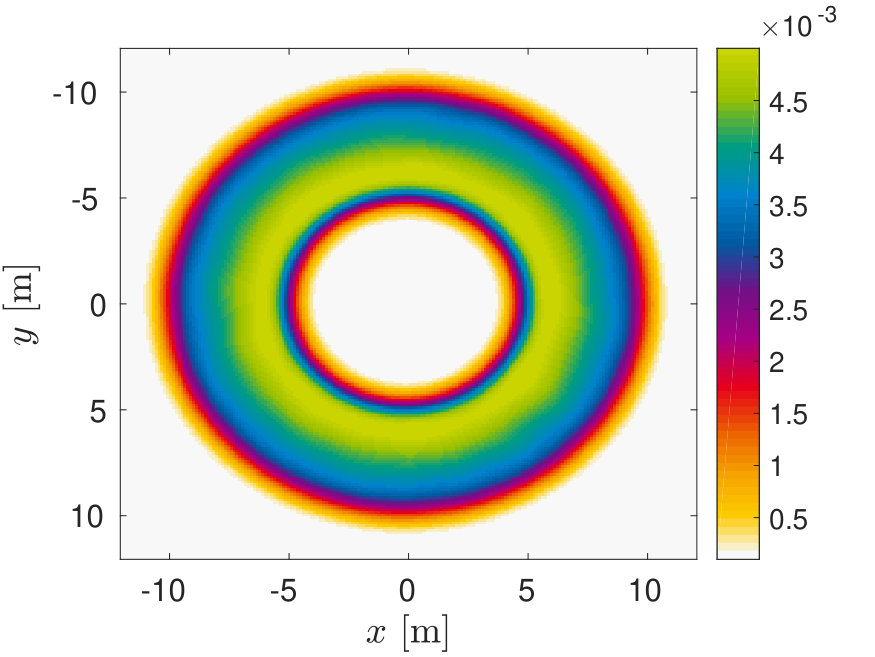 Figure 1
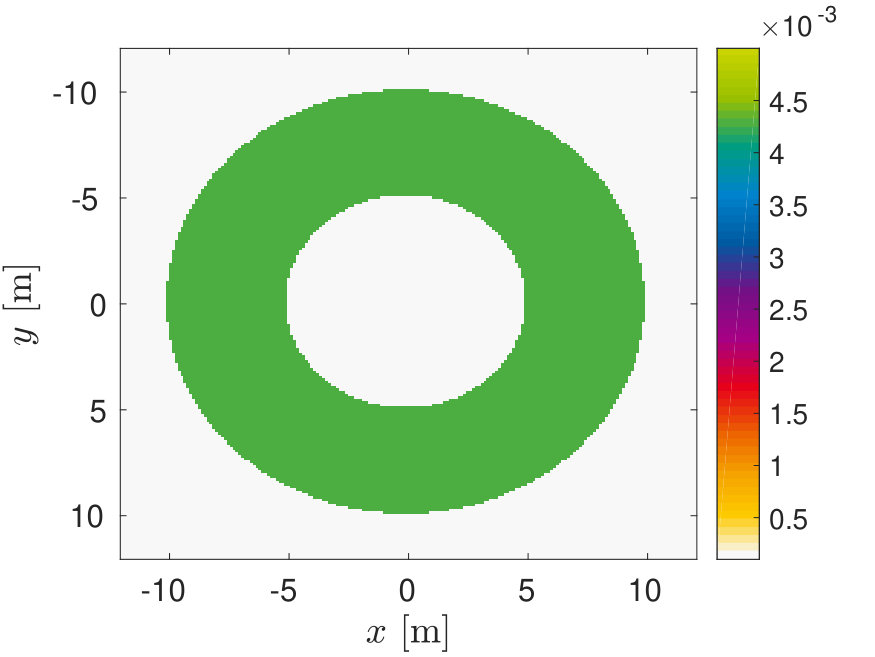 Figure 2
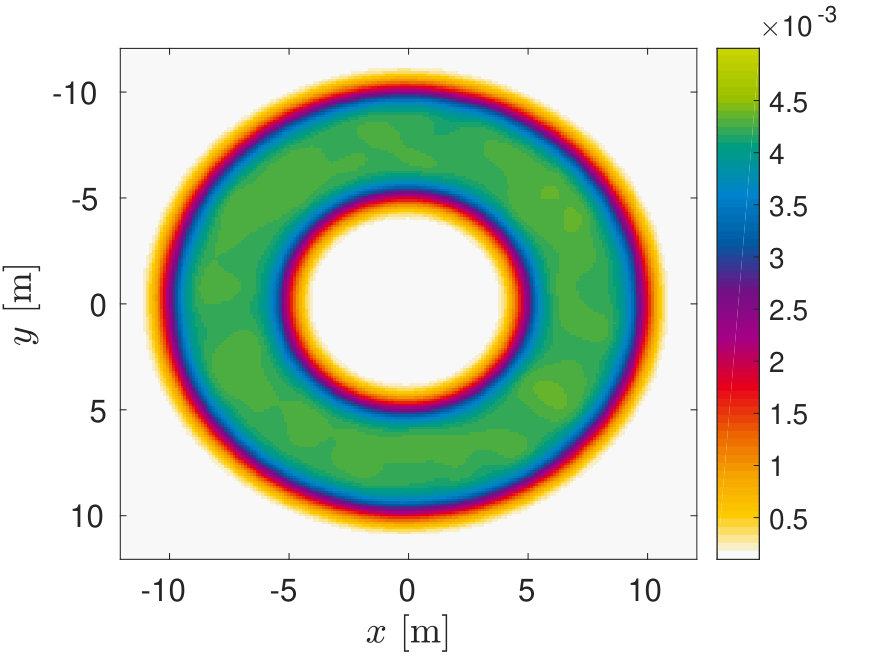 Figure 3
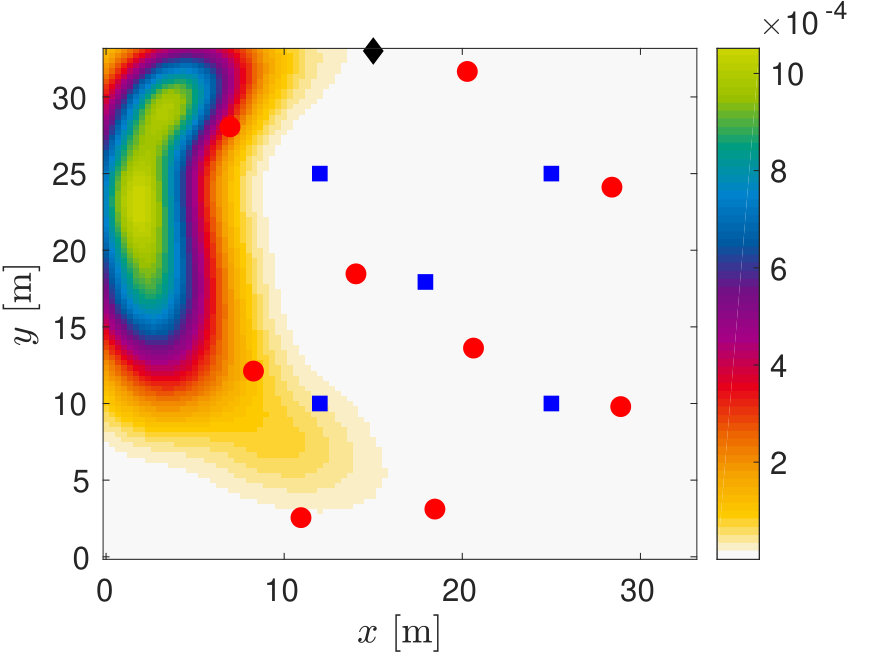 Figure 4
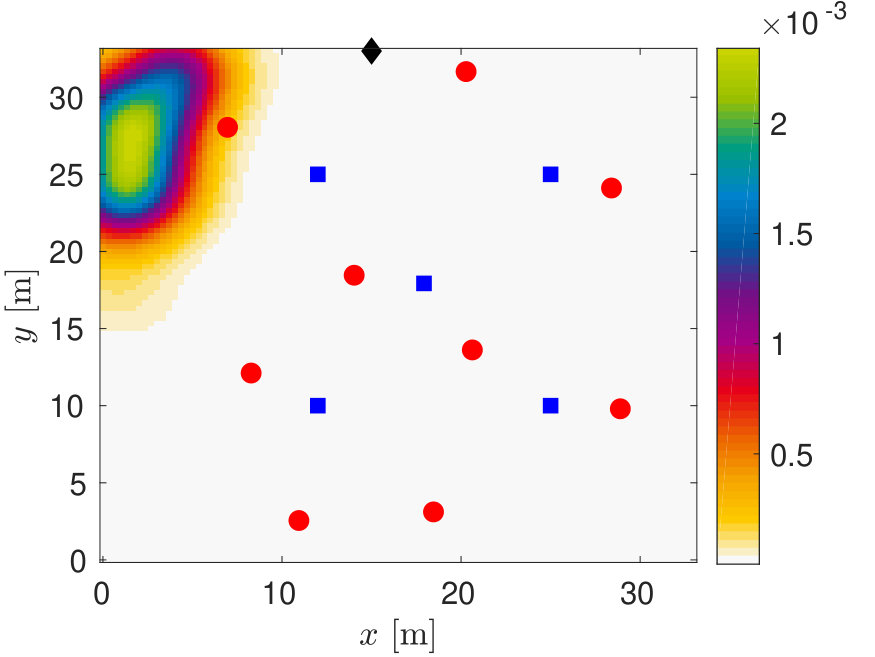 Figure 5
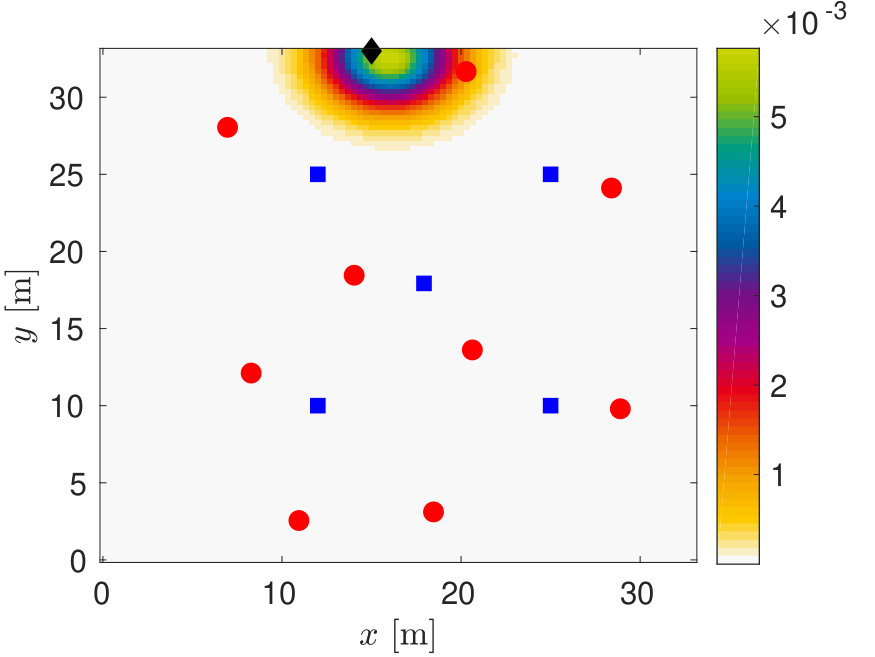 Figure 6
Peer Reviews
No public reviews on file for this paper yet. If you reviewed it on a platform where reviews are public (OpenReview, ICLR, NeurIPS, ICML), you can paste yours below so the community can read it here.
Videos
No videos yet. Explain this paper in a talk, walkthrough, or lecture? Add one.