Interference Prediction in Wireless Networks: Stochastic Geometry meets Recursive Filtering
Jorge F. Schmidt, Udo Schilcher, Mahin K. Atiq, and Christian, Bettstetter

TL;DR
This paper introduces a recursive interference prediction method for wireless networks using stochastic geometry and Kalman filtering, enabling accurate, low-complexity forecasts to enhance interference management across various scenarios.
Contribution
It presents a novel ARMA-based recursive predictor that accurately estimates future interference levels with low computational effort, adaptable to diverse wireless network conditions.
Findings
High prediction accuracy for relevant time horizons
Effective in Poisson and non-Poisson network scenarios
Applicable to device-to-device, Wi-Fi, and LTE coexistence
Abstract
This article proposes and evaluates a technique to predict the level of interference in wireless networks. We design a recursive predictor that estimates future interference values by filtering measured interference at a given location. The predictor's parameterization is done offline by translating the autocorrelation of interference into an autoregressive moving average (ARMA) representation. This ARMA model is inserted into a steady-state Kalman filter enabling nodes to predict with low computational effort. Results show a good accuracy of predicted values versus true values for relevant time horizons. Although the predictor is parameterized for Poisson-distributed nodes, Rayleigh fading, and fixed message lengths, a sensitivity analysis shows that it also tends to work well in more general network scenarios. Numerical examples for underlay device-to-device communications, a common…
Click any figure to enlarge with its caption.
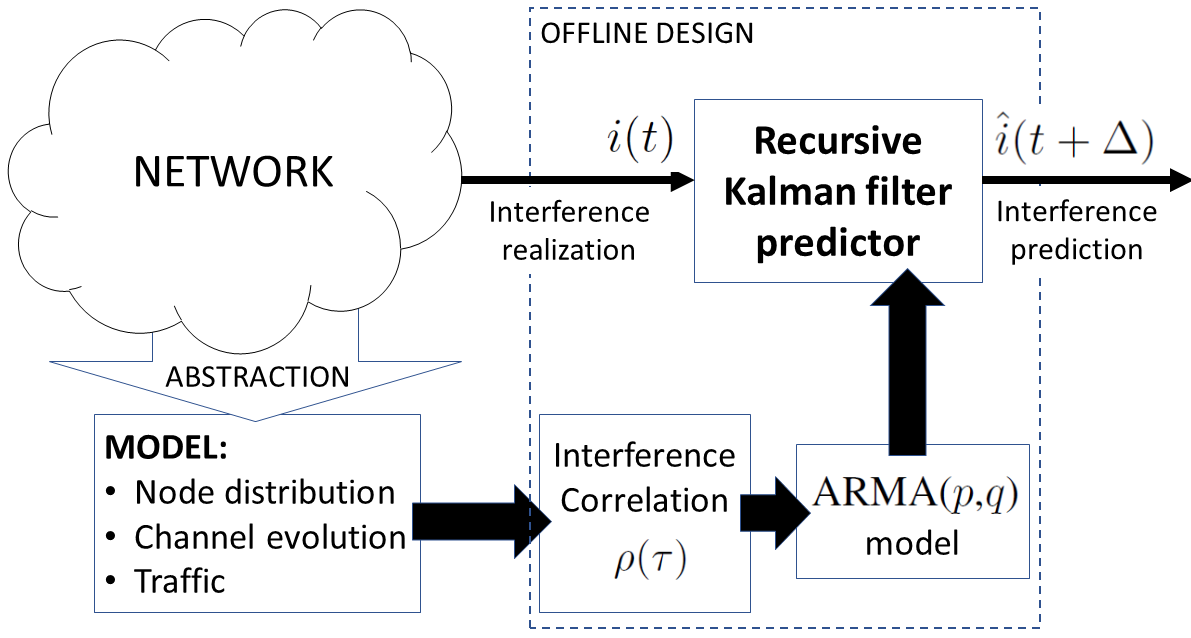 Figure 1
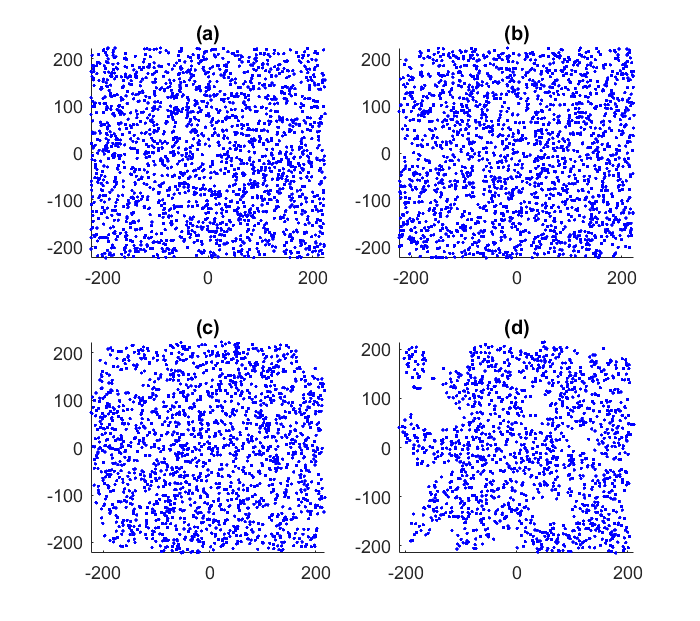 Figure 2
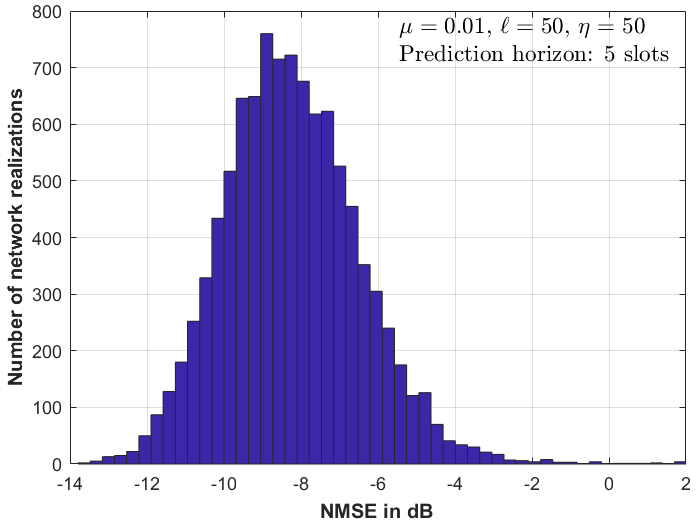 Figure 3
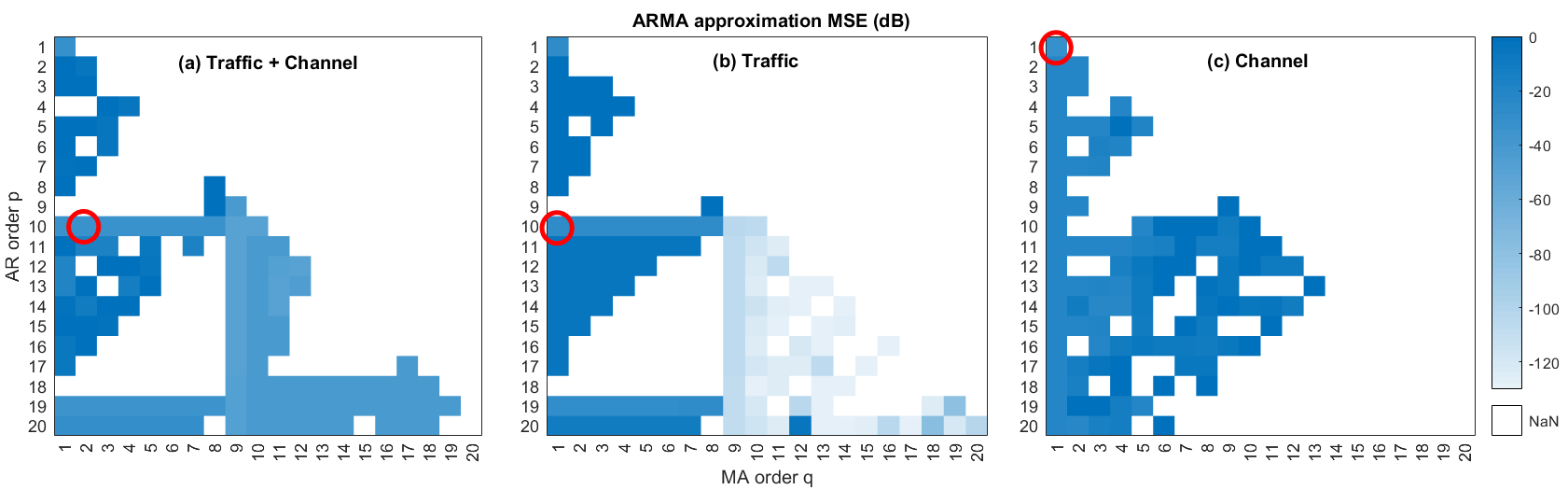 Figure 4
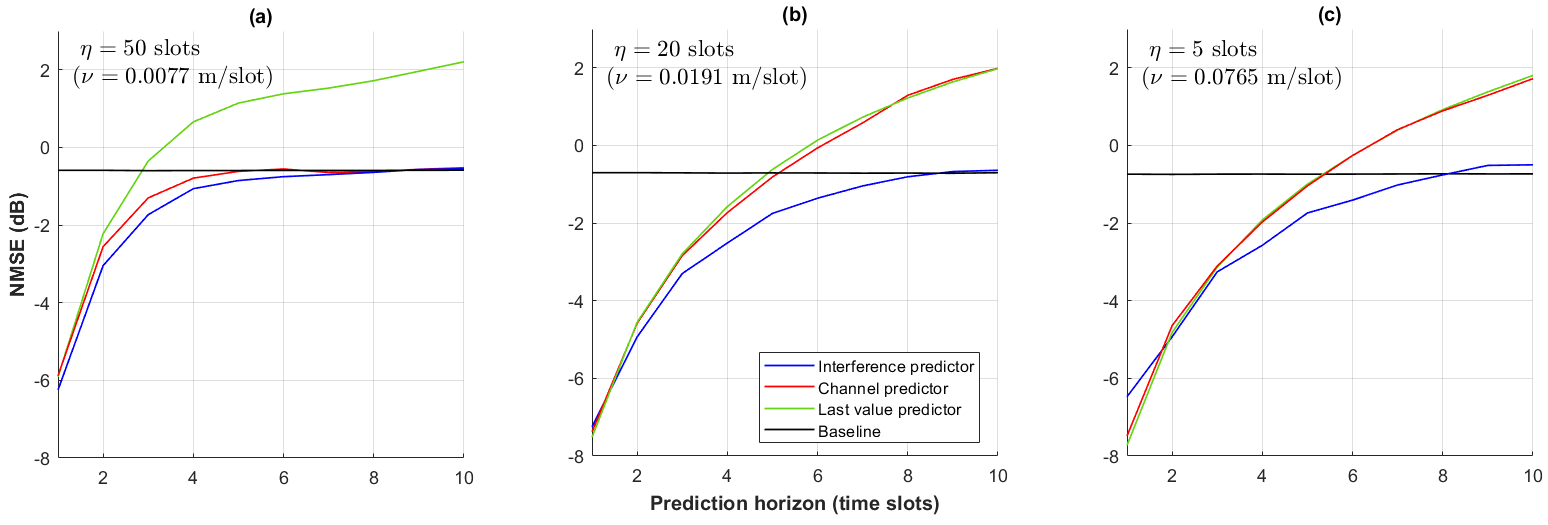 Figure 5
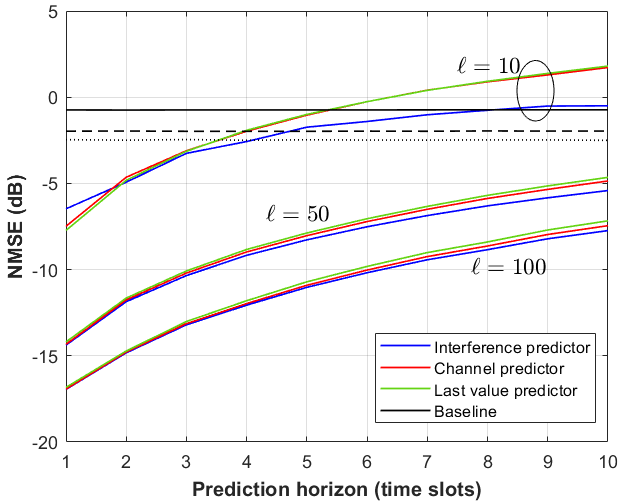 Figure 6
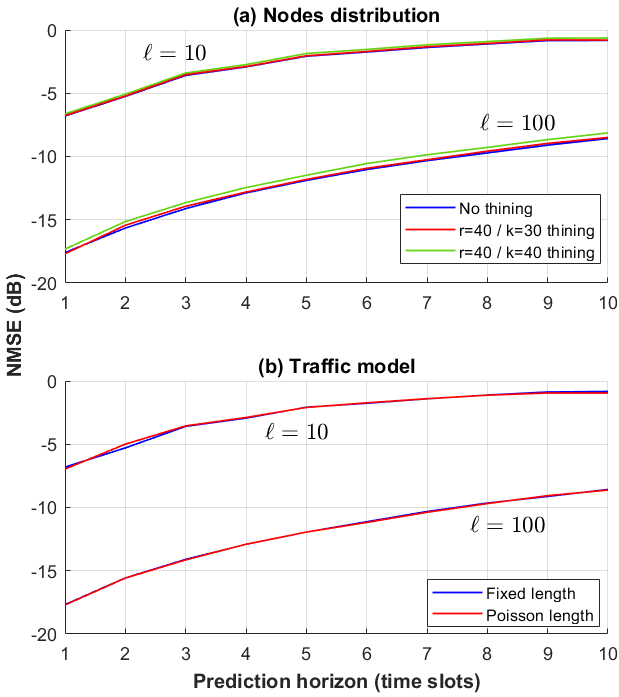 Figure 7
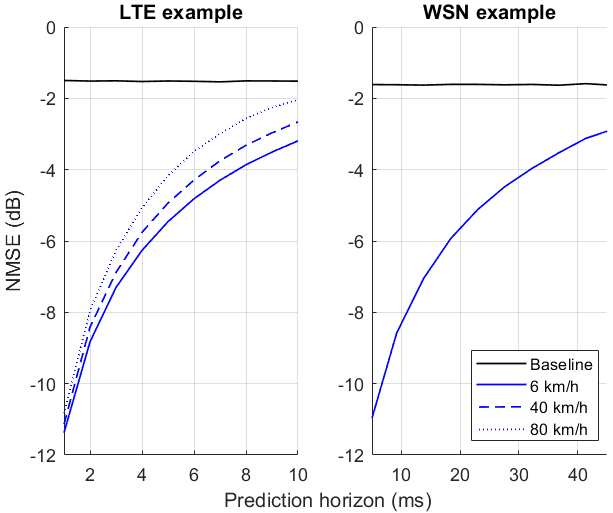 Figure 8
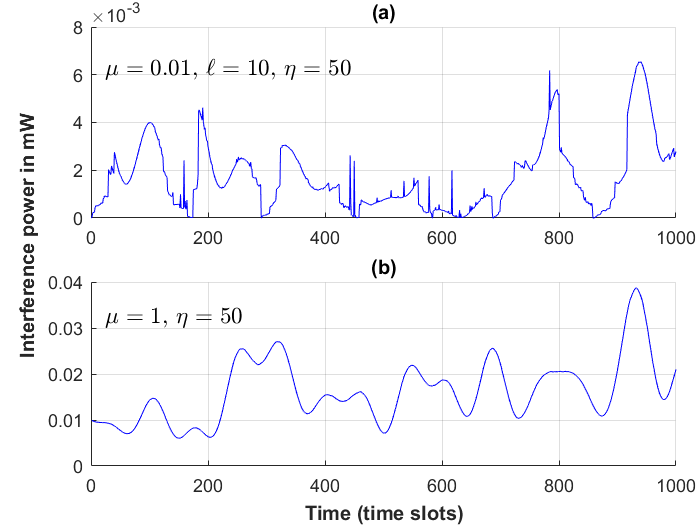 Figure 9
Peer Reviews
No public reviews on file for this paper yet. If you reviewed it on a platform where reviews are public (OpenReview, ICLR, NeurIPS, ICML), you can paste yours below so the community can read it here.
Videos
No videos yet. Explain this paper in a talk, walkthrough, or lecture? Add one.
Taxonomy
MethodsARMA GNN