TL;DR
This paper introduces Mask-ShadowGAN, a novel deep learning framework that effectively removes shadows from images using unpaired data by jointly learning shadow masks and shadow removal, overcoming limitations of traditional cycle-consistency methods.
Contribution
The paper proposes Mask-ShadowGAN, which automatically learns shadow masks and shadow removal simultaneously from unpaired data, improving shadow removal performance without requiring paired datasets.
Findings
Effective shadow removal demonstrated on unpaired datasets.
Outperforms existing methods in shadow removal quality.
Automatically learns shadow masks alongside shadow removal.
Abstract
This paper presents a new method for shadow removal using unpaired data, enabling us to avoid tedious annotations and obtain more diverse training samples. However, directly employing adversarial learning and cycle-consistency constraints is insufficient to learn the underlying relationship between the shadow and shadow-free domains, since the mapping between shadow and shadow-free images is not simply one-to-one. To address the problem, we formulate Mask-ShadowGAN, a new deep framework that automatically learns to produce a shadow mask from the input shadow image and then takes the mask to guide the shadow generation via re-formulated cycle-consistency constraints. Particularly, the framework simultaneously learns to produce shadow masks and learns to remove shadows, to maximize the overall performance. Also, we prepared an unpaired dataset for shadow removal and demonstrated the…
Click any figure to enlarge with its caption.
 Figure 1
 Figure 2
 Figure 3
 Figure 4
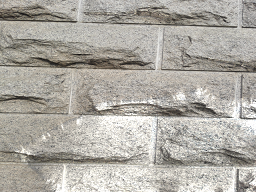 Figure 5
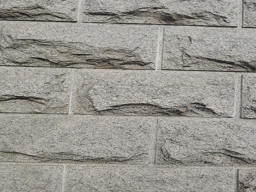 Figure 6
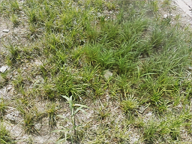 Figure 7
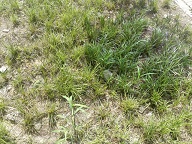 Figure 8
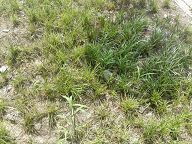 Figure 9
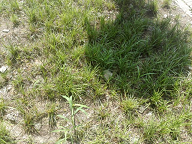 Figure 10
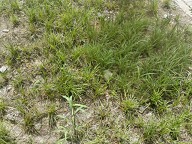 Figure 11
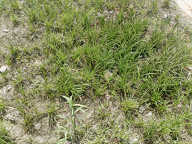 Figure 12
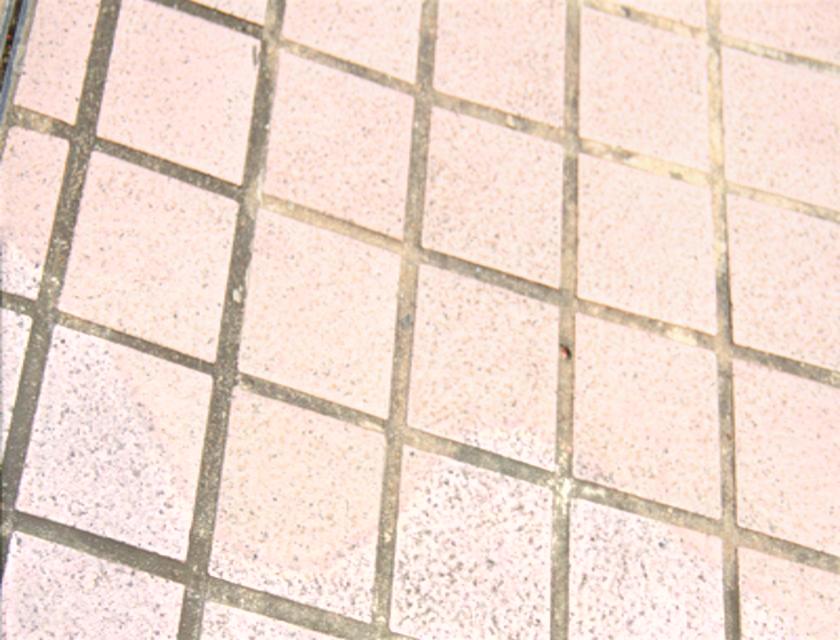 Figure 13
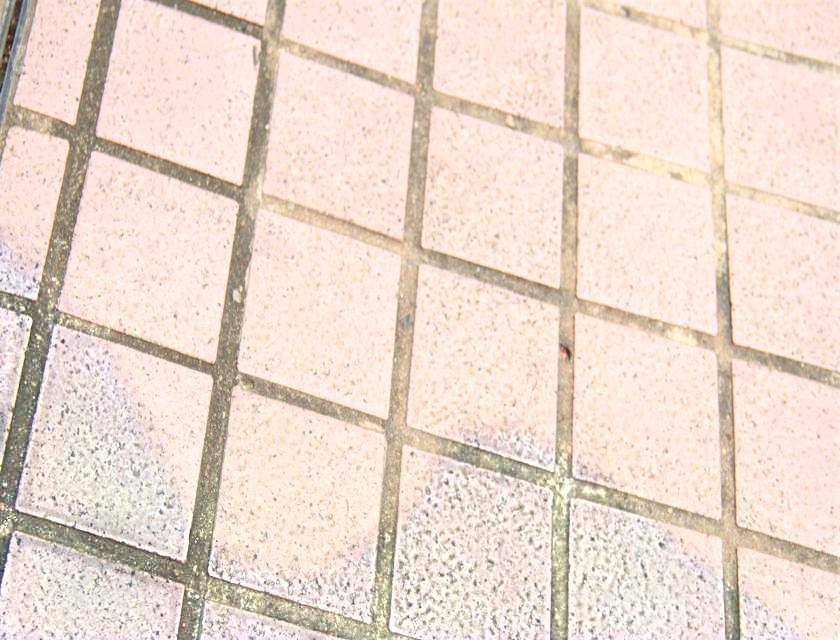 Figure 14
 Figure 15
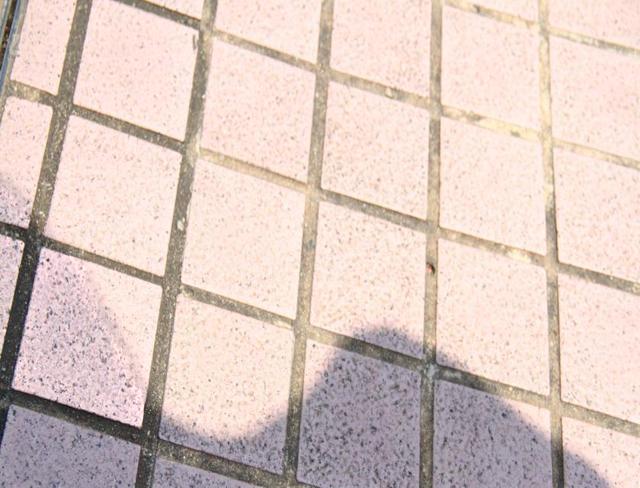 Figure 16
 Figure 17
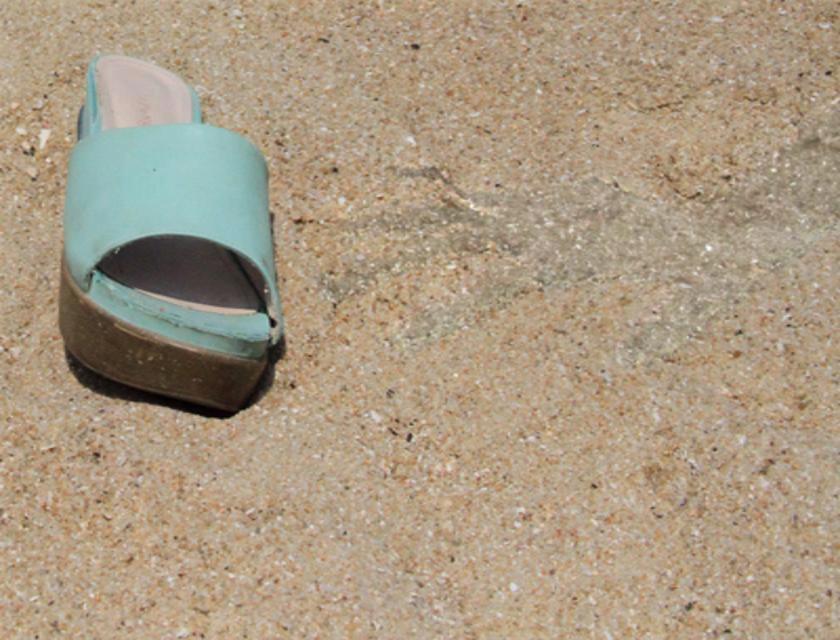 Figure 18
 Figure 19
 Figure 20
 Figure 21
 Figure 22
 Figure 23
 Figure 24
 Figure 25
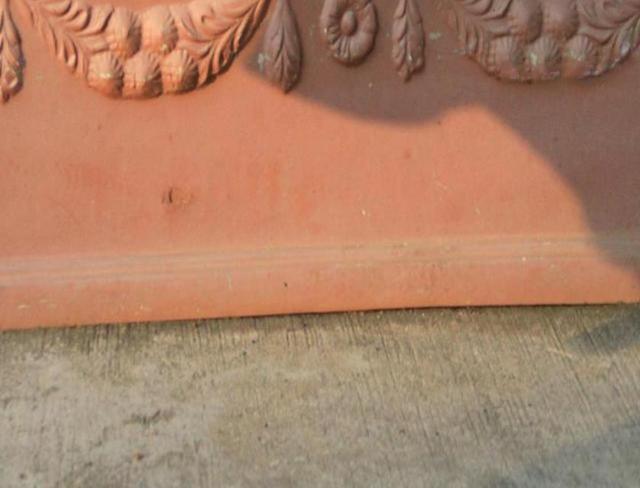 Figure 26
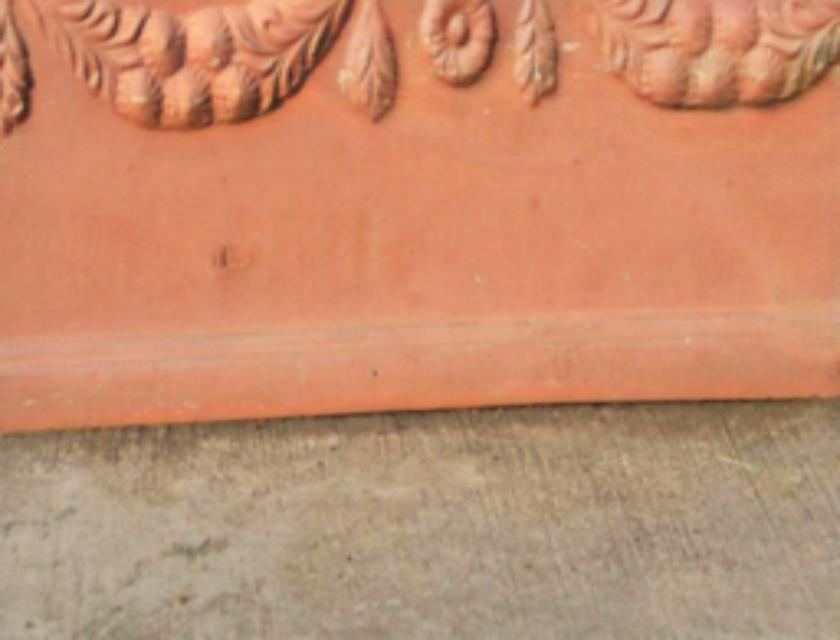 Figure 27
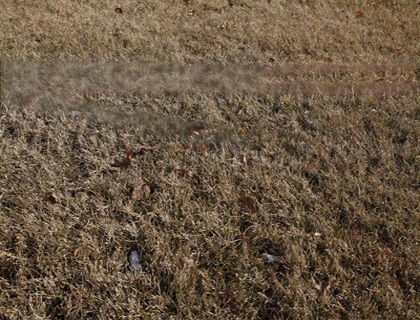 Figure 28
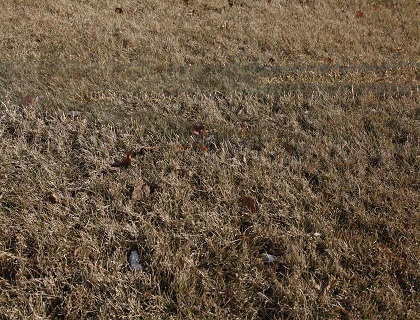 Figure 29
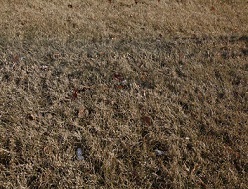 Figure 30
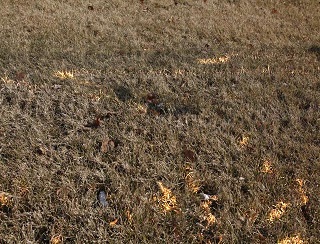 Figure 31
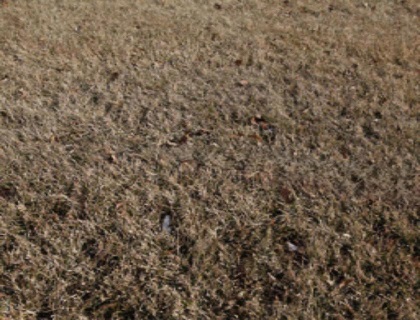 Figure 32
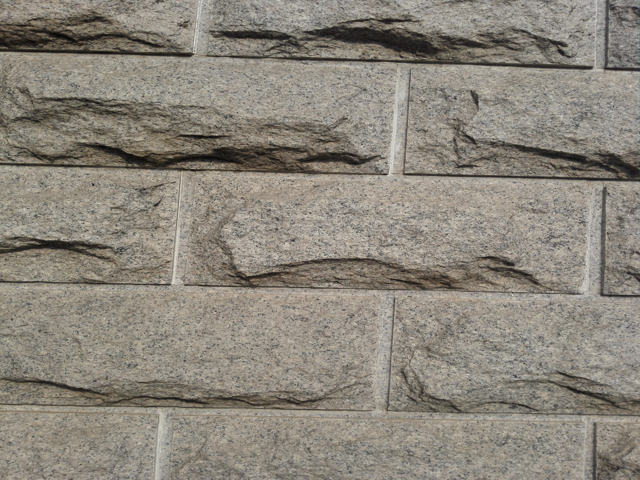 Figure 33
 Figure 34
 Figure 35
 Figure 36
 Figure 37
 Figure 38
 Figure 39
 Figure 40
| Trained models | Training set | Rating (mean & standard dev.) |
|---|---|---|
| Ours-I | ISTD | |
| DSC-I | ISTD | |
| Ours-S | SRD | |
| DSC-S | SRD |
Peer Reviews
No public reviews on file for this paper yet. If you reviewed it on a platform where reviews are public (OpenReview, ICLR, NeurIPS, ICML), you can paste yours below so the community can read it here.
Code & Models
Videos
No videos yet. Explain this paper in a talk, walkthrough, or lecture? Add one.
Mask-ShadowGAN: Learning to Remove Shadows from Unpaired Data
Xiaowei Hu1, Yitong Jiang2, Chi-Wing Fu1,2,∗, and Pheng-Ann Heng1,2,
1 Department of Computer Science and Engineering, The Chinese University of Hong Kong
2 Guangdong Provincial Key Laboratory of Computer Vision and Virtual Reality Technology,
Shenzhen Institutes of Advanced Technology, Chinese Academy of Sciences, China Co-corresponding authors
Abstract
This paper presents a new method for shadow removal using unpaired data, enabling us to avoid tedious annotations and obtain more diverse training samples. However, directly employing adversarial learning and cycle-consistency constraints is insufficient to learn the underlying relationship between the shadow and shadow-free domains, since the mapping between shadow and shadow-free images is not simply one-to-one. To address the problem, we formulate Mask-ShadowGAN, a new deep framework that automatically learns to produce a shadow mask from the input shadow image and then takes the mask to guide the shadow generation via re-formulated cycle-consistency constraints. Particularly, the framework simultaneously learns to produce shadow masks and learns to remove shadows, to maximize the overall performance. Also, we prepared an unpaired dataset for shadow removal and demonstrated the effectiveness of Mask-ShadowGAN on various experiments, even it was trained on unpaired data.
1 Introduction
Shadow removal is a very challenging task. We have to remove the shadows, and simultaneously, restore the background behind the shadows. Particularly, shadows have a wide variety of shapes over a wide variety of backgrounds. Recently, learning-based methods [10, 11, 18, 32], especially those using deep learning [13, 27, 35], have become the de facto standard for shadow removal, given their remarkable performance. These methods are typically trained on pairs of shadow and shadow-free images in a supervised manner, where the paired data is prepared by taking a photo with shadows and then taking another photo of the scene without shadows by removing the associated objects.
Such approach to prepare training data has several limitations. First, it is very tedious to prepare the training data, since for each scene, we need to manually fix the camera and then add & remove objects to obtain a pair of shadow and shadow-free images. Moreover, the approach limits the kinds of scenes that data can be prepared, since it is hard to capture shadow-free images for shadows casted by large objects such as trees and buildings. Lastly, the training pairs may have inconsistent colors and luminosity, or shift in camera views, since the camera exposure and pose, as well as the environmental lighting, may vary when we take the photo pair with and without the shadows.
To address these problems, we present a new approach to learn to remove shadows from unpaired training data. Our key idea is to learn the underlying relationship between a shadow domain (a set of real images with shadows) and a shadow-free domain (a set of real shadow-free images), where we do not have any explicit association between individual images in and . Here, we want to train a network , which takes a shadow image as input and produces an output image that is indistinguishable from the shadow-free images in , by adversarial learning [9, 15]. This mapping is highly under-constrained, so the network can easily collapse during the training [43]. Hence, we train another network to learn the inverse mapping, i.e., , to translate a shadow-free image into a shadow image like those in , and impose the following cycle-consistency constraints [43] on images and , i.e., should be the same as the input shadow image , and should be the same as the input shadow-free image .
Fundamentally, deep neural networks generate a unique output for the same input. Having said that, for the same shadow-free image, always generates the same shadow image with the same shadow shape. However, this is clearly insufficient to shadow generation, since for the same background, we may have different shadows. Figure 1(a) shows a further illustration: starting from different shadow images with the same background, while produces the same shadow-free image, will fail to generate different outputs that match the corresponding original inputs. Hence, the cycle-consistency constraint cannot hold, and we cannot train and to learn to remove and generate shadows.
To address the problem, we formulate a mask-guided generative adversarial network, namely Mask-ShadowGAN, which learns to produce a shadow mask from an input shadow image during the training and takes the mask to guide to generate shadows. Therefore, given a shadow-free image, we can generate different shadows by using different shadow masks. Further, from an input shadow image, we can produce a shadow-free image and generate suitable shadows on the image to produce an output that matches the corresponding input; see Figure 1(b). Hence, we can adopt the cycle-consistency constraint to train and .
To our best knowledge, this is the first data-driven method, which trains a network with unpaired data, for shadow removal. Particularly, we design Mask-ShadowGAN to learn to remove shadows from unpaired data, bringing forth the advantage of using more shadow and shadow-free images for network learning. Also, we prepare the first unpaired shadow-and-shadow-free image dataset with diverse scenes. Last, we perform various experiments to evaluate Mask-ShadowGAN and demonstrate its effectiveness, even it was trained on unpaired data. Results show that our method produces comparable performance with existing works on the existing benchmarks, and outperforms others for more general shadow images without paired ground truth images. The source code and dataset are publicly available at https://xw-hu.github.io/.
2 Related Work
2.1 Shadow Removal
Early methods remove shadows by modeling images as combinations of shadow and shadow-free layers [2, 4, 5, 6, 7, 23, 24, 40], or by transferring colors from non-shadow to shadow regions [28, 37, 38, 39]. Since the underlying shadow models are not physically correct, they usually cannot handle shadows in complex real scenes [18]. Later, statistical-learning methods were explored to find and remove shadows using features, such as intensity [8, 10, 11], color [11, 32], texture [11, 32], and gradient [10]. However, these hand-crafted features lack high-level semantics for understanding the shadows. Later, Khan et al. [17, 18] adopted convolutional neural networks (CNNs) to detect shadows followed by a Bayesian model to remove shadows.
In recent years, shadow removal mainly relies on CNNs that are trained end-to-end to learn the mapping from paired shadow and shadow-free images. Qu et al. [27] developed three subnetworks to extract features from multiple views and embedded these subnetworks in a framework to remove shadows. Wang et al. [35] used a conditional generative adversarial network (CGAN) to detect shadows and another CGAN to remove shadows. Hu et al. [13, 14] explored the direction-aware spatial context to detect and remove shadows. However, these methods are all trained on paired images, which incur several limitations, as discussed in the introduction. Similarly, the recent shadow detection methods [33, 21, 44, 42] also trained their deep neural networks using paired data. Unlike previous works, we present a new framework based on adversarial learning to learn to remove shadows from unpaired training data.
2.2 Unsupervised Learning
Unsupervised learning receives great attention in recent years. These methods can roughly be divided into three approaches. The first approach learns the feature representations by generating images, where early methods, such as the auto-encoder [12] and denoising auto-encoder [34], encoded the input images in a latent space by reconstructing them with a low error. Some more recent works transferred the synthetic images into “real” images through adversarial learning [29]. The second approach is self-supervised learning, which learns the invariant features by designing the auxiliary training objectives via labels that are free to obtain, e.g., Doersch et al. [3] predicted the location of image patches for feature learning; Pathak et al. [26] learned the feature representations from segmented moving objects in videos; and Wang et al. [36] learned the visual representations from the transitive relations between images.
The last approach is more related to our work. It learns the underlying mapping between domains in the form of unpaired data. CycleGAN [43] and other similar models [19, 41] used two generative adversarial networks [9] to formulate the cycle consistency constraints, and learned the mapping to translate images between domains. Though they can learn an arbitrary one-to-one mapping, a trained network can only produce a single output for the same input image. To extend cycle consistency to handle many-to-many mapping, Almahairi et al. [1] and Lee et al. [22] explored the use of latent variables to generate diverse outputs. In contrast, the relationship between shadow and shadow-free images can be explicitly modelled by their difference. Hence, in this work, we design a framework to learn to produce the shadow mask for guiding the shadow generation, and learn to use the difference between shadow and shadow-free images in the shadow regions to model the relationship between the shadow and shadow-free images.
3 Methodology
Figure 2 outlines the overall network architecture of our Mask-ShadowGAN framework, which has two parts: one to learn from real shadow images (Section 3.1) and the other to learn from real shadow-free images (Section 3.2).
3.1 Learning from Shadow Images
Starting from a real shadow image , we first use a generator network to transform it into a shadow-free image . Then, we use an adversarial discriminator to differentiate whether is a real shadow-free image or not:
[TABLE]
Here, we optimize the following objective function, simultaneously for the generator and its discriminator:
[TABLE]
where denotes the error; denotes the data distribution; and and indicate that and are selected, respectively from the data distribution over the shadow-free and shadow datasets. However, if we use the adversarial loss alone to optimize the generator, there may exist some artifacts on the generated images [15], which may also successfully fool the discriminator [43]. Hence, we take another generator to transform the generated shadow-free image back to its original shadow image and encourage their contents to be the same.
As presented earlier in the introduction, we can produce multiple shadow images from one shadow-free image by adding the shadow regions of different shapes at different image locations. To preserve the consistency between the generated shadow image and the original one, we use a shadow mask as the guidance to indicate the shadow regions, and concatenate the shadow mask with the generated shadow-free image as the input to the generator , which produces the shadow image :
[TABLE]
where the shadow mask is the difference between the real shadow image and the generated shadow-free image . The shadow mask is a binary map, where zeros indicate non-shadow regions and ones indicate shadow regions; see Section 3.4 for the details. Then, we formulate the following shadow cycle consistency loss to encourage the reconstructed image to be similar to the original input real shadow image , and optimize the mapping functions in and by a cycle-consistency constraint:
[TABLE]
By leveraging the loss to calculate the difference on each pixel, generator will learn to produce a shadow image as well as to capture the relationship between the shadow image and shadow mask, i.e., zeros denote the non-shadow regions, while ones denote the shadow regions.
See again the Figure 2(a), we further use a mask with all zero values and the real shadow image as the input of , and generate an image , which contains no newly added shadows:
[TABLE]
Then, we leverage the shadow identity loss [30] to regularize the output to be close to the input shadow image:
[TABLE]
Hence, we can encourage that no shadows will be added on the input shadow image in the generated image under the guidance of , and we can also preserve the color composition between the input and output images [43].
3.2 Learning from Shadow-free Images
Figure 2(b) shows the framework on how to learn from the shadow-free images for shadow removal. Given a real shadow-free image , we use a generator to produce the shadow image , which is used to fool the discriminator , and makes it hard to distinguish whether it is a real shadow image or not. As mentioned before, for the generator , we need a shadow mask as the input to indicate the shadow regions. Here, we are able to use a mask with any forms of shadows as the guidance and produce the generated shadow image :
[TABLE]
To make the generated shadow regions look real, we randomly select one shadow mask learned from the real shadow image; see Section 3.4 for the details. By leveraging different shadow masks as the guidance, we produce multiple shadow images with different forms of shadows. Therefore, a large number of shadow images will be created, thus increasing the generalization capability of the deep models. Finally, we use the adversarial loss to optimize the generator and discriminator :
[TABLE]
To leverage the cycle-consistency constraint, we adopt the generator to produce the shadow-free image from the generated shadow image , s.t., , and use the shadow-free cycle consistency loss to optimize the networks:
[TABLE]
Last, we adopt the generator to produce a shadow-free image by taking the real shadow-free image as the input, s.t., , and then use the shadow-free identity loss to force the content of the input and output images to be the same:
[TABLE]
By using the identity loss as a constraint, the generator will learn to remove shadows without changing colors on non-shadow regions.
3.3 Loss Function
In summary, the final loss function for our Mask-ShadowGAN is a weighted sum of the adversarial loss, cycle consistency loss, and identity loss in two parts of the framework:
[TABLE]
We follow [43] and empirically set , , and as , , and , respectively. Finally, we optimize the whole framework in a minimax manner:
[TABLE]
3.4 Mask Generation
As described earlier, we design a shadow mask to indicate how to generate shadows on the shadow-free images. We obtain the shadow mask by calculating the difference between the real shadow image and the generated shadow-free image , and then binarizing the result:
[TABLE]
where indicates the binarization operation, which sets the pixels as one, when their values are greater than the threshold , otherwise, as zero. We obtain the threshold by Otsu’s algorithm [25], which calculates the optimum threshold to separate shadow and non-shadow regions by minimizing the intra-class variance.
Since we obtain one shadow mask from one real shadow image, we adopt a list to save multiple shadow masks produced from the shadow images in one dataset. During the training process, the quality of shadow masks increases with the quality of generated shadow-free images . Hence, we update the list of shadow masks by pushing the newly generated mask (high quality) and removing the least recently added mask (low quality). This process is achieved by the Queue dataset structure, which obeys the rule of “first in, first out”. Moreover, we empirically set the length of the list as a quarter of image numbers in the real shadow dataset.
When accessing the shadow masks, we set in Figure 2(a) as the newly generated mask from its input shadow image, and randomly choose one mask from the list as in Figure 2(b).
3.5 Network Architecture and Training Strategy
Network architecture.
We take the network architecture designed by Johnson et al. [16] as our generator network, which includes three convolution operations, followed by nine residual blocks with the stride-two convolutions and two deconvolutions for feature map upsampling. In this network, instance normalization [31] is used after each convolution and deconvolution operation. The generator takes the shadow image with the channel number of three as the input, while the generator adopts the concatenation of the shadow-free image and shadow mask as the input, which has four channels in total. Both and produce a residual image with three channels, which is added with the input image as the final shadow-free or shadow image. For the discriminator and , we use the PatchGAN [15] to distinguish whether the image patches are real or fake.
Training strategy.
We initialized the parameters in all generators and discriminators by random noise, which follows a zero-mean Gaussian distribution with standard deviation set as . Moreover, Adam [20] was used to optimize our networks with the first and second momentum values set as and , respectively. We empirically set the basic learning rate as for the first epochs, gradually reduced it to zero with a linear decay rate in the next epochs, and then stopped the learning. Lastly, we built our model on PyTorch with a mini-batch size of one, and randomly cropped images for data argumentation.
4 Unpaired Shadow Removal Dataset - USR
Existing shadow removal datasets [27, 35] are paired. Typically, we have to fix the camera, take a photo with shadows, then take another one without shadows by removing the associated objects. Due to the varied environment light and camera exposure, a training pair may have inconsistent colors and luminosity; see examples in Figure 3. Also, paired data is available only for limited scenes, thus affecting the generality and practicality of the trained models.
We prepared an unpaired shadow removal dataset named USR with shadow images and shadow-free images. The dataset contains a large variety of scenes with shadows cast by various kinds of objects, e.g., trees, buildings, traffic signs, persons, umbrellas, railings, etc. Very importantly, existing datasets typically cover only hundreds of different scenes (even with thousands of image samples), while ours cover over a thousand different scenes. Furthermore, we divide the shadow images in the dataset randomly into images for training and for testing, and use all the shadow-free images for training (since they are not used in shadow removal testing).
5 Experimental Results
5.1 Datasets and Evaluation Metrics
Datasets.
Besides the USR dataset, we employed two recent shadow removal datasets (SRD [27] and ISTD [35]), which contain the paired shadow/shadow-free images and are used for training the existing shadow removal methods.
Evaluation metrics.
We followed recent works [13, 27, 35] to evaluate shadow removal performance by computing the root-mean-square error (RMSE) between the ground truth and predicted shadow-free images in LAB color space. In general, a small RMSE indicates a better performance.
5.2 Comparison using USR
First of all, we compare Mask-ShadowGAN with state-of-the-art shadow removal methods on the USR dataset. The purpose here is to show that by leveraging unpaired data, we are able to train a network to learn to remove shadows of more variety shapes for a wider range of scenes.
USR training set.
First, we trained our model on the USR training set and applied it to produce shadow-free images on the USR testing set. Also, we applied several state-of-the-art methods to remove shadows on the USR testing set: DSC [13], Gong et al. [8], and Guo et al. [11]. For DSC, we adopted its public implementation and trained its network on the SRD and ISTD datasets: “DSC-S” and “DSC-I” denote the model trained on the SRD dataset and on the ISTD dataset, respectively. Since DSC requires paired shadow and shadow-free images, we cannot re-train it on the USR dataset, which is unpaired. For the other methods, Gong et al. and Guo et al., we downloaded and leveraged their public code with recommended parameters to produce the shadow-free image results. Note that the code of ST-CGAN [35] and DeshadowNet [27] are not publicly available, we cannot evaluate them on the USR testing data.
As the unpaired USR dataset has no ground truths, we conducted a user study to evaluate the shadow removal results. First, we generate shadow-free images using Mask-ShadowGAN, as well as using DSC-I, DSC-S, Gong et al., and Guo et al., on the USR testing set (only shadow images). Here, we recruited ten participants: six females and four males, aged to with mean . For each participant, we randomly selected shadow-free image results ( per method), presented the results in random order to the participant, and asked the participant to rate the result in a scale from (bad) to (good). Therefore, we obtained ratings ( participants images) per method.
Table 1 shows the results. Mask-ShadowGAN received the highest ratings compared to other methods, showing its effectiveness to remove shadows for more diverse scenes, even it was trained just on unpaired data. Further, we performed a statistical analysis on the ratings by conducting t-tests between Mask-ShadowGAN and other methods. All the t-test results show that our results are statistically significant (with ) than the others, evidencing that the participants prefer our results more than those produced by other methods. Figure 4 shows the visual comparisons, where Mask-ShadowGAN can more effectively remove the shadows and recover the background, while others may blur the images or fail to remove portions of the shadows. Very importantly, our method was trained just on unpaired data.
SRD & ISTD training sets.
Also, we trained our method separately on the training sets of SRD (“Ours-S”) and ISTD (“Ours-I”). Then, we applied these models, as well as DSC-S and DSC-I to the USR test set, conducted another user study with four females & six males (aged to ), and showed randomly-selected shadow-free image results ( from each trained model) to each participant in random order. Table 2 shows the results. Our method still outperforms the state-of-the-art (DSC), even it was trained on the same training set, since training in an unpaired manner improves the generalization capability of our model.
5.3 Comparison using SRD and ISTD
Next, we compare our method with others on the SRD and ISTD dataset (paired data) using their ground truths. Here, we trained our Mask-ShadowGAN on the SRD training set and tested it on the SRD testing set, then re-trained our model on the ISTD training set and tested the trained model on the ISTD testing set. Since Mask-ShadowGAN is designed to train on unpaired data, we randomly chose an image from the shadow image set and the other from the shadow-free image set per mini-batch during the training.
Quantitative and visual comparison.
To compare with other shadow removal methods (DSC [13], ST-CGAN [35], DeshadowNet [27], Gong et al. [8], Guo et al. [11], Yang et al. [40]), we obtained their results directly from the authors or by generating them using the public code with the recommended parameter setting. Here, DSC, ST-CGAN and DeshadowNet are deep networks that produce shadow-free images end-to-end, and their networks were trained on paired shadow and shadow-free images. Gong et al., Guo et al., and Yang et al. leverage image priors to remove shadows.
We present the results in Table 3, where our method achieves RMSE values (even trained in an unpaired manner) that are comparable with those of the other deep neural networks trained on paired images, and clearly outperforms the methods based on hand-crafted features. Note also that the code of ST-CGAN [35] and DeshadowNet [27] is not publicly available, and we can only report their results on the datasets used in their published papers.
Figure 5 shows the visual comparison results on these two datasets, which present some challenging cases, e.g., large shadow regions (the first three rows) and shadows across the backgrounds with complex textures (the first, fourth and fifth rows). Although the RMSE value of Mask-ShadowGAN on these datasets is higher than the deep networks trained on paired data, Mask-ShadowGAN can generate more realistic images and better preserve the texture details occluded by shadows; see again the first, fourth and fifth rows in Figure 5. This is because we learn to remove shadows from the reliable intrinsic statistics of real shadow/shadow-free images, and avoid the unrealistic grayish (blurry) outputs through adversarial learning.
Comparison with CycleGAN.
Further, we compared our method with CycleGAN [43], which is designed for general image-to-image translations using unpaired training data. Here, we adopted the author-provided implementations and used the same parameter setting as our Mask-ShadowGAN to re-train the model on the SRD and ISTD training sets.
Table 3 reports the results, showing that our method outperforms CycleGAN on both datasets. By leveraging the shadow masks to guide the shadow generation for both real and generated shadow-free images, we can effectively provide constraints to the network to guide its exploration in the search space for producing more realistic results. Figure 7 shows visual comparison results. Mask-ShadowGAN can clearly remove the shadows, but CycleGAN tends to produce artifacts on the regions occluded by the shadows. Besides, Figure 6 shows shadow images generated from real shadow-free images by Mask-ShadowGAN and by CycleGAN. While CycleGAN always produces the same shadow image for the same shadow-free input, Mask-ShadowGAN is able to produce multiple realistic shadow images with the help of the shadow masks, which are also learned in the network automatically from some real shadow images.
6 Conclusion
In this work, we present a novel generative adversarial framework, named as Mask-ShadowGAN, for shadow removal based on unpaired shadow and shadow-free images. Our key idea is to transform the uncertain shadow-free-to-shadow image translation into a deterministic image translation with the guidance of the shadow masks, which are learned from the real shadow images automatically. Further, we construct the first unpaired shadow removal (USR) dataset, test our method on various datasets, and compare it with the state-of-the-art methods to show its quality, both quantitatively and visually. However, our method assumes a small domain difference (e.g., variations in scene contents) between the unpaired shadow and shadow-free images. Also, to aim for better results, we generally need a larger training set. In the future, we plan to use the generated shadow masks to facilitate new applications, such that shadow editing, where we may manipulate shadows rather than just removing them. We also plan to explore the mask generation technique for other image translation applications, where mapping between image sets is not one-to-one, e.g., learn to remove/synthesize rain or snow from unpaired real rain/snow and rain-free/snow-free images.
Acknowledgments.
This work was supported by the National Basic Program of China, 973 Program (Project no. 2015CB351706), the Shenzhen Science and Technology Program (JCYJ20170413162256793 & JCYJ20170413162617606), the Research Grants Council of the Hong Kong Special Administrative Region (Project no. CUHK 14201918), and the CUHK Research Committee Funding (Direct Grants) under project code - 4055103. Xiaowei Hu is funded by the Hong Kong Ph.D. Fellowship.
The reference list from the paper itself. Each links out to its DOI / PubMed record.
- 1[1] Amjad Almahairi, Sai Rajeshwar, Alessandro Sordoni, Philip Bachman, and Aaron C. Courville. Augmented Cycle GAN: Learning many-to-many mappings from unpaired data. In ICML , pages 195–204, 2018.
- 2[2] Eli Arbel and Hagit Hel-Or. Shadow removal using intensity surfaces and texture anchor points. IEEE Transactions on Pattern Analysis and Machine Intelligence , 33(6):1202–1216, 2011.
- 3[3] Carl Doersch, Abhinav Gupta, and Alexei A. Efros. Unsupervised visual representation learning by context prediction. In ICCV , pages 1422–1430, 2015.
- 4[4] Graham D. Finlayson, Mark S. Drew, and Cheng Lu. Entropy minimization for shadow removal. International Journal of Computer Vision , 85(1):35–57, 2009.
- 5[5] Graham D. Finlayson, Steven D. Hordley, and Mark S. Drew. Removing shadows from images. In ECCV , pages 823–836, 2002.
- 6[6] Graham D. Finlayson, Steven D. Hordley, Cheng Lu, and Mark S. Drew. On the removal of shadows from images. IEEE Transactions on Pattern Analysis and Machine Intelligence , 28(1):59–68, 2006.
- 7[7] Clément Fredembach and Graham Finlayson. Hamiltonian path-based shadow removal. In BMVC , volume 2, pages 502–511, 2005.
- 8[8] Han Gong and D. P. Cosker. Interactive shadow removal and ground truth for variable scene categories. In BMVC , pages 1–11, 2014.
