B-decay discrepancies after Moriond 2019
Jason Aebischer, Wolfgang Altmannshofer, Diego Guadagnoli, Meril, Reboud, Peter Stangl, David M. Straub

TL;DR
Recent measurements of B decay ratios suggest potential new physics, favoring models with lepton flavor universality violation, especially involving semi-leptonic Wilson coefficients and leptoquark scenarios, with some models nearing exclusion limits.
Contribution
The paper provides a comprehensive analysis of B decay anomalies post-Moriond 2019, highlighting the preference for semi-leptonic new physics contributions and the viability of the U_1 leptoquark model.
Findings
Data favors new physics in semi-leptonic Wilson coefficients.
A muonic contribution with C_9 = -C_10 is preferred.
LFU shifts in C_9 improve fit and can originate from high-scale operators.
Abstract
Following the updated measurement of the lepton flavour universality (LFU) ratio R_K in B -> Kll decays by LHCb, as well as a number of further measurements, e.g. R_K* by Belle and B_s -> mu mu by ATLAS, we analyse the global status of new physics in b -> s transitions in the weak effective theory at the b-quark scale, in the Standard Model effective theory at the electroweak scale, and in simplified models of new physics. We find that the data continues to strongly prefer a solution with new physics in semi-leptonic Wilson coefficients. A purely muonic contribution to the combination C_9 = -C_10, well suited to UV-complete interpretations, is now favoured with respect to a muonic contribution to C_9 only. An even better fit is obtained by allowing an additional LFU shift in C_9. Such a shift can be renormalization-group induced from four-fermion operators above the electroweak scale,…
Click any figure to enlarge with its caption.
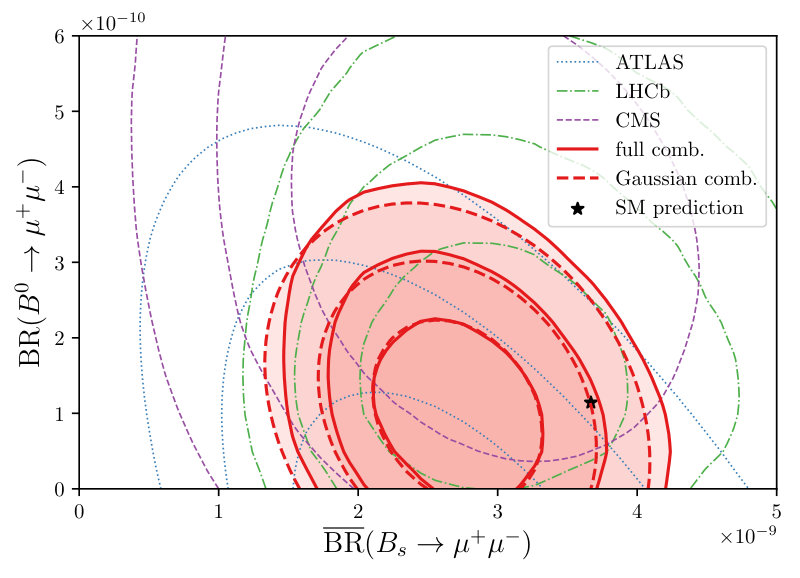 Figure 1
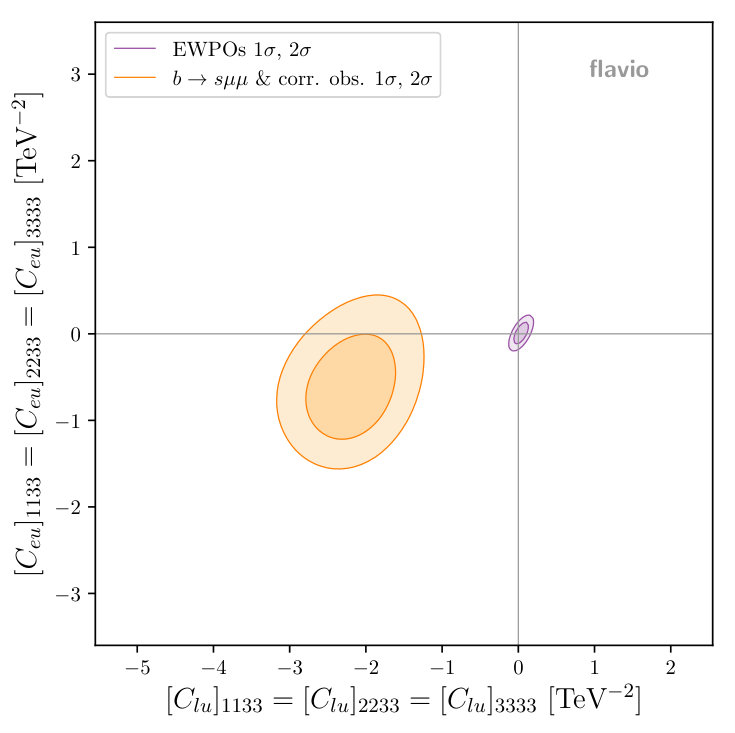 Figure 2
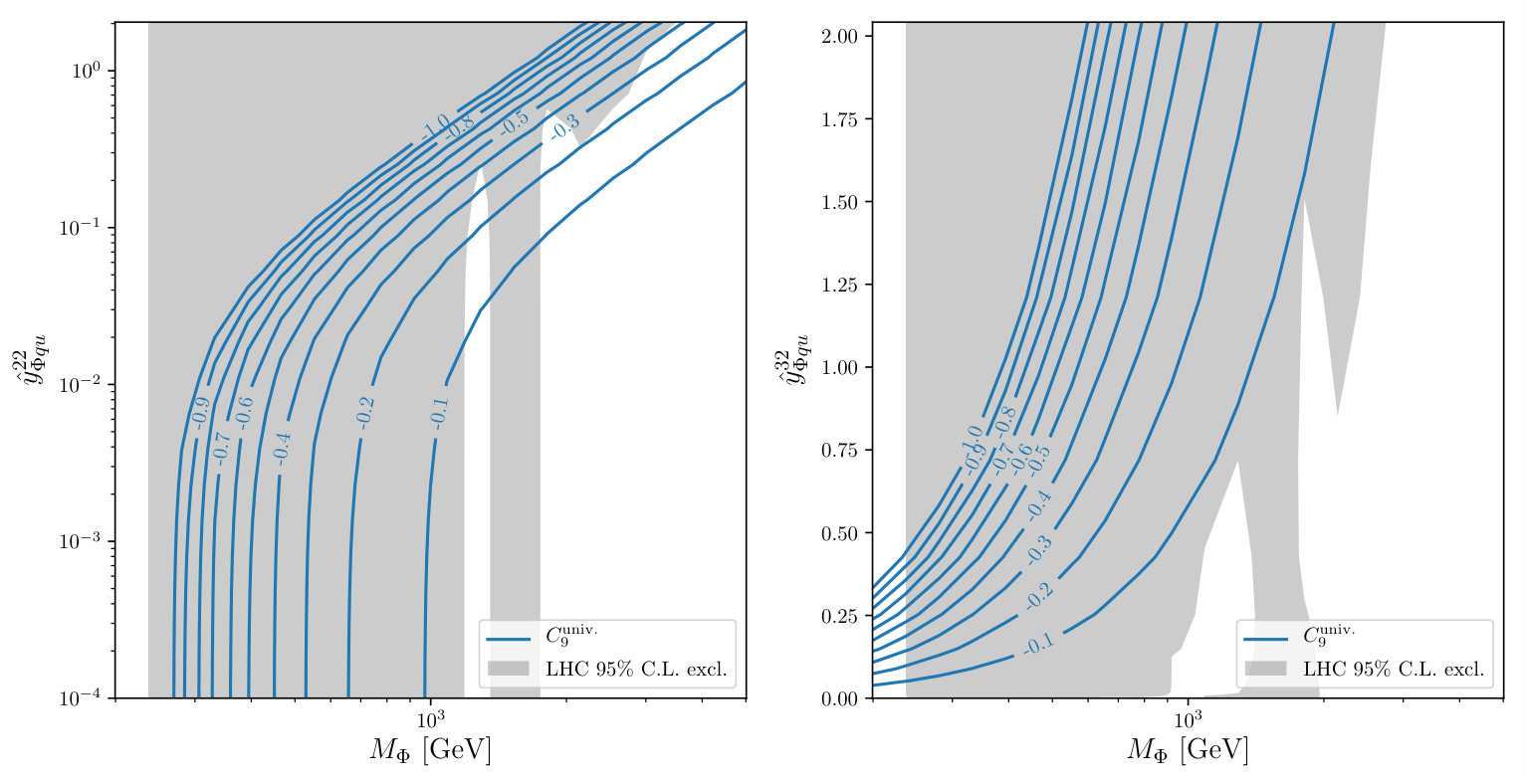 Figure 3
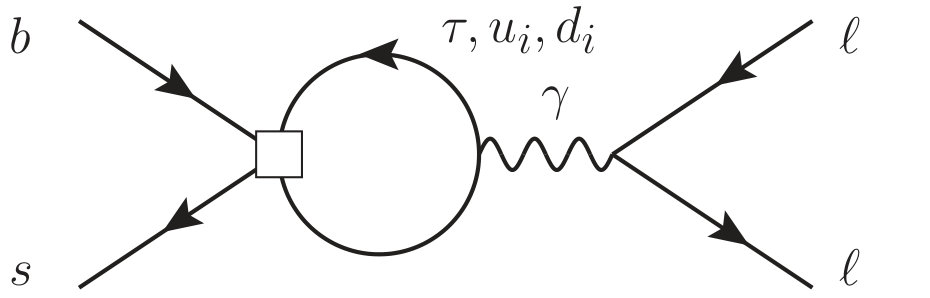 Figure 4
 Figure 5
 Figure 6
 Figure 7
 Figure 8
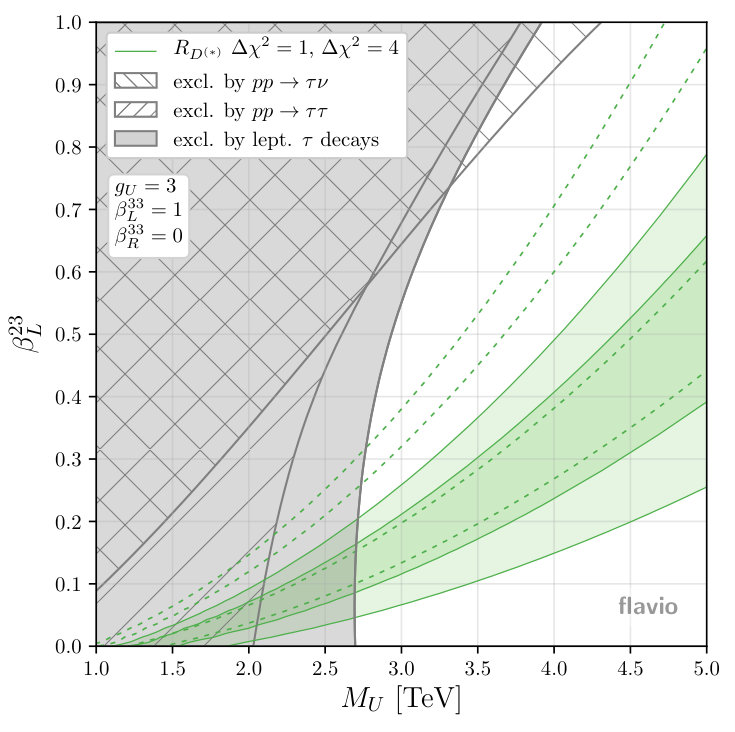 Figure 9
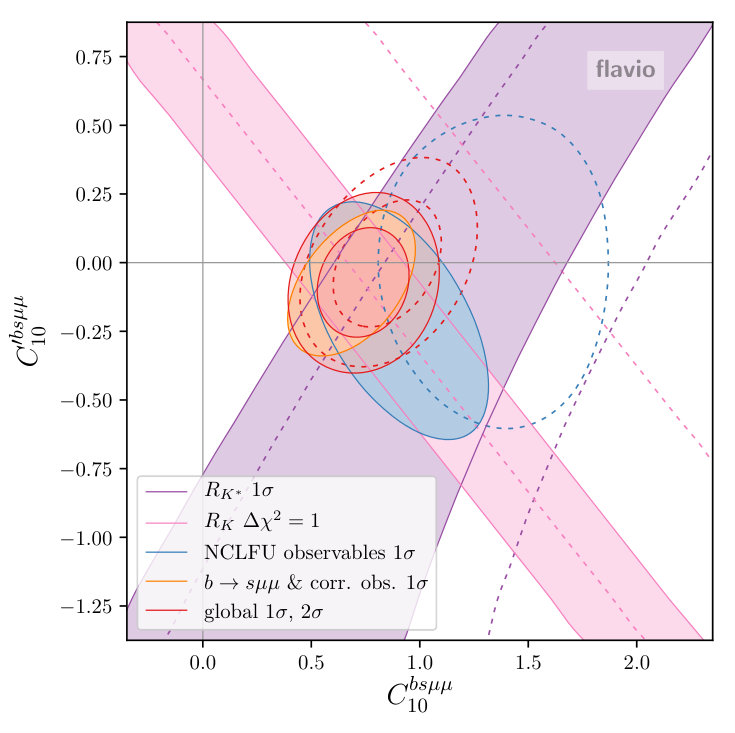 Figure 10
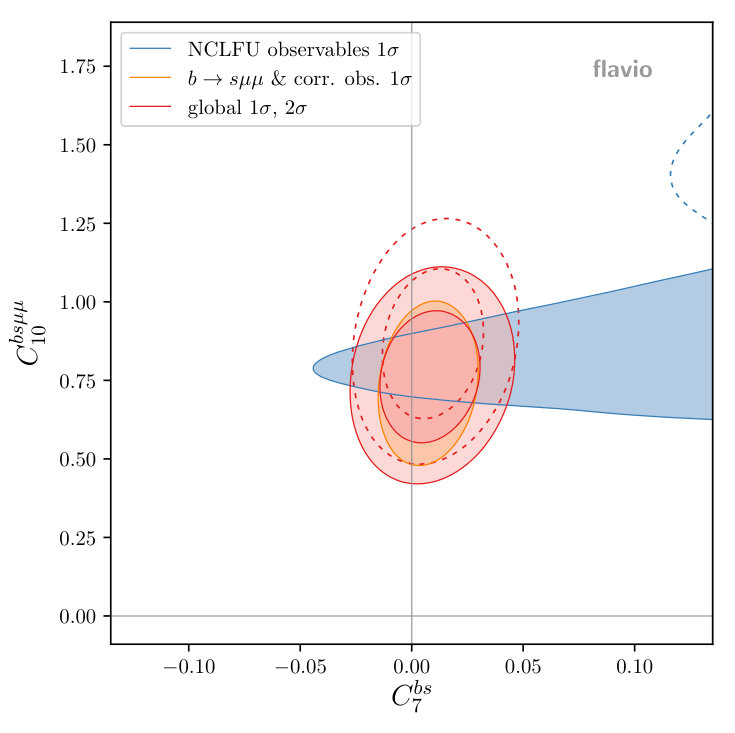 Figure 11
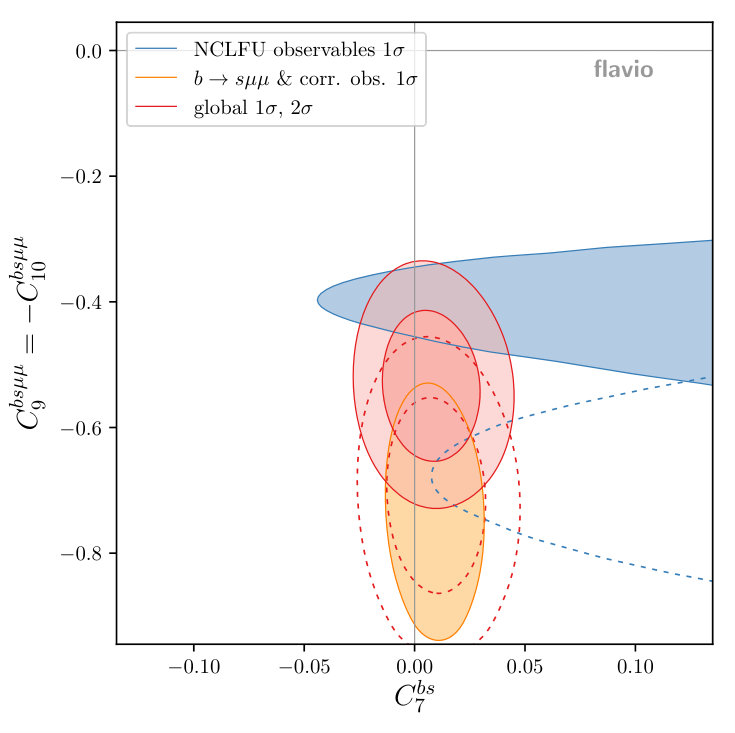 Figure 12
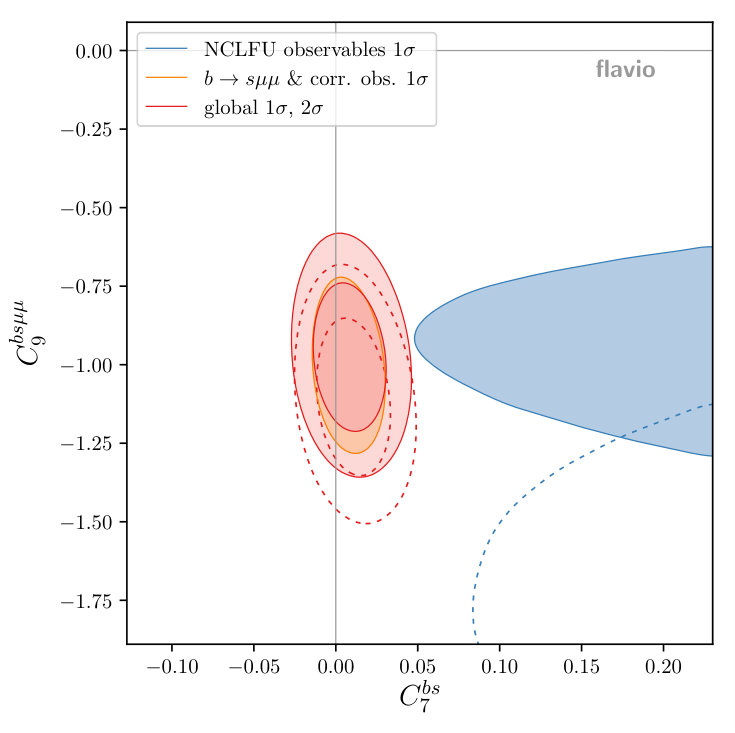 Figure 13
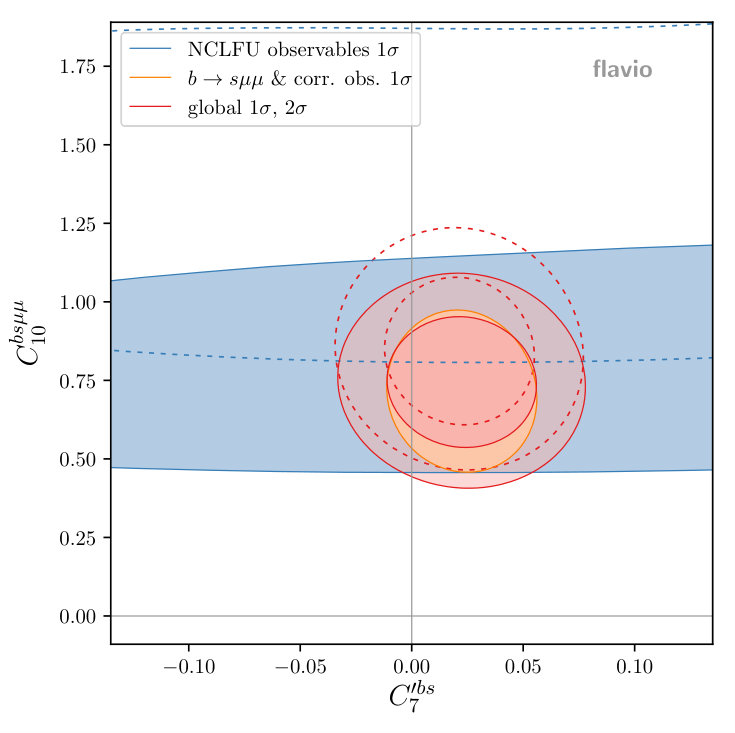 Figure 14
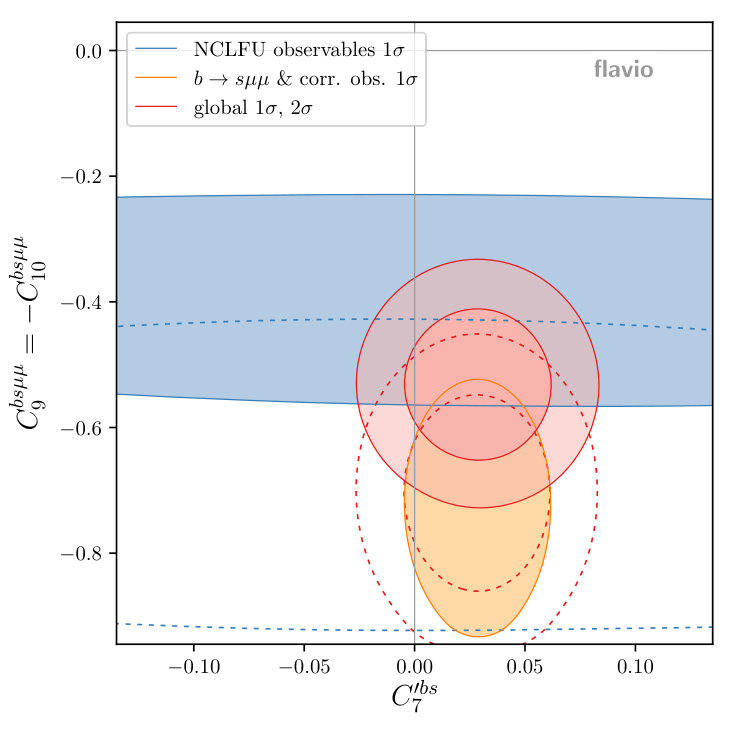 Figure 15
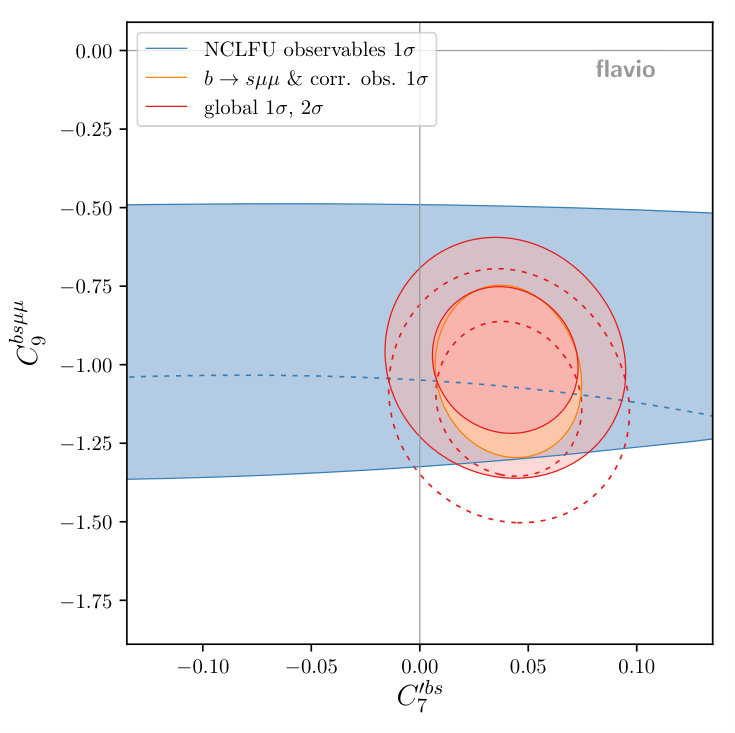 Figure 16
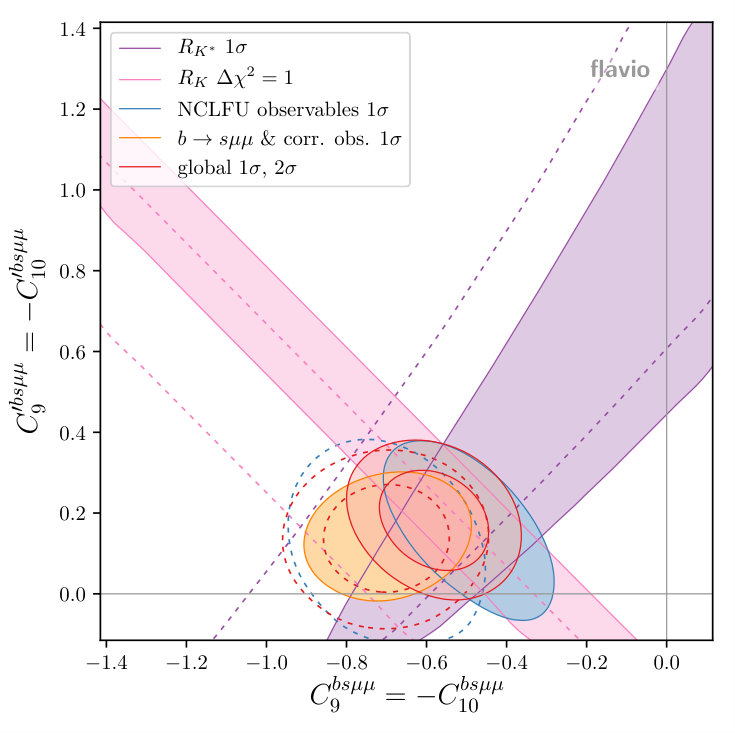 Figure 17
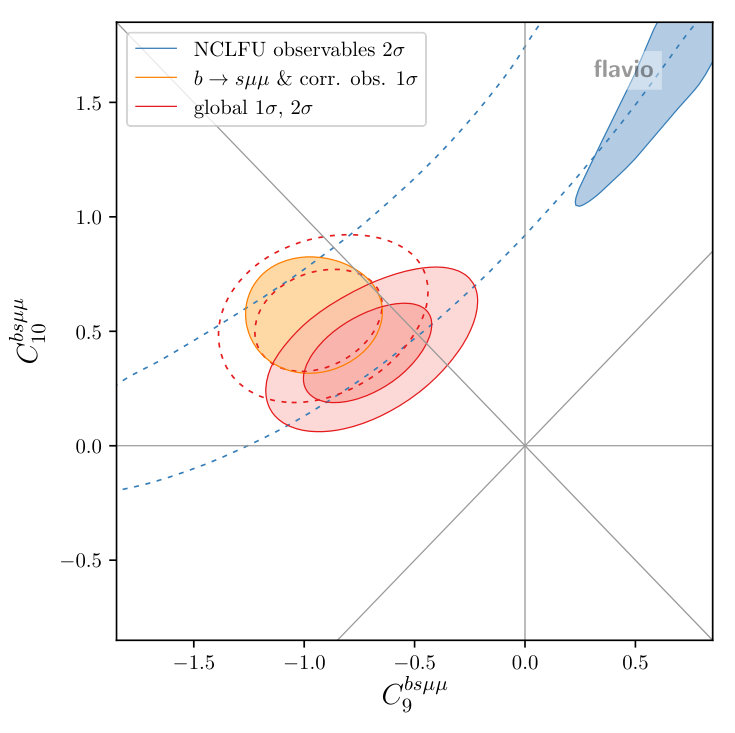 Figure 18
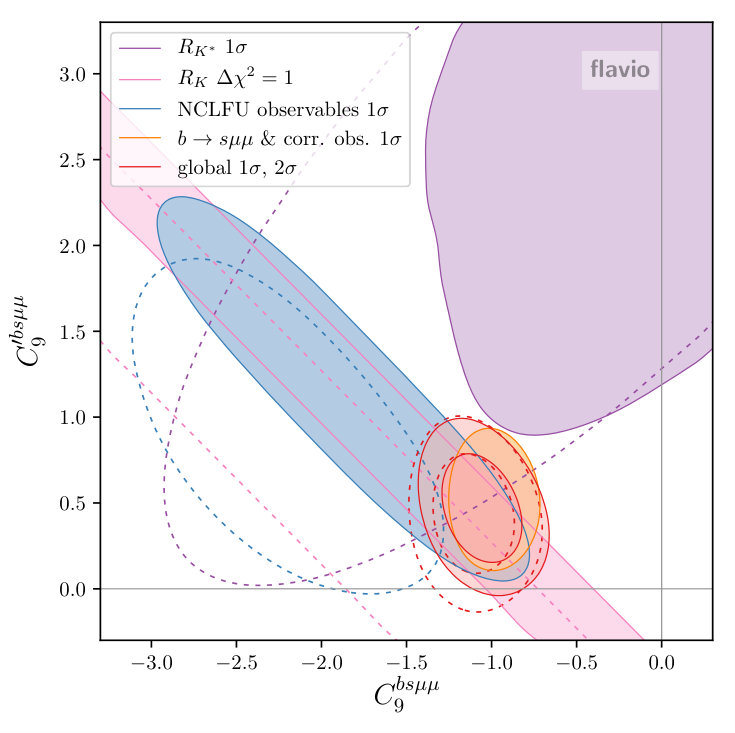 Figure 19
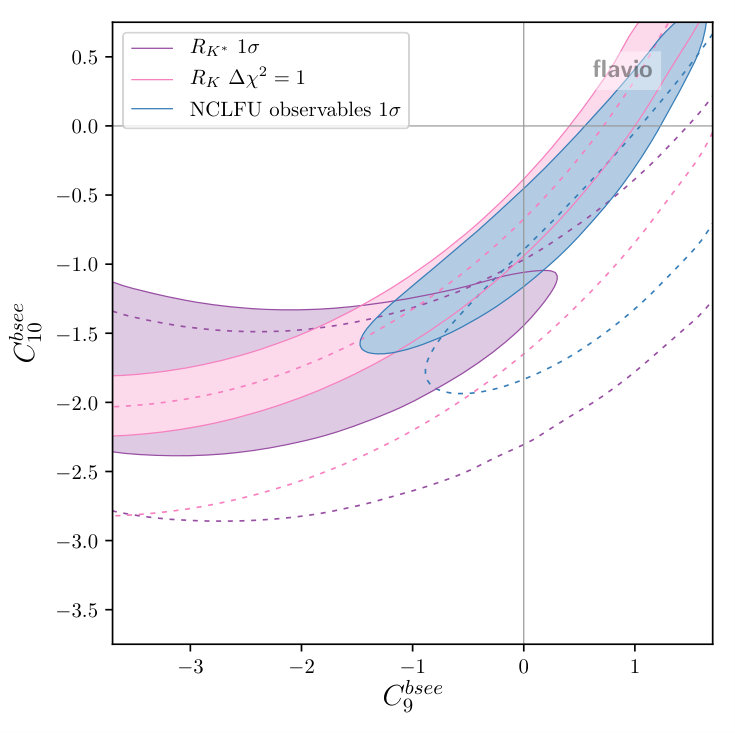 Figure 20
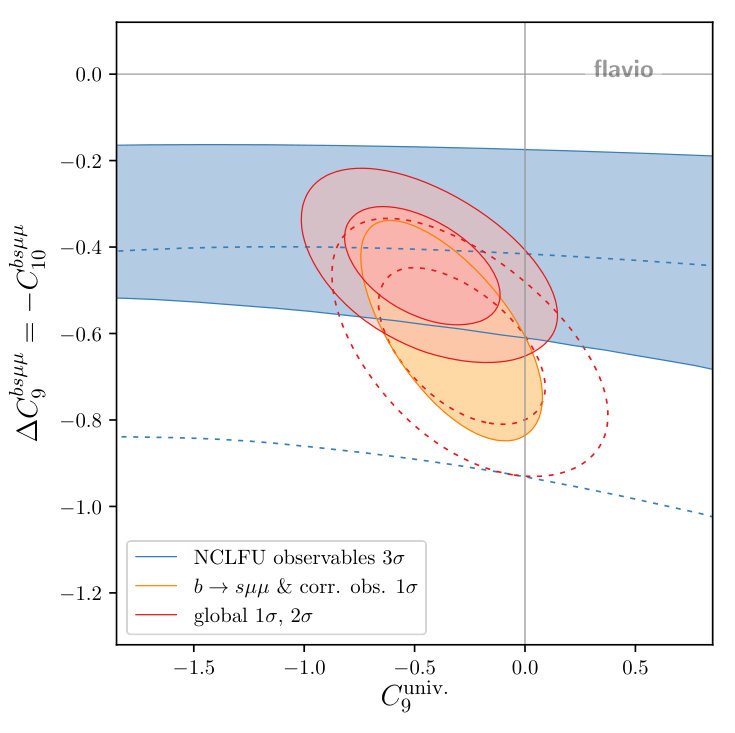 Figure 21
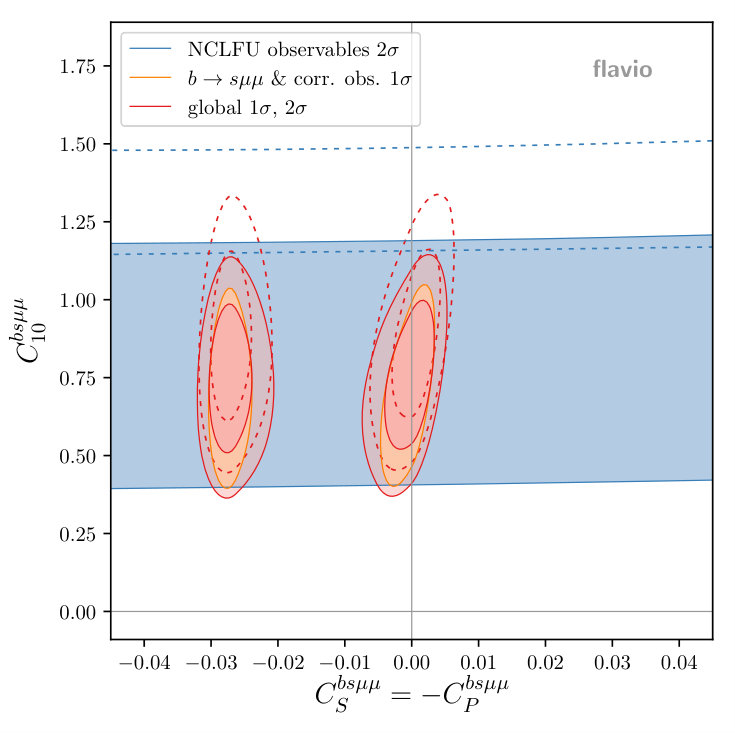 Figure 22
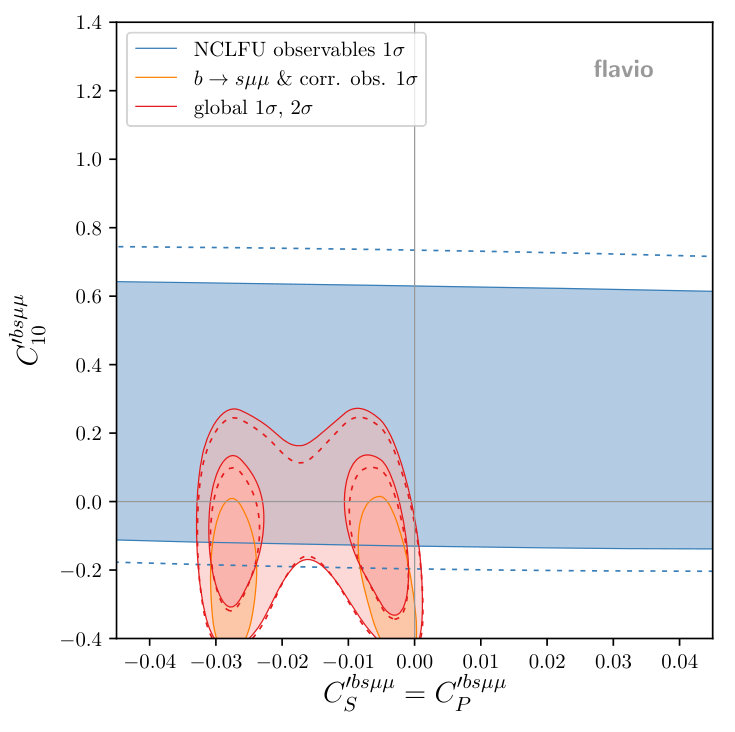 Figure 23
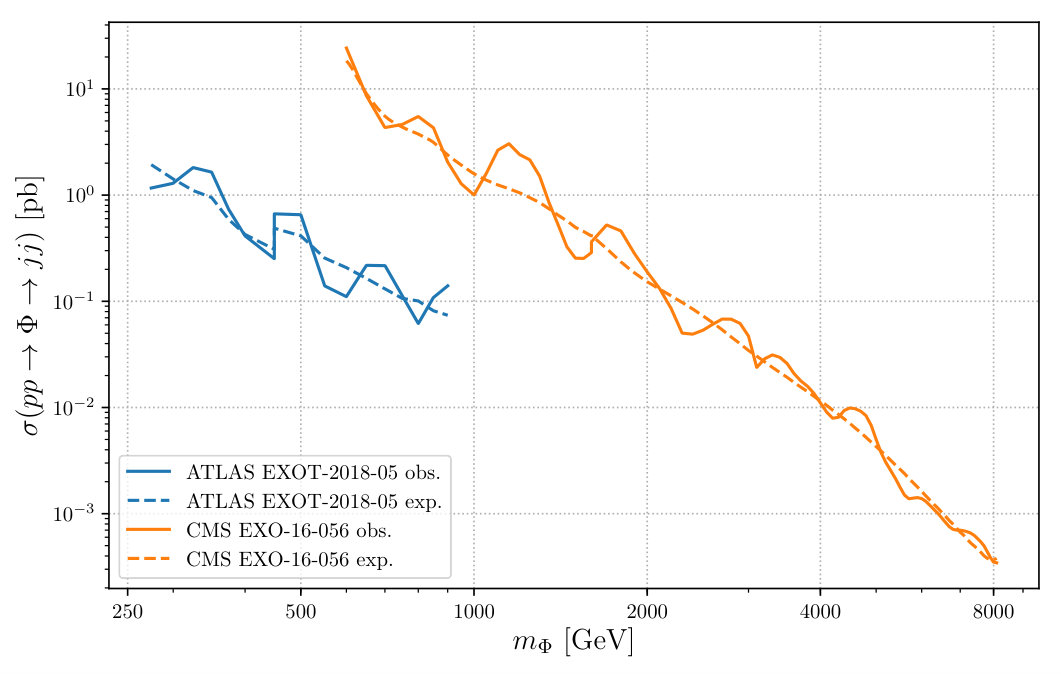 Figure 24
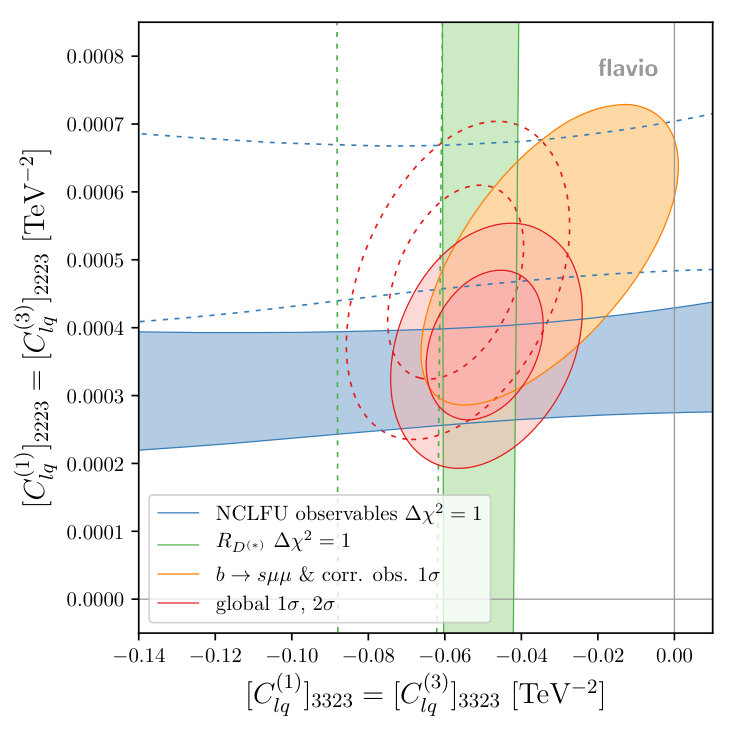 Figure 25
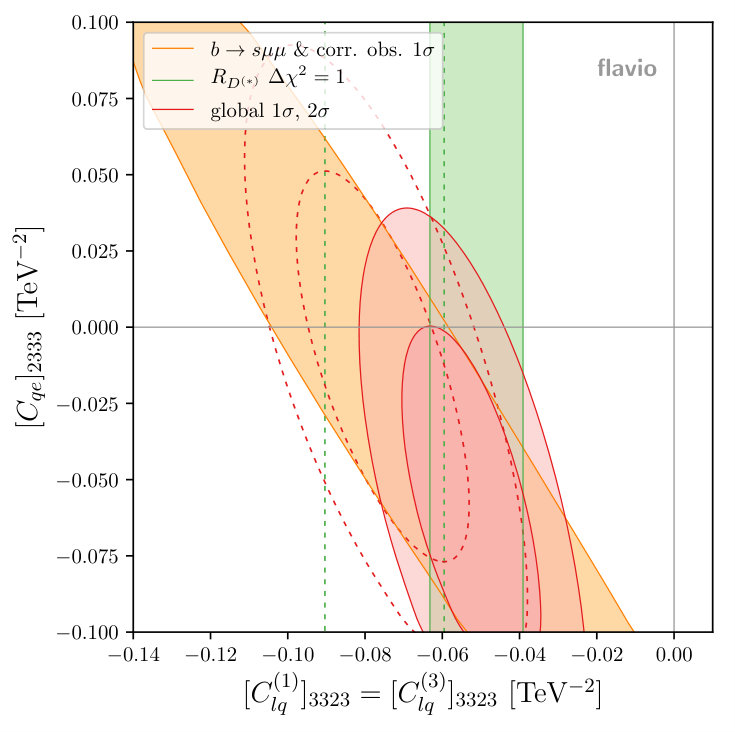 Figure 26
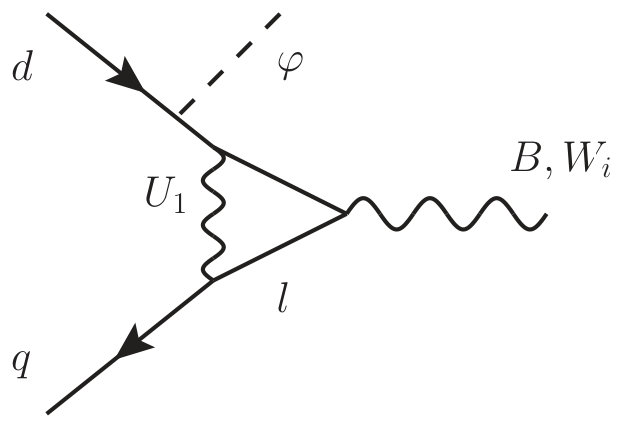 Figure 27
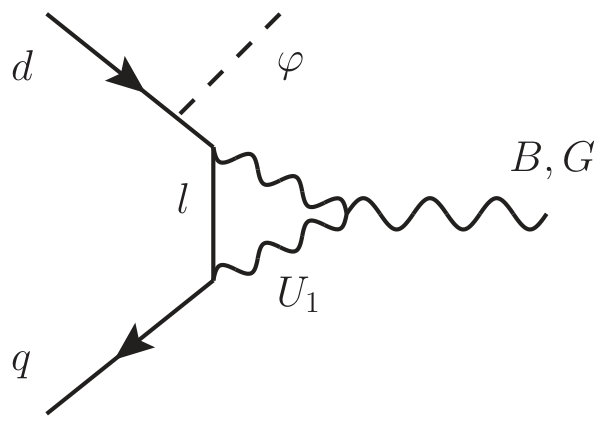 Figure 28
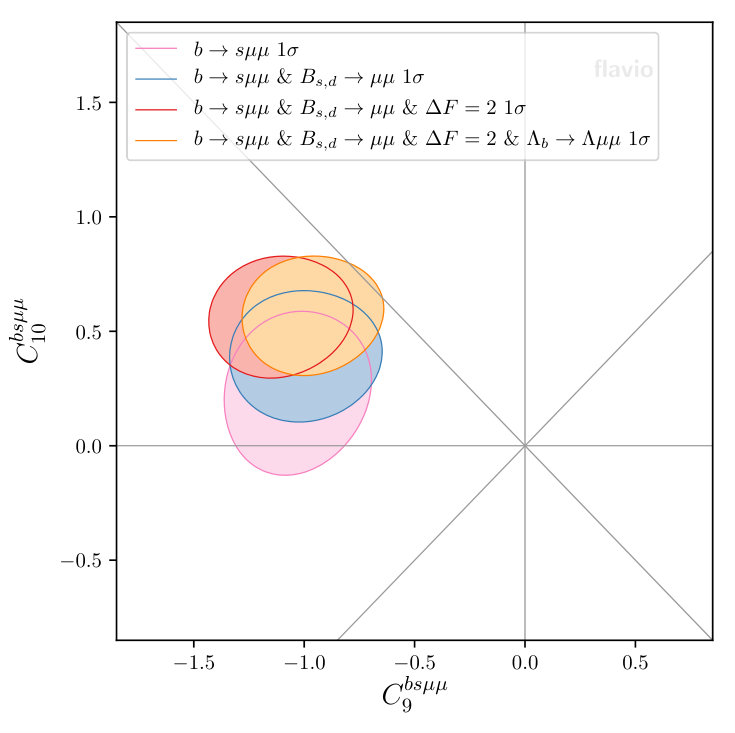 Figure 29
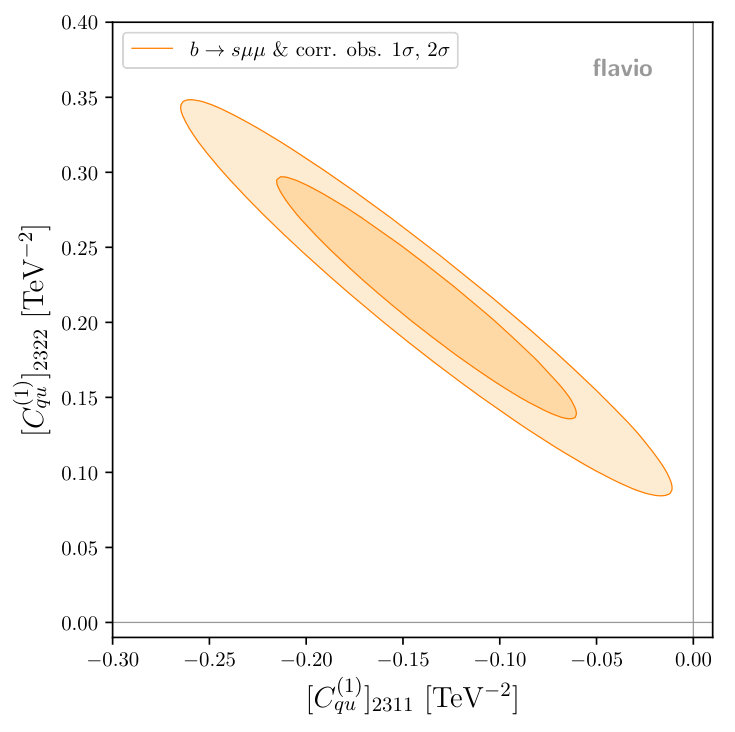 Figure 30
| Coeff. | best fit | pull | ||
| [, ] | [, ] | |||
| [, ] | [, ] | |||
| [, ] | [, ] | |||
| [, ] | [, ] | |||
| [, ] | [, ] | |||
| [, ] | [, ] | |||
| [, ] | [, ] | |||
| [, ] | [, ] | |||
| [, ] | [, ] | |||
| [, ] | [, ] | |||
| [, ] | [, ] | |||
| [, ] | [, ] | |||
| [, ] | [, ] | |||
| [, ] | [, ] |
| Observables | -value [%] | ||
|---|---|---|---|
| 127 | 126.7 | 49 | |
| 138 | 149.9 | 23 | |
| 143 | 155.9 | 22 | |
| 149 | 193.4 | 0.8 | |
| 218 | 264.7 | 1.7 | |
| all quark flavour | 258 | 301.9 | 3.1 |
| all low-energy | 276 | 308.6 | 8.6 |
| global | 313 | 361.4 | 3.1 |
Peer Reviews
No public reviews on file for this paper yet. If you reviewed it on a platform where reviews are public (OpenReview, ICLR, NeurIPS, ICML), you can paste yours below so the community can read it here.
Videos
No videos yet. Explain this paper in a talk, walkthrough, or lecture? Add one.
\addtokomafont
disposition
LAPTH-024/19
**-decay discrepancies after Moriond 2019
**
Jason Aebischera, Wolfgang Altmannshoferb, Diego Guadagnolic,
Méril Reboudc, Peter Stanglc, David M. Strauba
a Excellence Cluster Universe, Boltzmannstr. 2, 85748 Garching, Germany
b Santa Cruz Institute for Particle Physics, University of California, Santa Cruz, CA 95064, USA
c Laboratoire d’Annecy-le-Vieux de Physique Théorique, UMR5108, CNRS,
9 Chemin de Bellevue, B.P. 110, F-74941, Annecy-le-Vieux Cedex, France
E-mail: [email protected], [email protected], [email protected], [email protected], [email protected], [email protected]
Abstract
Following the updated measurement of the lepton flavour universality (LFU) ratio in decays by LHCb, as well as a number of further measurements, e.g. by Belle and by ATLAS, we analyse the global status of new physics in transitions in the weak effective theory at the -quark scale, in the Standard Model effective theory above the electroweak scale, and in simplified models of new physics. We find that the data continues to strongly prefer a solution with new physics in semi-leptonic Wilson coefficients. A purely muonic contribution to the combination , well suited to UV-complete interpretations, is now favoured with respect to a muonic contribution to only. An even better fit is obtained by allowing an additional LFU shift in . Such a shift can be renormalization-group induced from four-fermion operators above the electroweak scale, in particular from semi-tauonic operators, able to account for the potential discrepancies in transitions. This scenario is naturally realized in the simplified leptoquark model. We also analyse simplified models where a LFU effect in is induced radiatively from four-quark operators and show that such a setup is on the brink of exclusion by LHC di-jet resonance searches.
1 Introduction
In recent years, several deviations from Standard Model (SM) expectations have been building up in -decay measurements. While each of them could be a first sign of physics beyond the SM, statistical fluctuations or underestimated experimental or theoretical systematic uncertainties cannot be excluded at present. These deviations – or “anomalies” – can be grouped into four categories that have very different experimental and theoretical challenges:
- (i)
Apparent suppression of various branching ratios of exclusive decays based on the flavour-changing neutral current (FCNC) transition [1, 2]. The uncertainties are dominated by the limited knowledge of the to light meson hadronic form factors [3, 4, 5]. 2. (ii)
Deviations from SM expectations in angular observables [6, 7, 8, 9] (also based on the transition), where form factor uncertainties are much smaller than for the branching ratios, but hadronic uncertainties are nevertheless significant [10, 11]. 3. (iii)
Apparent deviations from - universality in transitions in the processes and (via the ratios [12] and [13], respectively). Here the theoretical uncertainties are negligible [14] and the sensitivity is only limited by statistics at present. 4. (iv)
Apparent deviations from - and - universality in transitions [15, 16, 17, 18, 19, 20, 21]. Uncertainties are dominated by statistics, with non-negligible experimental systematics but small theoretical uncertainties [22, 23, 24, 25]. (Note that - universality in transitions is tested to hold at the percent level [26, 27, 28].)
While the deviations in (i) and (ii) could be alleviated by more conservative assumptions on the hadronic uncertainties, it is tantalizing that a simple description in terms of a single non-standard Wilson coefficient of a semi-muonic operator like or leads to a consistent description of (i), (ii), and (iii), with a best-fit point that improves the fit to the data by more than five standard deviations compared to the SM (for a single degree of freedom) [29, 30, 31, 32, 33, 34]. Moreover, it was shown that simplified models with a single tree-level mediator can not only explain (i), (ii), and (iii), but even all four categories of deviations simultaneously without violating any other existing constraints [35, 36, 37, 38, 39, 40].
Taken together, these observations explain the buzz of activity around these deviations and the anticipation of improved measurements of the theoretically clean ratios and . The purpose of this article is to examine the status of the tensions after inclusion of a number of updated or newly available measurements, in particular:
- •
The new measurement of by the LHCb collaboration combining Run-1 data with 2 fb*-1* of Run-2 data (corresponding to about one third of the full Run-2 data set). The updated measurement finds [41]111In our numerical analysis, we use the full one-dimensional numerical likelihood provided in [41], which is markedly non-Gaussian, rather than symmetrizing the uncertainties in (1).
[TABLE]
where the first uncertainty is statistical and the second systematic, and is the dilepton invariant mass squared. The SM predicts lepton flavour universality, i.e. is unity with uncertainties that are well below the current experimental sensitivities. While the updated experimental value is closer to the SM prediction than the Run-1 result [12], the reduced experimental uncertainties imply a tension between theory and experiment at the level of , which is comparable to the situation before the update.
- •
The new, preliminary measurement of by Belle [42]. Averaged over and decays, the measured values at low and high are
[TABLE]
Given their sizable uncertainties, these values are compatible with both the SM predictions ( approximately unity) and previous results on from LHCb [13]
[TABLE]
that are in tension with the SM predictions by in both bins.
- •
One further, important piece of information included in our study is the 2018 measurement of by the ATLAS collaboration [43], that we combine with the existing measurements by CMS and LHCb [44, 45, 46].
In this paper we will explore the implications of all these, as well as other data, to be described in fuller detail in the next section, in the context of global fits to model-independent new physics scenarios, identify those that lead to a good description of the data, and discuss possible realizations in terms of simplified new-physics models.
Our numerical analysis is entirely based on open-source software, notably the global likelihood in Wilson coefficient space provided by the smelli package [47], built on flavio [48] and wilson [49]. As such, our analysis is easily reproducible and modifiable.
The rest of this work is organized as follows.
- •
In Section 2, we describe our statistical approach and the experimental measurements we employ in our numerical analysis.
- •
In Section 3, we perform a model-independent global analysis of transitions, first in the weak effective theory (WET) below the electroweak (EW) scale, then in the SM effective field theory (SMEFT) above the EW scale, which allows us to extend the discussion to the charged-current deviations and to incorporate constraints from electroweak precision tests and other precision measurements.
- •
In Section 4, we discuss a number of specific simplified new-physics (NP) models that are favoured by the current data, assuming the deviations to be due to NP.
- •
Section 5 contains our conclusions.
2 Setup
Our numerical analysis is based on a global likelihood function in the space of the Wilson coefficients of the WET valid below the EW scale, or the SMEFT valid above it. Theoretical uncertainties (for observables where they cannot be neglected) are treated by computing a covariance matrix of theoretical uncertainties within the SM and combining it with the experimental uncertainties (approximated as Gaussian). The main assumption in this approach is that the sizes of theory uncertainties are weakly dependent on NP, which we checked for the observables included. This approach was first applied to transitions in [50]. The theoretical uncertainties in exclusive -decay observables stem mainly from hadronic form factors, which we take from [3] for to light vector meson transitions and from [5] for , as well as unknown non-factorizable effects that are parametrized as in [50, 3, 48] (and are compatible with more sophisticated approaches [10, 11]). Additional parametric uncertainties (e.g. from CKM matrix elements) are based on flavio v1.3 with default settings [48]. For more details on the statistical approach and the list of observables and measurements included, we refer the reader to [47].
Here we highlight the changes in observables sensitive to transitions included with respect to the recent global analyses [29, 30] by some of us.
- •
We include the LHCb update of [41] (cf. footnote 1) and the new, preliminary measurement of by Belle [42]. The Belle results are available for various -bin choices, separately for and decays and in an isospin averaged form. In our numerical analysis we use the GeVGeV2 and GeVGeV2 bins, separately for and decays.
- •
We include the new ATLAS measurement of [43], that we combine with the CMS and LHCb measurements [44, 45, 46]. This combination is discussed in detail in appendix A. Our combination is in slight tension with the SM prediction of BR by approximately .
- •
We include the updated LHCb measurement of forward-backward asymmetries in [51] as well as its branching ratio [52]. For the theory predictions of the baryonic decay we follow [53, 54].
- •
Here we are working with the global likelihood described in [47] (i.e. including as many observables sensitive to the Wilson coefficients as possible), while in [29] we focused on observables sensitive to the transition only. This means e.g. that we also include all the observables sensitive to the dipole transitions studied in [55]. In addition, the global likelihood also includes observables that do not directly depend on the Wilson coefficients of interest but whose theory uncertainties are strongly correlated with those of the directly dependent observables. This is in particular relevant for the observables. In our figures, we indicate the set of observables consisting of , , and other correlated observables as “ & corr. obs.”.
Like in the previous analysis [30] by some of us, we again include the LFU differences of angular observables222. The observables are defined in [56]. and . To this end, we have added them to the global likelihood in version 1.3.0 of the smelli package.
3 Model-independent numerical analysis
Having at hand the global likelihood in the space of NP Wilson coefficients, , we perform a model-independent numerical analysis by studying it in simple one- and two-coefficient scenarios. This analysis proceeds in two steps:
We first investigate the Wilson coefficients of the weak effective theory at the -quark mass scale. This analysis can be seen as an update of earlier analyses (see e.g. [29, 30, 31, 32, 33, 34]) and is completely general, barring new particles lighter than the quark (see e.g. [57, 58, 59, 60]). 2. 2.
Next, we embed these results into the SMEFT at a scale above the electroweak scale. This is based on the additional assumptions that there are no new particles beneath and that EW symmetry breaking is approximately linear (see e.g. [61]). This allows us to correlate NP effects in model-independently with other sectors like EW precision tests or transitions (cf. [62, 63, 47, 64]).
3.1 observables in the WET
We start by investigating the constraints on NP contributions to the Wilson coefficients of the WET at the -quark scale that we take to be . We work with the effective Hamiltonian
[TABLE]
where the first term contains the SM contributions to the Wilson coefficients. The second term reads
[TABLE]
with the normalization factor
[TABLE]
The dipole operators are given by333The sign of the dipole coefficients are fixed by our convention for the covariant derivative .
[TABLE]
where , and the semi-leptonic operators
[TABLE]
We have omitted from semi-leptonic tensor operators, which are not generated at dimension 6 in theories that have SMEFT as EW-scale limit, as well as chromomagnetic and four-quark operators. Even though the latter can contribute via one-loop matrix elements to processes, their dominant effects typically stem from renormalization group (RG) evolution above the scale , and we will discuss these effects in the SMEFT framework in the next section. For the same reason, we have constrained the sum over lepton flavours to and : semi-tauonic WET operators can contribute via QED RG mixing, but their direct matrix elements are subleading [65].
3.1.1 Scenarios with a single Wilson coefficient
The reference list from the paper itself. Each links out to its DOI / PubMed record.
- 1[1] LH Cb collaboration, R. Aaij et al., Differential branching fractions and isospin asymmetries of B → K ( ∗ ) μ + μ − → 𝐵 superscript 𝐾 superscript 𝜇 superscript 𝜇 B\to K^{(*)}\mu^{+}\mu^{-} decays , JHEP 06 (2014) 133 , [ 1403.8044 ]. · doi ↗
- 2[2] LH Cb collaboration, R. Aaij et al., Angular analysis and differential branching fraction of the decay B s 0 → ϕ μ + μ − → subscript superscript 𝐵 0 𝑠 italic-ϕ superscript 𝜇 superscript 𝜇 B^{0}_{s}\to\phi\mu^{+}\mu^{-} , JHEP 09 (2015) 179 , [ 1506.08777 ]. · doi ↗
- 3[3] A. Bharucha, D. M. Straub and R. Zwicky, B → V ℓ + ℓ − → 𝐵 𝑉 superscript ℓ superscript ℓ B\to V\ell^{+}\ell^{-} in the Standard Model from light-cone sum rules , JHEP 08 (2016) 098 , [ 1503.05534 ]. · doi ↗
- 4[4] R. R. Horgan, Z. Liu, S. Meinel and M. Wingate, Rare B 𝐵 B decays using lattice QCD form factors , Po S LATTICE 2014 (2015) 372 , [ 1501.00367 ]. · doi ↗
- 5[5] N. Gubernari, A. Kokulu and D. van Dyk, B → P → 𝐵 𝑃 B\to P and B → V → 𝐵 𝑉 B\to V Form Factors from B 𝐵 B -Meson Light-Cone Sum Rules beyond Leading Twist , JHEP 01 (2019) 150 , [ 1811.00983 ]. · doi ↗
- 6[6] LH Cb collaboration, R. Aaij et al., Angular analysis of the B 0 → K ∗ 0 μ + μ − → superscript 𝐵 0 superscript 𝐾 absent 0 superscript 𝜇 superscript 𝜇 B^{0}\to K^{*0}\mu^{+}\mu^{-} decay using 3 fb -1 of integrated luminosity , JHEP 02 (2016) 104 , [ 1512.04442 ]. · doi ↗
- 7[7] ATLAS collaboration, Angular analysis of B d 0 → K ∗ μ + μ − → subscript superscript 𝐵 0 𝑑 superscript 𝐾 superscript 𝜇 superscript 𝜇 B^{0}_{d}\to K^{*}\mu^{+}\mu^{-} decays in p p 𝑝 𝑝 pp collisions at s = 8 𝑠 8 \sqrt{s}=8 Te V with the ATLAS detector , Tech. Rep. ATLAS-CONF-2017-023, CERN, Geneva, Apr, 2017.
- 8[8] CMS collaboration, Measurement of the P 1 subscript 𝑃 1 P_{1} and P 5 ′ superscript subscript 𝑃 5 ′ P_{5}^{\prime} angular parameters of the decay B 0 → K ∗ 0 μ + μ − → superscript B 0 superscript K absent 0 superscript 𝜇 superscript 𝜇 \mathrm{B}^{0}\to\mathrm{K}^{*0}\mu^{+}\mu^{-} in proton-proton collisions at s = 8 Te V 𝑠 8 Te V \sqrt{s}=8~{}\mathrm{Te V} , Tech. Rep. CMS-PAS-BPH-15-008, CERN, Geneva, 2017.