Fluctuation Theorem of Information Exchange between Subsystems that Co-Evolve in Time
Lee Jinwoo

TL;DR
This paper extends the fluctuation theorem of information exchange to cases where both subsystems co-evolve over time, broadening its applicability to dynamic biological and non-equilibrium systems.
Contribution
It generalizes the fluctuation theorem of information exchange to include co-evolving subsystems, removing previous static assumptions.
Findings
The fluctuation theorem holds even when both subsystems evolve during information exchange.
The result applies to dynamic biological systems with interacting subsystems.
The theorem's applicability is extended to broader non-equilibrium processes.
Abstract
Sagawa and Ueda established a fluctuation theorem of information exchange by revealing the role of correlations in stochastic thermodynamics and unified the non-equilibrium thermodynamics of measurement and feedback control [T. Sagawa and M. Ueda, Phys. Rev. Lett. 109, 180602 (2012)]. They considered a process where a non-equilibrium system exchanges information with other degrees of freedom such as an observer or a feedback controller. They proved the fluctuation theorem of information exchange under the assumption that the state of the other degrees of freedom that exchange information with the system does not change over time while the states of the system evolve in time. Here we relax this constraint and prove that the same form of the fluctuation theorem holds even if both subsystems co-evolve during information exchange processes. This result may extend the applicability of the…
Click any figure to enlarge with its caption.
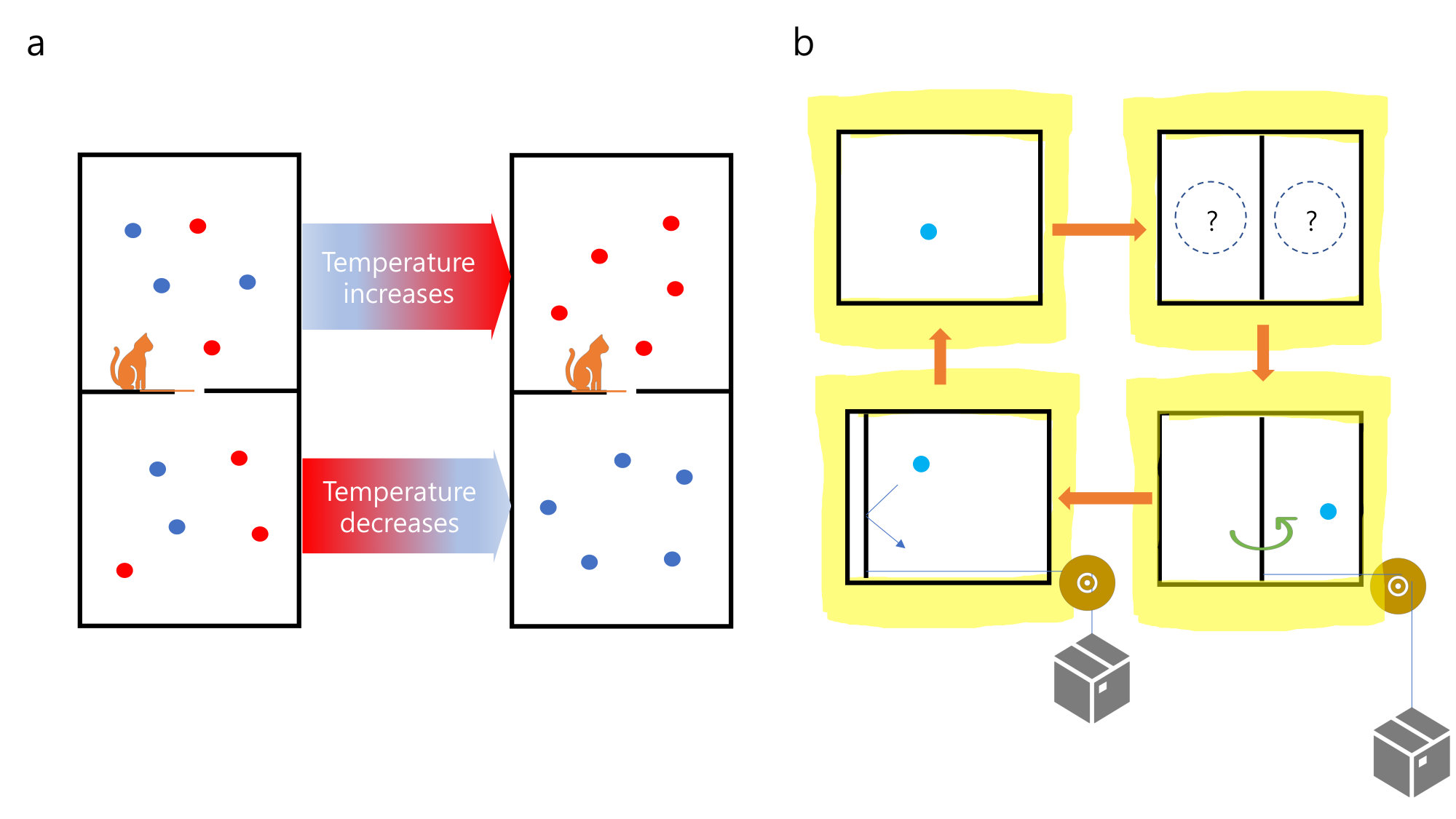 Figure 1
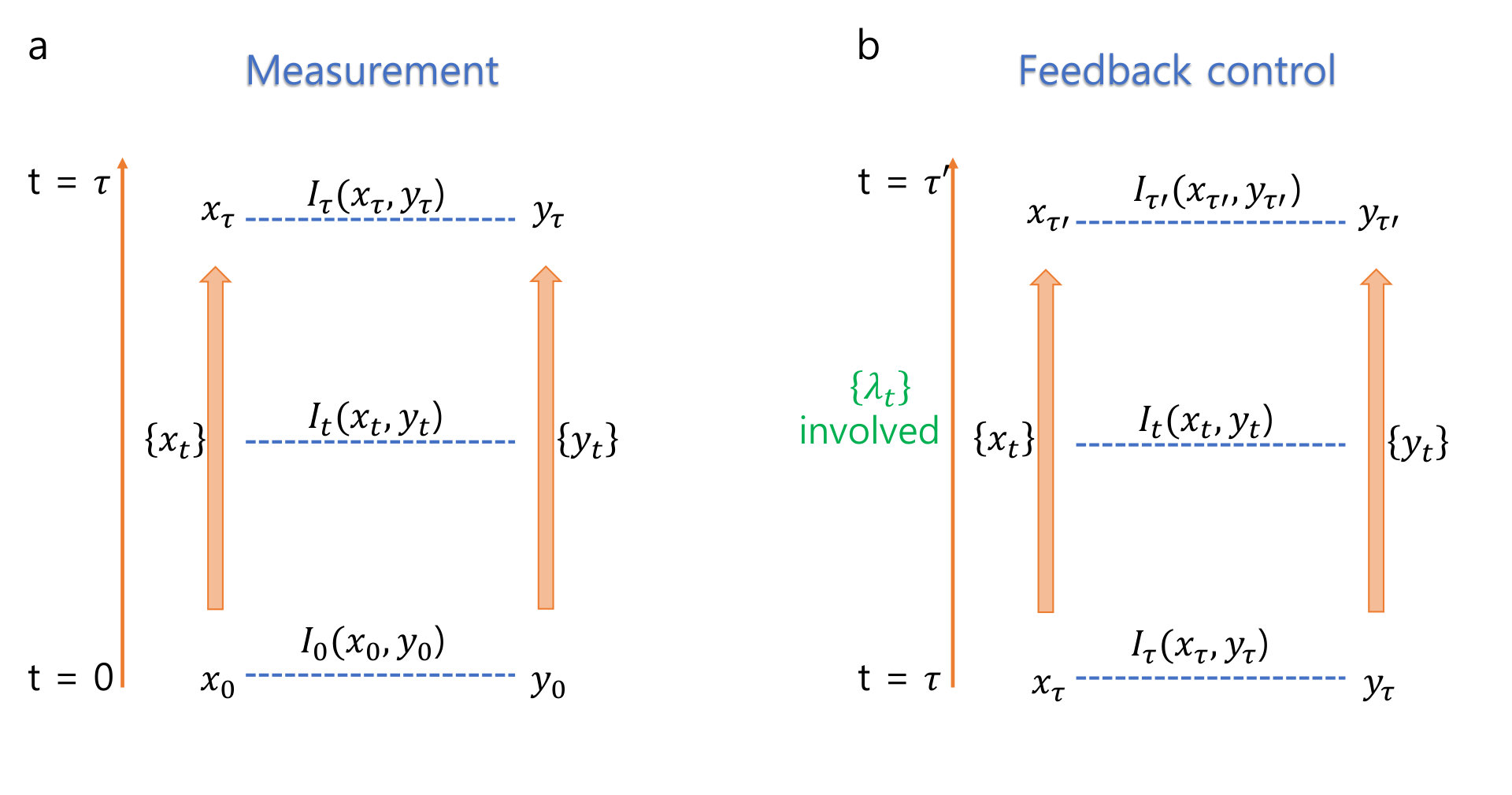 Figure 2
Peer Reviews
No public reviews on file for this paper yet. If you reviewed it on a platform where reviews are public (OpenReview, ICLR, NeurIPS, ICML), you can paste yours below so the community can read it here.
Videos
No videos yet. Explain this paper in a talk, walkthrough, or lecture? Add one.