Consequences of Modified Cosmologies in DM abundance and PeV IceCube signals
G. Lambiase

TL;DR
This paper explores how modified cosmological models, specifically $f(T)$ cosmology, impact dark matter abundance and high-energy neutrino signals observed by IceCube, using a minimal operator framework.
Contribution
It introduces the effects of $f(T)$ cosmology on dark matter relic density and PeV neutrino flux, providing a novel connection between modified gravity and astrophysical observations.
Findings
Modified cosmology alters dark matter abundance predictions.
Impacts on PeV neutrino flux consistent with IceCube data.
Highlights the importance of cosmological models in particle astrophysics.
Abstract
To explain the high-energy astrophysical neutrino flux with energies recently observed by IceCube collaboration and the relic abundance of DM in the Universe, we consider the minimal 4-dimensional operator . The cosmological background is assumed to evolve according to cosmology, where is the scalar torsion.
Click any figure to enlarge with its caption.
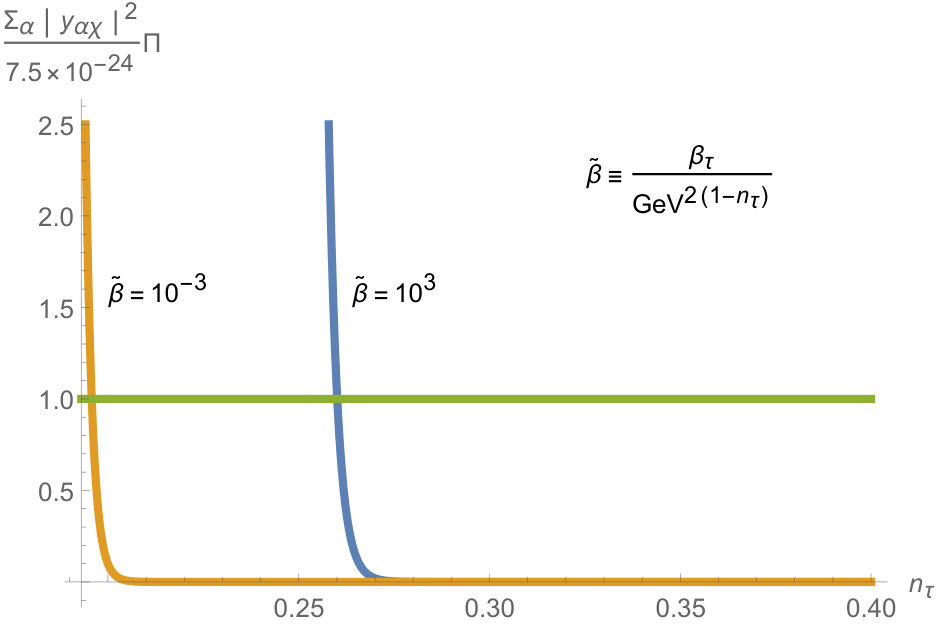 Figure 1
Peer Reviews
No public reviews on file for this paper yet. If you reviewed it on a platform where reviews are public (OpenReview, ICLR, NeurIPS, ICML), you can paste yours below so the community can read it here.
Videos
No videos yet. Explain this paper in a talk, walkthrough, or lecture? Add one.
Taxonomy
TopicsDark Matter and Cosmic Phenomena · Astrophysics and Cosmic Phenomena · Precipitation Measurement and Analysis
SNSN-323-63
Consequences of Modified Cosmologies in DM abundance and PeV IceCube signals
G. Lambiase111Work supported by INFN.
*Dipartimento di Fisica E.R. Caianiello, Universita’ di Salerno, ITALY
INFN - Gruppo Collegato di Salerno, ITALY*
To explain the high-energy astrophysical neutrino flux with energies recently observed by IceCube collaboration and the relic abundance of DM in the Universe, we consider the minimal 4-dimensional operator . The cosmological background is assumed to evolve according to cosmology, where is the scalar torsion.
PRESENTED AT
NuPhys2018, Prospects in Neutrino Physics
Cavendish Conference Centre, London, UK, December 19–21, 2018
1 Introduction
The IceCube Collaboration [1] has recently reported several events of neutrinos with energies of the order of PeV. Candidates for the generation of such neutrino high energy events could be various astrophysical sources [2]. Till now, however, there are no clear correlations with the known astrophysical sources (SNe remnants or AGN [3]). Other interesting ideas assume that neutrinos could arise from the decay of PeV mass Dark Matter (DM) [4]. Besides this topic, another interesting question is whether it is possible to explain both the PeV DM relic density (i.e. \Omega_{DM}h^{2}\Big{|}_{obs}=0.1188\pm 0.0010 [5]) and the decay rate required for IceCube with only one operator. The minimal DM-neutrino 4-dimensional interaction we consider is [4]. In the framework of the comsological standard model, this operator fails to account for both the PeV dark matter relic abundance and the decay rate required to explain IceCube. We therefore consider the possibility that Universe evolves according to modified cosmology that consist in an extension of Einstein’s theory (see for example [7]). In these models, the expansion rates of the Universe can be written in terms of the expansion rate of General Relativity (GR) [8]
[TABLE]
where is a reference temperature, and free parameters that depend on the cosmological model under consideration [8]. To preserve the successful predictions of BBN, one refers to the pre-BBN epoch since it is not directly constrained by cosmological observations.
2 PeV neutrinos and modified cosmology
The simplest 4-dimensional operator that allows to explain the IceCube high energy signal, is
[TABLE]
where is the DM particle that transforms as of SM, is the Higgs doublet, is the left-handed lepton doublet corresponding to the generation , and finally are the Yukawa couplings. We consider the freeze-in production [6, 4], i.e. the DM particles are never in thermal equilibrium since they interact very weakly, but are gradually produced from the hot thermal bath. As a consequence, a sizable DM abundance is allowed until the temperature falls down to (temperatures below are such that DM particles phase-space is kinematically difficult to access).
Denoting with the DM abundance, where is the number density of the DM particles and the entropy density, the evolution of the DM particle is governed by the Boltzmann equation where is the expansion rate of the Universe and the general collision term. In modified cosmology, the DM relic abundance is given by [9]
[TABLE]
with . accounts for all corrections induced by modified cosmology. To explain the DM relic abundance and the IceCube data, we require
[TABLE]
Consider the model , where ( is a generic function of the torsion ). In such a case [9], one gets (see Eq. (1))
[TABLE]
and . For , i.e. , it follows . The transition temperature given in (4) has to be used into Eq. (3). In Fig. 1 is plotted (3) for the model. The value of is obtained by fixing the transition temperature at GeV, that is .
3 Conclusions
In this paper we have studied the possibility to reconcile the current bound on DM relic abundance with IceCube data in terms of the 4-dimensional operator (2). We have shown that modified gravity models can explain the IceCube outputs and at the same time the DM relic abundance observed in a minimal particle physics model. We have considered cosmological models related to torsion .
The reference list from the paper itself. Each links out to its DOI / PubMed record.
- 1[1] M.G. Aartsen et al , Phys. Rev. Lett 115 081102 (2015). I. Cholis and D. Hooper, JCAP 06 030 (2013). L.A. Anchordoqui et al , JHE Ap 1-2 1 (2014).
- 2[2] S. Sahu and L.S. Miranda, Eur. Phys. J. C 75 273 (2015).
- 3[3] M.G. Aartsen et al , Astrophys. J. 835 151 (2017).
- 4[4] M. Chianese and A. Merle, JCAP 04 017 (2017).
- 5[5] P.A.R. Ade et al , Astron. Astrophys. 594 13 (2016).
- 6[6] L.J. Hall, K. Jedamzik, J. March-Russell, and S.M. West, JHEP 03 080 (2010).
- 7[7] A. De Felice and S. Tsujikawa, Living Rev. Rel. 13 3 (2010). G. Chakravarty, S. Mohanty, and G. Lambiase, Int. J. Mod. Phys. D 26 1730023 (2017 ). R. Durrer and R. Maartens, Gen. Relat. Grav. 40 301 (2008).
- 8[8] R. Catena, N. Fornengo, M. Pato, L. Pieri and A. Masiero, Phys. Rev. D 81 123522 (2010). M. Kamionkowski and M.S. Turner, Phys. Rev. D 42 3310 (1990). P. Salati, Phys. Lett. B 571 121 (2003). G. Lambiase, JCAP 10 028 (2012). G. Gelmini and P. Gondolo, ar Xiv:1009.3690. G. D’Amico, M. Kamionkowski, and K. Sigurdson, ar Xiv:0907.1912. L. Randal and R. Sundrum, Phys. Rev. Lett. 83 4690 (1991). F. Profumo and P. Ullio, JCAP 0311 006 (2003). F. Rosati, Phys. Lett. B 57