Origin of the flat band in heavily Cs doped graphene
N. Ehlen, M. Hell, G. Marini, E.H. Hasdeo, R. Saito, G. Di Santo, L., Petaccia, G. Profeta, A. Gr\"uneis

TL;DR
This paper presents a novel method to induce flat energy bands in 2D materials by sandwiching them with cesium layers, demonstrated on graphene through experiments and calculations, offering an alternative to twisted bilayer graphene.
Contribution
The study introduces a new approach to create flat bands in 2D materials using Cs layers, expanding possibilities beyond twisting methods.
Findings
Flat bands can be achieved in graphene by Cs layer sandwiching.
Charge transfer and covalent bonding are key to flat band formation.
This method provides a stable alternative to twisted bilayer graphene.
Abstract
A flat energy dispersion of electrons at the Fermi level of a material leads to instabilities in the electronic system and can drive phase transitions. Here we introduce a method to induce a flat band in two-dimensional (2D) materials. We show that the flat band can be achieved by sandwiching the 2D material by two cesium (Cs) layers. We apply this method to monolayer graphene and investigate the flat band by a combination of angle-resolved photoemission spectroscopy experiment and the calculation. Our work highlights that charge transfer, zone folding of graphene bands and the covalent bonding between C and Cs atoms are at the origin of the flat energy band formation. The presented approach is an alternative route for obtaining flat band materials to twisting bilayer graphene which yields thermodynamically stable flat band materials in large areas.
Click any figure to enlarge with its caption.
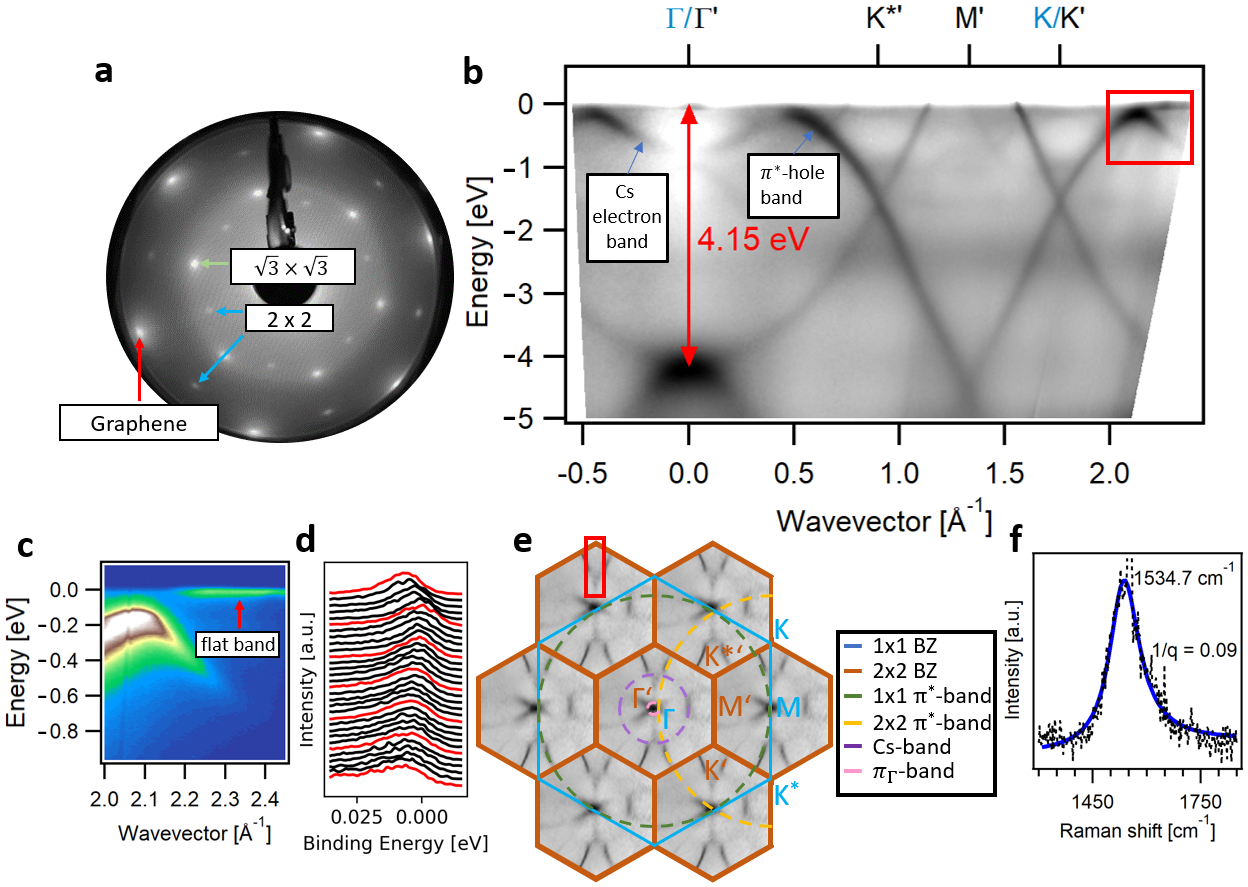 Figure 1
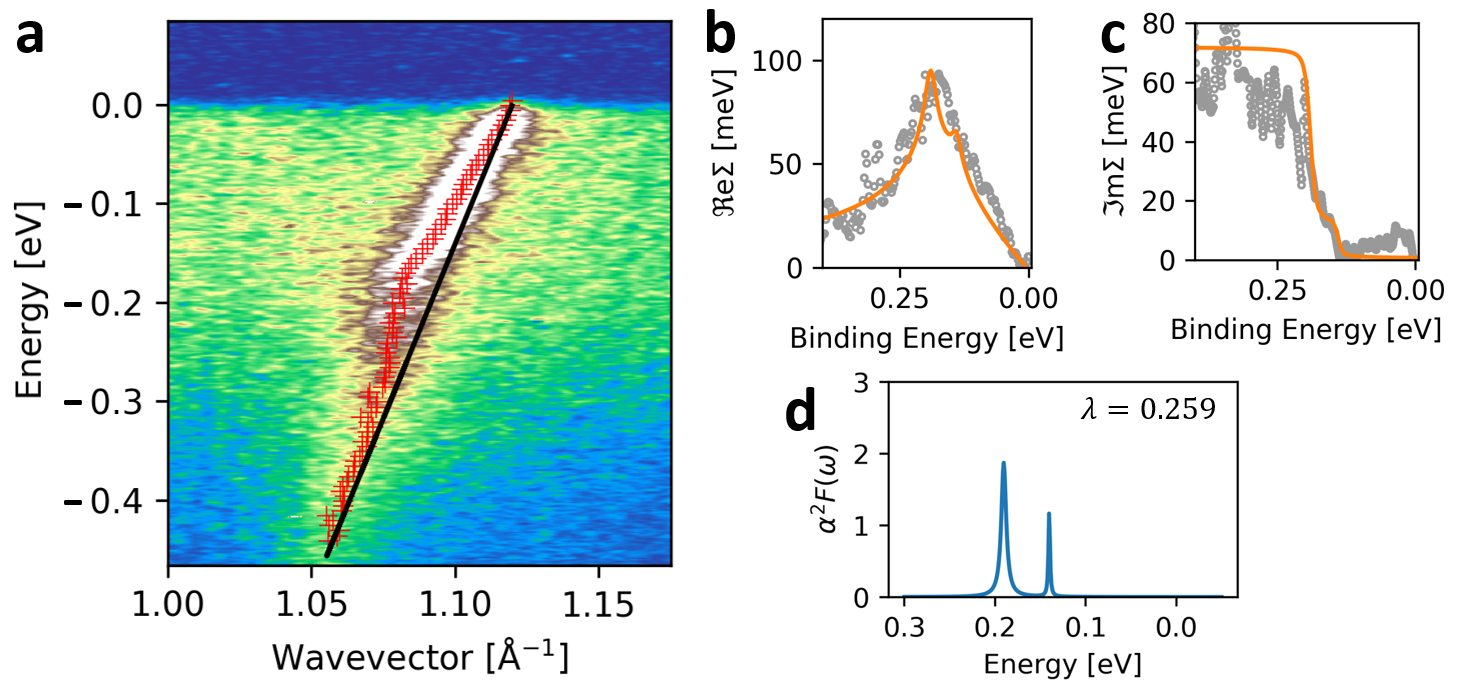 Figure 2
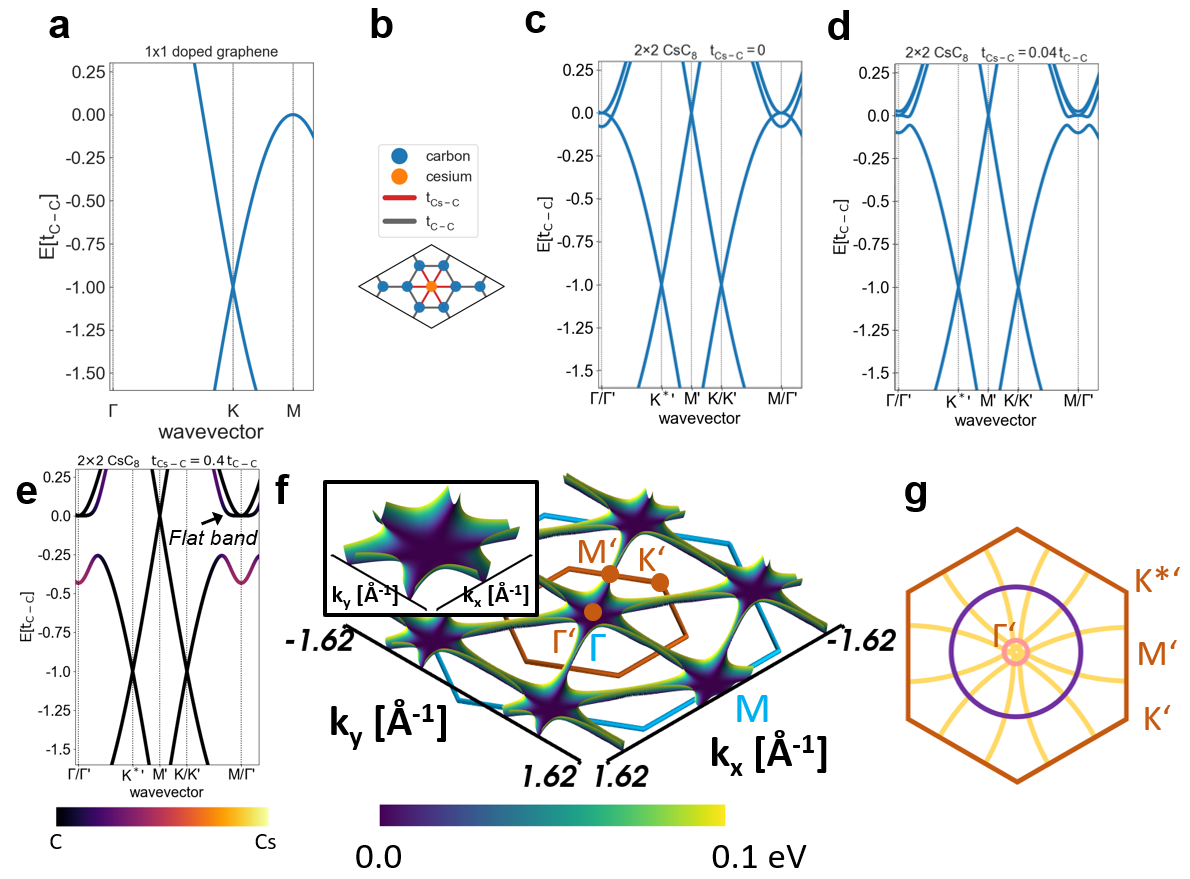 Figure 3
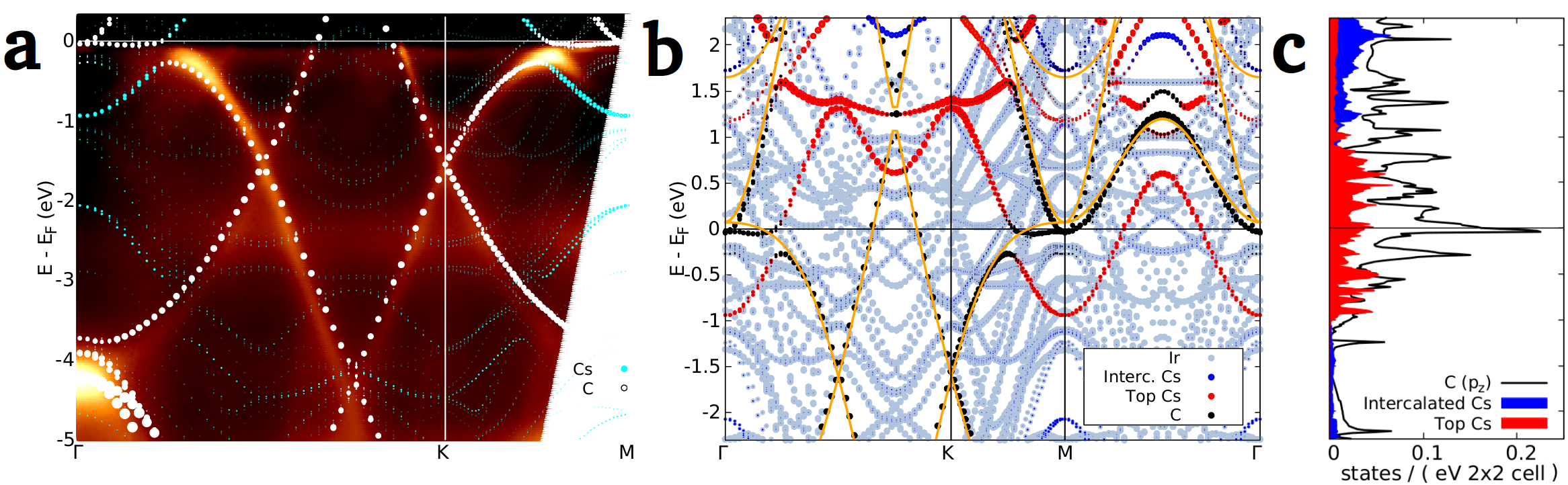 Figure 4
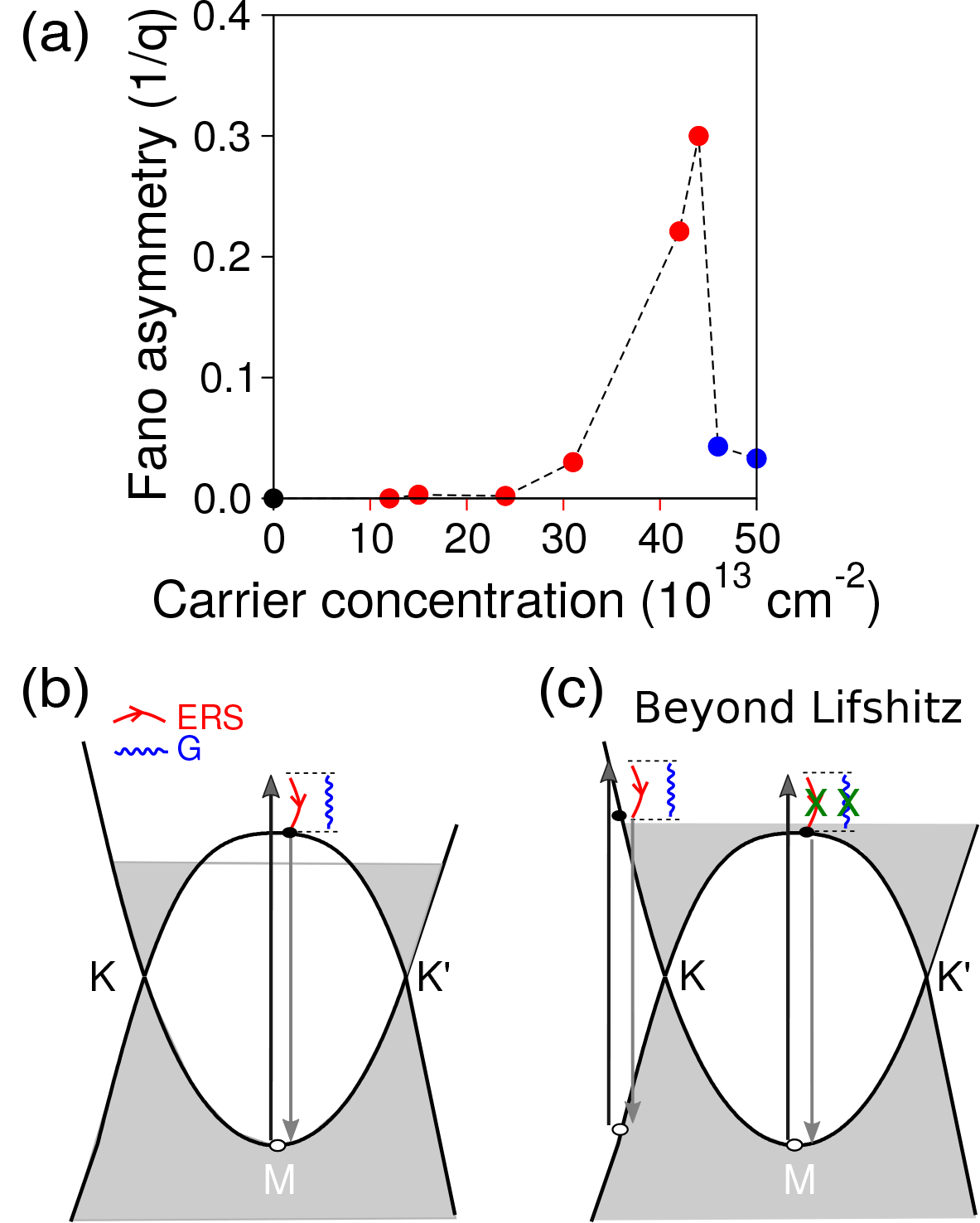 Figure 5
Peer Reviews
No public reviews on file for this paper yet. If you reviewed it on a platform where reviews are public (OpenReview, ICLR, NeurIPS, ICML), you can paste yours below so the community can read it here.
Videos
No videos yet. Explain this paper in a talk, walkthrough, or lecture? Add one.