A Lighthouse Illumination Problem
Erhan Tezcan

TL;DR
This paper investigates the total dark area in a configuration of n circular lighthouses with specific illumination angles, providing solutions for certain light source placements and analyzing the limit as n approaches infinity.
Contribution
It introduces a formal problem setup for lighthouse illumination, offers a solution for the center point light source case, and discusses small cases for arc light sources.
Findings
Derived the dark area formula for the center point light source case.
Analyzed small cases of n for arc light sources.
Discussed the behavior as n approaches infinity.
Abstract
This paper discusses a problem that consists of "lighthouses" which are circles with radius 1, placed around a common center, equidistant at units away from the placement center. Consecutive lighthouses are separated by the same angle: which we denote as . Each lighthouse "illuminates" facing towards the placement center with the same angle , also called "Illumination Angle" in this case. As for the light source itself, there are two variations: a single point light source at the center of each lighthouse and point light sources on the arc seen by the illumination angle for each lighthouse. The problem: what is the total dark (not illuminated) area for a given number of lighthouses, and as the number of lighthouses approach infinity? We show that by definition of the problem, neighbor lighthouses do not overlap or be tangent to each other. We…
Click any figure to enlarge with its caption.
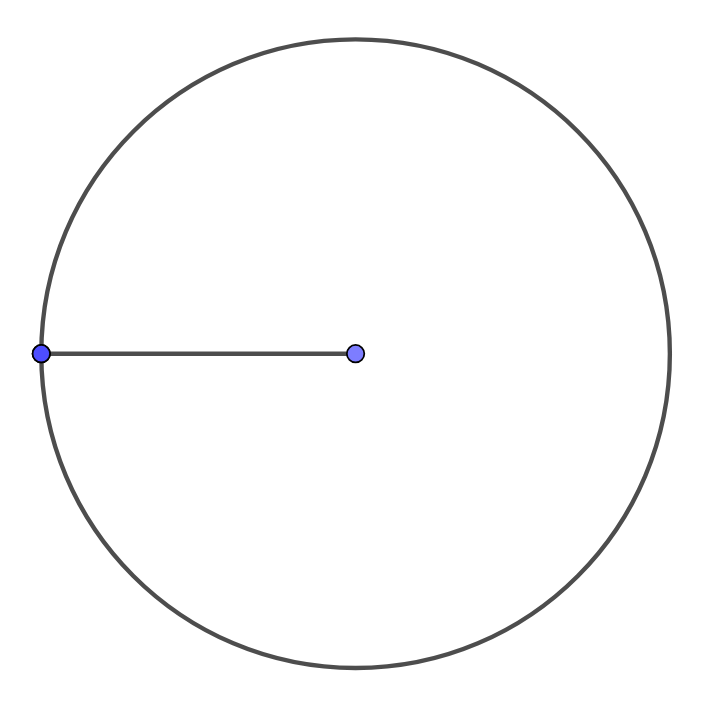 Figure 1
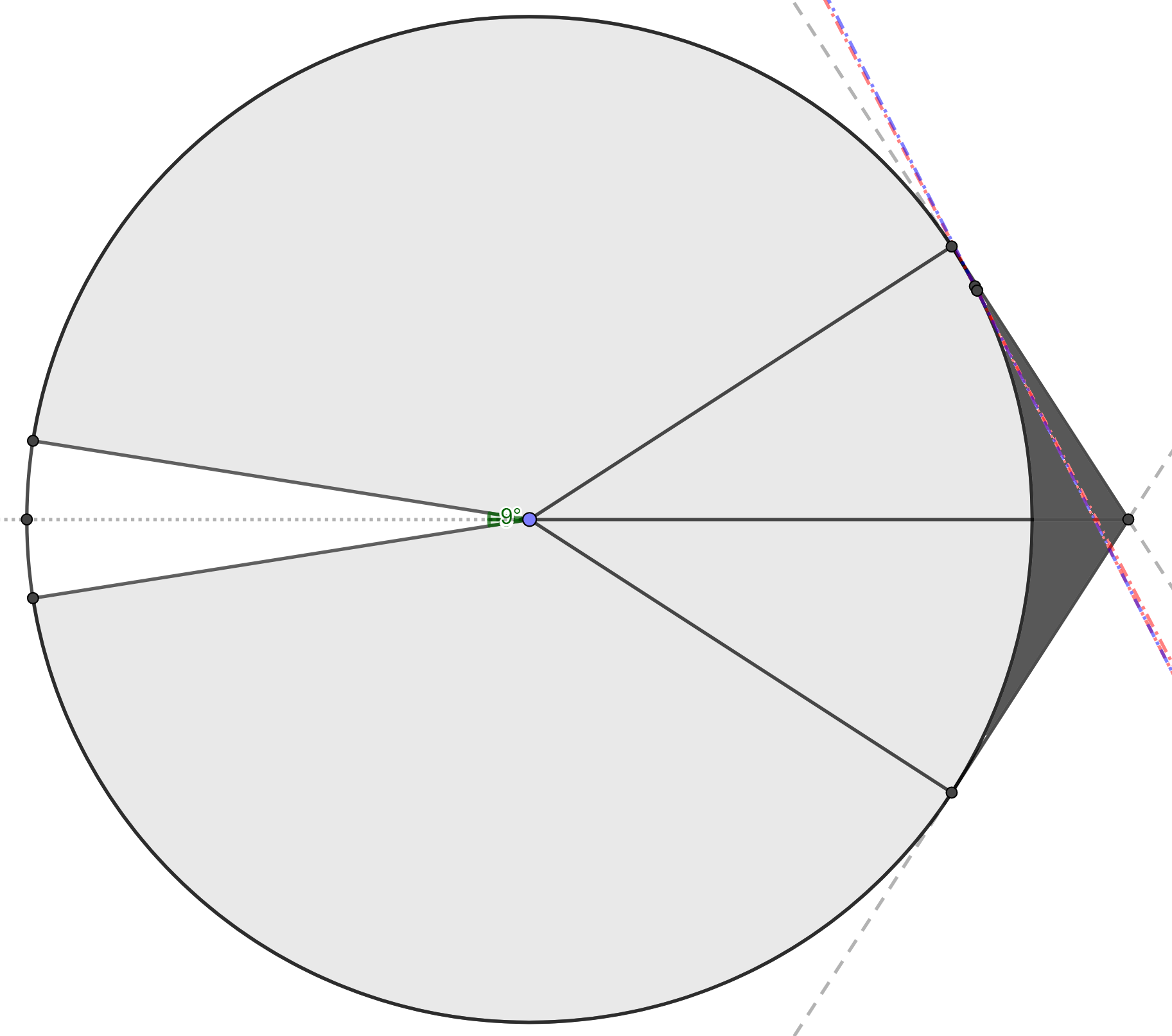 Figure 2
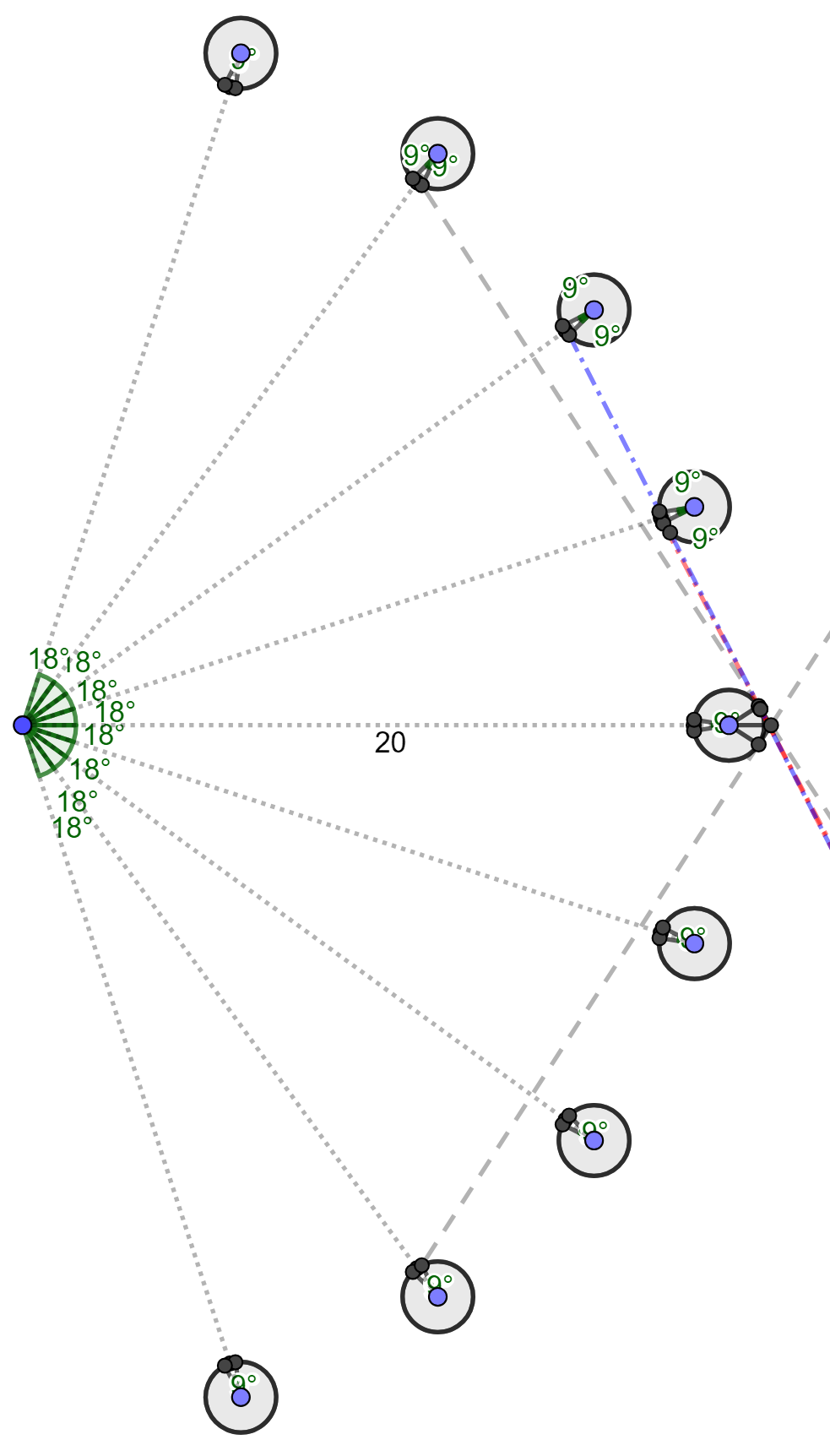 Figure 3
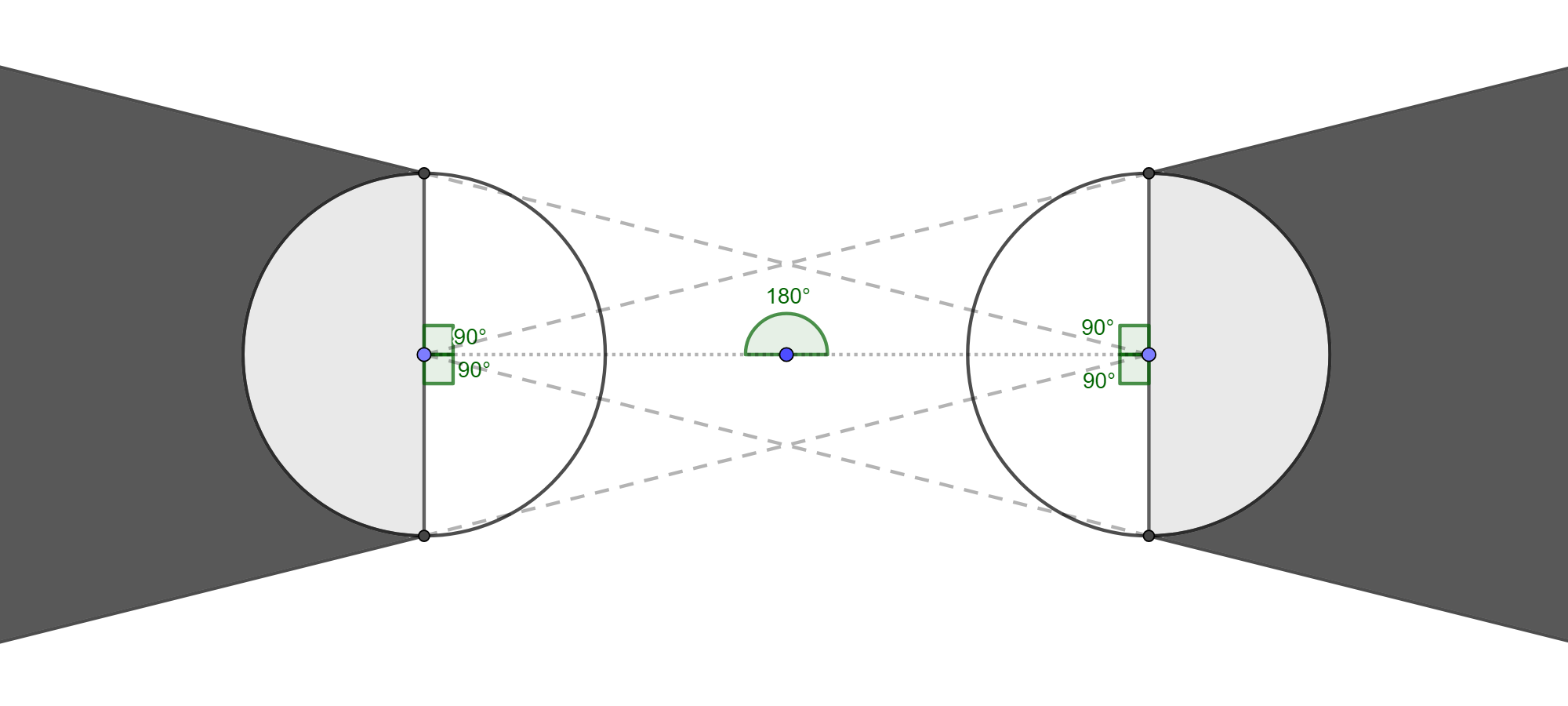 Figure 4
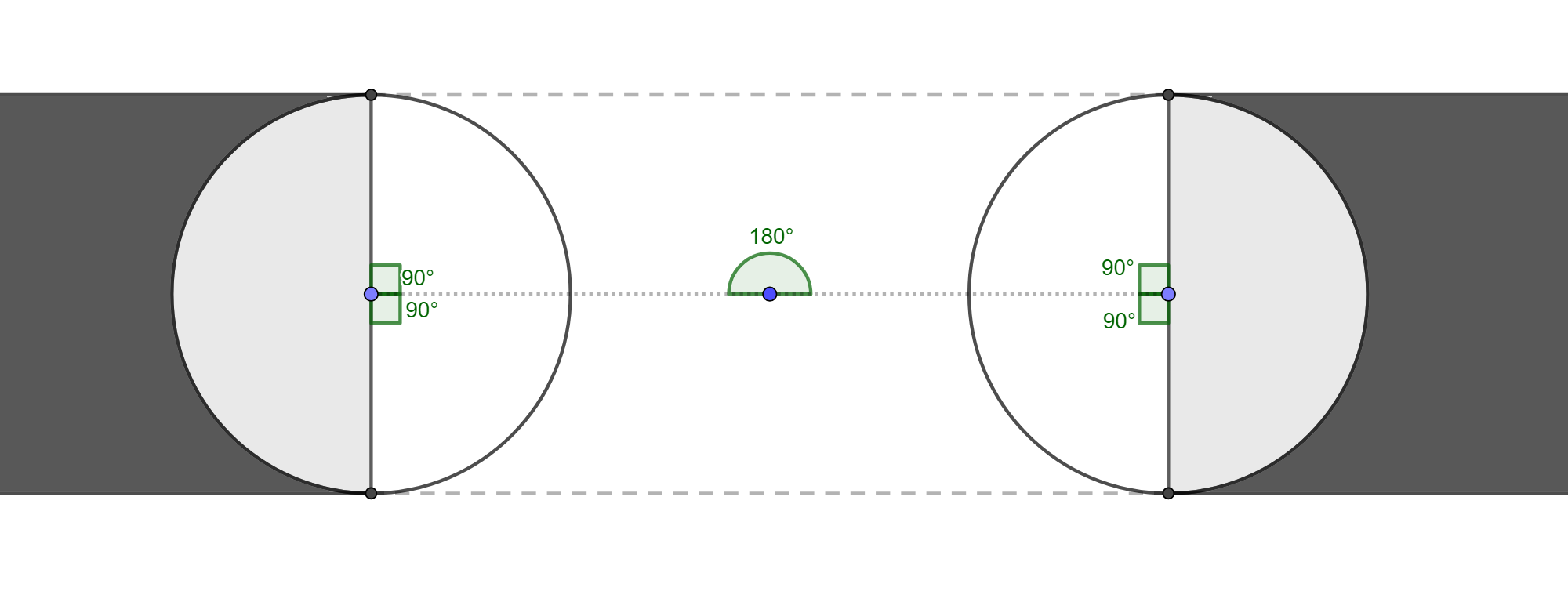 Figure 5
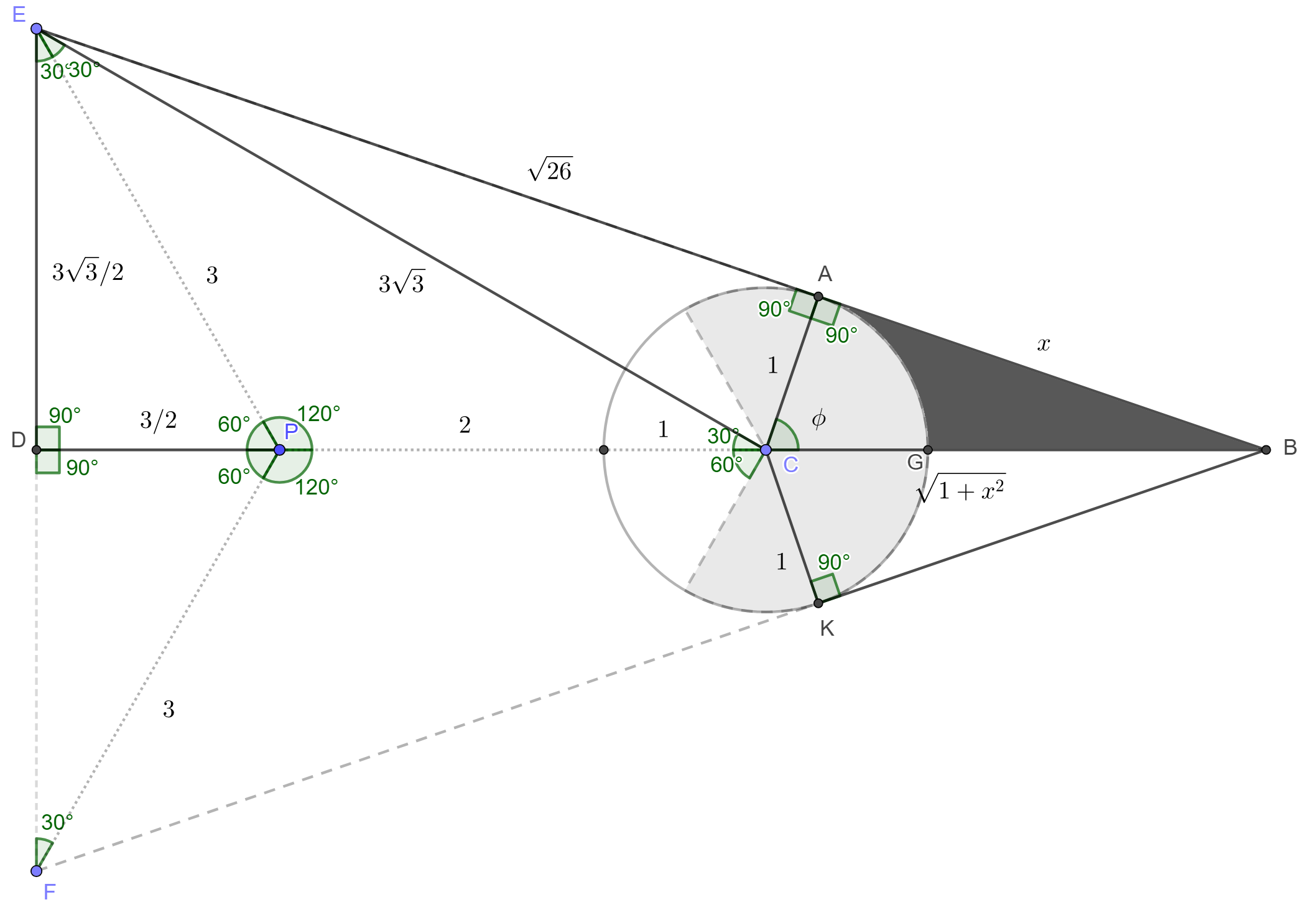 Figure 6
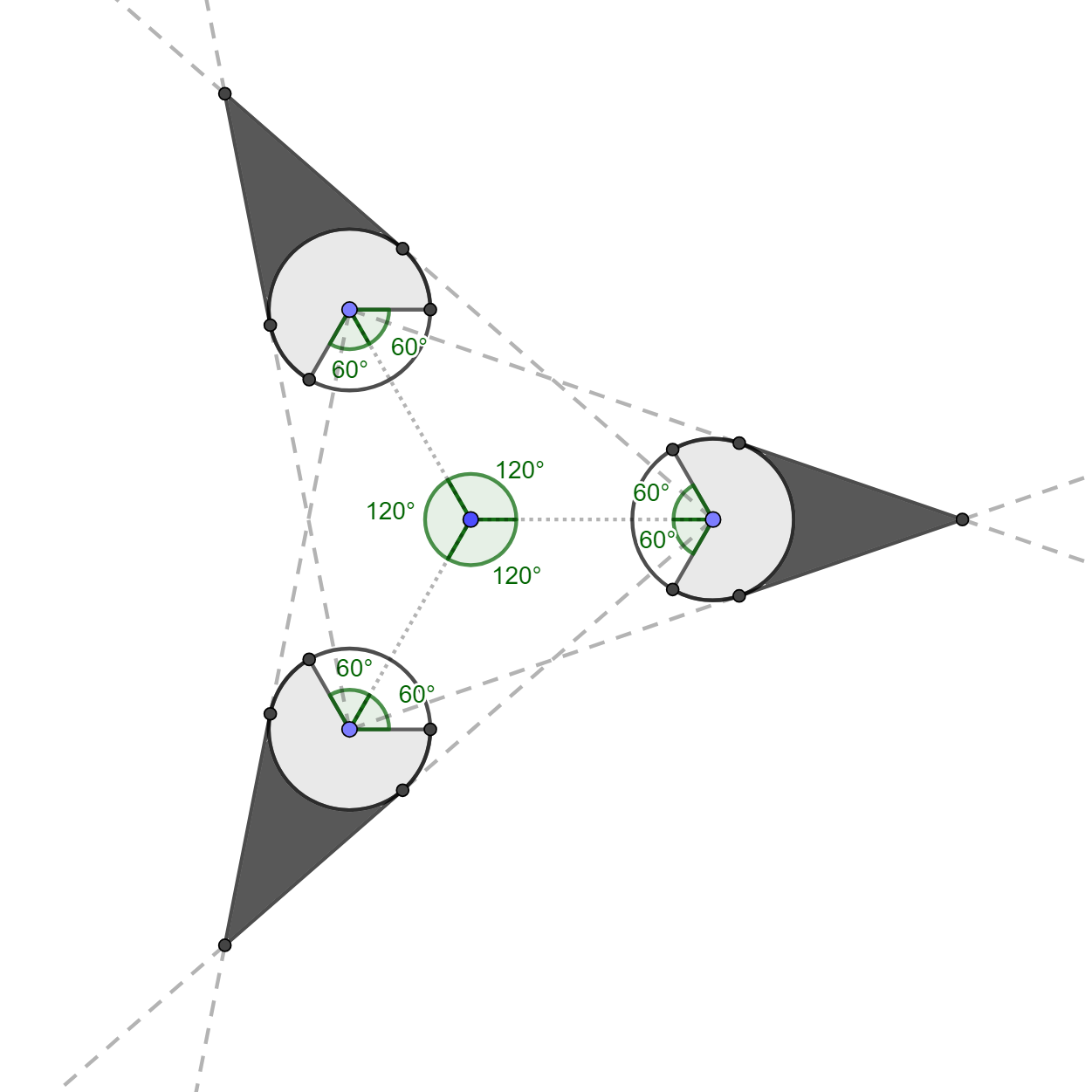 Figure 7
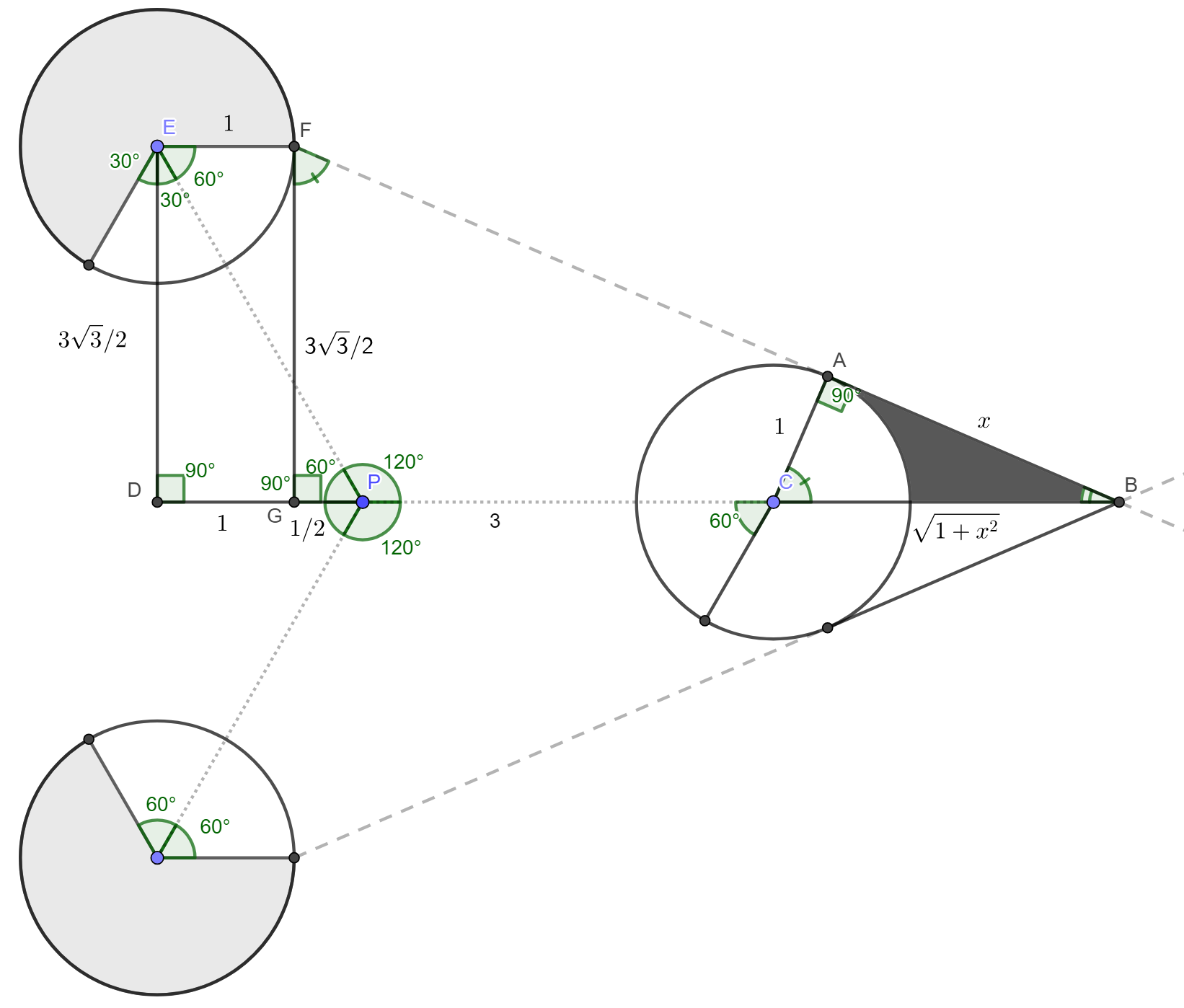 Figure 8
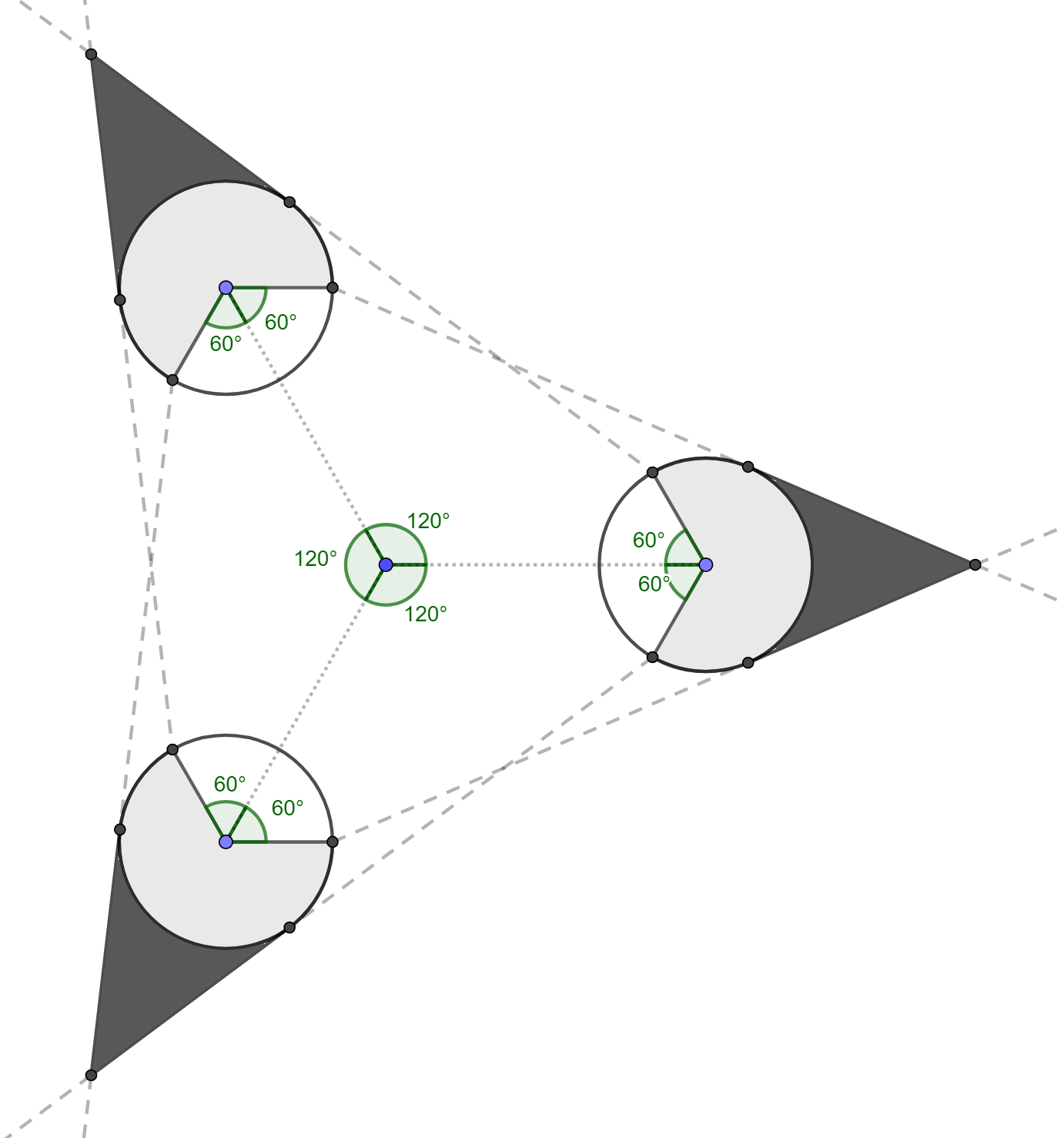 Figure 9
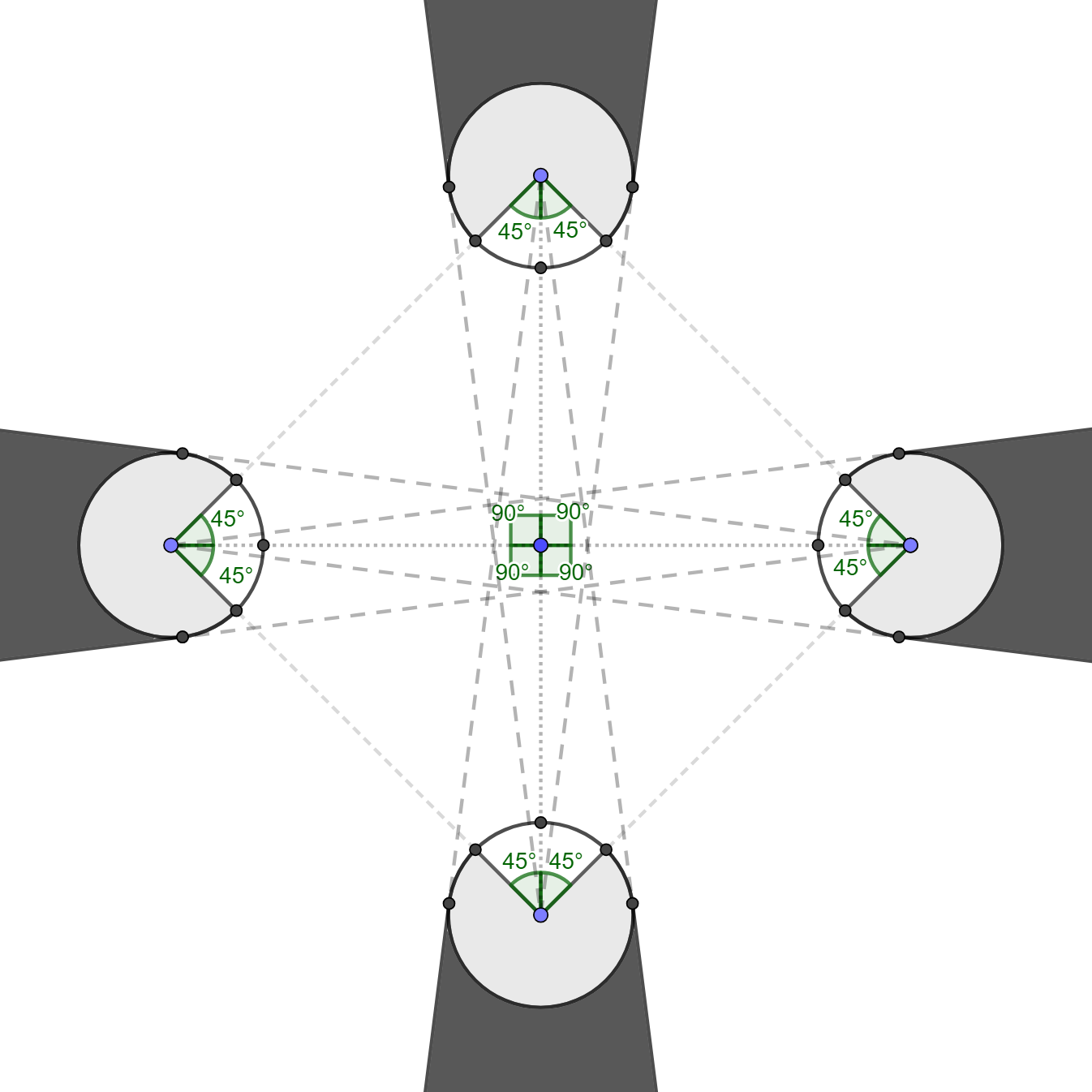 Figure 10
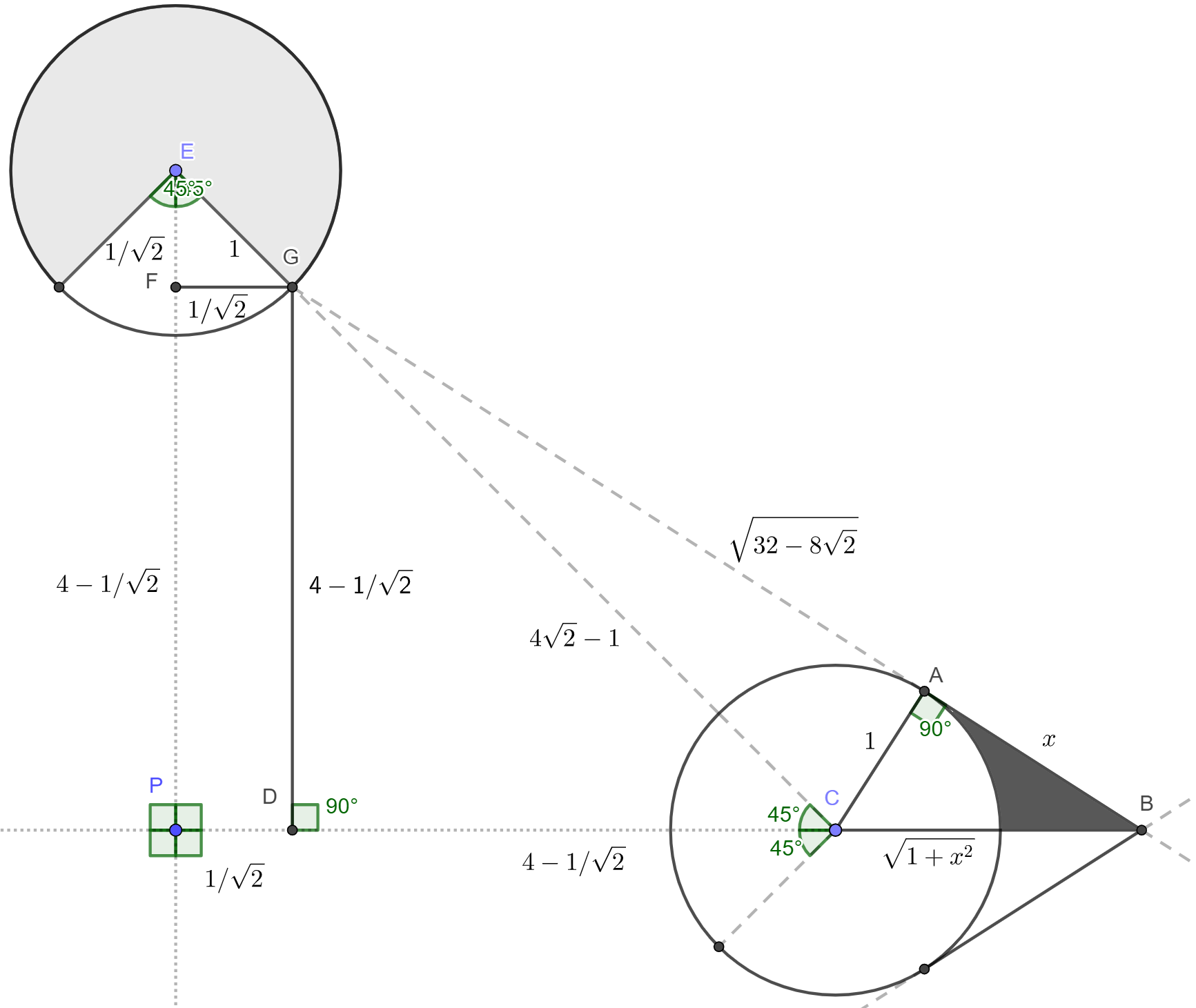 Figure 11
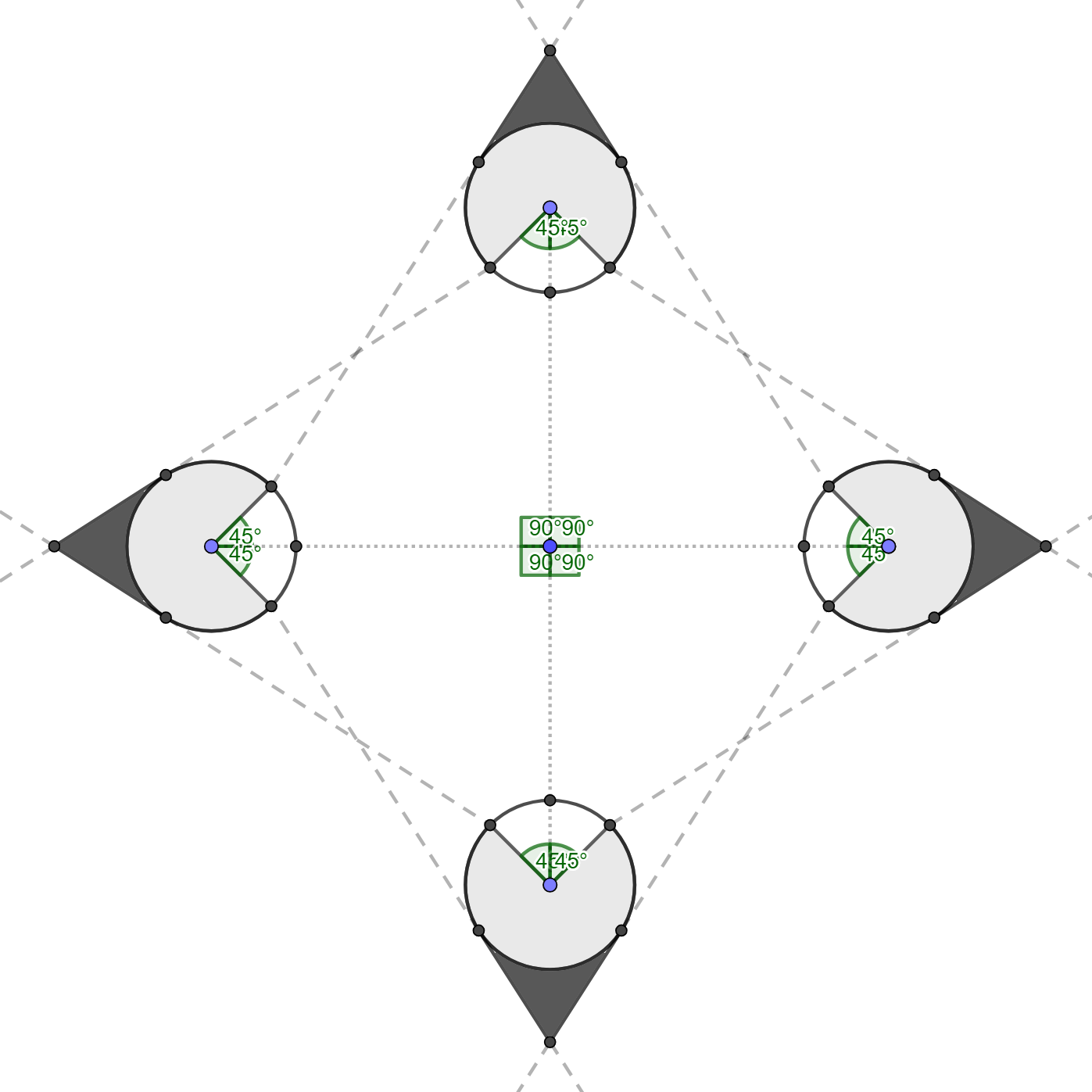 Figure 12
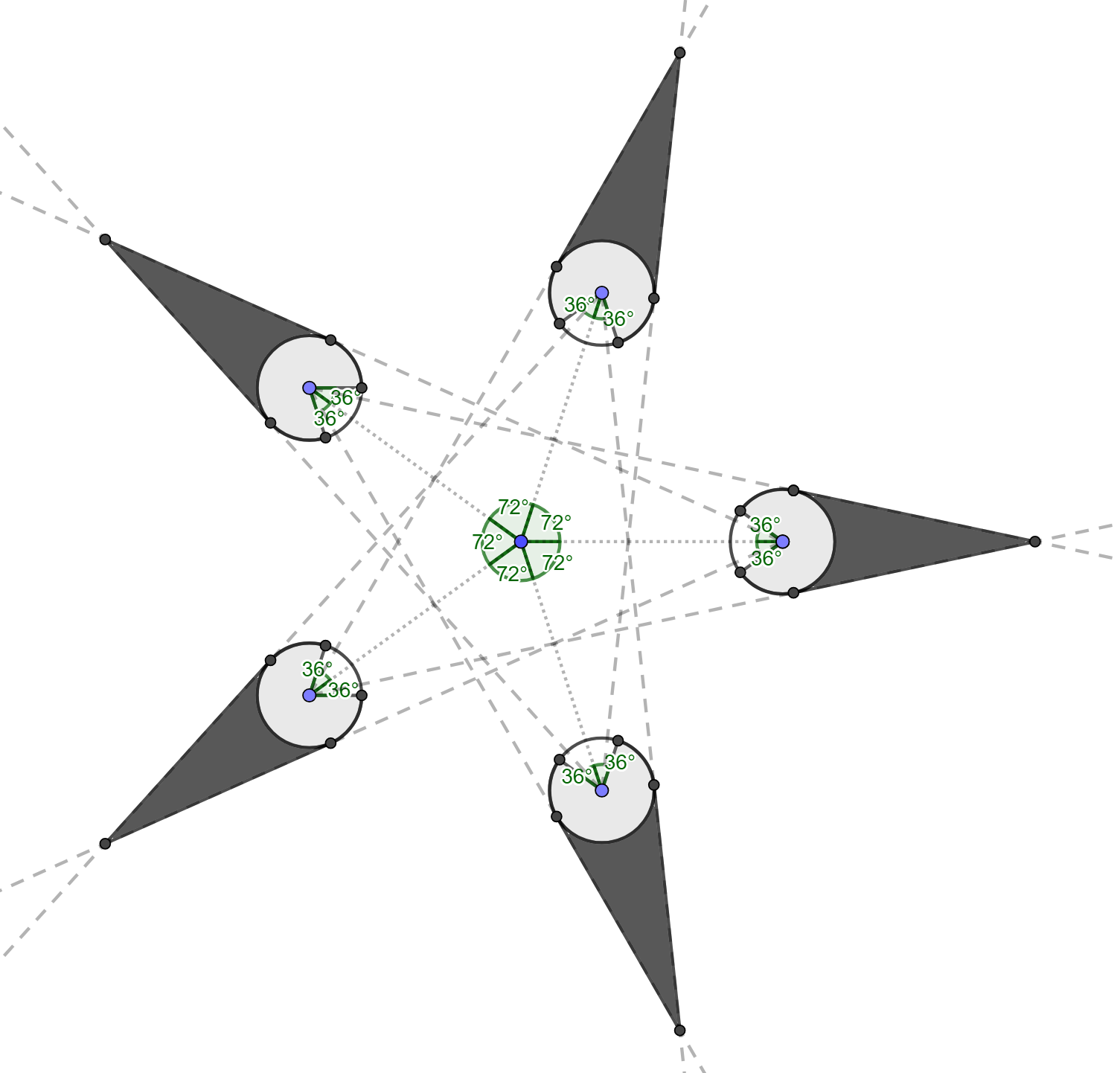 Figure 13
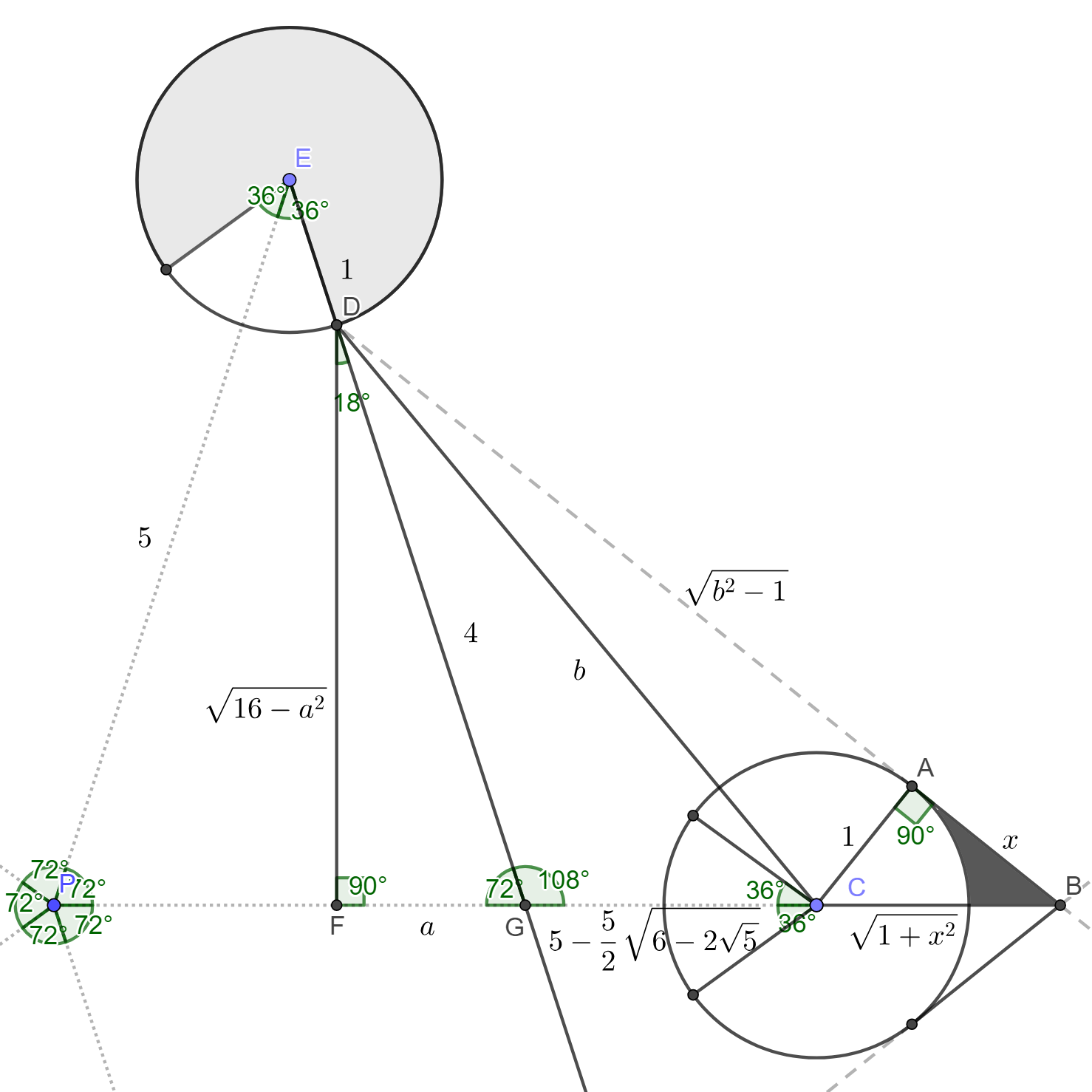 Figure 14
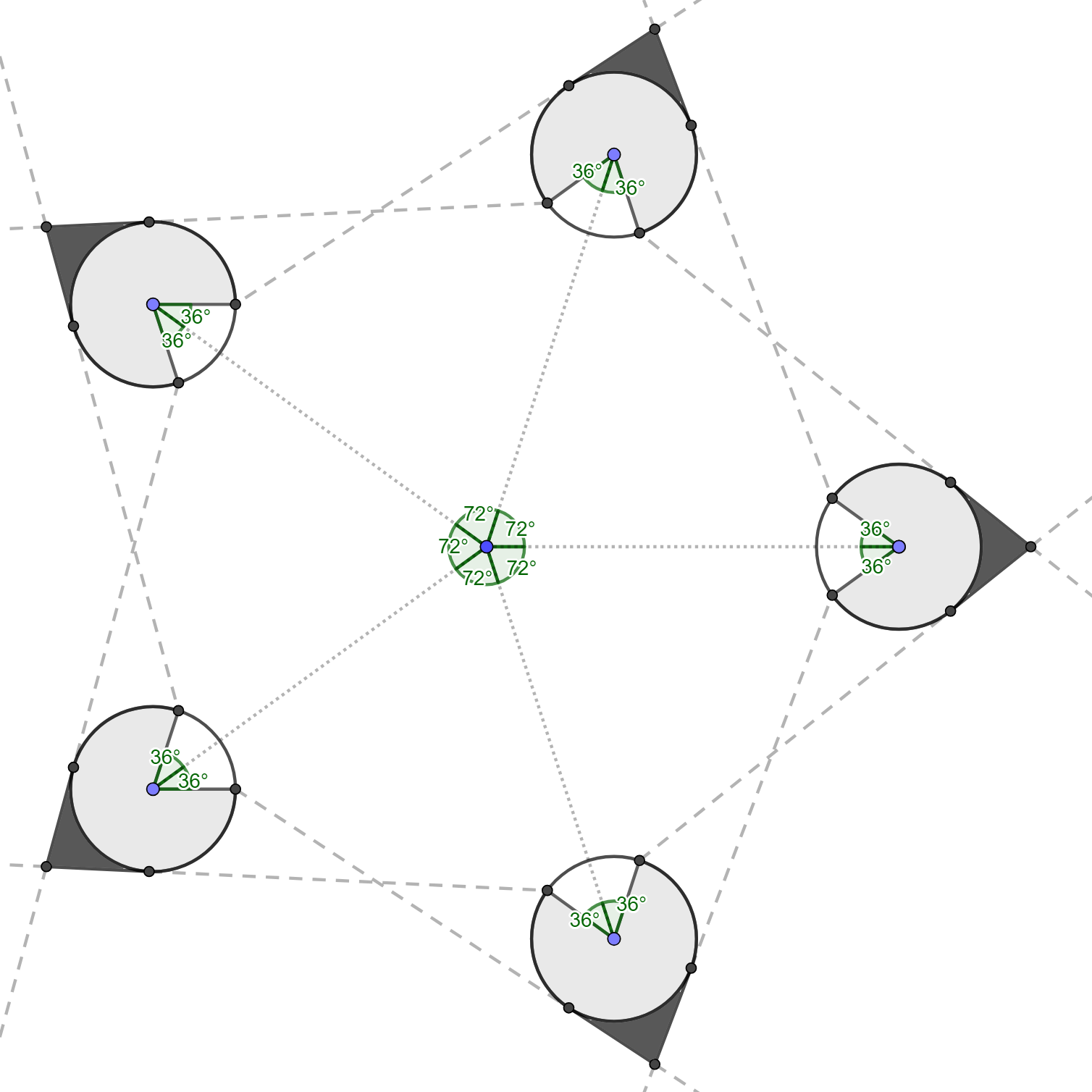 Figure 15
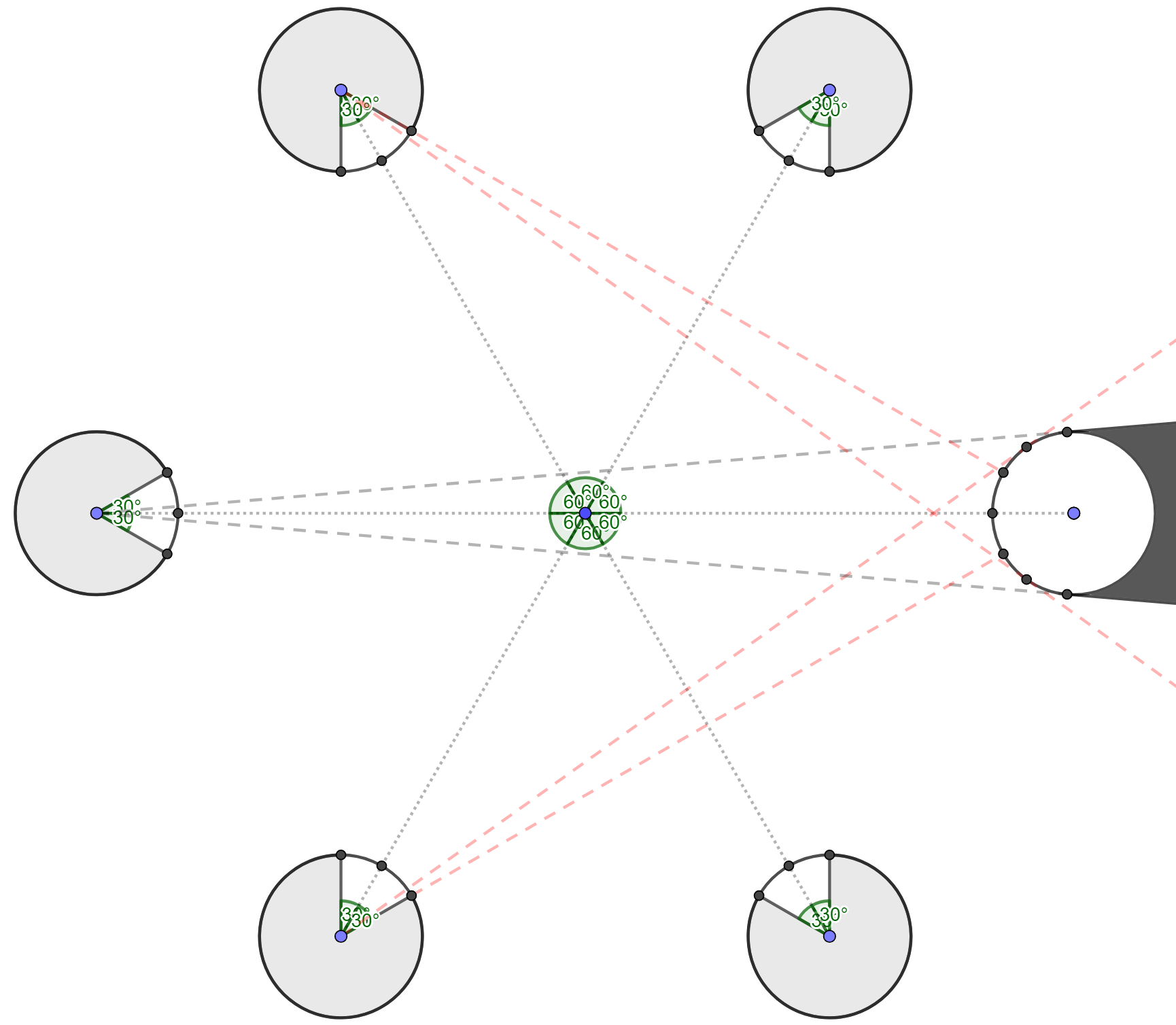 Figure 16
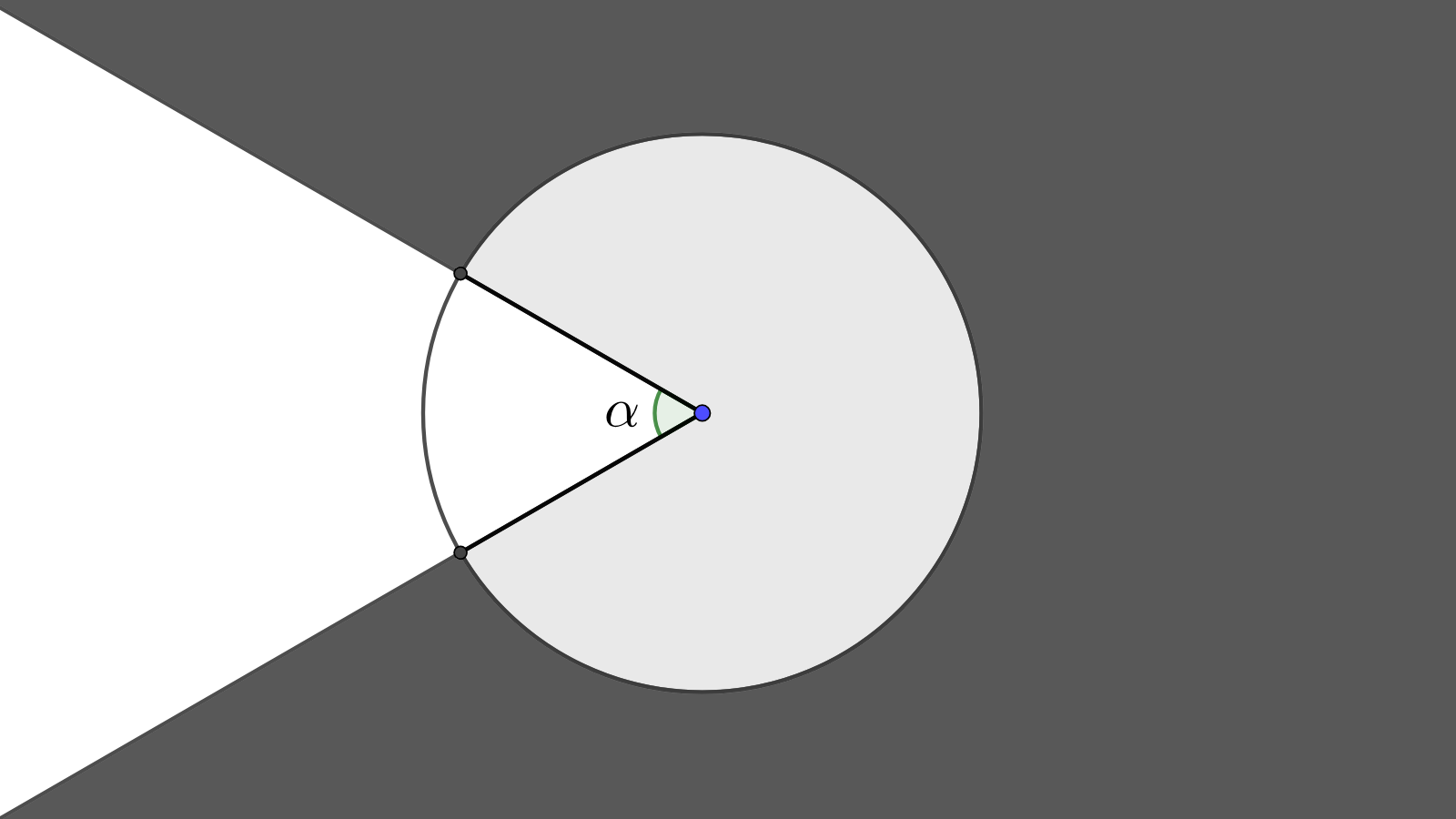 Figure 17
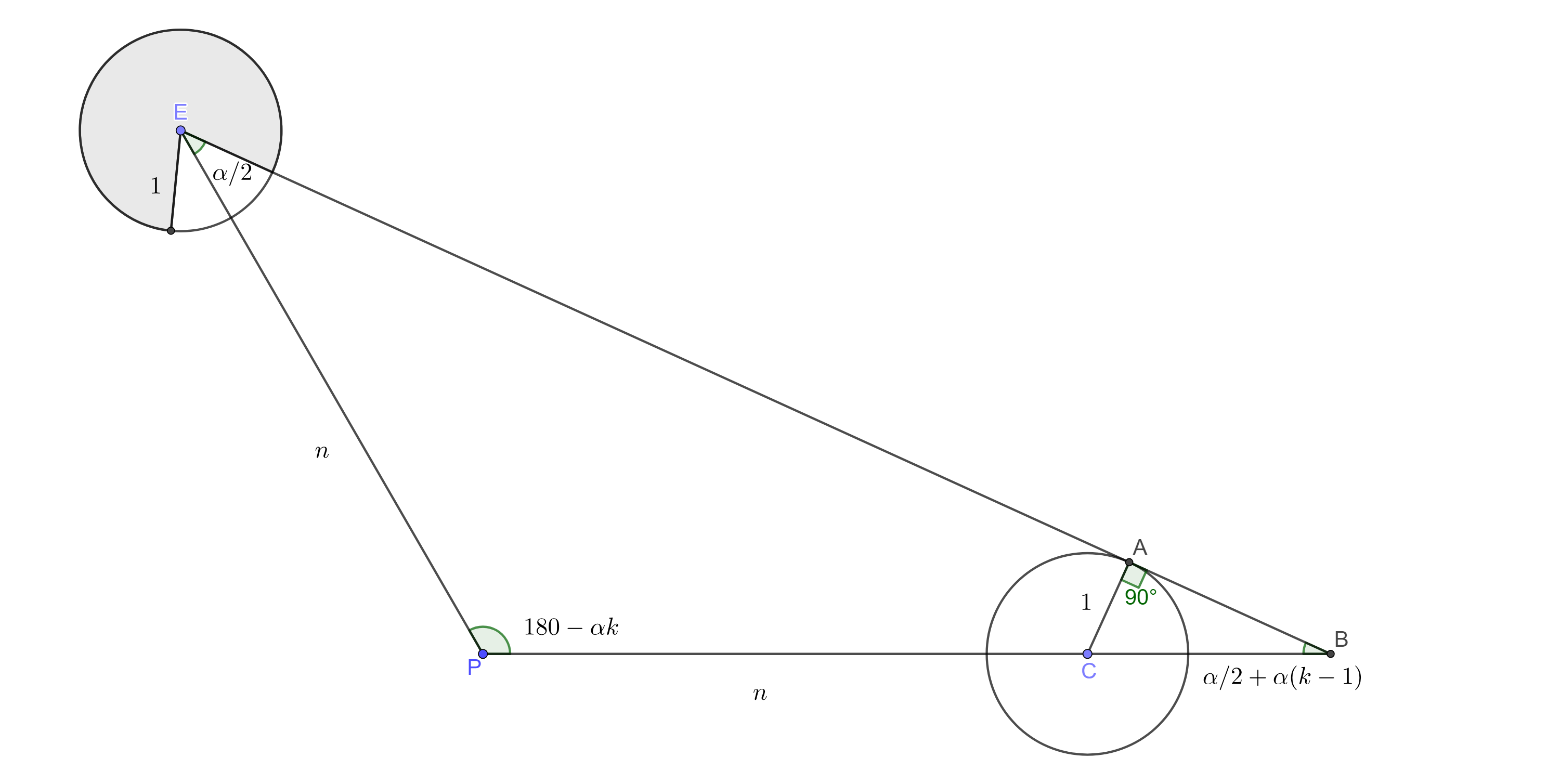 Figure 18
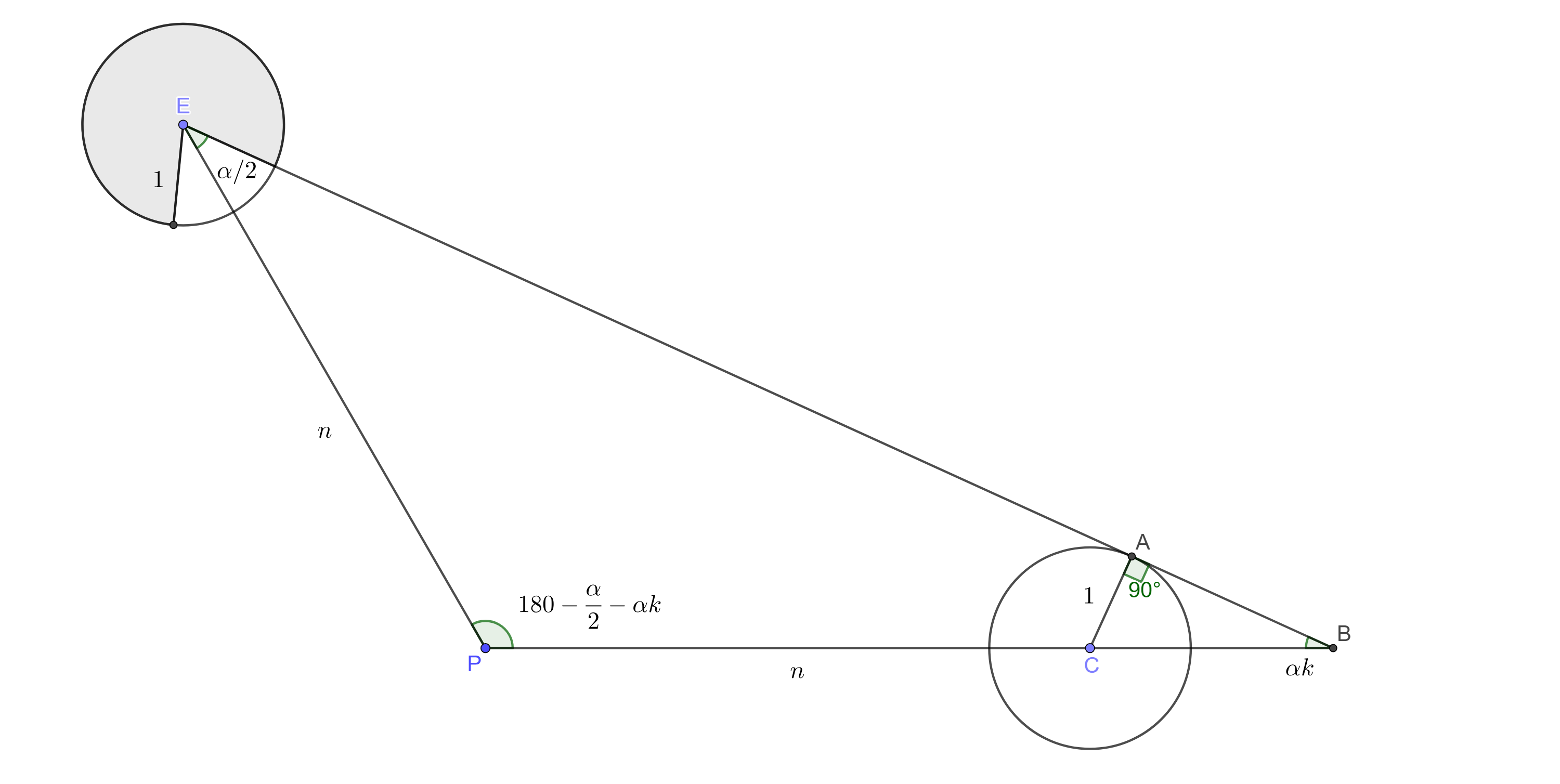 Figure 19
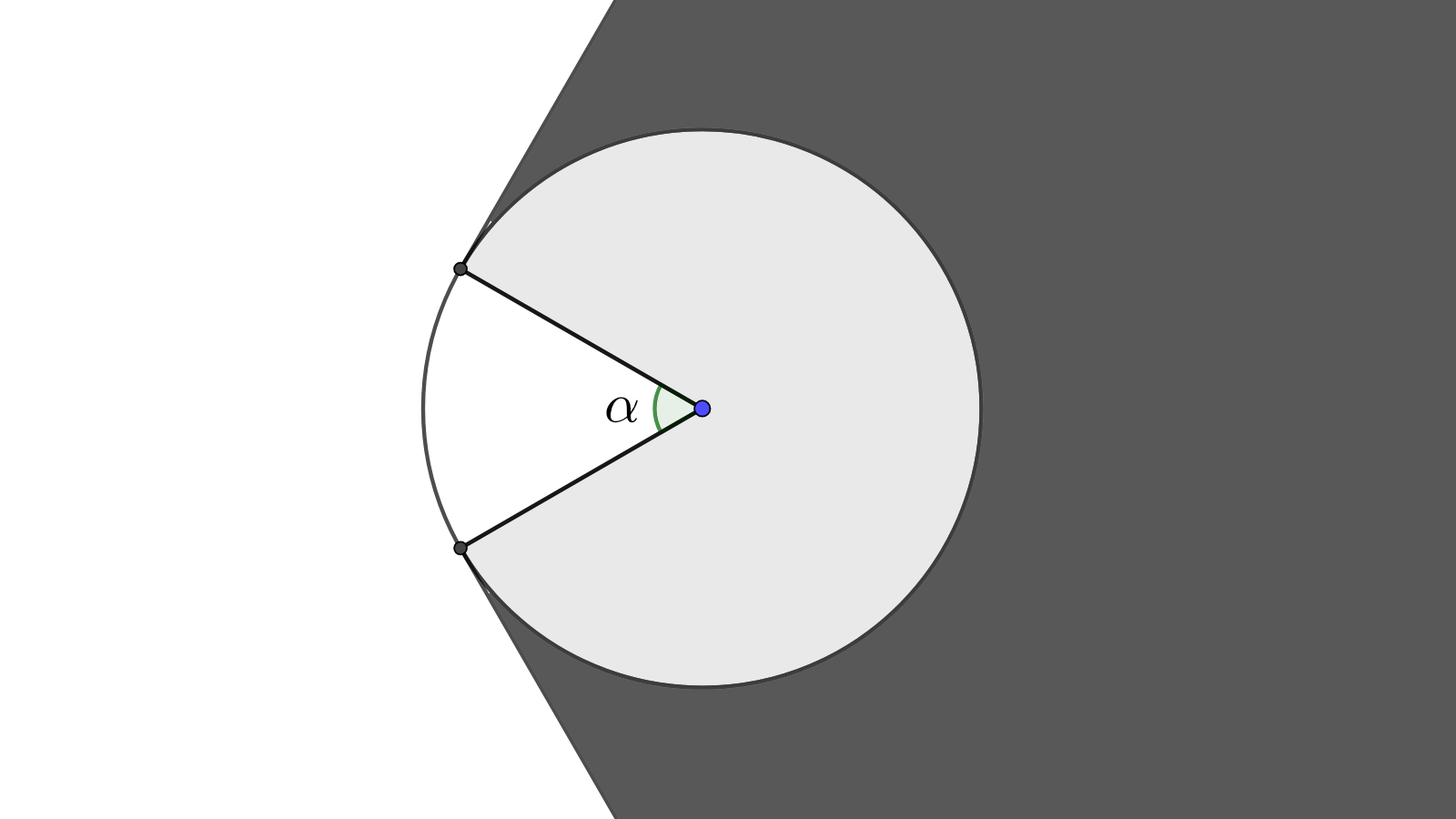 Figure 20
 Figure 21
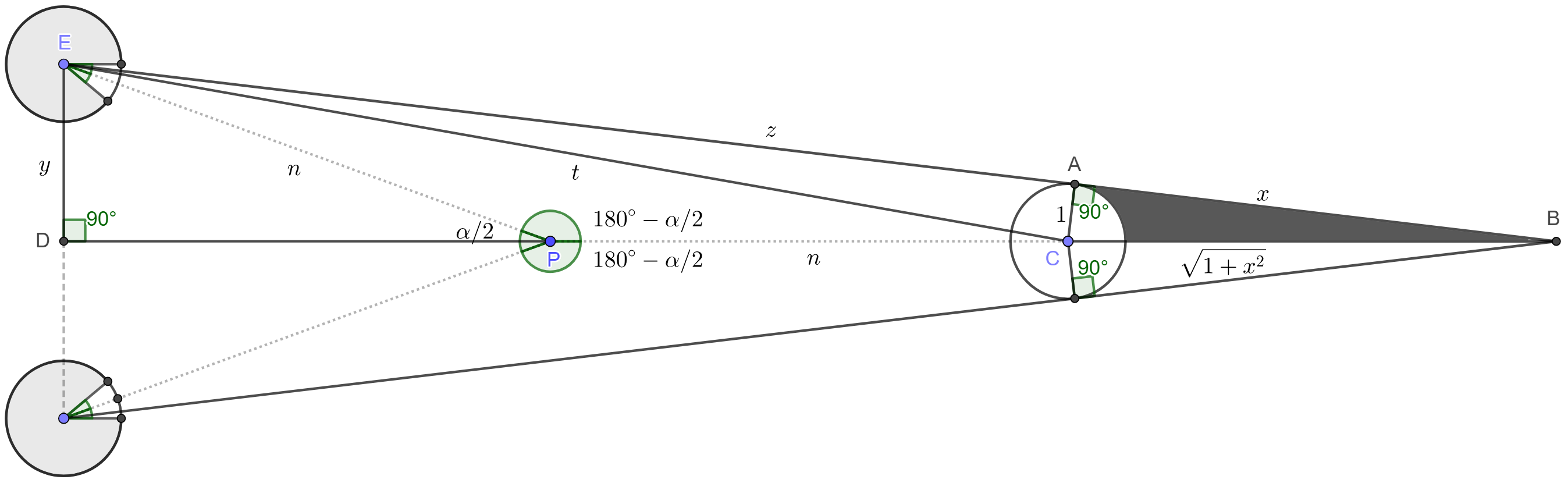 Figure 22
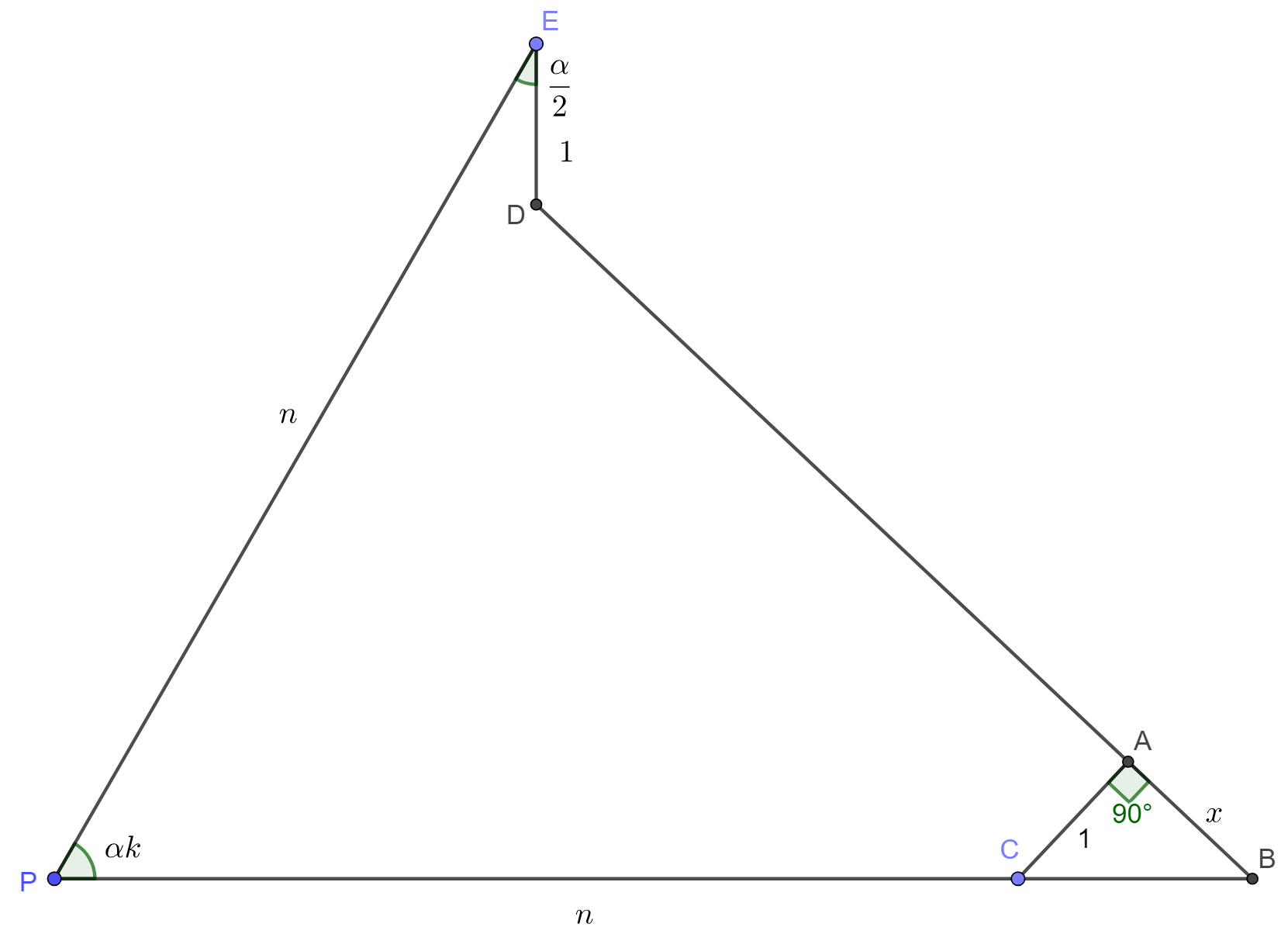 Figure 23
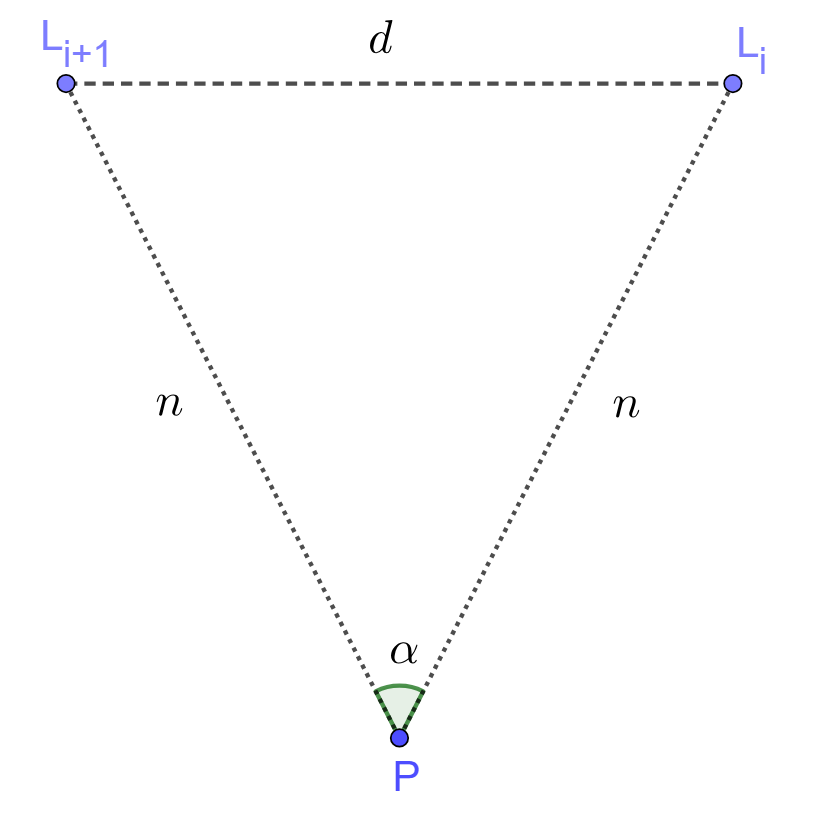 Figure 24
|
|
|
||||||
|
? | |||||||
| Possibly | ? |
Peer Reviews
No public reviews on file for this paper yet. If you reviewed it on a platform where reviews are public (OpenReview, ICLR, NeurIPS, ICML), you can paste yours below so the community can read it here.
Code & Models
Videos
No videos yet. Explain this paper in a talk, walkthrough, or lecture? Add one.
Taxonomy
TopicsStructural Analysis and Optimization · Mathematics and Applications · Computational Geometry and Mesh Generation
A Lighthouse Illumination Problem
Erhan Tezcan
(Date: March 3, 2019)
Abstract.
This paper discusses a problem that consists of “lighthouses” which are circles with radius 1, placed around a common center, equidistant at units away from the placement center. Consecutive lighthouses are separated by the same angle: which we denote as . Each lighthouse “illuminates” facing towards the placement center with the same angle , also called “Illumination Angle” in this case. As for the light source itself, there are two variations: a single point light source at the center of each lighthouse and point light sources on the arc seen by the illumination angle for each lighthouse. The problem: what is the total dark (not illuminated) area for a given number of lighthouses, and as the number of lighthouses approach infinity? We show that by definition of the problem, neighbor lighthouses do not overlap or be tangent to each other. We propose a solution for the center point light source case, and discuss several small cases of for the arc light source case.
**Keywords: ** Euclidean, Geometry, Circle, Illumination, Lighthouse, Problem
MSC: Primary 52C05, Secondary 51M05; 51M04
1. Introduction
This problem originated to the author during a 17-hour long bus trip from Warsaw to Tallinn, in line with author’s inability to sleep in a bus. At night, with only visual input being the bus’ indoor ceiling lights that are circular, the author tried to pass time by thinking of a random problem originating from aforementioned light sources. This paper discusses that problem, which the author initially called “Lighthouse Problem” but to differentiate it from another problem of the same name that takes place in [1], we would like to call our problem “A Lighthouse Illumination Problem”.
In the next section we will be defining the problem, afterwards, we will discuss the boundaries and then delve into the problem itself. Finally, we will be recapitulating our questions and question marks. We created all our figures using a software called “GeoGebra” [2].
2. The Problem
Definition 2.1** (The Lighthouse Illumination Problem).**
Suppose we have circles with radius in an infinite plane, placed around a common center point (placement center) where the distance between any circle’s center and the placement center is . Placing circles like this divides the of the center point into angles of . We will denote this angle as . Each circle acts as a “lighthouse”, illuminating towards the center, looking directly at the placement center point with the illumination angle . The light source has two variations in this problem:
- (1)
The center point of each lighthouse is a point light source. (Figure 2) 2. (2)
Every point on the intercepted minor arc of the illumination angle act as a point light source. (Figure 2)
For both variations of the light source, what is the total dark area for a given number of lighthouses ?
To further explain figures 2 and 2, we shall explain the three shades: white, dark gray and light gray.
- •
White denotes an illuminated area. The circular sector defined by the illumination angle is also white.
- •
Dark gray denotes a dark area, these are not illuminated by any lighthouse.
- •
Light gray denotes the non-illuminating part of the lighthouse.
One might wonder whether the light gray counts as a dark area or not. We made our calculations with the light gray area excluded, because it is easy to include it if we want to. The light gray area for every lighthouse is given by
[TABLE]
Multiplying (1) by gives the total light gray area
[TABLE]
If we want to include the light gray area as darkness we just add to our calculation.
By definition, the only possible dark area is the area where no lighthouse can illuminate. The only “objects” in the plane are lighthouses, and they very well illuminate in front of them. Their sides are illuminated by the other lighthouses, but behind a lighthouse is not illuminated. The dark area occurs behind a lighthouse. This problem has identical lighthouses, same radius, same distance to placement center, same illumination angle. We can find the total dark area just by looking at the dark area behind one lighthouse, then multiply that with the number of lighthouses . As for notation, we will use for total dark area, for the dark area behind a single lighthouse.
[TABLE]
The dark area behind a lighthouse is defined by two light rays coming from two other lighthouses. We will call the lighthouse we are calculating the dark area behind of as the “target lighthouse”. The lighthouse bearing the light source of the aforementioned light ray will be called “source lighthouse”.
3. Boundary Cases
Before we actually delve into the dark area calculations, we want to discuss two cases. For some number of lighthouses is it possible that
- (1)
Lighthouses are tangent to each other? 2. (2)
Lighthouses are overlapping?
Theorem 3.1**.**
Neighbor lighthouses never overlap or touch for .
Proof.
We can answer both by looking at the triangle defined by a pair of neighbor lighthouse centers and the placement center.
Each lighthouse has a radius of . Looking at figure 3, if the neighbor lighthouses are tangent, then . Similarly, if the neighbor lighthouses are overlapping then . We can write in terms of using Cosine Theorem.
[TABLE]
This reduces to . Recall that so we get . Taking the root yields
[TABLE]
Now we can prove the cases by showing that . Note that only exists when there are 2 or more lighthouses, so and we want which gives the inequality
[TABLE]
Looking at , we have
[TABLE]
which is correct. From this point on, is monotonically increasing, and since the first value was the remaining values will never be less than . ∎
Remark 3.2**.**
The case of tangent lighthouses can be also studied by referring to Steiner Chain [3]. Regarding a Steiner Chain:
[TABLE]
where there are circles packed between a central circle of radius and an outer concentric circle of radius . Relating this to our problem, we have and . Plugging them in equation (5) yields:
[TABLE]
This is the equation we would get by plugging in equation (4).
3.1. Distance between neighbor lighthouses at infinity.
We can find the distance between neighbor lighthouses at infinity just by looking at
[TABLE]
Substituting gives us
[TABLE]
This means that as approaches infinity the distance between neighbor lighthouses becomes . Now that we have shown lighthouses will remain unscathed without colliding with one another, we can continue with the dark area calculations.
4. Point Light Source at the Center
Our first variation of the problem has each lighthouses having a single point light source at their center. We will be giving examples for 1, 2, 3, 4, 5 and 6 lighthouses. We will then discuss the dark area for any .
4.1. 1 Lighthouse
Our first case is a single lighthouse. Illumination angle was defined to be . Now that we have illumination angle. This basically describes a single lighthouse illuminating in all directions. On figure 5 we can see two points. The point on the left is the placement center, point on the right is the center of the lighthouse. Total dark area is [math], in other words, .
4.2. 2 Lighthouses
On figure 5 we see the case of . Two lighthouses are facing each other and evidently they can not illuminate behind each other. The result is an infinite dark area, .
4.3. 3 Lighthouses
The first visually appealing case is . It is also the first non-zero finite value for the dark area.
Our eyes could measure [math] and but now we will have to do some calculations. We show the case on figure 6. Recall that in section 2 we talked about the fact that it is possible to focus on just a single lighthouse and the dark area behind it. That is exactly what we will be doing.
On figure 7 we can see the target lighthouse and a way to calculate the dark area behind it. Note that only half of the area behind it is shaded dark gray. Notice the symmetry, , and all intersect at the same point behind the target lighthouse. is the ray coming from top lighthouse, is the ray coming from bottom lighthouse. This enables us to split the dark area behind the target lighthouse in half. The dark gray shaded area in this case is which is equal to area of the triangle minus the area of the circular sector formed by .
[TABLE]
The circular sector has an unknown angle but we can overcome this by seeing that . This tells us . Then,
[TABLE]
[TABLE]
Remembering that we get .
[TABLE]
Now all that is left to do is find . In this case and its complementary are beautiful angles, therefore could be useful for us. We already know and because that is how the problem is defined. First we can find and by Pythagoras rule at the triangle find . Then, we draw the triangle and find to be . We now have two similar triangles, notice that , and . Thanks to this similarity between and we can say
[TABLE]
Looking at we have
[TABLE]
Squaring both sides
[TABLE]
[TABLE]
This gives the equation . Using the quadratic formula:
[TABLE]
We cannot have negative root because is the length of , since we will choose in place of . Then we have
[TABLE]
Measuring using GeoGebra, where we draw these figures, yields . Calculating 8 using a calculator gives . This shows that our calculations are correct.
[TABLE]
The result is .
4.4. 4 & 6 Lighthouses
On figure 8 we can see the case for .
Similar to case we have because the dark area behind each lighthouse goes to infinity. It is important to note that this is because no two rays can meet behind a lighthouse.
Looking at a target lighthouse for on figure 9 we see the same thing happening,
4.5. Even Number of Lighthouses
For even lighthouses, we were not able to draw a tangent to define a finite dark area behind the target lighthouse. This causes the dark area to be infinite. We can show that this is always true, using proof by contradiction.
Theorem 4.1**.**
**
Proof.
Imagine an even number of lighthouses placed around a center. Place the first lighthouse directly units to the right of the placement center (as we always did in our figures). Let be the first and target lighthouse, number the rest of the lighthouses as counter-clockwise. If we number like this, the lighthouse on the opposite side of is . We have to show that none of the lighthouses numbered are able to define a finite dark area behind . Note how they are all numbered in reference to . Now to use proof by contradiction, we assume that it is possible to draw a finite dark area defining tangent from one of the giving us the figure 10. In this figure, is the center of lighthouse , is the placement center and is the center of target lighthouse . By definition , but if then which requires . therefore is not possible. For we realize . Now looking at and , if this would require ,
[TABLE]
Thus showing that this is not possible. Another case to consider is when there is such a tangent that , but again this causes to be bigger and inevitably , which we have shown to be contradictory in 10.
∎
Now we can safely say that dark area is infinite for even number of lighthouses.
4.6. Odd Number of Lighthouses
Looking at 5 lighthouses case in figure 11 it seems as if the furthest lighthouses define the dark area behind the target lighthouse.
We will show that it is indeed the furthest lighthouses that define the dark area behind a target lighthouse and then give a formula to find the dark area itself.
Theorem 4.2**.**
The finite dark area behind a target lighthouse is defined by the tangents coming from two furthest lighthouses when .
Proof.
Our proof is similar to the proof we had for theorem 4.1. Imagine an odd number of lighthouses. Place the first lighthouse directly units to the right of the placement center. Let be the first and target lighthouse. Draw a line that passes through the placement center and the center of the target lighthouse. This divides the plane in half, lighthouses on one side and on the other. Since is an odd number we can say . So in other words, we have lighthouses on one side and on the other. Starting from the right, number the lighthouses on the upper half as , counter-clockwise. Our claim is that is illuminated by and only. We said “furthest lighthouses” which is plural, the other lighthouses is the lighthouse that is ’s reflection on the line we just drew. Like we demonstrated on case the dark area behind the lighthouse is divided in two by this line, calculating on one half suffice. We can use proof by contradiction, assuming that some other lighthouse illuminates . Drawing the figure 12 gives us an idea.
In this figure, is the center of lighthouse , is the placement center, is the center of the target lighthouse . For positive values of we see that . This would require but that is not possible, exactly the same contradiction on (10). We now know that , so and we are illuminated by , but what is ? Let us say that and such that . This gives us which results in . As the number of lighthouses increase, the angle approaches because gets smaller, and now we also see that gets smaller too, such that . In conclusion, does illuminate and it is the only one doing so. ∎
Theorem 4.3**.**
* where*
[TABLE]
Proof.
This is going to be a pretty straightforward proof. To start, let us again imagine the same figure we did for the previous proof 4.6. We have to the right and going counter-clockwise. We just showed that we only need to care about so that is exactly what we are going to do.
We get figure 13 as a result. We have some new variables in our figure, namely and . We will describe all three of them in terms of and then work our way towards . in this figure is in equation (11). Like we have done for , if we find we can find , and consequently . So, let us describe the uninvited guests one by one:
- •
can be found by looking at , which gives
[TABLE]
- •
can be found using Cosine Theorem on seen by the angle . The theorem gives us . The expression can be reduced.
[TABLE]
Since ,
[TABLE]
Finally we get
[TABLE]
- •
can be written in terms of using Pythagoras rule at . The rule gives us therefore . Since we already wrote in terms of we get
[TABLE]
Now that we have and in terms of we can work on . We will be doing the same thing we did for , thanks to the similarity .
[TABLE]
Looking at we have
[TABLE]
Squaring both sides
[TABLE]
This gives us which yields the equation
[TABLE]
Plugging this into quadratic formula gives us
[TABLE]
By definition of the problem, and because of this the will have to be sign, otherwise will be negative and can’t be negative.
[TABLE]
We should take a moment and write what and are using radians instead of degrees.
[TABLE]
[TABLE]
We can see that is
[TABLE]
Remember that . If we get therefore . We further reduce:
[TABLE]
Also remembering we can further reduce
[TABLE]
is then . Finally we have the formula for :
[TABLE]
∎
Giving in equation (15) and using calculator yields
[TABLE]
which is exactly same as the result we obtained by hand at equation (8). Looking back at case, measuring in GeoGebra yields . Plugging to equation (15) returns . When it comes to we can do what we did in (6) and by looking at figure 13 we can say that . Taking and plugging it in yields
[TABLE]
Multiplying this by 5 and we get
[TABLE]
5. Point Light Sources at the Arc
The second variation of the problem is when the points on the arc seen by the illumination angle act as point light sources. This case is a bit more complex than the “Point Light Source at the Center” variation, which we have solved. We will be giving examples for 1, 2, 3, 4 and 5 lighthouses, then try to generalize it, which is where the problem passionately slaps us for trying to do so.
5.1. 1 Lighthouse
This is the same case as it was for point light source at the center, because the illumination angle is . To see how this looks like, refer to figure 5. For the record, .
5.2. 2 Lighthouses
This case is shown on figure 14.
Again, the dark area is infinite, but in a slightly different way. It is literally “barely” infinite. The point light sources apart from each other in both arcs make a parallel light ray tangent to the lighthouses facing each other, resulting in a rectangular-like dark area that extends to infinity. We are safe to say .
5.3. 3 Lighthouses
Figure 15 shows us the case for .
Like we always did so far we will be focusing on a single lighthouse. On figure 16 we can see a way to approach .
We should immediately warn that though it looks as if that is not correct, it is just that the angle is quite close to . To find we draw the points and , thereby finding and . We already know . Since the angle is seeing then angle sees . Also because we have . We the notice the similarity which tells us that there is a ratio . This gives us the equation below.
[TABLE]
The author could not reduce this to a quadratic equation and sought help from WolframAlpha [4], which gave . We then used GeoGebra to measure the length which gives approximately so we can assume that the equation is correct. Taking the total dark area is
[TABLE]
5.4. 4 Lighthouses
Unlike the first variation, we actually have a finite dark area in this case. Figure 17 shows the case for .
Now, the closest neighbors of a target lighthouse can illuminate behind it. In figure 18 we will try to find .
We find with a simple glance at . Thanks to the right-angled triangle where we can use Pythagoras rule to find . Once again using Pythagoras rule we find . A final Pythagoras rule gives us
[TABLE]
After unwrapping and reducing both sides we get
[TABLE]
Again, the author was unable to reduce and solve this. We use WolframAlpha [5] to find which returns . Using GeoGebra to measure the length also yields approximately . Taking we can find .
[TABLE]
5.5. 5 Lighthouses
Looking at on figure 19, again it appears that the closest neighbors define the dark area behind a target lighthouse.
Looking closely to the target lighthouse as shown in figure 20
Immediately we are blessed with , therefore . We want to use the similarity like we did on previous cases, so we have to find and before we actually come to . To find we can use the Cosine Theorem as and leave out to find its value. Remembering that we get
[TABLE]
This reduces to
[TABLE]
[TABLE]
[TABLE]
Squaring both sides,
[TABLE]
[TABLE]
[TABLE]
Next, we find . and can be found by Cosine Theorem as . This is reduced to .
[TABLE]
[TABLE]
[TABLE]
Now that we found and we can find .
[TABLE]
Next, we can work on by doing Pythagoras rule as .
[TABLE]
[TABLE]
[TABLE]
Looking at we find
[TABLE]
We have everything ready to find . We will do it by using the . The similarity gives us the equation .
[TABLE]
Squaring both sides
[TABLE]
[TABLE]
[TABLE]
Again, we were unable to reduce this and used WolframAlpha [6] to calculate . Measuring using GeoGebra also gives . is then given as
[TABLE]
5.6. A general rule for any number of lighthouses?
So far, we have failed to reduce the equation obtained from the similarity of the triangles, we sought help from WolframAlpha and compared the result to the measurement using GeoGebra. Nevertheless, we could try to find a general form for , basing a claim that the dark area is defined by the closest lighthouses of the target lighthouse, like we did for the previous variation where the dark area was defined by the furthest lighthouses when was odd. But we realize this is not the case. Upon generalization, we might think that maybe the illumination angle becomes so small that the closest neighbor is no more able to illuminate behind the target lighthouse, instead, some other lighthouse pair does the job. To approach this case, consider a target lighthouse and a source lighthouse . At most, the light ray coming out of the point on the arc of would be tangent to . More than that would mean that the light ray actually passes through to be tangent to . This is exactly the case for . At the angle is slightly more than but at the angle is less than , so perhaps some other lighthouse is illuminating the target lighthouse. For , the closest lighthouse is the one illuminating the target lighthouse, as shown in figures 22 and 22.
So even if we had a formula to calculate based on the cases it would cease to work after . The general figure is given by 23.
Knowing that , describe and in terms of , that is the task! is the number of the lighthouse, means the closest lighthouse, means the second closest lighthouse, the third closest and so on… For example, for values and then for . After we actually find a way to deal with we will find (which the author had trouble even without ). The case of was found empirically, and we do not have a formula that tells us which lighthouse will illuminate the target lighthouse for a given number of lighthouses.
6. Conclusion & Closing Remarks
In this section we will recapitulate our findings on both variations of the problem.
If the lighting is done using a single point light source at the center of each lighthouse, we can define a piece-wise formula for the dark area.
Definition 6.1** (Total Dark area when there is a point light source at the center).**
[TABLE]
[TABLE]
We would like to ask, what is ? Furthermore, as goes to infinity we have shown that the distance between two lighthouses is , on the other hand so the illumination angle would be approaching 0. Reconsidering figure 13 we would say that but then we have the angle approaching , so does the lighthouse on the left illuminate the target lighthouse on the right at all? We believe that it does illuminate the target lighthouse but the tangent light rays are almost parallel to each other so the dark area approaches infinity, but we do not have a proof for this yet. Furthermore, there could be a better way to calculate instead of brute-forcing our way to with Cosine theorems and Pythagoras rules.
As for the point light source at arc case, there is another problem regarding which lighthouse is illuminating the target lighthouse. We have to find a rule regarding which lighthouse illuminates the target lighthouse for given , which enables us to write in terms of , then we could find in terms of .
The results obtained in this paper can be seen on table 1. The question remains: What is the total dark area for any for both variations of the problem, and what is it as approaches infinity?
The reference list from the paper itself. Each links out to its DOI / PubMed record.
- 1[1] Gull S.F. (1988) Bayesian Inductive Inference and Maximum Entropy. In: Erickson G.J., Smith C.R., eds. Maximum-Entropy and Bayesian Methods in Science and Engineering. Fundamental Theories of Physics (An International Book Series on The Fundamental Theories of Physics: Their Clarification, Development and Application) , vol 31-32. Springer, Dordrecht, pp. 53–74
- 2[2] Hohenwarter, M., Borcherds, M., Ancsin, G., Bencze, B., Blossier, M., Éliás, J., Frank, K., Gál, L., Hofstätter, A., Jordan, F., et al. (2019), Geo Gebra , Version 6.0.526.0-w, http://www.geogebra.org
- 3[3] Weisstein, Eric W. Steiner Chain From Math World–A Wolfram Web Resource. http://mathworld.wolfram.com/Steiner Chain.html
- 4[4] Wolfram Alpha . Wolfram Research, Inc. n.d. Web. Retrieved 27 Feb 2019. https://www.wolframalpha.com/input/?i=2%2F(3+sqrt(3))+%3D+x+%2F+(7%2F 2+%2B+sqrt(1+%2B+x%5E 2))
- 5[5] Wolfram Alpha . Wolfram Research, Inc. n.d. Web. Retrieved 27 Feb 2019. https://www.wolframalpha.com/input/?i=1+%2B(4+-++1%2F%5Csqrt(2))%5Csqrt%7B 1+%2B+x%5E 2%7D+%3D+x%5Csqrt%7B 32-8%5Csqrt%7B 2%7D%7D
- 6[6] Wolfram Alpha . Wolfram Research, Inc. n.d. Web. Retrieved 27 Feb 2019. https://www.wolframalpha.com/input/?i=1%2F(10%2B 2+sqrt(5))+%3D+(1+%2B+x%5E 2)%2F(x%5E 2+-1+%2B+24.36881039+%2B+2x+sqrt(24.36881039+-1))